Category Archives: House

New House Vacancies:
Meadows, Ratcliffe

By Jim Ellis

Rep. Mark Meadows (R-NC) announced as the new White House chief of staff

March 9, 2020 — With Rep. Mark Meadows (R-NC) being announced as the new White House chief of staff and following the late February declaration that Rep. John Ratcliffe (R-TX) would again be put forth for confirmation as the Director of National Intelligence, it means as many as two more US House seats could be added to the vacancy list.

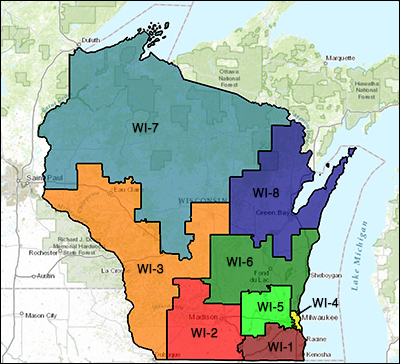
Currently, five districts are without representation: CA-25 (Katie Hill-D), CA-50 (Duncan Hunter-R), MD-7 (Elijah Cummings-D), NY-27 (Chris Collins-R), and WI-7 (Sean Duffy-R). All but CA-50 are currently in special election cycles with nominees or finalists either being chosen or awaiting the general election in CA-25, MD-7, and WI-7. The NY-27 seat will be filled in an April 28 election, which is concurrent with the New York presidential primary. There will be no special election for CA-50, as Gov. Gavin Newsom (D) has decided to let this seat remain vacant until the next Congress.

The regular California primary election occurred on Super Tuesday. In the 25th District, it is apparent that state Assemblywoman Christy Smith (D-Newhall) and defense contractor and Iraq War veteran Mike Garcia (R) will advance to the May 12 special election. They will also face each other in the regular general election. Though all the votes are not yet tabulated and won’t be for some time because of the California verification and counting system, leads are strong enough that the final result is unlikely to change the order of finish. Therefore, assuming the current trend continues, former Rep. Steve Knight (R), a relatively close third place finisher, will be eliminated from further competition.

In the 50th District, 2018 Democratic finalist Ammar Campa-Najjar has secured the first general election position. It appears that former Rep. Darrell Issa (R) will also advance, since his vote margin over former San Diego City Councilman Carl DeMaio (R) is expected to hold.

When Rep. Meadows indicated that he would not seek re-election speculation quickly built that he was headed to the administration, especially when he made his surprise announcement just two days before the candidate filing period expired. The retirement declaration began a chain of events that just culminated with the Super Tuesday regular primary.

In last week’s North Carolina vote Democrat Moe Davis advanced to the general election from the 11th District. Republicans Lynda Bennett and Madison Cawthorn were forced to a run-off election scheduled for May 12.

Continue reading

Numbers Rolling in From the
Texas and California Primaries

By Jim Ellis

March 5, 2020 — Tuesday’s elections in Texas and California were subject to slow counting, but at least in the Lone Star State, the numbers are near final.

More than 780,000 votes have currently been received in California but not yet counted. More votes are coming into county offices. To be valid, voters could have postmarked their mail ballots on Election Day and as long as they are received in the county election offices by close of business on March 6, they will be counted. Therefore, an unknown number will be added to the received but uncounted total.

The large total explains why some of the California congressional races remain uncalled even though the vote spreads among the affected candidates is sometimes quite large.

Map of US Congressional districts in Texas

In Texas, US Senate candidate Cristina Tzintzun Ramirez conceded the second Democratic run-off position to state Sen. Royce West (D-Dallas). The two battled for the slot all evening and into yesterday, but the small margin in Sen. West’s favor was definitive enough that Ramirez officially ended her bid. The May 26 statewide run-off election will feature first-place finisher M.J. Hegar, a retired Army helicopter pilot who held veteran Rep. John Carter (R-Georgetown) to a 51-48 percent re-election victory in the 2018 CD-31 campaign that encompasses Williamson and Bell Counties, and now Sen. West. The winner opposes Sen. John Cornyn (R) in November.

The final unofficial Democratic presidential tally finds former vice president Joe Biden scoring 34.5 percent of the vote as compared to 30.0 percent for Sen. Bernie Sanders (I-VT). Though Biden and Sanders were the only candidates to break the 15 percent barrier to qualify for at-large delegates, former New York City mayor Michael Bloomberg and Sen. Elizabeth Warren (D-MA) both obtained the threshold percentage in certain congressional districts, so they, too, earned several delegate votes; both, however, have ended their campaigns, Sen. Warren just this morning. The final unofficial delegate board finds Biden capturing 111 bound Texas first-ballot delegates, Sen. Sanders 102, Bloomberg 10, and Sen. Warren, five.

Just over 2 million people voted in the Democratic presidential primary. President Trump garnered 94 percent of the Republican vote, translating into more than 1.863 million votes. Just under 2 million voters cast ballots in the GOP primary despite there being no real race for president.

Continue reading

Super Tuesday Has Arrived

Super Tuesday 2020 States & Territories

By Jim Ellis

March 3, 2020 — The election landscape has changed since Saturday with former mayor Pete Buttigieg, Sen. Amy Klobuchar (D-MN), and billionaire Tom Steyer all exiting the race. Sen. Klobuchar endorsed former vice president Joe Biden as did Buttigieg in an announcement last night.

How do these developments and an obvious Joe Biden resurgence affect today’s vote? Maybe not as much as meets the eye. With the early voting processes well underway, and even completed in some states, the late-breaking political news and happenings will influence far fewer voters.

In fact, the three largest states with primaries today, California (415 first-ballot delegates), Texas (228), and North Carolina (110), all have extensive early voting options and large percentages of their voters have already cast their ballots meaning Biden’s sudden upswing in momentum after his South Carolina victory on Saturday night won’t sway them.

In California, more than 2 million people have already voted, which may translate into as much as one-third of the total Democratic presidential primary turnout. In 2016, more than 5.1 million people voted in the Hillary Clinton-Bernie Sanders race in June of that year. Returning to today, more than one million have already voted in Texas, and 800,000-plus have cast their ballots in North Carolina.

Thirty-eight states have some form of early voting, even if it is merely an in-person absentee system like those found in Minnesota and Virginia. For Super Tuesday, of the 14 states with primary elections today, only Alabama and Colorado have no early voting. The latter state fully conducts all-mail balloting but has no pre-election process in which to submit votes.

Looking at the current political map, though the establishment is making moves to coalesce behind Biden, the latest polling suggests that Sen. Sanders leads in nine primaries today and it’s possible, even with the candidate departures, that as many as three contenders in almost all of the states could still qualify for delegate apportionment.

Today will also mark the first time that former New York City mayor Michael Bloomberg’s name will be on the ballot and how he fares will be telling. Depending upon how many votes he takes could prevent one of the leading candidates from securing majority support, meaning the race evolving into a contested national convention is still a possibility.

Continue reading

Super Tuesday State Primaries

By Jim Ellis

Feb. 28, 2020 — While the Democratic presidential primaries have dominated the political media coverage for next Tuesday’s big election, five states are also holding their regular primary elections including four with Senate races.

Voters in Alabama, Arkansas, North Carolina, and Texas will begin choosing their nominees for the Senate and their entire slate of down ballot races. Each is a run-off state, and two of the aforementioned, Alabama and Texas, appear headed for a secondary Senate primary contest later in March and May, respectively. The regular California primary is also scheduled, but there is no Senate election in the Golden State this year. We will, however, see 53 sets of US House general election participants advance to the general election from their top-two jungle primary system.

In Alabama, former US attorney general and senator Jeff Sessions is attempting a political comeback. Retired Auburn University head football coach Tommy Tuberville and US Rep. Bradley Byrne (R-Mobile) are his chief opponents. Former Alabama Supreme Court chief judge Roy Moore is also on the ballot, but polling suggests he will not even break into double digits.

Sessions ad

Sessions launched two new ads in the last couple days, one that promotes himself as a strong supporter of, and the best person to implement the Trump agenda. The second is an attack ad against Tuberville, hitting him with audio of the retired coach saying we need immigrants coming across the border for certain jobs and that Tuberville actually lives and pays taxes in Florida.

Tuberville ad

Earlier, Tuberville was running a statewide ad reminding the electorate that President Trump fired Sessions as attorney general and that choosing him for the post was the president’s top regret during his tenure in office. Rep. Byrne has been simultaneously running a negative spot jointly attacking both of his top opponents.

The most likely pair to advance into the run-off are Sessions and Tuberville. The secondary election is scheduled for March 31.

Arkansas Sen. Tom Cotton (R) is virtually re-elected. Democrats failed to file a candidate against him, meaning Tuesday’s primary is a non-event for the first-term senator. He will advance into the general against only minor party opposition.

Continue reading

Candidate Filings Completed in Battleground State of Pennsylvania

Pennsylvania Congressional Districts

By Jim Ellis

Feb. 21, 2020 — While the Democratic presidential debate of a couple nights ago is getting most of the political news coverage, Democrats and Republicans completed their filings to run for office in one of the country’s major political battlegrounds, the Keystone State of Pennsylvania.

While the state will be one of the most important in the presidential race, it also yields a significant political playing field for the House of Representatives. There is no Senate or gubernatorial election in Pennsylvania this year.

From their 18 House districts, we see only three incumbents drawing primary opposition, and only one of the intra-party challengers appears credible. The state primary is April 28.

Rep. Brian Fitzpatrick (R-Levittown) has one primary challenger, investment company executive Andrew Meehan, but he had raised only $35,000 through the end of last year. It is assumed that Meehan has personal wealth, but whether or not he invests in his own long-shot campaign is as yet unknown.

Freshman Rep. Mary Gay Scanlon (D-Swarthmore) draws Democratic opposition from businessman Lou Lanni, but he does not appear politically credible. Raising only $8,000 through the end of last year, Lanni is not running a competitive campaign. With little to fear from Republicans in this district, Rep. Scanlon appears to have an easy run for her first re-election.

The most interesting primary likely lies in Pittsburgh. Veteran Rep. Mike Doyle (D-Pittsburgh) faces two Democratic opponents, one of whom looks credible. While pastor Janis Brooks does not appear to be a competitive primary contender, attorney Gerald Dickinson, on the other hand, had already raised $173,000 at the end of the year, all from individual contributors. It is still very doubtful that Rep. Doyle will be denied re-nomination, but this is the one primary campaign to watch for a developing challenge.

Continue reading

Special Election Nominees Chosen
In WI-7: Tiffany (R), Zunker (D)

By Jim Ellis

Feb. 20, 2020 — Wisconsin Republican state Sen. Tom Tiffany (R-Minocqua) and Wausau School Board member Tricia Zunker (D) won their respective party primaries Tuesday night and now head to the special general election scheduled for May 12. The winner of the succeeding contest replaces resigned Rep. Sean Duffy (R-Wausau) in WI-7 who departed Congress earlier in the year for family reasons.

Sen. Tiffany recorded a 57-43 percent win over Army veteran Jason Church who was previously a staff member for Sen. Ron Johnson (R-WI). Church, who lost both legs in Afghanistan, made military service the centerpiece of his campaign. Sen. Tiffany was originally elected to the state assembly in 2010. He won his state Senate seat in 2012 and was re-elected in 2016.

Zunker was an easy winner on the Democratic side, amassing a landslide 89-11 percent victory margin in a race where she became the obvious consensus candidate early in the process.

Sen. Tiffany now becomes the heavy favorite to win the seat in May. The northern Wisconsin region has transformed into a dependable Republican area after this district laid in Democratic hands from early 1969 all the way to the beginning of 2011 in the person of former House Appropriations Committee chairman David Obey.

Over his five elections here, Rep. Duffy averaged 57.9 percent of the vote. President Trump carried the 7th with a 58-37 percent majority, which was a substantial upgrade over Mitt Romney’s 51-48 percent performance. The Republican trend has clearly grown as the decade progressed.

Turnout in the primary election greatly favored the Republican candidates. When the final count is tabulated, the combined GOP participation factor looks to be well over 76,000 as compared to the Democratic total of just over 40,000 votes. The turnout ratio is another factor that provides Sen. Tiffany with a major advantage heading into the special general election.

Continue reading

Granger Goes Negative

(Granger Attack Ad)

By Jim Ellis

Feb. 17, 2020 — Veteran Texas Congresswoman Kay Granger (R-Ft. Worth) faces a serious Republican primary challenge that will be decided on March 3. With no public polling available, outside signs suggest the race is getting close. Otherwise, a 12-term incumbent would not be launching negative ads against her low name ID opponent.

Once the political domain of former US House Majority Leader Jim Wright (D), Texas’ 12th Congressional District has seen Granger dominate this area’s politics now for almost three decades. She became the first female mayor of Ft. Worth before winning her congressional seat in 1996, and now stands for a 13th term in the 2020 election.

The congresswoman’s GOP challenger is former Colleyville City Councilman Chris Putnam, who made himself wealthy in private business before running for political office. Putnam’s rise into politics is a familiar story. The local city council was blocking one of his business moves, so he decided to run himself and won. In the following election, he and his allies converted every seat on the panel. Putnam didn’t seek a second four-year term on the council, saying he had accomplished his original set of goals.

Now he is challenging Rep. Granger, even though his locality of Colleyville is not in the 12th District. Putnam raised significant money through the end of the year and has the wherewithal to add some more of his own should the situation call for such action. Of the $535,000-plus that he raised through the end of 2019, $250,000 was self-loaned.

For her part, Granger is taking this campaign seriously. She spent more than $1.1 million even before 2019 ended, and figures to spend whatever she needs to in 2020 to saturate her messages.

Continue reading

Top Senate Fundraisers

Retired astronaut Mark Kelly, a Democrat, announced his candidacy for the party nomination for the Arizona Senate. He tops the 4th Quarter fundraisers list.

By Jim Ellis

Feb. 10, 2020
— Continuing to look at the just released 4th Quarter fundraising figures, below is a chart of the top Senate candidates (30) who raised more than $1 million in the previous quarter.

Of the top 30 Senate fundraisers, 17 are Democrats and 13 are Republicans. The incumbent to non-incumbent ratio is the same as the partisan division, 17 incumbents versus 13 non-incumbents pertaining to the $1 million-plus 4th Quarter 2019 fundraisers. The top two 4th Quarter fundraisers — Arizona retired astronaut Mark Kelly and retired Marine Corps pilot Amy McGrath — are both Democratic challengers.

Among the top 10 Senate fundraisers, both parties place five candidates in the category. In 10 states, opponents both exceeded the $1 million receipt mark for the quarter just ended.

SENATE RECEIPTS (In Millions)

CANDIDATE PARTY STATE INCOME COH
KELLY, MARK D AZ $6.219 $13.609
McGRATH, AMY D KY $6.152 $9.133
McCONNELL, MITCH R KY $4.587 $11.579
McSALLY, MARTHA R AZ $3.990 $7.660
GRAHAM, LINDSEY R SC $3.837 $10.337
HARRISION, JAIME D SC $3.553 $4.700
JAMES, JOHN R MI $3.532 $6.085
GIDEON, SARA D ME $3.439 $2.778
HICKENLOOPER, JOHN D CO $2.756 $3.216
CORNYN, JOHN R TX $2.697 $12.117
PETERS, GARY D MI $2.487 $8.037
KENNEDY, JOSEPH D MA $2.405 $5.544
COLLINS, SUSAN R ME $2.228 $7.195
SHAHEEN, JEANNE D NH $2.040 $5.758
GARDNER, CORY R CO $1.969 $7.752
JONES, DOUG D AL $1.898 $5.477
TILLIS, THOM R NC $1.885 $5.307
PERDUE, DAVID R GA $1.838 $7.830
ERNST, JONI R IA $1.676 $4.856
SMITH, TINA D MN $1.670 $3.623
GREENFIELD, T. D IA $1.605 $2.158
CUNNINGHAM, CAL D NC $1.602 $1.701
HAGERTY, BILL R TN $1.504 $3.010
WARNER, MARK D VA $1.490 $7.460
MARKEY, ED D MA $1.387 $4.550
DAINES, STEVE R MT $1.386 $5.037
HEGAR, MJ D TX $1.142 $1.004
SULLIVAN, DAN R AK $1.129 $5.716
BOLLIER, BARBARA D KS $1.067 $0.810
LUJAN, BEN RAY D NM $1.016 $2.001

Continue reading

Mfume’s Maryland Comeback

By Jim Ellis

Former congressman Kwesi Mfume looks to be headed back to represent Maryland on Capitol Hill.

Feb. 6 2020 — In the midst of the Iowa counting fiasco and President Trump’s State of the Union Address, a special primary election was also held in the state of Maryland. For all intents and purposes, the Democratic primary is the determining factor regarding who will succeed the late Congressman Elijah Cummings (D-Baltimore). Twenty-four candidates qualified for the Democratic ballot, but the contest narrowed to three serious contenders.

Former US representative, Kweisi Mfume, who originally served in the House for nine years beginning in 1987, was victorious in his comeback attempt. He resigned the seat in 1996 to become president of the NAACP, a position he would hold until 2006 when he ran unsuccessfully for the US Senate, losing to current Maryland Sen. Ben Cardin in the Democratic primary. Cummings would then win the special election to replace then-Rep. Mfume, and now the tables turn.

Mfume captured 43 percent of the vote, far ahead of Cummings’ widow, Maya Rockeymoore Cummings, who posted 17 percent support. Maryland state Sen. Jill Carter (D-Baltimore) was third with 16 percent. None of the other candidates broke into double digits.

With Hillary Clinton scoring a 76-20 percent victory over President Trump in 2016, it is a foregone conclusion that Mfume will easily win the special general election on April 28. He will also seek re-nomination for the full term beginning in 2021 on that same day. Upon winning the special election, Mfume will be sworn into office and serve the balance of the current term.

The next special election will occur in Wisconsin on Feb. 18, in a race that should favor the Republicans. State Sen. Tom Tiffany (R-Minocqua) will square off against disabled Afghanistan War veteran Jason Church in the GOP primary. The winner advances to the May 12 special general election. Wausau School Board member Tricia Zunker is favored to win the Democratic primary.

The California and New York special congressional elections will follow in March and April, respectively. Resigned California representative, Duncan Hunter’s 50th District in San Diego County will remain vacant for the rest of this year.

Next Week’s Other Election

Key candidates who hope to succeed late Rep. Elijah Cummings in MD-7 iclude rom left: Maya Rockeymoore Cummings, Kweisi Mfume, Talmadge Branch, Jill Carter, Terri Hill, Jay Jalisi, Michael Higginbotham, Saafir Rabb


By Jim Ellis

Jan. 31, 2020 — The Iowa Caucus is not the only election happening next week. The day after Iowans gather in their precinct meetings on Monday, Baltimore area voters will go to the polls to choose nominees to replace the late Congressman Elijah Cummings (D-MD) who passed away in early October.

Though Tuesday hosts only the special primary election, the Democratic nominee emerging from that vote will succeed Rep. Cummings in the April 28 special general election from a seat that is virtually unwinnable for a Republican.

Which of the 24 Democrats running will win the nomination is a point of speculation, however. The field includes the late congressman’s widow, Maya Rockeymoore Cummings, who resigned her position as Maryland Democratic Party chair to run, and the man who Elijah Cummings replaced in a 1996 special election, former congressman, Kweisi Mfume. Mfume resigned from the House to become President of the NAACP, thus necessitating the special congressional election 24 years ago. He would remain in this position until he ran unsuccessfully for Senate in 2006.

Also in the race are state House Majority Whip Talmadge Branch, state Sen. Jill Carter (D-Baltimore), and state Delegates Terri Hill, a Columbia physician, and Jay Jalisi (D-Baltimore County).

The candidate who has so far spent the most money, however, is law professor Michael Higginbotham. He has raised just over $110,000 and loaned his campaign over $500,000. The $600,000+ total is almost $400,000 more than the next closest competitor, ex-congressman Mfume, who reported just over $266,000 in receipts on his Jan. 15 pre-primary financial disclosure filing. The other candidate raising over $200,000 is business consultant Saafir Rabb. All of his funds come from other individuals. Higginbotham and Mfume report having the most cash-on-hand, just over $200,000 apiece.

Continue reading