Category Archives: Election Analysis

Judge Orders Tenney Certified

By Jim Ellis

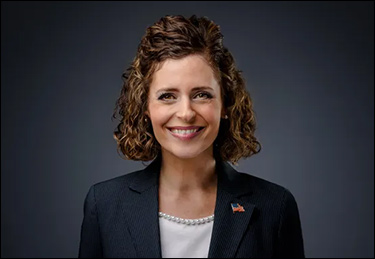
Former New York Rep. Claudia Tenney (R)

Feb. 9, 2021 — After more than three months of legal wrangling about whether former Rep. Claudia Tenney (R) defeated 116th Congress Rep. Anthony Brindisi (D-Utica) in New York’s 22nd Congressional District, a judicial ruling on Friday afternoon at last paves the way for a final certification from the New York State Board of Elections.

The NY-22 campaign is obviously the last to receive an initial final count. Another result, from the IA-2 contest that came down to a six-vote margin, is before in the House of Representatives. In this instance, the state of Iowa long ago certified that victory margin and Rep. Mariannette Miller-Meeks (R-Ottumwa) is provisionally seated pending a challenge referred to the House Administration Committee.

Returning to the New York situation, State Supreme Court of Oswego County Justice Scott DelConte early last week ordered election representatives from the eight counties, all or parts of which comprise the 22nd District, to appear in his court and certify the final totals, but he then suspended the order. This, after Brindisi appealed indicating that such a decision would cause him “irreparable harm.” Justice DelConte responded, saying he would take the motion under advisement until Feb. 5.

With his new ruling, Justice DelConte re-affirmed the previous order for the counties to send their certified totals to the state Board of Elections. The aggregate electoral sum will reflect a Tenney victory margin of 109 votes. The initial public count on Election Night ended with her leading by over 28,000 votes, which would drop to her trailing by just 14 tallies when the outstanding mail ballots from several counties were added. The post-election tabulation that included late-arriving votes from overseas and other ancillary ballots was then adjusted into a Tenney 12-vote edge and later 29, before yielding to an unofficial preliminary final count of a 122-vote spread.

Now, after the Justice has ruled on all contested votes – more than 600 after the two parties agreed on resolutions to an additional 500-plus ballots – a Tenney victory margin of 109 votes becomes the official final tally that will be transmitted to the state.

Continue reading

CO-3: Rep. Boebert Challenge Looming

By Jim Ellis

2nd Amendment activist, local restaurant owner and now US Rep. Loren Boebert represents Colorado’s 3rd CD.

Feb. 8, 2021 — Colorado freshman Rep. Lauren Boebert (R-Silt), who first upset then-Rep. Scott Tipton in the 2020 Republican primary and later overcame more than $6 million in combined spending from her general election opponent and outside organizations, can count on seeing another tough campaign in 2022.

Already, candidates are lining up, and the most prominent one in the early going announced late last week. State Senate President Pro Tempore Kerry Donovan (D-Gunnison) released a video announcing that she will forego re-election to the state legislature in order to challenge Rep. Boebert in the next congressional campaign. Rancher Gregg Smith and former state House candidate Colin Wilhelm had previously declared their intentions to compete for the Democratic nomination.

Lauren Boebert is a Florida native who moved with her family to the Denver area when she was 12 years old. She then re-located to the Western Slope region in 2003 and, with her husband, opened their restaurant, Shooters Grill, in 2013.

Congresswoman Boebert has attracted much national attention so far with her insistence of carrying a firearm on the House floor. Such is nothing new since she has always holstered a side arm in her restaurant establishment and made defending the 2nd Amendment the cornerstone of her congressional campaign effort.

Despite being heavily outspent, Boebert carried the general election against former state representative and 2018 congressional nominee Diane Mitsch Bush (D) by a 51-45 percent margin, meaning a spread of 26,512 votes. Former President Trump, who recorded only 42 percent of the statewide vote, also carried the 3rd District in a similar 52-46 percent margin.

Continue reading

Nevada’s Harry Reid Re-Emerges

By Jim Ellis

Feb. 5, 2021 — Former Senate Democratic Leader Harry Reid (D-NV) is no longer in elective office, but it appears he’s still active in politics. Now, Reid has a new cause: making Nevada the first-in-the-nation presidential nomination contest.

Former Senate Democratic Leader Harry Reid (D-NV)

Reports suggest that the former party leader is lobbying Democratic officials to change the order of nomination voting. As we know, Iowa is the first caucus state to vote, followed by the New Hampshire primary. The Nevada caucus then follows, and then onto the South Carolina primary before Super Tuesday voting commences.

Reid, and others, are arguing that neither Iowa nor New Hampshire are representative of the core Democratic Party, and therefore should not receive the undue attention from being scheduled as the first caucus and primary despite tradition yielding such.

He points out that in 2020 the Iowa caucus system became colluded and poorly administered thus leading to a situation that even today it is unclear as to who actually won the caucus vote. While Sen. Bernie Sanders (I-VT) received the most votes, it was former South Bend mayor and now US Transportation Secretary Pete Buttigieg who came away with the most delegates.

In New Hampshire, Reid contends that the eventual nominee, and of course general election winner, Joe Biden, placed fifth in the Granite State Democratic primary before his candidacy was rescued with a big primary win in South Carolina. He fails to mention, however, that Biden also lost Nevada, coming in a poor second to Sen. Sanders (40-19 percent) and just ahead of Buttigieg’s 17 percent.

Since 1952, there have been 13 New Hampshire Democratic presidential primaries in races that did not involve a party incumbent. In only five of those campaigns did the Granite State voters back the eventual party nominee. The last time the state chose a nominee who went onto win an open or challenge race for the Presidency occurred in 1976. In that year, Jimmy Carter won the New Hampshire primary, and then proceeded to unseat then-President Gerald Ford in a close general election.

In reality, however, South Carolina may actually have the best argument about moving into the first primary position. The South Carolina presidential primary system began in 1988. Since then, the state has hosted seven such Democratic elections where no president of their party was seeking re-election. In its history, the eventual party nominee has won five of the seven Palmetto State presidential primaries.

Continue reading

Another Delay in NY-22 Certification;
Rep. Ryan to Announce Senate Run

By Jim Ellis

Feb. 4, 2021 — After ordering the eight NY-22 counties to certify their final congressional election results by yesterday afternoon and now surpassing 90 days after the votes were cast, State Supreme Court of Oswego County Justice Scott DelConte has reversed course. Yesterday, he instructed the county election officials to suspend their certification process.

Justice DelConte said he now wants to consider at least until Friday the effect of 116th Congress incumbent Anthony Brindisi (D-Utica) possibly winning his motions for legal relief at the appellate level after race leader Claudia Tenney (R) is certified the winner and takes office. This new direction suggests it could be several more weeks before we see a member sworn into the House from this particular Upstate New York district.


OHIO SENATE

Ohio Rep. Tim Ryan (D-Warren/Youngstown)[/caption]Yesterday, Ohio Rep. Tim Ryan (D-Warren/Youngstown) indicated that he will officially announce a campaign for the state’s open Senate seat in March. Ryan becomes the first prominent Democrat to begin organizing a campaign.

Ohio Rep. Tim Ryan (D-Warren/Youngstown)

As we will remember, Rep. Ryan joined the Democratic presidential field attempting to approach the electorate from a union jobs, more centrist perspective. His campaign failed to gain legs and he dropped out well before the first votes were cast in the Iowa Caucuses. During his 10 terms in the House, Ryan has publicly considered running for lieutenant governor, governor, and the Senate, only to back away each time in order to seek re-election to the House.

This time, however, his statement is definitive about running, and such a move makes political sense. Ohio is slated to lose another congressional seat in reapportionment and there is reason to believe that Rep. Ryan’s 13th District seat could be the one collapsed.

OH-13 begins at the Pennsylvania border and immediately encompasses the cities of Youngstown, Niles and Warren. Then the district moves further west to capture more than 228,000 individuals in the Akron metro area. Most of Akron city is shared with Rep. Marcia Fudge’s (D-Cleveland) 11th District, which is the least populated CD in the state. The 11th will likely need an influx of about 100,000 people to become compliant with the projected per district population number for the current decade under the new redistricting plan when adopted.

Continue reading

The Next Step in NY-22

New York’s Congressional Districts

By Jim Ellis

Feb. 3, 2021 — Late yesterday, by judicial order, the seven affected counties in New York’s 22nd Congressional District finalized and completed the verification process of their final vote totals, but that doesn’t end the process.

The seven entities with the challenged ballots and Tioga County’s long ago completed results will then be sent to the State Board of Elections for final certification. The process, however, could conceivably endure further delays in the capital city of Albany.

First, 116th Congress incumbent Anthony Brindisi (D-Utica), who now will assuredly finish behind former US Rep. Claudia Tenney (R) in the final 2020 election count, has already filed an appeal to State Supreme Court of Oswego County Justice Scott DelConte’s ruling, asking for a hand recount of all ballots.

Second, as part of the 23-page judicial ruling directing the counties as to which votes must be added and subtracted from their counts because of eligibility rules, Justice DelConte indicated that his ruling is somewhat limited.

The Justice said he does not have the power either to order a new election or allow the 2,418 people who registered to vote before the Oneida County deadline but were denied ballots because election officials did not process their forms to vote post-election. Before the State Board of Elections, however, the final action could result in a different conclusion.

The SBoE is comprised of two appointed Democrats and a pair of Republicans. The panel is co-chaired by Democratic appointee Douglas Kellner and Republican choice Peter Kosinski. Nominees for the two co-chair positions are put forth to the governor from the partisan legislative leaders from both lawmaking chambers.

Continue reading

NY-22 Vote on Brink of Certification

By Jim Ellis

Former New York Rep. Claudia Tenney (R)

Feb. 2, 2021 — After being suspended in political limbo for three months after Upstate New York voters cast their ballots, it appears that former Rep. Claudia Tenney (R) is on the threshold of being declared the winner of the disputed NY-22 contest.

State Supreme Court of Oswego County Justice Scott DelConte issued his ruling late Friday after weeks of hearings regarding disputes over more than 1,000 contested ballots and 2,100-plus individuals who registered to vote in a timely manner but whose documentation were not properly processed.

Justice DelConte released a 23-page ruling detailing his findings. As a result, it appears his acceptance or rejection of various ballots and a decision governing the mis-applied voter registrations allow Tenney to increase her lead from 29 votes to 122.

The justice first ordered Tioga County’s election officials, the only entity from the eight-county district that had no issues, to immediately certify their final totals. From the remaining seven counties with outstanding ballots, those election officials were ordered to appear in court Monday to count or remove votes at the Justice’s direction.

Once completed, the DelConte ruling ordered the counties to then implement a final canvass and certify their results by mid-day today. At this point, the final results from all eight counties will be sent to the State Elections Board in Albany for final certification.

In summary, the original totals found the two candidates, Tenney and 116th Congress incumbent Anthony Brindisi (D-Utica), separated by just 12 votes from the 317,727 ballots cast: 155,492 to 155,480, respectively, and including 6,755 votes for the Libertarian candidate. Through the ballot challenge period, we saw Brindisi moving ahead by 14 votes, and then back to Tenney’s most often reported 29-vote edge. It was only through Friday’s ruling when her advantage expanded to 122.

In all, 1,118 ballots were challenged. A total of 533 of those were withdrawn through agreement between the two campaigns, and after the two camps had resolved challenges to an additional 43 ballots. Three more ballots were “not preserved for judicial review.” Of the 609 challenges the justice considered, 470 were admitted to the count while 139 were rejected and ordered removed.

Continue reading

Impeachment Targets

By Jim Ellis

Rep. Liz Cheney, (R-WY), one of 10 representatives facing primary challenges as a result of their votes to impeach Donald Trump.

Feb. 1, 2021 — Ten Republican House members voted to impeach then-President Donald Trump in January and already primary challenges are being announced against some, the most serious of which appears to be aimed at Republican Conference chair Liz Cheney (R-WY). A new poll suggests that she would badly trail a challenger in her presumed battle for re-nomination come August of 2022 in the at-large Wyoming Republican primary race.

Of the 10, seven already have announced Republican opponents, four of which appear potentially serious. The quartet facing what could become a serious challenge are Reps. Cheney, Tom Rice (R-SC), Dan Newhouse (R-WA), and David Valadao (R-CA). The others with minor challengers are Reps. Adam Kinzinger (R-IL), Anthony Gonzalez (R-OH), and Peter Meijer (R-MI). Those seeing no announced challenger are Reps. Fred Upton (R-MI), John Katko (R-NY), and Jaime Herrera Beutler (R-WA).

As many as 1,000 people, according to the Casper Star-Tribune reporter covering the event, gathered at the Wyoming state Capitol in Cheyenne Late last week to listen to Florida Rep. Matt Gaetz (R-Ft. Walton Beach/Pensacola) and Donald Trump Jr., the latter via telephone, attack Rep. Cheney for her vote to impeach former President Trump.

McLaughlin & Associates released a new poll testing Rep. Cheney against one announced opponent, state Sen. Anthony Bouchard (R-Laramie), and a presumed challenger, state Rep. Chuck Gray (R-Casper). The results suggest Cheney has serious internal political problems.

The McLaughlin poll was conducted during the Jan. 25-27 period and surveyed 500 general election likely voters. According to their data, Cheney’s re-elect score is only 13 percent, which drops to an even lower 10 percent when only Republicans are segmented. Paired directly with state Sen. Bouchard, Rep. Cheney would trail 54-21 percent.

Continue reading

More Redistricting Delays

By Jim Ellis

Jan. 29, 2021 — The Census Bureau announced at mid-week yet another postponement in releasing the national apportionment figures, this time until April 30. Reapportionment should have been completed by Dec. 31, but the Bureau previously announced that March 6 would be the new release date due to COVID-related problems. Now, we see further delays.

Reapportionment is the process of creating a new census data algorithm in order to project the number of congressional seats each state will be awarded for the coming decade. It appears that 10-12 seats could change states, with the northeast and Midwest typically losing districts to southern and western states. This time, however, California, for the first time in history, is reversing their trend and appears headed for the losing list.

Once the apportionment numbers are known and the individual data dispersed, the states can begin the redistricting process. The Census Bureau further stated that individual states won’t be receiving their particular data necessary for redistricting until at least July 30. This will clearly set the redistricting cycle back significantly, which could cause major problems for the coming election cycle.

In the past, the Census Bureau has prioritized the states with early primaries to be first to receive their data. This meant that New Jersey and Virginia initially received their new population numbers ahead of the others because they have odd-numbered year state legislative elections. Texas and Illinois were next to receive since they traditionally schedule their regular primaries in March of the election year.

Knowing that the numbers would not be available for them in 2021, New Jersey and Virginia took preparatory action. Garden State officials placed a referendum on the November ballot asking voters for approval to postpone legislative redistricting until 2023. The measure passed.

The Old Dominion leaders decided they would run their 2021 state Delegate elections on the amended 2011 map but could conceivably call elections again for next year once they receive their updated data and can draw district boundaries. Virginia state senators do not stand for election until 2023, so it is unlikely the redistricting delay will affect those campaigns.

The data distribution and processing delay could place most legislatures in a conundrum. Most will be adjourned when the data is received, so special sessions will have to be called in most cases to complete the process prior to the 2022 candidate filing deadlines. This suggests that the states having redistricting commissions might prove to be in better position to complete the task because they won’t have to deal with legislative politics, priorities, or calendars, all of which result in a lengthy process.

Additionally, since almost every map is challenged in court, we could well see a plethora of lawsuits being filed late in the year that keep the redistricting process tied in figurative knots for months.

The states in the most difficult situations will be those gaining and losing congressional representation. Because the number of districts these particular states will have differ from their current allotments, they do not have the option of reverting to the current map once 2021 apportionment becomes final.

In the case of gainers and losers not having completed maps, we may see at-large races for the House. This would be particularly difficult for the losing states because we may see all members in the affected places having to run at-large for seats in their House delegations.

Unofficially, the gaining states appear to be Texas (3 seats), Florida (2), Arizona, Colorado, Montana, North Carolina, and Oregon. The losers may be New York (possibly 2 seats), Alabama, California, Illinois, Michigan, Minnesota, Ohio, Pennsylvania, Rhode Island, and West Virginia. Reports suggest that the closest developing situation concerns whether Alabama loses a seat or New York drops two.

President Biden’s executive order that mandates non-citizens be counted in the census will certainly affect the final data projections and may be another reason for this latest delay.

The only certainty about 2021 reapportionment and redistricting is the many moving parts in these various states will likely produce surprising political results.

Jockeying for Ohio’s Senate Seat

By Jim Ellis

Jan. 28, 2021 — Monday’s surprise announcement that Sen. Rob Portman (R) will not seek re-election next year has ignited a flurry of activity and speculation from potential candidates and political observers alike. Some looking to challenge Gov. Mike DeWine (R) are now also beginning to survey and assess how an open US Senate candidate field might unfold.

Recent voter history suggests that the eventual Republican nominee will at least begin the general election campaign in the favorite’s role. The GOP, with a large number of statewide office holders, former elected officials, and a dozen sitting US House members, has an array of candidates from which to choose, and many will take the plunge.

For example, former US Rep. Jim Renacci, who held Sen. Sherrod Brown (D) to a 53-47 percent victory in the 2018 campaign and was reportedly looking to challenge Gov. DeWine in the 2022 Republican primary, may now set his sights on the open Senate seat.

Another ex-office holder, Pat Tiberi, who averaged 60.6 percent of the vote over nine elections from a Columbus area congressional district that former governor and presidential candidate John Kasich once held, still sits on more than $5 million in his federal campaign account even though he hasn’t been on the ballot since 2016.

It was widely believed that he was amassing a huge war chest to run against Sen. Brown in ’18, but family considerations led him to change his mind, resign from Congress and instead take the reins of the Ohio Business Roundtable.

Still another former elected official, ex-state Treasurer Josh Mandel (R), who lost the 2012 Senate election to Sen. Brown, was planning to run again in 2018 until leaving the race because of his wife’s health issue. Mandel raised almost $20 million for his Senate race eight years ago and has over $4 million in his campaign account even though he has not been a federal candidate in eight years.

Republicans hold all of the state’s constitutional offices. Lt. Gov. Jon Husted, Secretary of State Frank LaRose, Attorney General Dave Yost, state Treasurer Robert Sprague, and State Auditor Keith Faber are all credible potential US Senate candidates.

Continue reading

Ohio Sen. Portman to Retire

By Jim Ellis

Ohio Sen. Rob Portman (R) surprisingly announced his retirement Monday.

Jan. 27, 2021 — Ohio Sen. Rob Portman (R) surprisingly announced Monday that he will not seek a third term next year, opening the third Senate seat for the 2022 election cycle.

Addressing reporters at a news conference in Cincinnati yesterday, Sen. Portman said, “Our country’s polarized right now. It’s kind of shirts and skins. That makes it more difficult to find that common ground. Elected officials aren’t rewarded for that. What they’re rewarded for is throwing red meat to the talk show.”

The two-term senator indicated that the “partisan gridlock” is one of the reasons for his retirement. He further said in explaining his retirement decision, “we just keep pushing out to the right and to the left, there’s not going to be much left in the middle to solve the real problems we face.”

For the Republicans, they now have three big state open seats to defend as Sen. Portman joins Pennsylvania GOP Sen. Pat Toomey and North Carolina’s Richard Burr as incumbents who have already made their 2022 retirement plans public. Several others could be on the horizon.

Senators Richard Shelby (R-AL) and Chuck Grassley (R-IA) will be 88 and 89 years of age, respectively, at the time of the next election, and Wisconsin Sen. Ron Johnson (R) originally took a two-term pledge when he was first elected in 2010. None of these three lawmakers have made their future political plans public to date, however.

Ohio, once a bedrock Republican state, developed a swing image beginning in 1992 when the state deserted GOP President George H.W. Bush and backed Democrat Bill Clinton. They did so again in 1996. In 2000 and 2004, Ohio returned to the Republican column awarding George W. Bush with its electoral votes. In 2008 and 2012, the Buckeye State ventured back to the Democratic side of the political ledger, supporting Barack Obama in both of his national elections.

Therefore, rather than being cast as a swing state during this 20 year period, Ohio may actually have been a microcosm of the national electorate since the state’s voters chose the winning candidate in each of the presidential elections during that time span, and had done likewise for the three previous decades.

Continue reading