By Jim Ellis — Thursday, February 12, 2026
Senate
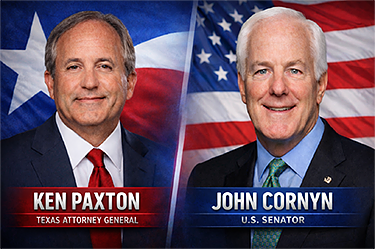
A series of political surveys conducted in late January and early February are now in the public domain, and we again see data suggesting that four-term Sen. John Cornyn is virtually assured of being forced into a runoff election once votes are cast and counted in the March 3 Texas Republican primary.Four new polls have been released, and while each produces different ballot test numbers the conclusion is similar: that is, we will see two of the three major contenders, Sen. Cornyn, Attorney General Ken Paxton, and Rep. Wesley Hunt (R-Houston), advancing into a secondary nomination election on May 26.
The University of Houston conducted its poll during the Jan. 20-31 period (550 likely Texas Republican primary voters; 550 likely Democratic primary voters; online); Ragnar Research Partners polled for the pro-Cornyn Texans for a Conservative Majority Super PAC during Jan. 29 – Feb. 1 (sample size not released); J.L. Partners queried their sample during Jan. 31 – Feb. 1 (600 likely Texas Republican primary voters); and Pulse Decision Science went into the field during the Feb. 1-3 period (801 likely Texas Republican primary voters; live interview).
The results below detail the closeness of this race:
University of Houston (Jan. 20-31)
| Candidate | Percent |
|---|---|
| Paxton | 38 |
| Cornyn | 31 |
| Hunt | 17 |
Ragnar Research for Texans for a Conservative Majority (Jan. 29-Feb. 1)
| Candidate | Percent |
|---|---|
| Cornyn | 31 |
| Paxton | 29 |
| Hunt | 24 |
J.L. Partners (Jan. 31-Feb. 1)
| Candidate | Percent |
|---|---|
| Paxton | 27 |
| Cornyn | 26 |
| Hunt | 26 |
Pulse Decision Science (Feb. 1-3)
| Candidate | Percent |
|---|---|
| Paxton | 34 |
| Cornyn | 26 |
| Hunt | 18 |
The four polls have several factors in common. First, they were all conducted within the same 15-day time frame. Second, all show Sen. Cornyn performing poorly for a four-term incumbent within his own party. Third, that a runoff is a foregone conclusion. Fourth, that all three major candidates have a chance of qualifying for the secondary election.
The addition of Rep. Hunt to the primary campaign is largely the reason that the race will advance to a runoff stage. Hunt has gone from being relegated to a pure spoiler role to a status where at least two current pollsters suggest he has an outside path on March 3 to eliminate one of his two opponents from further consideration.
This being the case, expect both Cornyn and Paxton along with their outside supporters to turn their negative attacks to Hunt, since driving him deeper into third place will guarantee that both statewide officials advance.
This has begun to happen already. The targeted electorate is seeing a great deal of negative attacks being lobbed in Rep. Hunt’s direction. The Texans for Conservative Majority polling memo suggests that $3.4 million in ads have already aired, or time is reserved for negative Hunt commercials.
The campaign balance sheet favors Sen. Cornyn, however, as the year-end Federal Election Commission filings reveal. The veteran incumbent reported $5.9 million in his campaign account at the end of 2025, while AG Paxton posted $3.7 million. Rep. Hunt showed a lesser $1.8 million cash-on-hand.
Only one of the four pollsters recently releasing Texas Senate political data tested the Democratic primary. The University of Houston found Rep. Jasmine Crockett (D-Dallas) leading state Rep. James Talarico (D-Austin), 47-39 percent.
It is Talarico, however, who has the funding advantage. He reported $7.1 million in his account, a larger sum than any candidate from either party. Rep. Crockett posted receipts of $6.5 million raised with $5.6 million in the bank. Because there are only two major candidates on the Democratic side, it is probable that this election will be decided on March 3.
Real estate broker Ahmad Hassan is also a Democratic Senate primary candidate. Even though his status is minor, any votes he receives could be enough to force the other two into a runoff should they finish close. The tightness of such an outcome could mean that Hassan attracting a vote total even as little as two to three percent could result in the top Democratic candidates being forced into a secondary election because the leader barely missed topping the 50 percent mark.
Texas early voting begins next week on Feb. 17 in preparation for the March 3 primary. Tracking the early vote will give us a clue into political enthusiasm between the voters within the two parties. In less than a month we can expect a close finish in both parties from what promises to be one of the most exciting primary elections of the entire 2026 election cycle.
TX-18: Menefee Wins Special
By Jim Ellis — Monday, February 2, 2026
House
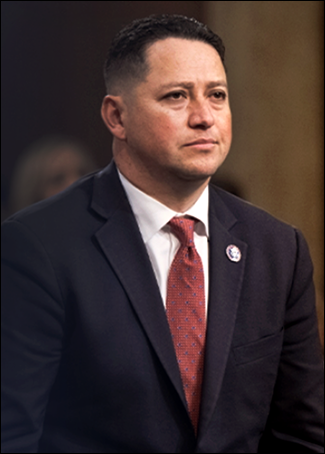
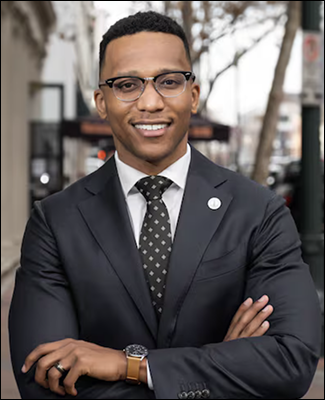
After a very long special election cycle to replace the late Texas Rep. Sylvester Turner (D-Houston), who passed away in March last year, Harris County Attorney Christian Menefee (D) won the special replacement election on Saturday night. Menefee will be sworn into the House and serve the balance of the current term.Rep-Elect Menefee defeated former Houston City Councilwoman Amanda Edwards, 68-32 percent. When the final votes are tallied, it appears that approximately 27,500 individuals will have cast ballots, a very low number.
The two finalists were forced into a runoff because no one received majority support in the Nov. 4 initial special election. In a field of 16 candidates, Menefee and Edwards finished first and second with 29 and 26 percent of the vote, respectively. The runoff obviously produced a more convincing victory margin for Menefee.
The Menefee victory brings the House party division count to 218R – 214D with three seats, two Republican — CA-1 (LaMalfa) and GA-14 (Greene) — and one Democratic — NJ-11 (Sherrill), remaining vacant.
The Congressman-Elect’s tenure in the House may be short lived, however. On March 3, both he and Edwards will compete in the 2026 regular election primary for new District 18 against veteran Congressman Al Green (D-Houston). Because of the 2025 redistricting map, the 18th District, while still fully contained within Harris County and solidly Democratic, is considerably different than the district in which Menefee prevailed on Saturday.
The new 18th sees only 26 percent of the current constituency carrying over from the 18th that was drawn in 2021 and which hosted the special election. Almost 65 percent of the new constituency comes from Rep. Green’s current 9th CD, with just over eight percent transferring from District 29 (Rep. Sylvia Garcia-R) and slivers coming from Districts 7 (Rep. Lizzie Fletcher-D) and 22 (Rep. Troy Nehls-R), according to the statisticians from The Down Ballot political blog.
Therefore, the geography would favor Rep. Green winning renomination and limiting Menefee to serving just 11 months in Congress.
Despite Rep. Green’s geographic edge, the first public poll of a proposed primary election among the three contenders surprisingly favored Menefee. According to the Lake Research Partners poll (Dec. 15-21; 455 likely TX-18 Democratic primary voters; live interview), it was Menefee who led both Green and Edwards, 41-35-13 percent, suggesting that Rep. Green may not be the overwhelming favorite to win the party nomination as most observers initially believed.
Additionally, Ms. Edwards’ presence in the regular primary race, though she is unlikely to prove victorious, may carry enough political strength to deny either Rep. Green or Rep-Elect Menefee an outright majority on March 3rd. Therefore, the top two finishers, likely Green and Menefee, would then advance to a May 26th runoff election.
The March 3 Texas primary will be busy. In addition to the competitive District 18 campaign, 10 Texas US House seats are open, each featuring hot primary elections.
Sen. John Cornyn (R) is in a dogfight for renomination against Attorney General Ken Paxton and Rep. Wesley Hunt (R-Houston). Additionally, Gov. Greg Abbott is seeking renomination for a fourth term as Governor. Should he be elected and serve most of the ensuing term, Abbott will become the longest-serving Governor in Texas history.
On the Democratic side, we also see a hotly contested US Senate nomination race. There, Rep. Jasmine Crockett (D-Dallas) and state Rep. James Talarico (D-Austin) are battling for the right to face the eventual GOP nominee in November.
Polls are inconsistent so far in this campaign. In December, Texas Southern University fielded their survey (Dec. 9-11; 1,600 likely Texas Democratic primary voters) and found Rep. Crockett leading Talarico, 51-43 percent. A month later, Emerson College (Jan. 10-12; 413 likely Texas Democratic primary voters) saw Talarico surging into a 47-38 percent advantage.
HIT Strategies countered with their study taken largely within the same time frame as Emerson College but with a larger polling sample (Jan. 6-15; 1,005 likely Texas Democratic primary voters). This ballot test result posted Crockett to a reverse double-digit lead, 46-33 percent. Finally, Slingshot Strategies released their January survey, also with a large sample (Jan. 14-21; 1,290 likely Texas Democratic primary voters), and found the candidates virtually tied with Crockett posting only a one-point, 38-37 percent edge.
As you can see, we can count on seeing a big Lone Star State primary night on March 3, now only a month away.
Key Senate Races Taking Shape
By Jim Ellis — Friday, January 16, 2026
Senate
As we know, Republicans currently have a 53-47 Senate majority and the unfolding competitive statewide races suggest that the GOP will retain chamber control, but their margin could lessen.
A total of nine Senate seats are open but only two of those, Michigan and North Carolina, appear hotly competitive for the general election. The remaining seven are projected to retain the party that currently holds the respective seat. Eight of the nine in this group, however, will host highly contested primary elections for at least one party. North Carolina features the only open Senate race where the party nominees already appear set.
Another group of nine seats are contested for the general election, and it is here where Democrats will make a run at taking the Senate majority away from Republicans. To do so, they must reach 51, since Vice President Vance would break a 50-50 tie; Democrats would have to win seven of the nine contested races.
The Republicans are defending seats in Alaska, Iowa, Maine, North Carolina, Ohio, and Texas, while the Democrats must protect Georgia, Michigan, and New Hampshire.
Earlier this week former Alaska at-large Rep. Mary Peltola (D), who lost her seat to current Rep. Nick Begich III (R-Chugiak) in 2024, surprisingly launched a Senate campaign. Most believed she would enter the open Governor’s race where her prospects appear brighter. In the Senate race, she faces an uphill challenge against two-term incumbent Dan Sullivan (R), who has posted an average winning margin of 14.9 percentage points in his two elections including defeating Democratic Sen. Mark Begich in 2014.
Alaska’s unique top four/Ranked Choice Voting system does give Peltola some chance of winning the Senate race in the same manner as how she cobbled together two US House victories. If she can hold Sullivan under 50 percent in the general election, Ranked Choice Voting will begin and then all bets are off. At the outset, however, Sen. Sullivan is favored to win re-election.
Iowa Sen. Joni Ernst (R) is retiring after two terms, and Rep. Ashley Hinson (R-Marion/Cedar Rapids) appears as a consensus 2026 GOP Senatorial candidate. She will be favored to hold the seat probably against the Democratic leadership’s top choice, state Rep. Josh Turek (D-Council Bluffs), though several credible party members are competing for the nomination.
Maine Sen. Susan Collins (R) will defend her seat against either Gov. Janet Mills (D) or oysterman Graham Platner. Platner is the chosen Democratic Socialist candidate and has attracted major far left political figures to his campaign such as Sens. Bernie Sanders (I-VT) and Elizabeth Warren (D-MA). The general election will be close no matter who the Maine Democrats nominate.
North Carolina Republican Sen. Thom Tillis is retiring after two terms, and we will see a tight contest develop between former two-term Gov. Roy Cooper (D) and ex-Republican National Committee chairman Michael Whatley. North Carolina always features tight statewide elections, but for the first time in history Republicans have overtaken Democrats in party registration. This race, however, will likely end in a photo finish.
Appointed Ohio Sen. Jon Husted (R) faces the voters in his new role for the first time (he previously won two statewide races as Secretary of State and was twice on the gubernatorial ticket with Gov. Mike DeWine), and his opposition will be former Sen. Sherrod Brown (D). The fact that ex-Sen. Brown lost his seat in 2024 even though he garnered almost 293,000 more votes than when he last won in 2018 shows strongly the Ohio electorate is moving to the right.
The Texas Republican primary is likely going to a runoff between two of three candidates: Sen. John Cornyn, Attorney General Ken Paxton, and Rep. Wesley Hunt (R-Houston). The Democrats feature a battle between Rep. Jasmine Crockett (D-Dallas) and state Rep. James Talarico (D-Austin). A better general election picture will be drawn once the party nominees are chosen, but Texas Democrats have not won a statewide race since 1994.
Georgia Sen. Jon Ossoff (D) will be seeking a second term, and he already leads the nation in campaign fundraising. Republicans likely won’t have a nominee until a May runoff election concludes. A secondary election campaign potentially between Reps. Mike Collins (R-Jackson) and Buddy Carter (R-Pooler/Savannah) could well determine who challenges Sen. Ossoff in November.
The most vulnerable Democratic Senate seat may lie in Michigan. Here, an open contest between favored Republican Mike Rogers, a former seven-term Congressman and 2024 US Senate nominee, and one of the following: Rep. Haley Stevens (D-Birmingham), state Sen. Mallory McMorrow (D-Royal Oak), or former Wayne County Health Director Abdul El-Sayed, will take place.
The Michigan Democrats not only face a difficult primary campaign, but the nomination election isn’t until Aug. 4. The lengthy Democratic primary means Rogers will enjoy a long period of political open field running where he can build volunteer support and funding reserves.
Should former Sen. John E. Sununu win the New Hampshire Republican Senatorial nomination — and he is favored to do so over former ex-Massachusetts Sen. Scott Brown — the GOP will have a strong candidate to battle presumptive Democratic nominee Chris Pappas, the 1st District Congressman.
Though Pappas will be considered at least a slight favorite to win the general election, the Sununu name in New Hampshire has generally been political magic over the years. The Sununu family, including former Gov. John Sununu, ex-Gov. Chris Sununu, and ex-Senator and former Rep. John E. Sununu, have combined to win 11 major New Hampshire elections.
It remains to be seen if any other Senate contests enter the competitive realm, but electoral history suggests that an unexpected campaign is also likely to reach the political forefront.
Republicans are likely to hold their majority, but all of the aforementioned campaigns should be regularly monitored throughout this election year.
Looking Forward to March
By Jim Ellis — Monday, Jan. 5, 2026
Midterms
As we begin Midterm Election ‘26, we look to the nation’s first set of primaries, five of which will take place in the month of March.
Casting the first regular midterm cycle ballots will be voters in Arkansas, North Carolina, and Texas on March 3; Mississippi on March 10; and Illinois a week later, on St. Patrick’s Day, March 17.
Candidate filing has closed in all five states, and four of the five employ a runoff system. Only Illinois will select nominees through a plurality vote. Arkansas, Texas, and Mississippi feature 50 percent plus-1 vote nomination thresholds, while North Carolina candidates clinch their party’s nomination when exceeding 30 percent.
March 3:
Arkansas — The Natural State voters are looking at a quiet midterm election, just as the Republicans desire. Gov. Sarah Huckabee Sanders (R) is on the ballot for a second term. She faces no renomination competition. For the Democrats, state Sen. Fred Love (D-Mabelvale) and magazine publisher Bupha Xayprasith-Mays battle for the party nomination, and realistically for the right to lose to Gov. Sanders in the general election.
Sen. Tom Cotton (R) faces little in the way of primary opposition. He will easily defeat his two minor Republican opponents in the March 3 primary. He will probably face Lewisville Mayor Ethan Dunbar (D) in the general election. Sen. Cotton will be rated as a prohibitive favorite to win a third term in November.
Three of the four congressional incumbents, all Republicans, face no GOP opposition. Only Rep. French Hill (R-Little Rock) has a minor Republican opponent. All four Arkansas US Representatives are heavy favorites for re-election.
North Carolina — The open US Senate race is the only Tar Heel statewide campaign in 2026, and the nominees are virtually set long before voters cast ballots in the March 3 election.
Both former Gov. Roy Cooper and ex-Republican National Committee chairman Michael Whatley — though each face a large number of intra-party opponents — will glide to their respective Democratic and Republican nominations. The general election, however, will feature one of the most competitive Senate races in the nation.
With a new congressional map yielding little in the way of general election competition, a great deal of political attention will be centered upon the new 1st District. There, Republicans hope to unseat two-term Democratic incumbent Don Davis (D-Snow Hill).
The 1st was the focal point of the 2025 redistricting plan, and now the district moves clearly into the lean Republican column from its previous Democratic tilt. With Rep. Davis winning re-election by less than two percentage points in 2024, the re-draw will give the edge to the new Republican nominee.
Laurie Buckhout, the ’24 GOP nominee who almost defeated Rep. Davis, returns for a re-match and is favored to win the Republican primary against state Sen. Bobby Hanig (R-Currituck County), Carteret County Sheriff Asa Buck, Lenoir County Commissioner Eric Rouse, and attorney Ashley-Nicole Russell.
The other major primary campaign comes on the Democratic side in the state’s 4th CD. There, freshman Rep. Valerie Foushee (D-Hillsborough/Chapel Hill) fights for renomination against Durham County Commissioner Nida Allam. Expect the Congresswoman to prevail on March 3, but this race will likely host an ideologically driven campaign.
Texas — The Lone Star State will feature a major March 3 primary. The Senate race for both parties will headline the primary vote. Republican Sen. John Cornyn looks to be facing a runoff election, assuming he qualifies, with either Attorney General Ken Paxton or Rep. Wesley Hunt (R-Houston). The only certainty here appears that no candidate will receive majority support.
For the Democrats, the party primary will likely decide whether Rep. Jasmine Crockett (D-Dallas) or state Rep. James Talarico (D-Austin) will win the nomination. It is probable that the first-place finisher will exceed the 50 percent majority threshold. The eventual Republican nominee will be rated as at least a slight favorite in the general election, but the contest will be competitive.
Gov. Greg Abbott will win a fourth nomination as Governor against minor opponents. The Democrats will likely head to a gubernatorial runoff election and probably between two of the following three contenders: state Rep. Gina Hinojosa (D-Austin), former Congressman and 2006 gubernatorial nominee Chris Bell, and businessman Andrew White, son of the late former Governor Mark White. Gov. Abbott will be favored in the general election.
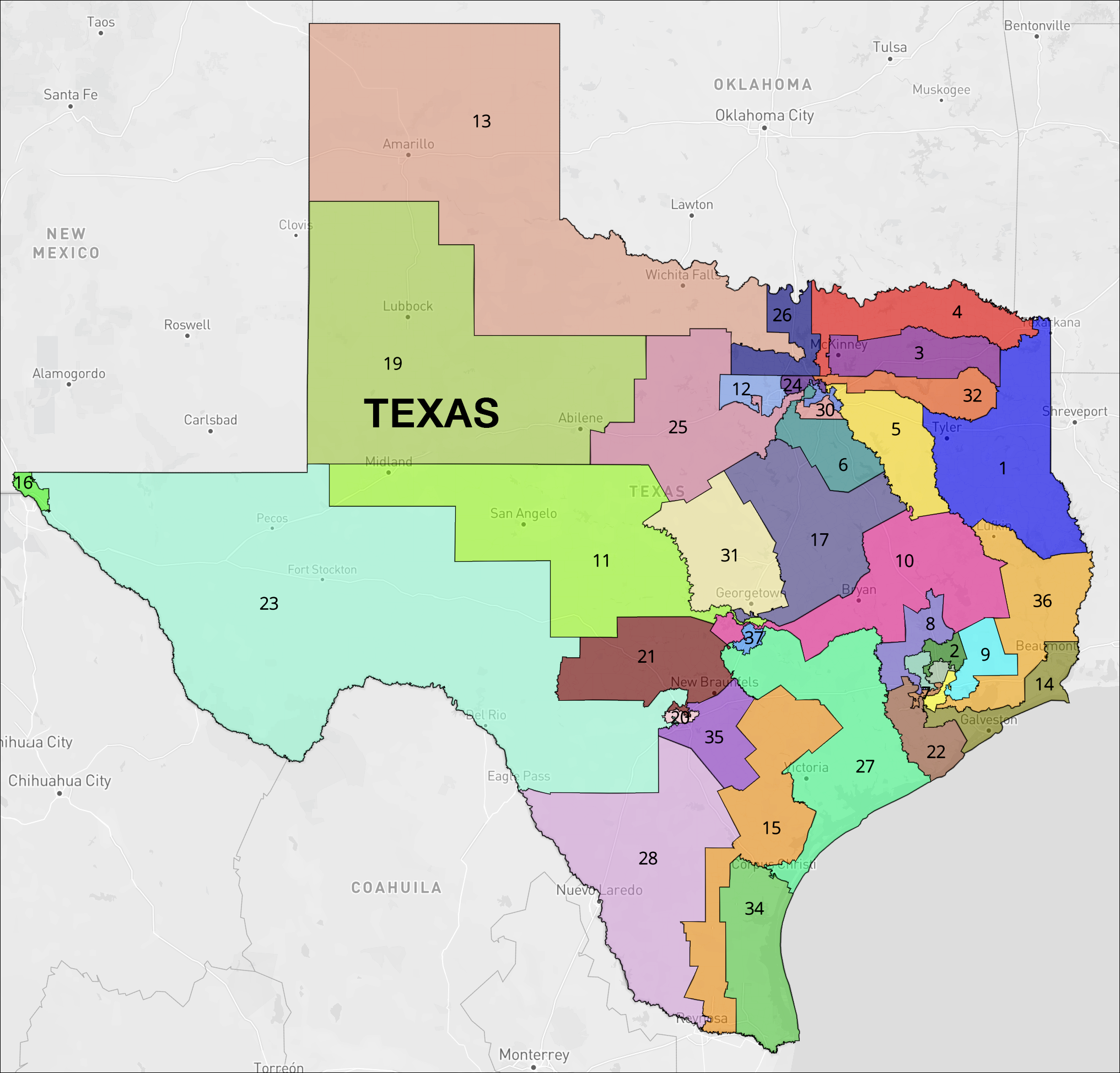
The US House races in Texas feature 11 open seats among the state’s 38 districts. Six of the 11 are Republican-held with three new seats created through the 2025 redistricting map.
The Democrats will feature a District 18 paired battle including both Jan. 31 special election candidates, Harris County Attorney Christian Menefee and ex-Houston City Councilwoman Amanda Edwards, against Rep. Al Green (D-Houston).
The other open Democratic seat lies in Dallas and Tarrant counties since Rep. Crockett is running for Senate. The six open Republican seats and three new districts all feature crowded primaries. Advancing to runoffs in each situation appears as a virtual certainty.
March 10:
Mississippi — Sen. Cindy Hyde-Smith (R) is on the ballot for a second full term and will be favored for re-election. She faces only one minor GOP opponent. The likely Democratic nominee, also expected to win the party nomination outright, is Lowndes County District Attorney Scott Colom. We can expect the Democrats to mount an effort in the general election, but it will be difficult to unseat Sen. Hyde-Smith in this reliably Republican state.
The only serious primary contest occurs in the state’s Delta region. Second District veteran Congressman Bennie Thompson (D-Bolton) has drawn a primary opponent in the person of attorney and former congressional aide Evan Turnage. This contest is expected to be a generational battle as opposed to being ideologically based. Turnage will attempt to create a contrast between himself, as a challenger in his 40s, and an incumbent in his late 70s. Expect Rep. Thompson to again prevail, but this could become a contest that draws significant political attention.
March 17:
Illinois — The major Illinois contest is the open US Senate Democratic primary. Here, Rep. Raja Krishnamoorthi (D-Schaumburg) appears to have the inside track toward winning the plurality election. He is favored to defeat Lt. Gov. Juliana Stratton and Rep. Robin Kelly (D-Matteson/Chicago). The Democratic nominee then becomes a prohibitive favorite to win the general election and succeed retiring Sen. Dick Durbin (D).
Gov. J.B. Pritzker is on the ballot for a third term and is unopposed for the Democratic nomination. Six Republicans, including 2022 party nominee Darren Bailey, are competing. Regardless of who comes through the GOP battle, Gov. Pritzker will be a prohibitive favorite to win the general election.
As in Texas, Illinois features a large number of open US House seats. In the Land of Lincoln, five of the state’s 17 congressional seats are open, all currently Democratic held districts. We will see nomination clinching elections in every Illinois CD on March 17. Each of the five open seats will remain Democratic in the general election.
Among the notable campaigns is a comeback attempt from former Rep. Jesse Jackson, Jr. (D), who has a reasonable chance of winning the crowded 2nd District Democratic primary. The winner will replace Rep. Kelly. Should Jackson return to the House, he will join his brother, Rep. Jonathan Jackson (D-Chicago), in the congressional delegation.
Another former member, Melissa Bean, is attempting to regain the 8th District seat she lost in 2010; she has a good chance of being successful.
The open 4th District campaign is controversial in that retiring Rep. Jesus “Chuy” Garcia (D-Chicago) didn’t announce his retirement decision, thus allowing his congressional chief of staff, Patty Garcia, to declare at the end of the filing period; therefore, she is running unopposed for the Democratic nomination. Garcia, no relation to the Congressman, will likely face major competition in the general election, however.
Two prominent Democrats, including Chicago Alderman Byron Sigcho-Lopez, are attempting to qualify for the ballot as Independent candidates. The Illinois ballot requirements for non-major party candidates are substantial, but the potential candidates have until May 26 to qualify.
NC-1 Rematch;
TX-18 Special Election Overview

North Carolina 2026 Congressional District map (Click on image or here to go to: DRA-North Carolina)
By Jim Ellis — Tuesday, Dec. 23, 2025
NC-1
A surprising turn of events has occurred in North Carolina’s eastern 1st Congressional District, as we move past last week’s North Carolina candidate Friday filing deadline for the March 3 primary.
The 1st District is the focal point of the new North Carolina redistricting map. Republican legislators redrew the congressional plan several weeks ago with the goal of flipping the district from Democratic Rep. Don Davis (D-Snow Hill) to a Republican. Now, we see a major change on the candidate slate.
Rocky Mount Mayor Sandy Roberson (R), who earlier loaned his congressional campaign $2 million, decided earlier last week to end his candidacy. On Thursday, 2024 congressional nominee Laurie Buckhout, who had endorsed Roberson, decided she would make a comeback in his absence and declared her candidacy.
Buckhout had accepted a Department of Defense position from the Trump Administration but will now leave Washington, DC and re-enter the 1st District race. In 2024, Buckhout held Rep. Davis to a razor-thin 49.5 – 48.7 percent re-election margin in District 1’s more Democratic version. In the same election, however, President Trump carried the district with a 51.2 – 48.1 percent margin over Kamala Harris.
At this point, with candidate filing closed as of Friday, the announced Republican candidates in addition to Buckhout are Carteret Count Sheriff Asa Buck, state Sen. Bobby Hanig (R-Powells Point), Lenoir County Commissioner Eric Rouse, and attorney Ashley-Nicole Russell.
Rep. Davis, saddled with what is now an unfavorable district, has filed for re-election. The Dave’s Redistricting App partisan lean for the new NC-1 is 52.4R – 45.9D. The 2024 election’s partisan lean was 50.9D – 47.7R.
The North Carolina primary is scheduled for March 3. In order to avoid a runoff, the first-place finisher must exceed the 30 percent vote threshold. NC-1 is now a prime conversion opportunity for the GOP.
TX-18
The special election to replace the late Texas Rep. Sylvester Turner (D-Houston) has had the longest campaign cycle of the five 2025 US House vacancies. Turner passed away earlier this year on March 5.
Gov. Greg Abbott decided to schedule the special election concurrently with the state’s municipal elections on Nov. 4. Under Texas law, a runoff election, necessary if no candidate receives 50 percent in the first vote, is calendared once it becomes official that no contender reached the majority mark.
In this case, Gov. Abbott slotted the runoff for Jan. 31. Qualifying for that election are Harris County Attorney Christian Menefee and former Houston City Councilwoman Amanda Edwards.
Redistricting has played havoc with this Houston-anchored CD, which is fully contained within Harris County. Immediately after the special election concludes, both Menefee and Edwards, regardless of the outcome, will advance into the regular term primary election for new District 18 that will be settled on March 3. There, however, they will face 9th District veteran Congressman Al Green (D-Houston) who is running for a 12th term in new District 18.
The new map puts both Menefee and Edwards at a major disadvantage against Rep. Green because 64.5 percent of the new district constituency comes from the Congressman’s current 9th CD according to The Down Ballot political blog redistribution analysis. Only 25.8 percent carries over from the current 18th where the special election is being conducted.
Turning to the special, a new Lake Partners Research survey (Dec. 8-14; 437 likely TX-18 Democratic primary voters; live interview & text) conducted for the Jan. 31 runoff finds Menefee posting a 43-30 percent edge.
Looking at the district stats and comparing them with the new map, it appears that the special election winner will likely have only a short tenure in the House as Congressman Green will be favored to prevail for the regular term party nomination on March 3.
Three-Way Race Unfolding in Texas
By Jim Ellis — Thursday, Dec. 18, 2025
Senate
The Texas Senate election has already drawn a great deal of attention during the 2026 early campaign segment and likely will attract more based upon recent polling.When the Lone Star State’s Rep. Wesley Hunt (R-Houston) entered the Republican US Senate primary, most observers believed he would act as a spoiler for the battle between Sen. John Cornyn and Attorney General Ken Paxton. Rep. Hunt’s presence, it was believed, would siphon enough votes away from the two leading candidates to force a secondary runoff election in order to decide the Republican nomination.
According to four different polls, all conducted between the Dec. 1-4 period, Rep. Hunt is now attracting enough support to position himself to secure one of the runoff slots.
The four polls came from four different pollsters: three Republican companies and one Democratic research firm. The Republican pollsters were McLaughlin & Associates, J.L. Partners, and co/efficient, while Public Policy Polling was the lone Democratic firm to test the Republican primary in early December.
Public Policy Polling (Dec. 1-2; 527 likely Texas Republican primary voters; text & live interview) was the initial pollster in the field, and their result was the first of the December data to find Rep. Hunt forging into polling parity with both Sen. Cornyn and AG Paxton. The ballot test showed Paxton leading Cornyn and Hunt, 32-22-22 percent.
Both co/efficient (Dec. 1-3; 1,022 likely Texas Republican primary voters; online) and J.L. Partners (Dec. 1-3; 600 likely Texas Republican primary voters) were in the field simultaneously but arrived at different results.
The Partners find Paxton leading with 29 percent and Cornyn and Hunt tied at 22 percent; co/efficient’s conclusion found Sen. Cornyn topping the group at 28 percent support, with AG Paxton pulling into a virtual tie at 27 percent. Though co/efficient found Rep. Hunt lagging, he was still within single digits of the two leaders at 19 percent preference.
McLauglin & Associates (Dec. 1-4; 800 likely Texas Republican primary voters) then found Paxton leading Hunt and Cornyn in a closely bunched field at 33-28-27 percent.
Averaging these four polls, we find Paxton having the most aggregate support, averaging 29.7 percent per survey. Sen. Cornyn’s average was 26.3 percent, while Rep. Hunt recorded 23.7 percent. Therefore, these numbers — again derived from professional polling firms all within the same time period — find a wide-open three-way race where each of the three have a legitimate chance of qualifying for the runoff … or being left out.
The latest campaign financial disclosure reports (period ending Sept. 30) find that Sen. Cornyn is in the best financial position with more than $6 million cash-on-hand. Paxton has just over $3 million, while Rep. Hunt posts slightly more than $1.5 million in his campaign account.
With the short campaign season to the March 3 primary, we can expect heavy spending as each candidate works to position themselves to clinch one of the two runoff slots. Count on seeing a Republican mad dash to the finish beginning in late February.
We also saw the first post-candidate filing deadline poll on the Democratic side. Texas Southern University surveyed the likely Democratic voters and found Rep. Jasmine Crockett (D-Dallas) leading state Rep. James Talarico (D-Austin) beyond the polling margin of error.
According to the Texas Southern data (Dec. 9-11; 1,600 likely Texas Democratic primary voters; online), Rep. Crockett’s advantage over Talarico is 51-43 percent. Contrary to the situation on the Republican side, with two major candidates the Democratic nomination fight will very likely end on March 3 because either Crockett or Talarico should be positioned well enough to command majority support on the first vote.
Redistricting Becoming Clearer
By Jim Ellis — Tuesday, Dec. 16, 2025
Redistricting
The redistricting wars may be coming to a head. Recent action has occurred in several states providing a better national redistricting picture in preparation for the 2026 election.Below is a synopsis of the latest developments:
California: After a majority of California voters approved the special election redistricting referendum, a racial gerrymandering lawsuit was filed against the state’s new map.
Meanwhile, the US Supreme Court issued a stay on the Texas racial gerrymandering lawsuit, with a rebuke from Justice Samuel Alito to the three-judge panel in El Paso for rendering a decision before the high court ruled on a related Louisiana racial gerrymandering case. Thus, it became clear that all other cases would be held until the high court issues what could be a landmark ruling.
The judicial action likely means the new California map will be in place for the 2026 election. The original map proponents believe the plan will return five more seats for the Democrats, reducing the Republicans to just four of 52 Golden State districts.
Florida: Late last week, Gov. Ron DeSantis (R) said that the state will redistrict the congressional map and do so during the Spring. The Florida primary is not scheduled until Aug. 18, so time remains to complete the redistricting process. It is possible that Republicans could gain two seats from a new map.
Georgia: A new Georgia map has been completed. The legislature made minor changes to the existing plan that will not likely affect the current partisan division (9R-5D).
Indiana: Late last week, the Indiana state Senate defeated a redistricting map that the state House passed. The plan would have converted two Democratic seats to Republican, thus sweeping the nine-member delegation. Unless the Senate reconsiders the action, the current 7R-2D map will remain intact for the 2026 election.
Louisiana: The US Supreme Court is considering the Callais racial gerrymandering case that could become the vehicle for the justices to render a landmark racial gerrymandering decision. A ruling was expected in June, but the justices postponed their opinion and ordered a second round of oral arguments. The subsequent hearing was held Oct. 15, and all await a final determination.
If the court upholds the lower court decision, the current Louisiana map will be invalidated, meaning the Republicans will likely gain one seat. Should this be the Supreme Court’s ultimate decision, then the possibility exists that the Alabama map will also be redrawn because its plan is virtually identical to Louisiana’s.
Maryland: In a situation similar to what is found in Indiana, most of the Maryland Democratic political establishment favors attempting to collapse their one Republican congressional district, but the state Senate leadership refuses to take action. Therefore, unless the Senate President completely reverses himself, a new redistricting map will not be enacted.
Missouri: The Missouri legislature and Governor have enacted a new map that will likely convert the Kansas City anchored 5th CD from Democratic to Republican. Opponents of the map, officially organized under a group name entitled People Not Politicians, have collected double the number of signatures needed to force a special election initiative vote with the goal of repealing the new map. If a ruling is made qualifying the initiative for the ballot, voters will then decide if the new map will stand.
Under Missouri procedure, simply qualifying the initiative will suspend the new map. This means the state would be forced to revert to the 2021 map for the 2026 election. An initiative vote would occur in the regular election cycle. If the voters adopt the new plan, it would take effect in the 2028 election cycle.
North Carolina: The legislature’s new congressional map will almost assuredly stand for the 2026 election. The initial complaint protesting the plan was rejected at the lower court level. The US Supreme Court’s action involving the Texas case suggests that no further judicial movement will occur on the new North Carolina plan before the candidate filing deadline on Dec. 19. Therefore, it is likely that Republicans will gain one seat in the Tar Heel delegation.
Ohio: The bipartisan elected official redistricting commission unanimously agreed upon a new congressional map, one that state law mandated be drawn. Under the Ohio procedure, a unanimous decision from the redistricting panel, which included Gov. Mike DeWine (R), means the map is officially enacted without action from the state legislature. The new plan will likely produce a one seat gain for Republicans in western Ohio, with the outside possibility of a second conversion in Cincinnati.
Texas: As discussed above, the Supreme Court stayed the three-judge panel decision that ruled the new map a racial gerrymander. Candidate filing has concluded, so the new 2025 map will be in place for the 2026 elections. The original map proponents believe the plan will return five more seats for the Republicans.
Utah: A state court ruled that the legislature ignored certain criteria that voters adopted in a previous redistricting initiative. Therefore, the 2021 map was declared invalid, a ruling that the state Supreme Court sustained. The court then adopted a new map that created a Salt Lake City Democratic seat. The new plan will produce a 3R-1D map for the 2026 election, which is a gain of one Democratic seat.
Virginia: The Old Dominion redistricting effort may determine which party wins the national redistricting wars. With the Democrats gaining full control of the state government, the new legislature must pass a referendum for the ballot when they convene in January. The measure will have to fulfill other legal requirements, and a special statewide referendum election is required. Voters would have to approve a new map before the April 2 candidate filing deadline for the June 16 primary election.
Democrats claim they can draw a map that will relegate Republicans to just one seat in the 11-member delegation. Currently, the Virginia congressional districts split 6D-5R. A four-seat swing in this state could tip the balance of power toward the Democrats in their quest for the US House majority.
The Texas Surprises
By Jim Ellis — Thursday, Dec. 11, 2025
Texas Elections
The old saying, “you can’t tell the players without a scorecard,” certainly applies to the 2026 Texas federal office slate. Now that candidate filing is closed, the clouded political situation is becoming a bit clearer.Texas has a unique filing system that makes following which candidate is running where confusing. Instead of filing with a government agency, the candidates file with their political party. Yet, the process is further complicated.
Candidates filing for offices where the jurisdiction covers more than one county turn their qualifying documents in to their state party office. If a district is fully contained within a single county, the candidates file with their county political party. Once the paperwork is received, the political party entities eventually report the qualified candidates’ names and particulars to the Secretary of State. Therefore, the process takes longer to determine who will be on the ballot than it does in most other states.
In the Senate race, we now have a clear picture for the March 3 partisan primaries. For the Republicans, amidst minor candidates the three major participants, Sen. John Cornyn, Attorney General Ken Paxton, and Rep. Wesley Hunt (R-Houston), are vying for the party nomination. This race is expected to be close and moving toward a runoff, which is necessary if no candidate receives majority support in the first vote. At this point, it appears that Sen. Cornyn and AG Paxton will advance to the secondary election.
For the Democrats, we see a battle between Rep. Jasmine Crockett (D-Dallas) and state Rep. James Talarico (D-Austin). Five minor candidates have filed, and it is unclear just how many will qualify for the ballot. Irrespective of these latter candidates’ presence, it is likely that we will see either Rep. Crockett or state Rep. Talarico claim the party nomination on March 3.
In the House delegation, 11 seats are open with the addition of TX-30, the seat that Rep. Crockett is leaving to run statewide. It appeared that Rep. Marc Veasey (D-Ft. Worth) would move into that district, but he surprisingly chose not to file. Instead, Veasey decided to run for Tarrant County Judge (Executive) where he will face a Republican incumbent and other significant candidates.
The Veasey move allows Rep. Julie Johnson (D-Farmers Branch), who sees her 32nd District transform into a Republican domain and stretch into East Texas, to run in District 33, which is fully contained within Dallas County. Her major obstacle to winning a second term in Congress is former Representative and 2024 US Senate Democratic nominee Colin Allred. Though announcing for the Senate in October, Allred instead changed his mind at the last minute and filed to return to the House, this time in District 33. Also in the race is former state Representative and ex-Dallas City Councilman Domingo Garcia. Therefore, the top two candidates falling into a runoff becomes a possibility. The eventual Democratic nominee will easily win the seat in the general election.
Another new development is the return to the political wars of former Congressman Steve Stockman (R). He has filed in new open District 9. Stockman was twice elected to Congress in non-consecutive elections. He was convicted of violating certain financial laws, but President Trump commuted his 10-year prison sentence. The other major candidate within the crowded field is state Rep. Briscoe Cain (R-Deer Park).
With 11 filed candidates in the CD-9 race, advancing to a runoff election is probable. It remains to be seen how many of the filed candidates qualify for the ballot. Under the new redistricting plan, the 9th District should be one of the seats that Republicans gain.
Another surprising move came in Houston’s 18th District. This seat is currently in special election mode, with Harris County Attorney Christian Menefee (D) and former Houston City Councilwoman Amanda Edwards (D) vying to replace the late Congressman Sylvester Turner (D). Immediately after the special election, it was thought the winner would then face Rep. Al Green (D-Houston) in a battle for the new 18th District. The regular primary is scheduled for March 3 after a special election winner is declared on Jan. 31.
Only Menefee, however, filed in new District 18. Therefore, should Edwards win the special election, she will only serve the balance of the current term. Win or lose on Jan. 31, Menefee will advance into the regular Democratic primary against Rep. Green.
The truly surprising facet from the Texas congressional filings is the fact that only two state legislators, Cain and state Rep. John Lujan (R-San Antonio; open new District 35), entered one of the 11 open-seat congressional campaigns. Therefore, the Texas delegation will feature a large number of incoming freshmen entering the House with no legislative experience.
Texas: Crockett Announces for Senate, Allred Moves Campaign to House
By Jim Ellis — Tuesday, Dec. 9, 2025
Senate/House

Rep. Jasmine Crockett (D-Dallas) / Photo by Gage Skidmore, Flickr
Also, as he promised, Rep. Marc Veasey (D-Fort Worth) left his 33rd CD to file in Rep Crockett’s 30th District. The new 33rd is now fully contained in Dallas County, thus robbing Veasey of his Tarrant County base. The new 30th ventures into Tarrant suggesting Rep. Veasey believes his re-election chances are better in CD-30.
Freshman Rep. Julie Johnson (D-Farmers Branch) eschews her 32nd District, which is now a Republican seat that stretches from Dallas County well into East Texas, to run in the 33rd. This creates a competitive Democratic primary between her and Allred.
There is some speculation that Rep. Johnson could have switched to the 24th CD in yesterday’s filing to challenge Rep. Beth Van Duyne (R-Irving), thus avoiding a Democratic primary. It remains to be seen where candidates are running until the political party entities release the qualified candidates’ names.
By running for the Senate, Rep. Crockett has certainly upset the Democratic apple cart. The national party leaders had hoped to find Allred facing a field of minor candidates similar to those opposing him in 2024 when he easily won the statewide party nomination. Allred, then risking a safely Democratic 32nd district that Johnson would later win, lost to Sen. Ted Cruz (R) by just over eight percentage points after polling suggested the contest would be much closer.
The Democratic leadership plans were thwarted this year when state Rep. James Talarico (D-Austin), a media star among Texas political prognosticators and commentators, announced for the Senate and immediately began performing well in research surveys that pitted him opposite Allred.
Once the Senate race pollsters began to include Rep. Crockett, it became clear that it was she, and not Allred as the party leaders had hoped, who was consistently leading the candidate field.
Now, the Democratic primary will feature a competitive battle between Rep. Crockett and state Rep. Talarico. Since the field will likely evolve into a two-way contest, it is probable that a runoff will not be necessary, meaning the Democrats will probably see a nominee emerge in the March 3 party primary.
On the Republican side, Sen. John Cornyn, running for a fifth six-year term, faces Attorney General Ken Paxton and Rep. Wesley Hunt (R-Houston). Early polling suggests this race will proceed to a May 26 runoff election from the March 3 primary.
At this point, it appears Sen. Cornyn and AG Paxton will advance, but Rep. Hunt is hoping to come from the outside as a positive alternative to what promises to be a negative battle between his two principal opponents.
There are 10 open US House districts in the Texas delegation, but the full candidate complement for each of those races won’t be known until later in the week.
Uniquely, Texas candidates file for office with their political party and not a government agency. In a multi-county race, candidates file with their state party. If the office for which a candidate is running is fully contained within a county, the competing individuals file with their local county political party.
In terms of incumbent primary challenges, most US House members have drawn minor primary opposition. The first of three serious March 3 intra-party skirmishes appear in the Houston area’s District 2 where four-term Rep. Dan Crenshaw (R-Humble), state Rep. Steve Toth (R-Spring), and several others will compete. The question here is whether Crenshaw can avoid being forced into a runoff.
The second primary incumbent challenge to watch is again TX-23. In 2024, Rep. Tony Gonzales (R-San Antonio) survived a Republican runoff defeat by just 734 votes opposite businessman Brandon Herrera. The 2026 contest will feature a re-match between the two, and another close election is expected.
Additionally, Rep. Sylvia Garcia (D-Houston) has drawn a significant Democratic challenger in a newly configured District 29. Former state Representative and ex-Houston City Councilman Jarvis Johnson is challenging Rep. Garcia for the party nomination, and this race has the potential of developing into a serious campaign within a significantly changed Harris County congressional district.
Some of the more interesting general election projected pairings come in South Texas. In District 15, two-term Rep. Monica De La Cruz (R-McAllen) will likely face regional entertainer Bobby Pulido (D) in a district that changed very little under the new map. Rep. De La Cruz was re-elected in 2024 with 57 percent of the vote.
Rep. Henry Cuellar (D-Laredo), who President Trump just pardoned from a federal indictment, will likely face Webb County Judge (Executive) Tano Tijerina (R) in a district that is actually 10.7 data points more Democratic, according to the Dave’s Redistricting App organization calculations. The partisan lean numbers best explain why Rep. Cuellar again filed as a Democrat after the Trump pardon.
In new District 34, a coastal seat anchored in Brownsville, we are likely to see Round 3 between Rep. Vicente Gonzalez (D-McAllen) and former Rep. Mayra Flores (R). The 34th is now 18.4 data points more Republican, and since the 2024 race recorded a tight 51 to 49 percent finish, Flores’ chances, assuming she wins the party nomination, are therefore significantly enhanced.
Much more to come on the unfolding Texas political situation later in the week when the qualifying candidates for ballot placement are declared official.
Rep. Issa to Remain in California
By Jim Ellis — Monday, Dec. 8, 2025
US House
There had been some speculation that veteran Rep. Darrell Issa (R-San Diego) was going to travel to Texas to seek re-election in the new TX-32 district since the California redistricting plan has turned his safely Republican CD into one that is highly competitive.At the end of last week, Rep. Issa announced that he will seek re-election and will do so in CA-48 despite the district now having a Democratic tilt.
The US Supreme Court approved the new Texas map late last week and declared that the 2025 plan will be in place for the 2026 election. The decision also affects the new California map since the pending lawsuits in both cases involved racial gerrymandering claims, meaning the voter-approved new Golden State map will almost assuredly be in place for the 2026 elections.
The justices timed their ruling to allow candidate filing in Texas to conclude today. Several key political determinations dominoes will fall, the most significant of which revolves around Rep. Jasmine Crockett’s (D-Dallas) decision to file for the Senate or House.
In a related choice, Rep. Marc Veasey (D-Ft. Worth), who sees his 33rd District now located wholly within Dallas County thus eliminating his Tarrant County political base, says he will file in Crockett’s District 30 if she announces for the Senate. If Crockett decides to remain in the House, Veasey will either file for District 33 or enter the race for Tarrant County Judge (labeled County Executive in other places).
Freshman Rep. Julie Johnson’s (D-Farmers Branch) 32nd District is transformed into a Republican seat that stretches into East Texas. Her plan is to reportedly file in District 33.
While California’s candidate filing will remain open until March 6 (March 11 if the incumbent in a particular race does not file), individuals are making decisions about where to seek election; hence, Rep. Issa’s plan to run in new District 48.
Under the 2021 California Citizens Redistricting Commission map that the legislature and voters replaced this year, Rep. Issa’s San Diego County-anchored 48th District held a partisan lean (according to the Dave’s Redistricting App organization) of 58.3R – 39.8D. Under the new plan, that ratio moves to 50.6D – 48.7R, a net swing of 20.5 data points in the Democrats’ favor.
Though this makes re-election much more difficult for Rep. Issa, he still has a fighting chance of defeating a Democrat in the general election. Several California districts with more lopsided Democratic partisan leans have elected Republican Representatives. Therefore, this seat likely moves from a Safe Republican rating to Toss-Up.
In comments posted in an X tweet, Rep. Issa also made some suggestions about other members in his delegation, most specifically the proposed pairing between Reps. Ken Calvert (R-Corona) and Young Kim (R-La Habra). At this point, both have announced for new District 40 (DRA partisan lean: 57.0R – 42.3D), but Rep. Issa was suggesting that Rep. Kim instead run in new District 45 where she would challenge freshman Rep. Derek Tran (D-Orange County).
From a Republican Party standpoint, such a move would make sense. Ironically, the state’s two most vulnerable Democratic members, the pair who won the closest US House elections in 2024 — Reps. Adam Gray (D-Merced; winning by 187 votes) and Tran (winning by 653 votes) — actually see their Democratic partisan ratios surprisingly reduced under the new map.
In District 13, Rep. Gray views a partisan swing that moves a net 4.3 data points in the Republicans’ favor, making the partisan lean, according to the Dave’s Redistricting App statisticians, of 52.4D – 46.9R. In 2022, Republican John Duarte won the 13th District that featured a partisan lean of 54.0D – 44.2R.
In southern California’s 45th CD, former Rep. Michelle Steel (R), who earlier announced that she will not return to run again in 2026, carried the seat in 2022 with a DRA partisan lean of 52.2D – 45.9R. The new 45th posts a 51.7D – 47.5R partisan lean, again suggesting that a Republican general election finalist will be competitive.
With the Supreme Court making the political situations clearer in at least the two most populous states, final 2026 electoral decisions in California and Texas can now be made with all candidates confident of which map will be in place. We will carry further analysis of the Texas situation after candidate filing closes later today.