Tag Archives: President Trump

Warren Surges in California

By Jim Ellis

Sen. Elizabeth Warren (D-MA)

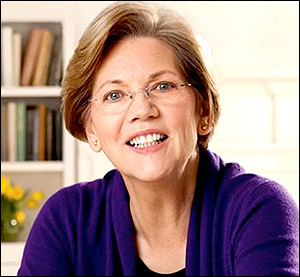
Sept. 25, 2019 — The Capitol Weekly firm in California has been tracking the Golden State electorate monthly since April, and their September data shows a significant change from August. Now, it is Sen. Elizabeth Warren (D-MA) eclipsing former Vice President Joe Biden for the lead and coming all the way from last place in the original track to post an unweighted 33.1 percent support factor in September.

Biden, on the other hand, began with an unweighted 20.4 percent preference from a universe of over 5,000 individuals from which selected respondents were polled in April. This was the best score among the candidates at the time, but the former vice president and veteran senator began to seesaw through the succeeding months after rising to a high of 29.6 percent in May. Gradually he began dropping to his September level of 18.0 percent, now well behind Sen. Warren and less than one point ahead of Sen. Bernie Sanders (I-VT).

The September weighted numbers from the 599 most likely Democratic primary voters find Sen. Warren leading with 29 percent, Sen. Sanders moving into second with 21 percent, Biden with 18 percent, and home-state Sen. Kamala Harris dropping to just 11 percent from her high of 20.6 percent in July.

The California vote is critically important to winning the nomination because the state possesses 416 first-ballot delegates at the Democratic National Convention. Texas has the second-largest delegation with 228 first-ballot delegates, thus providing a measure of California’s prominence within the Democratic nomination process. Under the weighted percentages, Sens. Warren, Sanders, and Biden would be the only candidates to qualify for delegate apportionment because they would exceed the minimum 15 percent threshold.

The underlying questions asked of September’s weighted respondents reveal an even more stark difference between Warren and Biden. It is here where we see a fundamental shifting of strength between the two, with her on the ascent and him falling back.

Continue reading

US House Open Seat Status

By Jim Ellis

Sept. 17, 2019 — With US House retirements coming in bunches, it can be confusing to remember how many open seats currently exist for the 2020 cycle and where they stand in terms of political projections. Now that the two North Carolina special elections have been decided, it is a good time to review the future open seat contests.

As things currently stand, 20 seats are known to be open, including the WI-7 seat that Rep. Sean Duffy (R-Wausau) will resign from next week. Of the 20, only four seats are Democratic, meaning the remaining 16 belong to the Republicans.

Most of the districts are safe – likely 14 of the 20 – and are projected to remain with the succeeding incumbent party nominee. The remaining six either lean to one party or the other (4) or are already cast in the toss-up category (2).

At this point, 13 of the 14 least competitive seats are in the safe category with one in the Likely segment:

Safe D:

  • CA-53: Rep. Susan Davis (D-San Diego) – retiring
  • NM-3: Rep. Ben Ray Lujan (D-Nambe) – running for Senate
  • NY-15: Rep. Jose Serrano (D-Bronx) – retiring

Safe R:

  • AL-1: Rep. Bradley Byrne (R-Mobile) – running for Senate
  • AL-2: Rep. Martha Roby (R-Montgomery) – retiring
  • IL-15: Rep. John Shimkus (R-Collinsville) – retiring
  • KS-1: Rep. Roger Marshall (R-Great Bend) – running for Senate
  • MI-10: Rep. Paul Mitchell (R-Dryden/Macomb County) – retiring
  • TX-11: Rep. Mike Conaway (R-Midland) – retiring
  • TX-17: Rep. Bill Flores (R-Bryan/Waco) – retiring
  • UT-1: Rep. Rob Bishop (R-Brigham City) – retiring
  • WI-5: Rep. Jim Sensenbrenner (R-Menominee Falls) – retiring
  • WI-7: Rep. Sean Duffy (R-Wausau) – resigning for family reasons

Likely R:

  • IN-5: Rep. Susan Brooks (R-Carmel) – retiring

The most competitive seats are as follows:

Lean D:

  • IA-2: Rep. David Loebsack (D-Iowa City) – retiring

Lean R:

  • MT-AL: Rep. Greg Gianforte (R-Bozeman) – running for Governor
  • TX-22: Rep. Pete Olson (R-Sugar Land) – retiring
  • TX-24: Rep. Kenny Marchant (R-Coppell) – retiring

Toss-Up:

  • GA-7: Rep. Rob Woodall (R-Lawrenceville) – retiring
  • TX-23: Rep. Will Hurd (R-San Antonio) – retiring

Analysis

  • GA-7: This district produced the closest raw vote margin in the country last year, as Rep. Rob Woodall was re-elected with just a 417-vote spread over former state Senate budget director Carolyn Bourdeaux (D), who returns to run again in 2020.
    Bourdeaux, however, will not have the nomination field to herself. Six other Democrats have filed, including state Sen. Zahra Karinshak (D-Duluth), state Rep. Brenda Lopez (D-Norcross), and former Fulton County commission chairman John Eaves. Nine Republicans are in the race including state Sen. Renee Unterman (R-Buford) and former Atlanta Falcons football player Joe Profit.
    This race will have to gel after the primary in order to obtain a better read on how the political contest will ultimately end. It appears both parties are headed to run-off elections to settle upon a nominee. The Georgia primary is May 19, with a run-off, if necessary, scheduled for July 21.
  • TX-23: No matter who the major party candidates turn out to be, the 2020 TX-23 race will end in a razor-thin margin. The highest percentage attained by a winning candidate throughout the current decade is 50.3 percent in 2012, and no one has won with a majority since. With each major party nominee virtually assured of a percentage in the high 40s, this will be a competitive race regardless of who eventually advances into the general election.
    Grace Ortiz Jones, the 2018 Democratic nominee who came within 926 votes of unseating Rep. Will Hurd, returns to run again. She has a strong chance of becoming a consensus candidate. Republicans will likely have a contested primary and possibly a run-off. This race, in a district that stretches from San Antonio to El Paso, will go down to the wire before it is ultimately decided.
  • MT-AL: Republicans should have an advantage here in a presidential year, as Montana figures to be one of President Trump’s strongest states in 2020. Two Republicans elected statewide, Secretary of State Corey Stapleton and state auditor and 2018 US Senate nominee, Matt Rosendale, are competing for the open seat in a field of five candidates to date.
    Democrats look to have strong candidates, as well. Former state Rep. Kathleen Williams, who held Rep. Greg Gianforte to a 51-46 percent win last November, returns for another try. Her Democratic opponents are state Rep. Tom Winter (D-Missoula) and rancher Matt Rains.
  • TX-22: Rep. Pete Olson (R-Sugar Land) is retiring after four terms from a district that is becoming much more competitive. The minority complexion is now high, with the non-Hispanic white percentage dropping to 45.9 percent among citizens of voting age. Six Republicans have announced with possibly wealthy donor and conservative activist Kathaleen Wall, who ran in the 2nd District open seat in 2018, could be the person to beat.
    Democrats are likely to back 2018 nominee Sri Preston Kulkarni, who held Rep. Olson to a 51-46 percent win. Expect this race to be a major battleground House campaign, and though the district is clearly changing, the GOP still maintains at least a slight advantage.
  • TX-24: Veteran Rep. Kenny Marchant (R-Coppell), who had a close call last November with a 51-47 percent win against an opponent who didn’t even spend $100,000, decided to retire after serving what will be eight terms. Republicans appear to be coalescing behind former Irving mayor, Beth Van Duyne, who will be a credible and energetic candidate.
    Democrats already have a crowded field that already features six candidates. The early favorite for the party nomination is retired Air Force colonel and 2018 state agriculture commission nominee Kim Olson, who lost her statewide campaign, 51-46 percent, which is one of the stronger Democratic showings in the recent past. The 24th will host another Texas competitive contest in 2020, but the seat still leans the Republicans’ way.
  • IA-2: The only competitive Democratic open seat that could come into play is Iowa’s southeastern district. With seven-term Rep. David Loebsack (D-Iowa City) retiring, Democrats are coalescing around former state senator and lieutenant governor nominee Rita Hart.
    Republicans appear to have their own consensus candidate, former Illinois Rep. Bobby Schilling, who served one term after winning the 2010 election in the Rock Island/Moline district across the Mississippi River from the Iowa border. Several years later, Schilling moved to Iowa and now is looking to revive his short-lived political career.
    Democrats have a clear advantage here, but in this open seat where the candidates already appear set and President Trump outpolled Hillary Clinton, a meaningful campaign could develop.

North Carolina Polling Review:
Under-Estimating the GOP Vote

By Jim Ellis

Sept. 13, 2019 — The recent North Carolina special elections’ polling appears slightly flawed, containing a pattern that came to the forefront in the previous presidential race. The weakness: under-estimating the Republican vote. Doing so became a major discussion point within the research community after they cumulatively missed the 2016 Trump-Clinton race but did not regularly appear in most of the subsequent midterm campaigns.

In the two North Carolina special elections that were decided on Tuesday night, the winning Republican candidates exceeded the published polling projections. The same pattern also occurred in Pennsylvania back in late May when Rep. Fred Keller (R-Middleburg), while predicted to win comfortably, garnered a considerably larger vote percentage than projected when he scored a 68 percent special election victory.

Four different polls were publicly released during the week preceding Tuesday’s North Carolina elections. Only RRH Elections sampled the 3rd District and tested the eventual winner, state Rep. Greg Murphy (R-Greenville), against former Greenville mayor, Allen Thomas. The polling result projected Murphy to a 51-40 percent lead. He won 62-37 percent, meaning RRH under-estimated Murphy’s strength and over-estimated Thomas’.

The survey was conducted during the Aug. 26-28 period, two full weeks before the election, which means the situation on the ground could have certainly changed during the intervening time between the poll and the vote. Advertising was heavy during the campaign’s final two weeks, and the survey could not account for which campaign would be more adept at turning out its vote.

Three polls, from three different survey research firms, were released for the more competitive 9th CD at irregular times, and here RRH was the closest to the actual result. Their study was also conducted over the Aug 26-28 period, and it correctly forecast a close Dan Bishop win. At the time, RRH saw a 46-45 percent spread in favor of Bishop over Democrat Dan McCready, and the actual result was 50.7 – 48.7 percent.

Harper Polling, also testing during the same Aug. 26-28 span, missed. They projected McCready to be holding a five point, 51-46 percent advantage. At the time, we mentioned that their sample contained 56 percent female respondents, which could have been a major reason for the Democratic skew.

The final poll from a lesser known firm, co/efficient, also came very close to the actual result, projecting a 44 percent tie between the two candidates over a much later Sept. 5-6 period, but this result may have come through happenstance.

Continue reading

Republicans Sweep the North Carolina Special Elections

By Jim Ellis

Sept. 12, 2019 — Republican special election candidates Greg Murphy and Dan Bishop won their respective congressional campaigns Tuesday night in different parts of North Carolina.

North Carolina’s 3rd Congressional District

Murphy, a state representative from Greenville, was an easy winner in the 3rd District, as expected. He recorded a 62-37 percent win over former Greenville Mayor Allen Thomas (D) in taking 16 of the district’s 17 counties and falling in Hyde County by just 43 votes. Rep-Elect Murphy now replaces the late congressman, Walter Jones (R-Farmville), who passed away in February.

For the special election, 113,607 individuals cast their ballots, some 40 percent fewer than the number voting in the 2018 regular election even though Rep. Jones was unopposed. In the presidential election year of 2016, congressional race turnout exceeded 323,000 voters.

North Carolina’s 9th Congressional District

The hotly contested election occurred to the southwest in the 9th District, the seat left vacant all year because the 2018 result was never certified because of voter fraud allegations in Bladen County. Today, the district finally has a new representative. Bishop, a state senator from Charlotte, slipped past Democratic businessman Dan McCready despite being outspent $5 million to $2 million — though the outside group spending, particularly from the National Republican Congressional Committee, added at least another $2 million to the Bishop support effort.

Continue reading

NC Special Elections Decided Today

By Jim Ellis

North Carolina’s 9th Congressional District

Sept. 10, 2019 — Voters in eastern and south-central North Carolina will go to the polls today to fill the state’s two vacant congressional seats. The 3rd Congressional District is open because Rep. Walter Jones (R-Farmville) passed away in February. The 9th District will finally get a representative after going vacant for this entire Congress. As we remember, the 2018 electoral result was not certified due to voter fraud allegations; hence, the calling of this new election.

North Carolina’s 3rd Congressional District

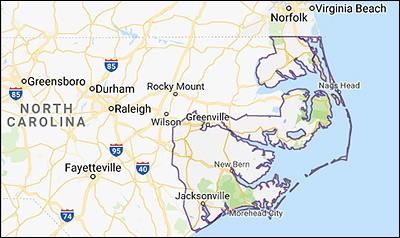
The 3rd District, which includes the Outer Banks area that Hurricane Dorian recently hit, hosts the cities of Jacksonville, New Bern, and part of Greenville within the 17-county region. It should remain in Republican hands. The seat has performed strongly for the GOP, including a 60-37 percent win for President Trump in 2016. Jones represented the district since his original election in 1994, when he unseated then-Rep. Martin Lancaster (D) in the Republican landslide of that year. Rep. Jones averaged 74.5 percent of the vote in the four elections of the present decade.

The Republican special election nominee, state Rep. Greg Murphy (R-Greenville), is favored to defeat former Greenville mayor Allen Thomas, who won the Democratic nomination outright at the end of April. The latest available polling yielded a low double-digit lead for Murphy.

The 9th District begins in Charlotte, encompassing approximately 20 percent of Mecklenburg County, and continues to annex Union – the most Republican county and largest population entity – Robeson, Richmond, Scotland, and Anson counties along with parts of Cumberland and Bladen. The final county, Bladen, was the site of the voter fraud allegations in the last regular election.

Continue reading

Rep. Shimkus to Retire

Illinois Rep. John Shimkus (R-Collinsville)

By Jim Ellis

Sept. 4, 2019 — Twelve-term Illinois Rep. John Shimkus (R-Collinsville), a key member of the House Energy & Commerce Committee, announced over the Labor Day weekend that he will not seek re-election next year, becoming the latest GOP House member to join the increasing line of incumbents voluntarily not returning for the next Congress.

Rep. Shimkus’ retirement makes his IL-15 the 18th open House seat for the next election, including the two September 10th North Carolina special elections. Of this group, Republicans currently hold 14 of the 18 seats, with the vacant NC-9 — one of those currently in special election and the district that featured a disputed 2018 electoral result — previously in the GOP column as well.

Shimkus, in his written statement, said, “[A]s Illinois candidates begin to circulate petitions next week, now is the time for me to announce that I will not be seeking re-election.

“It has been the honor of my lifetime to be asked by the people of Illinois to represent them in our nation’s capital. Each day I have tried to do this as best as I possibly could, and my success lies squarely at the feet of my incredible staff in Illinois and Washington, DC.”

IL-15 is a safe Republican district. President Trump carried the seat, 71-24 percent, in 2016. Four years earlier, Mitt Romney’s margin was 64-34 percent, and John McCain won here 55-43 percent in 2008. Therefore, over the course of time, the 15th has become more Republican. In his four elections in this district configuration, Shimkus has averaged 78.6 percent of the general election vote.

The district is predominantly located in the eastern sector of the state, hugging the Indiana border and traveling due south all the way to Kentucky. It then stretches west to almost the other side of the state in order to annex the Collinsville area, an outer St. Louis metro area community where Shimkus resides.

Continue reading

Ex-Rep. Issa Forms Exploratory Committee For Crowded CA-50

Ex-California US Rep. Darrell Issa

By Jim Ellis

Sept. 3, 2019 — Ex-California US Rep. Darrell Issa, who represented the state’s 49th CD for 18 years, just filed a new congressional exploratory committee with the Federal Election Commission. But he is not looking to run in his former seat. Rather, the exploratory committee is organized to survey his chances of winning the adjacent 50th CD, the district that indicted Rep. Duncan D. Hunter (R-Alpine) currently represents.

This congressional district’s political soap opera continues to unfold. Hunter is facing a trial after the first of next year to defend himself against campaign finance charges, certain ones for which his estranged wife and former campaign manager have already negotiated a plea agreement with the government. And, with the early March 3 state primary scheduled concurrently with the presidential Super Tuesday vote, candidates are already announcing their intentions.

Anticipating that the court case will go against the congressman, five Republicans have announced their candidacies. And, with the trial now postponed until after the first of the year (it was originally scheduled for mid-September) there is a strong chance that Rep. Hunter will file for re-election before the state’s Dec. 6 candidate filing deadline. Should Issa decide to enter the race, then at least seven Republicans will be competing.

So many are coming forward because the 50th is one of the safest Republican seats in California, a state that now has a congressional delegation of 46 Democrats and just seven Republicans. However, quite possibly, and largely due to the state’s jungle primary law, the seat could fall into Democratic hands under a very realistic scenario.

Under California law, similar to the system in Louisiana and Washington, all candidates appear on the primary ballot regardless of political party affiliation. In the California process, the top two finishers in the first election, which is in reality a qualifying election as opposed to a partisan primary, advance to the general election.

Because there will be seven Republicans or more on the ballot and, at this point, just one Democrat — 2018 nominee Ammar Campa-Najjar, who posted 48.3 percent of the vote against Hunter — Campa-Najjar’s chances of advancing to the general election are quite favorable.

Continue reading

Lt. Gov. Reeves Advances in Mississippi

By Jim Ellis

Mississippi Lt. Gov. Tate Reeves (R)

Aug. 29, 2019 — As expected, Mississippi Lt. Gov. Tate Reeves won Tuesday’s Republican gubernatorial run-off election, defeating former state Supreme Court judge Bill Waller Jr. by a 54-46 percent count. During the Aug. 6 primary, Reeves captured 49 percent of the vote, just one point shy of being nominated outright in the first election.

Lt. Gov. Reeves had the Republican establishment behind him, including public support from term-limited Gov. Phil Bryant and former governor and ex-Republican National Committee chairman Haley Barbour. Additionally, both he and Waller attempted to be viewed as the most conservative candidate in the race and ran as strong supporters of President Trump.

Therefore, a 54-46 percent win appears to be a slight under-performance, particularly when the drop-off turnout rate when compared to the primary election was only 15.3 percent. Tuesday’s turnout reached 324,353 voters, meaning that 58,727 fewer people cast ballots when compared to the early August Republican primary, which is a relatively small number.

Reeves now advances into the Nov. 5 general election where he will face the Democratic nominee, Attorney General Jim Hood. Hood has been commonly referred to as the “most successful Democrat in the South” because he has won four consecutive statewide elections in Mississippi. He was easily nominated in this year’s original gubernatorial primary, winning 69 percent of the vote against seven opponents, but the total vote in the Democratic primary was less – 21,963 votes less — than even last night’s Republican run-off.

The lieutenant governor carried 65 of Mississippi’s 82 counties against Judge Waller, though five of the locality results denoted a winner garnering less than 51 percent of the vote. In one county, Quitman, Reeves’ victory margin was just one vote.

In what could be a rather ominous sign for the general election, Reeves did poorly in and around the state’s capital and largest city, Jackson, its county (Hinds) and the two suburban entities bordering it, Madison and Rankin counties. He lost all three of these counties, though the aggregate vote totals in Hinds were low.

Continue reading

Wisconsin Rep. Sean Duffy to Resign

Wisconsin’s US 7th Congressional District

By Jim Ellis

Aug. 28, 2019 — Five-term Wisconsin Rep. Sean Duffy (R-Wausau) announced Monday that he is resigning from Congress effective Sept. 23. Rep. Duffy indicated his reason for leaving mid-term is that his wife and his expectant child, their ninth, has already been diagnosed with challenging health issues.

Therefore, his 7th Congressional District will go to special election once Gov. Tony Evers (D) sets the schedule. The congressional vote will likely coincide with the state’s spring election, where statewide and district judges are on the ballot and many localities use the dates to hold their own elections. The Wisconsin calendar pinpoints the Spring Primary for Feb. 18, 2020, while the Spring General election will run concurrently with the Wisconsin presidential primary on April 7.

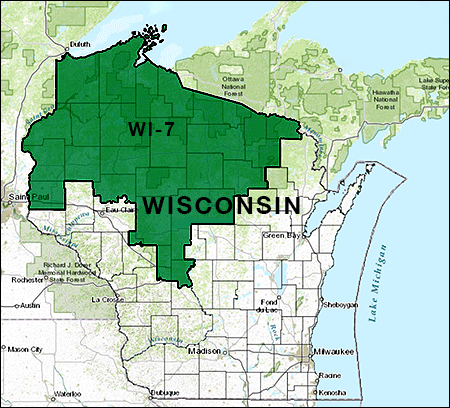
The Badger State’s 7th CD occupies a full quarter of the state’s land area, beginning on the shores of Lake Superior and stretching to Buckhorn State Park close to Wisconsin’s center. The district covers a large land mass and is populated with small towns spread throughout the 26 counties that it covers or touches. WI-7 contains 21 whole counties and parts of five others. Its largest city, Wausau, which is Congressman Duffy’s hometown, has just under 40,000 people.

The district’s electorate now votes solidly Republican but, before Rep. Duffy was elected in 2010, this seat remained in Democratic hands for 41 consecutive years in the person of former Rep. David Obey (D) who first won in a 1969 special election and retired in the 2010 cycle. The district’s pre-Obey history, however, was solidly Republican. A member of the GOP had represented the seat for 82 of its first 96 years of existence.

Since the Duffy resignation was unexpected, no potential successors are being discussed, but that situation will quickly change.

Continue reading

PA Rep. Lamb Draws Challenger

By Jim Ellis

Scott Timko (R) | Rep. Connor Lamb (D)

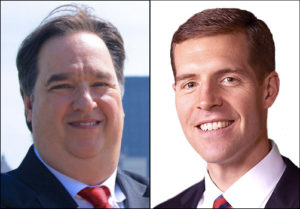
Aug. 2,7 2019 — Pennsylvania Rep. Conor Lamb (D-Pittsburgh), who came to recent national political prominence when he upset a Republican special election nominee and then defeated an incumbent GOP House member in a newly created Allegheny County-anchored district in the regular cycle, has drawn a 2020 opponent for re-election.

Rep. Lamb, who campaigns as a moderate Democrat, defeated state Rep. Rick Saccone (R) by 755 votes in an early 2018 special election and knocked out then-Rep. Keith Rothfus (R) 56-44 percent last November, could face a novice Republican candidate in his 17th CD where Donald Trump slipped past Hillary Clinton, 49-47 percent.

Former Air Force pilot and local small business owner Scott Timko (R) declared his candidacy on Friday in a campaign that could become interesting. If Timko raises enough money to become competitive, the district voters appear to be much closer to he and Trump ideologically than they are to the national Democratic agenda.

Rep. Lamb keeps his distance from the national Democrats, but Timko is already attempting to push him leftward, pointing out that Lamb supports the national leadership and won’t even accept PAC contributions from private sector corporate employees who voluntarily support their company’s political action committee.

The 17th District was created in the Pennsylvania state Supreme Court’s early 2018 mandated congressional district re-draw. Just about three-quarters of the district’s population resides in Allegheny County, and covers the outer Pittsburgh suburbs from northeast of the city all the way around to the southwest. CD-17 also includes all of Beaver County that stretches to the Ohio border, and a sliver of Butler County.

As mentioned above, President Trump won a close victory within the 17th District confines, hence Lamb’s 2018 victory margin over Rep. Rothfus was more substantial than expected. Under the court’s redistricting plan, the new 17th contained 56 percent of the territory that Rothfus represented for three terms in his original 12th District, while Lamb had only 20 percent carry over from the 18th District to which he was elected shortly before the new map was created.

Continue reading