Tag Archives: New York

Outstanding Races Update

By Jim Ellis

Nov. 9, 2020 — A few races were called over the weekend, while political overtime drags on for others.

Alaska senate race still undecided between physician and commercial fisherman, Democrat Al Gross (left), and first-term Republican incumbent Dan Sullivan.

The uncalled Senate races will likely remain in their current position throughout this week. Currently, Alaska Sen. Dan Sullivan (R) holds a big lead over physician Al Gross (I/D), 62.3 – 32.1 percent, with a vote margin of 57,616. Despite the large spread, the race is not called because only 58 percent of the vote is reporting. The Alaska cut-off date for receiving ballots postmarked Nov. 3 is this Friday, Nov. 13. Therefore, it is presumed that we will not have a final declaration until the weekend at the earliest.

The North Carolina situation remains frozen. Sen. Thom Tillis (R) holds a 95,739-vote lead with all counted but those ballots that could come in through Nov. 12. It appears the universe of requested ballots not yet returned could only be a maximum of approximately 116,500. The ballots must now be in the mail stream as they would have to have been postmarked on Nov. 3. Mathematics suggest a Tillis victory will occur, but such a declaration is not yet official.

As we know, both Georgia Senate races will advance to their respective runoff elections on Jan. 5. The political battles feature Republican Sen. David Perdue (49.7 of requested ballots not yet returned) and Democrat Jon Ossoff (47.9 percent). The special election features Democratic Rev. Raphael Warnock (32.9 percent) and appointed Republican Sen. Kelly Loeffler (25.9 percent).

The House races are not fully complete, as 24 contests remain in abeyance. At this point, Republicans have gained a net five seats among the 411 campaigns that have been decided. Of the remaining 24, the GOP candidates lead in 18, but many will likely flip back toward the Democrat as counting concludes. In the end, it is likely that the Republicans will gain between seven and nine seats, meaning they will hold 208 to 210 House seats as compared with 227 to 225 for the Democrats.

In the past few days, the following races have been declared and the winners are listed below:

AZ-6: Rep. David Schweikert (R)
CA-50: Darrell Issa (R) – Open Seat – Republican hold
GA-7: Carolyn Bourdeaux (D) – Open Seat – Democratic gain
IN-5: Victoria Spartz (R) – Open Seat – Republican hold
MI-3: Peter Meijer (R) – Open Seat – Republican gain
MI-8: Rep. Elissa Slotkin (D)
MI-11: Rep. Haley Stevens (D)
MN-1: Rep. Jim Hagedorn (R)
MN-2: Rep. Angie Craig (D)
NV-3: Rep. Susie Lee (D)
NV-4: Rep. Steven Horsford (D)
NJ-2: Rep. Jeff Van Drew (R)
NY-4: Rep. Kathleen Rice (D)
PA-7: Rep. Susan Wild (D)
PA-8: Rep. Matt Cartwright (D)
PA-10: Rep. Scott Perry (R)
PA-17: Rep. Conor Lamb (D)
WA-3: Rep. Jaime Herrera Beutler (R)

The remaining races are still undecided:
Continue reading

Can Repubs Win 49 of 52 Competitive House Races to Win Majority?

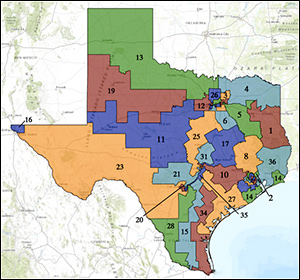
Texas could be the key state in determining whether the Democrats will gain seats. If Republicans are to make a run at the majority, they will have to maintain their historically strong showing in the Lone Star State, and also win just about everywhere else.

By Jim Ellis

Oct. 27, 2020 — Virtually all election analysts are predicting that the Democrats will maintain their majority in next week’s national election with the principal unanswered question prompting speculation about whether they will add members to their party conference.

Irrespective of predictions, it appears that 113 congressional races still feature legitimate competition, meaning the two major party nominees in each situation have adequate resources with which to communicate their respective messages. Though the incumbent, or incumbent party in the open seats, is the favorite in most of the races, enough districts are in play for Republicans to end the election cycle by making a dent into the relatively small 17-seat Democratic majority.

One can divide the competitive races into three tiers, with those in the first segment being the most likely to see an incumbent or incumbent party fall to a challenger candidate, and are the subject of this Update. Unfortunately for Republicans, the Democrats are on offense in 56 percent of the contested seats. Obviously, this gives the Dems more opportunities for gains, thus increasing their chances of adding to their majority margin.

Within our 52 rated first-tier competitive category, Democrats are on offense in 30 of them, thus making retaining the chamber majority probable and allowing multiple opportunities to increase their aggregate total.

Texas could be the key state in determining whether the Democrats will gain seats. We see 11 of the Lone Star seats falling into the competitive category, five of them in the top tier. Of the 11, only one is a Democratic seat, that held by freshman Rep. Lizzie Fletcher (D-Houston), meaning the Texas campaigns will likely prove to be ground zero in previewing the overall House result.

Continue reading

Michigan Reverses Direction
On Mail-In Ballot Oversight

By Jim Ellis

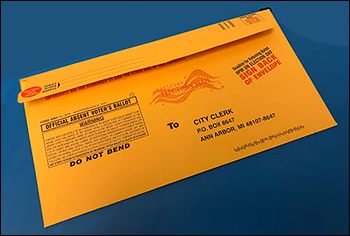
Oct. 20, 2020 — The Michigan Court of Appeals on Friday reversed a lower court ruling that allowed a post-election ballot reception period that would have lasted until Nov. 17, and granted the process known as “ballot harvesting,” where another individual or individuals can deliver unspecified numbers of ballots for voters.

The three-judge high court unanimously overturned a ruling from Court of Claims Judge Cynthia Stephens who made the original directive in deciding an election lawsuit that the Michigan Alliance for Retired Americans, a union-funded organization, brought forth.

When the Michigan attorney general and secretary of state jointly decided not to appeal Judge Stephens’ ruling, the Republican controlled state House and Senate filed the motion and were granted standing. It is unclear now whether the Michigan Alliance will appeal to the state Supreme Court.

According to the Detroit News’s reporting, the original ruling contained the directive that the ballots must be postmarked by Nov. 3. That clerical distinction, however, will be difficult to enforce once we advance into the post-election counting and challenge stage.

The US Postal Service, themselves, according to their employee practices handbook, indicate that many mail pieces do not require postmarks. In most of the 21 states that are now allowing the post-election reception period, the ballots will fall into one of these categories thus making the postmark question moot, and that will invariably lead to further lawsuits and litigation. Below is the official language for the postmark directives:

“Postmarks are not required for mailings bearing a permit, meter, or precanceled stamp for postage, nor to pieces with an indicia applied by various postage evidencing systems.”

The Appellate Court ruling means, at least until if and when the state Supreme Court addresses the issue, that there will be no post-election ballot reception period in Michigan. Ballot harvesting pertaining to individuals who are not immediate family members of the person wanting to vote absentee or is not an election office clerk, will again be prohibited. Therefore, all ballots are required to be in the possession of election authorities throughout Michigan’s counties before the polls close on Election Day, Nov. 3.

Continue reading

Eight Men Out

By Jim Ellis

Poster for the movie, “Eight Men Out”

Aug. 20, 2020 — The 1988 movie “Eight Men Out” about the 1919 baseball World Series carries a title that also aptly describes the 2020 congressional primary season. At this early point in the voting cycle, already eight US House members have been denied re-nomination, which will oust them from office — a large number when comparing to typical campaign years.

It’s worth noting these results because the incumbent defeats are geographically widespread and not confined to one party. Of the eight, five are Republicans, three are Democrats, and each come from different states.

Looking at the eight campaigns, however, only two reasons largely explain the incumbent losses within the respective intra-party elections: ideology and ethics.

Florida Freshman Rep. Ross Spano (R-Dover) from his Lakeland-anchored district this past Tuesday is the latest to lose. The others are, chronologically from the beginning: Reps. Dan Lipinski (D-IL), Steve King (R-IA), Denver Riggleman (R-VA), Eliot Engel (D-NY), Scott Tipton (R-CO), Steve Watkins (R-KS), Lacy Clay (D-MO), and Spano.

In each case, the Democratic losses are ideologically driven. In Illinois, New York, and Missouri, veteran Democrats lost their seats to challengers from the far left, all backed by the Justice Democrats PAC that is loosely associated with New York Rep. Alexandria Ocasio-Cortez. The insurgent campaign strategy in each case was to cast the incumbent as not being sufficiently progressive in addition to more specific attacks.

In Illinois back in March, media consultant Marie Newman returned to again challenge Rep. Lipinski after losing to him 51-49 percent in the 2018 Democratic primary. Rep. Lipinski, an eight-term Chicago suburban congressional veteran whose father held the seat for 22 years before him, had established a moderate record — yet even moving left for the current term couldn’t stop the coming trend. Turnout increased 16 percent when compared to the 2018 primary, and Newman flipped a 49-51 percent loss into a 47-45 percent victory.

Eliot Engel represented the Bronx in Congress for what will be 32 years after serving for 12 years in the New York State Assembly. Aided by Engel campaign mistakes, middle school principal Jamaal Bowman swept to victory with strong assistance from the Justice Democrats. The key themes here were Engel losing touch with his constituents and being out of step with today’s Democratic Party.

Continue reading

Plethora of House Polls Released; All Tell Unique Stories

By Jim Ellis

Aug. 14, 2020 — In the past several days, 14 polls in 13 competitive House districts were publicly released, and they all tell a unique story. The synopsis is below (in alphabetical order):


CO-3:
• GQR Research – Mitsch Bush (D) 43%; Boebert (R) 42%

Greenberg Quinlan Rosner Research (Aug. 3-6; 400 likely CO-3 voters) went into the field to test Democratic candidate Diane Mitsch Bush versus Republican Lauren Boebert, who unseated Rep. Scott Tipton (R-Cortez) in the June Republican primary.

The result here is not particularly surprising considering that Boebert was a shocking upset winner in the GOP primary. Mitsch Bush has a huge cash advantage, but Republicans will likely rally around Boebert in a district where President Trump should comfortably win.


IL-13:
• RMG Research – Londrigan (D) 43%; Rep. Davis (R) 41%

After seeing the 2018 election between Rep. Rodney Davis (R-Taylorville) and challenger Betsy Dirksen Londrigan (D) evolve into a 50.3 – 49.6 percent result, the pair returns for Round 2. The RMG poll (July 27-Aug. 7; 400 likely IL-13 voters), though over a very long sampling period, finds what has been clear for some time, that the 2020 edition will yield another tight race.


IN-5:
• WPA Intelligence – Spartz (R) 47%; Hale (D) 40%

The new WPA Intelligence poll (Aug. 4-6; 400 likely IN-5 voters) produces the opposite result of a survey we saw from the GBAO research organization in late June (June 25-28; 500 likely IN-5 voters). The latter study projected Democratic former state representative and ex-lieutenant governor nominee Christina Hale topping Republican state Sen. Victoria Spartz, 51-45 percent.

According to the current WPA data, Sen. Spartz, a Ukrainian immigrant, now holds a 47-40 percent advantage. The latter numbers are more consistent with the district’s voting history. Incumbent Rep. Susan Brooks (R-Carmel) is retiring.


Continue reading

Updating Tuesday’s Results

By Jim Ellis

June 25, 2020 — With the Kentucky and New York primary totals still days away from becoming final, there are ways of looking to project an outcome of the close races.

KENTUCKY

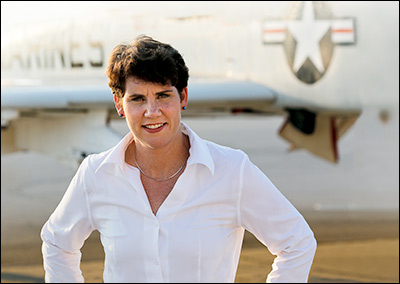
Kentucky Senate challenger Amy McGrath (D).

There was some news in Kentucky yesterday as Fayette County, the state’s second-largest local entity, reported its first numbers in the Senate Democratic primary. While only showing about 2,000 total votes counted, 72 percent of the early tallies went state Rep. Charles Booker’s (D-Louisville) way, a rather astonishing occurrence in opponent Amy McGrath’s home county.

You will remember that McGrath ran for the US House in the Fayette County-anchored 6th District in 2018. Therefore, it was expected that the Fayette Senate primary totals would heavily favor her, thus suggesting her 5,104 early statewide vote lead might be sustained. Though just a sliver of the actual votes to come from Fayette are now reported, the fact that Booker would receive such a large share indicates the supposition that McGrath would sweep the county is incorrect.

Even with a low total being reported from Fayette — and that appears to be the only county with newly reported data — the Secretary of State is telling county election administration personnel not to release numbers until June 30. Booker’s statewide deficit is now just 4,066 votes with well over 600,000 votes expected to be added to the various totals.

The vote overlay also boosts Booker’s potential chance of slipping past McGrath when understanding that his home area alone, Jefferson County, could easily wipe out such a small statewide deficit. Jefferson County, which houses Louisville and is Kentucky’s largest local entity, has a population that exceeds 760,000 individuals. Therefore, the expected vote total coming from the locality will be large in proportion to the outstanding number of uncounted ballots. Thus, the race may well be too close to call.

In any event, the big winner of the Democratic primary appears to be incumbent Republican Sen. Mitch McConnell. He is now assured of facing a Democratic general election opponent who will come out of their own party primary with a split base, not the way one would want to start a general election campaign against a powerful Senate majority Leader who tends to dominate his state’s politics.
Continue reading

Primary Results: Many Undecided

By Jim Ellis

June 24, 2020 — Partial returns were reported last night in Kentucky and New York, but it likely will be June 30 before we see even unofficial final totals as both states wait for returning absentee ballots.

In Kentucky, an estimated 625,000 ballots are in the postal system and can take until June 27 to arrive in their respective county counting centers. The secretary of state is allowing the Kentucky counties to not report until June 30 and will not release statewide totals until then. News services, however, were reporting counted numbers.

Trends appear better established in New York, where a greater percentage of the overall vote is most likely counted. New York generally records low primary participation numbers. Most of the races have clear winners, however. Completed totals are reported in North Carolina and Virginia.

The Kentucky Senate Democratic primary, as closing polling predicted, is tight in early counting. Retired Marine Corps pilot Amy McGrath leads state Rep. Charles Booker (D-Louisville), but with only a 5,104-vote margin (45-37 percent) among the just under 62,000 votes tabulated. No numbers are reported from the state’s two largest counties, Jefferson and Fayette, the homes of Booker and McGrath, respectively.

At this point, McGrath appears headed toward a close victory but, with so many votes outstanding, it will likely be a full week before we see an official winner declared. On the Republican side, Senate Majority Leader Mitch McConnell’s 87 percent total assures him of re-nomination.

All five of Kentucky congressional Republican incumbents have been re-nominated, as each total between 88-94 percent of the yesterday’s in-person vote. Kentucky is one of 12 states that does not allow early voting. In Rep. John Yarmuth’s (D-Louisville) 3rd District, no numbers have been reported in the Republican primary, but the congressman has been re-nominated because he was unopposed on the Democratic side.

In New York, state Sen. Chris Jacobs (R-Buffalo) has been projected as the special election winner in the vacant 27th District. Of the totals counted, he topped former Grand Island town supervisor Nate McMurray (D), 69-29 percent. In the concurrent Republican primary for the regular term, Jacobs is capturing 71 percent of the vote to easily win the party nomination for the full term.
Continue reading