Tag Archives: Mayor Pete Buttigieg

Democratic National Convention Shaping Up to be Historic

By Jim Ellis

Oct. 8, 2019 — At this point, Democratic presidential primary patterns are beginning to reveal themselves.

The February First Four states are becoming a hodgepodge of political strength with both Sens. Elizabeth Warren (D-MA) and/or Bernie Sanders (I-VT) potentially stealing Iowa and New Hampshire away from national front-runner Joe Biden. That means the former vice president may have his back up against the proverbial wall when the campaign streams into Nevada, the third voting state whose caucus participants will convene on Feb. 22. He may well need a victory there, before getting to South Carolina and his southern states political oasis.

As the new Fox News South Carolina Democratic primary poll shows (Sept. 29-Oct. 2; 803 likely South Carolina Democratic primary voters), Biden’s lead is very strong in the Palmetto State at 41-12-10 percent over Sens. Warren and Sanders, respectively. These numbers are commensurate with his standing in other recently polled southern domains.

But new data coming from delegate-rich states that are not frequently polled give us a further perspective about just how the nomination drama might unfold.

Four new state surveys were released at the end of last week with clear separation only detected in Arizona. Data coming from California and Ohio show dead heats among the three major candidates. Additionally, the latest Wisconsin poll gives Biden only a small lead.

The first three states in this group will vote in March, on Super Tuesday (March 3, California), March 10 (Ohio), and March 17 (Arizona). The fourth state’s electorate, Wisconsin, will cast their ballots on April 7.

Change Research (Oct. 27-28; 396 likely Arizona Democratic primary voters) finds that Arizona is polling as one of the ex-vice president’s weakest states and the only one that shows a relatively competitive four-way race. The Change results finds Sen. Warren claiming a significant lead with 35 percent support, ahead of Sen. Sanders’ 19 percent, Biden’s 15 percent, with South Bend Mayor Pete Buttigieg making a viable appearance with 13 percent preference.
Continue reading

Underestimating Sanders

Sen. Bernie Sanders of Vermont

By Jim Ellis

Oct. 3, 2019 — One of the major political campaign stories of the week is Sen. Bernie Sanders (I-VT) releasing his third quarter financial receipts, which exceeded $25.2 million for the previous 12-week period. The only other candidate to publicize his most recent financial information at this point in time is Mayor Pete Buttigieg who reports raising $19 million for the quarter.

While these numbers are high and continue to demonstrate strong, broad-based support, we still do not know the amounts that former Vice President Joe Biden and Sen. Elizabeth Warren (D-MA) will soon announce and are required to report by the Oct. 15 deadline.

Buttigieg makes the argument that this is his second consecutive outstanding quarter, which puts him at more than $51 million raised for the campaign. It appears Buttigieg has handled his money well, meaning he has adequate funding to compete in all of the early states. This is particularly true for Iowa, which hosts the first nominating on Feb. 3, and is of the utmost importance to his political survival in this national campaign.

But the Sanders campaign is our point of focus. Though his effort has been relatively quiet in the early going, the Sanders operation has concentrated upon and successfully secured their ground operation. This will prove a strong move once the actual voting begins.

In the 2016 campaign Sanders consistently under-polled. He was not predicted to do particularly well in Iowa, for example. Remember, in that contest Sanders fought Hillary Clinton to a virtual tie, forcing her to win a series of coin flips in selected precincts thus enabling her to declare a very slight statewide victory. For all intents and purposes, the Sanders performance created a virtual tie with Clinton and began to transform the contest into a one-on-one battle.

After Iowa, Sanders rolled into his New England backyard and the New Hampshire primary. Here we must recall that he garnered 60 percent of the vote against Hillary Clinton, a landslide victory that dashed her inevitable nominee strategy.

When the candidates advanced to Nevada, the race cemented as a two-person contest. Though Sanders lost the Sliver State caucus, controversy arose when the Independent senator’s campaign claimed that the Democratic National Committee had changed the rules to disallow some of the Sanders’ outlying precinct delegates from casting their ballots.
Continue reading

Qualifying Already Underway
For Upcoming Presidential Debates

By Jim Ellis

Oct. 1, 2019 — The Democratic National Committee had barely announced the new qualification requirements for the November and December presidential debates when three candidates immediately proved they met the polling requirement and several others reached the halfway point.
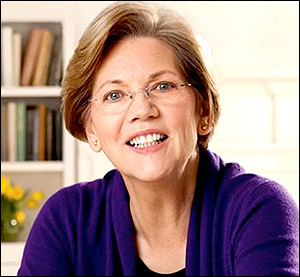
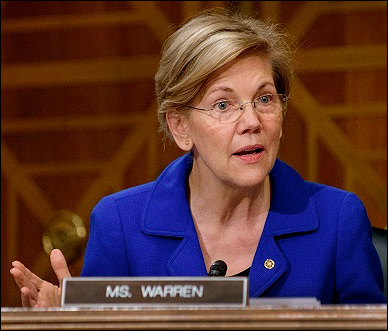
Not that there was any doubt that former Vice President Joe Biden and Sens. Elizabeth Warren (D-MA) and Bernie Sanders (I-VT) would be in the late year forums, but they have already clinched their podiums.

CNN, one of the sanctioned pollsters that the DNC recognizes for determining candidate support, released two studies in states whose electorates will vote in February. The surveys that SSRS, the CNN regular polling firm partner, conducted tested the electorates in both Nevada and South Carolina.

The new party rules require candidates to now earn three percent support, up from two percent, in four sanctioned surveys either nationally or within the first four voting states, those that party rules allow to hold their nominating event in February (Iowa, New Hampshire, Nevada, South Carolina). Another option allows a candidate to meet the polling requirement if he or she receives five percent in two of the first four voting states.

The CNN/SSRS Nevada poll (Sept. 22-26; 324 likely Nevada Democratic caucus attenders) is sanctioned even though the sample size is small. That being the case, the results find that the three top contenders lie in a statistical tie. Biden and Sen. Sanders each post 22 percent support, while Sen. Warren trails only by four points at 18 percent.

Sen. Kamala Harris (D-CA) is next with five percent, a rather poor showing considering that Nevada is adjacent to her home state of California, but one that would alone give her one-half of the polling qualification requirement. She would need to reach five percent in just one other poll in a First Four state to meet the polling requirement in order to earn a debate podium spot in November and December.

Continue reading

Warren Surges in California

By Jim Ellis

Sen. Elizabeth Warren (D-MA)

Sept. 25, 2019 — The Capitol Weekly firm in California has been tracking the Golden State electorate monthly since April, and their September data shows a significant change from August. Now, it is Sen. Elizabeth Warren (D-MA) eclipsing former Vice President Joe Biden for the lead and coming all the way from last place in the original track to post an unweighted 33.1 percent support factor in September.

Biden, on the other hand, began with an unweighted 20.4 percent preference from a universe of over 5,000 individuals from which selected respondents were polled in April. This was the best score among the candidates at the time, but the former vice president and veteran senator began to seesaw through the succeeding months after rising to a high of 29.6 percent in May. Gradually he began dropping to his September level of 18.0 percent, now well behind Sen. Warren and less than one point ahead of Sen. Bernie Sanders (I-VT).

The September weighted numbers from the 599 most likely Democratic primary voters find Sen. Warren leading with 29 percent, Sen. Sanders moving into second with 21 percent, Biden with 18 percent, and home-state Sen. Kamala Harris dropping to just 11 percent from her high of 20.6 percent in July.

The California vote is critically important to winning the nomination because the state possesses 416 first-ballot delegates at the Democratic National Convention. Texas has the second-largest delegation with 228 first-ballot delegates, thus providing a measure of California’s prominence within the Democratic nomination process. Under the weighted percentages, Sens. Warren, Sanders, and Biden would be the only candidates to qualify for delegate apportionment because they would exceed the minimum 15 percent threshold.

The underlying questions asked of September’s weighted respondents reveal an even more stark difference between Warren and Biden. It is here where we see a fundamental shifting of strength between the two, with her on the ascent and him falling back.

Continue reading

Warren Overtakes Biden in Iowa Poll

By Jim Ellis

Sept. 24, 2019 — Des Moines-based Selzer & Company, largely regarded as the most accurate pollster of the Iowa electorate, just released their latest data for the Des Moines Register newspaper (Sept. 14-18; 602 likely Iowa Democratic Caucus attenders) and it contains significant positive news for Massachusetts Sen. Elizabeth Warren.

Democratic presidential candidate, Sen. Elizabeth Warren

On the ballot test, Selzer finds that Warren has eclipsed former Vice President Joe Biden, leading him 22-20 percent with Sen. Bernie Sanders (I-VT), Mayor Pete Buttigieg, and Sen. Kamala Harris (D-CA) following with support factors of 11, nine, and six percent, respectively. But the data goes deeper than projecting who simply leads the ballot test.

The Selzer pollsters also asked the individuals’ second choice if for some reason their original chosen candidate was no longer in the race. Combining the results provides us a further gauge into Warren’s underlying strength as defined in this particular poll.

Selzer projects Warren scoring 42 percent support on the combined first and second choice ballot test response. This is 12 points better than Biden’s 30 percent, and doubles Sen. Sanders’ combined figure of 21 percent. Mayor Buttigieg and Sen. Harris follow with 18 and 12 percent, respectively.

The large percentage going to Warren and, perhaps more significantly, the margin between she and Biden, and Warren and Sanders, suggests a greater underlying electoral strength than any of the other candidates within this Iowa respondent group. In a limited participation caucus meeting nominating event, depth of support is highly likely to be the winning difference.

It is clear that Biden is attempting to establish himself as the national front runner for the party nomination and Iowa is very important toward such an end. As the leading national candidate, losing the first event could send a campaign into a downward spiral because the first set of high campaign expectations was not met.

Continue reading

Iowa: Midwesterners Gain

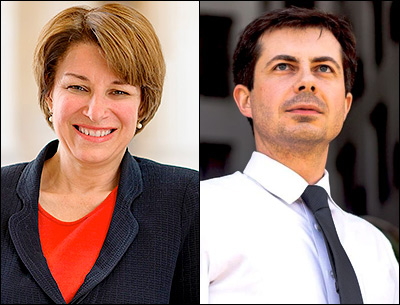
Minnesota Sen. Amy Klobuchar (left) and South Bend Mayor Pete Buttigieg

By Jim Ellis

Sept. 20, 2019 — While South Bend Mayor Pete Buttigieg and Minnesota Sen. Amy Klobuchar are lagging in the polls nationally, new data from Iowa may be providing them each with a ray of hope.

Hawkeye State caucus attenders from both parties tend to like candidates from the Midwest. This was true for Republicans when former Kansas Sen. Bob Dole twice won the Iowa Caucuses in his presidential campaigns. President Gerald Ford (MI) also beat Ronald Reagan here in 1976.

Since the beginning of the Iowa Caucus system, a Midwestern Democratic candidate has won this nominating event exactly half of the time. Those winners were former Vice President Walter Mondale (MN), ex-House Leader Richard Gephardt (MO), home state Iowa Sen. Tom Harkin, and President Barack Obama (IL) twice.

The current Democratic field features two Midwestern candidates, Mayor Buttigieg from South Bend, Indiana, and Minnesota’s Sen. Klobuchar. Neither has been doing particularly well in polling lately, and both need a strong showing in Iowa, the first voting state, next February to remain viable.

Two polls were just released for the impeding 2020 Iowa Caucus and both show Mayor Buttigieg rebounding. The Civiqs polling organization, surveying for Iowa State University (Sept. 13-17; 572 likely Iowa Democratic caucus participants) finds Sen. Elizabeth Warren (D-MA) placing first with 24 percent, and former Vice President Joe Biden and Sen. Bernie Sanders (I-VT) tied for second, each posting 16 percent.

Mayor Buttigieg then scores 13 percent, returning to double digit support and claiming a solid fourth position. Sen. Klobuchar does not do particularly well on this poll, recording only three percent preference and tying her with New York City businessman Andrew Yang.

Continue reading

Probing the Second Choice

By Jim Ellis

Former vice president and ex-Delaware senator Joe Biden

Sept. 18, 2019 — The Morning Consult organization released their post-debate survey and it shows former Vice President Joe Biden stabilizing his lead over the Democratic presidential field. Arguably the contender who needed to register the best performance in the September debate, Sen. Kamala Harris (D-CA), because she had lost considerable support since her August performance before a national televised audience, fell well short of her intended goal.

According to the MC data (Sept. 13-15; 7,487 Democratic likely primary voters with an over-sample from the first four voting states, Iowa, New Hampshire, Nevada and South Carolina), Biden remains well ahead of his two closest competitors. The results find the former vice president securing 32 percent support, holding constant from the August post-debate poll. Sen. Bernie Sanders (I-VT) also remains in a stagnant position posting 20 percent both in the new September survey and from August. Sen. Elizabeth Warren (D-MA), however, increased from 15 to 18 percent after the two Democratic presidential forums.

Sen. Harris has been on a downward spiral since July, a period that could prove to be her candidacy’s apex. After the first debate, Sen. Harris reached 14 percent support in the Morning Consult survey, and appeared to be on an upward trend. After the August forum, however, she slipped to nine percent, and post the September forum she slid even further to six percent preference.

South Bend Mayor Pete Buttigieg has also fallen over the course of time. It appears he hit is high mark in April when he scored nine percent nationally but fell back to the five percent range in July and, except for a short-lived blip in August, has remained stagnant in the mid-single digit range.

Though the numbers are consistent for the leaders in the Morning Consult survey series, other polling firms see a much tighter contest among the top three. The second choice question that MC routinely asks, on the other hand, may provide better perspective as to where the race is headed, or where it might should one of the top three fade in the early voting states, leave the campaign, or remain tightly bunched to force additional roll call votes at the convention.

Continue reading

Multiple Choice, Multiple Candidates

Sen. Elizabeth Warren (D-MA)

By Jim Ellis

Sept. 16, 2019 — The international polling firm YouGov for The Economist magazine just completed a major 86-question survey of 1,500 US adults (Sept. 8-10; online through an opt-in panel), 1,182 of whom are registered voters and found many interesting results. The most unique, however, might be their question asking the self-identified primary or caucus attending Democrats and Democratic-leaning Independents (632) just how many of their party’s presidential candidates they would consider supporting.

The purpose of the question was to test for multiple responses; therefore, most respondents named several candidates. Possibly the most interesting phase of the response process was that only one candidate exceeded 50 percent under this format, and the person receiving the 55 percent consideration factor might not be who you would name with your first guess.

Of the 20 candidates identified in the questionnaire, 10 broke into double digits. This is not particularly surprising when remembering that respondents were encouraged to give more than one candidate they are considering and, in fact, could name as many individuals as they liked.

But the candidate receiving the 55 percent mention factor was not former Vice President Joe Biden. Rather, it was Massachusetts Sen. Elizabeth Warren, and this type of outcome could be quite significant in determining who people might ultimately support. Biden was second but failed to reach a majority even from a respondent pool who could render multiple choices. He posted a 48 percent score.

In third position was Vermont Sen. Bernie Sanders (40 percent), so here again we see these three candidates, Warren, Biden, and Sanders, capturing the top positions by a wide margin.

Sen. Kamala Harris (D-CA) was fourth with 32 percent followed by South Bend Mayor Pete Buttigieg who was named by 27 percent of the sample. Others in double digits were New Jersey Sen. Cory Booker at 18 percent, ex-Rep. Beto O’Rourke recording 14 percent, and former HUD Secretary Julian Castro posting 13 percent, with Minnesota Sen. Amy Klobuchar and New York City businessman Andrew Yang both registering 11 percent under this format.

Continue reading

The “First Four” And The Scramble
For Delegate Apportionment

By Jim Ellis

Sept. 11, 2019 — The YouGov international polling organization conducted four simultaneous surveys in the states whose electorates will cast presidential nominating ballots in February of next year, referred to in the college basketball tournament vernacular as “the First Four”. The quartet of states are Iowa, New Hampshire, Nevada, and South Carolina.

Looking at the polls’ aggregate totals, it appears the contest is already gelling into a three-way race that could meld into a free-for-all should this particular YouGov polling trend translate into actual results.
All of the polling was conducted during the Aug. 28 – Sept. 4 period, and sampled between 492 (New Hampshire) and 785 (South Carolina) likely Democratic primary voters or caucus participants. All four polls found former Vice President Joe Biden, and Sens. Bernie Sanders (I-VT) and Elizabeth Warren (D-MA) occupying the first three positions, but in different orders.

Sen. Kamala Harris (D-CA) and South Bend Mayor Pete Buttigieg placed in the fourth and fifth positions in each entity, again not in the same order in all four states, yet neither reached double-digit percentages in any of the polls. Under this set of data, neither Harris nor Buttigieg would qualify for at-large delegates in any of the First Four states.

To reach the at-large delegate apportionment plateau, a candidate must receive 15 percent of the statewide vote. Candidates can also qualify for individual congressional district delegates, but those projections are not readily available from these polling results.

In Iowa, scheduled for caucus meetings on Feb. 3, Biden begins with a small lead according to the YouGov research. From the 682 individuals surveyed, the former vice president would score 29 percent, with Sanders closely following with 26 percent, and Warren posting 17 percent. Iowa has 41 delegates, and if the congressional district result followed the statewide percentage, Biden would receive 16 delegate votes, Sanders 15, and Warren 10.

Moving to New Hampshire, which will host the first-in-the-nation primary on Feb. 11, 2020, it is Sen. Warren who places first, but the result among the trio is a virtual three-way tie. Warren recorded 27 percent in the YouGov poll, with Biden getting 26 percent, and Sanders 25 percent. Again, assuming New Hampshire’s two congressional districts would vote in the same proportion as the state, each candidate would receive eight delegate votes, equally splitting the state’s 24-person delegation.

Continue reading

Inslee Bows Out of Presidential Race

By Jim Ellis

Washington Gov. Jay Inslee (D)

Aug. 23, 2019 — The Democratic National Committee leaders’ strategy to substantially increase the presidential debate qualification requirements in order to decrease the unwieldy and bloated candidate field is working.

The prerequisites to prove that a campaign has more than 130,000 donors and that each candidate reaches a minimum of two percent support from four of eight designated pollsters paid another dividend Wednesday as Washington Gov. Jay Inslee became the third Democratic candidate to officially exit the race.

Not making the debate stage signifies that a candidate has no chance to become a top-tier candidate. Without national exposure, also-ran candidates have little opportunity to increase name identification and familiarity in order to raise enough money to deliver a message, motivate people to work on their campaign, and attract serious media attention both nationally and in the important local markets within key states.

Inslee follows Rep. Eric Swalwell (D-CA) and former Colorado Gov. John Hickenlooper in making the decision to bow out of the race, and there are likely to be several more following suit once it becomes even more evident that the lower-tier candidates will no longer have the opportunity to climb onto the national debate stage.

Gov. Inslee, in an interview on MSNBC’s “The Rachel Maddow Show” Wednesday, stated ” … it’s become clear that I’m not going to be carrying the ball. I’m not going to be the president, so I’m withdrawing tonight from the race.” He is expected to announce that he will seek a third term as Washington’s governor.

The Inslee withdrawal is not a surprise to anyone, apparently even to the candidate himself. He remained non-committal about ruling out running for a third gubernatorial term, which froze most of the Washington Democratic potential aspirants in place. The rhetoric blocked them from overtly assembling a statewide campaign since most correctly interpreted the political tea leaves as meaning that Inslee would, in fact, be back to seek re-election.

With 10 candidates now qualified for the next debate since former HUD Secretary Julian Castro just joined the top-tier candidates of Joe Biden, Bernie Sanders, Elizabeth Warren, Kamala Harris, and Pete Buttigieg who are also joined by Sens. Cory Booker (D-NJ), Amy Klobuchar (D-MN), ex-Rep. Beto O’Rourke (D-TX), and businessman Andrew Yang, it remains to be seen just how many of those who won’t meet the qualifications will continue.

Continue reading