Tag Archives: Maryland

Is RFK Jr. In or Out? Hogan Moves Into a Tie in Maryland; Sheehy Rebounds in Montana; The Race to Replace the Late Rep. Bill Pascrell

By Jim Ellis — Wednesday, August 28, 2024

President

Robert F. Kennedy Jr. / Photo by Gage Skidmore

Robert F. Kennedy Jr: Can’t Withdraw in Key States — Though presidential candidate Robert F. Kennedy Jr. (I) wants to withdraw from the ballot in all key battleground states, certain election officials say they won’t or can’t (under state election law) remove his name. It appears that Kennedy’s name will remain on the ballot in Michigan, Nevada, North Carolina, and Wisconsin. It appears he won’t be on in Arizona, Georgia, or Pennsylvania.

Trump campaign pollster Tony Fabrizio released a memo suggesting the preponderance of Kennedy voters would move to former President Donald Trump if their first choice, Kennedy, were not on the ballot. In Michigan, according to Fabrizio, the Kennedy vote breaks 43-41 percent in Trump’s favor. The Nevada Kennedy vote split is a whopping 66-16 percent for Trump; North Carolina, 58-22 percent; and Wisconsin, 55-25 percent. Therefore, the Trump campaign and Kennedy will have to communicate to Kennedy voters in these affected states that RFK Jr. is no longer in the race irrespective of his ballot presence.

Senate

Maryland: Hogan Moves Into Tie: — The latest AARP Maryland poll (conducted jointly by Fabrizio Ward & Associates (R) and Impact Research (D); Aug. 14-20; 600 likely Maryland general election voters; oversample of 482 likely voters over age 50; oversample of 176 black likely voters; 60 percent live interview; 40 percent text) projects that former Gov. Larry Hogan (R) and Prince Georges County Executive Angela Alsobrooks (D) are deadlocked with each attracting 46 percent support.

These results are much different than the last publicly released ballot test survey, that from Public Policy Polling, conducted over the June 19-20 period. According to those results, Alsobrooks held a 48-40 percent lead. Before, Emerson College and Concord Public Opinion Partners conducted pre-May 14 Maryland primary polls. The two found Alsobrooks leading by two and five points, respectively. The AARP data puts the Maryland Senate race into an entirely different competitive prism. Should this tight electoral pattern continue, the Maryland Senate race will move into the top tier of competitive statewide contests.

Montana: Sheehy Rebounds — A new Public Opinion Strategies survey (Aug. 18-20; 500 likely Montana voters; live interview) finds retired Navy SEAL Tim Sheehy (R) climbing back into the lead over veteran Montana Sen. Jon Tester (D). According to the POS results, Sheehy leads the three-term incumbent, 51-44 percent.

Earlier in the month, RMG Research, polling for the Napolitan Institute (Aug. 6-14; 540 registered Montana voters) saw Tester leading 49-44 percent. Even the latter poll, however, flips to Sheehy if people believe that the Montana race will flip the Senate to Republican control. Under this argument, the ballot test reverses in Sheehy’s favor by a 55-37 percent mark.

Aside from converting the West Virginia Democratic Senate seat, which appears to be a lock for the GOP, Montana is clearly the next best contest for Republicans to topple a Democratic senator and claim a bare minimum Senate majority.

House

NJ-9: Endorsements & a Drop Out — State Sen. Nellie Pou (D-Paterson) received a big bounce in her effort to replace the late Rep. Bill Pascrell (D-Paterson) on the New Jersey general election ballot. New Jersey politics, of which the local county party chairmen have powerful positions, is still machine driven. For the coming special Democratic Party meeting to replace Pascrell, all three of the 9th District’s county chairmen, those from Passaic, Bergen, and Hudson counties, have endorsed the local state senator.

In another pre-meeting event, Paterson Mayor André Sayegh, thought to be the late congressman’s choice to succeed him, announced that he is removing himself from consideration. The remaining candidates are: General Assembly Speaker Pro Tempore Benjie Wimberly (D-Paterson), Assemblywoman Shavonda Sumter (D-Paterson), and state Sen. Pou.

Significant Lead for Alsobrooks in Maryland; Senate Race Tightens in Nevada; Cori Bush in Dead Heat; Another Dead Heat in WA-3

By Jim Ellis — Thursday, June 27, 2024

Senate

Angela Alsobrooks

Maryland: Alsobrooks Develops Significant Lead — A new Public Policy Polling survey finds Prince Georges County Executive Angela Alsobrooks (D) opening an advantage over ex-Gov. Larry Hogan (R) despite his favorable ratings.

The PPP survey (June 19-20; 635 Maryland voters) sees Alsobrooks leading Hogan and a series of independents and minor party candidates (cumulatively), 45-34-5 percent. In a head-to-head ballot test, she leads Hogan 48-40 percent. This, despite a positive Hogan favorability index of 50:33 percent. The biggest drag for Hogan is from the top of the Maryland ticket where President Joe Biden leads former President Donald Trump, 56-30 percent.

Nevada: Race Tightens — A new survey from a Democratic and Republican polling team finds a closer Senate race than the Emerson College poll conducted during the same period. The Fabrizio Ward (R)/Impact Research (D) survey, commissioned for AARP (June 12-18; 600 likely Nevada general election voters; live interview & text) sees Sen. Jacky Rosen (D), riding a media ad blitz, leading Republican Sam Brown, 47-42 percent, while former President Trump has a 44-37-10 percent advantage over President Biden and Robert F. Kennedy Jr. (I).

Conversely, Emerson College’s study (June 13-18; 1,000 registered Nevada voters; multiple sampling techniques) sees Sen. Rosen with a much larger lead over Brown, 50-38 percent. While there is a clear advantage for Sen. Rosen in the most recent polling, this race will still be highly competitive come November.

House

MO-1: Rep. Bush in Dead Heat –– The Mellman Group, conducting a survey for the Democratic Majority for Israel PAC (June 18-22; 400 registered MO-1 Democratic voters; live interview & text), sees challenger Wesley Bell, a former St. Louis County prosecutor, pulling into a one point, 43-42 percent, lead over Rep. Cori Bush (D-St. Louis), a member of the Socialist Democrat “Squad.” The Mellman analysis finds that Bell has closed the gap against the incumbent since January, seeing a net 17-point swing in his favor.

We can expect heavy outside spending coming into the district before the Aug. 6 primary. The pro-Israel organizations were successful in helping to defeat another Squad member, Rep. Jamaal Bowman (D-NY), in Tuesday night’s Democratic primary. Rep. Bush is another of the most anti-Israel congressional members and a top target of the American Israel Public Affairs Committee (AIPAC) and the DMFI PAC.

WA-3: Dead Heat Poll — A new Public Policy Polling survey, regularly conducted for the Northwest Progressive Institute (June 11-12; 649 registered WA-3 voters; live interview & text), sees Rep. Marie Gluesenkamp Perez (D-Skamania County) trailing 2022 general election finalist Joe Kent (R), by a 46-45 percent dead heat margin.

Washington’s 3rd District, which lies in the far southwestern corner of the state and anchored in the city of Vancouver, is the second-most Republican district that a US House Democrat represents. The FiveThirtyEight data organization rates the seat as R+11. In 2022, Perez defeated Kent by less than a percentage point in one of the biggest upsets of that election year. The 2024 rematch, which is likely to occur after the state’s Aug. 6 jungle primary, portends to be just as close.

Why Trone Lost in Maryland; North Dakota House Primary Tightening, Armstrong Up in Two Polls; Virginia Gambling Initiative Opposed

By Jim Ellis — Thursday, May 16, 2024

Senate

Rep. David Trone (D-Potomac)

Maryland: Why Trone Lost — There are specific reasons as to why Maryland Rep. David Trone (D-Potomac) lost to Prince George’s County Executive Angela Alsobrooks (D) by a large margin even with his huge financial advantage. First, as we had been stating in these posts all along, Trone’s exorbitant spending, estimated to be a self-contributed $62 million, which is an all-time record candidate investment for a Senate primary, was placing him ahead in polling but not to the point where he was substantially pulling away from Alsobrooks.

In contrast, she had strong grassroots support within the African-American communities in PG County and Baltimore, which is very important in a Maryland Democratic primary and could partially compensate for being outspent. She was also smart about how to spend the money she did have, working the ground early and spending her funds late in the campaign, knowing that she could not equal Trone’s largess.

Additionally, Trone likely became over-saturated to the point people were tuning him out because of over-exposure. His last ads, attacking former Gov. Larry Hogan, also reverberated negatively toward Trone. Though Hogan is a Republican, he generally possesses a positive image among most Democrats.

Furthermore, the Trone campaign strategy appeared misapplied. He attempted to secure the left flank of the party while Alsobrooks was firmly entrenched within the faction. Therefore, he left more centrist Democrats in places like Baltimore County and the Annapolis area with no place to go. The fact that the entire Democratic congressional delegation, with the exception of retiring Sen. Ben Cardin who stayed neutral, and Rep. Dutch Ruppersberger (D-Cockeysville) who supported Trone, along with Gov. Wes Moore, all not backing the congressman also proved damaging to his credibility.

For Trone to win the nomination, he would have needed to carry five of the state’s eight congressional domains, including Districts 1 (Rep. Andy Harris-R), which he did, 2 (Rep. Ruppersberger), which he did not, 3 (retiring Rep. John Sarbanes-D), which he did not, and 8 (Rep. Jamie Raskin-D), which he did not. In the end, he topped Alsobrooks only in the lone Eastern Shore Republican district and his own western Maryland 6th District. Adding the sum of these factors, in addition to making three verbal and strategic gaffes at the end, culminated in what appears to be a 12-point loss even with his approximate 10:1 spending advantage.

House

ND-AL: Tight Primary Unfolding — As part of their statewide polling project, DFM Research (May 6-8; 550 likely North Dakota Republican primary voters; live interview & text) tested the open Republican primary for the state’s at-large US House seat. Three-term incumbent Rep. Kelly Armstrong (R-Bismarck) is running for governor, thus leaving a competitive GOP congressional primary in his wake.

The contest, heading for a June 11 primary election, appears too close to call. The DFM results find former state Rep. Rich Becker leading Public Service Commissioner Julie Fedorchak by a 29-26 percent margin with former Miss America Cara Mund trailing at 14 percent. Thus, between Becker and Fedorchak, the race appears as a toss-up. The plurality primary winner will have the inside track toward winning the seat in November.

Governor

North Dakota: Rep. Armstrong Up in Two Polls — DFM Research and Guidant Polling & Strategy returned Republican primary survey data on the impending North Dakota open governor’s race, which is headed for a June 11 nomination election. Both find Rep. Kelly Armstrong (R-Bismarck) posting major, and almost identical, leads over Lt. Gov. Tammy Miller.

DFM Research (May 6-8; 550 likely North Dakota Republican primary voters; live interview & text) posts Rep. Armstrong to a 56-18 percent advantage. Guidant (May 4-8; 500 likely North Dakota Republican primary voters; live interview & text) sees virtually the same result favoring Armstrong, 60-19 percent. The eventual Republican nominee will be a heavy favorite in the general election to replace retiring Gov. Doug Burgum (R).

States

Virginia: Statewide Gambling & Candidate Polling Results — An organization attempting to defeat a proposed Virginia gambling ballot proposition, Virginians Against Neighborhood Slot Machines, commissioned a joint statewide poll from two major polling organizations, Fabrizio Ward & Associates, a Republican firm, and the Democratic polling group, Impact Research. The pollsters (released May 10; surveyed April 26-28; 500 registered Virginia voters; live interview & text) found wide opposition to the gambling measure (opponents outnumbering supporters by a 20 point margin), and then tested the key statewide contests.

On the candidate front, surprisingly President Joe Biden held only a one-point ballot test lead over former President Donald Trump, 43-32 percent, while Sen. Tim Kaine (D) outpaced retired US Navy captain and 2022 congressional candidate Hung Cao (R) by 12 percentage points, 48-36 percent. If additional research suggests a tightening at the presidential level, Virginia could move into a more competitive political realm in the coming months.

Trone’s Spending & Gaffes;
CA-49 Becoming Competitive; Understanding CA-16;
Daughtry Drops Out of NC-13 Race

By Jim Ellis — Monday, May 6, 2024

Senate

Rep. David Trone (D-Potomac)

Maryland: Trone’s Spending & Gaffes — Reports are surfacing that Rep. David Trone’s (D-Potomac) personal spending on his Senate race to win the Maryland Democratic US Senate primary has now exceeded an incredible $57 million. Polling, however, suggests that while Trone leads on the various ballot tests he still hasn’t quite put away Prince George’s County Executive Angela Alsobrooks.

Trone is now recovering from two misstatements that have caused him to publicly apologize. The first was uttering a racially insensitive comment during a committee hearing, and the second is verbiage in his latest ad that suggests he wouldn’t need “training wheels” once he entered the Senate, which is a condescending backhanded swipe at Alsobrooks’ lack of legislative experience. Trone had to publicly apologize for the committee remark, and now has removed the training wheels language from his ads, yielding to the criticism. Thus, he is in an apologetic position entering the critical final two weeks of campaigning before the May 14 primary election.

House

CA-49: Becoming Competitive — California Rep. Mike Levin’s (D-San Juan Capistrano) Orange-San Diego County district is on the borderline of competitiveness. The FiveThirtyEight data organization rates the seat as D+5 and President Joe Biden carried the district with a 55-43 percent margin. The Daily Kos Elections site ranks CA-49 as the 29th most vulnerable seat in the Democratic Conference. In the 2022 election, Rep. Levin defeated frequent Republican congressional candidate Brian Maryott, 52.6 – 47.4 percent, which is a closer margin than President Biden’s.

Republicans, armed with what appears to be a better candidate in the ’24 election, just released an 1892 research organization poll from three weeks ago (April 9-11; 400 likely CA-49 general election voters; live interview) that finds Rep. Levin only leading business owner Matt Gunderson (R) by a scant 44-42 percent margin with President Biden’s image degrading to an upside-down 39:56 percent favorable to unfavorable ratio. This, coupled with the fact that Rep. Levin only pulled 51 percent of the vote in the March jungle primary, suggests this race could become highly competitive in November.

CA-16: A Greater Understanding — The Silicon Valley congressional situation may be becoming clearer. With the original count showing Assemblyman Evan Low (D-Campbell) and San Mateo County Supervisor Joe Simitian (D) tied for the second general election qualifying position after all ballots were counted, curiosity arose when allies of first-place finisher Sam Liccardo (D), the former mayor of San Jose, requested and paid for an electronic recount. Under California election procedure, in the event of a tie between candidates for a general election qualifying position, both would advance to the November ballot. Therefore, it was in neither Simitian nor Low’s interest to request a recount.

An early April Lake Research poll (April 5-8; 400 likely CA-16 general election voters; live interview) found a tight three-way contest if the tie stood, with Liccardo leading Assemblyman Low and Supervisor Simitian by a tight 26-21-20 percent count. If the battle were only between Liccardo and Low, the former mayor would hold a stronger 36-26 percent advantage. The recount did change the outcome, and the final numbers now show Low with a five-vote advantage. It remains to be seen if Simitian will challenge that result.

NC-13: Candidate Daughtry Drops Out — Attorney Kelly Daughtry (R), who placed first in the 14-candidate 13th District Republican primary on March 5, has now dropped out of the race. Daughtry indicated her initial internal polling suggested she led the runoff against former federal prosecutor Brad Knott, but the candidate said when former President Donald Trump endorsed her opponent, the race’s entire political flow changed.

Saying that Trump’s “involvement has foreclosed her path to victory,” Daughtry announced late last week that she is ending her campaign. This means that Knott will be effectively unopposed in the May 14 Republican runoff and is a lock to convert the newly redistricted seat to the GOP column in November.

Trump Leads Among Texas Hispanics; Trone Rebounds in Maryland; Figures Wins Runoff in Alabama; Indiana Sen. Braun Criticized for Supporting BLM

By Jim Ellis — Friday, April 19, 2024

President

Former President Donald Trump / Photo by Gage Skidmore

Texas: Trump Leads Among Texas Hispanics — The Texas Hispanic Policy Foundation conducted a recent poll of the Lone Star State electorate (April 5-10; 1,600 likely Texas voters) and finds former President Donald Trump posting a 12-point lead over President Joe Biden in a five-way race that includes the two major party candidates, Independent Robert F. Kennedy Jr., Green Party nominee Jill Stein, and potential Libertarian candidate Chase Oliver. The preference split was 46-34-9-2-1 percent in the above candidate order. Texas, the second-largest state in population, has 40 electoral votes to award to its presidential winner.

The most interesting part of the poll, however, was the vote division among Hispanics. Within this segment, Trump actually leads President Biden 41-37 percent, which is another indication that Trump has upward mobility among Hispanics while Biden exhibits clear weakness within the community. Trump also does well with Texas women, leading the president 44-34 percent, a trend not seen in many other places. His spread among Lone Star men is 50-34 percent.

Senate

Maryland: Trone Rebounds from Close Poll — We earlier reported on a poll from Maryland Democratic Senate candidate Angela Alsobrooks (Garin-Hart-Yang Research Group; April 8-10; 600 likely Maryland Democratic primary voters; live interview) that found her trailing US Rep. David Trone (D-Potomac) by just three percentage points, 43-40 percent.

Already, we see a counter poll, this one coming from the Baltimore Sun newspaper. According to their new survey (OpinionWorks; April 7-10; 1,292 likely Maryland general election voters; 600 Democratic primary voters), Rep. Trone holds a commanding advantage over Alsobrooks, topping her 48-29 percent. With such an obvious difference between the two professional polls conducted in the same time frame with identical sample sizes, it is clear we will need further data to better understand where this race resides. Expect heavy campaigning to occur as we move closer to the May 14 Maryland primary.

House

AL-2: Shomari Figures Wins Dem Runoff — As expected, Obama Justice Department official Shomari Figures, who placed first in the original Democratic primary back on March 5, easily defeated state House Minority Leader Anthony Daniels by a 61-39 percent count. Figures, the son of parents who both served in the Alabama Senate, now advances to the general election where he will be favored to win a newly created district that President Biden would have carried 56-43 percent.

The Republican runoff ended with a surprise, as attorney Caroleen Dobson upset former state Sen. Dick Brewbaker with a 58-42 percent victory. In the March 5 primary, Brewbaker led a field of eight candidates. Dobson trailed Brewbaker by more than 12 percentage points and only qualified for the second runoff position by 632 votes over the third-place finisher. Like Figures, Dobson will now advance into the Nov. 5 general election.

Governor

Indiana: Braun Attacked for Supporting BLM — While Sen. Mike Braun (R) has shown Republican primary polling strength against Lt. Gov. Suzanne Crouch, former state Commerce Secretary Brad Chambers, and venture capitalist Eric Doden in their battle for the open governor’s position, he is now under attack for statement indicating his support for the Black Lives Matter organization.

The American Advancement organization is running ads featuring Braun saying, “I support that movement because it’s addressing an inequity that has not been solved.” The ad further has him saying he would, “if asked,” join a BLM protest as the narrator continually calls him a “RINO” (Republican In Name Only). It remains to be seen if the Super Pac buys enough airtime to make their negative attack on Sen. Braun stick.

April-May Primary Outlook – Part II

Primaries

Today, we conclude our early primary outlook with a recap of the May 14 primaries in Maryland, Nebraska, and West Virginia, and the May 21 contests in Georgia, Idaho, Kentucky, and Oregon.

Maryland

May 14 will host a very active day in Maryland politics. Voters will choose nominees for an open US Senate race and three open House seats which, in most cases, will determine who will also win the general election.

The big statewide race features US Rep. David Trone (D-Potomac) and Prince George’s County Executive Angela Alsobrooks vying for the open US Senate Democratic nomination to succeed retiring Sen. Ben Cardin (D). Cardin spent more than $24 million on his campaign before the end of 2023, but still has not fully pulled away from Alsobrooks in the polling. The winner will face former two-term Gov. Larry Hogan (R) in what is now a competitive general election even in this most Democratic of states.

Eleven-term Rep. Dutch Ruppersberger (D-Cockeysville) is retiring and leaves a six-way Democratic primary in his wake. The odds-on favorite to capture the party nomination and the seat in the general is Baltimore County Executive Johnny Olszewski (D), who already represents more people than the number who reside in a congressional district. State Delegate Harry Bhandari (D-Parkville) is one of the top contenders, but the race is Olszewski’s to lose.

With Rep. John Sarbanes (D-Baltimore) retiring, perhaps the largest congressional field in the country has assembled. A total of 22 Democrats have filed for the primary in a district where the party nominee will easily win the seat in November. Among the almost two dozen candidates are two state senators and three state delegates. With so many competing candidates, the party nomination is completely up for grabs.

Rep. Trone’s open 6th CD features crowded primaries for both parties in what should lead to a competitive general election. Democrats have fielded 14 candidates including April McClain Delaney, a former Commerce Department official who is married to former US Rep. John Delaney, and a pair of state delegates.

Republicans see seven contenders, two of whom have won major primaries but gone down to defeat in the general elections because they are too conservative for the region. Dan Cox, the 2022 GOP gubernatorial nominee and two-time congressional nominee and ex-state Delegate Neil Parrott, are the two most well-known Republicans competing for the nomination. Should one of them top the GOP field, the edge goes to the eventual Democratic nominee in a district that should be considered a toss-up.

Reps. Andy Harris (R-Cambridge), Glenn Ivey (D-Cheverly), Steny Hoyer (D-Mechanicsville), Kweisi Mfume (D-Baltimore) and Jamie Raskin (D-Takoma Park) all face minor primary opposition.

Nebraska

The Cornhusker State features both US Senate seats up for election in 2024. The second due to a previous resignation, but neither Sen. Deb Fischer (R) and appointed Sen. Pete Ricketts (R) face major competition in the Republican primary nor general election.

While Rep. Don Bacon (R-Papillion) will be embroiled in another tough general election battle in the Omaha anchored 2nd District, neither he nor state senator and 2022 congressional nominee Tony Vargas (D) have serious primary opposition.

Reps. Mike Flood (R-Norfolk) and Adrian Smith (R-Gering), whose district encompasses all or parts of 80 of Nebraska’s 93 counties in a seat that stretches from Wyoming to Iowa, face only minor primary opposition.

West Virginia

The Mountain State features open Senate and gubernatorial races; Republicans are favored in both contests. Sen. Joe Manchin’s (D) retirement makes the GOP eventual nominee, likely Gov. Jim Justice who is expected to defeat Rep. Alex Mooney (R-Charles Town), the prohibitive favorite. Wheeling Mayor Glenn Elliott is favored to win the Democratic primary.

The open Republican gubernatorial primary is a spirited contest featuring Attorney General Patrick Morrisey (R), who leads in all polls, and two sons of current West Virginia office holders. Former state Delegate Moore Capito and businessman Chris Miller, sons of US Sen. Shelley Moore Capito (R) and Rep. Carol Miller (R-Huntington), are battling for the nomination as is Secretary of State Mac Warner. The primary winner will become a strong favorite against the presumptive Democratic nominee, Huntington Mayor Steve Williams.

Rep. Mooney’s open 2nd District yields a Republican primary of five candidates, including state Treasurer Riley Moore, a nephew to Sen. Capito. Moore is a clear favorite to win the party nomination and defeat presumptive Democratic nominee Steven Wendelin in the general election.

Georgia

While the Peach State is arguably the most pivotal domain in the presidential election, 2024 is a rather quiet year for in-state Georgia politics. There is very little competition in the general election, but we do see three primaries of note.

In GOP Rep. Drew Ferguson’s open 3rd District, six Republicans compete for the party nomination including state Sen. Mike Dugan (R-Carrollton), two ex-legislators, and a former Trump White House aide. The two top finishers being forced into a June 18 runoff election is the likely primary outcome. In a district that 538 rates R+38, the eventual Republican nominee is a lock to win the general election.

Two Democratic members face primary opposition. Because of the latest court-ordered redistricting directive, Rep. Lucy McBath (D-Marietta) must run in a much different district than the current domain she represents. As a result, she is drawing primary opposition from state Rep. Mandisha Thomas (D-Atlanta) and Cobb County Commissioner Jerica Richardson. Rep. McBath is favored, but the two opponents forcing a runoff is not beyond the realm of possibility. The eventual Democratic nominee will have an easy run in November.

Veteran Rep. David Scott (D-Atlanta), no stranger to facing primary opposition, now has six Democratic opponents including Marcus Flowers, who challenged Rep. Marjorie Taylor Greene in 2022. East Point City Councilwoman Karen Rene is the only candidate within the group who has any current political constituency. Rep. Scott is again favored for renomination. GA-13 is safely Democratic in the general election.

Idaho

With no Senate or governor’s race on the ballot, the Idaho election cycle will be uneventful. In the primary, Rep. Russ Fulcher (R-Meridian) faces no primary opposition, while veteran Rep. Mike Simpson (R-Idaho Falls) drew two minor Republican challengers. No change is expected in the Gem State delegation.

Kentucky

The Blue Grass State is another place with little political activity this year. All incumbents are expected to easily retain their congressional seats.

Reps. Morgan McGarvey (D-Louisville), Thomas Massie (R-Garrison), and Hal Rogers (R-Somerset) each face minor opposition in their respective Democratic and Republican primaries.

Oregon

The Beaver State also has no governor or Senate race on the ballot this year, but there are three contested primaries scheduled for May 21.

Rep. Earl Blumenauer (D-Portland), retiring after serving what will be 28 years in the House at the end of the current term, leaves a safe Democratic seat (D+43) for which seven party members will compete. State Rep. Maxine Dexter (D-Portland), a physician, is one of the leading candidates. Former Multnomah County Commissioner Susheela Jayapal, sister to Washington US Rep. Pramila Jayapal (D-Seattle), and Gresham City Councilor Eddy Morales also appear to be viable contenders. The winner of this plurality primary will take the seat in November.

In the 5th District, Rep. Lori Chavez-DeRemer (R-Happy Valley) seeks a second term. She defeated Democrat Jamie McLeod-Skinner two years ago but may see a different opponent this year. While McLeod-Skinner is running again, the Democratic establishment, including the Democratic Congressional Campaign Committee (DCCC), is instead lining up behind state Rep. Janelle Bynum (D-Clackamas), which likely gives her the inside track toward the nomination. In a seat rated R+3, this will become a national congressional race in the general election.

The 6th District is the new seat that Oregon earned in the 2020 national reapportionment. Drawn as a D+7 district according to the FiveThirtyEight data organization, the first ever congressional race within the new domain finished in a closer manner. Then-state Rep. Andrea Salinas (D) captured the seat with a 50-48 percent victory margin over Republican businessman Mike Erickson.

While Rep. Salinas faces only minor primary competition, the Republican field is more crowded. Erickson returns but will face 2022 gubernatorial candidate David Burch and Dundee Mayor David Russ in the battle for the party nomination. In a presidential year with President Joe Biden expected to post a strong double-digit Oregon victory, Rep. Salinas has a much better chance of posting a wider margin in the ’24 congressional race.

Tightening Senate Race in Arizona; Hogan Building Lead in Maryland; Tight Margins in California Vote Tallies; Bost Wins Tight Primary

By Jim Ellis — Thursday, March 21, 2024

Senate

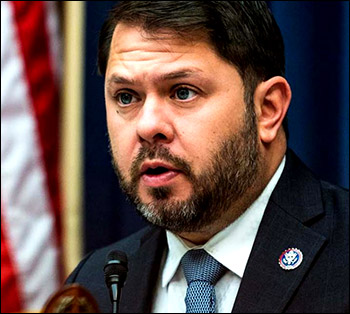
Arizona Rep. Ruben Gallego (D) holds a narrow lead in Arizona polling.

Arizona: Emerson College Shows a Tightening Race — Emerson College released a new two-way poll of the Arizona Senate race, their first since Sen. Kyrsten Sinema (I) announced she would not seek re-election. The survey (March 12-15; 1,000 registered Arizona voters; multiple sampling techniques) projects the new Arizona Senate race dropping to within the polling margin of error between Rep. Ruben Gallego (D-Phoenix) and 2022 GOP gubernatorial nominee Kari Lake. The ballot test finds Gallego holding a 44-40 percent lead, which is approaching the toss-up realm.

Within the same polling sample, former President Donald Trump leads President Joe Biden, 48-44 percent, which is bad news obviously for Biden, but also for Lake. With the data showing Trump leading the Republican ticket in the Grand Canyon State, her standing trails him by a full eight percentage points.

While Emerson tested only Biden and Trump and did not include the independent or third party candidates, they did push the undecided respondents to make a choice. When doing so, Trump would lead the aggregate count 52-48 percent, suggesting the undecideds, which are good prospects to support one of the minor candidates, would break evenly between the two men.

Rep. Gallego has an edge among the youngest and the oldest respondents in the sample. He is also rather surprisingly favored, 43-38 percent, among those who said the economy is their top issue. Lake is favored by a whopping 77-12 percent margin among those who are most concerned about the southern border.

Maryland: Ex-Gov. Hogan Building Lead — The University of Maryland, partnering with the Washington Post, released a new survey of the Maryland Senate race (March 5-12; 1,004 registered Maryland voters; live interview & text) that shows former Republican Gov. Larry Hogan building a strong lead in this most Democratic of states. According to the ballot test, Hogan leads US Rep. David Trone (D-Potomac) 47-39 percent, while his lead would expand to 50-36 percent if Prince George’s County Executive Angela Alsobrooks (D) were his general election opponent.

Hogan also enjoys an extremely positive 64:23 percent favorability index, while Rep. Trone scores 33:21 percent favorable to unfavorable, and Alsobrooks records a 26:15 percent ratio. Despite Trone so far outspending Alsobrooks by a 12:1 ratio ($24 million to $2 million), he leads the Democratic primary ballot test only 34-27 percent according to this survey.

Considering the lopsided spending amount, the ballot test suggests that Rep. Trone is at least slightly underperforming as a statewide candidate.

House

California: Two-Vote Margin; Another Race in Doubt — While the California vote totals are still not complete from the March 5 Super Tuesday primary, the battle for second qualifying position in the open 16th Congressional District continues to get tighter and tighter. The latest vote iteration, with an estimated 400-plus votes remaining to count, is literally down to a two-vote margin.

State Assemblyman Evan Low (D-Campbell) now leads San Mateo County Supervisor and former state Sen. Joe Simitian (D), 30,211 to 30,209. It is obvious we will see a recount when all the votes are finally tabulated. The Secretary of State has 22 more days to certify the election, and it is likely the tabulation process for this race will consume every bit of the allowable time. Former San Jose Mayor Sam Liccardo (D) has already clinched the first general election position. Incumbent Rep. Anna Eshoo (D-Atherton) is retiring.

Another race is also uncalled. Forty-fifth District Rep. Michelle Steel (R-Orange County) has easily clinched the first qualifying position with just under 55 percent of the aggregate jungle primary vote. Attorney Derek Tran (D) has run in second place during the entire counting period, but he now leads Garden Grove Councilwoman Kim Nguyen-Penaloza (D) by only a 327-vote margin and the end result is now in doubt. An estimated 2,500 ballots remain to be counted.

IL-12: Rep. Bost Wins Close Primary Battle — It took well into a second day of counting, but Rep. Mike Bost (R-Murphysboro) successfully won renomination in his southern Illinois congressional district. His opponent, 2022 Republican gubernatorial nominee Darren Bailey, issued a statement conceding defeat but saying his campaign “made a statement.” The current unofficial tally shows Rep. Bost capturing 51.4 percent of the vote as compared to Bailey’s 48.6 percent, translating to a vote spread of 2,590 from a turnout of over 94,000 individuals. A smattering of ballots will soon be added to the final tally.

The district featured wide swings, as both candidates typically won their respective counties by landslide proportions. Both men won 17 of the district’s 34 counties.