Tag Archives: Marianne Williamson

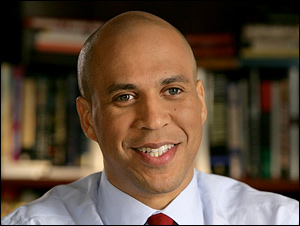
Sen. Cory Booker Ends Run for 2020

By Jim Ellis

Sen. Cory Booker (D)

Jan. 15, 2020 — With less than three weeks from the first votes being cast in the Democratic presidential nomination process, Sen. Cory Booker (D-NJ) announced via Twitter that he is ending his national effort.

The move is not surprising, as Sen. Booker rarely reached or surpassed three percent support in any presidential primary poll. Like Sen. Kamala Harris (D-CA), who left the race just before the California candidate filing deadline in early December, visions of Senate re-election may have at least in part driven the timing of Booker’s move. While Sen. Harris doesn’t face voters in a strong Democratic state until 2022, Sen. Booker is on the New Jersey ballot this year.

Before the presidential race began, New Jersey legislators and Gov. Phil Murphy (D) changed the state election law to allow candidates to run simultaneously for more than one office. The move was obviously made to assist Sen. Booker’s presidential efforts. Now, however, the simultaneous filing option becomes moot.

Leaving the race now provides him an excuse for finishing poorly in the first four voting states: Iowa, New Hampshire, Nevada, and South Carolina, though he filed for each primary and caucus vote and will still be on the ballot in at least New Hampshire and South Carolina.

Though Sen. Booker appears safe for re-election, the New Jersey filing deadline isn’t until March 30. Poor finishes in all primary and caucus states could have left him in a vulnerable state, and while the Garden State is highly unlikely to elect a Republican to the Senate, it’s not out of the realm of possibility that a strong Democrat could have begun to mount a primary challenge. Now we can expect Sen. Booker to invest all of his political capital into cementing his re-election for a second full six-year term.
Continue reading

Castro Out; Bernie Brings in $34.5M

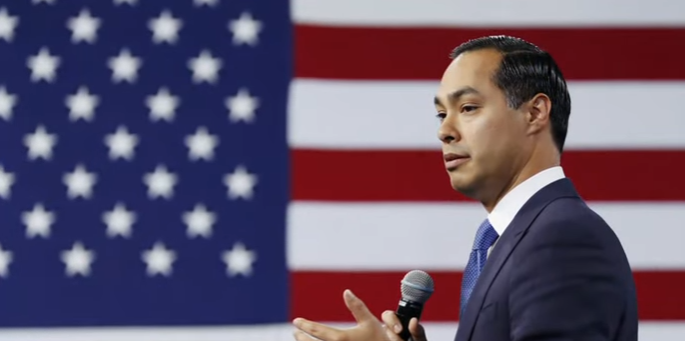
Julian Castro, 2020 Presidential candidate and Former Housing and Urban Development Secretary, bows out of the race.


By Jim Ellis

Jan. 6, 2020 — Saying that it simply “isn’t our time,” former Housing and Urban Development Secretary Julian Castro announced late last week that he is ending his bid for the Democratic presidential nomination now, exactly one month before the campaign’s first votes are cast in the Iowa Caucuses.

Castro, who served the final two-and-a-half years of the Obama Administration in the president’s cabinet after a five-year stint as mayor of San Antonio and previously being elected to one term on the city council, was one of the first candidates to enter the 2020 presidential campaign. Beginning the race as a little-known political figure despite serving in a national office, Castro couldn’t get his campaign untracked. He never came close to attaining high single digit support in any poll, even when including those from his home state of Texas.

On the money front, Castro raised slightly over $10 million for his national effort. Through Sept. 30, he attracted $7.6 million in financial backing with estimates of approximately $3.5 million for his final quarter in the race. Castro qualified for participation in four of the six national candidate forums, taking a major risk in one of them that proved to backfire.

Continue reading

Buttigieg Tops New Hampshire Field

By Jim Ellis

South Bend Mayor Pete Buttigieg

Dec. 13, 2019 — It has been clear for some time that South Bend Mayor Pete Buttigieg is making a strong move in Iowa, perfectly understandable for a candidate hailing from the Midwest; but could an Iowa-New Hampshire sweep be in the forecast for the upstart national contender?

A new MassInc poll for WBUR radio, the public news station in Boston, finds Mayor Buttigieg, for the first time, posting a small lead in the Granite State. The survey (Dec. 3-8; 442 likely New Hampshire Democratic primary voters) gives Buttigieg a slight 18-17-15-12 percent edge over former Vice President Joe Biden, and Sens. Bernie Sanders (I-VT) and Elizabeth Warren (D-MA), respectively, as a clear four-way race is beginning to crystallize for the first-in-the-nation primary.

The latest Iowa Caucus public polling, from Nov. 8 – Dec. 10 through four different survey research firms (Selzer & Company, YouGov, Civiqs, and Emerson College), finds Mayor Buttigieg either leading or tied in three of the studies.

Should such a trend come to fruition in February, we would see the underpinnings of not only Buttigieg becoming a legitimate contender, but a serious national four-way contest taking shape.

The New Hampshire poll is significant not only because it reveals a state base for Buttigieg but also finds that neither New England stalwart politicians Sanders nor Warren have clinched the state, as one might surmise. It was only four years ago when Sen. Sanders posted a 60 percent victory over Hillary Clinton in the 2016 Democratic New Hampshire presidential primary. At this point, now exactly two months from the Granite State primary vote, it would be reasonable to believe that both would be doing better than the MassInc survey and other recent polls suggest.

The MassInc/WBUR poll also provides another key data point. Despite former New York City mayor Michael Bloomberg’s major media spending, apparently on a national basis, his favorability ratings among Democrats continue to languish. His personal index will have to substantially improve if he is to make a push to develop a five-way nomination campaign.

Yesterday, we covered a Monmouth University national poll that found Bloomberg being regarded as the most unpopular of the well-known Democratic candidates, and this MassInc/WBUR New Hampshire survey returns similar results.

Continue reading

With Beto Out … Will the Rest
of the Dominoes Start to Fall?

Beto O’Rourke | Facebook Photo

By Jim Ellis

Nov. 5, 2019 — Former US Rep. Beto O’Rourke (D-TX) ended his presidential campaign Friday, joining Rep. Eric Swalwell (D-CA), ex-Colorado Gov. John Hickenlooper, Washington Gov. Jay Inslee, US Rep. Seth Moulton (D-MA), New York Sen. Kirsten Gillibrand, New York City Mayor Bill de Blasio, and US Rep. Tim Ryan (D-OH) as 2020 national contenders who are no longer in the race.

O’Rourke’s concession statement made reference to departing because he no longer possesses adequate resources with which to compete. Beginning as a top tier candidate with a strong financial base, his effort rapidly crumbled largely due to ill-advised comments, poor debate performance, and calling for assault weapon confiscation, which did not reinvigorate his campaign as he expected. O’Rourke had hoped to use the latter issue to begin cracking into the party’s far-left faction that Sens. Elizabeth Warren (D-MA) and Bernie Sanders (I-VT) seemingly have cornered.

Democratic leaders had from the outset attempted to persuade O’Rourke to challenge Texas Sen. John Cornyn (R) instead of running for president, but they were ignored. In his statement announcing the end of his national campaign, the former congressman addressed the speculation that he might return to Texas to challenge Cornyn, but again ruled out running for that office or any other in 2020.

How does the Democratic race change now that O’Rourke has departed? Largely, his move could be a precursor of many more exits to come. At this point, it is clear three candidates occupy the top tier and separation exists between them and the rest of the pack. Former Vice President Joe Biden and Sens. Warren and Sanders maintain the top three positions in virtually every poll, and it is reasonable to expect that one of them will eventually become the Democratic nominee.

South Bend Mayor Pete Buttigieg has recently made a resurgence after lagging in single digits since the second nationally televised debate in July. Concentrating on fundraising and organization, Buttigieg’s efforts have proven worthwhile. Raising $19.1 million just in the third quarter, placing him behind only Sanders ($25.3 million raised in Quarter 3) and Warren ($24.6 million) during that period, the mid-size city mayor has brought in over $51.5 million since the onset of his presidential campaign.

Continue reading

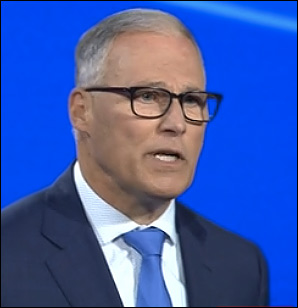
Inslee Bows Out of Presidential Race

By Jim Ellis

Washington Gov. Jay Inslee (D)

Aug. 23, 2019 — The Democratic National Committee leaders’ strategy to substantially increase the presidential debate qualification requirements in order to decrease the unwieldy and bloated candidate field is working.

The prerequisites to prove that a campaign has more than 130,000 donors and that each candidate reaches a minimum of two percent support from four of eight designated pollsters paid another dividend Wednesday as Washington Gov. Jay Inslee became the third Democratic candidate to officially exit the race.

Not making the debate stage signifies that a candidate has no chance to become a top-tier candidate. Without national exposure, also-ran candidates have little opportunity to increase name identification and familiarity in order to raise enough money to deliver a message, motivate people to work on their campaign, and attract serious media attention both nationally and in the important local markets within key states.

Inslee follows Rep. Eric Swalwell (D-CA) and former Colorado Gov. John Hickenlooper in making the decision to bow out of the race, and there are likely to be several more following suit once it becomes even more evident that the lower-tier candidates will no longer have the opportunity to climb onto the national debate stage.

Gov. Inslee, in an interview on MSNBC’s “The Rachel Maddow Show” Wednesday, stated ” … it’s become clear that I’m not going to be carrying the ball. I’m not going to be the president, so I’m withdrawing tonight from the race.” He is expected to announce that he will seek a third term as Washington’s governor.

The Inslee withdrawal is not a surprise to anyone, apparently even to the candidate himself. He remained non-committal about ruling out running for a third gubernatorial term, which froze most of the Washington Democratic potential aspirants in place. The rhetoric blocked them from overtly assembling a statewide campaign since most correctly interpreted the political tea leaves as meaning that Inslee would, in fact, be back to seek re-election.

With 10 candidates now qualified for the next debate since former HUD Secretary Julian Castro just joined the top-tier candidates of Joe Biden, Bernie Sanders, Elizabeth Warren, Kamala Harris, and Pete Buttigieg who are also joined by Sens. Cory Booker (D-NJ), Amy Klobuchar (D-MN), ex-Rep. Beto O’Rourke (D-TX), and businessman Andrew Yang, it remains to be seen just how many of those who won’t meet the qualifications will continue.

Continue reading

Poll: Biden Falling

By Jim Ellis

July 2, 2019 — The Morning Consult organization immediately went into the field after the second night of the Democratic presidential forum (June 27-28; 2,407 US self-identified Democratic registered voters) and found that former Vice President Joe Biden’s support slipped, at least as an immediate reaction to what is commonly viewed as his poor debate performance, while Sen. Kamala Harris (D-CA), evaluated as performing quite well, gained.

The MC data still finds Biden in first place, but down five points from their previous survey. On June 23, just three days before the first forum, Biden led Sen. Bernie Sanders (I-VT), 38-19 percent while Sen. Harris lagged at six percent support. Just after the debate, when completing the poll on June 28, Biden dropped to 33 percent, but Sanders remained constant at the 19 percent level. Conversely, Sen. Harris doubled her past support to 12 percent.

MORNING CONSULT POLL RESULTS:

Click on above graphic to go to complete Media Consult poll results story.

In the Morning Consult survey, Sen. Elizabeth Warren (D-MA) also posted 12 percent support, which was virtually on par with her standing in their June 23 poll when she recorded 13 percent preference. South Bend Mayor Pete Buttigieg, who actually scored well on the second debate night, had a similar result to Sen. Warren. While he was polling seven percent on the June 23 poll, he basically remained constant one week later, dropping to six percent on the MC June 28 survey.

Former Texas representative, Beto O’Rourke, who was dogged with poor debate reviews from his first night performance, also dropped in the Morning Consult polling. Before the forum, O’Rourke was only in the four percent range, and after, even lost half that support base, dropping to two percent.

Continue reading

Democrat Debate Friction


By Jim Ellis

June 10, 2019 — The Politico publication ran a story late last week detailing building friction between the Democratic National Committee and Montana Gov. Steve Bullock, a late-entering Democratic presidential candidate, over the committee leaders apparently axing the western governor from the first debate forum coming later this month.

The source of controversy is the party leadership contending that Gov. Bullock, who looked to have qualified for the debate under the outlined criteria, now has not. Instead, New York City Mayor Bill de Blasio is in position to capture the 20th and final debate podium for the upcoming June 26-27 candidate forums from Miami.

As we have previously reported, the qualifications the party leaders have placed upon the candidates require them to either build a fundraising organization of 65,000 donors, with a minimum of 200 coming from 20 states, or score one percent support in at least three surveys from eight designated pollsters.

Gov. Bullock appeared to have met the polling requirement. He exceeded the one percent threshold in the ABC/Washington Post survey in January. But, the DNC is now disallowing this particular poll, and the action probably eliminates him from the debate.

Their reasoning is that the ABC/Post poll asked an open-ended presidential ballot test question — that is, where the names of the candidates are not read, but the respondents must voluntarily state a name. This type of question is usually employed to test hard name identification and candidate strength.

Continue reading

Democrats Up the Debate Ante

By Jim Ellis

May 31, 2019 — The Democratic National Committee just announced the imposition of new requirements for presidential candidates to participate in the series of subsequent debates to begin in mid-September. The first two sessions are scheduled for June 26-27 and July 30-31 in Miami and Detroit, respectively.

The field is close to being set for the initial forums with 20 candidates qualifying according to the Intelligencer publication, the personnel from which have been tracking the debate process since the schedule was first announced.

To earn a podium in the first two debates, the candidates are required to either score one percent support in three of eight designated polls or reach 65,000 donors, of which at least 200 must come from 20 specific states.

The participants will include some of the more obscure candidates including author Marianne Williamson, New York City businessman Andrew Yang, and the two western governors, Jay Inslee of Washington, and Steve Bullock from Montana.

This means that Sen. Michael Bennet (D-CO), Rep. Seth Moulton (D-MA), former Sen. Mike Gravel (D-AK), and Miramar, Fla., Mayor Wayne Messam likely will not be part of the first forum, though time remains for them to still qualify.

Continue reading

The Scorecard – Part II

By Jim Ellis

May 21, 2019 — Today we continue with our overview of the 24 Democratic presidential candidates. Yesterday we outlined the first 12, and today we’ll finish up with the remaining candidates (listed alphabetically):

• Ex-Gov. John Hickenlooper (D-CO): Eschewing a Senate race against first-term Republican incumbent Cory Gardner, Hickenlooper, after leaving the Colorado governor’s office in January, became a presidential candidate in early March. But, his early results have been uninspiring.
Lagging in the polls but getting just enough to qualify for a debate podium, Hickenlooper is attempting to establish himself as a reasonable left-of-center candidate, but the constituent segment responding to such a message may simply be too small to make him viable. Colorado Sen. Michael Bennet’s presence in the race even cuts into Hickenlooper’s geographic support base. It is likely that the former two-term Colorado governor and Denver mayor will continue to languish in the second tier for the duration of his candidacy.

• Gov. Jay Inslee (D-WA): One of the also-ran candidates, Gov. Inslee, one of only two state chief executives in the field, is not a factor for the nomination. In fact, he has previously indicated that he would not rule out running for a third term as Washington’s governor next year if he fares poorly in the early presidential voting. It appears barely registering on key polls will be enough to place him in the presidential forums, but it is unlikely that he will receive enough of a boost from those events to make him a viable candidate.

• Sen. Amy Klobuchar (D-MN): From her announcement event where she spoke at an outside podium in a Minnesota snow storm, Sen. Klobuchar has yet to catch fire in any meaningful way. As the only candidate from the Midwest, Klobuchar has the opportunity of cobbling together a geographic coalition. The Iowa Caucus will be an important event for her to establish a legitimacy foothold. The Hawkeye State presidential electorate usually looks favorably on neighboring candidates, so it will be important for her to use this first-in-the-nation caucus as a way to become a top-tier candidate.

• Mayor Wayne Messam (D-Miramar, Fla.): Though Miramar is larger than Mayor Pete Buttigieg’s South Bend, Indiana, this local mayor has yet to catch fire. Many media publications do not even count him as part of the candidates’ list. Mayor Messam is unlikely to qualify for the candidate forums and faces major obstacles in developing national credibility for this presidential race.
Continue reading

We Now Have Candidate #22 In
The Race, And Sanders is Falling

By Jim Ellis

May 6, 2019 — A new Democratic presidential candidate entered the race late last week, one whom we didn’t expect to see this soon.

Colorado Sen. Michael Bennet

Despite undergoing prostate cancer surgery last month, Colorado Sen. Michael Bennet says he has already received a “clean bill of health” and is embarking upon his national political effort. Now at 22 candidates in the field of Democrats seeking their party’s nomination for the 2020 presidential election, eyes turn to Montana Gov. Steve Bullock who could be the last widely discussed potential candidate yet to make a decision about forming a campaign.

It’s difficult to see how Sen. Bennet breaks through to the top tier, however. He is not well known outside of Colorado and starts well behind most of the field, putting him in a difficult position from which to even qualify for the first two debate forums scheduled for late June and the end of July.

To earn a debate podium, all candidates must either tally at least one percent support in three Democratic National Committee designated polls, or attract financial support from 65,000 donors, from which they must have a minimum of 200 in at least 20 states. For the lesser known candidates, debate participation is a necessity in order to propel themselves into serious contention for the nomination.

Furthermore, Sen. Bennet doesn’t even have his home state electorate to himself. Former Colorado Gov. John Hickenlooper is also in the race, a man who Bennet once served as chief of staff. Just two days ago, Colorado moved its new primary – they used to apportion delegates through the caucus system – to March 3, the 2020 campaign’s Super Tuesday, which could serve to boost one of the two Centennial State candidates. Yet, with both men in the race, the state’s 67 first-ballot delegate contingent will prove less of a base for either one.

Continue reading