Tag Archives: Election Day

Delaware & Rhode Island Vote Today

By Jim Ellis

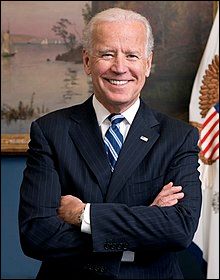
Former Delaware Sen. Joe Biden’s old seat is up for selection today.

Sept. 15, 2020 — The regular election state primaries conclude today as voters in Delaware and Rhode Island, two of America’s smallest states, vote to close out nomination season.

Louisiana holds its primary concurrent with the general election, so voters there will either elect officials outright with majority support or send the top two finishers into Dec. 5 runoff elections. We will also see a special jungle US Senate primary in Georgia concurrent with Election Day, and voters in the Atlanta area will go to the polls on Sept. 29 to choose a short-term successor to the late Rep. John Lewis (D-Atlanta). Otherwise, nominations throughout the 50 states are complete.

As Joe Biden runs for president, the Delaware US Senate seat he held for 36 years also appears on the ballot in this election. Biden resigned the position when he became vice president, just after being elected to his seventh term in the body. Then-Gov. Ruth Ann Minner (D) appointed Broadcasting Board of Governors member and Biden confidant Ted Kaufman (D) to replace the outgoing senator, and he served the first two years of the term but chose not to enter the 2010 special election. In that vote, voters selected a new senator to serve the final four years of that existing term.

The special election winner was then-New Castle County Executive Chris Coons (D), who was nominated in party convention and then defeated consultant Christine O’Donnell (R), 57-40 percent. This proved to be a wacky race where rumors abounded, and even a campaign commercial aired suggesting that O’Donnell believed herself to be a witch.

Sen. Coons was then re-elected to a full term in 2014, a 56-42 percent victory over Republican Kevin Wade. He now stands for a second six-year term this year and appears as a lock for re-election. Today, Sen. Coons faces a relatively minor Democratic primary challenge from business consultant Jess Scarane who had raised over $323,000 through the Aug. 26 pre-primary filing deadline. There is no indication that this election will be close either tonight or in the general election.

A pair of Republicans are on the ballot, attorney and Marine Corps veteran James Martino and Trump campaign activist Lauren Witzke. Whoever wins tonight will only be a small threat to Sen. Coons in the general election.

Gov. John Carney (D) runs for a second term, and he, too, should see little in the way of serious competition. He has one opponent today, Army veteran David Lamar Williams, Jr. (D), a minor candidate. Seven Republicans are in this gubernatorial primary race, including two state senators, Colin Bonini (R-Magnolia) and Bryant Richardson (R-Sussex County). Whoever wins the primary tonight begins as a heavy underdog to Gov. Carney in a very short general election cycle.

Continue reading

Super June & Oregon Primary Results

By Jim Ellis

May 21, 2020 — With so many early primary states moving their elections to June due to the coronavirus shut down, no less than 24 states will hold their nominating event in the upcoming month, making this the most active primary month during the election cycle.

A dozen of the states are still observing their regular political calendar, but 12 more moved into June from earlier dates. Therefore, the following adjusted calendar has been locked into place:


JUNE 2

Connecticut (presidential only)
Idaho (from May 19; though mail voting began on the original primary day)
Indiana (from May 5)
Iowa
Maryland (from April 28)
Montana
New Mexico
Pennsylvania (from April 28)
Rhode Island (presidential only)
South Dakota
West Virginia (from May 12)


JUNE 9

Georgia (from May 19)
Nevada
North Dakota
South Carolina


JUNE 20

Louisiana (presidential only)


Continue reading

Not Quite a Sweep for Biden

By Jim Ellis

March 11, 2020 — Former vice president Joe Biden expanded his lead for the Democratic presidential nomination, but he didn’t quite deliver the knockout blow that many predicted.

He racked up big percentages over Sen. Bernie Sanders (I-VT) in Michigan (53-37 percent), the biggest delegate prize of the night with 125 bound first-ballot votes, Mississippi (81-15 percent), and Missouri (60-35 percent), and carried Idaho with a smaller margin (49-43 percent), but looks to have fallen short in North Dakota (42-49 percent), and Washington (33-33 percent).

Biden earned an approximate total of 211 bound first-ballot delegates as opposed to Sen. Sanders’ projected 138, as the following unofficial list suggests (updated vote totals as reported in the Daily Kos Elections website; delegate projections from The Green Papers website):

Idaho (99% reporting)

Biden ……………….. 48.9%
Sanders …………….. 42.5%
Total First-Ballot Delegates: 20
Biden ……………….. 11
Sanders …………….. 9
Turnout: …………… 103,577   |   2016 Turnout: 23,884 (caucus)


Michigan (99% reporting)

Biden ……………….. 52.9%
Sanders …………….. 36.5%
Total First-Ballot Delegates: 125
Biden ……………….. 73
Sanders …………….. 52
Turnout: …………… 1,557,615   |   2016 Turnout: 1,205,552


Mississippi (98% reporting)

Biden ……………….. 81.0%
Sanders …………….. 14.9%
Total First-Ballot Delegates: 36
Biden ……………….. 34
Sanders …………….. 2
Turnout: …………… 262,252   |   2016 Turnout: 227,164


Missouri (100% reporting)

Biden ……………….. 60.1%
Sanders 34.6%
Total First-Ballot Delegates: 68
Biden ……………….. 44
Sanders …………….. 24
Turnout: …………… 664,305   |   2016 Turnout: 629,425


North Dakota (78% reporting)

Biden ……………….. 42.4%
Sanders …………….. 48.5%
Total First-Ballot Delegates: 14
Biden ……………….. 6
Sanders …………….. 8
Caucus: North Dakota does not report caucus turnout figures


Washington (67% reporting – all mail vote)

Biden ……………….. 32.5%
Sanders …………….. 32.7%
Warren ……………… 12.3%
Bloomberg …………. 11.1%
Total First-Ballot Delegates: 89 (projected results)
Biden ……………….. 43
Sanders ……………….. 43
Bloomberg …………. 2
Warren ……………….. 1
Turnout: …………… 1,024,530 (in progress)   |   2016 Turnout: 26,314 (Caucus)


Continue reading

Numbers Rolling in From the
Texas and California Primaries

By Jim Ellis

March 5, 2020 — Tuesday’s elections in Texas and California were subject to slow counting, but at least in the Lone Star State, the numbers are near final.
More than 780,000 votes have currently been received in California but not yet counted. More votes are coming into county offices. To be valid, voters could have postmarked their mail ballots on Election Day and as long as they are received in the county election offices by close of business on March 6, they will be counted. Therefore, an unknown number will be added to the received but uncounted total.

The large total explains why some of the California congressional races remain uncalled even though the vote spreads among the affected candidates is sometimes quite large.

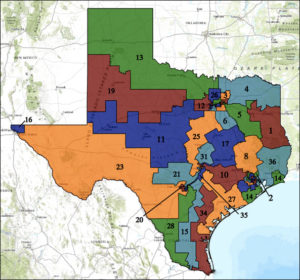
Map of US Congressional districts in Texas

In Texas, US Senate candidate Cristina Tzintzun Ramirez conceded the second Democratic run-off position to state Sen. Royce West (D-Dallas). The two battled for the slot all evening and into yesterday, but the small margin in Sen. West’s favor was definitive enough that Ramirez officially ended her bid. The May 26 statewide run-off election will feature first-place finisher M.J. Hegar, a retired Army helicopter pilot who held veteran Rep. John Carter (R-Georgetown) to a 51-48 percent re-election victory in the 2018 CD-31 campaign that encompasses Williamson and Bell Counties, and now Sen. West. The winner opposes Sen. John Cornyn (R) in November.

The final unofficial Democratic presidential tally finds former vice president Joe Biden scoring 34.5 percent of the vote as compared to 30.0 percent for Sen. Bernie Sanders (I-VT). Though Biden and Sanders were the only candidates to break the 15 percent barrier to qualify for at-large delegates, former New York City mayor Michael Bloomberg and Sen. Elizabeth Warren (D-MA) both obtained the threshold percentage in certain congressional districts, so they, too, earned several delegate votes; both, however, have ended their campaigns, Sen. Warren just this morning. The final unofficial delegate board finds Biden capturing 111 bound Texas first-ballot delegates, Sen. Sanders 102, Bloomberg 10, and Sen. Warren, five.

Just over 2 million people voted in the Democratic presidential primary. President Trump garnered 94 percent of the Republican vote, translating into more than 1.863 million votes. Just under 2 million voters cast ballots in the GOP primary despite there being no real race for president.

Continue reading

Florida: Biden Up

Former vice president, Joe Biden (Getty Images)


By Jim Ellis

June 20, 2019 — Quinnipiac University surveyed the Florida electorate (June 12-17; 1,279 registered Florida voters, 417 self-identified Democrats) and found former Vice President Joe Biden opening a substantial lead over Sens. Bernie Sanders (I-VT) and Elizabeth Warren (D-MA) there. He also posts a healthy advantage against President Trump in a hypothetical general election pairing in what is always a critical voting domain.

The Q-Poll numbers find Biden scoring a 41-14-12 percent advantage over Sens. Sanders and Warren, respectively, with South Bend Mayor Pete Buttigieg and Sen. Kamala Harris (D-CA) trailing in single-digits with eight and six percent, sequentially.

As Nate Silver, founder of the 538 statistical website, said in an interview this week that looking at general election polling this early is basically a futile exercise. It does, however, provide us a clue into candidates’ strengths and weaknesses. In the general election Q-Poll pairing, Biden records a 50-41 percent advantage over President Trump in Florida. This poll, of course, was taken before Trump’s Florida rally Tuesday night in which he kicked off his 2020 campaign.

Silver’s spoken sentiments are true because, among other reasons, so much time remains between now and the 2020 Nov. 3 election, and so many unknown events will occur that could alter the final outcome. Additionally, the campaign will drastically change when both parties have nominees and voters begin paying serious attention to the race.

Continue reading

Senators’ Approvals vs. Votes

By Jim Ellis

Dec. 13, 2018 — Reviewing documentation from the 2018 US Senate races, it appears there is at least a tangential correlation between an incumbent senator’s pre-campaign approval rating and the vote percentage garnered on Election Day.

(Click on image to go to full story at Morning Consult.)

The Morning Consult public affairs firm routinely surveys senators and governors to produce approval indexes for every member. Their 3rd Quarter 2018 sampling was publicly released on Oct. 10, one month before the election and just at the beginning of prime time campaigning.

Looking at the 32 incumbent senators who were on the ballot in November, the mean average increase from the individual’s approval score to the final vote percentage is 9.6 points when using the Morning Consult favorability index as our constant and the median is nine points.

The senator dropping the furthest from approval to vote percentage, down five points, was Maine Sen. Angus King (I), but the number is a bit deceiving. King scored a 58 percent positive approval rating in mid-October, but only received 53 percent in the election. Because the senator is an Independent and the Democrats with whom he caucuses did file their own candidate, the next closest opponent scored 35 percent. Therefore, his political standing still proved strong.

On the other end of the spectrum, the senator who improved the most from an upside-down favorability index rating to the vote was New Jersey Sen. Bob Menendez (D). While his October index was a poor 31:46 percent favorable to unfavorable, the worst by far among the 32 senators standing for re-election, he was successfully re-elected, 54-43 percent, over retired pharmaceutical company CEO Bob Hugin (R).

Continue reading

More Election Eve Updates

By Jim Ellis

Nov. 8, 2018 — According to a CBS News report quoting University of Florida professor Michael McDonald, who runs the United States Election Project, more than 113 million people voted in the 2018 midterm election, the first time turnout exceed the 100 million mark.

With voter participation approaching a majority of the eligible voting population for the first time since 1966, we see a continued increase in voter participation. The 2018 midterm is among the three top off-year elections with the highest turnout rate in the past 118 years. This high voting trend has largely been in effect since the 2000 election, though the 2014 midterm proved an exception with very low turnout.

Carrying through from media projections of uncalled races, it appears the Democrats will see a net gain of 31 seats, not counting the California races that still have millions of votes to tabulate. An incumbent race featuring New Jersey Rep. Tom MacArthur (R-Toms River) appears to be flipping back and forth in final counting.

The Golden State features an election system where at least 75 percent of the people vote through the mail and they allow ballots to be postmarked on Election Day. Therefore, it will be a couple of full weeks before we know the final totals in what appears to be five congressional contests that are still undecided, all in current Republican seats. It is probable that the Democrats will win at least two of the five and possibly even all of them.

Continue reading

The (Mostly) Final Election Results

By Jim Ellis

Nov. 7, 2018
— The long 2018 midterm election cycle drew to a close last night and, as predicted, split government will return to Capitol Hill. Republicans held the Senate and saw their majority grow as Democratic Sens. Heidi Heitkamp (ND), Joe Donnelly (IN), and Claire McCaskill (MO) 2018-mid-term-election-results-graphicfell to Republican challengers. Florida Gov. Rick Scott (R) likely will be forced into a recount to see if his just-under 40,000 vote advantage will be enough to unseat Sen. Bill Nelson (D).

The Montana race is undecided as Sen. Jon Tester (D) is on the precipice of losing but the outstanding vote suggests he could survive by a very small margin. The razor-thin Arizona race is a must-hold for the GOP. Democrat Jacky Rosen defeated Nevada Republican Sen. Dean Heller, and West Virginia’s Joe Manchin (D) fought back a tough challenge from Attorney General Patrick Morrisey (R).

If all of these follow their current trends, Republicans will gain a net of four seats and increase their majority margin to 55-45. If Montana and Arizona go Democratic, the division would slip to 53R-47D. In any event, it appears likely that the Republicans will gain two to four seats.

The new Senate will maintain their new majority split once the Nov. 27 run-off election is held and decided in Mississippi. In that new secondary election, appointed Sen. Cindy Hyde-Smith (R) will face former US Agriculture Secretary and ex-Mississippi congressman, Mike Espy (D). Sen. Hyde-Smith placed first in the Nov. 6 preliminary vote and ended with 41.5 percent of the vote, not close to secure the majority support that would have elected her outright and just ahead of Espy’s 40.6 percent. State Sen. Chris McDaniel (R-Ellisville) was third with 16.4 percent, likely denying Hyde-Smith the opportunity to win in the first round. He is eliminated from further competition.

As predicted, the House did flip to the Democrats and leadership elections will soon be held to determine who will replace retiring House Speaker Paul Ryan (R-WI). It is perceived that California’s Nancy Pelosi will again become the speaker after serving from 2007-11 and losing the post when the Republicans secured the majority in the 2010 election.

Continue reading

Election Day Is Here

2018-elections-open-seatsBy Jim Ellis,

Nov. 6, 2018 — At long last, the 2018 midterm Election Day has arrived. Democrats appear well positioned to capture the House of Representatives, but the question of how big a majority margin we will see remains. The large number of dead-even campaigns heading into today suggests that a small majority margin is the most likely outcome.

Republicans, largely because Democrats are defending 26 of the 35 Senate races, should hold control but, again, to what degree? Will their 51-49 margin increase? It appears they will successfully unseat North Dakota Sen. Heidi Heitkamp (D), but will Arizona and Nevada both hold for them, allowing more substantial gains? Does Rep. Beto O’Rourke’s (D-El Paso) new-found celebrity status and national fundraising prowess allow him to overcome Texas voting history to unseat first-term senator and former presidential candidate Ted Cruz? These and many other yet-to-be determined answers will be uncovered late tonight.

Several races may not finish tonight. Today is also the first time Louisiana voters will go to the polls during this cycle. Without a formal nomination process, the Bayou State consolidates its primary and general election into one vote. Therefore, if a candidate receives an absolute majority tonight, that individual is elected. If not, the top two finishers will advance to a Dec. 8 run-off. With no governor or Senate election on the ballot and little competition within the state’s six House districts, it appears likely that all congressional incumbents will win tonight. Next up, Gov. John Bel Edwards (D), possibly facing US Sen. John Kennedy (R), will defend his position in the 2019 odd-numbered year election.

Continue reading

The Final Outlook

2018-elections-open-seatsBy Jim Ellis

Nov. 6, 2018 — Election Day has arrived, but it is likely that a majority of those planning to vote have already done so. Early voting totals are way up in most of the 37 states that employ a pre-election ballot casting procedure in comparison to the 2014 midterm election.

According to the University of Florida’s United States Elections Project, 25 of the 37 states report receiving more early votes than they did four years ago. None, however, is larger than Texas where early voting has already exceeded that grand total votes cast in 2014. The same also has occurred in Nevada, but it’s less surprising since the last midterm aggregate turnout there was unusually low.

In Texas, just under 4.9 million votes already have been received. In 2014, the aggregate early and Election Day vote was 4.72 million. In 2014, 44 percent of the total vote was cast early. If this same pattern occurs, the current election total turnout will exceed the 2016 presidential level participation figure of 8.96 million votes, however it is unlikely that will happen. How the increased turnout will affect the election outcome is undetermined at this point, but the high number of first-time voters suggest that Democrats could improve their typical standing.

Continue reading