Tag Archives: California

Delegate Reallocation
Brings Increase to 4,750

By Jim Ellis

Jan. 22, 2020 — As we approach the first votes being cast for the Democratic presidential nomination next month, the Democratic National Committee has reallocated delegate slots among certain state contingents, thus increasing the size of the overall delegate universe to 4,750.

The changes are relatively substantial within the states when compared to the last national convention in 2016, while the recent Super Delegate total sees an increase of five new votes. The alterations within the state counts — an increase in every affected place but California — feature an additional 210 delegate votes when compared with the totals from four years ago.

Most of the boosts reflect a reward for increased Democratic votes in the 2016 and 2018 elections. The calculations include results in the recent races for president, US Senate, US House, governor, and for state legislature. States that hold their presidential nominating event after April 1 are also rewarded.

The largest increases are found in New York, Pennsylvania, and New Jersey where their respective delegations have grown by 50, 33, and 19 slots respectively, largely due to Democratic gains in the US House and state legislatures particularly from the 2018 elections. New Jersey, for example, converted a governor’s chair to the Democratic column in their 2019 election, after gaining five congressional seats in 2018 and ‘16, thus accounting for their delegation increase. And, all three states vote after April 1.

California’s regular delegate total has been reduced by one vote, possibly for moving their previous June primary to before April 1, on Super Tuesday, March 3. The state still has, by far, the largest contingent with 494 total delegates and 415 of those voting on the first ballot. The next largest delegation, after calculating their increase, is New York with 320 overall delegate slots, 274 of which are eligible to cast first-ballot votes.

Continue reading

Sanders Leading in California

By Jim Ellis

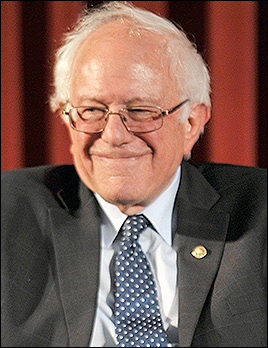
2020 Presidential candidate Sen. Bernie Sanders takes the lead in California

Jan. 13, 2020 — The new Capitol Weekly research survey (Jan. 1-9; 1,053 likely California Democratic primary voters) finds Sen. Bernie Sanders (I-VT) taking a slight polling lead in the California Democratic primary over Sen. Elizabeth Warren (D-MA), former Vice President Joe Biden, and South Bend Mayor Pete Buttigieg in what is consistently becoming a closely bunched field.

With two months to go before the Golden State primary is conducted but less than a month before early voting begins there on Feb. 3, the possibility of multiple candidates receiving portions of the state’s 415 first ballot delegates is becoming very real.

Sanders leads Warren, Biden, and Buttigieg by a 24-21-20-11 percent spread. Under party rules, a candidate must secure 15 percent of the statewide vote to earn at-large delegates. Therefore, Buttigieg must work to gain strength during the remaining time in order to reap the all-important mandated delegate commitments.

If he were to obtain 15 percent, and the others remained constant with these present percentages, the at-large delegate division would break 43 for Sanders and 38 for Warren, while Biden would earn 36 and Buttigieg 27 votes.

Should only the top three qualify for at-large delegate apportionment, Sanders would earn 53 votes, Warren 46, and Biden 45. Therefore, Buttigieg qualifying would significantly change the state and overall race because the large California delegation will be a major presence at the Democratic National Convention.

Scoring at-large delegate commitments is not the only way to earn votes, however. A larger total of 271 delegates will be awarded through the state’s 53 congressional districts. Each district, based upon its historical support performance for Democratic candidates, is awarded between 4 and 7 delegates, inclusive.

Continue reading

New House Census Projections

By Jim Ellis

Jan. 3, 2020 — The Census Bureau just released its new population growth estimates for the 12-month period between July 1, 2018 and July 1, 2019. Their data allows us to assess just which states will likely gain and lose congressional districts in 2020 reapportionment, both in terms of the real numbers just presented and for projecting the final count once the decade’s final-year patterns are calculated and the census is actually conducted.

The national population growth rate was analyzed to be 0.5 percent, down from the peak period of the decade, the July 1, 2014 through July 1, 2015 time segment, when the growth factor reached 0.73 percent. The population patterns of movement to the south and west continue, with the northeast actually seeing a population decrease during the aforementioned reported 12-month period that ended on July 1. The Midwest is not keeping up with the national rate of growth, either, but not losing overall population.

Ten states actually lost population during the reported period, led by West Virginia’s 0.7 percent drop. Alaska declined by 0.5 percent, with New York and Illinois each losing 0.4 percent. Hawaii dropped by 0.3 percent, Connecticut, Louisiana and Mississippi 0.2 percent, and Vermont (0.1 percent). New Jersey is the tenth population reduction state, but it lost only 3,835 people from a population of more than 8.9 million individuals for a 0.0004 percent decrease.

The fastest growing states at this point in the decade are Idaho (2.1 percent since July 1, 2010), Nevada, Arizona, and Utah (all at 1.7 percent increase during the same period), Texas and South Carolina (1.3 percent), Washington and Colorado (1.2 percent), Florida (1.1 percent), and North Carolina (1.0 percent).

Continue reading

Impeachment Politics

By Jim Ellis

Dec. 20, 2019 — As the most recent polling from national research sources and in key states shows President Trump gaining political strength, the US House last night, on a virtual party line vote, approved the resolution to send the Articles of Impeachment to the US Senate for trial.
The vote was 229-198, with three Democrats voting against the articles and one Republican-turned-Independent, Michigan’s Justin Amash, supporting the measures. Presidential candidate Tulsi Gabbard, who represents the 2nd District of Hawaii, voted “Present”. Three members, two Republicans and one Democrat, were absent. Rep. Duncan Hunter (R-CA) will soon resign his seat due to pleading guilty to a federal campaign finance charge. Retiring Reps. Jose Serrano (D-NY) and John Shimkus (R-IL) were the others who did not vote. All present and voting Republicans opposed the impeachment measures.

Two of the three opposition Democrats were expected to vote no, Reps. Collin Peterson (D-MN) who represents the strongest Trump district in the country to elect a Democrat to the House, and New Jersey’s Jeff Van Drew who is about to leave his party to join the Republicans. The third no vote came from freshman Rep. Jared Golden (D-ME), who represents the northern district in Maine that delivered its electoral vote to Trump in 2016 even though the state voted for Hillary Clinton. Maine and Nebraska are the only two states that choose to divide their electoral votes.

Two pollsters who had been showing national political support for the impeachment are now projecting a swing toward the opposite conclusion.

The CNN poll, conducted by their usual research partner, the SSRS firm, surveyed 1,005 adult respondents over the Dec. 12-15 period. A total of 45 percent of the respondents favored impeaching the president, while 47 percent said, “they don’t feel that way.” In contrast, their Nov. 21-24 survey found 50 percent favoring impeachment while 43 percent said they didn’t agree with the move. Previously, the CNN polls had reported positions consistently favoring impeachment since late September.

Continue reading

Rep. Yoho to Retire; Texas Filings

By Jim Ellis

Dec. 12, 2019 — Keeping his pledge to serve only four terms in the House, Florida Rep. Ted Yoho (R-Gainesville) announced in a local radio interview earlier this week that he will not seek re-election next year. Also, the 2020 Texas candidate filing deadline came on Monday, and lists of the qualifying candidates are now becoming public.

REP. YOHO, FL-3

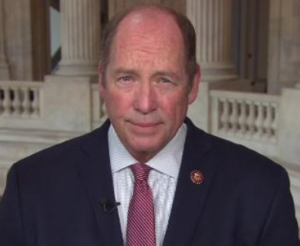
Florida Rep. Ted Yoho (R-Gainesville)

There had been some speculation brewing as to Yoho’s plans for 2020 with some suggesting he might eschew his original pledge. Making this now the 37th open House seat and second in Florida, potential candidates will have until May 1 to file for the Aug. 25 primary.

The eventual Republican nominee will clearly have the inside track to hold this seat for the GOP. Florida’s 3rd District is strongly, and consistently, Republican. President Trump scored 56.2 percent of the vote in 2016. This number is almost identical to the 56.6 percent that Mitt Romney posted against President Obama in 2012, and John McCain’s 54.6 percent that he garnered in the 2008 presidential election.

Rep. Yoho has averaged 61.0 percent of the vote here over four elections, but the district was significantly changed in the 2015 mid-decade court-ordered redistricting plan. In the current configuration, Yoho averaged almost exactly what the Republican presidential candidates scored: 57.2 percent in his two elections since the boundary alteration.

The 3rd District occupies five whole counties and parts of a sixth. The major population center is the city of Gainesville in Alachua County. The remaining portion of the CD is nestled squarely in the north/central section of the Florida peninsula.

Three Republicans had already announced their candidacies, but none seems particularly viable. The contender raising the most money through the Sept. 30 financial disclosure period is businesswoman Amy Pope Wells, but her receipts showed just under $40,000 raised for the campaign with a cash-on-hand figure of just under $8,500.

Continue reading

Is Sen. Kamala Harris Protecting
Her California Senate Seat?

By Jim Ellis

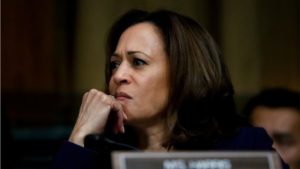
Democrat Sen. Kamala Harris of California

Dec. 5, 2019 — Sen. Kamala Harris (D-CA) became the first of what one might consider the top-tier candidates to end her presidential effort, but the announcement timing on Tuesday likely has more to do with her 2022 Senate race than the presidential contest.

The California candidate filing deadline is tomorrow, so Sen. Harris deciding to end her presidential effort means she won’t be on the Golden State presidential primary ballot, and thus avoids an embarrassing loss within her own constituency. Recent polling was forecasting her in the single-digit range even in California.

Obviously, losing any race in one’s home state reveals political weakness, and though she is virtually invulnerable against a Republican in the 2022 general election, the same might not be true if her opponent were a strong Democrat.

Under the California election system that features the jungle primary concept, variations of which are also seen in Washington state and Louisiana, members of the same party can advance into the general election. Florida voters will have the opportunity of adopting that jungle primary concept via ballot initiative next year.

Because California and Washington hold regular primaries before the general election, a pair of candidates always advance irrespective of percentages attained. Conversely, Louisiana holds one election concurrent with the general, meaning a candidate exceeding 50 percent is elected outright; otherwise the top two finishers advance into a December run-off election.

In the California 2022 Senate race, for example, two candidates will move into the general election from their March or June primary (California has continually alternated their primary election dates between the two months, depending upon the political situation at the time the legislature acted) so long as more than one candidate files. Thus, a strong Democrat — and California has many such individuals — could challenge Sen. Harris, draw a relatively meager percentage in the primary while finishing second, and then rally to make a serious general election challenge against her.

Other previous presidential candidates have often found the political going much tougher than expected when returning home to seek re-election after engaging in the national contest, and it remains to be seen if Sen. Harris will find her road to re-election any bumpier.

Continue reading

House 2020 Overview

By Jim Ellis

Dec. 3, 2019 — Now that two states have already completed their congressional candidate filing (Alabama and Arkansas) and five more are scheduled for December including Illinois, which closed yesterday, it is time to begin to ascertain where US House politics might reasonably stand right now.

California (Dec. 6), Texas (Dec. 9), Ohio (Dec. 11), and North Carolina (Dec. 20 – on hold due to court order), are the other states with candidate deadlines this month. At the end of December, the seven filed states including North Carolina, would account for 129 congressional district candidate slates.

Currently, the party division yields four vacant House seats — two from each party. Of the 431 seats with representation, Democrats hold 233 and Republicans have 197, along with one Independent — Michigan Congressman Justin Amash (I-Cascade Township/ Grand Rapids), who left the Republican Party earlier this year.

Comparing the current ratings for each district against where the seats stood a year before the 2018 election finds that 82 political situations have changed ratings with most moving away from the Republican column and toward the Democrats, but not in all cases.

Currently, 75 districts fall into either the Toss-up, Lean Democrat, or Lean Republican categories. This assumes that the four vacancies — CA-25 (Katie Hill-D), MD-7 (Elijah Cummings-D), NY-27 (Chris Collins-R), WI-7 (Sean Duffy-R) — all remain with their current party in upcoming special elections.

Adding another assumption concerning the House outlook involves the newly adopted court-ordered North Carolina congressional map, the third of this decade. On its surface, these latest district boundaries would net the Democrats at least two seats, those that Reps. George Holding (R-Raleigh) and Mark Walker (R-Greensboro) currently represent.

Both parties are lodging new legal challenges to the map, and the state’s Dec. 20 candidate filing deadline is on hold for the US House candidates until the legal situation is resolved. For the purposes of this analysis, the new North Carolina map is inserted into the national overlay, thus increasing the Democratic conference by two seats.

Of the 75 lean and toss-up seats, 36 are currently in the Democratic column and 38 lie in Republican hands. The remaining seat belongs to Independent Rep. Amash. Looking at how the seats might break right now, it appears that 33 are rated as Lean Democratic with 30 categorized as Lean Republican. The remaining dozen, including the Amash seat, are considered toss-ups.

Continue reading