Tag Archives: Beto O’Rourke

Polling Series: New Pattern Emerges

By Jim Ellis

Aug. 14, 2019 — The HarrisX polling firm just completed conducting three rolling national Democratic presidential primary polls, and while they confirm other data finding former Vice President Joe Biden leading the race, he does so only in the low 30s. This is a number range far below what he needs to win a first-ballot nomination. The data does, however, reveal a new contender consistently placing second.

Sen. Bernie Sanders of Vermont

HarrisX conducted the survey trio from Aug. 7-12 that covered the periods of Aug. 7-10, 8-11, and 9-12. The sample sizes were substantial and almost identical in size, ranging from 1,346-1,350.

The HarrisX findings when compared with other recent polling yield a first-place finish for Biden. The three studies post him to a pair of 30 percent finishes and one 31 percent showing.

But, perhaps the more interesting placement comes in examining who finished second. In contrast with the conclusions of other national polls that show Sen. Elizabeth Warren (D-MA) placing definitively in second place, the HarrisX series finds Sen. Bernie Sanders (I-VT) returning to that position.

The three polls project a consistent Biden-Sanders-Warren finish, with the leader scoring close to a 2:1 margin over his closest rival.

The research trifecta produced the following results:

Aug. 9-12; 1,346 registered or self-identified US Democratic voters
Biden 30%
Sanders 16%
Warren 10%
Harris 6%
Buttigieg 5%
O’Rourke 4%

Continue reading

Projected Democrat Delegate Count

By Jim Ellis

Aug. 12, 2019 — Several polls in key states have been released in early August, so it is a good time to again review the Democratic presidential delegate count estimate based upon the available data.

Projected delegate counts based on polling in nine key states of Democratic candidates jockeying for their party’s nomination for president in 2020.

We see new polls from Iowa, New Hampshire, California, Texas, North Carolina, Washington, and Pennsylvania. Adding the numbers from Nevada and South Carolina — important because this pair is part of the momentum setting First Four — we can gain a decent, though not wholly accurate, picture of where the race would stand if delegate apportionment were based upon these polling totals.

The most current surveys come from North Carolina, Iowa, and Pennsylvania all conducted between July 29 and Aug. 5.

In chronological order, based upon the latest studies, we begin with the Tar Heel State. Survey USA polled the North Carolina Democratic electorate (Aug. 1-5; 534 likely North Carolina Democratic primary voters) and find former Vice President Joe Biden leading his opponents by 21 points. He would post 36 percent as compared to Sens. Bernie Sanders (I-VT) and Elizabeth Warren (D-MA) scoring 15 and 13 percent, respectively. All others fall to single digits.

Accounting for some of the lower-tier candidates eventually dropping out before voting begins, it is likely that the three listed above would exceed the 15 percent threshold to qualify for delegates. If so, Biden would capture approximately 62 delegates, Sen. Sanders would earn 26, and Sen. Warren, 22.

Monmouth University conducted a new Iowa poll (Aug. 1-4; 401 likely Iowa Democratic caucus participants) and found much different results than when we last visited this electorate through the Change Research data in July. Those results projected the top five candidates qualifying for delegate apportionment, but Monmouth sees things quite differently.

According to their latest numbers, it is only Biden and Sen. Warren who would exceed the 15 percent threshold and qualify for delegates, polling at 28 and 19 percent respectively. Therefore, Iowa’s 41 first ballot delegates would split 24 for Biden and 17 for Warren.

Continue reading

Now, Texas Rep. Marchant Bows Out

By Jim Ellis

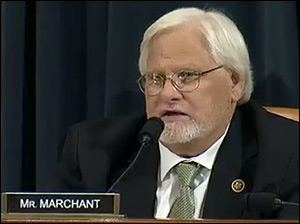
Texas Rep. Kenny Marchant (R-Coppell/DFW area)

Aug. 7 2019 — The string of House retirements continues this week as eight-term Texas Rep. Kenny Marchant (R-Coppell/DFW area) announced that he, too, will leave the House at the end of the current term. Combined with his time in the Texas legislature, Marchant will have served 34 consecutive years in elective office.

The 24th District has been a focal point of the Texas congressional scene since Democrats position the seat high on their conversion opportunity list because of its close 2018 result. Despite Democratic nominee Jan McDowell spending less than $100,000 on her campaign, she came within a 51-48 percent margin of upsetting the veteran congressman, a difference of approximately 8,100 votes.

The vote drop-off from the 2016 presidential year, as it relates to turnout, was only four percent in 2018 compared to 42 percent when contrasting the 2014 midterm to the 2012 presidential election year, thus partially explaining why the latest results are so different.

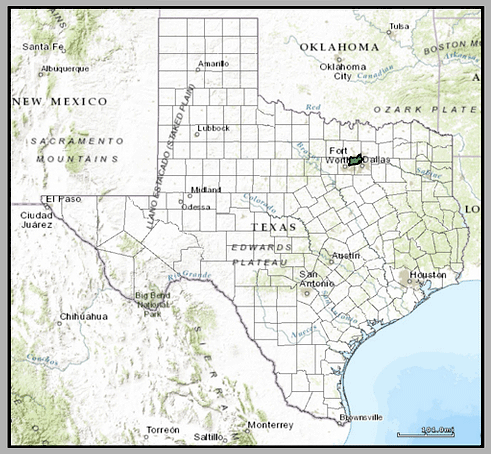
Texas Congressional District 24, currently represented in the US House by Kenny Marchant.

The 24th District is the region surrounding DFW Airport, and contains parts of Dallas, Tarrant, and Denton Counties. President Trump carried the seat with a 51-44 percent margin, down from Mitt Romney’s 60-38 percent, and the 58-41 percent margin that John McCain recorded back in 2008. Then-Rep. Beto O’Rourke slipped past Sen. Ted Cruz (R) in the November election by the same margin that Rep. Marchant won re-election, 51-48 percent, however.

Over his eight elections, Marchant averaged 61.8 percent of the vote, but 58.2 percent since the district was drawn in its present fashion from as part of the 2011 redistricting process.

Continue reading

Poll: Biden Falling

By Jim Ellis

July 2, 2019 — The Morning Consult organization immediately went into the field after the second night of the Democratic presidential forum (June 27-28; 2,407 US self-identified Democratic registered voters) and found that former Vice President Joe Biden’s support slipped, at least as an immediate reaction to what is commonly viewed as his poor debate performance, while Sen. Kamala Harris (D-CA), evaluated as performing quite well, gained.

The MC data still finds Biden in first place, but down five points from their previous survey. On June 23, just three days before the first forum, Biden led Sen. Bernie Sanders (I-VT), 38-19 percent while Sen. Harris lagged at six percent support. Just after the debate, when completing the poll on June 28, Biden dropped to 33 percent, but Sanders remained constant at the 19 percent level. Conversely, Sen. Harris doubled her past support to 12 percent.

MORNING CONSULT POLL RESULTS:

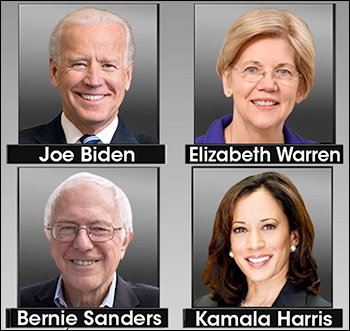
Click on above graphic to go to complete Media Consult poll results story.

In the Morning Consult survey, Sen. Elizabeth Warren (D-MA) also posted 12 percent support, which was virtually on par with her standing in their June 23 poll when she recorded 13 percent preference. South Bend Mayor Pete Buttigieg, who actually scored well on the second debate night, had a similar result to Sen. Warren. While he was polling seven percent on the June 23 poll, he basically remained constant one week later, dropping to six percent on the MC June 28 survey.

Former Texas representative, Beto O’Rourke, who was dogged with poor debate reviews from his first night performance, also dropped in the Morning Consult polling. Before the forum, O’Rourke was only in the four percent range, and after, even lost half that support base, dropping to two percent.

Continue reading

Next for Democrat Candidates

By Jim Ellis

July 1, 2019 — The first Democratic candidate forum is in the books, and the question being posed is how the various performances over the two-night process will affect the candidates’ standing.

On the first night, Sen. Elizabeth Warren (D-MA), really the only top-tier candidate on stage, seemed to dominate the proceedings and clearly scored with her hard left base … a constituency she must wrest away from Sen. Bernie Sanders in order to become a major threat to win the nomination. Some post-debate polling suggests that Rep. Tulsi Gabbard (D-HI) is the lower-tier candidate who significantly improved her standing from the first night group, but she still may not be able to break through to the top.

The general consensus for the candidate performing the worst on the first night, even though he rated his own performance as an “A”, was former Texas congressman, Beto O’Rourke. His attempt at answering questions in Spanish did not seem to be well delivered or received.

The second night, Thursday night, the center stage seemed to go to a pair of candidates, California Sen. Kamala Harris and South Bend, Ind., Mayor Pete Buttigieg. Sen. Harris scored points in bringing the out of control group to order early, and then directly confronted former Vice President Joe Biden on his busing position from decades ago. Even Biden’s explanation of him opposing the Department of Education’s policy was fumbling and incorrect. The votes they were discussing occurred in 1975. The Department of Education didn’t even come into existence until 1979.

Mayor Buttigieg needed a strong performance to solidify his early rise in the polls, and it appears he delivered. He seemed to successfully diffuse the point about the police shooting in his home of South Bend by simply admitting that he failed to do the job. There wasn’t much to say on the topic after that, and none of the other candidates brought it back after Rep. Eric Swalwell (D-CA) made a follow-up point that he should have fired the police chief.

Now, we will see how the candidates fare in post-debate polling, and whether their strategies change.

Continue reading

Debates Begin; Some Polls Tighten

By Jim Ellis

June 28, 2019 — Several polls were released just before the presidential debate series began and we see some inconsistency. Former Vice President Joe Biden leads in the most recent national surveys, but by varying margins.

The closest poll comes from YouGov (June 22-25; 522 likely US Democratic primary voters) and finds Biden’s lead over Sen. Elizabeth Warren to be 24-18 percent. In a close third place is Vermont Sen. Bernie Sanders with 15 percent.

All other candidates are in single digits. Those who have been experiencing a recent downward trend, Sen. Kamala Harris, and ex-Rep. Beto O’Rourke, again posted poor support scores, this time seven and three percent, respectively. South Bend Mayor Pete Buttigieg has been polling inconsistently in recent surveys. Here, we see downward movement, as he registers only five percent support, a polling range that has also been detected in other late June polling.

YouGov also finds two of the lower-tier candidates performing a bit better in this survey. Hawaii Rep. Tulsi Gabbard reaches three percent national support, and Sen. Cory Booker posts two percent support. All others are at one percent or below.

But the Morning Consult data, with a much larger survey sample, tells a much different story. Their poll (June 19-26; 7,150 likely US Democratic primary voters via automated response device) detects a much larger Biden lead. The results find the former vice president at 35 percent support with Sen. Sanders in second place – as he has been in most national polls – with 18 percent, and Sen. Warren in third at 12 percent. Like in the YouGov poll, only the top three finishers posted double-digit support numbers.

The lower tier is very similar to the YouGov results sans Gabbard. They find Sen. Harris (six percent), Mayor Buttigieg (six percent), O’Rourke (four percent), and Sen. Booker (three percent) comprising a second tier. All the rest are at one percent or less.

The HarrisX survey (June 24-26; 892 self-identified Democratic registered voters) brandished a middle-sized sample with commensurate results. HarrisX also finds Biden leading the Democratic race, but his 29 percent support factor falls virtually evenly between what was found in YouGov and Morning Consult.

Continue reading

The Early Delegate Projections

By Jim Ellis

June 25, 2019 — There have been several important state polls recently released that provide us data about where the Democratic presidential candidates stand in relation to popular preference. But that is only half the story.
In order to gauge where the candidates might stand in terms of delegate apportionment, we have taken the available published polls from 16 states and began extrapolating a reasonable delegate projection for each.

For purposes of this exercise, all of the polling data is considered accurate, even though in some instances such a conclusion is a stretch. Additionally, these projections were only based upon the at-large numbers but understand more than half of the delegates come from the state’s chosen districts (usually congressional district, though Texas uses their state Senate seats).

It is reasonable to believe, however, that the district apportionment will, in most cases, be similar to the statewide total. At this point, the at-large ratios are the only data set from which we can begin to draw statistical conclusions.

With that short background, the states and their most recent polling result are listed below along with our unofficial delegate projections listed in chronological order based upon voting schedule:

February 3

Iowa Caucus

(YouGov – May 31-June 12; 587 likely Iowa Democratic primary voters)
• First-Ballot Delegates: 41

Biden 30%
Sanders 22%
Warren 12%
Buttigieg 11%

Delegate Projection:

Biden 15
Sanders 11
Warren   8
Buttigieg   7

Continue reading

California Already Tightening

By Jim Ellis

June 17, 2019 — A new large-sample Golden State poll released from the University of California at Berkeley and the Los Angeles Times (June 4-10; 2,131 likely California Democratic primary voters from a pool of 4,435 registered voters) yields some surprising results. The three most unexpected findings first show a tight race among the four top contenders, Sen. Elizabeth Warren (D-MA) surging into second place, and home-state Sen. Kamala Harris only finishing fourth but not substantially behind.

The California primary, scheduled for March 3, possesses the largest number of first-ballot delegates of any state or territory. The state’s 416 first-ballot delegates, 272 of whom are divided among the 53 congressional districts and 144 at-large, will certainly help set the tone over how the Democratic National Convention unfolds.

Sen. Harris, who could well be the indicator candidate as to what scenario will occur at the convention, (i.e., will one candidate be able to coalesce a majority coalition on the first or second ballot or does the nomination battle fall into a multi-ballot contest) must score big in her home state, and this latest survey suggests her path is challenging but doable.

The Berkeley/LA Times study sees former Vice President Joe Biden holding a smaller lead than in past surveys, as he polls 22 percent first-choice responses. Sen. Warren makes a major jump into second place and records 18 percent, one of her best showings in any poll. Sen. Bernie Sanders (I-VT), who has been dipping in polling across the country, places third at 17 percent, and Sen. Harris trails in fourth position, but is still clearly in the game at 13 percent.

Polling from around the country within the last 10 days, and this California study is obviously no exception, has been projecting a tighter Democratic race. Though Biden still leads, his advantage is lessening.

Continue reading

Biden Beginning to Show Cracks

By Jim Ellis

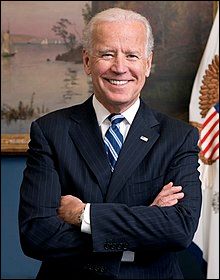
Former vice president and ex-Delaware senator Joe Biden is the Democratic front-runner in the 2020 presidential bid.

June 11, 2019 — Two polls were just released in critical Democratic primary states that find former Vice President Joe Biden’s standing to be weaker than his latest national polling results.

In Texas, the Change Research poll (May 20-June 3; 1,218 likely Texas Democratic primary voters) projects that former Rep. Beto O’Rourke (D-TX) has risen to the top of his home state electorate, leading Biden, 27-24 percent with Sen. Bernie Sanders (I-VT) posting 13 percent support. Sen. Elizabeth Warren (D-MA) is right behind with 12 percent, while California Sen. Kamala Harris records only eight percent backing.

Turning to Iowa, Selzer & Company released another of their Iowa Polls (June 2-5; 600 likely Iowa Caucus attenders; 433 saying they would personally attend their precinct caucus meeting while another 167 said they were interested in participating in the new virtual caucus that will be an Iowa Caucus feature for the first time) and while Biden leads the group of Democratic candidates, the combined numbers from the second, third, and fourth place finishers outpaces the leader by almost a 2:1 ratio.

In the Iowa Poll, conducted for CNN, the Des Moines Register newspaper, and Mediacom, Biden posts only 24 percent support. He is followed by Sen. Sanders at 16 percent, Sen. Warren notching 15 percent, and South Bend Mayor Pete Buttigieg trailing closely with 14 percent. But, Sens. Sanders and Warren together top Biden by seven percentage points and when Buttigieg is added, the trio comes close to denying Biden even the possibility of reaching majority status.

Continue reading

Democrat Debate Friction


By Jim Ellis

June 10, 2019 — The Politico publication ran a story late last week detailing building friction between the Democratic National Committee and Montana Gov. Steve Bullock, a late-entering Democratic presidential candidate, over the committee leaders apparently axing the western governor from the first debate forum coming later this month.

The source of controversy is the party leadership contending that Gov. Bullock, who looked to have qualified for the debate under the outlined criteria, now has not. Instead, New York City Mayor Bill de Blasio is in position to capture the 20th and final debate podium for the upcoming June 26-27 candidate forums from Miami.

As we have previously reported, the qualifications the party leaders have placed upon the candidates require them to either build a fundraising organization of 65,000 donors, with a minimum of 200 coming from 20 states, or score one percent support in at least three surveys from eight designated pollsters.

Gov. Bullock appeared to have met the polling requirement. He exceeded the one percent threshold in the ABC/Washington Post survey in January. But, the DNC is now disallowing this particular poll, and the action probably eliminates him from the debate.

Their reasoning is that the ABC/Post poll asked an open-ended presidential ballot test question — that is, where the names of the candidates are not read, but the respondents must voluntarily state a name. This type of question is usually employed to test hard name identification and candidate strength.

Continue reading