Tag Archives: Arizona

Senate: Recapping the Latest

By Jim Ellis

June 21, 2021 — We have seen quite a few recent US Senate moves that help set the picture for a very competitive 2022 election cycle that will almost certainly break the current 50-50 chamber tie. Below is a recap of the action:

Alabama: Katie Britt (R), the former president and CEO of the Alabama Business Council joined the race and immediately secured the endorsement of her former boss, retiring Sen. Richard Shelby (R). Before joining the Business Council, Britt was the senator’s chief of staff. She joins Rep. Mo Brooks (R-Huntsville) and former US Ambassador Lynda Blanchard in the GOP field. No Democrat has yet announced.

Arizona: Two-term Attorney General Mark Brnovich (R) announced his candidacy in the past week, giving the GOP a candidate who has won statewide to face freshman Sen. Mark Kelly (D), who stands for a full six-year term in 2022 after winning the 2020 special election. Also in the Republican field are retired Air Force Major General Mick McGuire and solar energy company executive Jim Lamon. Venture capitalist Blake Masters and US Rep. Andy Biggs (R-Gilbert) remain as possible candidates.

Florida: US Rep. Val Demings (D-Orlando), the former police chief whose husband is mayor of Orange County and the former county Sheriff, formally announced her US Senate challenge to Sen. Marco Rubio (R). Former congressman Alan Grayson and Miami City Commissioner Ken Russell are also Democratic US Senate candidates, among others.

Georgia: Former University of Georgia football star and NFL player Herschel Walker (R) is re-locating back to his home state from Texas ostensibly to soon announce a challenge to freshman Sen. Raphael Warnock (D) who, like Sen. Kelly in Arizona, must stand for a full six-year term in 2022 after winning a 2020 special election. Also in the GOP nomination race are state Agriculture Commissioner Gary Black, construction company owner Kelvin King, and financial executive and former Trump White House staff member Latham Saddler.

Iowa: Sen. Chuck Grassley (R), who will be 89 at the next election, appears poised to seek an eighth term. At this point, state Sen. Jim Carlin (R-Sioux City) is an announced Republican primary challenger, and ex-Crawford County Supervisor Dave Muhlbauer (D) is the lone Democratic announced candidate. Former one-term US Rep. Abby Finkenauer is a potential candidate along with current US Rep. Cindy Axne (D-Des Moines), and Waterloo Mayor Quentin Hart.

Missouri: Six-term US Rep. Vicky Hartzler (R-Harrisonville/Columbia) is the latest Republican to join the open field with Sen. Roy Blunt (R) retiring. She will oppose former governor, Eric Greitens, Attorney General Eric Schmitt, and St. Louis attorney Mark McCloskey, with US Reps. Ann Wagner (R-Ballwin), Billy Long (R-Springfield), and Jason Smith (R-Salem) remaining as possible candidates.

Former St. Louis area state Sen. Scott Sifton is the lone prominent announced Democrat. Ex-governor, Jay Nixon, and Kansas City Mayor Quentin Lucas are potential Democratic candidates.

Nevada: The Republican leadership believes that former Attorney General and 2018 gubernatorial nominee Adam Laxalt, grandson of the late former Sen. Paul Laxalt (R), will soon announce his Senate candidacy to oppose first-term Sen. Catherine Cortez Masto (D).

Continue reading

S-1: An Unintended Consequence?

By Jim Ellis

Senate Majority Leader Charles Schumer (D-NY)

June 7, 2021 — Senate Majority Leader Charles Schumer (D-NY) has scheduled the controversial federal elections bill, S-1, the companion measure to the House-passed HR-1, for debate on June 21, which appears to be a curious move. At this point, it seems improbable that the leadership can break the filibuster rule, and without doing so, how does the bill pass?

If such an observation is correct, then what does Sen. Schumer gain from bringing the bill to the floor, and will there be unintended consequences? These are questions to be answered after the bill is debated and either passed, dispensed with, or put on hold for a future legislative maneuver.

As we know, the filibuster rule is surviving because Democrats Joe Manchin (D-WV) and Kyrsten Sinema (D-AZ) won’t support changing the rule. Both senators, at least at this point, seem intransigent in their position.

Sen. Manchin just this week verbally shot back at reporters for continually asking him if he is changing his stance on the filibuster rule. “I’m not separating our country, OK?” Manchin said. “I don’t know what you all don’t understand about this. You ask the same question every day. It’s wrong.”

The Daily Kos Elections site yesterday published a filibuster-related response from Sen. Sinema to an Arizona constituent identifying himself through an email address as Triumph110. Below is an excerpt from a very long historically based response:

“I have long said that I oppose eliminating the filibuster for votes on legislation. Retaining the legislative filibuster is not meant to impede the things we want to get done. Rather, it’s meant to protect what the Senate was designed to be.

“I believe the Senate has a responsibility to put politics aside and fully consider, debate, and reach compromise on legislative issues that will affect all Americans. Therefore, I support the 60-vote threshold for all Senate actions. Debate on bills should be a bipartisan process that takes into account the views of all Americans, not just those of one political party. Regardless of the party in control of the Senate, respecting the opinions of senators from the minority party will result in better, commonsense legislation.

Continue reading

Latest Senate News – Part I

By Jim Ellis

May 27, 2021 — Incumbents, candidates, and potential candidates are making political moves in some key upcoming 2022 Senate races, which makes now a good time to review the latest happenings. Today we look at the significant developing races alphabetically from Alabama through Nevada. Tomorrow, we cover the remainder.

• Alabama: Sen. Richard Shelby (R) is retiring, and the early Republican primary battle looks to be a match between Rep. Mo Brooks (R-Huntsville), armed with an endorsement from former President Donald Trump, and ex-US Ambassador Lynda Blanchard who is promising to personally spend $5 million on her campaign.

No Democrat has yet come forward to declare a candidacy. US Rep. Terri Sewell (D-Birmingham), the lone Democratic member of the congressional delegation, has already said she that will seek re-election next year and not run statewide.

• Arizona: Sen. Mark Kelly (D), who won the 2020 special election, must stand for a full six-year term in this election cycle. At this point, four Republicans are in the mix. Term-limited Attorney General Mark Brnovich appears poised to enter the race. Venture capitalist Blake Masters, with presumed major backing from billionaire donor Peter Thiel, is likely to run, as is retired Air Force Major General Michael McGuire. Solar energy company executive Jim Lamon has already announced his candidacy.

This will be a top-tier 2022 Senate campaign and is considered a must-win for both parties.

• Florida: The Sunshine State has been drawing a great deal of political media attention of late, all concerning House members looking to run statewide. It now appears set that Rep. Charlie Crist (D-St. Petersburg) is in the governor’s race, while Rep. Stephanie Murphy (D-Winter Park) seeks re-election, and Rep. Val Demings (D-Orlando) appears set to announce her challenge against two-term Sen. Marco Rubio (R).

The Florida Senate race will be competitive because campaigns in this state are always close and Rep. Demings will be a strong opponent. Incumbent Sen. Rubio, however, begins with a clear advantage.

• Georgia: Like Sen. Kelly in Arizona, freshman Georgia Sen. Raphael Warnock (D) won the special 2020 election to serve the balance of an unexpired term. He, too, must stand for a full six-year term next year.

At this point, now that former Rep. Doug Collins says he won’t run, most of the attention centers around former Georgia football legend Herschel Walker (R) and whether he will return from Texas to challenge Sen. Warnock. Walker promises a decision by summer.

If the former football star chooses to pass, Rep. Buddy Carter (R-Pooler/Savannah) says he will run. Banking executive Latham Saddler and construction company owner Kelvin King are the announced GOP candidates. The list of potential Republican candidates is long with state House Speaker David Ralston (R-Blue Ridge) being the latest to discuss the race with national GOP leaders.

Continue reading

Arizona Sen. Kelly’s Latest Polling

By Jim Ellis

Sen. Mark Kelly (D) won the special election in November to fill the balance of the late Sen. John McCain’s (R) final term in office. He again comes before the voters in this election cycle to stand for a full six-year term.

May 17, 2021 — Arizona pollster OH Predictive Insights went into the field to test the Grand Canyon State’s early electorate as it relates to freshman Sen. Mark Kelly (D). As we remember, Kelly won the 2020 special election to fill the unexpired portion of the late Sen. John McCain’s (R) final term, and next year he stands for a full six-year term.

OHPI surveyed the sampling universe of 935 Arizona registered voters as part of an online opt-in panel during the May 3-5 period. The sample was weighted to properly reflect the partisan division within the state along with gender, age, education, region, and ethnicity segmentation.

The questionnaire first tested the job approval ratings of Arizona’s two Democratic senators, Kelly, and Kyrsten Sinema. Then, seven potential prominent Republicans were individually paired with Sen. Kelly to test his strength against each, one of whom is likely to be his 2022 general election opponent.

Regarding the approval ratings, Sen. Sinema scored a 44:36 percent positive to negative ratio with 10 percent landing in the very favorable category and 15 percent in the very unfavorable classification. Sen. Kelly posted a similar, but slightly worse, 45:38 percent ratio. Like Sen. Sinema, more respondents rated him very unfavorable (23 percent) than very favorable (18 percent). The upside-down extreme ratio suggests an underlying weakness since the very unfavorable outweighs the very favorable for both individuals.

Here’s how potential opponents matched up against Sen. Kelly:

CANDIDATE PERCENT
Sen. Mark Kelly (D) 45%
Kimberly Yee (R) 35%
CANDIDATE PERCENT
Sen. Mark Kelly (D) 43%
Jack McCain (R) 29%
CANDIDATE PERCENT
Sen. Mark Kelly (D) 46%
Karl Lake (R) 35%
CANDIDATE PERCENT
Sen. Mark Kelly (D) 47%
Kelli Ward (R) 36%
CANDIDATE PERCENT
Sen. Mark Kelly (D) 47%
Andy Biggs (R) 36%
CANDIDATE PERCENT
Sen. Mark Kelly (D) 44%
Michael McGuire (R) 35%
CANDIDATE PERCENT
Sen. Mark Kelly (D) 46%
Mark Brnovich (R) 36%

Yee is Arizona’s state treasurer. McCain is the son of the late Sen. McCain. Karl Lake is a former news anchor for one of the major network Phoenix television stations. Ward is the Arizona Republican Party chair who has previously served in the state legislature and run for the US Senate. Andy Biggs is the US congressman from the Maricopa County-anchored 5th District. Michael McGuire is a retired major general who headed the Arizona National Guard. Brnovich is the state’s attorney general.

Continue reading

Rep. Murphy to Challenge Sen. Rubio

By Jim Ellis

Florida Rep. Stephanie Murphy (D-Winter Park)

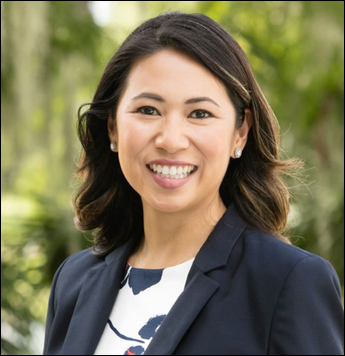
May 14, 2021 — According to the Axios news site, insiders close to Florida Rep. Stephanie Murphy (D-Winter Park) say that she has made the decision to challenge Sen. Marco Rubio (R) next year and will formally announce her campaign next month. The move had been expected for some time.

Rep. Murphy, a native of the country of Vietnam, was first elected to the House in 2016, defeating veteran Republican incumbent John Mica after the state Supreme Court had re-drawn the Florida congressional districts and made the 7th CD more Democratic. She unseated Rep. Mica 51-49 percent, and then scored re-election victories of 58 and 55 percent in 2018 and 2020, respectively.

A strong fundraiser, Rep. Murphy obtained over $3 million for both of her incumbent re-election campaigns. She ended the 1st quarter 2021 with a cash-on-hand figure of $1.43 million. Sen. Rubio posted $3.9 million in his campaign account during the same reporting period.

Assuming Murphy does enter the race next month, Democrats will have a credible challenger to Sen. Rubio, but one who still must be considered a decided underdog. In 2010, Sen. Rubio, then a state representative, defeated then-governor Charlie Crist, who was running as an Independent, and Democratic Congressman Kendrick Meek by a 49-30-20 percent margin. He was re-elected in 2016 with a 52-44 percent vote spread over then-congressman Patrick Murphy (D).

Florida races, as we know, are always competitive and usually very close, though the state has been trending more Republican over the past several elections. A Rubio-Stephanie Murphy race promises to become a national campaign.

With the Democrats apparently attracting a strong candidate in Florida, it is a good time to review the other key races.

In Pennsylvania, both parties are headed for very crowded primaries as each works to nominate a candidate to hopefully succeed retiring Sen. Pat Toomey (R). Afghan War veteran Sean Parnell entered the Republican primary earlier this week, but his only venture into elective politics was recording a two-point loss to Rep. Conor Lamb (D-Pittsburgh) last November in an Allegheny County suburban district.

Rep. Lamb, himself, may join the Democratic Senate campaign, meaning both parties are going to host political dogfights for the party nomination. In any event, however, the Pennsylvania race will be a top-tier national campaign.

Continue reading

Apportionment Surprises


By Jim Ellis

April 28, 2021 — In virtually every 10-year apportionment announcement at least one surprise occurs, but the census unveiling Monday contained multiple blockbusters.

For example, two states had their final number of congressional districts determined by less than 90 people. Reportedly, if New York had just had 89 more people, that would have saved an Empire State congressional seat. Minnesota becomes the beneficiary allowing the state to barely hold its eighth district.

Instead of 10 seats changing states as had been forecast, only seven, affecting 13 domains, switched. Perhaps the main reason for the lower number is the decade population growth rate. According to yesterday’s final report, the nation grew at only a 7.4 percent rate, the lowest since the 1930 census’s 7.3 percent. By contrast, the population increase from the 2010 total was 9.7 percent.

Pre-census projections, for better than a year, had been predicting that Texas would gain three seats, Florida two, and Arizona one. The analysts also estimated seat losses for Alabama, Minnesota, and Rhode Island. None of these projections proved accurate.

On the other hand, prognostications for the balance of the map were accurate. Texas, and Florida did gain, but two and one, respectively, instead of three and two seats. Colorado, Montana, North Carolina, and Oregon each added one district apiece as expected. The one-seat losers were California, for the first time in history, Illinois, Michigan, New York, Ohio, Pennsylvania, and West Virginia.

It’s a bit too soon to determine which party will benefit the most from these numbers at the congressional level, though Republicans should be up slightly in the Electoral College for the next presidential campaign. Once we see how the population is distributed within the states will better tell us whether Democrats or Republicans will take the most advantage of the apportionment. This will depend upon how the population spreads through the cities, suburbs, and rural regions.

Continue reading

Assessing Arizona

By Jim Ellis

Sen. Mark Kelly (D) won the special election in November to fill the balance of the late Sen. John McCain’s (R) final term in office. He again comes before the voters in this election cycle to stand for a full six-year term.

April 13, 2021 — The Club for Growth released the results of their new Arizona Republican primary poll on Friday, and it draws attention to a race that should become a top-tier 2022 campaign.

As you will remember, Sen. Mark Kelly (D) won the special election in November to fill the balance of the late Sen. John McCain’s (R) final term in office. Therefore, he again comes before the voters in this election cycle to stand for a full six-year term. Kelly, a retired astronaut and husband of former Arizona Rep. Gabrielle Giffords (D), defeated appointed Sen. Martha McSally (R), 51-49 percent, in a result much closer than the polling predicted.

WPA Intelligence conducted the Club for Growth 2022 poll during the April 5-6 period of 505 likely Republican primary voters via live interview. They tested Rep. Andy Biggs (R-Gilbert) against Gov. Doug Ducey. The results found the congressman holding a 46-45 percent lead over the governor and, in what seems to be a clear indication that base Republican voters still follow ex-President Donald Trump’s lead, the margin swells to 59-32 percent if the latter man endorses Rep. Biggs.

It is important to note, however, that Gov. Ducey has already announced that he is not running for the Senate. National Republican leaders are attempting to convince the governor to reverse his decision, but his entrance in the Senate race, at least for now, appears highly unlikely. Rep. Biggs has not given a firm public indication if he will become a statewide candidate.

Currently, the only Republican to announce for the Senate is software engineer Rob Paveza. While the pace of this eventual competitive contest is slow in the early going when compared to states such as Ohio, Pennsylvania, and North Carolina, a full year remains before candidate filing closes in Arizona, a state that hosts an August primary.

Those mentioned as possible candidates aside from Rep. Biggs include Attorney General Mark Brnovich, State Treasurer Kimberly Yee, state Republican Party chair and former Senate candidate Kelli Ward, ex-US representative and 2002 gubernatorial nominee Matt Salmon, State Adjutant General Michael McGuire, and solar energy company executive Jim Lamon, all according to the Politics1 blog.

Sen. Kelly was one of the top fundraisers of the 2020 election cycle, obtaining more than $101,000,000 for his campaign committee. Only Georgia Sens. Jon Ossoff (D) and Raphael Warnock (D), who both were forced to compete in general election runoff campaigns, and South Carolina’s Jaime Harrison, the current Democratic National Committee chairman, raised more. Already for 2022, Sen. Kelly announced that he pulled in $4.4 million during the first quarter of this year.

Continue reading

Analyzing the 2020 Turnout Increase

By Jim Ellis

March 29, 2021 — As we know, election year 2020 produced the largest voter participation level in history, including a substantial increase from the last presidential turnout in 2016. Now that all states have reported finalized election numbers, we know that a total of 158,507,137 individuals cast ballots in the 2020 presidential election, a number that shattered even the highest pre-election turnout predictions.

The figure also represents a 15.9 percent turnout increase when compared with 2016, which, at that time also set a record for raw number voter participation. Attempting to explain the large jump, the proponents of the election system overhaul legislative package in Congress, HR-1/S.1, credit the rise to the heightened use of early and mail voting, and therefore want to make permanent most of the court ordered COVID-19 pandemic response procedural changes. Digging deeper, however, we find that there are other factors present that help explain the voting uptick.

While all but five states (Alabama, Connecticut, Mississippi, Missouri, and New Hampshire) employed some form of early voting, another five conducted their elections only through the mail. The usual all-mail states of Colorado, Oregon, and Washington were joined by Hawaii and Utah according to the Ballotpedia election statistics organization that regularly publishes related data.

All five of these latter states saw turnout growth rates that exceeded the national average, including the state posting the highest increase, the Aloha State of Hawaii, which saw a whopping 32.5 percent rise in voting.

As stated earlier, the national average turnout increase when comparing the 2020 figures with 2016 is 15.9 percent. Eighteen states saw an increase greater than the national mean average, while 32 states and the District of Columbia fell below that number. All 51 entities, however, reported an upsurge in voting from 2016. The median average calculated to an increase of 12.8 percent.

Let’s concentrate on the 10 states with the highest increase from 2016. They are:

STATE        PERCENT INCREASE
Hawaii 32.5%
Arizona 31.6%
Utah 31.5%
Texas 26.2%
Idaho 25.8%
Nevada 24.9%
California 23.4%
Washington 23.2%
Tennessee 21.8%
Georgia 21.5%

Continue reading

Missouri Sen. Roy Blunt to Retire

By Jim Ellis

Missouri Sen. Roy Blunt (R)

March 10, 2021 — Missouri Sen. Roy Blunt (R) announced via video yesterday that he is not seeking a third term next year. He will conclude an era of elected public service that spanned 14 years in the House in addition to completing a dozen years in the Senate. Prior to his federal career, he served as Missouri’s secretary of state, was the Greene County clerk, ran for governor, and saw his son elected governor.

The Blunt exit brings the number of Republican open Senate seats to five and could soon go to seven if Sens. Chuck Grassley (R-IA) and Ron Johnson (R-WI) follow suit. Sen. Grassley will turn 89 years of age before the next election, and Sen. Johnson originally made a two-term promise when he first ran in 2010. The other announced GOP retirees are Sens. Richard Burr (NC), Pat Toomey (PA), Rob Portman (OH), and Richard Shelby (AL).

Without Sen. Blunt in the 2022 race, we can expect a contested Republican primary. Potential candidates include Lt. Gov. Mike Kehoe, Secretary of State Jay Ashcroft, the son of former senator and US Attorney General John Ashcroft, and US Reps. Ann Wagner (R-Ballwin/St. Louis County), Blaine Luetkemeyer (R-St. Elizabeth/Jefferson City), Sam Graves (R-Tarkio/St. Joseph), Billy Long (R-Springfield), and Jason Smith (R-Salem/Southeast MO) among others.

Resigned Gov. Eric Greitens, who was forced from office due to a sex scandal, was beginning to talk about launching a primary against Sen. Blunt, so in an open-seat situation he will be another person whose name will regularly surface.

We’re seeing almost the opposite response among Democrats. The initial public comments from two of the most well-known Missouri Dems, former Sen. Claire McCaskill and 2016 nominee Jason Kander, who held Sen. Blunt to a tight 49-46 percent win in 2016, both immediately indicated that they will not run in 2022. Thus, a previously announced Senate candidate, former state Sen. Scott Sifton, apparently becomes the early leader for the party nomination.

Continue reading

More Redistricting Delays

By Jim Ellis

Jan. 29, 2021 — The Census Bureau announced at mid-week yet another postponement in releasing the national apportionment figures, this time until April 30. Reapportionment should have been completed by Dec. 31, but the Bureau previously announced that March 6 would be the new release date due to COVID-related problems. Now, we see further delays.

Reapportionment is the process of creating a new census data algorithm in order to project the number of congressional seats each state will be awarded for the coming decade. It appears that 10-12 seats could change states, with the northeast and Midwest typically losing districts to southern and western states. This time, however, California, for the first time in history, is reversing their trend and appears headed for the losing list.

Once the apportionment numbers are known and the individual data dispersed, the states can begin the redistricting process. The Census Bureau further stated that individual states won’t be receiving their particular data necessary for redistricting until at least July 30. This will clearly set the redistricting cycle back significantly, which could cause major problems for the coming election cycle.

In the past, the Census Bureau has prioritized the states with early primaries to be first to receive their data. This meant that New Jersey and Virginia initially received their new population numbers ahead of the others because they have odd-numbered year state legislative elections. Texas and Illinois were next to receive since they traditionally schedule their regular primaries in March of the election year.

Knowing that the numbers would not be available for them in 2021, New Jersey and Virginia took preparatory action. Garden State officials placed a referendum on the November ballot asking voters for approval to postpone legislative redistricting until 2023. The measure passed.

The Old Dominion leaders decided they would run their 2021 state Delegate elections on the amended 2011 map but could conceivably call elections again for next year once they receive their updated data and can draw district boundaries. Virginia state senators do not stand for election until 2023, so it is unlikely the redistricting delay will affect those campaigns.

The data distribution and processing delay could place most legislatures in a conundrum. Most will be adjourned when the data is received, so special sessions will have to be called in most cases to complete the process prior to the 2022 candidate filing deadlines. This suggests that the states having redistricting commissions might prove to be in better position to complete the task because they won’t have to deal with legislative politics, priorities, or calendars, all of which result in a lengthy process.

Additionally, since almost every map is challenged in court, we could well see a plethora of lawsuits being filed late in the year that keep the redistricting process tied in figurative knots for months.

The states in the most difficult situations will be those gaining and losing congressional representation. Because the number of districts these particular states will have differ from their current allotments, they do not have the option of reverting to the current map once 2021 apportionment becomes final.

In the case of gainers and losers not having completed maps, we may see at-large races for the House. This would be particularly difficult for the losing states because we may see all members in the affected places having to run at-large for seats in their House delegations.

Unofficially, the gaining states appear to be Texas (3 seats), Florida (2), Arizona, Colorado, Montana, North Carolina, and Oregon. The losers may be New York (possibly 2 seats), Alabama, California, Illinois, Michigan, Minnesota, Ohio, Pennsylvania, Rhode Island, and West Virginia. Reports suggest that the closest developing situation concerns whether Alabama loses a seat or New York drops two.

President Biden’s executive order that mandates non-citizens be counted in the census will certainly affect the final data projections and may be another reason for this latest delay.

The only certainty about 2021 reapportionment and redistricting is the many moving parts in these various states will likely produce surprising political results.