Category Archives: House

Competitive Colorado Senate Race; Cortez Masto and Laxalt in Nevada Donnybrook; NC-13: Deadlocked Poll

By Jim Ellis — Tuesday, Sept. 6, 2022

Senate

Colorado incumbent Sen. Michael Bennet (D)

Colorado: Three Competitive Polls — While the Colorado Senate race has been on the edge of competitiveness for quite awhile, three new polls suggest this is a contest that deserves some national attention. The most surprising survey comes from the Tarrance Group, which tested the Centennial State electorate for the Republican Attorneys General Association (Aug. 22-25; 600 likely Colorado general election voters; live interview). Tarrance finds the Senate race between incumbent Michael Bennet (D) and challenger Joe O’Dea (R), a construction business owner, separated only by one point, 48-47 percent.

Two others see the race somewhat differently. The Trafalgar Group (Aug. 22-25; 1,087 likely Colorado voters; multiple sampling techniques) posts the race at 47-42 percent in Sen. Bennet’s favor. Finally, the most recent survey, from Public Policy Polling (Aug. 30-31; 782 likely Colorado voters; interactive voice response system) sees Bennet holding a 46-35 percent lead.

Republican Colorado Senate challenger Joe O’Dea (R)

Even this last survey, however, contains political warnings for the senator. President Biden’s job approval is decidedly upside-down at 43:51 percent, and Bennet is well below the 50 percent support level. The latter number is always a red flag for an incumbent.

Nevada: Sen. Cortez Masto and Adam Laxalt in Donnybrook — The Fabrizio Ward (R) and Impact Research (D) firms again collaborated on a statewide survey for AARP, as they have done in several places this year. Their latest joint effort ventured to the key swing state of Nevada. The poll was conducted over the Aug. 16-24 period of 500 registered Nevada voters, with over-samples of 550 senior voters aged 50 and older, and another over-sample of 290 Hispanic voters.

The ballot test finds Sen. Catherine Cortez Masto (D) again barely leading former Attorney General Adam Laxalt (R), 44-40 percent. When the two candidates were isolated on an individual ballot test, Cortez Masto’s edge dropped to a virtually even 48-47 percent.

House

NC-13: Deadlocked Poll — Public Policy Polling released a new survey of the Raleigh-Fayetteville new 13th Congressional District open seat campaign in North Carolina. The survey (Aug. 23-24; 506 likely NC-13 general election voters; live interview & text), finds Democratic state Sen. Wiley Nickel (D-Raleigh) and former North Carolina State University football player Bo Hines (R) tied at 40 percent apiece. Both have “top of the ticket” problems.

President Biden’s job approval score is a poor 37:51 percent favorable to unfavorable, where former President Trump’s favorability index is a similar 35:56 percent.

WI-3: Van Orden Leads on Dem Poll — Wisconsin state Sen. Brad Pfaff (D-La Crosse) released the results of his internal Public Policy Polling survey (Aug. 18-19; 626 registered WI-3 voters; live interview & text) and found Republican retired Navy SEAL Derrick Van Orden leading the race by a 45-40 percent count. It is a bit unusual to see a campaign release a survey that projects their candidate trailing, but Van Orden is viewed as the race favorite.

WI-3 is one of the few districts that voted for former President Trump in 2020 (51.5 – 47.8 percent) and elected a Democratic congressman, retiring Rep. Ron Kind (D-La Crosse). This race is a must-win for the Republican majority matrix.

Governor

Nevada: AARP Also Shows Tight Gov Race — The aforementioned Fabrizio Ward/Impact Research statewide Nevada survey for AARP (see Nevada Senate above) also finds a very close governor’s race with the incumbent far below the 50 percent threshold. The ballot test for this race finds Gov. Steve Sisolak (D) holding only a 41-38 percent advantage over Clark County Sheriff Joe Lombardo (R). Perhaps more troubling for Gov. Sisolak, the respondents believe Nevada is on the wrong track by a hefty 38:62 percent margin.

Examining the Role of the RCV System in Alaska’s Special Election; Rep. Crist Resigns in Fla.; Indiana “Shock” Poll

By Jim Ellis — Friday, Sept. 2, 2022

House

Sarah Palin (R)

AK-AL: Sarah Palin Loses Special Election — The headline here is that former Alaska governor and 2008 GOP vice presidential nominee Sarah Palin fell to Democrat Mary Peltola in the at-large Alaska special election, and the first full usage of the state’s new Ranked Choice Voting (RCV) system was fully in play. Yesterday we reported the results; today we’ll delve into the RCV system that delivered those results.

At the end of the final counting, which was when the Aug. 16 deadline to accept ballots in the primary election expired, 60 percent of voters chose a Republican candidate. However, the RCV system yielded a Democratic victor. Therefore, in a system that is designed to create a majority candidate, in this case the RCV system produced a minority vote share winner.

The finalists from the jungle primary election began with Peltola, who recorded 40.2 percent of the vote. Palin secured 31.3 percent, and Nick Begich III (R) captured 28.5 percent. Begich III is the grandson of former Democratic US Rep. Nick Begich, Sr. (D), and the nephew of former US senator and ex-Anchorage Mayor Mark Begich (D). In finishing third, Begich was eliminated from further competition, and his first-place votes were located and then allocated to the remaining two candidates via the voters’ ranking.

Former state Rep. Mary Peltola (D) winner of the Alaska special election race.

As we predicted, based upon the experiences of other states and cities that have used the RCV system, a large number of votes were disqualified, or “exhausted” to use the Alaska vernacular.

Of the 192,158 individuals who participated in the special election and/or regular primary, a total of 3,401 ballots were listed as “blank,” meaning the individuals voted in the election but bypassed the special congressional contest. Another 342 ballots were categorized as “overvotes.” This terminology suggests the owners of such ballots voted incorrectly. Typically, it means the individual, presumably inadvertently, voted more than once for the same candidate, thus disqualifying the ballot.

The categories that likely cost Palin the election, despite the large majority voting for a Republican candidate, came in RCV’s Round 2. In that round, a total of 11,222 Begich voters did not properly manage the RCV system on their ballots, which was to rank the three candidates in the order of the individual voter’s preference.

Lawyers who challenged the RCV system in other places around the country warned that their experience showed a large number of disqualified, or “exhausted,” ballots would be present here, which certainly proved to be the case.

This latter number added to the initial overvotes, meant a total of 11,269 Begich first-place voters saw their ballot disqualified, more than twice the number of votes (5,219) that comprised Palin’s deficit against Peltola’s final victory total. Adding this number to those who chose to bypass the special congressional race meant that 14,965 individuals who voted in this election failed to have their ballot count in the RCV process.

The second category leading to Palin’s demise were the 15,445 individuals who voted for Begich on the first ballot, but decided to support Peltola with their second choice. This is a much higher number than our pre-election estimate projection, and are chiefly responsible for the ex-governor failing to win the general election.

A possible reason that some of these voters chose Peltola is that the Begich name identification comes from the current candidate’s family predecessors mentioned above who were, and are, affiliated with the Democrats. It is possible that the multiple confusion factors present in this race also extended to Begich’s name, with many traditional Democratic voters still thinking he is a member of their party and not noticing his Republican label on the ballot.

Also adding to the confusion factor was the RCV system being used only in this special general election that was run concurrently with the regular state primary. In all other races on Aug. 16, voters were simply choosing one candidate to advance into the general election, where four jungle primary candidates from each race would do so. Therefore, the almost 15,000 ballots being disqualified before the end of the RCV special election process suggests a large amount of confusion within the electorate.

With the same three finalists again advancing into the regular election from the regular congressional primary, which was also held on the same day (Aug. 16), thus producing one more confusion factor, we could see a rerun of the RCV results in the November election. If either Palin or Begich were to withdraw from the regular general election, however, Peltola’s fate would then likely be sealed, since the Republican vote would then presumably overwhelm the number of her Democratic preference ballots.

While the intrigue associated with this one race has now been resolved, new questions will immediately begin to unfold for the impending general election. For now, however, Mary Peltola will be sworn in as the House of Representatives’ newest member.

FL-13: Rep. Crist Resigns — Congressman Charlie Crist (D-St. Petersburg) resigned his Pinellas County-anchored US House seat Wednesday in order to fully concentrate on his gubernatorial campaign. Crist won the statewide Democratic primary on Aug. 23 and will face Gov. Ron DeSantis (R) in the general election. Another member of the Florida congressional delegation, Rep. Ted Deutch (D-Boca Raton), who announced in February that he would leave Congress to become the CEO of the American Jewish Committee, will reportedly officially resign on Oct. 1.

With the Crist and Deutch resignations, the Democrats will be down to 220 seats in the House even after adding New York Rep. Pat Ryan (D-Poughkeepsie) after his special election victory certification and the Alaska at-large seat where Democrat Mary Peltola was declared the special election winner. It is unclear if Gov. DeSantis will call a special election to fill the Florida vacancies or just leave them vacant until the new term begins in January.

Senate

Indiana: Shock Poll — Hoosier State Democratic US Senate nominee Tom McDermott’s campaign released the results of their recently conducted Change Research poll (Aug. 20-24; 2,111 likely Indiana general election voters; online), which posted Sen. Todd Young (R) to only a 45-42 percent lead. The Indiana Senate race had been considered non-competitive. The Young campaign responded with criticism over the online methodology and weighting system that Change Research employs. Expect the Young campaign to quickly counter this data with a poll release of their own.

Governor

South Carolina: Gov. McMaster Leading in Consecutive Polls — In a race that had not been polled during the general election period to-date, two new surveys were released on consecutive days. Yesterday, we reported that Gov. Henry McMaster (R) led in The Trafalgar Group survey (Aug. 25-28; 1,071 likely South Carolina general election voters; multiple sampling techniques) by a 51-43 percent margin over former Congressman Joe Cunningham, who won the Democratic nomination back in the June primary.

The next day’s polling release featured a survey from the Democratic firm, Blueprint Polling (Aug. 24-25; 721 likely South Carolina general election voters; live interview), that actually posted McMaster to a larger lead than the Trafalgar result, 50-39 percent.

Palin Loses in Alaska; Walker Leads in Second Poll in Georgia, Kemp Holds Edge; Gen. Bolduc Again Leading in NH; Gov. McMaster’s SC Quest

By Jim Ellis — Thursday, Sept. 1, 2022

House

Former state Rep. Mary Peltola (D) wins the Alaska special election race.

AK-AL: Sarah Palin Loses Special Election — Former Alaska governor and 2008 GOP vice presidential nominee Sarah Palin fell to Democrat Mary Peltola in the at-large Alaska special election, which marked the first full usage of the state’s new Ranked Choice Voting system.
At the end of the final counting, 60 percent of voters chose a Republican candidate, but the RCV system yielded a Democratic victor. Therefore, in a system that is designed to create a majority candidate, in this case it produced a minority vote share winner.

The finalists were Peltola, who recorded 40.2 percent of the vote; Palin, who secured 31.3 percent, and Nick Begich III (R), the grandson of former Democratic US Rep. Nick Begich, and the nephew of former US senator and ex-Anchorage Mayor Mark Begich (D), who captured 28.5 percent. Finishing third, Begich was eliminated from further competition, and his first-place votes were located and then distributed to the other candidates via the voters’ ranking. In the end, Peltola defeated Palin by a 5,219 votes; another 14,965 ballots were disqualified in the Ranked Choice Voting process.

Senate

Georgia Sen. Raphael Warnock (D) and Republican challenger Herschel Walker[/caption]Georgia: Walker Leading in Second Poll — Previously, an early August Phillips Academy poll projected Republican Herschel Walker to be holding a slight 45-44 percent lead over Sen. Raphael Warnock (D) after trailing in seven of eight July surveys. Emerson College released the result of their most recent Georgia survey Tuesday (Aug. 28-29; 600 likely Georgia general election voters; interactive voice response system, text, and online), which found Walker posting an almost identical 46-44 percent edge, again providing more evidence that this race is a long way from being over.

New Hampshire: Gen. Bolduc Again Leading — In mid-August, when St. Anselm College released a survey showing retired Army general and 2020 US Senate Republican candidate Don Bolduc developing a substantial lead for the Sept. 13 GOP Senate primary, Gov. Chris Sununu (R) went public in an attempt to negate his advantage. Many believe, including Gov. Sununu, that Gen. Bolduc would lose to Sen. Maggie Hassan (D) in November. Previously, Gen. Bolduc had accused Gov. Sununu of being “a Chinese communist sympathizer,” among other comments that created bad blood between the two men.

The University of New Hampshire (Aug. 25-29; 892 likely New Hampshire Republican primary voters; online) reported the results of their new statewide survey. According to the UNH Granite State Poll, Gen. Bolduc continues to lead state Senate President Chuck Morse (R-Salem) by over 20 points, 43-22 percent, with three other candidates languishing in low single digits.

Georgia: Kemp Again Holds Advantage — The aforementioned Emerson College survey (see Georgia Senate above) also tested the Peach State governor’s race between incumbent Brian Kemp (R) and challenger Stacey Abrams (D) who returns for a re-match from their close 2018 contest. The Emerson results give Gov. Kemp a 48-44 percent edge, which appears as a consistent margin routinely found in eleven of 12 July-August polls in which the incumbent held an edge. The lone outlier poll, a Research Affiliates study that concluded on Aug. 1, found the two candidates tied at 47 percent apiece.

South Carolina: Gov. McMaster Leading in Re-election Poll — Gov. Henry McMaster (R) succeeded then-Gov. Nikki Haley (R) when she resigned her office in 2017 to become US Ambassador to the United Nations. McMaster would then win a full term in 2018, and now seeks re-election. Because of the state’s former one and now two-term limit, winning re-election this year and serving most of the next term would make McMaster the longest-serving governor in state history.

The Trafalgar Group, as part of their nationwide polling series (Aug. 25-28; 1,071 likely South Carolina general election voters; multiple sampling techniques) tested the Palmetto State electorate and sees Gov. McMaster jumping out to a 51-43 percent lead over former Congressman Joe Cunningham, who won the Democratic nomination back in the June primary. Four years ago, Gov. McMaster was re-elected with a 54-46 percent margin.

Schmitt Up Comfortably in Missouri;
Tight Election Evolving in AZ-1; Whitmer Still Leading in Michigan

By Jim Ellis — Tuesday, Aug. 30, 2022

Senate

Missouri AG Eric Schmitt (R)

Missouri: GOP’s Eric Schmitt Up Comfortably — International online pollster YouGov tested the Missouri Senate race, one of the first we’ve seen since Attorney General Eric Schmitt won the Republican primary on Aug. 2 and philanthropist Trudy Busch Valentine prevailed on the Democratic side. The YouGov poll (released Aug. 25; Aug. 8-16; 900 likely Missouri general election voters) posts Schmitt to a double-digit 49-38 percent advantage. This race, another must win for the national GOP, should be rated as Likely Republican.

House

AZ-1: Tight General Election Evolving — Arizona’s new 1st Congressional District was crafted as somewhat more favorable to the Democrats, but still a decidedly Republican seat (FiveThirtyEight rating: new AZ-1: R+7; former AZ-6: R+13; 25 percent new territory). Therefore, it comes as no surprise that a new Normington Petts survey for the Jevin Hodge (D) campaign (Aug. 15-18; 500 likely AZ-1 general election voters; live interview & text) sees the 2022 congressional race as a dead heat, with Hodge and incumbent Rep. David Schweikert (R-Fountain Hills) each receiving 47 percent support.

The poll finds Rep. Schweikert, who before the 2020 election accepted 11 ethics violations fines for misuse of his congressional office and campaign finance related issues, posting a poor 26:46 percent personal favorability rating. The additional fact that the congressman received only 43.3 percent in this year’s Republican primary against two opponents, and may well have been defeated if only one individual had challenged him, suggests that this should be a race of concern for the Republican leadership.

Governor

Kansas: Independent Qualifies; Poll Result — Northeastern Kansas state Sen. Dennis Pyle (I-Hiawatha) qualified for the ballot as an independent gubernatorial candidate on Friday. Pyle, who was elected as a Republican but became an Independent in further evidence of the deep divide between Kansas conservative and centrist Republicans, is getting support from an improbable source.

Some in the Democratic Party were active in helping further the petition signature process that allowed him to qualify for the general election. Sen. Pyle attacks GOP nominee Derek Schmidt, the state’s attorney general, as being insufficiently conservative, while the Democrats want Pyle to take conservative votes away from the GOP nominee to help incumbent Gov. Laura Kelly (D).

Four years ago, Gov. Kelly won her office with plurality support (48 percent), and her likely path to re-election will again be with less than a majority. The latest released survey, from Battleground Connect (Aug. 8-10; 1,074 likely Kansas general election voters; text) found Schmidt leading Gov. Kelly, 48-45 percent, with Pyle attracting only two percent support. This poll was conducted, however, prior to the latter man qualifying as an official November contender.

Michigan: More Conflicting Polls — Around the country, we have been seeing a number of places report conflicting polling data. Such is the case last week in the Michigan governor’s race. Though both EPIC-MRA, polling for the Michigan Information & Research Service, and the Trafalgar Group find Gov. Gretchen Whitmer (D) leading GOP nominee Tudor Dixon, the margins are quite different.

EPIC (Aug. 18-23; 600 likely Michigan general election voters; live interview) posts Gov. Whitmer to a double-digit, 50-39 percent advantage. But The Trafalgar Group, surveying basically within the same time realm (Aug. 22-25; 1,080 likely Michigan voters; multiple sampling techniques) sees the governor holding a lead just outside the polling margin of error, 49-45 percent. This example again reminds us of the volatility that can occur from pollsters using different techniques and weighting methodology.

Polling Conflict in Nevada;
Dr. Oz Draws Closer in PA;
Two Polls, Different Results

By Jim Ellis — Aug. 29, 2022

Senate

Nevada Sen. Catherine Cortez Masto (D)

Nevada: Polling Conflict — The Nevada Senate race is one of the most competitive and important statewide contests in this midterm election cycle, and two polls conducted within the same sampling realm report drawing opposite conclusions. Suffolk University, polling for the Reno Gazette Journal (Aug. 14-17; 500 likely Nevada general election voters; live interview), projects Sen. Catherine Cortez Masto (D) to be leading former Attorney General Adam Laxalt (R), 45-38 percent. Conversely, The Trafalgar Group (Aug. 15-18; 1,082 likely Nevada general election voters; multiple sampling techniques) sees a complete opposite picture. They find Laxalt holding a three-point edge, 47-44 percent.

It is not particularly surprising to see The Trafalgar Group with different results since their polling methodology is unique. Their accuracy rate, however, is among the best in the survey research industry.

Pennsylvania: Oz Drawing Closer — Despite what even a casual observer would perceive as Pennsylvania Republican Senate nominee Mehmet Oz’s campaign going poorly, two new statewide surveys find him trailing Lt. Gov. John Fetterman (D) by only four percentage points as the two research firms arrived at exactly identical ballot test results.

The pollsters, The Trafalgar Group (Aug. 15-19; 1,087 likely Pennsylvania general election voters; multiple sampling techniques) and Emerson College (Aug. 22-23; 1,034 likely Pennsylvania general election voters; interactive voice response system, online & text) both see Fetterman leading Dr. Oz, 48-44 percent. On the other hand, the new Franklin & Marshall College poll (Aug. 15-21; 522 registered Pennsylvania voters; live interview), with a much higher error rate than the other two, finds Fetterman’s advantage to be 43-30 percent.

House

MI-10: Two Polls, Same Time, Different Results — Regular Michigan pollster Mitchell Research, again surveying for the Michigan Information & Research Service (Aug. 16-21; 429 ikely MI-10 lgeneral election voters), finds former US Senate Republican nominee John James leading ex-Macomb County prosecutor Carl Marlinga (D), by a 47-38 percent clip, well beyond the polling margin of error. The Marlinga campaign countered with a Target Insyght survey (Aug. 16-18; 400 likely Michigan general election voters) that gives their candidate, Marlinga, a slight 47-45 percent edge. The new 10th was drawn as a highly competitive district, so a close finish here is clearly on the political horizon.

Governor

Pennsylvania: Same Pattern as Senate — The three pollsters that tested the Pennsylvania Senate race, The Trafalgar Group, Emerson College and Franklin & Marshall College (see PA Senate above) the same partisan pattern is also appearing in the governor’s race. The Trafalgar and Emerson results are similar, and the F&M conclusion greatly differs, though they all agree on the race order.

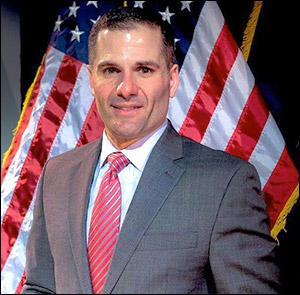
In the governor’s race, The Trafalgar Group finds Attorney General Josh Shapiro (D) leading state Sen. Doug Mastriano (R-Fayetteville), 49-45 percent, while Emerson posts a similar 47-44 percent division. Like in the Senate race, Franklin & Marshall sees the Democratic performance in much better position. Their ballot test projects AG Shapiro with a stronger 44-33percent advantage. The stated margin of error factor on the Trafalgar poll is 2.9, while Emerson’s is an almost identical 3.0. The F&M error factor, however, is listed as 4.3percent.

Updated Alaska Results; First Poll From Arizona’s New 6th District; A Resolution in NY-10?

By Jim Ellis — Friday, Aug. 26, 2022

House

Sarah Palin, former Alaska governor and vice presidential candidate, now running for US House Representative

AK-AL: Updated Results — Alaska officials have updated the election totals as more ballots have been received, counted, and recorded. Under Alaska voting procedure, ballots can still be accepted from the outlying rural regions until Aug. 31 as long as they were postmarked on primary day, Aug. 16.

In the special election to fill the remainder of the late Rep. Don Young’s (R) current term, Democratic state Rep. Mary Peltola maintains the lead with an adjusted 38.9 percent of the vote. Former governor and 2008 vice presidential nominee Sarah Palin is second with 31.4 percent of the vote, a total of 5,630 votes ahead of third-place finisher Nick Begich III (R). Palin has maintained this 5,000-plus vote margin over Begich for virtually the entire counting process. Second place is critical, since the first two finishers will advance into the Ranked Choice Voting round.

State officials estimate that approximately 90 percent of the votes are now recorded. This means another 20,000 ballots could be outstanding. If so, calculations suggest that Begich would have to garner approximately 73 percent of the vote pool that remains for a Republican candidate. So far, he has only received 47.2 percent of the ballots that were marked for either he or Palin. Should this standing hold, Palin would need approximately 40 percent of the Begich second choice votes to overtake Peltola and win the special election. This is a reasonable number, but her biggest problem could be the number of votes that are disqualified in the second round for mis-marking the multiple entries due to voter confusion over the new system.

Votes are also being counted for the regular House primary election where the top four finishers will advance into the regular general election. Like in the special general election, the top three finishers kept the same order, Peltola-Palin-Begich. The person currently running fourth, Republican Tara Sweeney, who has only four percent of the vote, says she will not continue if she qualifies. The Board of Elections officials ruled that when Independent candidate Al Gross withdrew from the competition after qualifying for the special general that only three would then advance. Therefore, we are likely to see a rerun of this special general election in the regular November vote.

AZ-6: First Poll, No Surprise — Democratic pollster Greenberg Quinlan Rosner Research released the first post-primary survey of Arizona’s new 6th District, the seat located in the southeast corner of the state that encompasses the largest part of the city of Tucson. The district leans slightly Republican, R+6 according to the FiveThirtyEight data organization with a partisan lean index of 52.0-R – 47.1-D from Dave’s Redistricting App.

The GQR survey (Aug. 16-21; 500 likely AZ-6 general election voters; live interview) finds Democratic former Tucson state senator and representative Kirsten Engel posting a two-point lead over ex-Hispanic Chamber of Commerce official Juan Ciscomani (R), 49-47 percent. This is Ciscomani’s first run for elective office.

NY-10: Candidates May Return for General Election — Once all of the thousands of yet-to-be-counted mail ballots are finally tabulated and recorded, it is projected that attorney Dan Goldman (D) will win the crowded open seat Democratic primary. NY election officials are not releasing any new results until Aug. 31, they’ve announced, and it could take as long as just before the Sept. 9 primary election certification deadline to officially crown a party primary winner in this and other races.

Goldman, however, may face another electoral hurdle before taking the seat. He did not hold the Working Families ballot line, and this liberal political party has a slot in the general election. Rep. Mondaire Jones (D-Westchester County), who left his 17th District to run for re-election in the new 10th, failed to win the primary but does carry the WFP endorsement in his previous district. There is an argument that Jones would be entitled to the ballot line in this election.

The Working Families Party, however, endorsed state Assemblywoman Yuh-Line Nioh (D-Manhattan) instead of Rep. Jones for this election, thus a dispute is beginning to arise as to who would represent the party in the 10th District general election. Having the ballot line would give one of these two the opportunity of challenging Goldman for the seat in the general election. At this point, Rep. Jones is indicating he would not pursue running in the general election, thus leaving the ballot line for Nioh.

Vance Surges in Ohio; Hill Withdraws in SC-4; Ohio Gov. DeWine With a Double Digit Lead; Term Limits

By Jim Ellis — Thursday, Aug. 25, 2022

Senate

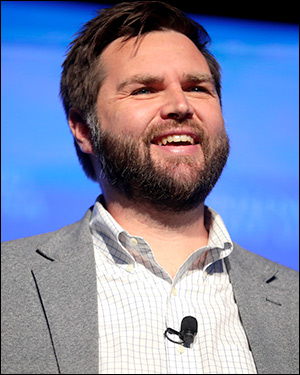
Author J.D. Vance, Ohio Senate Candidate

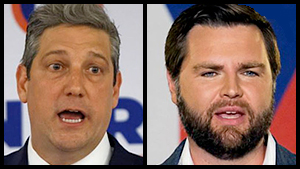
Ohio: Vance Tilts Up — After a series of polls from the end of June through early August found US Rep. Tim Ryan (D-Warren/Youngstown) leading the Ohio US Senate general election, a second survey this week sees Republican J.D. Vance surging ahead. For the early part of the campaign, Ryan was spending heavily on advertising that Vance and his Republican allies left unchecked, thus largely explaining why the Democrat was able to build a lead. Now that Vance has countered, he has already moved past the veteran congressman.

The new Trafalgar Group survey (Aug. 16-19; 1,087 likely Ohio general election voters; multi-sampling techniques) finds Vance topping Ryan, 50-45 percent. This largely confirms the Emerson College poll released earlier in the week that saw Vance holding a similar 45-42 percent advantage.

SC-4: Rep. Timmons Catches Break — South Carolina Rep. William Timmons (R-Greenville) caught a major re-election break earlier this week when his Democratic opponent, Ken Hill, withdrew from the race. Hill said his business responsibilities, which now require him to spend substantial time in New York, make it impossible for him to continue his congressional campaign.

Rep. Timmons won a closer-than-expected Republican primary in June, avoiding a runoff with just 52.7 percent of the vote, largely due to extramarital affair allegations and related unproven claims that he was improperly using his congressional power. Now, he will run without having a Democratic opponent. Businesswoman Lee Turner (D) says she will run as a write-in candidate, however. Under South Carolina election procedure, it is too late for the Democratic Party to officially replace Hill on the ballot.

Governor

Ohio: Gov. DeWine Leading In Double-Digits — A week after a Lake Research Partners (D) survey found Gov. Mike DeWine (R) edging Dayton Mayor Nan Whaley (D) by a slim 44-43 percent margin, the aforementioned Trafalgar Group Ohio survey (see Ohio Senate above) and an Emerson College poll (Aug. 15-16; 925 likely Ohio general election voters; multi-sampling techniques) see the governor pulling away to a pair of substantial leads. Trafalgar projects a 16-point advantage for Gov. DeWine at 54-38 percent. Emerson College posts a similar 49-33 percent spread.

House

US Term Limits’ Polling Series: Six New August Polls — The US Term Limits organization has been conducting a series of US House polls around the nation. RMG Research conducted the House campaign surveys for the group and released the results of six new polls conducted between July 31 and Aug. 15. All included 400 likely general election voters, but how the polling samples were surveyed was not disclosed.

Of the six August polls, two incumbents were ahead, two were behind, and one was tied. The other study surveyed a North Carolina open-seat electorate. In Arizona, Rep. Greg Stanton (D-Phoenix) leads businessman Kelly Cooper (R), 46-39 percent. Washington Rep. Kim Schrier (D-Sammamish) held a 47-43 percent edge over Matt Larkin (R), the 2020 finalist in the attorney general’s race.

The two trailing incumbents are Reps. Susan Wild (D-PA) and David Trone (D-MD). The tied incumbent is Nevada Rep. Steven Horsford (D-Las Vegas). In the Allentown-Bethlehem district, GOP challenger Lisa Scheller held a 47-43 percent advantage over Wild. Maryland state Delegate Neil Parrott (R-Frederick) topped Rep. Trone, 45-43 percent, while Rep. Horsford and insurance agency owner Sam Peters (R) were tied at 43 percent preference. In the lone released open seat poll, Republican Bo Hines held a 44-39 percent lead over North Carolina state Sen. Wiley Nickel (D-Raleigh).

Crist Wins Florida Gov. Primary; Nadler Easily Defeats Maloney in NY; Mullin Wins OK Senate GOP Runoff

By Jim Ellis — Aug. 24, 2022

Primary Results

Florida Rep. Charlie Crist (D-St. Petersburg) easily wins Democrat nomination for governor to run against incumbent Gov. Ron DeSantis (R).

Florida: Crist Wins Gov Primary; Few Surprises — A busy night occurred around the country and particularly in the Sunshine State, as the political parties chose nominees in key statewide races and for Florida’s 28 newly drawn congressional districts. Thus, the last major primary date is now in the books.

The Florida statewide races were not in particular doubt. While Gov. Ron DeSantis and Sen. Marco Rubio were unopposed in their respective Republican primaries, congressman and former governor, Charlie Crist (D-St. Petersburg), easily defeated Agriculture Commissioner Nikki Fried, 60-35 percent, to claim the Democratic gubernatorial nomination. US Rep. Val Demings (D-Orlando), as expected, was an easy 84 percent winner in the Democratic US Senate primary.

The competitive House primary winners were:

  • Rep. Matt Gaetz (R; 70-24 percent victory margin)
  • Senate President Pro Tempore Aaron Bean (R; 68-26 percent; created open seat)
  • Cory Mills (R; 34-21 percent; open Stephanie Murphy seat)
  • Maxwell Alejandro Frost (D; 35-25 percent; open Val Demings seat)
  • Rep. Dan Webster (R; 51-44 percent), Anna Paulina Luna (R; 44-34 percent; open Charlie Crist seat)
  • Laurel Lee (R; 41-28 percent; new seat from reapportionment), Rep. Sheila Cherfilus-McCormick (D; 66-29 percent)
  • Jared Moskowitz (D; 61-21 percent; open Ted Deutch seat)
  • state Sen. Annette Taddeo (D; 68-26 percent; versus Rep. Maria Elvira Salazar)
  • ex-state Rep. Robert Asencio (D; 69-31 percent; versus Rep. Carlos Gimenez)

New York: Parties Hold Specials; Reps. Maloney & Jones Lose — The very active New York congressional primary begins with a special general election win for the Democrats. In a race many believed the Republican nominee, Dutchess County Executive Marc Molinaro would covert, Ulster County Executive Pat Ryan successfully held the 19th CD in the Democratic column with a close 52-48 percent win. Ryan will now serve the unexpired portion of former Rep. Antonio Delgado’s term. Delgado resigned the seat to accept his appointment as lieutenant governor.

Curiously, Ryan will seek his re-election in the 18th District as he ran for both seats simultaneously. There, he will face state Assemblyman Colin Schmitt (R-New Windsor) who was unopposed in the open seat Republican primary. Former congressional aide John Riley won the 19th Democratic primary and now advances into the regular general election against Molinaro.

Another incumbent pairing was also decided last night. Congressman Jerrold Nadler (D-Manhattan) easily defeated Rep. Carolyn Maloney (D-Manhattan), 55-24 percent, thus ending the congresswoman’s 30-year congressional career. Nadler had led in all polling, hence the final result is not surprising, though the size of his victory is greater than expected.

Rep. Tom Reed (R-Corning) resigned his seat to accept a position in the private sector earlier this year. The Republican caretaker candidate, Steuben County Republican Party chairman Joe Sempolinski, won the special election to serve the balance of the term. He scored a 53-47 percent win over Democrat Max Della Pia. The latter man, however, won the regular election Democratic primary and he moves into the general election.

The competitive House primary winners were:

  • Nick LaLota (R; 47-28 percent; open Lee Zeldin seat)
  • Robert Zimmerman (D; 36-26 percent; open Tom Suozzi seat; versus George Santos)
  • Lauren Gillen (D; 63-24 percent; open Kathleen Rice seat)
  • Dan Goldman (D; 26-24 percent; created open seat)
  • Rep. Nicole Malliotakis (R; 78-21 percent; in general versus ex-Rep. Max Rose)
  • Rep. Jamaal Bowman (D; 57-23 percent)
  • Rep. Sean Patrick Maloney (D; 67-33 percent; in general versus state Assemblyman Michael Lawler)
  • Brandon Williams (R; 58-42 percent; in general versus Francis Conole; open John Katko seat)
  • Nick Langworthy (R; 52-48 percent; regular election successor to Rep. Tom Reed)
  • Rep. Claudia Tenney (R; 54-40 percent)

Oklahoma: Rep. Markwayne Mullin Wins Senate GOP Runoff; OK-2 Surprise — As expected, US Rep. Markwayne Mullin (R-Westville) scored a landslide special election Republican runoff victory, 65-35 percent, over former state House Speaker T.W. Shannon. Mullin advances into the special general election where he will be favored to defeat former US Rep. Kendra Horn (D). The winner will replace resigning Sen. Jim Inhofe (R) in January and serve the remaining four years of the current term.

With Rep. Mullin’s 2nd Congressional District being open, the primary’s second-place finisher, former state Sen. Josh Brecheen, won the Republican runoff with a 52-48 percent win over favored state Rep. Avery Frix (R-Muskogee). In Oklahoma’s safest Republican seat, rated R+55, Brecheen is now a prohibitive favorite to defeat Democratic nominee Naomi Andrews in the general election.

Florida, NY, OK Primaries; Term Limits Polling; Whitmer With Larger Lead

By Jim Ellis — Tuesday, Aug. 23, 2022

Primaries

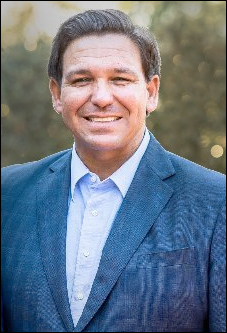
Florida Gov. Ron DeSantis (R)

Florida — The Sunshine State voters also will choose their nominees today, and many important intra-party races will be decided.

Gov. DeSantis Well Ahead in Pre-Primary Poll — Florida voters will choose their general election nominees today, and a new Cherry Communications survey (conducted for the Florida Chamber of Commerce; Aug. 4-15; 608 likely Florida general election voters; live interview) projects Gov. Ron DeSantis (R) as well positioned for re-election. The CC poll results find the governor leading US Rep. Charlie Crist (D-St. Petersburg) 51-43 percent, while his advantage over state Agriculture Commissioner Nikki Fried is a similar 50-43 percent. This, in a state where Republicans traditionally under-poll. Crist, the former governor and multi-time statewide candidate who has run, and lost, under the Democratic, Republican, and Independent banners.

After recent polls found Florida Crist falling into an increasingly more competitive Democratic gubernatorial primary campaign with Fried, a new St. Pete Polls survey, on election eve, finds the congressman and former governor now ahead in a landslide. The St. Pete Polls survey (Aug. 20-21; 1,617 likely Florida Democratic primary voters; interactive voice response system) projects Rep. Crist to be holding a major 59-30 percent lead, far above any advantage he has recently posted. The Democratic winner will face Gov. DeSantis in November and will face an uphill battle against DeSantis in a campaign that will become a national event.

The Senate nomination contests in both parties, while leading to a competitive general election, are set. Sen. Marco Rubio (R) will be defending his seat against US Rep. Val Demings (D-Orlando), the former Orlando police chief. Recent polling has tightened, but voting history suggests that Sen. Rubio has at least a small lead.

A large number of US House races feature competitive nomination battles beginning in northwestern Florida’s 1st District where controversial Rep. Matt Gaetz (R-Ft. Walton Beach) is in a serious campaign with former FedEx executive Mark Lombardo. Gaetz’s highly publicized legal trouble is front and center in this race as well as Lombardo charging that the congressman’s national activities and profile have taken his attention away from serving the local district. This is certainly a race to watch, and a Lombardo upset is possible.

Florida gained a new seat in national reapportionment, and the state’s 15th District has been created. The district stretches from Lakeland into Tampa and leans Republican but we can expect some competition in the general election. Both parties feature five-person candidate fields. Polling suggests that former Secretary of State Laurel Lee has the inside track for the Republican nomination over state Sen. Kelli Stargel (R-Lakeland) and state Rep. Jackie Toledo (R-Tampa). The leading Democrat appears to be former news anchorman and two-time congressional nominee Alan Cohn.

New York — When the New York Court of Appeals, the state’s highest court, ordered the congressional districts and state Senate map redrawn, a second primary was scheduled just for these races. The original NY primary was held on June 28. The congressional and state Senate nominees will be finally decided today, and many US House contests are in a competitive mode.

Oklahoma: Close Result on Tap for Tonight in OK-2 — When Rep. Markwayne Mullin (R-Westville) opted to run for the Senate, his open eastern Oklahoma congressional district drew a crowded 14-candidate Republican field. In the June 28 regular primary for the strongest GOP district in the state (R+55 according to the FiveThirtyEight data organization), two candidates advanced into today’s runoff election even though they finished with less than 30 percent of the aggregate primary vote combined.

State Rep. Avery Frix (R-Muskogee) topped former state Sen. Josh Brecheen (R-Ada) by just 757 votes to secure the first runoff position. Brecheen then claimed the second slot over former Muskogee Police Chief Johnny Teehee by an even lesser 616-vote margin. In all, the top five candidates finished within 2,892 votes of each other.

Polling finds that the race still remains tight. The wrap-up Sooner Poll (Aug. 11-17; number of likely voter polling respondents undisclosed) projected Rep. Frix holding the lead, but with only a 43-35 percent margin. While Frix apparently enjoys a small edge, this race is still anybody’s game.

Rep. Mullin has enjoyed large leads in his bid for the Senate in post-primary polling up until the latest release. Immediately after the June 28 primary election, where he easily topped former state House Speaker T.W. Shannon, 44-18 percent within a field of 12 candidates, Rep. Mullin was seeing average leads of 18 percentage points among three polls conducted from July 25 through Aug. 15.

The latest study, however, from the Sooner Poll, which is an add-on track from their Aug. 11-15 survey that ended on Aug. 17 (322 likely Oklahoma Republican runoff voters), shows the congressman’s statewide advantage at only 53-47 percent over Shannon. Tonight’s special runoff winner will advance into the general election against former US Rep. Kendra Horn (D).

Governor

Michigan: Whitmer With Larger Lead — Countering last week’s published Fabrizio Ward (R) and Impact Research (D) teamed Michigan governor’s study (Aug. 8-14; 1,365 likely Michigan voters; live interview & text) that projected Gov. Gretchen Whitmer (D) to be leading online talk show host Tudor Dixon (R) 51-46 percent, Democratic pollster Blueprint Polling (Aug. 15-16; 611 likely Michigan general election voters; live interview) posts the governor to a much larger 51-39 percent advantage.

Ohio: One-Point Lead — Democratic pollster Lake Research (Aug. 4-9; 611 OH likely general election voters; live interview) released their latest survey that finds Gov. Mike DeWine (R) holding only a narrow one-point, 44-43 percent, edge over Dayton Mayor Nan Whaley (D).

This result is not particularly surprising. First, the Ohio electorate typically polls close and then one candidate significantly pulls away in the campaign’s last two weeks. Second, Gov. DeWine won his Republican primary with only 48.1 percent of the vote opposite three opponents suggesting clear weakness within his party’s base. Additionally, over one-third of DeWine voters say their support for him is “not so strong” or that they are only “leaning” in his direction. Expect the governor to soon use his strong financial advantage to put distance between he and Mayor Whaley.

Conflicting Polls in Florida; Vance Rebounds in Ohio; Fetterman Bounces Back With Big Lead in PA

By Jim Ellis — August 19, 2022

Senate

Rubio | Demmings

Florida: Conflicting Polls — A pair of polls was recently released, and each shows a different leader. The University of North Florida released their survey (Aug. 8-12; 1,624 registered Florida voters; online) and surprisingly found Rep. Val Demings (D-Orlando) leading incumbent Sen. Marco Rubio (R) by a 48-44 percent clip, the first time any poll had shown a result such as this since early May. In six polls since that time, Sen. Rubio had led in four with two dead heat ties.

Simultaneously, the Center Street PAC surveyed the Florida electorate (Aug. 12-14; 610 likely Florida voters) and found a completely different result. This poll projects Sen. Rubio to a 52-41 percent likely voter advantage, and a smaller 46-39 percent edge among the larger pool of 996 Florida registered voters. These two polls, conducted within the same relative time frame, show the volatility in the current race, which is typical for Florida election polling. Republican votes are also usually slightly under-counted in Sunshine State polls, as well.

Ohio: Vance Rebounds to Lead — After seeing a series of six statewide polls that projected Rep. Tim Ryan (D-Warren/Youngstown) to be holding a small lead over author J.D. Vance (R), the new Emerson College survey sees a GOP rebound. The Emerson poll (Aug. 15-16; 925 likely Ohio general election voters) finds Vance reversing the field to claim a three-point 45-42 percent edge.

The results are to be expected. Rep. Ryan developed a lead when spending $7 million-plus on early advertising with no counter from Vance or Republican outside groups. Now beginning to promote their message, we see a new survey reflecting Vance in a better position. Typically, the Ohio electorate polls close until the final weeks when one candidate pulls away, usually the Republican, and wins the race going away.

Pennsylvania: Fetterman Returns With Big Lead — Still recovering from a major stroke suffered right before the May 17 Pennsylvania primary, Lt. Gov. John Fetterman returned to the campaign trail late last week. This week, a new poll shows him expanding his lead over Dr. Mehmet Oz (R). Public Opinion Strategies released the results of their new August survey conducted for the Pittsburgh Works Together organization (Aug. 7-10; 600 registered Pennsylvania voters; live interview) that posts Fetterman to a 52-36 percent lead over Dr. Oz. This 16-point spread represents the largest polling margin of this campaign.

House

VA-7: Rep. Spanberger Holding Edge — RMG Research, conducting their series of polls around the country for US Term Limits (July 31-Aug. 6; 400 likely VA-7 voters) finds two-term Virginia Rep. Abigail Spanberger (D-Glen Allen) leading Prince William County Supervisor Vesli Vega (R) by a 46-41 percent margin, suggesting we will see a highly competitive campaign effort from both sides throughout the remaining part of the general election cycle. Though upside-down in job approval in the 7th CD, President Biden’s ratio is better than in most places, 48:51 percent positive to negative. The Biden factor should be less of a drain on Rep. Spanberger than it may prove on certain Democratic candidates in other places.

Governor

Pennsylvania: Shapiro Up, Too — The aforementioned Public Opinion Strategies survey (see Pennsylvania Senate above) also tested the open Pennsylvania governor’s race. The ballot test on this contest favors Democratic Attorney General Josh Shapiro over Republican state Sen. Doug Mastriano (R-Fayetteville) by a strong 51-37 percent margin, slightly less than the Senate Democratic spread, but more than enough to secure a comfortable victory.