Category Archives: Election Analysis

Election Night Analysis

Election Night 2013 may have turned out somewhat differently than political polling projected in terms of margin, but the actual voting yielded few surprise winners.

New Jersey

In New Jersey, as expected, Gov. Chris Christie (R) romped to a second term, defeating state Sen. Barbara Buono (D) 60-38 percent. The only question would be whether the governor could bring new Republican state legislators with him, but the legislative chambers remained virtually intact. The initial unofficial count shows the GOP gaining one state Senate seat and two Assembly positions, but strong Democratic majorities remain in both bodies.

Virginia

In Virginia, though polls were suggesting a Terry McAuliffe win of greater than five points over Ken Cuccinelli – the final Washington Post poll projected a 12-point gap, for example – the actual Democratic margin of victory was only three points,  Continue reading >

Griffin to Retire in Arkansas; New NH Polls

As was widely reported yesterday, sophomore Arkansas Rep. Tim Griffin (R-AR-2) announced that he will not seek a third term in the House, saying that he needs to spend more time with his young children, whom he described as being in their “formative” years.

With Griffin’s retirement, a 20th open seat will now be present in the 2014 election cycle and this one has a good chance of becoming competitive. Though Rep. Griffin and Republican presidential nominee Mitt Romney each garnered a healthy 55 percent of the vote in this Little Rock metropolitan district, Democrat Rep. Vic Snyder represented a similar configuration of the 2nd District for 14 years.

Recognizing that the Griffin retirement announcement came as a major surprise, names of potential candidates in both parties are quickly beginning to surface, nonetheless. For his fellow Republicans, who Griffin said he wanted to help by announcing his decision early, state senators David Sanders, Jeremy Hutchinson, Jason Rapert, ex-Senate Minority Leader Gilbert Baker, former state Rep. Ed Garner, and businessman French Hill are the most prominent names mentioned.

On the Democrat side, former North Little Rock Mayor Pat Hays is expected to announce his candidacy today. Considering forming a campaign committee are former Lt. Gov. Bill Halter, state Sen. David Johnson, state Rep. Tommy Thompson, former state Rep. Linda Tyler, and Conway Mayor Tab Townsell.

The campaign’s early sector should yield a “Lean Republican” rating, but it would not be surprising to see this contest tip toward “Toss-up” territory once campaigning becomes heavy.

New Hampshire

Over the past few election cycles the University of New Hampshire has conducted political polling, but their reliability factor has proved questionable. The new UNH release is not likely to engender improvement because the  Continue reading >

Three Real Primary Dust-ups

Though the government shutdown delayed filing of the candidates’ quarterly disclosure reports with the Federal Election Commission, some of the dollars and cents information has already started flowing into the media. Of all the data being reported, three specific campaigns are noteworthy because challengers to incumbents within their own party are already reporting more money raised and in the bank than for their respective opponent.

MI-11

The first salvo has been fired in Michigan in attorney David Trott’s (R) challenge to freshman Rep. Kerry Bentivolio (R), and it is a serious blow. According to published reports, the challenger is going to post raising over $648,000, including a substantial contribution from himself – although the exact amount was not released – with $452,000 cash-on-hand. Bentivolio had a very poor second quarter, raising only $39,000, and reporting approximately $59,000 in his campaign account. We will soon see the extent of his third quarter take.

Rep. Bentivolio is often described as an “accidental congressman” because he entered office under unusual circumstances. Filing as a Tea Party challenger against then-Rep. Thaddeus McCotter (R), Bentivolio became the only qualified Republican candidate on the ballot when the incumbent failed to submit enough valid nominating petition signatures. He then went on to win the general election with strong help from the Liberty for All Super PAC, which spent more than $600,000 as an independent expenditure on his behalf.

It is unclear if the congressman will receive such support this time around, but it is becoming apparent that he will need major assistance in order to compete against Trott. Armed with heavy establishment Republican Party support, Trott will soon be sporting the type of campaign resources usually reserved for an incumbent. A primary challenger victory is highly possible in this suburban Detroit district.

TN-4

Another Republican congressman who might be denied renomination is Tennessee sophomore Rep. Scott DesJarlais. A scandal broke late in his first re-election bid, one  Continue reading >

Jousting in New Hampshire

In April, former Massachusetts Sen. Scott Brown (R) surprisingly admitted that he was considering moving to New Hampshire to challenge first-term Sen. Jeanne Shaheen (D). Brown followed his statement by spending time in the Granite State, meeting with the party faithful and explaining that he truly does have New Hampshire bona fides.

After initial polling showed large Shaheen leads, talk of an impending Brown move seemed to dissipate. The political focus surrounding him shifted to whether he would run for governor of Massachusetts, a prospective race in which polling posted him well ahead of every potential candidate from both parties. Then, a show trip to Iowa immediately preceded his announcement declining a run for governor, but his verbiage certainly left the door wide open for a 2016 presidential run.

Now, however, the talk surrounding Brown’s next political move is returning to New Hampshire and even Sen. Shaheen, herself, is participating.

First, in a look back to last week, Public Policy Polling (Sept. 13-16; 1,038 registered New Hampshire voters) released a poll showing Brown just four points behind Sen. Shaheen, 48-44 percent, hardly an insurmountable deficit and a net seven-point gain in his direction from PPP’s April poll.

Apparently Sen. Shaheen is not taking the survey nor the potential Brown move to her state lightly; or, she is simply using the potential threat as a fundraising ploy. In the past few days the senator began sending communications to supporters repeating a WMUR television report that Brown is selling his home in Massachusetts, while asking for “$5,780 in six hours” to make her arbitrary campaign finance deadline goal.

The Democrats and media’s talk of Brown now moving to New Hampshire in order to challenge Shaheen may be much ado about nothing, or it could have substance. The idea is certainly attractive to the national Republicans because they are desperate to expand the Senate playing field in order to maximize the number of opportunities necessary to convert the six Democratic seats they need to capture the majority.

While Scott Brown would certainly begin the campaign as an underdog to Sen. Shaheen, it is unlikely the Republicans could recruit a  Continue reading >

The Vote: Potential Aftermath

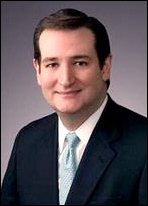
Sen. Ted Cruz (R-TX)

Sen. Ted Cruz (R-TX)

The Ted Cruz (R-TX) informal Obamacare funding filibuster is predicted to inflict political harm, but there is a myriad of opinion as to who will suffer the most severe consequences for their respective votes at the polling place, if anyone.

Below are the names of the 18 Republican senators who supported Cruz by voting “No” on the continuing resolution cloture petition last Friday, and when they next face the voters:

    Senators voting NO (alphabetical by state):

  • Jeff Sessions (R-AL), 2014
  • Richard Shelby (R-AL), 2016
  • Marco Rubio (R-FL), 2016
  • Mike Crapo (R-ID), 2016
  • Jim Risch (R-ID), 2014
  • Chuck Grassley (R-IA), 2016
  • Pat Roberts (R-KS), 2014
  • Jerry Moran (R-KS), 2016
  • Rand Paul (R-KY), 2016
  • David Vitter (R-LA), 2016
  • Deb Fischer (R-NE), 2018
  • Dean Heller (R-NV), 2018
  • Rob Portman (R-OH), 2016
  • Jim Inhofe (R-OK), 2014
  • Pat Toomey (R-PA), 2016
  • Tim Scott (R-SC), 2014
  • Mike Lee (R-UT), 2016
  • Mike Enzi (R-WY), 2014
  •  
    Not Voting:

  • Jeff Flake (R-AZ), 2018
  • Orrin Hatch (R-UT), 2018
  • It’s possible, however, that certain Republican senators voting “Aye” and standing for election next year are in the more vulnerable position. The senators facing primary opposition include Minority Leader Mitch McConnell (R-KY), himself. Sen. Lindsey Graham (R-SC) is the other  Continue reading >

    Lost and Found in Massachusetts and West Virginia

    Massachusetts

    Massachusetts Attorney General Martha Coakley (D) might be remembered as the candidate who “blew” the special election to then-state Sen. Scott Brown (R) in the early 2010 battle to replace the late Sen. Ted Kennedy (D). Her campaign became famous for its futility, and she was routinely disparaged throughout state and national Democratic circles.

    But the 2010 election cycle was not a total wash out for Coakley. After losing the special election, she immediately announced a run for re-election to her current post, and won another term as Attorney General in a 61-36 percent landslide.

    Now, with Gov. Deval Patrick (D) not seeking re-election, Coakley is again attempting to win a more prominent political position. Yesterday, she announced her campaign for governor.

    Coakley has strong Democratic opposition, however. State Treasurer Steve Grossman is already in the race, as is Juliette Kayyem, a former Department of Homeland Security Assistant Secretary, pharmaceutical executive Joe Avellone, and former Medicare/Medicaid administrator Don Berwick. The winner will oppose 2010 Republican gubernatorial nominee Charlie Baker, who came within five points of unseating incumbent Patrick. Therefore, no candidate has an easy path to the Massachusetts state house.

    West Virginia

    The Democrats finally have a West Virginia senatorial candidate. Months after Sen. Jay Rockefeller (D) announced that he would not seek re-election, the party has found its potential successor. Secretary of State Natalie Tennant, long believed the Democrats’ best available candidate, yesterday announced her statewide challenge.

    Rep. Shelley Moore Capito (R-WV-2), who made public her own candidacy even before Rockefeller proclaimed his decision to retire, is the consensus Republican candidate and the early race leader.

    West Virginia has been trending Republican since the 2000 presidential campaign when Al Gore failed to carry the state for the  Continue reading >

    NYC Results; Colorado Recall

    New York

    As expected, public advocate Bill de Blasio finished first in his bid for the Democrat mayoral nomination last night and continues to hover around the 40 percent mark. Under New York City election law, a candidate must reach the 40 percent plateau or a run-off between the top two finishers occurs at a later date – Oct. 1, in this case. Former NYC Comptroller Bill Thompson is second with 26 percent. The campaign’s original leader, City Council President Christine Quinn, finished a distant third with only 16 percent of the vote. Disgraced former Rep. Anthony Weiner (D-NY-9) actually dropped to fifth position, capturing a mere 5 percent of his party’s vote.

    Despite a turnout approaching 10 times less than the Democratic participation number, former NY Metropolitan Transit Authority chairman Joe Lhota won the Republican nomination outright, capturing 53 percent of the vote. Supermarket magnate John Catsamitidis was second with 41 percent. Doe Foundation founder George McDonald finished way back attracting just 7 percent support.

    It might take several days to determine if de Blasio actually reached 40 percent, allowing for uncounted precinct, absentee and provisional ballots. Should he fall short, it will literally be by only a handful of votes, so it will be interesting to see if Thompson pushes for the run-off, or concedes the nomination. Late polls gave the first place finisher double-digit leads over the former New York comptroller, but things can certainly change in a new election between just two candidates. More likely than not, however, de Blasio will claim his party’s nomination whether it be this week or on Oct. 1. He then will face Lhota in the Nov. 5 general election.

    Though the Republicans are badly outnumbered in terms of voter registration, they have kept the Democrats from winning the mayor’s office for the past 20 consecutive years. Former Mayor Rudy Giuliani served two terms beginning in 1993, and current incumbent Michael Bloomberg has held the office since 2001. The latter man was originally elected as a Republican, but later switched to Independent status. De Blasio will be favored in the general election, but expect Lhota to be competitive, especially with a public financing system that ensures he will have more than $6 million to spend on the campaign.
     Continue reading >