
Author Archives: Jim Ellis

Dems Looking Ahead to a
Looming Nomination Battle

By Jim Ellis

May 13, 2019 — The Hill newspaper ran a pair of articles late last week that discussed several points about the upcoming Democratic presidential nomination battle. The first piece was a story covering former Vice President Joe Biden’s prediction that many of the candidates will drop out of the race soon after the Iowa Caucus, thus winnowing the 22-person (and possibly as high as 24) contest down to a more manageable number.

What kind of role will super delegates play in 2020?

The second piece delved into the new Super Delegate status, and about their re-emergence if the convention lapses into a multiple ballot situation before choosing a nominee. The story also highlighted several candidates, and in particular Sen. Bernie Sanders (I-VT), who are already reaching out to Super Delegates in an attempt to identify which candidate they might support if presented with the chance to vote.

The Biden comments reflect a traditional view that one candidate may begin to build an early consensus by doing well in the first two voting events, the Iowa Caucus and the New Hampshire primary. Currently, these are scheduled for Feb. 3 and Feb. 11, 2020, respectively.

The flaw in the Biden argument is that, combined, Iowa and New Hampshire only carry 65 first-ballot delegates, less than two percent of the entire first-ballot universe of 3,768. A candidate must obtain 1,885 delegate votes to win the nomination on the first ballot. Therefore, such a small early number is unlikely to be determinative, but the lowest tier of candidates, as fallout from the first votes actually being cast, collapsing due to a lack of funding is certainly a possibility.

The Super Delegates were a source of major controversy at the 2016 Democratic National Convention. At the time, the Sanders campaign contended that the nomination process was “rigged” because the non-elected Super Delegates were a block for Hillary Clinton, which would enable her to win the nomination even if Sanders forged a majority among the elected delegates. In the end, the Sanders’ supposition proved untrue – Clinton did win among the elected delegates – but, nevertheless, the Democratic National Committee changed the Super Delegates’ voting status as a result of the Sanders’ complaint.

Continue reading

The Telling Second Choices

By Jim Ellis

May 10, 2019 — Often in political polling, asking respondents about their second choice on a ballot test is quite telling. The Morning Consult firm polls regularly and they are the only prominent pollsters so far in this presidential campaign to consistently ask the second-choice question.
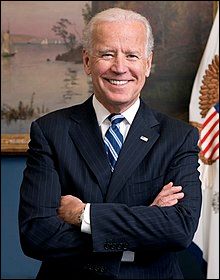
Their latest national survey conducted over the April 29 through May 5 period and involving 15,770 respondents who are registered self-identified Democratic voters, or those who lean to the Democrats, found former Vice President Joe Biden pulling away from the pack of candidates, claiming 40 percent support. In a distant second place is Sen. Bernie Sanders (I-VT) who had 19 percent.

None of the other candidates even reached double-digits. In third position is Sen. Elizabeth Warren (D-MA) with a preference figure of just eight percent. Following closely is California Sen. Kamala Harris at seven percent, and South Bend (IN) Mayor Pete Buttigieg who posted six percent support. Former Rep. Beto O’Rourke (D-TX) is next with five percent. All others have three percent or less.

After the initial question, those choosing one of the top five finishers were then asked who they would support if the candidate they originally named was not in the race. This provides a further way of gauging the depth of a candidate’s strength.

The Biden supporters predominantly break toward three candidates with Sen. Sanders being the chief beneficiary, getting 31 percent of the Biden first choice voters. Sen. Harris receives 13 percent, with Sen. Warren getting 10 percent.

Continue reading

Biden’s Drastically Changed Picture

By Jim Ellis

Former vice president and ex-Delaware senator Joe Biden

May 9, 2019 — Recent polling has seen former Vice President Joe Biden take full advantage of his announcement tour. While the pre-race appeared to be settling into a battle between Biden and Sen. Bernie Sanders (I-VT), once the ex-VP became an active candidate the picture drastically changed.

Several polls were taken during the last days of April and into early May. The HarrisX research organization and the Morning Consult firm conducted national surveys while Firehouse Strategies/Optimus commissioned Democratic primary polls in three of the first four nomination venues: Iowa, New Hampshire, and South Carolina. All of these polls produced big leads for Biden in contrast to what we were seeing just two weeks ago.

But, Change Research, in a slightly later New Hampshire poll with a larger sample (May 3-5; 864 likely New Hampshire Democratic primary voters), finds Sen. Sanders still on top, 30-26-12 percent over Biden and South Bend (IN) Mayor Pete Buttigieg.

The HarrisX national poll (May 3-4; 440 registered voters in the US) gives Biden a whopping 44-14 percent lead over Sen. Sanders with all others following in single-digits. The third-place finisher, Mayor Buttigieg has only eight percent support. Sens. Elizabeth Warren (D-MA) and Kamala Harris (D-CA) have seven percent and six percent, respectively, while former Rep. Beto O’Rourke (D-TX) has dropped to just three percent, tied with New Jersey Sen. Cory Booker.

Continue reading

IL-3: The Primary Re-match

By Jim Ellis

Illinois media consultant Marie Newman in a campaign ad

May 8, 2019 — One of the previous election cycle’s most contested primaries was decided early, in March of 2018, when veteran Illinois Rep. Dan Lipinski (D-Western Springs/Oak Lawn) eked out a 51-49 percent victory over media consultant Marie Newman. The challenger, who ran a spirited campaign, did so with the backing of many national left-of-center organizations.

Soon after the primary ended, Newman indicated that she would return for a re-match in 2020 and a group of organization leaders yesterday jointly announced their support for her.

Representatives from EMILY’s List, MoveOn, NARAL Pro-Choice America, Planned Parenthood Action Fund, the Progressive Change Campaign Committee and Democracy for America are pledging to independently spend in order to help Newman unseat Rep. Lipinski. In the last campaign, these groups and others combined to provide over $1.6 million in outside expenditures to supplement Newman’s own campaign spending, which exceeded $1.475 million.

Continue reading

Wyoming Sen. Mike Enzi to Retire

By Jim Ellis

Wyoming Sen. Mike Enzi (R)

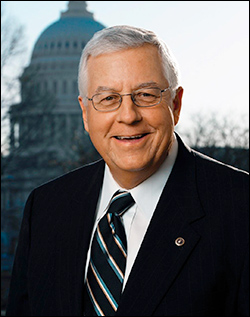
May 7, 2019 — Four-term Wyoming Sen. Mike Enzi (R), 75, announced from the Gillette City Hall building Saturday that he would not seek re-election next year and will end his career as the third longest-serving senator in state history.

In addition to what will be a 24-year tenure in Washington, Enzi has served in elected office in all but four years beginning in 1975. He was elected Mayor of Gillette in 1974, then to the state House of Representatives in 1986, the state Senate in 1991, and finally to the US Senate in 1996.

Sen. Enzi becomes the fourth in-cycle senator to announce his retirement, joining Sens. Lamar Alexander (R-TN), Pat Roberts (R-KS), and Tom Udall (D-NM). Wyoming, being one of the strongest Republican states in the country and even more so in a presidential election year, is heavily favored to remain in the GOP column.

Most of the succession speculation centers around at-large Rep. Liz Cheney (R-Wilson), the House Republican Conference chair and daughter of former Vice President Dick Cheney. Former Gov. Matt Mead (R), who just left office in January since Wyoming limits its governors to two consecutive terms, would obviously be another strong candidate if he were to run.

Continue reading

We Now Have Candidate #22 In
The Race, And Sanders is Falling

By Jim Ellis

May 6, 2019 — A new Democratic presidential candidate entered the race late last week, one whom we didn’t expect to see this soon.

Colorado Sen. Michael Bennet

Despite undergoing prostate cancer surgery last month, Colorado Sen. Michael Bennet says he has already received a “clean bill of health” and is embarking upon his national political effort. Now at 22 candidates in the field of Democrats seeking their party’s nomination for the 2020 presidential election, eyes turn to Montana Gov. Steve Bullock who could be the last widely discussed potential candidate yet to make a decision about forming a campaign.

It’s difficult to see how Sen. Bennet breaks through to the top tier, however. He is not well known outside of Colorado and starts well behind most of the field, putting him in a difficult position from which to even qualify for the first two debate forums scheduled for late June and the end of July.

To earn a debate podium, all candidates must either tally at least one percent support in three Democratic National Committee designated polls, or attract financial support from 65,000 donors, from which they must have a minimum of 200 in at least 20 states. For the lesser known candidates, debate participation is a necessity in order to propel themselves into serious contention for the nomination.

Furthermore, Sen. Bennet doesn’t even have his home state electorate to himself. Former Colorado Gov. John Hickenlooper is also in the race, a man who Bennet once served as chief of staff. Just two days ago, Colorado moved its new primary – they used to apportion delegates through the caucus system – to March 3, the 2020 campaign’s Super Tuesday, which could serve to boost one of the two Centennial State candidates. Yet, with both men in the race, the state’s 67 first-ballot delegate contingent will prove less of a base for either one.

Continue reading

March 3, 2020: The New Super Tuesday

By Jim Ellis

May 3, 2019 — Colorado Gov. Jared Polis (D) announced this week, as expected, that his state’s new primary will move to March 3, 2020, which has clearly become the next presidential cycle’s Super Tuesday.

Previously, Colorado employed the caucus system to apportion delegates, but voters changed to a primary when passing a 2016 ballot initiative, so now the state’s 67 Democratic first-ballot delegates and 37 Republican convention votes will be apportioned through a primary election.

But the Centennial State voters and the Democratic National Committee rules appear to be at odds. According to news reports, the 2016 Colorado electoral primary ballot initiative not only transformed into a primary, but also adopted a winner-take-all apportionment format. While Republicans allow states to award all of their delegates to one candidate based upon a primary or caucus victory, the Democrats, under the McGovern reform rules adopted after the 1972 presidential election, do not.

While the state may want to make the winner-take-all option determinative, the procedure violates Democratic rules, so we could see yet another pre-convention issue develop before the Credentials Committee, the body that certifies all of the delegate votes prior to the convention officially beginning.

The 2020 Democratic nomination process is becoming seriously front-loaded, which could play to the party’s detriment. By rule, only four states, referred to as “The First Four,” may vote before March 1 in the presidential year: Iowa (caucus, 41 first-ballot delegates), New Hampshire (primary, 24), Nevada (caucus, 36), and South Carolina (primary, 54). But just three days after South Carolina concludes, the following Tuesday, March 3, could become the most significant date of the early campaign.

Now that Colorado has joined the 3/3 fold, the following states will vote (in parenthesis, are the number of first ballot votes each entity possesses under the Democratic delegate apportionment formula):

  • Alabama (52)
  • American Samoa (6) – presumed to be voting this day
  • Arkansas (31)
  • California (416)
  • Colorado (67)
  • Democrats Abroad (13)
  • Georgia (105)
  • Massachusetts (91)
  • Minnesota (75)
  • North Carolina (110)
  • Oklahoma (37)
  • Tennessee (64) – probable, but has not yet set the calendar
  • Texas (228)
  • Utah (29)
  • Vermont (16)
  • Virginia (99)

Continue reading