Tag Archives: Sen. Dan Sullivan

Peltola Announces for Senate

By Jim Ellis — Wednesday, January 14, 2026

Senate

Former Alaska at-large Rep. Mary Peltola (D) announces her Senate candidacy in this Facebook post.

Reports from last week suggesting that former Alaska at-large Rep. Mary Peltola (D) was seriously considering running for the Senate this year have proven correct. Peltola, defeated for re-election to the House in 2024, announced Tuesday that she will challenge two-term Republican Sen. Dan Sullivan later this year.

Though the Senate race was always on the table for Peltola, her decision to jump into this challenger contest is still a bit surprising. Considering the crowded Republican field running in the open Governor’s campaign, it appeared that Peltola would be assured of qualifying for the general election with a reasonable chance of winning the Governorship against possibly three Republicans advancing from the state’s unique top four primary system. Peltola’s chance improves even further when such a scenario advances to the Ranked Choice Voting round, through which she won her two congressional races.

The Alaska electoral system features an August jungle qualifying election where all candidates are placed on the same ballot regardless of political party affiliation. The top four finishers then advance into the general election. If no candidate receives majority support, the Ranked Choice Voting rounds begin.

The top four/Ranked Choice Voting system was challenged at the ballot box in 2024 through a voter initiative and survived by just 664 votes in the statewide tabulation. System opponents have again filed for another run at repealing the system and it appears enough signatures have been filed to qualify for the 2026 ballot. Even if the repeal proponents are successful in the ‘26 election, however, the top four process will still be in effect for the present cycle.

Though polling is already showing a Sullivan-Peltola Senate race to be a virtual toss-up, such is not surprising at this point in the election cycle. It is common to see the Alaska Democratic candidates consistently polling better early than they actually perform when votes are counted on election day.

For example, in the 2020 presidential race, President Trump appeared to be in a dead heat with future President Joe Biden in the Last Frontier, but the Republican ended with a secure 10-point win. In the 2024 congressional race, then-Rep. Peltola led Republican Nick Begich III by 9-14 percentage points in early polling before losing in a 51-49 percent Ranked Choice Voting final.

While Sen. Sullivan should still be regarded as the favorite for re-election, Peltola’s candidacy certainly makes the Senate race competitive. Looking at the rest of the country, we now see eight states where voters will decide a potentially tight Senate election.

In addition to Alaska, Republicans will be defending key Senate seats in Iowa, Maine, North Carolina, and Texas, while Democrats must protect Georgia, Michigan, and New Hampshire. For Democrats to reach a majority status of 51 Senate seats in this election, they would have to win seven of these eight hotly contested campaigns.

While the Peltola candidacy in Alaska puts another Republican Senate state in play for the Democrats, the party chances of capturing the majority in 2026 are still slim, but they may lessen the current 53-47 GOP margin.
Hill Harper Announces for Senate; Nevada’s Brown Will Run for Senate; Sen. Ted Cruz Picks Up Challenger; Jockeying in Alaska for House Seat

By Jim Ellis — Thursday, July 13, 2023

Senate

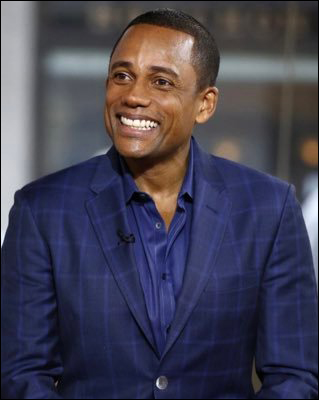
Frank Eugene “Hill” Harper (D), one of the stars of the “CSI: NY” and “The Good Doctor” programs

Michigan: Actor Announces for Senate — As expected, actor Frank Eugene “Hill” Harper (D), one of the stars of the “CSI: NY” and “The Good Doctor” programs, announced that he will compete in the open Michigan US Senate primary. He becomes the fourth major candidate, and third African American, in the Democratic primary. He joins US Rep. Elissa Slotkin (D-Lansing), Michigan State Board of Education president Pamela Pugh, and former state Rep. Leslie Love.

The crowded field likely plays well for the perceived leader, Rep. Slotkin. This primary will take a long while to unfold, however. The Michigan primary won’t occur until Aug. 6, 2024, and its competitiveness could tamp down the Democrats’ advantage in the general election. Though the party primary may well be more eventful considering Harper’s entry, Rep. Slotkin must still be rated as the favorite for the party nomination and to win the seat in the November election. Sen. Debbie Stabenow (D) is retiring after serving what will be four full terms.

Nevada: Republicans Score Candidate Prospect — In another move that has been expected for several months, disabled Afghan War veteran and 2022 Senate candidate Sam Brown (R) announced he will return to again compete in a Nevada US Senate race. This time, he hopes to capture the Republican nomination and challenge first-term Democratic Sen. Jacky Rosen.

In ’22, Brown lost the party primary to former Attorney General Adam Laxalt, 56-34 percent, but raised an impressive $4 million-plus for his effort. Laxalt would then lose the general election to Sen. Catherine Cortez Masto (D) by fewer than 18,000 votes from more than 1 million ballots cast. Now, it appears that Brown has the inside track for the party nomination and would be an interesting candidate in the general election. A strong Brown candidacy could elevate Nevada into top-tier campaign status.

Texas: State Senator Enters Battle to Challenge Sen. Cruz — San Antonio area state Sen. Roland Gutierrez (D) announced Tuesday that he will enter the Texas Democratic primary, which will likely ignite a difficult nomination battle against US Rep. Colin Allred (D-Dallas) who announced his candidacy in early May. The eventual party nominee will then challenge two-term Sen. Ted Cruz (R) in the general election.

Sen. Gutierrez, who represents a legislative domain similar to that of US Rep. Tony Gonzales’ (R-San Antonio) congressional district in that it begins in the metro area and then stretches through most of west Texas toward El Paso, is a strong gun control advocate. Prior to defeating a Republican incumbent to win a Senate seat in 2020, Gutierrez had served six terms in the state House of Representatives.

Rep. Allred is reporting raising more than $6.2 million for his Senate effort after announcing his candidacy, but now will have to spend heavily just to win the party nomination in March. It is likely the beneficiary of what will be a hotly contested race between Allred and Gutierrez is Sen. Cruz. The Texas primary is scheduled for Super Tuesday, March 5, 2024.

House

AK-AL: Nick Begich (R) Considering Another House Bid — Businessman Nick Begich III, whose grandfather was a Democratic congressman and uncle, Mark Begich, served as a Democratic US senator before losing to current Republican Sen. Dan Sullivan, is again reportedly contemplating a run for the state’s at-large US House seat. He participated in the 2022 special and regular elections as a Republican, qualifying for the secondary election both times, but failing in Ranked Choice Voting.

Many observers believed he would be the strongest candidate against Rep. Mary Peltola (D-Bethel) who won both of those elections by outdueling Sarah Palin in the Ranked Choice rounds. Should Begich run in 2024, it is probable he would have a strong chance to end in the final round with Rep. Peltola. The at-large Alaska seat is now the most Republican congressional district in the country to send a Democrat to the US House.

Britt Wins Alabama Runoff; Al Gross Exits Alaska Race; Tough Night For Trump in Peach State

By Jim Ellis — June 22, 2022

Senate

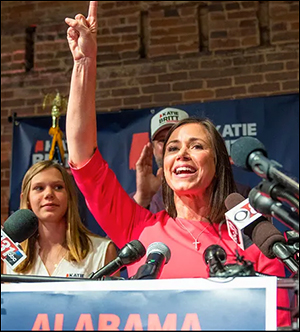
Katie Britt won the Republican US Senate nomination in Alabama.

Alabama: Britt Wins Runoff — As the post-primary polling unanimously foretold, Katie Britt, the former president and CEO of the Business Council of Alabama organization and ex-chief of staff to retiring Sen. Richard Shelby (R), won the Republican US Senate nomination with a landslide 63-37 percent margin over Alabama US Rep. Mo Brooks (R-Huntsville) in last night’s runoff election.

Britt’s victory was complete in that she carried 66 of Alabama’s 67 counties en route to claiming the party nomination, and a veritable ticket to the US Senate. She now faces pastor Will Boyd, who won the Democratic nomination outright on May 24 in what will prove to be a perfunctory general election in this safely Republican state.

House

AL-5: Dale Strong Headed to DC — Madison County Commission chairman Dale Strong (R) defeated former Deputy Army Secretary Casey Wardynski with just over 63 percent of the Republican runoff vote. Like Britt, Strong has punched his ticket to Washington with last night’s victory.

The FiveThirtyEight data organization rates AL-5 as R+32, leaving little doubt that Strong is now the prohibitive favorite to defeat Democratic nominee Kathy Warner-Stanton who won her party’s nomination outright in the regular primary contest.

AK-AL: Al Gross Exits Race — Yesterday, surgeon Al Gross, who was the 2020 Democratic US Senate nominee against Sen. Dan Sullivan (R) but running as an Independent in the US House special election, decided to end his campaign. Dr. Gross had qualified for the four-candidate runoff with his third-place finish in the special primary on June 11. He simply said he had “great hope for Alaska” in his departing statement but did not offer a particular reason for making the decision to prematurely end his campaign.

It appears the fifth place finisher, Republican Tara Sweeney a former Deputy Assistant Secretary in the US Department of Interior will move into the fourth position, but even officials at the Board of Elections could not confidently confirm that such is the procedure.

Former governor and 2008 vice presidential nominee Sarah Palin qualified in first position, followed consecutively by businessman Nick Begich III (R), Dr. Gross, and former state Rep. Mary Peltola (D).  In his statement, Dr. Gross endorsed both Peltola and Sweeney saying “they are two outstanding Native women who will serve our state well.” The special general election is Aug. 16.
 
Georgia: Trump has Another Tough Night in Peach State — Georgia proved another tough night for former President Donald Trump, as his two key candidates in House runoff races, Jake Evans in the newly reformed open District 6 and Vernon Jones in the open 10th CD, both went down in landslide proportions. These results, added to Trump candidates David Perdue and Rep. Hice losing the governor and Secretary of State’s races respectively in the May 24 primary, suggests that the Peach State will likely prove to be Trump’s poorest endorsement state.

Dr. Rich McCormick, a retired Navy physician who was the 7th District GOP nominee in 2020, scored a 67 percent win over Evans. In District 10, businessman Mike Collins, a trucking company owner and son of the late former Congressman Mac Collins, recorded almost 75 percent of the runoff vote.

Virginia: Two Congressional Primaries Decided — As predicted, state Sen. Jen Kiggans (R-Virginia Beach), a US Navy veteran and nurse practitioner, topped a field of four Republican candidates with a convincing 56 percent of the vote. She will now oppose Rep. Elaine Luria (D-Norfolk) in what promises to be one of the most hotly contested GOP challenger races in the country.

Moving to northern Virginia, Rep. Abigail Spanberger’s (D-Glen Allen) politically marginal 7th CD produced a general election Republican challenger last night. Prince William County supervisor and former law enforcement officer Yesli Vega defeated five GOP opponents on her way to a tight 29-24-20 percent victory spread. The Spanberger-Vega general election will be hard fought. While the congresswoman has a slight advantage in partisan voting history, the potential turnout pattern suggests that this seat is still very much in play for a potential GOP upset.

Alaska Special Election Set

By Jim Ellis

Alaska’s At-Large Congressman, the late Don Young (R-Ft. Yukon)

March 24, 2022 — Decisions have been made about the special election calendar to replace the late at-large Alaska Congressman Don Young (R-Ft. Yukon).

Gov. Mike Dunleavy (R) has set June 11 as the special primary election day, and the vote will be conducted through the mail. Alaska’s new top-four jungle primary system will be in play, meaning that four competitors will advance into the special general election, regardless of party affiliation.

The special general will be run concurrently with the Aug. 16 regular primary election, meaning candidates will be placed separately on the ballot for both the special election and the regular full term.

If no candidate receives majority support in the Aug. 16 special election, the Ranked Choice Voting System will take effect. Voters would rank their choices from first to four just for the special general. Since no one would have received 50 percent, the last-place finisher is eliminated and the ballots that ranked the last place finisher as their first choice are located, and only their second choices are then added to the total. This process continues until one of the candidates reaches 50 percent.

This means that voters will rank the four finalists for the special general and then vote for one of the regular primary candidates for the Nov. 8 election during the same voting process on Aug. 16, or the date on which they choose to vote early.

Since Alaska’s at-large House seat has not been open since the 1973 special election when Rep. Young was originally elected, a large special election field will form. Already, Nick Begich III, grandson of Rep. Young’s first Democratic opponent back in 1972, then-Congressman Nick Begich (D) who perished in a plane crash shortly before the regular general election, is in the field but as a Republican. He had announced against Young in the Republican primary before the congressman’s death.

Also saying he will run both in the special and regular elections, as did Begich, is Anchorage City Assemblyman Chris Constant (D).

The Democratic/Independent 2020 US Senate nominee who raised and spent over $19.5 million to unsuccessfully challenge GOP Sen. Dan Sullivan, surgeon Al Gross, publicly said that he, too, plans to enter the open seat campaign. Dr. Gross begins the race with a reported $200,000 (approximate) in remaining campaign funds, obviously a big advantage.

Continue reading

The “Fail Up” Senate Candidates

By Jim Ellis

Nov. 16, 2021 — There is an interesting phenomenon developing in the 2022 US Senate races, and that is the number of currently leading primary nomination candidates who have lost their last race. No less than five current US Senate contenders, all topping the latest polling, were defeated the last time they were on the ballot, some even in political campaigns for offices with less prominence.

In recent election years, we’ve seen a number of candidates lose a race and then attempt to “fail up” in the next campaign year. Most of the time, the same result occurs. The seemingly lone exception to the rule is Georgia Sen. Jon Ossoff (D), who lost a special election for the US House in 2017 only to run for the Senate in 2020 and be elected.

Turning to 2022 and the unusually high number of such “fail up” candidates allows us to see if this pattern can reverse itself, or if the vast majority of these contenders will again find themselves on the short end of the vote totals when their election cycle ends either in the nomination contest or general election.

The 2022 “fail up” Senate candidates are Abby Finkenauer (D) in Iowa, Adam Laxalt (R) from Nevada, Pat McCrory (R) and Cheri Beasley (D) in North Carolina, and Pennsylvania’s Sean Parnell (R). Dr. Al Gross, who lost the 2020 Senate race in Alaska is a possibility to enter the 2022 race in the Last Frontier, but so far has not announced his candidacy.

Finkenauer, a Democrat, is a former state representative and congresswoman from Dubuque, Iowa. She was elected to the House in 2018, only to lose her seat after one term, 50-47 percent, to current US Rep. Ashley Hinson (R-Marion/Cedar Rapids).

Finkenauer is leading in early polling for the Senate Democratic nomination as she and retired Navy admiral and defeated 2020 US Senate candidate Mike Franken battle to challenge venerable Sen. Chuck Grassley (R) who has won seven US Senate elections. Early polling finds Finkenauer trailing by close to 20 points.

Laxalt was elected Nevada’s attorney general in 2014, but with only 46 percent of the vote in a place where his party swept all of the statewide offices in that election year with his being the lowest victory percentage. Laxalt then entered the open 2018 governor’s race but lost to current incumbent Steve Sisolak (D), 49-45 percent. The latest polling (September) finds him trailing Sen. Catherine Cortez Masto (D) by five points in a Mellman Group survey but holding a two-point lead in a study from WPA Intelligence.

North Carolina actually features candidates in both parties leading in nomination polling after losing their last race. McCrory is the former governor who lost his 2016 re-election campaign, even while Donald Trump and seven other Republicans were winning their statewide elections.

Continue reading

Alaska Senate: A Re-Emergence

By Jim Ellis

Sarah Palin, former Alaska governor and vice presidential candidate

Aug. 4, 2021 — The Alaska Survey Research firm released a new Alaska Senate poll finding Sen. Lisa Murkowski (R) improving her standing, but an even more drastic potential development has surfaced.

The poll (July 11-21; 947 registered Alaska voters, online) shows Sen. Murkowski posting her best numbers of the year, leading former State Administration Commissioner Kelly Tshibaka (R), 36-27 percent. Tshibaka, already the candidate who the Alaska Republican Party and former President Donald Trump have officially endorsed, was leading the senator in earlier published surveys (Change Research: May 22-25; 1,023 likely Alaska voters, Tshibaka 39-19 percent. Cygnal: released March 29; 500 registered Alaska voters, Tshibaka 34-19 percent).

In the July ASR poll, state Sen. Elvi Gray-Jackson (D-Anchorage) and former Senate nominee Joe Miller (R/Libertarian) trailed the two leaders with 19 and 18 percent, respectively. Under Alaska’s new top-four primary system, all four of these candidates, however, would advance into the general election.

In even better news for Sen. Murkowski, the ASR poll tested her against Tshibaka in a head-to-head match-up and the incumbent would defeat the challenger, 55-45 percent. The bad news for Murkowski is the new Alaska voting system will not allow for such a pairing. Beginning with the 2022 election, all candidates run on a jungle primary ballot in the Aug. 16, 2022, nomination contest and the top four contenders, regardless of percentage attained will advance into the general election. Therefore, testing for a one-on-one ballot test should no longer be applicable in analyzing the Alaska electoral system.

Beyond the poll, a new development could be on the Alaska political horizon. Over the weekend, former Alaska governor and 2008 vice presidential nominee, Sarah Palin, addressed a group of evangelical Christian leaders. Asked if she would run for the Senate, Palin retorted, “if God wants me to run for the US Senate next year, I will.” She then, however, scolded the leaders saying, “I would say you guys better be there for me this time, because a lot of people were not there for me last time.”

Continue reading

More Races Called in House & Senate

By Jim Ellis

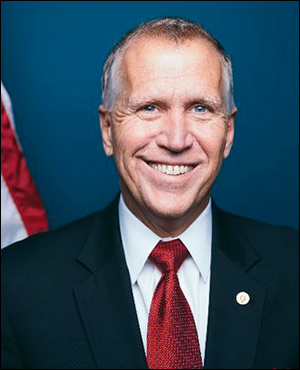
North Carolina Sen. Thom Tillis (R)

Nov. 11, 2020 — Though the North Carolina ballot reception period continues through tomorrow, Democratic US Senate nominee Cal Cunningham, after leading in polling throughout most of the race, conceded late yesterday to Sen. Thom Tillis (R).

The remaining votes are from people who requested absentee ballots that have yet to be returned. Estimates suggested approximately 116,500 could be returned but it became clear that not all of them would be sent. Each had to be postmarked on Nov. 3 and placed in the mail stream. With Sen. Tillis leading by exactly 95,000 votes and an estimated 30 percent of the absentee ballot requests going to Republican voters, it became obvious that there would not be enough available votes to turn the election Cunningham’s way.

The Tillis victory means that Republicans now control 49 Senate seats with only Alaska remaining until the two Georgia runoffs are held on Jan. 5. In Alaska, now with 69 percent of the vote reporting, Sen. Dan Sullivan (R) leads Dr. Al Gross (I/D) by 52,995 votes or by a 58.5 – 36.4 percent margin. The Alaska ballot reception period lasts through Friday, so we should see this race being called shortly, and almost assuredly for GOP Sen. Sullivan.

In the House, we see several calls being made, some of which had been obvious for some time. Democratic Reps. Tom O’Halleran (D-AZ-1), Jimmy Gomez (D-CA-34), and Kim Schrier (D-WA-8), along with Republican Rep. Ken Calvert (R-CA-42) and open seat contender Jay Obernolte (R-CA-8) were all declared official winners. All had been leading throughout the post-election period and it was just a matter of time before a declaration was made for each.

Two major competitive races were called yesterday. In California, where the post-election counting is moving along at a brisker pace than in the past, Orange County Supervisor Michelle Steel (R) has defeated freshman Rep. Harley Rouda (D-Laguna Beach) in the 48th CD. The district, which contains most of the Orange County coastline and was in Republican hands for 30 years in the person of Rep. Dana Rohrabacher (R) before Rouda won the seat in 2018, returns to the GOP.

Continue reading