Tag Archives: Public Policy Polling

Markey Looking Strong; “Governor” Nelson?

Rep. Ed Markey (D-MA-5)

Rep. Ed Markey (D-MA-5)

As we turn into the home stretch for the special Democratic primary election to fill John Kerry’s vacated Senate seat in Massachusetts on Tuesday, Rep. Ed Markey (D-MA-5) continues to appear well positioned for claiming his party’s nomination over fellow Rep. Stephen Lynch (D-MA-8).

A new Public Policy Polling brushfire survey (April 23-25; 563 likely Massachusetts Democratic primary voters) conducted for the League of Conservation Voters, an organization supporting Markey, continues to show the 36-year congressional veteran with a substantial lead. According to the PPP data, Markey posts a 50-36 percent margin over Lynch. The winner of the Democratic primary becomes the prohibitive favorite in the June 25 special general election.

Both candidates scored strong favorability ratings from the sampling universe. Markey registers 66:23 percent favorable to unfavorable; Lynch 50:32 percent.

Earlier in the week, the Western New England University Polling Institute released their survey (April 11-18; 480 registered Massachusetts voters; 270 Democratic primary voters) that showed  Continue reading >

Brown’s First NH Numbers

Public Policy Polling (April 19-21; 933 registered New Hampshire voters) went to New Hampshire to test former Massachusetts senator Scott Brown’s (R) electability in the Granite State. Two weeks ago, Brown, who was defeated for re-election in Massachusetts last November, indicated that he is considering challenging Sen. Jeanne Shaheen (D) in 2014. Since publicly confirming that the idea is at least a possibility, he has made several appearances in the state.

The early PPP numbers, however, don’t look particularly promising for Brown, but he does fare better than any other Republican against Shaheen. If the election were in the current time frame, the senator would lead him 52-41 percent. Though being 11 points down early in the cycle is not the worst of positions for a challenger, it was believed Brown might fare better because of being so well-known throughout the entire New England region.

But, it’s not the ballot test results that suggest the former senator begins in relatively weak political position in New Hampshire. When asked if the respondents think that Brown should run for Senate in the state next year, only 32 percent said they believe he should as compared to 54 percent who said no.

Turning to whether those in the sampling universe consider Brown a New Hampshirite, only 18 percent said that they did. A full 63 percent said they did not.

As previously stated, Brown does fare better than any other Republican against Sen. Shaheen. Former US congressman Jeb Bradley (R-NH-1), who now is the state Senate Majority Leader, trails the senator 39-54 percent. Manchester Mayor Ted Gatsas (R) is behind 34-53 percent; ex-congressman Frank Guinta (R-NH-1) comes up 18 points short at 37-55 percent. Finally, Executive Councilor Chris Sununu (R), the son of former governor and White House Chief of Staff John Sununu and brother of former senator John E. Sununu, would lose to Sen. Shaheen 39-53 percent.
 Continue reading >

Hickenlooper, Udall Cruising in Colorado

Public Policy Polling just completed a survey of the Colorado electorate (April 11-14; 500 registered Colorado voters) and found both Democratic Gov. John Hickenlooper and Sen. Mark Udall in strong position for re-election.

PPP surveys tend to produce more negative numbers of the various politicians tested than most polling firms. The Colorado results are no exception, as all eight tested Republicans registered upside down personal favorability ratings when the respondents were queried about whether they had favorable or unfavorable opinions about each individual. When testing Gov. Hickenlooper and Sen. Udall, the question only pertained to their job performance. On that scale, both men performed well: Hickenlooper scored 53:44 percent positive to negative (though his negative jumped up from 26% as recorded on PPP’s November ’12 Colorado poll); Udall 50:33 percent.

Despite all of the Republicans registering poor favorability ratings, their ballot test standing when paired with either Hickenlooper or Udall are better than one might expect after perusing the initial data.

Former Rep. Bob Beauprez (R-CO-7), who ran unsuccessfully for governor in 2006 after serving two terms in the House from a marginal suburban Denver district, comes within seven points of Hickenlooper, 43-50 percent, in a hypothetical general election. Attorney General John Suthers (R) scores 39-49 percent against the governor. Rep. Cory Gardner (R-CO-4) tallies exactly the same result as Suthers. Rep. Scott Tipton (R-CO-3) also registers in the same range, behind 40-50 percent. Former Rep. Tom Tancredo (R-CO-6) does a bit worse, trailing 41-52 percent.

If these same Republicans were to challenge Sen. Udall, the results prove similar. Despite Beauprez scoring a 15:34 percent personal favorability index and Udall registering a 50:33 percent job approval rating, the Republican trails the senator only 41-48 percent. Suthers is down to Udall 38-50 percent; Gardner 39-49 percent; Tipton 37-50 percent; and Tancredo 39-51 percent.  Continue reading >

New McConnell Polling

Public Policy Polling (April 5-7; 1,052 registered Kentucky voters) tested Senate Minority Leader Mitch McConnell (R) as he prepares for re-election. The poll was taken after actress Ashley Judd (D) stated that she would not challenge the senator in 2014.

As has been detected in other polls, McConnell’s job approval is poor. According to this study, only 36 percent of the sampling universe approves of his performance as the state’s senior senator, versus 54 percent, who do not. By contrast, fellow Kentucky Republican Sen. Rand Paul’s approval index is 46:39 percent. When asked whether the respondents hold a higher opinion of Sen. Paul or McConnell, by a 42-24 percent split the group responded Paul.

Right now, the Democrats do not have a viable candidate to challenge the Republican leader. If first-term Secretary of State Alison Lundergan Grimes were to run — an alternative that she has not ruled but is not likely to pursue — McConnell would lead her 45-41 percent. If defeated representative Ben Chandler (D-KY-6), for example, were to become the Democratic nominee, the senator would lead him by a similar 46-41 percent margin. Chandler also gives no indication that he will enter the race.

Though McConnell is unpopular, he still fares reasonably well in ballot tests against the most viable potential Democratic opponents. Unless a top-tier challenger comes forward, McConnell must still be rated as a clear favorite for re-election.

Sanford Continues South Carolina Comeback

Mark Sanford (R)

Mark Sanford (R)

When scandal-ridden former South Carolina governor Mark Sanford (R) first announced he was attempting a political comeback by running in the current special congressional election cycle, many voters and political observers scoffed at his chances of victory. Last night, Sanford overcame the critics and quite possibly the odds as he won his Republican nomination with a rather impressive 57-43 percent victory over former Charleston County Councilman Curtis Bostic.

This sets up what promises to be a competitive special general election campaign with Democratic nominee Elizabeth Colbert Busch, the sister of Comedy Central comedian Stephen Colbert, even though South Carolina’s 1st Congressional District should be safely Republican.

As is typical for Palmetto State run-off elections, 85.6 percent of the number of primary voters returned to cast ballots for the secondary vote. The state, which features only two-week run-off cycles, performs better in turnout terms than others having a two-tiered nomination system. In most of those places, it is common to see participation levels drop by 50 percent or more. In yesterday’s GOP run-off, 46,071 individuals voted as compared to the 53,793 who cast ballots in the special primary election.
 Continue reading >

Sanford Leads in Run-off Poll

Public Policy Polling (March 22-24; 1,175 likely SC-1 special election voters; 648 self-described Republican run-off voters) released the results of their first post-special primary survey and found scandal-plagued former South Carolina governor Mark Sanford (R) to be leading ex-Charleston County Councilman Curtis Bostic (R) by a 53-40 percent count. The poll suggests that Bostic has so far failed to coalesce the substantial anti-Sanford vote behind his candidacy. In the first election, featuring 16 Republican candidates, the former governor placed first with 37 percent of the vote, while Bostic just grabbed second place with 13 percent.

But the most surprising part of PPP’s poll is how the two Republicans fare against Democrat Elizabeth Colbert Busch in the special general. Despite SC-1 being a heavily Republican district, the data shows that Busch has a small 47-45 percent lead over Sanford and ties Bostic at 43 percent.

The two results are surprising in different ways. First, many would believe that Busch’s lead over Sanford would be greater considering his heavy personal negatives in conjunction with his highly publicized international extra-marital affair. But Bostic, on the other hand, without carrying such heavy political baggage should actually be in a stronger position than a dead heat when being paired with the Democratic nominee.

The Republicans have had trouble winning special elections during the past few years, even in strong partisan seats such as the one in southeast South Carolina. The April 2 run-off is only a little more than a week away, which now stacks up well for Sanford. Based upon this now available polling data, expect the special general to be much more competitive than originally forecast.

Rounds Starting Strong in South Dakota Senate Race

Gov. Mike Rounds

Gov. Mike Rounds

With former South Dakota Gov. Mike Rounds (R) just completing a series of Washington, DC visits to the PAC community drumming up support for his already announced US Senate run, Public Policy Polling released a survey (March 18-19; 1,069 registered South Dakota voters; 501 Republican primary voters; 390 Democratic primary voters) of the state’s electorate that shows early signs of a GOP conversion race.

Sen. Tim Johnson (D) has promised to soon make clear whether he will seek re-election, originally saying he would do so “at the end of March.” Most local and national political observers believe that he will retire for health reasons.

In a hypothetical ballot test between the senator and Rounds, it is the Republican who already holds the strong early lead. According to PPP, Rounds would defeat Sen. Johnson 52-41 percent in a current contest. If Rep. Kristi Noem (R-SD-AL) were the Republican senatorial nominee, she would outpace the incumbent by four points, 49-45 percent.

Should the senator retire, two Democrats are most often mentioned as potential candidates: former Rep. Stephanie Herseth Sandlin and US Attorney Brendan Johnson, the senator’s son. Herseth Sandlin, who held the at-large House seat for three full terms  Continue reading >

Booker Cruising in Jersey Senate Poll; Corbett Improves in Pa.

Newark Mayor Cory Booker

Newark Mayor Cory Booker

New Jersey’s Fairleigh Dickinson University, as part of their March 4-10 Garden State survey (702 registered New Jersey voters; 323 Democratic primary voters), studied the upcoming 2014 open Senate race. Their findings present good news for Newark Mayor Cory Booker (D) and suggest that both Rep. Rush Holt (D-NJ-12) and Rep. Frank Pallone (D-NJ-6) have quite a bit of ground to close if they intend to enter the race. Of the two, Pallone is likely to run, while Holt’s candidacy is only a possibility.

According to the FDU results, Booker would lead Holt and Pallone 50-7-4 percent, respectively, if a Democratic primary vote were held during the present period. With such a wide spread, either or both of these potential candidates will have to create a negative image of Booker if they are to substantially gain on him. Typically, big city mayors don’t do particularly well in statewide electoral contests normally because the voters not residing in the largest city, and particularly so for rural voters, often have a negative image of big city politics. Therefore, we can expect to see serious questions raised about the city’s government and state of the local economy before Democratic voters go to the polls in June of 2014.

Booker is in equally good shape for the general election. The only potential GOP  Continue reading >

Va., Pa. Gubernatorial Glimpses

Virginia Lt. Gov. Bill Bolling has decided not to enter this year’s gubernatorial campaign as an Independent candidate. In an email communication sent to his supporters that sounded very similar to one he sent on Feb. 28, Bolling indicated that his decision not to run largely revolved around the ability to raise enough money to run a “winning” campaign for Virginia governor, in addition to his distaste for what he terms the “rigid ideology” of today’s modern politics.

“In many ways I fear that the ‘Virginia way’ of doing things is rapidly being replaced by the ‘Washington way’ of doing things and that’s not good for Virginia. As a result, the political process has become much more ideologically driven, hyper-partisan and mean-spirited. Rigid ideologies and personal political agendas are too often placed ahead of sound public policy and legitimate policy disagreements too quickly degenerate into unwarranted personal attacks. This makes it more difficult to govern effectively and get things done,” Bolling wrote as part of his message.

The development should result as a big plus for consensus Republican gubernatorial candidate Ken Cuccinelli, the state’s attorney general. Though polling generally indicated that Bolling’s entry really didn’t move the race dramatically toward presumed Democratic nominee Terry McAuliffe, over the course of the campaign that would likely have been the result. Without Bolling in the race trying to chip away moderate Republican support from Cuccinelli, the attorney general will have a better chance of unifying his party’s support for the general election campaign.

Polling has shown that the McAuliffe-Cuccinelli race begins as a dead heat and there is a good chance that the campaign will remain in such a mode all the way through Election Day.

Corbett Down

Pennsylvania Gov. Tom Corbett (R) appears  Continue reading >

Sen. Levin to Retire

Sen. Carl Levin

Sen. Carl Levin

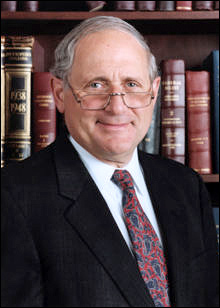
Michigan Sen. Carl Levin (D), chairman of the Senate Armed Services Committee, announced yesterday afternoon that he will not seek a seventh term next year.

Originally elected in 1978, Levin will conclude 36 years of service at the end of the 113th Congress and becomes the eighth senator since the November election to either leave the body, or plan a defined departure; six incumbents have announced retirement plans for 2014, Sen. John Kerry (D-MA) was appointed US Secretary of State, and Sen. Daniel Inouye (D-HI) passed away in late December.

An open Michigan seat is potentially competitive, but the state’s voting history suggests that the eventual Democratic nominee will begin the general election as the early favorite. Though, as we saw in 2010 when Republicans swept the state, Michigan voting patterns can vary widely in low turnout mid-term elections.

For the Democrats, the two potential candidates who will garner the most attention are former Gov. Jennifer Granholm and Detroit Rep. Gary Peters (D-MI-14). Granholm served two full terms as the state’s chief executive, leaving office at the beginning of the 2011. Her tenure was  Continue reading >