
Tag Archives: President Trump

One In, One Out

By Jim Ellis

July 13, 2017 — Two major announcements occurred during the last few days resulted in one individual becoming an official statewide candidate and another withdrawing from a campaign that had already begun.

West Virginia Senate

As had been expected for some time, two-term West Virginia Attorney General Patrick Morrisey (R) announced his campaign for the United States Senate. He will face two-term Rep. Evan Jenkins (R-Huntington) in the Republican primary, with the winner drawing a difficult political match with Sen. Joe Manchin (D).

With average win percentages of 62 percent over two elections as governor (2004, ’08) in addition to a pair of Senate campaigns (2010 special election; 2012), Sen. Manchin appears to be in strong shape as he approaches his 2018 re-election. But, there are some cracks in his armor, hence the presence of two strong GOP opponents.

Though Sen. Manchin has attempted to cross the partisan line in his public relationship with President Trump and the Republican leadership on several issues, it is still a net negative for the senator to campaign on the same political landscape that proved to be the former’s second strongest state (69 percent).
Continue reading

Big Governor News

By Jim Ellis

July 12, 2017 — A major announcement was made in a western state governor’s race Monday, with an additional one from an adjacent domain coming later today. Both affect corresponding US House seats.

New Mexico Governor; NM-2

Rep. Steve Pearce (R-Hobbs) announced that he will enter the open New Mexico governor’s race next year, saying to the Albuquerque Journal that he’s “concerned about an exodus of young people leaving New Mexico,” going to other places for a more favorable job market. Pearce said his campaign will emphasize improving education, spurring economic growth, and reducing crime and poverty.

This will be the second time Pearce has left his House seat to pursue a statewide contest. In 2008, when serving his third term in Congress, he decided to challenge then-Rep. Heather Wilson (R-Albuquerque) for the US Senate nomination, and successfully upset her in the Republican primary. He would then go onto lose the general election to then-Rep. Tom Udall (D-Santa Fe), 61-39 percent, in the Obama landslide year.

Continue reading

The Wild West

By Jim Ellis

July 11, 2017 — Surprising political rumblings are being felt in two key western swing states, one highlighting what will be a major Republican primary battle, with a toss-up open seat and a potentially competitive challenger campaign in the other.

The former will feature a serious Colorado GOP primary between two of the most conservative candidates in that state, while two Nevada seats could see a pair of candidates swapping districts.

CO-5

Republican former US Senate nominee Darryl Glenn says that, in the next several weeks, he will announce a formal GOP primary challenge to veteran Rep. Doug Lamborn (R-Colorado Springs). Glenn received no national party support in his 2016 race against Sen. Michael Bennet (D) but still came within six points of him on election night, holding the incumbent below majority support. Just recently, state Sen. Owen Hill (R-Colorado Springs) announced his own primary challenge to Rep. Lamborn. Therefore, we are on the precipice of witnessing a major three-way intra-party confrontation before a Republican electorate very familiar with tough primary battles.

Rep. Lamborn was originally elected in 2006, coming through a difficult primary battle in that year. The same scenario occurred in his first re-election, and he has repelled several primary challenges in subsequent campaigns. But, in each of those situations he was the most conservative candidate. The difference here, at least when reflecting upon a Glenn candidacy, is that Rep. Lamborn may not be considered as such. This will be the first challenge where the congressman will actually have to defend himself from the right.

Continue reading

A Surprising Announcement

By Jim Ellis

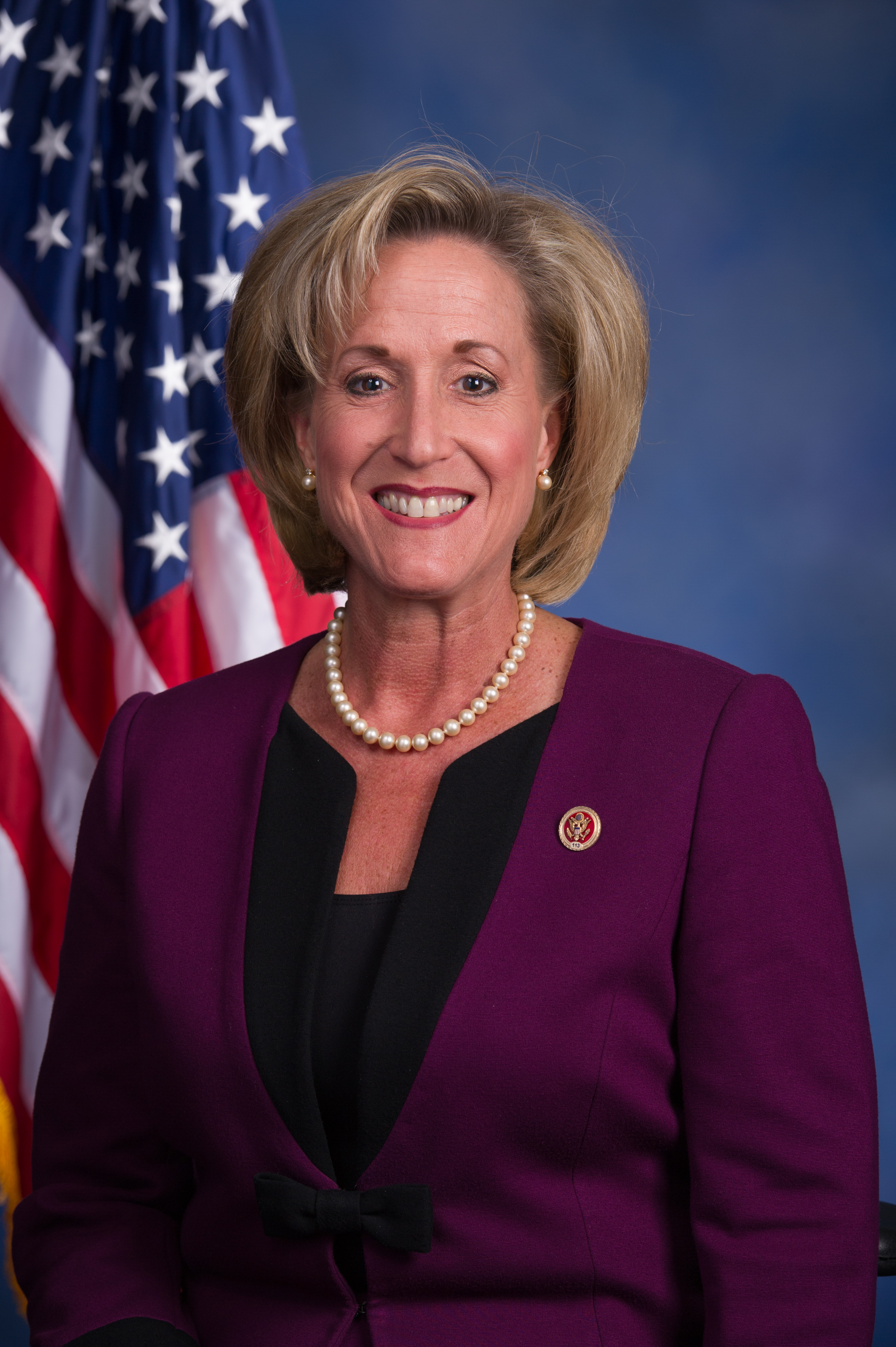
Rep. Ann Wagner (R-St. Louis County)

Rep. Ann Wagner (R-St. Louis County)

July 6, 2017 — A July announcement regarding the coming Missouri US Senate race had been expected for weeks, but the actual content featured a much different declaration than anticipated.

Just before the July 4th holiday, Rep. Ann Wagner (R-St. Louis County), who was thought to be announcing a campaign for the Senate, instead made public her decision not to challenge Democratic incumbent Claire McCaskill. Rep. Wagner will seek a fourth term in the House, however. The congresswoman cited her desire to continue fully representing her home area as the driving force behind her ultimate political decision. In her statement, Wagner said that the 2nd District “ … is my home. It’s where I grew up, went to school, have worked and volunteered, raised my kids, and attend church every week—there is no greater honor than representing a place and people that I love.”

The Wagner turnabout was particularly surprising in that she had been raising money at a very strong clip, more than $800,000 in the first quarter with a projected similar amount for the quarter just ended but not yet publicly reported.

Democrats, of course, are saying that Wagner decided not to run statewide because she and another Republicans fear a bad political year. The Dems uniformly cite President Trump’s low approval ratings and what many perceive as a politically negative healthcare issue, things they believe will cause major electoral problems for GOP candidates.

Continue reading

Fake Analysis?

By Jim Ellis

June 30, 2017 — As we all know, one of President Trump’s favorite gambits is to call out reporters for what he terms their “fake news” stories, and we see an example this week of where he may be right. The New York Times is one of the president’s favorite whipping posts, and Nate Cohn’s analysis in the publication’s Political Calculus section about the Democrats’ chances in the 2018 election cycle is at least dangerously close to fitting into that category. While Cohn’s analysis may not be “fake”, he certainly omits a great many facts that don’t conveniently fit his premise.

Cohn is right in the early part of his article when he states that for Democrats to win the net 24 seats they need to capture at least a one-seat House majority they must expand the political playing field. He goes so far as to say they need to challenge perhaps as many as 70 Republican incumbents or nominees in open Republican seats in order to obtain that number, and his statement may well be correct.

But the “fake” part of the analysis again surrounds the special elections just completed. The author reiterates the common narrative that the Republicans under-performed in these seats, which, therefore, lays the foundation for a Democratic sweep in next year’s House races.

The premise of Republican under-performance in these campaigns simply isn’t accurate in three of the four GOP-held seats. While true President Trump recorded big percentages in the four districts, and House Republican incumbents previously racked up large victory margins against weak opponents, an “apples to apples” comparison puts the results into better perspective. In past open seat or challenger contests in these same seats, the Republican special election victors came within at least similar range with previous winning GOP candidates in like situations. The current analyses isolate the Trump numbers, which in many cases aren’t like other Republican totals, while adding landslide incumbent wins that skew the underlying vote history.

Continue reading

The Aftermath

By Jim Ellis

June 22, 2017 — Much was written and discussed yesterday about Tuesday’s surprising special election results in GA-6 and SC-5. Democrats, in particular, had raised victory expectations to unrealistically high levels for the Georgia race while spending record sums of money there, yet still suffered another crushing defeat.

Northeast from the Atlanta district some 200 miles away on Interstate 85, South Carolina Democratic candidate Archie Parnell, who the national party leadership basically considered politically dead even before he won the party nomination, lost by only two percentage points. He actually came closer to his Republican opponent than GA-6 candidate Jon Ossoff did while having 97 percent less in the way of campaign financial resources.

Predictably, Democratic congressional members, activists, and donors from around the country are not happy with the party leadership over the losses, but talk inside and outside the House of deposing the leadership team of Minority Leader Nancy Pelosi (D-CA), Minority Whip Steny Hoyer (D-MD), and Assistant Minority Leader Jim Clyburn (D-SC) will soon dissipate.

Continue reading

Handel and Norman

By Jim Ellis

June 21, 2017 — It’s difficult to characterize a Republican candidate winning a Republican congressional district as an “upset”, but Karen Handel’s victory in the north Atlanta suburbs last night, at least in terms of the money spent, polling, and how the media covered the campaign, seems to qualify for such a description.

From a huge turnout of 259,622 voters, just about 58 percent of the entire registered 6th district universe and almost 50,000 more than participated in the last regular mid-term election, Handel, a former Georgia Secretary of State, topped Democratic filmmaker and ex-congressional aide Jon Ossoff by a 52-48 percent margin, a spread of 9,702 votes when all of the ballots were counted. She retains for the Republicans Health and Human Services Secretary Tom Price’s former congressional seat.

Simultaneously, over 200 miles away via Interstate 85 northeast of Atlanta in central South Carolina, Republican Ralph Norman claimed the evening’s other special congressional election with a surprisingly close 51-49 percent win over Democrat Archie Parnell from a small turnout of 87,840 voters. Office of Management & Budget Director Mick Mulvaney left open this seat to assume his national position.

The GA-6 contest, which became a national election because of the record amounts of money spent — an aggregate total that will likely exceed $50 million when the final accounting is published, and where the Democratic leadership virtually invested their entire special election season budget and emphasis — is now a crushing defeat for the party and what is termed the “anti-Trump resistance.”

Continue reading

Election Day Today

By Jim Ellis

June 20, 2017 — Voters in Georgia and South Carolina complete their special election processes today, with Republicans protecting both vacant US House seats and Democrats trying to make one of them a major national gain. The GA-6 and SC-5 seats of Trump Administration appointees Tom Price of Georgia and Mick Mulvaney from South Carolina have been vacant for months, but will have new representatives as tonight draws to a close.

GA-6

This is the big one. More than $40 million will be spent in the aggregate for this campaign, more money than ever expended for a single congressional contest. Democrats went “all in” on this contest at the beginning of the special election cycle, using President Trump’s 1.5 percentage point victory performance as a harbinger of a changing Republican district.

Polling shows the race between Democrat Jon Ossoff and Republican Karen Handel as being a dead heat. Ossoff has maintained a slight lead for most of the post-primary period, but the polling sample selections have often over-emphasized the 2016 presidential campaign, which has led to a greater number of Democratic respondents. This, plus the Republicans tending to under-poll in the South could give Handel a better chance than the pure numbers indicate.

Democrats are using this race as proof that they can sweep the mid-term elections, but GA-6 isn’t representative of their coming campaigns. First, they won’t be able to raise and spend $25 million for every congressional race in the 2018 cycle, so the financial aspect skews the outcome. Second, the Democratic spokespeople will make this result, should Ossoff win, a statement suggesting that the voting public is rejecting President Trump. This is only a surface argument because Ossoff’s public positions don’t often mention the chief executive, nor do they espouse liberal economic principles. Therefore, it is likely their post-election victory analysis won’t reflect Ossoff’s actual reasons for winning.

Continue reading

Unelecteds and Opens

By Jim Ellis

June 12, 2017 — It was always known that a large number of 2017-18 cycle governors’ races would be open contests, but finding several unelected incumbents running to hold their new positions is an unforeseen nuance.

In three states, and possibly soon a fourth, governors have been appointed to Trump administration positions or forced from office, thus allowing the lieutenant governor to move into the state’s top position.

South Carolina’s Nikki Haley, now UN Ambassador; Terry Branstad of Iowa becoming US Ambassador to China and Alabama Gov. Robert Bentley being forced from office for misappropriation of state funds have made Henry McMaster (SC), Kim Reynolds (IA), and Kay Ivey (AL) overnight governors. While on paper and in practice this is a big advantage for the former lieutenant governors in running for the state’s top position, none of them have easy campaign roads, and not even for their respective party nominations.

Last week’s announcement from Kansas Secretary of State Kris Kobach (R) that he will enter his state’s open gubernatorial contest next year may soon lead to him battling a new incumbent if on-again, off-again Washington, DC appointment rumors eventually prove true.

Speculation has abounded that President Trump will tap Gov. Sam Brownback (R-KS) for an open United Nations position, or another associated with foreign policy. Though such talk has been a subject of discussion since February and he has yet to be appointed, it is unclear if such will ever happen. Should it, however, then Secretary Kobach, oil businessman Wink Hartman, and ex-state Rep. Ed O’Malley will have to face a new sitting Republican governor, Jeff Colyer, the current lieutenant governor.

Continue reading

GA-6: Even More Controversy

By Jim Ellis

June 5, 2017 — The backfired Kathy Griffin ploy about beheading President Trump has made its way into the hotly contested GA-6 special election.

The Republican Congressional Leadership Fund (CLF), loosely associated with House Speaker Paul Ryan, is airing a new ad (above) that ties Griffin to Democratic candidate Jon Ossoff, labeling her an “Ossoff supporter,” and then attacking “extreme liberals” for creating violence and national unrest. Griffin publicly endorsed Ossoff several weeks ago via Twitter.

The script proceeds to call attention to Ossoff’s fundraising that could attract over $12 million before the election culminates on June 20. The CLF contends that 95 percent of Ossoff’s funds come from outside of Georgia, and infers that most of his supporters are of the same ilk as Griffin. The script ends explaining that these activists support Ossoff because “he is one of them.”

Continue reading