Tag Archives: Nebraska

2020 Senate Review – Part II

By Jim Ellis

March 26, 2019 — The second of our three-part Senate review covers the races alphabetically from Louisiana through New Mexico:
  • Louisiana – Sen. Bill Cassidy (R) – Sen. Cassidy will seek a second term next year but, as in Kentucky, no real action will occur in the federal campaigns until the 2019 governor’s race is decided. Currently, Sen. Cassidy faces no serious opposition. Likely Republican

  • Maine – Sen. Susan Collins (R) – Sen. Collins appears near the top of the 2020 Democratic target list, but she may not be as vulnerable as it might appear on paper. The four-term senator is a good fit for her constituency; she racked up win percentages of 67 and 61 in her past two elections (2014; 2008) and, unless Rep. Chellie Pingree (D-North Haven/ Portland) runs, the Dems don’t appear to have a top tier candidate.
    Neither newly elected Democratic Gov. Janet Mills nor Rep. Jared Golden (D-Lewiston) appear to be looking at a Senate run. Currently, Lean Republican and closer to Likely Republican than Toss-up

  • Massachusetts – Sen. Ed Markey (D) – Sen. Markey’s only concern is a potential Democratic primary challenger and, with Rep. Seth Moulten (D-Salem) looking more toward the presidential contest than the Senate, the veteran incumbent should be secure for a second full term. Adding his long tenure in the House, Sen. Markey will be in Congress 44 consecutive years at the end of the current session. Safe Democratic

  • Michigan – Sen. Gary Peters (D) – Republican manufacturing company owner and retired Army Ranger John James’ better-than-expected performance against Sen. Debbie Stabenow (D) last year, and first-term Sen. Peters’ below-average polling numbers are moving Michigan fast up the Republican target list. Assuming James runs, the Michigan Senate race could become quite interesting. Lean Democratic

  • Continue reading

Tracking Trump’s Approval Ratings
Against Electoral College Results

2016 Electoral College Results map (270toWin)


By Jim Ellis

Feb. 26, 2019 — Already beginning to project where the states might fall in the 2020 presidential election, the Gallup organization released a 50-state survey tracking study Friday that summarizes their cumulative research collected throughout the past year.

Gallup finds President Trump slightly improving his standing over a similar project conducted from their aggregate 2017 data. Meanwhile, the Civiqs polling organization projects, as do all other pollsters, that Trump’s job approval remains upside-down. In the good news category for the president, however, the latter organization finds that he is viewed more positively than either of the national political parties.

Nationally, Trump carries a 44:52 percent job approval ratio according to the Civiqs poll of registered voters (polled continually from Oct. 12, 2015-Feb. 23, 2019; 181,729 responses during that multi-year tracking period). The Democratic Party, however, posts a lesser 39:52 percent rating, while the Republican Party lags behind both the president and their political party counterpart. The GOP registers a poor 26:60 percent index.

But these numbers are not particularly unusual because the same trend among the three polling subjects has been consistent for many months. The more telling conclusion is that the deviation factor among the approval ratings has remained constant for well over a year, suggesting that the electorate continues locked in a highly polarized and negative status.

Continue reading

What to Expect

We’re back after going dark briefly over the Christmas holiday. (No, just in case you were wondering, we’re not part of the government shutdown.) We trust that you are rested, recharged and ready for the new year and the ever-evolving political developments that will come.

By Jim Ellis

Jan. 2, 2019 — We kick off a new calendar and political year looking at several anticipated events. On the presidential front, we can expect several candidate announcements coming in January, along with a changing primary/caucus schedule. Additionally, some close losing congressional candidates are already declaring they want a re-match.

Sen. Elizabeth Warren (D-MA) began the new year by forming a presidential exploratory committee and stating that she would begin her potential national campaign with a four-city information-gathering tour in Iowa, site of the first presidential votes scheduled for early February of 2020.

Four potential Democratic candidates are reportedly close to hiring key personnel either as national managers or Iowa state leaders. Aside from Sen. Warren, Sens. Kamala Harris (D-CA), Cory Booker (D-NJ), and Kirsten Gillibrand (D-NY), are apparently poised to make staffing announcements possibly within the first two weeks of this new month and year.

An imminent presidential candidacy declaration is expected from former Housing and Urban Development Secretary Julian Castro (D-TX), who formed an exploratory committee in early December. Rumors in Texas abound, however, that while Castro may begin to compete in the presidential race he could pivot out of the national campaign and into a US Senate challenge against Sen. John Cornyn (R-TX) if he fails to gain traction.

Continue reading

The Democrats’ Path

By Jim Ellis

Sept. 25, 2018 — Most of the contemporary political talk surrounds the Democrats’ ability to gain the US House majority, but is there a viable path for a power shift in the Senate? Their road to a new Senate majority is much rockier than for the House, but at least a mathematical chance of that becoming reality does exist.

senate 2018 midterm election competitionLast week we reviewed the status of the 17 states that see legitimate competition for the in-cycle Senate seats. Now, looking at the latest Fox News Senate ratings, we can draw some conclusions about the Democrats’ victory chances.

It is important to remember that the minority Dems must defend 26 of the 35 in-cycle Senate races in the current election cycle. Thus, the party’s least complicated path is to run the table of their current 26 seats, and then take two of the five GOP states where they are fielding credible opposition candidates. Doing so would give the Dems a 51-49 majority.

But, this is easier said than done. According to Fox, and virtually all other media prognosticators, one of the Democratic seats, North Dakota, is already leaning to the Republicans, while three more (Florida, Indiana, and Missouri) reside in the “Toss-up” column.

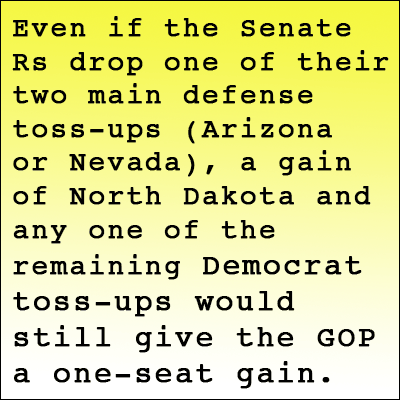
Of the nine seats the Republicans need to defend, three reside in the Toss-up category (Arizona, Nevada, and Tennessee), while one is classified as a Lean Republican (Texas), and the remaining five (Nebraska, the two Mississippi seats, Utah, and Wyoming) are rated as Likely Republican. (Fox does not use a “safe” designation. The best a candidate of either party can achieve from a Fox News political rating is “likely.”)

Continue reading

The Primaries Through May:
Setting November, Part I

By Jim Ellis
the-primaries
May 24, 2018
— We have now completed primaries in 13 states. Therefore, we can review the key run-off and general election pairings that these primaries produced. Today we’ll look at Arkansas, Georgia, Idaho, Illinois, Indiana, Kentucky, Nebraska and North Carolina. Tomorrow we’ll go over the states of Ohio, Oregon, Pennsylvania, Texas and West Virginia.


Arkansas: Gov. Asa Hutchinson (R) is a lock for re-election. Rep. French Hill (R-Little Rock) is a clear favorite over state Rep. Clarke Tucker (D-Little Rock).


Georgia: Republicans will see a gubernatorial July 24 run-off between Lt. Gov. Casey Cagle and Secretary of State Brian Kemp. The winner faces former state House Minority Leader Stacey Abrams (D) in the open general election. In the House, Democrats are forced into run-offs in District 6 and 7. The winners will be clear underdogs to Reps. Karen Handel (R-Roswell) and Rob Woodall (R-Lawrenceville).


Idaho: Lt. Gov. Brad Little (R) is a heavy favorite over state Rep. Paulette Jordan (D-Moscow) in the open governor’s race. Former state Sen. Russ Fulcher (R) will succeed Rep. Raul Labrador (R-Eagle/Boise) in the open 1st District.


Continue reading

May Primaries: Round 2

By Jim Ellis

New Pennsylvania Congressional Map | Source: Pennsylvania State Supreme Court (click on image to see full size)

New Pennsylvania Congressional Map | Source: Pennsylvania State Supreme Court (click on image to see full size)

May 15, 2018 — Voters in four more states go to the polls to choose their nominees today. Today, we examine those four states as voting gets underway in the Idaho, Nebraska, Oregon and Pennsylvania primaries.

Pennsylvania

Voters in the Keystone State go to the polls throughout the day to choose partisan nominees for governor, US senator, and representatives in their 18 new US House Districts.

The governor and Senate contests are not stirring up much intrigue as neither Gov. Tom Wolf (D) nor Sen. Bob Casey Jr. (D) face any Democratic primary opposition. On the Republican side, state Sen. Scott Wagner (R-York) seems to have the inside track against businessman Paul Mango and former Pittsburgh Chamber of Commerce president Laura Ellsworth. In the Senate GOP contest, US Rep. Lou Barletta (R-Hazelton) appears primed to defeat state Rep. Jim Christiana (R-Monaca) for the opportunity to challenge Sen. Casey in November. Both Democratic incumbents are currently favored to win new terms.

PA-1: Rep. Brian Fitzpatrick (R-Levittown) will easily win re-nomination against a minor Republican candidate. Democrats have three candidates vying for advancement to the general election. Though the district remains 93 percent intact after the state Supreme Court re-drew the Pennsylvania CDs, and contains all of Bucks County, this race has toss-up potential.

PA-2: Rep. Brendan Boyle (D-Philadelphia) is running in the eastern downtown district, now fully contained within Philadelphia County. Rep. Boyle will have little trouble securing this seat in tonight’s Democratic primary and in the general election. Half of Rep. Boyle’s previous 13th District comprises new District 2.

PA-3: Freshman Rep. Dwight Evans (D-Philadelphia) seeks re-election in a slightly different district, as 80 percent of his former constituents are re-cast into the new 3rd CD. Evans will easily be re-elected in both today’s primary and the general.

PA-4: The new 4th is comprised of parts of five previous districts, and now contains most of Montgomery County with a sliver of Berks County. Former US Rep. Joe Hoeffel (D) is attempting a comeback here, but it appears state Rep. Madeleine Dean has the advantage in the Democratic primary. The new 4th is safely Democratic in the general election.

Continue reading

Senate Candidates 2018 – Part I

By Jim Ellis

Jan. 17, 2018 — As we continue setting the stage for the 2018 midterms now that we are in the actual election year, in a two-part series, we review the announced candidate status in each state, since much has changed in the past few weeks.

Arizona: Sen. Jeff Flake (R) – Retiring – Open Seat
Candidate Filing Deadline: May 30, 2018
State Primary: Aug. 28, 2018
• Joe Arpaio (R) – former Sheriff, Maricopa County
• Martha McSally (R) – US Representative; 2nd District
• Kelli Ward (R) – former state Senator; 2016 US Senate candidate
• Kyrsten Sinema (D) – US Representative; 9th District
3 Minor Republican candidates
5 Minor Democratic candidates
1 Libertarian candidate
1 Green candidate

California: Sen. Dianne Feinstein (D) – seeking re-election
Candidate Filing Deadline: March 9, 2018
State Primary: June 5, 2018
Jungle Primary: Top two candidates advance to general election
• Kevin de Leon (D) – State Senate President
• Erin Cruz (R) – Radio Talk Show host
5 Minor Democratic candidates
6 Minor Republican candidates
6 Independent candidates

Connecticut: Sen. Christopher Murphy (D) – seeking re-election
Candidate Filing Deadline: June 8, 2018
State Primary: Aug. 14, 2018
• Ann-Marie Adams (D) – Journalist
• Tony Hwang (R) – State Senator – possible candidate
2 Minor Republican candidates

Continue reading

New Year House Preview

US-House-of-Representatives-balance-of-power-January-2018By Jim Ellis

Jan. 8, 2018 — Continuing our federal race outlook to set the political stage in this first week of the actual midterm election year, we now turn to the House races.

Republicans have a 24-seat margin (counting their three vacant seats that will go to special election in the early part of this year: PA-18, AZ-8, and OH-12), and though Democrats and most in the media claim that a new majority is just around the corner, a race-by-race House analysis shows that the road to converting the majority remains difficult to attain. This is so for several key reasons, not the least of which is the typical House incumbent retention factor. In 2016 the rate hit 97 percent (377 victories for the 389 House members who ran for re-election).

Additionally, even though President Trump’s job approval rating is historically low, we must remember that he won the 2016 national election with a personal approval index no higher than his present positive to negative ratios. And, even though congressional approval was well below 20 percent for the entire 2016 election year, Republicans lost only six House seats from their previous modern era record majority of 247 that was attained in the 2014 election.

When we have seen major seat changes occur in past elections, the winning party has done well in converting open seats. For the fourth election cycle in a row, the 2018 House cycle features an above average quantity of incumbent-less US House campaigns – the current number is 45, counting the two latest announced retirees, Reps. Bill Shuster (R-PA) and Gregg Harper (R-MS).

Continue reading

New Year Senate Preview – Part I

By Jim Ellis

Jan. 4, 2018 — Now that we are officially in election year 2018, it is a good time to set the stage for the coming campaign season. With Democrat Doug Jones converting the Alabama special election last month, and new Sen. Tina Smith (D-MN) standing for a concurrent special election this November, a different picture exists for the coming Senate election campaigns.

THE REPUBLICANS

Sen. Dean Heller (R-NV)

Sen. Dean Heller (R-NV)

Before Alabama, it was a virtual mathematical certainty that the Republicans would retain Senate control after the 2018 vote because the Democrats had too few viable conversion targets. The Jones’ special election victory to permanently replace Attorney General Jeff Sessions, who left the Senate in order to accept his Trump Administration position, now gives the Democrats a path to attaining the majority but they still must overcome the GOP’s strong defensive wall.

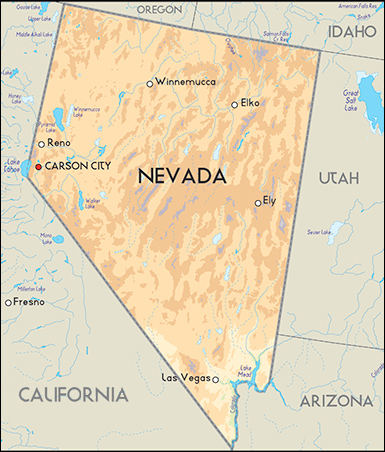
Only forced to defend eight of the now 34 in-cycle seats, the Republicans are most at risk in Nevada and Arizona.

In the Silver State, first-term Sen. Dean Heller (R) currently defends his statewide position against two known opponents, only one of which is a Democrat.

Perennial candidate Danny Tarkanian, who has lost campaigns for five different offices (state Senate, Secretary of State, US Senate, Congressional District 4, and Congressional District 3), is nevertheless 4-1 in Republican primaries. Therefore, Sen. Heller’s first task is to secure the GOP nomination in June. Already we have seen erratic polling, with the Tarkanian camp and some national pollsters posting him ahead of Heller, but the senator and other independent research firms countering with the opposite result.

Continue reading

The Senate Picture – Re-cap

34-in-cycle-us-senate-seats

By Jim Ellis

Nov. 28, 2017 — During the Thanksgiving holiday week, we previewed all 34 current Senate races. Today, we wrap-up with the often-described 30,000-foot national overview perspective.

The Alabama special Senate election scheduled for Dec. 12 will tell us a great deal about the coming regular cycle. While the Roy Moore-Doug Jones race is not likely to provide a voting trend preview since the contest has been tainted with scandal, it will signal whether or not the Democrats own a path to the Senate majority.

If Democrat Jones wins the Alabama special, it would give his party 49 seats, thus making their two primary Republican conversion targets in Arizona and Nevada enough to claim majority status, assuming all 25 of their defense seats are held, which, of course, is no easy task. If Republican Moore can hold Alabama, despite being jettisoned by the national GOP leadership, that would secure the Republican majority because such an outcome relegates Democrats’ chances of netting the three GOP seats they need within the regular cycle as highly unlikely.

Continue reading