Tag Archives: Michigan

Why Arizona is So Pivotal

By Jim Ellis

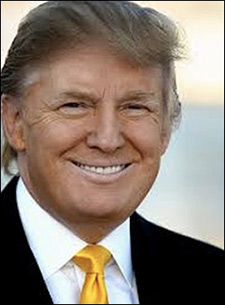
Does Arizona hold the key in a Trump-Biden election?

Sept. 16, 2020 — For several reasons, the Grand Canyon State of Arizona is possibly the most important state on the political map to determine the ultimate presidential election outcome.

Primarily, Arizona is one of five core states that President Trump must win to form a foundation for a favorable remaining state coalition map. The other four, geographically from west to east, are Texas, Georgia, Florida, and North Carolina. Should Joe Biden break through in any one of these five states, he will likely win the national election.

At this point, Arizona appears to be the most precarious of the Trump core states. While the President’s numbers are improving here, the September polls find him trailing Biden in all six publicly released surveys from a range of one to nine points among likely voters, with a mean average of Biden plus-4, and a median of Biden plus-3.5.

The five states are so critical to President Trump, or any Republican national candidate, because, as a unit, they yield a relatively easy remaining victory map. Carrying the five southern sector domains and assuming no leakage in Ohio or Iowa, and even while not winning Nevada or New Hampshire, the GOP nominee then claims the presidency with a victory in any one of the key Great Lakes states: Michigan, Minnesota, Pennsylvania, or Wisconsin. For a Democrat to win under this scenario, he or she would be forced to sweep the aforementioned quartet.

President Trump won the 2016 Electoral College vote 306-232, which means he can relinquish a net 36 electoral votes in 2020 and still win the national election. Under the scenario of him taking either Wisconsin or Minnesota, along with keeping Arizona, he would defeat Biden with exactly 270 electoral votes. This model also assumes he wins the 2nd Congressional District from both Nebraska and Maine, the two states that split their electoral votes. He won both in 2016. Under this scenario, Michigan and Pennsylvania would go to Biden.

Arizona, now potentially teetering toward the Democrats, is critical to the president’s prospects because Trump cannot afford to trade it for one of the western Great Lakes States, either Minnesota or Wisconsin. Such a loss would force the president to win two of the four Great Lakes, but only one could be Minnesota or Wisconsin since those two states have 10 electoral votes and Arizona has 11.

Therefore, simply put, losing Arizona because of its 11th electoral vote would mean that Trump would be forced to carry either Michigan or Pennsylvania in addition to one of the other three remaining Great Lakes States. A further scenario involving Trump losing Arizona and replacing it with both of the 10-electoral vote states (MN and WI) could result in the election ending in a 269-269 tie. This would force a tiebreaker to be decided in the US House of Representatives.

Let’s look at the chances of Trump winning Arizona by comparing his current standing to where he was at this point in 2016. Looking at the Real Clear Politics polling archives, we find that 19 Arizona polls were conducted during the entire 2016 election cycle. In 2020, just since the July 4th holiday break, 25 surveys were publicly reported in the Grand Canyon State.

Four years ago, at the end of August through mid-September, two individual polls came from Gravis Marketing (Aug. 25-27, 2016) and NBC News/Marist College (Sept. 6-8, 2016). These surveys yielded Trump four and one-point leads, respectively. Shortly thereafter, the trend began to turn Hillary Clinton’s way. The OH Predictive Insights survey (Sept. 28-30, 2016) found the two candidates tied at 42 percent apiece, while Emerson College (Oct. 2-4, 2016) and the Arizona Republic newspaper poll (Oct. 10-15, 2016) detected consecutive leads for Clinton of two and five points.

Therefore, Arizona did not turn toward Trump for good until the Monmouth University survey in late October (Oct. 21-24, 2016), which put him just one point ahead. Going into the election from that point, and remembering the 2016 election was on Nov. 8, Trump led in the final four polls from a two to five-point margin. He would eventually win the actual vote count by 3.6 percentage points, 48.7 – 45.1 percent, meaning a raw vote margin of 91,234 votes of more than 2.573 million ballots cast.

Because of Arizona’s fast population growth, the state has changed in four years. During that interval, the overall population expanded five percentage points to 7,278,717 individuals according to the Census Bureau’s July 2019 estimate, the latest available.

Minorities, specifically Hispanics and blacks, account for approximately 69 percent of the population gain, thus at least partially explaining Biden’s improved prospects in the state. Overall, Hispanics represent 31.7 percent of the overall Arizona population, and blacks 5.2 percent, as compared to the non-Hispanic white position receding to 54.1 percent.

The population changes suggest that this already tight political state will likely become even closer as we head for Nov. 3.

The Senate Trends

By Jim Ellis

Sept. 14, 2020 — The AARP organization yesterday released a series of polls covering nine Senate races in eight states that help set benchmarks for the most recent data.

AARP contracted with four polling firms, two Republican and two Democratic, and paired each with the opposite party pollster. The Benenson Strategy Group (D) partnered with the GS Strategy Group (R) for surveying Arizona, Michigan, and North Carolina.

The Fabrizio Ward firm (R) and Hart Research Associates (D) conducted the joint Colorado, Georgia (both races), Iowa, Maine, and Montana survey research. All of the polls were live interview with large sampling universes of likely voters unless otherwise noted.

Predominantly, the ballot tests find the Democratic candidate typically leading, but with the Republican improving his or her position in comparison to the previously released polling results.

Below are the AARP results followed by the two most recent reported surveys in each state:


ARIZONA
Benenson Strategy/GS Strategy (Aug. 28-Sept. 8; 1,600 likely Arizona voters)
• Mark Kelly (D) – 48%
• Sen. Martha McSally (R) – 45%
Previous:
• Change Research (D) – (Sept. 4-6) – Kelly +6
• Redfield & Wilton Strategies (UK) – (Sept. 30-Aug. 4) – Kelly +15


COLORADO
Fabrizio Ward/Hart Research (Aug. 30-Sept. 5; 800 likely Colorado voters)
• Ex-Gov. John Hickenlooper (D) – 51%
• Sen. Cory Gardner (R) – 46%
Previous:
• Morning Consult – (Aug. 21-30) – Hickenlooper +9
• Public Policy Polling (D) – (Aug. 18-19) – Hickenlooper +9 (voters)


GEORGIA-A
Fabrizio Ward/Hart Research (Aug. 30-Sept. 5; 800 likely Georgia voters)
• Jon Ossoff (D) – 48%
• Sen. David Perdue (R) – 47%
Previous:
• Public Policy Polling (D) – (Aug. 13-14) – Even (voters)
• Garin Hart Yang Research (D) – (Aug. 10-13) – Ossoff +2


Continue reading

A Polling Comparison

By Jim Ellis

Neck-and-neck polling in a few key battleground states between President Donald Trump and former vice president Joe Biden shows interesting parallels to the 2016 race between Trump and Hillary Clinton.

Sept. 10, 2020 — With a plethora of presidential polls being released every week providing sometimes radically diverse results, it is often difficult to draw a clear picture of where the electorate is heading.

The conventional wisdom and preponderance of polling trends suggest that Joe Biden is leading the presidential race, but that President Trump is making a comeback, and the race is beginning to show some of the same characteristics found in 2016.

Three of the key states that baffled the political pollsters four years ago were Michigan, Pennsylvania, and Wisconsin. As we will remember, President Trump was expected to lose them all but scored close upset victories in each place.

The aggregate group of 2016 pollsters missed in each of the three states and the Real Clear Politics polling archives still publicly maintains all of those survey results. Therefore, we have the historical data to draw clear parallels between then and now.

In Wisconsin, 33 polls were taken during the election cycle and only one, from the Trafalgar Group at the end of the campaign season, placed Trump in front. A total of 62 polls were conducted in Pennsylvania with only three, again including a Trafalgar poll, projecting the future president into the lead. In Michigan, 42 polls were publicly released with Trump ahead in just two.

Though it is not generally statistically significant to average polling results because the polling methodologies, and certainly sample sizes, are very different, doing so does give us a guide as to the error factor that was present in 2016, and possibly a glimpse into what might exist this year.

In Wisconsin, the average Hillary Clinton lead advancing into the general election was 6.5 percentage points. With a 0.7 percent win for Trump, the overall error factor became a whopping 7.2 percent. The Pennsylvania numbers were closer but still a significant miss. Clinton’s average lead heading into Election Day was 2.1 percent and the president won there by the same 0.7 percent that he carried Wisconsin. Therefore, the Keystone State error factor was 2.8. Michigan was a similar story. Error factor: Clinton plus-3.6 percent. Trump victory margin: just 0.3. Total Michigan error factor: 3.9.

Continue reading

Where the Senate Stands

By Jim Ellis

Aug. 28, 2020 — A tough battle is underway for the US Senate majority, and both parties are fiercely attempting to assume control in the next Congress. Republicans hold a 53-47 majority, but a win in Alabama would send them to 54-46, and that makes the Democrats’ road to the majority all the more difficult.

Democrats need a net conversion of three Republican seats if Joe Biden is elected president, and four if President Trump wins re-election.

Today, we take a snapshot look at polling figures in the key campaign states. How the states listed below eventually fall will determine which party runs the Senate for the 117th Congress.

Below, we provide you the two most extreme results of recent publicly released surveys from the competitive campaigns. The Ellis Insight ratings depict where the race is today, which is not solely based upon polling.


ALABAMA – Lean R (possible conversion)

Morning Consult (July 24-Aug. 2; 80 likely Alabama voters)
• Tommy Tuberville (R) – 52%
• Sen. Doug Jones (D) – 35%

Auburn University at Montgomery (July 2-9; 55 registered Alabama voters)
• Tommy Tuberville (R) – 44%
• Sen. Doug Jones (D) – 36%


ARIZONA – Lean D (possible conversion)

Redfield & Wilton Strategies (Aug. 16-18; 856 likely Arizona voters)
• Mark Kelly (D) – 53%
• Sen. Martha McSally (R) – 34%

OnMessage (Aug. 2-4; 40 likely Arizona voters)
• Mark Kelly (D) – 48%
• Sen. Martha McSally (R) – 48%


COLORADO – Lean D (possible conversion)

Public Policy Polling (Aug. 18-19; 731 Colorado voters)
• Ex-Gov. John Hickenlooper (D) – 51%
• Sen. Cory Gardner (R) – 42%

Morning Consult (July 17-26; 61 likely Colorado voters)
• Ex-Gov. John Hickenlooper (D) – 48%
• Sen. Cory Gardner (R) – 42%


GEORGIA–A – Lean R/Toss

Garin Hart Yang Research Group (Aug. 10-13; 60 likely Georgia voters)
• Jon Ossoff (D) – 48%
• Sen. David Perdue (R) – 46%

Survey USA (Aug. 6-8; 62 likely Georgia voters)
• Sen. David Perdue (R) – 44%
• Jon Ossoff (D) – 41%


Continue reading

Presidential Polling Progress

By Jim Ellis

Aug. 27, 2020 — The Republican National Convention coverage featured several mentions of swing state polling getting closer between the two presidential candidates, and recent moves from both sides would seem to suggest that internal survey numbers also reflect such a trend.

Below, we compare the 10 most recent polls with the 10 prior surveys in each of the key states to better illustrate the campaign’s movement:


ARIZONA

Last 10 Public Polls: July 17 – August 23
• Biden Aggregate Average Lead: 3.2%

Previous 10 Public Polls: June 26 – July 24
• Biden Aggregate Average Lead: 4.4%

Swing: Trump +1.2%


FLORIDA

Last 10 Public Polls: July 17 – August 22
• Biden Aggregate Average Lead: 3.2%

Previous 10 Public Polls: June 8 – July 21
• Biden Aggregate Average Lead: 6.9%

Swing: Trump +3.7%


GEORGIA

Last 10 Public Polls: July 9 – August 15
• Trump Aggregate Average Lead: 0.4%

Previous 10 Public Polls: May 4 – July 2
• Trump Aggregate Average Lead: 0.1%

Swing: Trump +0.3%


MICHIGAN

Last 10 Public Polls: July 24 – August 23
• Biden Aggregate Average Lead: 7.0%

Previous 10 Public Polls: July 9 – July 26
• Biden Aggregate Average Lead: 7.4%

Swing: Trump +0.4%


Continue reading

Plethora of House Polls Released; All Tell Unique Stories

By Jim Ellis

Aug. 14, 2020 — In the past several days, 14 polls in 13 competitive House districts were publicly released, and they all tell a unique story. The synopsis is below (in alphabetical order):


CO-3:
• GQR Research – Mitsch Bush (D) 43%; Boebert (R) 42%

Greenberg Quinlan Rosner Research (Aug. 3-6; 400 likely CO-3 voters) went into the field to test Democratic candidate Diane Mitsch Bush versus Republican Lauren Boebert, who unseated Rep. Scott Tipton (R-Cortez) in the June Republican primary.

The result here is not particularly surprising considering that Boebert was a shocking upset winner in the GOP primary. Mitsch Bush has a huge cash advantage, but Republicans will likely rally around Boebert in a district where President Trump should comfortably win.


IL-13:
• RMG Research – Londrigan (D) 43%; Rep. Davis (R) 41%

After seeing the 2018 election between Rep. Rodney Davis (R-Taylorville) and challenger Betsy Dirksen Londrigan (D) evolve into a 50.3 – 49.6 percent result, the pair returns for Round 2. The RMG poll (July 27-Aug. 7; 400 likely IL-13 voters), though over a very long sampling period, finds what has been clear for some time, that the 2020 edition will yield another tight race.


IN-5:
• WPA Intelligence – Spartz (R) 47%; Hale (D) 40%

The new WPA Intelligence poll (Aug. 4-6; 400 likely IN-5 voters) produces the opposite result of a survey we saw from the GBAO research organization in late June (June 25-28; 500 likely IN-5 voters). The latter study projected Democratic former state representative and ex-lieutenant governor nominee Christina Hale topping Republican state Sen. Victoria Spartz, 51-45 percent.

According to the current WPA data, Sen. Spartz, a Ukrainian immigrant, now holds a 47-40 percent advantage. The latter numbers are more consistent with the district’s voting history. Incumbent Rep. Susan Brooks (R-Carmel) is retiring.


Continue reading

Recapping the Primaries

By Jim Ellis

Aug. 6, 2020 — Five states held their primary elections on Tuesday night and many were close, most of which are now complete. Additionally, electorates in several safe open House seats chose a party primary winner who will be the next representative. Therefore, we want to recap the final action along with a projection for the general election.


ARIZONA

Arizona Senate candidate, retired astronaut Mark Kelly (D); appointed Sen. Martha McSally (R)

Senate: Appointed Sen. Martha McSally scored a 76 percent victory in the Republican primary against minimal opposition, while retired astronaut Mark Kelly was unopposed on the Democratic side. Arizona will host a major national Senate campaign in the fall, and Kelly has the early sustained polling lead.

Even with him facing no opposition on Tuesday, Democratic turnout rose nine percent when compared to 2018, but 55,617 more people voted in Tuesday’s GOP primary. This, after more Democrats had voted early according to pre-election ballot tabulations. Because of the large number of mail ballots present in this election, it is likely that the final count is incomplete.

AZ-1: Rep. Tom O’Halleran (D-Sedona) scored only a 59 percent Democratic primary win over former Flagstaff City councilwoman Eva Putzova on Tuesday, despite a better than 2:1 spending advantage. Attorney Tiffany Shedd won the Republican nomination. This district could become competitive, but Rep. O’Halleran is the clear favorite for re-election. The expansive eastern Arizona district leans Democratic as the party’s 3,000-plus vote edge in primary turnout suggests.

AZ-2: Rep. Ann Kirkpatrick (D-Tucson) was easily re-nominated on Tuesday and is a heavy favorite in the general election. Defense contractor Brandon Martin won the Republican primary, but he faces a very uphill climb against Kirkpatrick in November. Despite more Republicans than Democrats voting statewide, Democrats outpaced Republican turnout in this district by a substantial 75,780 to 58,277.


KANSAS

Senate: Rep. Roger Marshall (R-Great Bend) convincingly won the controversial Republican primary, and advances into a general election race with state Sen. Barbara Bollier (D-Mission Hills), a physician and former Republican. This will be a competitive general election despite the strong Republican voter history because Bollier already has over $4 million cash-on-hand to begin the November campaign cycle. We will soon see new polling here. The last published poll pairing Marshall and Bollier came from the Civiqs research organization at the beginning of June: Marshall 42-41 percent.

Continue reading

Wacky Wins in a Senate Primary; Incumbents Watkins & Clay Lose

By Jim Ellis

Aug. 5, 2020 — We review last night’s primary action in the states of Kansas, Missouri, Michigan, Arizona and Washington:


KANSAS

Rep. Roger Marshall (R-Great Bend)

The 2020 election cycle’s wackiest Senate primary ended last night with a big victory for Kansas Rep. Roger Marshall (R-Great Bend) as he defeated former secretary of state and 2018 gubernatorial nominee Kris Kobach and Kansas City Plumbing Company owner and self-funder Bob Hamilton in the statewide Republican primary.

The Marshall victory margin is 40-26-19 percent over the two men, while former Kansas City Chiefs football player and state Turnpike Commission chairman Dave Lindstrom captured 6.7 percent of the vote, best among the also-ran candidates.

The race featured both parties making seven-figure media buys. The national Republican leadership, however, came in to run negative spots against Kobach, a risky strategy in case he would become their nominee. It was clear that Republican survey research provided virtually the same results that Democrats were seeing, namely Kobach winning his primary would give the Democrats the inside track toward snatching away what should be a safe Republican seat.

The other unusual Kansas Senate facet was seeing Democratic organizations come into the state to actively boost Kobach in the GOP primary. He lost the 2018 governor’s race to Democrat Laura Kelly, and the party leaders believed Kobach would be the weakest general election candidate to oppose their party’s consensus nominee, state Sen. Barbara Bollier (D-Mission Hills). Now, she must run against the Republicans’ presumed strongest candidate, Rep. Marshall.

Interestingly, the most recent publicly released poll, which dated back to the beginning of June from the Civiqs organization surveying for the Daily Kos Elections website, found Rep. Marshall and Sen. Bollier falling into a virtual tie. It is likely, however, as the new Republican nominee, that Marshall will become a clear favorite to win in November.
Continue reading

The Polling Extremes

By Jim Ellis

Former vice president and 2020 presidential candidate, Joe Biden (D)

July 31, 2020 — Two survey research organizations, Morning Consult and Change Research, just released the results of their recent battleground states polling series. Looking at all the recent public data in these places illustrates the polling volatility and movement within the states that will ultimately decide the presidential election.

The ballot test results listed for each state below illustrates the most extreme examples for President Trump and former vice president Joe Biden during the mid to late July period. With such a wide variance in most places, it is difficult to say with any certainty exactly how these defining states will actually perform come Election Day.

President Donald Trump

It is also important to take into account sample size, sample segmentation, and whether the poll was conducted through live interview, online questioning, or an interactive voice response system.


ARIZONA
• Morning Consult (JULY 17-26, 908 likely Arizona voters)
Joe Biden (D) ………….. 49% (+7)
Donald Trump (R) ……. 42%
• Change Research (July 24-26, 365 likely Arizona voters; targeted online sample)
Joe Biden (D) ………….. 47% (+2)
Donald Trump (R) ……. 45%

Arizona surveys have consistently yielded small leads for Biden over the past several months. Most of the recent results find the candidates falling within the polling margin of error.


FLORIDA
• Morning Consult (July 17-26, 3,593 likely Florida voters; online)
Donald Trump (R) ……. 48% (+1)
Joe Biden (D) ………….. 47%
• Quinnipiac University (July 16-20, 924 registered Florida voters; live interview)
Joe Biden (D) ………….. 51% (+13)
Donald Trump (R) ……. 38%

This is the most divergent spread within all of the battleground states. Florida’s polling history has routinely featured wide polling ranges that result in close election results.
Continue reading

An Inexplicable Michigan Poll

By Jim Ellis

Jen Richardson, Michigan’s MI-6 Democratic candidate for Congress

July 22, 2020 — Late last night, the Jen Richardson for Congress campaign in Michigan released a Gravis Marketing survey (July 16; 604 MI-6 likely general election voters via interactive voice response system) that defies credibility. According to Gravis, Democratic candidate Richardson leads 17-term incumbent Rep. Fred Upton (R-St. Joseph) by 20 percentage points, 56-36 percent.

It is difficult to know even where to begin with the analysis. Let’s first point out that Richardson, who has raised just over $57,000 according to her June 30 Federal Election Commission disclosure report, is a big underdog in the Democratic primary let alone against Rep. Upton if paired in the general election.

Richardson is a teacher from Kalamazoo, running, as she describes, to be a voice for the middle class. Her Democratic opponent, however, in the intra-party election that will be decided Aug. 4, is three-term state Representative Jon Hoadley (D-Kalamazoo), who is ineligible to seek re-election under the Michigan term limits law. In contrast to Richardson’s meager fundraising, Hoadley has attracted over $1.3 million and is the heavy favorite to face Rep. Upton in the fall campaign.

Perhaps the most glaring flaw in the Gravis poll – a survey firm that normally works for Republican candidates and often finds themselves posting better numbers for GOP contenders than other pollsters surveying the same races, e.g., Arizona president and Senate races at the end of June – is with their follow-up question.

Any established credibility ends totally when they report the generic ballot test question results, i.e., “if the election for Michigan District 6 were today and the candidates were a generic Democrat vs. a Republican, who would you vote for?” The same sampling universe that favors Richardson over Upton by 20 points chooses the generic Republican in a 46-43 percent margin.

Therefore, this poll’s results tell us that their interactive voice response system, which allows people to listen to an automated survey and then answer the questions by choosing a related number on their telephone, expects us to believe a conclusion that gives the Republican Party a three-point edge in this district, but their 34-year incumbent who has won 17 consecutive general elections in the southwestern Michigan region is 20 points behind someone who has little to no name identification?

Continue reading