Tag Archives: Maine

New Hampshire & New Mexico

Could New Hampshire & New Mexico be in play for Republicans?

By Jim Ellis — Friday, July 19, 2024

President

Even before the Trump assassination attempt and the Republican National Convention commenced, polling was beginning to suggest that some unusual states were venturing into the competitive realm.

At this point in the election cycle, it appears that the top conversion targets for the Trump campaign are Arizona, Georgia, and Nevada. Together, these states would deliver 33 of the 35 conversion electoral votes (from those states that voted for President Biden in 2020 but are strong potential Trump states in 2024) the former president would need to win the national election.

In the trio of these states since the beginning of this year, Trump has not trailed in any of the cumulative 62 polls from 15 different pollsters conducted in the three entities. If these states vote Trump in 2024, then the electoral map significantly changes.

Obviously, beyond Arizona, Georgia, and Nevada, the three commonly discussed Great Lakes states are clear battleground regions: Michigan, Pennsylvania, and Wisconsin.

Now, however, cumulative polling suggests other places could be potential Trump conversion opportunities. It is important, however, to determine which might legitimate prospects to flip as compared to those where the newly crowned Republican nominee could do well but might only come close to President Biden’s vote percentage.

The states in question are Maine, Minnesota, New Hampshire, New Jersey, New Mexico, and Virginia. One victory in any of the aforementioned, or converting the 2nd Congressional District of Nebraska (via an Electoral College tie), would award the election to former President Trump, assuming all 25 states that he twice carried return to his column.

While a Trump plurality victory is certainly within the realm of possibility in Maine since polling suggests his lead in the northern ME-2 district is at or near 20 percentage points, his chances of losing the 1st District by less than such a spread are good. Therefore, Trump could reasonably place first in Maine. His problem is the state’s Ranked Choice Voting system. Because it is doubtful he could secure majority support in the state — more than 50 percent — Trump would likely lose to President Biden in the RCV rounds.

Minnesota is the most loyal Democratic state in modern presidential campaign history. The last time the Land of 10,000 Lakes voted for a Republican in the national election came in 1972 when the state chose then-President Richard Nixon over then-Sen. George McGovern (D). Every other state has voted for a Republican at least one time since that election. In 2016, Mr. Trump came within 1.5 points of Hillary Clinton in Minnesota, which is probably the best he could do in 2024.

New Jersey is a state where Republicans poll better than they run, unlike some of the southern states where the opposite is true. The latest publicly released survey (co/efficient; June 26-27; 810 likely New Jersey general election voters; live interview & text) found Trump actually posting a slight 41-40 percent lead over President Biden in the Garden State. Such a margin is unlikely to occur when actual votes are cast, making New Jersey a “fool’s gold” state for Republicans.

Virginia also is unlikely to flip. The Washington, DC metro area in its entirety, meaning the city itself as well as the Northern Virginia and Maryland suburbs, is historically Trump’s worst-performing area in the country. Therefore, looking at the increased population in northern Virginia and Trump’s unpopularity in the region suggests that his three-point deficit spread found in the July 12-15 Florida Atlantic University survey of 918 likely Virginia voters is the closest that Trump will come to victory in the state.

The New Hampshire and New Mexico situations, however, look different. Both states are small, campaigning is relatively cheap, and though they have Democratic voting histories certainly since 2016, both could be seriously in play come November.

New Hampshire has elected a Republican governor in four straight elections and though outgoing Gov. Chris Sununu (R) is no fan of Trump’s, he pledged to vote for him and if the state is in a position to make a national difference, the governor will put the campaign levers in place to help push Trump over the top.

New Hampshire, however, has not been kind to the Republican presidential candidates. Since the 2012 presidential election, national Republican nominees have averaged only 46.1 percent of the vote as compared to the Democratic contenders 50.5 percent. Yet, the Granite State still has swing characteristics.

The New Mexico numbers are slightly worse than those in New Hampshire. The cumulative average in presidential races since 2012, inclusive, finds the Democratic nominee attracting a mean average of 51.8 percent compared to the Republicans’ 42.1 percent. Yet, with a plurality Hispanic Voting Age Population figure (44.3 percent Hispanic; 40.5 percent Anglo), and more Hispanic voters professing openness toward Republicans, the state may well be closer in 2024 than what previous statistics show.

If the Trump campaign is to overcome their electoral vote deficit, they must first expand the playing field, which they appear to be doing, continue to concentrate on Michigan, Pennsylvania, and Wisconsin, and then invest in some longer-shot states in the hope that one comes through. Two such candidates for long-shot victory are clearly New Hampshire and New Mexico.

More States in Play

By Jim Ellis — Wednesday, July 3, 2024

President

MORE SWING STATES IN PLAY: Arizona, Georgia, Michigan, Minnesota, Nevada, North Carolina, Pennsylvania, Virginia, Wisconsin (and possibly Maine, New Hampshire, New Jersey, and New Mexico)

Recent polling data suggests that several surprising states are becoming competitive. In addition to Minnesota and Virginia, the former of which has been close for weeks and the latter showing dead heat signs within the last 14 days, four more states are now returning tight polling numbers.

As has been the case since the beginning of the year, Arizona, Georgia, and Nevada have been reporting strong numbers for former President Donald Trump. In fact, the 19 polls conducted in Arizona since Jan. 1 finds Trump leading in each. The Georgia data projects a similar pattern. There, 16 surveys have been conducted in 2024, again with Trump leading in all. The Nevada numbers report the same pattern as Georgia.

It’s also been common political knowledge that the three key Great Lakes states, Michigan, Pennsylvania, and Wisconsin, have been in the toss-up category throughout the current year. Recently, the three have all leaned towards Trump, and likely will report an exaggerated trend at least for the short-term post-debate period.

If the Arizona, Georgia, and Nevada trends hold through the election, and Trump converts all three, he would only need one more state of any size to win the national election. Now, it appears several others are coming into the observance realm.

New polling finds the race coming into dead heat territory in Maine, New Hampshire, New Jersey, and New Mexico, all of which have been Democratic strongholds for years.

The last time Maine and New Jersey went for a Republican presidential candidate occurred in 1988, when the states’ electorates supported George H.W. Bush over Michael Dukakis. New Hampshire last voted Republican in 2000 for George W. Bush against Al Gore, while New Mexico supported the latter Bush in 2004 opposite John Kerry. The previously mentioned Minnesota hasn’t voted for a Republican presidential candidate since 1972, while Virginia, like New Mexico, also favored then-President Bush over Kerry 20 years ago.

St. Anselm College on Monday released their latest New Hampshire poll (June 28-29; 1,700 registered New Hampshire voters; online) and sees Trump taking a 44-42-4 percent lead over President Joe Biden and Independent Robert F. Kennedy Jr.

The co/efficient firm tested the New Jersey electorate (June 26-27; 810 likely New Jersey voters; live interview & text) and these results also show Trump ahead in an unlikely state, 41-40-7 percent.

The New Mexico data still finds President Biden leading, but barely. The 1892 polling organization (June 19-24; 600 likely New Mexico voters) posts Biden to only a one-point lead, 43-42-8 percent over Trump and Kennedy.

In Minnesota, a place where the two presidential candidates have consistently battled in polls to within three-point margins for most of the year, Emerson College (June 13-18; 1,000 registered Minnesota voters; multiple sampling techniques) recently projected Trump to a one-point edge.

The Critical Insights firm tested the Maine electorate (June 12; 609 registered Maine voters; live interview and online) and found Trump recording a one-point advantage in this state as well, 41-40 percent, with 19 percent going to other candidates. Maine features a Ranked Choice Voting system, so even if Trump manages to secure plurality support in the regular election, he would likely lose in the Ranked Choice rounds.

Fox News conducted the most recent Virginia poll (June 1-3; 1,107 registered Virginia voters; live interview) and this solidly Democratic state, too, turned in a ballot test within dead-heat range. According to the Fox results, Biden would hold a very slim 42-41-9 percent edge.

Typically, a Democratic presidential nominee would not have to exert much effort to hold these aforementioned states in the party column. The fact that they are currently in toss-up range, and all the studies but the New Hampshire poll were conducted before Thursday’s CNN presidential debate, suggests that the electoral map is legitimately becoming more expansive.

At least for the short term, it appears evident that the campaign will expand beyond the traditional seven swing states that have been the deciding factors in the last two elections.

Incumbents Prevail Again

By Jim Ellis — Wednesday, June 12, 2024

Primary Results

No major surprises occurred in primary elections last night. Once more, challenged incumbents all won their renomination efforts. The most competitive were in South Carolina. Turning to Ohio, Republican Michael Rulli, after trailing early, successfully claimed the 6th District special election to replace resigned Rep. Bill Johnson (R).

Austin Theriault (R), retired NASCAR driver and Maine state representative.

Maine — In the state’s lone competitive US House primary, as expected, retired NASCAR driver and state Rep. Austin Theriault (R-Ft. Kent) easily won the Republican primary, defeating fellow state representative and actor Mike Soboleski (R-Phillips) with almost two-thirds of the vote.

Theriault will advance into the general election against Rep. Jared Golden (D-Lewiston). Should former President Donald Trump continue with his large polling lead in this district over President Joe Biden, the turnout model should be favorable for Theriault, thus making this a competitive race to watch in the general election. Ranked Choice Voting, which has previously helped Golden, will again be used in this race should no contender record majority support on the initial count.

Nevada — As expected, Afghan War veteran Sam Brown was an easy winner in the Republican Senate primary and now advances to officially challenge Sen. Jacky Rosen who was naturally a big winner in the Democratic primary. This will be a top-tier general election contest.

In the three potentially competitive Las Vegas House races, 2022 1st District nominee Mark Robertson appears to have won the multi-candidate Republican primary and will again challenge Rep. Dina Titus (D). Robertson did not run a particularly good campaign two years ago, losing by six percentage points. He will have to substantially improve if he is to become a serious contender in 2024.

In the 3rd District, the Republican primary is close, but it appears that marketing consultant Drew Johnson will prevail for the nomination. He will then advance to challenge Rep. Susie Lee (D) in what should be the most competitive of the three seats.

In District 4, former North Las Vegas Mayor and ex-Democrat John Lee, has won the Republican primary and will challenge veteran Rep. Steven Horsford (D) in November.

The three Las Vegas seats should be competitive, but the Democratic incumbents in each of the districts are early favorites to win re-election.

North Dakota — Public Service Commissioner Julie Fedorchak, with backing from former President Trump and Gov. Doug Burgum, won the at-large Republican primary last evening defeating former state Rep. Rich Becker and 2018 Miss American Cara Mund. The Fedorchak nomination victory is tantamount to winning the at-large seat in the general election.

The House seat is open because three-term US Rep. Kelly Armstrong (R-Bismarck) easily won the Republican gubernatorial nomination, as he defeated Lt. Gov. Tammy Miller with more than 70 percent of the GOP vote. Armstrong will now be the prohibitive favorite to replace retiring Gov. Burgum in the general election.

South Carolina — The most interesting House races were in South Carolina where two incumbents faced credible competition. As has been the case in all contested campaigns this year, the incumbents again prevailed.

Rep. Nancy Mace (R-Charleston) posted 57 percent in her battle against former Haley Administration cabinet secretary Catherine Templeton and non-profit corporation executive Bill Young. Polling had placed Rep. Mace well ahead of her opponents, but the question lingered as to whether she would exceed the majority vote threshold. Doing so easily, and with the Supreme Court not changing the 1st District in its ruling last month, Rep. Mace is now officially on her way to winning a third term in November.

In the Greenville-Spartanburg seat, Rep. William Timmons (R) also won re-election, turning back state Rep. Adam Morgan (R-Greenville) with another close 52-48 percent victory margin, the same margin of his 2022 primary win.

The open 3rd District from which Rep. Jeff Duncan (R-Laurens) is retiring will head to a runoff election in two weeks. Pastor and National Guard veteran Mark Burns placed first and will face National Guard Lt. Col. Sheri Biggs, who has Gov. Henry McMaster’s endorsement. The pair finished within two points of each other and now advance to the June 25 election. The winner of the secondary election will take the seat in November.

OH-6 — The evening’s special general election was decided in the Republicans’ favor, but in a closer than expected finish against a Democratic candidate who had little in the way of resources. Ohio state Sen. Michael Rulli (R-Salem) defeated Democrat Michael Kripchak with a 55-45 percent margin.

The Rulli victory will bring the Republican Conference to 219 members with another special election, that in the CO-4 district, to be decided on June 25.

Once again, we see a Republican candidate slightly under-performing in a special election from a district that should have returned a victory in the much higher 50s. Rep-Elect Rulli and Kripchak will now advance to the regular general election. Rulli will again be favored and should win with a larger margin in November from a district that ex-President Trump will carry heavily.

June 11 Primary Preview: Part I

By Jim Ellis — Monday, June 10, 2024

Primaries

Four states and a special election are on tap for tomorrow, as voters in Nevada, Maine, North Dakota, South Carolina, and eastern Ohio decide some important primaries and fill another US House vacancy.

Today, we look at the races in Nevada, Maine, and North Dakota. Tomorrow, the two congressional races in South Carolina and the special election in Ohio’s 6th District.

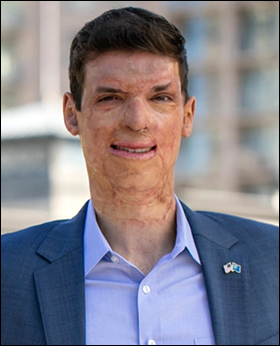
Army veteran Sam Brown

Nevada — Republicans will choose their Senate nominee tomorrow night and we see conflicting final week polls. It appears that Afghan War veteran Sam Brown, the choice of the Republican Party establishment, should win, which is the prelude to what will become one of the most competitive Senate campaigns in the country. Before challenging Sen. Jacky Rosen (D), Brown must first top former Trump Administration Ambassador to Iceland and physician Jeff Gunter along with 10 other minor candidates.

Last week, Gunter released his internal Kaplan Strategies poll (May 30; 802 likely Nevada Republican primary voters; online) that found him leading Brown 31-30 percent. Noble Predictive Insights then published their early June survey results (June 4-5; 424 likely Nevada Republican primary voters; interactive voice response system and text) that posted Brown to a much different 50-15 percent whopping advantage. The latter poll is more reflective of previous research studies conducted for this race.

In the House, Republicans look to challenge three Las Vegas Democratic incumbents, all from politically marginal districts. In Rep. Dina Titus’ (D) 1st CD, the main Republican primary battle appears to be between 2022 nominee Mark Robertson and businessman Flemming Larsen.

In District 3, a total of seven Republicans are running with hopes of challenging Rep. Susie Lee (D). The race appears to be between electronic game company owner Marty O’Donnell and former state Treasurer Dan Schwartz.

In District 4, former North Las Vegas Mayor John Lee looks to advance into the general election opposite four-term US Rep. Steven Horsford. All three races should be rated as Lean Democratic. When the House majority comes down to just a few seats, these districts will be important in determining which party will control the House in the next Congress.

Nevada’s lone Republican House member, 2nd District Rep. Mark Amodei (R-Carson City), faces minor opposition tomorrow and only Independents and minor party candidates in the general election.

Maine — While the Pine Tree State could have a significant role in the presidential campaign because their congressional districts carry their own electoral vote, US House competition appears present in only one of Maine’s two CDs. While Rep. Chellie Pingree (D-North Haven/Portland) is secure in the southern 1st District, Republicans will make a play for northern District 2.

At this point, polling suggests that former President Donald Trump has possibly a 20-point lead in District 2, thus not only putting the statewide vote up for grabs in the national race but also exerting more pressure on three-term Rep. Jared Golden (D-Lewiston). Tomorrow’s Republican primary is expected to yield a victory for state representative and former NASCAR driver Austin Theriault (R-Fort Kent) over fellow state representative and actor Mike Soboleski (R-Phillips).

North Dakota — With Gov. Doug Burgum (R) choosing not to seek a third term, we see an open governor and at-large US House race adorning the political ballot. Three-term Rep. Kelly Armstrong (R-Bismarck) is leaving Congress in an attempt to succeed Gov. Burgum, and the move appears to be paying dividends. As a former chairman of the North Dakota Republican Party, Armstrong won the official party endorsement in overwhelming fashion and faces Lt. Gov. Tammy Miller in tomorrow’s GOP primary.

Polling also gives Rep. Armstrong a big advantage. The most recent survey, from WPA Intelligence (May 20-22; 500 likely North Dakota Republican primary voters; live interview) sees Armstrong posting a huge 57-19 percent lead over Miller. It appears that tomorrow’s primary will launch Rep. Armstrong well on his way into the governor’s mansion.

In the open at-large House district, the eventual Republican nominee will become a prohibitive favorite in the general election. The GOP race is a five-way affair. Two of the contenders appear to be the leading combatants, Public Service Commissioner Julie Fedorchak, who has the Trump endorsement, and former state Rep. Rick Becker. Former Miss America Cara Mund is also in the race along with two minor candidates.

A pair of May polls found Fedorchak and Becker each leading a ballot test. Therefore, we could see an interesting finish tomorrow night, with most observers giving Fedorchak a slight advantage.

Michigan Presidential Primaries Today; Surprising Maine Poll; Michigan GOP Candidate Leading; NY Legislature Rejects Redistricting Map

By Jim Ellis — Tuesday, Feb. 27, 2024

President

Michigan: Presidential Primaries Today — The presidential nomination process moves to Michigan today, and Wolverine State voters of both parties will cast delegate apportioning votes. It is clear that President Joe Biden and former President Donald Trump will win their respective primaries, and by large majorities.

Michigan presidential Primaries underway today; is former President Donald Trump besting President Joe Biden in a new Maine poll?

The Emerson College survey (Feb. 20-24; 1,000 registered Michigan voters; multiple sampling techniques) sees Biden posting a whopping 75-5 percent lead over US Rep. Dean Phillips (D-MN). A total of nine percent report planning to vote for the Uncommitted Slate, the move that Rep. Rashida Tlaib (D-Detroit) was encouraging Michigan voters to take in order to protest the Biden’s pro-Israel policy. On the Republican side, Trump records a 69-20 percent lead over former UN Ambassador Nikki Haley. Both men are already in the “presumptive nominee” sphere.

Maine: Shock Poll; Trump Leads in General — A very surprising general election poll in Maine was released from the Pan Atlantic Research organization in Portland, Maine. The poll (Feb. 6-14; 836 Maine adults; 791 Maine likely voters; online) finds former President Trump topping President Biden in what was previously a state largely unattainable for Republican presidential candidates. The numbers find Trump leading the Biden 38-32 percent with 21 percent saying they would vote for another candidate. The “other candidates” were not identified, but it is reasonable to assume that most of these New Englanders choosing to support a candidate other than Biden or Trump would be headed to Robert F. Kennedy Jr.

Trump is carrying the state largely on the back of his large 20-point lead in the 2nd Congressional District. He would trail Biden in the Democratic 1st CD by eight points. Because Maine’s congressional districts carry their own electoral votes, the results suggest Trump would get three electoral votes from the state and Biden, one.

Of course, these surprising results can easily change but things will have to significantly improve for President Biden before such happens. According to this data, the Biden’s favorability index in Maine is 38:61 percent favorable to unfavorable, meaning the campaign’s task of improving his image is a difficult one.

Senate

Michigan: New GOP Poll Posts Ex-Rep. Rogers to Primary Lead — A regular Michigan pollster, MRG Research, surveyed the state’s Republican electorate and becomes the first poll in the field since retired Detroit Police Chief James Craig (R) withdrew from the Senate race. The study (Feb. 19-22; 600 likely Michigan primary voters) finds former US Rep. Mike Rogers opening a large 23-7 percent Republican primary lead over ex-Rep. Peter Meijer.

Another former congressman, Libertarian Justin Amash, is reportedly considering entering the GOP race but has yet to do so. The Michigan state primary is not scheduled until Aug. 6. The eventual Republican Senate nominee will very likely face US Rep. Elissa Slotkin (D-Lansing) in the general election. The congresswoman is the prohibitive favorite to win the Democratic nomination.

House

New York: Legislature Rejects Redistricting Map — Yesterday, both chambers of the New York state legislature rejected the Citizens Redistricting Commission congressional plan that made few changes to the court-imposed map of 2022. It is clear that the Democratic legislature wants to draw a political footprint more favorable for their party but will do so under what will be an almost guaranteed partisan gerrymandering lawsuit.

The state Senate then passed a bill attempting to limit where such a lawsuit could be filed, listing the most populous and Democratic counties in the state. Republicans claim that such a maneuver will be ruled unconstitutional.

While the Democrats may have won this latest New York redistricting round, the fight is a long way from culmination.

Dem West Virginia Senate Candidate Emerges; Indiana Rep to Retire; Kentucky Candidate Filing Closes;
No Labels Party Qualifies in Maine

By Jim Ellis — Wednesday, Jan. 10, 2024

Senate

Wheeling, WVa., Mayor Glenn Elliott (D)

West Virginia: Democratic Candidate Emerges — Wheeling Mayor Glenn Elliott (D), a former staff member for Senate Majority Leader Robert Byrd (D-WV), announced that he will seek the Democratic nomination for the open seat that Sen. Joe Manchin (D) is vacating. Though a long shot to overtake favored Republican candidate Jim Justice, the state’s two-term governor, the Democrats now appear to have a credible candidate to fill the major void that Sen. Manchin leaves for his party. Also in the Republican Senate primary is US Rep. Alex Mooney (R-Charles Town).

House

IN-8: Rep. Larry Bucshon (R) to Retire — Continuing the recent cascade of House retirements, seven-term Indiana Rep. Larry Bucshon (R-Evansville) announced that he will not seek re-election later this year. Bucshon becomes the 43rd member leaving the House, and the 19th Republican. This is another seat that will be non-competitive in the general election, however.

The 8th District, formerly one of the most hotly contested seats in the country to the point it was nicknamed “the Bloody Eighth,” is no longer a domain that produces close general election results and a large number of incumbent defeats. In his seven successful elections, Rep. Bucshon averaged 61.7 percent of the vote and has broken the 60 percent threshold in his last five consecutive campaigns.

IN-8 occupies the southwest corner of Indiana, bordering Kentucky on the south and Illinois on the west. The two largest population centers are the cities of Evansville and Terre Haute. The FiveThirtyEight data organization rates IN-8 as the second-safest Republican seat in the Hoosier State at R+36. The Daily Kos Elections site ranks the district as the 50th-safest seat in the Republican Conference.

With Reps. Jim Banks (R-Columbia City) running for the Senate and Reps. Victoria Spartz (R-Noblesville) and Bucshon retiring, one-third of Indiana’s nine congressional seats now stand in the open category. The candidate filing deadline is Feb. 9 for the associated May 7 Indiana primary election.

Kentucky: Candidate Filing Closes — One more state, Kentucky, has closed its candidate filing period for the 2024 primary election. With no Senate or governor’s race on the 2024 ballot, the presidential and congressional races will lead the ticket.

All six US House incumbents have political opponents, but Reps. Thomas Massie (R-Garrison) and Hal Rogers (R-Somerset) drew no Democratic general election competition in Districts 4 and 5, respectively. Both have Republican primary opposition. It appears that all six incumbents, five Republicans and one Democrat, will have easy runs in the general election.

States

No Labels Party: Qualifies in Maine; Objecting in Arizona — The No Labels Party announced that they have qualified for a ballot line in Maine, to date increasing the number of states to 13 where they will have ballot presence for the 2024 election.

Conversely, they have also filed suit in Arizona trying to block candidates for offices other than president from using their ballot line. Arizona Secretary of State Adrian Fontes (D) is treating No Labels as the state would any other political party. That is, a registered voter in that party can run for office. It is doubtful that No Labels will be granted a court ruling that allows the party leaders to bar a qualified individual from running under their ballot line.

The states where No Labels has qualified for ballot position are: Alaska, Arizona, Arkansas, Colorado, Florida, Hawaii, Maine, Mississippi, Nevada, North Carolina, Oregon, South Dakota, and Utah. The party officials claim to have active ballot qualification petition drives underway in an additional 14 unidentified states.

Christie Out in Maine; Florida Redistricting; Santos Out, Now What?; Maloy Challenged in Utah; House Retirements Reversal

By Jim Ellis — Tuesday, Dec. 5, 2023

Senate

Former New Jersey Gov. Chris Christie (R) / Photo by Gage Skidmore

Chris Christie: Fails to Qualify for Maine Ballot — Due in part to a notary clerical error, GOP presidential candidate Chris Christie has failed to qualify for the Maine Super Tuesday primary scheduled for March 5, 2024. It remains to be seen if the Christie campaign will attempt to access the ballot via court order. Christie is the only significant GOP candidate not to meet the Maine ballot qualification requirement of submitting 2,000 valid registered voter petition signatures.

House

Florida Redistricting: Appeals Court Overturns Map Rejection — A Florida appeals court overturned a lower court ruling that declared the state’s congressional map as an illegal racial gerrymander. This means the ruling that the northern portion of the map be redrawn is nullified. An appeal to the state Supreme Court is likely. Even if the plaintiffs move forward, however, the time it would take for the high panel to hear the complaint could well extend past the April 26 candidate filing deadline. This means the current map now has a relatively strong chance of lasting at least through the 2024 election cycle.

In its ruling, the appellate directive stated, “The constitution cannot demand that all voters are treated equally without regard to race and at the same time demand that voters are treated differently based on race.” The plaintiffs want a majority minority district reinstated in northern Florida. In the previous decade a 5th District that stretched from Tallahassee into Jacksonville was drawn to elect an African American Representative.

NY-3’s Rep. Santos Expelled: What Now? — Based upon the House Ethics Committee report about now former Rep. George Santos’ (R-Long Island) alleged unethical and illegal activities, the House on a 311-114 count reached the necessary two-thirds vote of those present and voting to expel the freshman member. A special election will now be called to fill the balance of the term. Gov. Kathy Hochul (D) will have 10 days in which to schedule the vote. According to New York governing parameters, the eligible election days are either Feb. 20 or 27.

Under the Empire State procedure, the affected county party chairmen have the power to nominate their special election standard bearers. Because Nassau County comprises three quarters of the 3rd District, only one individual will effectively select the nominee for the various parties. Since the county chairmen votes are weighted based upon entity population, the Nassau chairman can out-vote the Queens Borough chairman.

The Democrats are apparently going to announce their nominee today, which will very likely be former Congressman Tom Suozzi. He will be favored in the special general against whomever the Republican chairman chooses. It is less clear what action the Republican chairman will take and when.

Suozzi represented the 3rd District for three terms beginning in 2017. He did not seek re-election in 2022 because he launched a long-shot campaign for the Democratic gubernatorial nomination and was unsuccessful.

The FiveThirtyEight data organization rates NY-3 as D+4, but Dave’s Redistricting App calculates a more favorable Democratic partisan lean, 56.4D – 42.0R. President Joe Biden posted a 53.6 – 45.4 percent victory here opposite Donald Trump in 2020. Republicans scored a rebound in 2022, however. Gubernatorial nominee Lee Zeldin carried NY-3 with a 56-44 percent margin despite losing statewide. The Republicans also saw their Nassau County Executive candidate unseat a Democratic incumbent.

UT-2: New Rep. Maloy Already Challenged — While Utah Rep. Celeste Maloy (R-Cedar City) was just sworn into office last week after winning the Nov. 21 special election, she has already drawn a 2024 Republican primary opponent. Army Reserve colonel and technology company executive Colby Jenkins (R) declared his congressional candidacy against the new congresswoman on Friday.

Jenkins says he will pursue the controversial ruling that awarded Maloy a ballot position even though she registered to vote after the candidate filing deadline. At this point, Rep. Maloy should be favored for renomination, but it is likely that she will already become embroiled in a new campaign. The Utah state primary is scheduled for June 25.

House Members: Re-Election Announcements — While we saw a spate of House retirements in November (13 in all), five members on Friday declared for re-election. Reps. Ken Calvert (R-CA), Majority Leader Steve Scalise (R-LA), Chris Smith (R-NJ) second in House seniority and returning to seek a 23rd term, Frank Lucas (R-OK), and Joe Wilson (R-SC) are en masse reversing the retirement trend.