
Tag Archives: Ellis Insight

Biden Scores, Bloomberg Out;
State Primary Results

Joe Biden captured the lion’s share of the delegates on Super Tuesday.


By Jim Ellis

March 4, 2020
— Former vice president Joe Biden, with a strong close from his South Carolina victory on Saturday, captured the lion’s share of the delegates on Super Tuesday and has re-established himself as the front-runner for the Democratic presidential nomination.

Biden placed first last night in 10 states, and surprisingly topped the field in Massachusetts and Maine, right in the backyard of Sens. Bernie Sanders (I-VT) and Elizabeth Warren (D-MA). He also placed first in Minnesota where home-state Sen. Amy Klobuchar had been leading. Her endorsement of Biden clearly helped propel him to the top position. In 2016 against Hillary Clinton in Minnesota, Sanders notched a 61 percent win. Last night his popular vote percentage was only 29.9 percent.

Though the former vice president carried the day in 10 states, one still must receive a majority of the delegate votes to win the presidential nomination. He exceeded the 50 percent mark in only two of the states, Alabama and Virginia.

Sen. Sanders, disappointingly for him, placed first in only four states, his home base of Vermont, and California, Colorado, and Utah. Former New York City mayor Michael Bloomberg did very poorly after spending reportedly as much as $700 million from his own fortune. He placed first in America Samoa and qualified for delegates in just eight of the 15 Super Tuesday voting entities. This morning, Bloomberg announced his withdrawal from the race and endorsed Biden.

The Green Papers organization ran full delegate extrapolation tables based upon the preliminary results in both the at-large and congressional district votes. Delegates are earned by exceeding 15 percent in both categories from each state. Totaling all 19 entities that have now voted, Biden would lead the national delegate count with an unofficial 667 bound delegate votes as compared to Sen. Sanders’ 581.

Bloomberg earned only an unofficial 141 delegate total and Sen. Warren just 76. The remaining 34 delegates were split among three others including Rep. Tulsi Gabbard (D-HI) who won a vote yesterday in American Samoa. These numbers will adjust as official vote totals are reported. California, where potentially more than 2 million votes remain to be counted, will substantially alter the totals once the state’s laborious counting process ends in the next several weeks.

Clearly, Biden is the big winner on Super Tuesday, and the night proved very disappointing for Sen. Sanders. Where the race goes now remains to be seen, but Biden winning on the first ballot in Milwaukee at the Democratic National Convention now seems to be the most likely unfolding scenario.

Five states held their full primaries last night and nominees were chosen in many places while run-offs will occur in a number of other situations. Here’s a state-by-state breakdown:
Continue reading

Super Tuesday Has Arrived

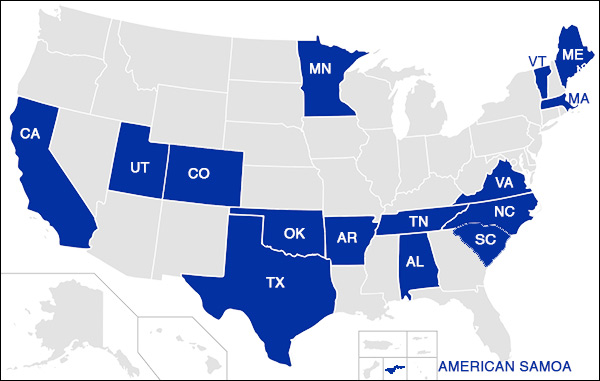
Super Tuesday 2020 States & Territories

By Jim Ellis

March 3, 2020 — The election landscape has changed since Saturday with former mayor Pete Buttigieg, Sen. Amy Klobuchar (D-MN), and billionaire Tom Steyer all exiting the race. Sen. Klobuchar endorsed former vice president Joe Biden as did Buttigieg in an announcement last night.

How do these developments and an obvious Joe Biden resurgence affect today’s vote? Maybe not as much as meets the eye. With the early voting processes well underway, and even completed in some states, the late-breaking political news and happenings will influence far fewer voters.

In fact, the three largest states with primaries today, California (415 first-ballot delegates), Texas (228), and North Carolina (110), all have extensive early voting options and large percentages of their voters have already cast their ballots meaning Biden’s sudden upswing in momentum after his South Carolina victory on Saturday night won’t sway them.

In California, more than 2 million people have already voted, which may translate into as much as one-third of the total Democratic presidential primary turnout. In 2016, more than 5.1 million people voted in the Hillary Clinton-Bernie Sanders race in June of that year. Returning to today, more than one million have already voted in Texas, and 800,000-plus have cast their ballots in North Carolina.

Thirty-eight states have some form of early voting, even if it is merely an in-person absentee system like those found in Minnesota and Virginia. For Super Tuesday, of the 14 states with primary elections today, only Alabama and Colorado have no early voting. The latter state fully conducts all-mail balloting but has no pre-election process in which to submit votes.

Looking at the current political map, though the establishment is making moves to coalesce behind Biden, the latest polling suggests that Sen. Sanders leads in nine primaries today and it’s possible, even with the candidate departures, that as many as three contenders in almost all of the states could still qualify for delegate apportionment.

Today will also mark the first time that former New York City mayor Michael Bloomberg’s name will be on the ballot and how he fares will be telling. Depending upon how many votes he takes could prevent one of the leading candidates from securing majority support, meaning the race evolving into a contested national convention is still a possibility.

Continue reading

Super Tuesday State Primaries

By Jim Ellis

Feb. 28, 2020 — While the Democratic presidential primaries have dominated the political media coverage for next Tuesday’s big election, five states are also holding their regular primary elections including four with Senate races.

Voters in Alabama, Arkansas, North Carolina, and Texas will begin choosing their nominees for the Senate and their entire slate of down ballot races. Each is a run-off state, and two of the aforementioned, Alabama and Texas, appear headed for a secondary Senate primary contest later in March and May, respectively. The regular California primary is also scheduled, but there is no Senate election in the Golden State this year. We will, however, see 53 sets of US House general election participants advance to the general election from their top-two jungle primary system.

In Alabama, former US attorney general and senator Jeff Sessions is attempting a political comeback. Retired Auburn University head football coach Tommy Tuberville and US Rep. Bradley Byrne (R-Mobile) are his chief opponents. Former Alabama Supreme Court chief judge Roy Moore is also on the ballot, but polling suggests he will not even break into double digits.

Sessions ad

Sessions launched two new ads in the last couple days, one that promotes himself as a strong supporter of, and the best person to implement the Trump agenda. The second is an attack ad against Tuberville, hitting him with audio of the retired coach saying we need immigrants coming across the border for certain jobs and that Tuberville actually lives and pays taxes in Florida.

Tuberville ad

Earlier, Tuberville was running a statewide ad reminding the electorate that President Trump fired Sessions as attorney general and that choosing him for the post was the president’s top regret during his tenure in office. Rep. Byrne has been simultaneously running a negative spot jointly attacking both of his top opponents.

The most likely pair to advance into the run-off are Sessions and Tuberville. The secondary election is scheduled for March 31.

Arkansas Sen. Tom Cotton (R) is virtually re-elected. Democrats failed to file a candidate against him, meaning Tuesday’s primary is a non-event for the first-term senator. He will advance into the general against only minor party opposition.

Continue reading

The Open Primary Effect

Super Tuesday 2020 States and Territories


By Jim Ellis

Feb. 26, 2020 — One factor for the coming March 3 Super Tuesday primary elections that hasn’t received any discussion is whether or not the open voting system will have a major effect upon the final results. Though only 24 states around the country feature open, or semi-open, primaries, all but two of the 15 Super Tuesday states lie in this category.

For purposes of this column, South Carolina, scheduled for this Saturday and the prelude to the mega-state vote, is added to the Super Tuesday roster because of its close proximity. America Samoa, which also holds its nomination election on March 3, is a caucus.

An open primary is one where any voter may choose to participate in the nomination election of his or her choice. In these states, voters typically are not registered by political party and can select either a Democratic or Republican ballot. A semi-closed primary is one where registered party members must stay in their respective party primary, but the unaffiliated, or Independent, voter may choose the primary in which to participate. A closed primary allows only individuals who are registered in a particular political party to vote in their respective nomination election.

Pertaining to Super Tuesday, Alabama, Arkansas, Colorado, Minnesota, South Carolina, Tennessee, Texas, Vermont, and Virginia are the open primary states. The semi-opens are Massachusetts, North Carolina, Oklahoma, and Utah.

The two closed presidential primaries for the big day are California and Maine. Despite California featuring the ultimate open primary system in their regular elections, where everyone receives the same ballot and the top two finishers advance to the general election regardless of political party affiliation and percentage attained, only registered party members may vote in their respective presidential primary. Therefore, in the national nomination contest, where the top-two system is not recognized for delegate allocation, the Golden State reverts to the closed procedure.

Continue reading

Projecting Delegates

By Jim Ellis

Feb. 24, 2020 — It is becoming clearer that the Democratic presidential contest could result in an open, or “brokered”, convention. This would occur if no candidate secures majority support after the electorates in all the voting entities have cast their ballots and the delegates’ first ballot tallies are locked into place under the individual state laws.
Discounting the Nevada Caucus held over the weekend, only 65 of the 3,979 first-ballot delegate votes have been assigned. By the evening of March 3, however, the aggregate assigned delegate total will soar to 1,398 and we will begin to see sustaining patterns developing.

By March 17, 61 percent of the first-ballot votes will be locked. At that time, it is highly likely we will be able to determine if a candidate can attain majority support or whether multiple ballots will be required to choose a nominee. If this latter scenario occurs, it will be the first time since 1952 that a major party convention is forced to call for more than one ballot to choose a nominee.

Looking past Nevada and onto South Carolina on Saturday, Feb. 29, and then to Super Tuesday just three days later, we can begin to make delegate projections based upon available polling data. Of the 19 total voting entities that will record votes from the time the Iowa Caucuses began to the end of voting on Super Tuesday, relevant polling exists in 14 of those states.

Using the available data and delegate quotas that are noted from each place, rudimentary projections can be calculated regarding which candidates might receive delegate votes from the specific states for purposes of comparing aggregate totals against the 50 percent threshold.

Early in the cycle, it appeared that former Vice President Joe Biden would be in the strongest position post Super Tuesday because of what looked to be his early dominance in the South. The voting schedule appeared to favor him since half the March 3 voting states lie in that region. His trouble in Iowa and New Hampshire, plus his poor debate performances, and Sen. Bernie Sanders’ strength along with the recent emergence of Michael Bloomberg, has apparently already relegated Biden to also-ran status.

Continue reading

Candidate Filings Completed in Battleground State of Pennsylvania

Pennsylvania Congressional Districts

By Jim Ellis

Feb. 21, 2020 — While the Democratic presidential debate of a couple nights ago is getting most of the political news coverage, Democrats and Republicans completed their filings to run for office in one of the country’s major political battlegrounds, the Keystone State of Pennsylvania.

While the state will be one of the most important in the presidential race, it also yields a significant political playing field for the House of Representatives. There is no Senate or gubernatorial election in Pennsylvania this year.

From their 18 House districts, we see only three incumbents drawing primary opposition, and only one of the intra-party challengers appears credible. The state primary is April 28.

Rep. Brian Fitzpatrick (R-Levittown) has one primary challenger, investment company executive Andrew Meehan, but he had raised only $35,000 through the end of last year. It is assumed that Meehan has personal wealth, but whether or not he invests in his own long-shot campaign is as yet unknown.

Freshman Rep. Mary Gay Scanlon (D-Swarthmore) draws Democratic opposition from businessman Lou Lanni, but he does not appear politically credible. Raising only $8,000 through the end of last year, Lanni is not running a competitive campaign. With little to fear from Republicans in this district, Rep. Scanlon appears to have an easy run for her first re-election.

The most interesting primary likely lies in Pittsburgh. Veteran Rep. Mike Doyle (D-Pittsburgh) faces two Democratic opponents, one of whom looks credible. While pastor Janis Brooks does not appear to be a competitive primary contender, attorney Gerald Dickinson, on the other hand, had already raised $173,000 at the end of the year, all from individual contributors. It is still very doubtful that Rep. Doyle will be denied re-nomination, but this is the one primary campaign to watch for a developing challenge.

Continue reading

Special Election Nominees Chosen
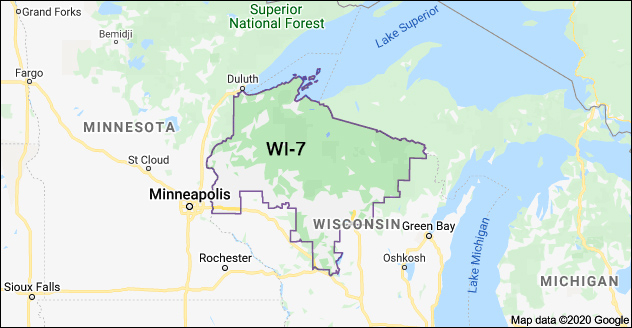
In WI-7: Tiffany (R), Zunker (D)

By Jim Ellis

Feb. 20, 2020 — Wisconsin Republican state Sen. Tom Tiffany (R-Minocqua) and Wausau School Board member Tricia Zunker (D) won their respective party primaries Tuesday night and now head to the special general election scheduled for May 12. The winner of the succeeding contest replaces resigned Rep. Sean Duffy (R-Wausau) in WI-7 who departed Congress earlier in the year for family reasons.

Sen. Tiffany recorded a 57-43 percent win over Army veteran Jason Church who was previously a staff member for Sen. Ron Johnson (R-WI). Church, who lost both legs in Afghanistan, made military service the centerpiece of his campaign. Sen. Tiffany was originally elected to the state assembly in 2010. He won his state Senate seat in 2012 and was re-elected in 2016.

Zunker was an easy winner on the Democratic side, amassing a landslide 89-11 percent victory margin in a race where she became the obvious consensus candidate early in the process.

Sen. Tiffany now becomes the heavy favorite to win the seat in May. The northern Wisconsin region has transformed into a dependable Republican area after this district laid in Democratic hands from early 1969 all the way to the beginning of 2011 in the person of former House Appropriations Committee chairman David Obey.

Over his five elections here, Rep. Duffy averaged 57.9 percent of the vote. President Trump carried the 7th with a 58-37 percent majority, which was a substantial upgrade over Mitt Romney’s 51-48 percent performance. The Republican trend has clearly grown as the decade progressed.

Turnout in the primary election greatly favored the Republican candidates. When the final count is tabulated, the combined GOP participation factor looks to be well over 76,000 as compared to the Democratic total of just over 40,000 votes. The turnout ratio is another factor that provides Sen. Tiffany with a major advantage heading into the special general election.

Continue reading