Could Bannon Cost the GOP?

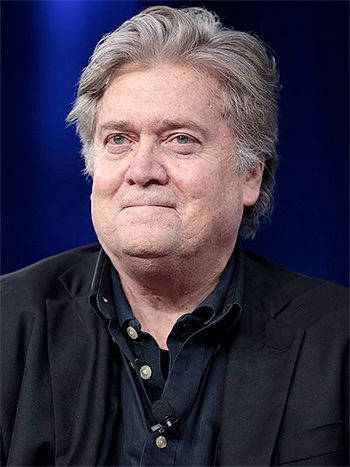
Steve Bannon (Photo by Gage Skidmore)

Steve Bannon (Photo by Gage Skidmore)

By Jim Ellis

Oct. 13 2017 — Several articles have surfaced this week speculating that former presidential advisor Steve Bannon wanting to find and support challengers to Republican Senate incumbents could cost the GOP its majority. It appears individuals making such a claim have forgotten how to count.

Keeping in mind that the Democrats must protect 25 of 33 in-cycle Senate seats, there are simply not enough legitimate targets available for the minority to change their status within the chamber, even though they need a net gain of only three seats. Yes, the Dems are forcing Sens. Dean Heller (R-NV) and Jeff Flake (R-AZ) into toss-up situations, but the remaining six GOP incumbents are some of the safest in the Senate. So, even if Bannon or other conservative insurgents recruit opposition to incumbents, the chances of the eventual Republican nominee losing the general election in these particular states are extremely low.
Continue reading

The Missouri Move


By Jim Ellis

Oct. 12, 2017 — Missouri Attorney General Josh Hawley (R) officially announced his long-awaited challenge to Sen. Claire McCaskill (D) on Tuesday this week. The move had been expected since even before he formed a senatorial exploratory committee at the beginning of August. Hawley then found himself encouraged to run for the Senate literally from the first few days after his election as the state’s AG in November.

Saying Sen. McCaskill has turned her back on many key Show Me State constituencies and industries, that she has been in Washington “forever”, and simply “doesn’t represent Missouri” anymore, Hawley declared his new US Senate candidacy via campaign video featuring he, his wife, and two young sons (above).

Already, a McCaskill-Hawley general election race is being viewed as the Republicans’ top conversion opportunity. Though Hawley must get past several lesser GOP primary candidates, including state Rep. Paul Curtman (R-Pacific/Franklin County), he is the prohibitive favorite to become the party nominee next August.

The McCaskill Campaign and the national Democratic political apparatus has been readying a defense plan against a Hawley offensive for several months. In his campaign for attorney general, Hawley used ladders as props in his ads to symbolize politicians who win one office and then immediately turnaround and jump to another. Now, doing exactly what he campaigned against, we can expect a steady barrage of attacks over what McCaskill and the Democrats will claim is Hawley’s “hypocrisy.”

Continue reading

Yes, She Will

By Jim Ellis

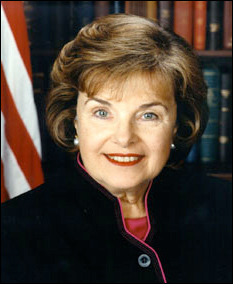
California Sen. Dianne Feinstein (D)

California Sen. Dianne Feinstein (D)

Oct. 11, 2017 — California Sen. Dianne Feinstein (D) announced this week that she will seek a fifth full term next year despite, at 84 years of age, being the Senate’s oldest member. Curiously, her recent comments about President Trump and gun control have created some problems for the senator within the far left of her California Democratic Party. Thus, Feinstein’s decision to run again has engendered possible opposition from at least one prominent Democratic elected official.

Sen. Feinstein was first elected in 1992, when she defeated appointed Sen. John Seymour (R) after Gov. Pete Wilson (R) selected him to fill the Senate vacancy. Then-Sen. Wilson was elected governor in 1990, thus creating the vacancy. Two years later, Sen. Feinstein nipped then-Rep. Michael Huffington (R-Santa Barbara) 47-45 percent in the 1994 general election, the last close California Senate race. She would go onto win easy re-elections in 2000, 2006, and 2012.

A few weeks ago, Sen. Feinstein made the public comment that Donald Trump actually “can be a good president,” which drew the ire of many of his ardent Golden State opponents including state Senate President Kevin de Leon (D-Los Angeles), who seemingly has become the chief anti-Trump spokesman in California. After the Las Vegas shooting, Sen. Feinstein made the further statement that “no gun laws could have prevented the Las Vegas massacre.” Predictably, this comment was also met with derision from the far left, including Sen. de Leon.

Continue reading

A Shocking Retirement

By Jim Ellis

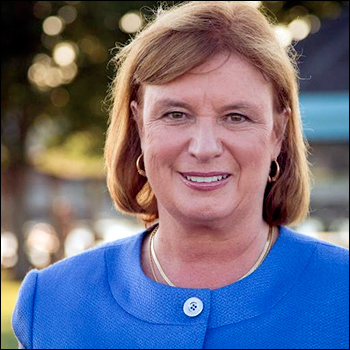
New Hampshire Rep. Carol Shea-Porter (R-Rochester)

New Hampshire Rep. Carol Shea-Porter (R-Rochester)

Oct. 10, 2017 — Since Pennsylvania Rep. Lou Barletta (R-Hazelton) announced he would run for the US Senate in late August, and after an additional eight US House seats opened in the succeeding weeks, none were as surprising as the latest one announced on Friday.

New Hampshire Rep. Carol Shea-Porter (R-Rochester), who represents the one seat that has defeated more incumbents than any other in the last decade including herself twice, announced that she will not seek re-election in 2018.

Her departure reasons were not part of the retirement statement but, for a woman who first came to Congress in 2006, was defeated in 2010, returned in 2012, and then lost again in 2014 before winning once more last November, her voluntary departure was certainly not predicted. Shea-Porter claimed another term in 2016, but with only 44 percent of the vote in part due to three Independent and minor party candidates taking more than 12.6 percent, but the number represented her lowest victory percentage.

Since the 2006 election, inclusive, the NH-1 electorate has consistently defeated its incumbent. In only 2008 was a US representative (Shea-Porter) here re-elected. The district encompasses New Hampshire’s eastern half, including the state’s largest city of Manchester, the Seacoast region, and the mountain area that hugs the Maine border. In the past six elections, the largest recorded win percentage was 54 percent (Republican Frank Guinta in 2010), while Shea-Porter never exceeded 51.7 percent.

Continue reading

With Murphy Out in PA, Corker Out in TN, Who Will Fill the Vacancies?

By Jim Ellis

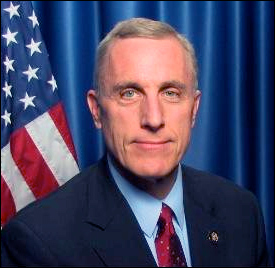
Rep. Tim Murphy  (R-Pittsburgh)

Rep. Tim Murphy (R-Pittsburgh)

Oct. 9, 2017 — A new special US House election will soon be on tap, this time in southwestern Pennsylvania in PA-18. Beleaguered Rep. Tim Murphy (R-Pittsburgh) succumbed to the negative publicity leaking out about his extra-marital affairs, abortion hypocrisy, and internal relations with staff members to announce late last week that he will resign his congressional office effective Oct. 21. This, just a day after he made public his intention not to seek re-election but serve the balance of the current term.

Once the seat is vacant, Gov. Tom Wolf (D) will call a special election to choose a replacement. Since the Nov. 7 municipal elections occur less than three full weeks after Rep. Murphy departs, that means holding a new special congressional contest concurrently with the regular off-year vote would be impossible. Therefore, it is probable a mid-December or post-January 1st election will be scheduled.

There will be no primary period. Under Pennsylvania law, the parties will meet in district conclaves and local delegates will select the respective nominees.

Continue reading

Pennsylvania’s Importance

Pennsylvania Congressional Districts Map (click on image to enlarge to see detail)

Pennsylvania Congressional Districts Map (click on image to enlarge to see detail)

By Jim Ellis

Oct. 6, 2017 — In every election, it seems one or two states become that cycle’s political focal point and we can already identify which places might serve in such a role for 2018. Along with California for House races, political fortunes in the Keystone State of Pennsylvania could well influence national Senate and House outcomes, while strongly contributing to the national redistricting outlook when the state’s competitive governor’s race is ultimately decided.

Gov. Tom Wolf (D) seeks re-election with improving favorability ratings and will be in a targeted 2018 campaign. Sen. Bob Casey Jr. (D) is running for a third term and drawing considerable opposition, particularly from US Rep. Lou Barletta (R-Hazelton). US House competition is projected for as many as 11 of the state’s 18 congressional districts, some of which coming in primaries, and a live political gerrymandering lawsuit before the state court system could potentially radically change Pennsylvania’s redistricting maps prior to the next election. Therefore, we see a state teeming with political activity in each of its four corners.

Gov. Wolf came from nowhere in 2014 as a successful York business owner to capture the Democratic nomination, and then proved to become the only member of his party to unseat a Republican governor in what was otherwise a Republican wave election year. He will face his own highly competitive re-election battle next year, as the GOP must re-capture this statehouse to protect its congressional and state legislative gains as a new redistricting cycle will begin during this next governor’s term.

Continue reading

Bannon: How Much a Factor?

Steve Bannon (Photo by Gage Skidmore)

Steve Bannon (Photo by Gage Skidmore)

By Jim Ellis

Oct. 5, 2017 — Several articles have appeared in the past few days contemplating former presidential advisor Steve Bannon’s perceived political strength, most specifically regarding his actions involving recruiting Republican primary challengers against Senate Majority Leader Mitch McConnell’s (R-KY) loyalists.

While Bannon appears in good stead vis-à-vis financial backers — with the billionaire Mercer family serving as his monetary base — those running the McConnell-aligned outside political operation downplay just how strong the insurgents might be opposite 2018 Senate GOP incumbents standing for re-election.

Valid points resonate with both sides. Buoyed by Alabama former state Supreme Court Chief Justice Roy Moore’s victory over appointed Sen. Luther Strange in last week’s special Republican run-off election, the Bannon forces, who heaped attack ads on the interim incumbent, were naturally taking a great deal of credit for the victory. And, without doubt, anyone thinking of challenging a sitting senator is greatly encouraged after seeing the Alabama outcome.

Continue reading