Category Archives: Senate

North Carolina Races Set – Part I

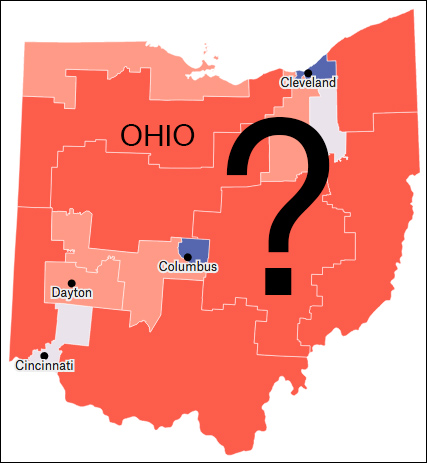
2022 North Carolina Congressional Redistricting Map

By Jim Ellis

March 8, 2022 — The chaotic Tar Heel State political scene quelled on Friday as the postponed candidate filing period finally came to a close. Today we look at the recent North Carolina redistricting past and future, along with an analysis of the open Senate race. Tomorrow, we examine the state’s 14 new US House districts.

The North Carolina state Supreme Court’s approved map will be in place for the 2022 midterm election, and as a result the candidate slate is less competitive than the originally conceived congressional plan would have yielded. While the Democrats won this most recent political battle, the state’s redistricting war, a fight between the legislature and state Supreme Court that has resulted in four different congressional maps being in passed into law and ultimately rejected since 2010, will likely continue.

The Republican legislature controls the redistricting pen because the North Carolina governor, in this case Democrat Roy Cooper, has no veto power over this subject matter. Democrats control the state Supreme Court with a 4-3 partisan majority, but there is at least an even chance that the balance of power will change after the midterm election.

Two of the Democratic judges are on the ballot this year and no Republicans. One of the two, Justice Robin Hudson, is not seeking re-election, so GOP chances of winning at least one of the two races are enhanced. If they succeed, Republicans will hold the court majority after the first of the year.

Since a court map is only an interim plan, the legislature can replace it at any time. Since the state high court did approve the legislature’s latest version of the state House and Senate maps, Republicans stand a strong chance of maintaining their majorities in both houses. Therefore, re-drawing the congressional map in 2023 should the NC Supreme Court have a different complexion could mean that the GOP would be able to enact a stronger plan next year.

Originally, North Carolina arguably looked to be the Republicans’ most important redistricting state in that it was one of just two places where the party could gain multiple congressional seats and the only one where a potential three-seat increase was within the realm of possibility. The outlook for the final 2022 map, however, gives the Democrats an advantage. It now appears more likely that the Dems will gain one or even two seats in the delegation.

The North Carolina judicial decision is a major blow to House Republican national prospects. While the party still has a good chance of re-taking the majority they lost in the 2018 election, the difficulty factor has increased through adverse court decisions here and in several other states.

Continue reading

Four More Reps Departing

By Jim Ellis

March 2, 2022 — Sen. Jim Inhofe’s (R-OK) impending resignation has begun an Oklahoma game of political musical chairs. One member of the Sooner State US House delegation announced that he will run in the special election, and another is soon expected to follow suit.

A third member, a committee chairman from Florida, announced that he will resign to become CEO of an advocacy organization. Finally, a freshman from Hawaii is sending signals that he won’t seek a second term.

Oklahoma Rep. Markwayne Mullin (R-Westville) is now a US Senate candidate, formally entering the special election to succeed resigning Sen. Inhofe. Inhofe will serve through the balance of this year, with his successor coming from the regular election calendar and taking office at the beginning of the next Congress.

Rep. Mullin announced his statewide intentions Monday, and his move will create a crowded Republican primary in the state’s easternmost congressional district, a newly drawn 2nd CD that would have supported former President Donald Trump with a whopping 76-22 percent margin.

Reports suggest that two-term Rep. Kevin Hern (R-Tulsa) will also soon join the Senate race and risk his safely Republican district anchored in the state’s second largest city of Tulsa. Both will oppose now-former Inhofe chief of staff Luke Holland, whom the senator is publicly supporting.

Additionally, state Sen. Nathan Dahm (R-Broken Arrow), who was challenging Sen. James Lankford in the regular Senate election, said that he, too, will switch to the open special election. Sen. Lankford’s other primary opponent, pastor Jackson Lahmeyer, indicated that he will also likely move to the open special election contest. Former state House Speaker and 2016 US Senate candidate T.W. Shannon is another potential Republican Senate candidate.

As sitting members, both Reps. Mullin and Hern can transfer their federal money raised for their House campaigns to a Senate committee. At the end of the year, Rep. Mullin had more than $944,000 in his account, and Rep. Hern just under $560,000. State Sen. Dahm had just under $83,000 in his US Senate campaign account. It is clear the Oklahoma Senate primary will become a major nomination campaign.

The Sooner State candidate filing deadline is April 15 for the June 28 primary election. Should no candidate receive majority support, which is a likelihood, a runoff election between the top two finishers will be held on Aug. 23.

Also, Florida Rep. Ted Deutch (D-Boca Raton), chairman of the House Ethics Committee, announced on Monday that he will be leaving Congress when the House recesses to accept a position to run the American Jewish Committee advocacy organization.

Deutch first came to the House when winning a 2010 special election after then-Rep. Robert Wexler (D) resigned the seat, and leaves what is now a safely Democratic domain in which over 80 percent of the constituency lies in Broward County and the other 20 percent in Palm Beach County. The current 22nd District supported President Biden, 57-42 percent, but with redistricting still not completed in Florida Republican map drawers may find it more appealing to significantly change the district boundaries with no incumbent on the succeeding ballot.

Continue reading

Oklahoma Sen. Inhofe to Resign

By Jim Ellis

Veteran Oklahoma Sen. Jim Inhofe (R) / Facebook

Feb. 28, 2022 — Veteran Oklahoma Sen. Jim Inhofe (R), who turned 87 years old last November, is reportedly set to announce that he will leave the Senate at the end of this year. He was first elected in 1994 after serving four terms in the US House and six years as mayor of Tulsa prior to coming to Congress.

As of this writing, the senator is expected to sign an irrevocable resignation letter before March 1. If so, he will serve until the end of this year; a special election to replace him will be held concurrently with the 2022 election cycle. His resignation is unexpected, and the reason for his departure has not yet been publicized.

Under the Sooner State special election laws, if a vacancy in the Senate occurs in an even-numbered year, the seat is filled within the regular election schedule. An odd-numbered year vacancy has its own election formula. Oklahoma is one of 13 states that doesn’t fill a Senate vacancy through gubernatorial appointment.

The regular political schedule calls for a primary on June 28, an Aug. 23 runoff if no candidate receives majority support in the first vote, and the general election on Nov. 8. The candidate filing deadline is April 15.

The Inhofe resignation also means that both of the state’s Senate seats will be up for election this autumn since Sen. James Lankford (R) is in-cycle. The special election winner will serve the remaining four years of the Inhofe term and be eligible to run for a full six-year stint in 2026.

While the new Oklahoma Senate race brings the total number of federal statewide campaigns to 35, with Republicans now defending 21, this contest won’t likely alter the aggregate political picture. The GOP should remain safe in both of the Oklahoma general election contests.

The special Republican primary, however, will be a different story. Expect a crowded field and a tough primary campaign and likely runoff, with the eventual winner having an easy ride in the general election.

Already, rumors are flying as to who may run in the special. Names from Gov. Kevin Stitt and Lt. Gov. Mark Pinnell to US Reps. Kevin Hern (R-Tulsa) and Markwayne Mullin (R-Westville) to former state House Speaker T.W. Shannon and ex-US Attorney Trent Shore are already being mentioned.

Continue reading

Senate Candidate Gibbons Confirmed to be in Top Tier of Ohio Race

By Jim Ellis

Ohio US Senate candidate Mike Gibbons forges into a small lead.

Feb. 15, 2022 — At the end of January, a Cygnal research poll found investment banker and 2018 Ohio US Senate candidate Mike Gibbons forging into a small lead over perennial GOP primary leader Josh Mandel, the state’s former treasurer and 2012 US Senate nominee. Two new polls now confirm Gibbons’ outright lead in the battle to succeed retiring Republican Sen. Rob Portman.

The previously released internal Gibbons’ campaign Cygnal January poll (Jan. 28-30; 929 likely Ohio Republican primary voters, SMS text & email) gave their candidate a 16-13 percent lead over Mandel, with author J.D. Vance showing in double-digits at 10 percent.

The new pair of statewide Buckeye State Republican US Senate primary surveys find the businessman again overtaking Mandel to claim first place. A co/efficent independent survey (Feb. 6-8; 613 likely Ohio Republican primary voters, text & automated interview responses) posts Gibbons to a 20-18 percent lead over Mandel, with state senator and Cleveland Guardians MLB club minority owner Mike Dolan, former state Republican Party chair Jane Timken, and Vance trailing with 7, 6 and 5 percent support, respectively.

The new Cyngal research firm’s internal poll for the Gibbons campaign (Feb. 8-10; 609 likely Ohio Republican primary voters, SMS text & email), however, gives their candidate a much larger margin over the rest of the field.

One possible reason for the increase in support is that another business candidate, car dealer Bernie Moreno, who had reached as high as 11 percent in a January poll, withdrew from the race in early February, reportedly at the behest of former President Donald Trump. It is conceivable that much of the Moreno support base went to Gibbons, since the two candidates were similar in several ways.

The most recent Cygnal numbers find Gibbons holding a surprisingly large 23 percent support figure, with Mandel, Vance, Timken, and Dolan trailing with 11, 9, 8 and 6 percent, respectively. The Gibbons’ media blitz, to an extent featuring Sen. Rand Paul (R-KY) endorsing the investment banker’s candidacy, has clearly achieved its goal of propelling Gibbons into serious contention for the party nomination that will be decided in the open May 3 primary election.

Though the study’s analysis report doesn’t provide segmented numbers, the Cygnal pollsters claim the Gibbons lead is widespread within the key Republican voter groups. They report Gibbons leads by double digits among “self-identified Trump Republicans as well as Traditional Republicans.”

Gibbons also maintains similar leads with “self-identified Extremely Conservative, Very Conservative, and Somewhat Conservative voters, and over the nearest competitor among both men and women.” He also “holds strong advantages among Evangelical Protestants, Mainline Protestants, and Catholic voters.”

Gibbons’ effort is almost exclusively self-financed, to the tune of $11.4 million, all as a loan to the campaign. He has spent $5.8 million and had a cash-on-hand reserve of $6.4 million at the end of 2021. Therefore, even if his fundraising operation does not raise major money, Gibbons has enough to compete for the nomination.

Continue reading

Cortez Masto Rebounds in New Poll

By Jim Ellis

Nevada Sen. Catherine Cortez Masto (D)

Feb. 4, 2022 — Nevada Sen. Catherine Cortez Masto (D), who trailed in the most recent published statewide poll (Trafalgar Group; Nov. 24-29; 1,034 likely Nevada general election voters; Adam Laxalt (R) 44 percent, Cortez Masto (D) 41 percent) has rebounded to regain the lead according to a new OH Predictive Insights survey, but warning signs persist for the first-term incumbent.

The OHPI poll commissioned for the Nevada Independent news site (Jan. 19-26; 755 likely Nevada registered voters, online) finds Sen. Cortez Masto topping former state Attorney General Laxalt (R) in a general election ballot test by a 44-35 percent margin. While the spread is relatively strong in her favor, posting a 44 percent support number is low for any incumbent.

For example, the same poll tested Gov. Steve Sisolak, a Democrat, and found his preference figure reaching 52 percent if Clark County Sheriff Joe Lombardo were his Republican opponent, and 54 percent if former US Sen. Dean Heller were to become the Republican gubernatorial nominee. Because OHPI forced preference answers, meaning no recorded undecided responses for the governor’s ballot test, the Sisolak support numbers are high. It is unlikely, however, that a traditional preference question would find him dropping to the senator’s current support level.

The OHPI pollster isolated Sen. Cortez Masto’s most significant problem as her being tied to President Biden’s low approval ratings. According to this study, the president only posts a 41:53 percent favorable to unfavorable job approval index, and 33 percent, which is the poll’s top issue response, said that the economy and jobs are most important to them. Isolating Biden’s score on his handling of the economy, the president’s disapproval rose to 55 percent, darkening the political climate for the senator even further.

Laxalt’s low support number (35 percent) is likely due to him recording only a 76 percent preference factor among Republicans. This is likely due to the fact that challenger Sam Brown, a businessman and disabled Afghan War veteran, is becoming a significant contender for the Republican nomination.

Though the GOP sample segment is low in the OHPI survey – only 230 respondents and well below the 300 that becomes statistically significant in a state the size of Nevada – we still see only 37 percent of the Republican base supporting Laxalt while 14 percent names Brown as their preferred candidate. This means that 49 percent of those Republicans polled say they are undecided about whom to support in the GOP Senate primary. Despite having a short sample, the results suggest that Laxalt still has work to do in securing the nomination.

Another changing element that could affect this race, but in a heretofore unknown way, are the party registration changes occurring throughout 2021. Comparing the partisan breakdown in the state from January of 2021 through December of last year, both the Democrats and Republicans lost patrons. Democratic registration dropped 2.9 percent, while Republicans were down 2.5 percent. This meant that those registering Non-Partisan and “Other” were up substantially.

Continue reading

A Curiously Conflicting Georgia Poll

By Jim Ellis

“The negative driver for this [Georgia poll] appears to be President Biden.”

Feb. 1, 2022 — The Atlanta Journal-Constitution (AJC) released one of their regular Georgia statewide polls that the School of Public and International Affairs from the University of Georgia administers (Jan. 13-24; 872 registered Georgia voters, live interview) and the results reflect an electorate with some conflicting views.

While President Biden’s job approval ratio has taken a steep dive since the news entity’s May 2021 survey was published, and the right track/wrong track question is heavily lopsided toward the negative, the current statewide office holders and even the state legislature land in the positive approval realm. Yet, in the accompanying ballot test numbers, the tested Democratic officials are trailing despite brandishing the relatively positive approval ratios.

President Biden now records a combined 34:61 percent favorable to unfavorable index (13 percent strongly approve; 21 percent somewhat approve; 11 percent somewhat disapprove; 50 percent strongly disapprove), which is a huge net reduction of 32 percentage points from his combined 51:46 percent score in May (28 percent strongly approve; 23 percent somewhat approve; 9 percent somewhat disapprove; 37 percent strongly disapprove).

In the new January poll, the respondents believe, in a very poor 17:71 percent ratio, that the country is on the wrong track. They also feel Georgia is headed in the wrong direction, but with less intensity, 34:48 percent negative. The May AJC poll, with a shorter questionnaire, did not ask similar track questions.

The sense of the nation figures in the January study, however, also seem inconsistent with how these same respondents rate their elected federal officials. Sens. Raphael Warnock (D) and Jon Ossoff (D) record 44:35 percent and 43:35 percent positive ratios, respectively. This tells us that the sampling universe members don’t hold their senators particularly responsible for the country being on the perceived wrong track.

In another inconsistency, the senator who is on the 2022 ballot, Rev. Warnock, actually trails his prospective general election opponent, former Georgia and NFL football star Herschel Walker (R), despite the positive job approval sentiment. In this AJC poll, Walker holds a 47-44 percent lead. This latter finding is also consistent with a recent Quinnipiac University study (Jan. 19-24; 1,702 registered Georgia voters, live interview) that gave the challenger an edge, but with a smaller 49-48 percent split.

The governor’s numbers show a similar inconsistency. In Gov. Brian Kemp’s (R) case, while the state is viewed as headed in the wrong direction, the chief executive does not appear to be shouldering an excessive amount of blame. His job approval lies in the positive realm at 49:43 percent favorable to unfavorable. Paired with his likely general election opponent, 2018 gubernatorial nominee and former state House Minority Leader Stacey Abrams (D), Kemp leads 48-41 percent.

Continue reading

Another Close Arizona Race Beckons

By Jim Ellis

Arizona Sen. Mark Kelly (D)

Jan. 31, 2022 — The state of Arizona has become a volatile political domain, and a new poll suggests we will see another razor-thin US Senate race evolve later this year.

Over the course of history, the Arizona voting universe boasts a pattern of electing similar numbers of candidates from both parties. Admitted to the Union in 1912 as the 48th state, Arizonans have elected just 14 individuals to their two Senate seats, seven of whom have been Democrats with an equal number of Republicans. Since 2010, however, the electorate has strayed from its conservative political roots and moved toward the ideological center.

With this backdrop, the Data for Progress research organization just released their major statewide survey of the Grand Canyon State electorate (Jan. 21-24; 1,469 likely Arizona general election voters, online & text). The DfP finds Sen. Mark Kelly (D) already falling into a tight battle with Attorney General Mark Brnovich, should the latter man win the GOP nomination.

In the campaign from two years ago, you will remember that Sen. Kelly won a special election in 2020 and now serves the remaining two years of the late Sen. John McCain’s (R) final term. In this election year, he stands for a full six-year term.

The ballot test found Kelly holding a slight 49-47 percent edge over AG Brnovich, but with the senator’s personal approval rating lapsing into the negative realm, 46:49 percent favorable to unfavorable. He still rates higher, however, than President Biden (45:54 percent), fellow Arizona Democratic Sen. Kyrsten Sinema (42:52 percent), and Republican Gov. Doug Ducey (39:57 percent).

Brnovich also records a negative personal approval rating at 26:32 percent, while venture capitalist Blake Masters, another top Republican in the US Senate field, posts a 16:17 percent ratio, with 68 percent replying that they “haven’t heard enough (about him) to say.”

In a ballot test against Gov. Ducey, who is not a Senate candidate, Sen. Kelly’s advantage is 50-47 percent. Masters was not included in the head-to-head pairing questions with Sen. Kelly.

Continue reading