Category Archives: Polling

Contrasting Poll Stories

By Jim Ellis

Oct. 21, 2021 — A pair of Schoen Cooperman Research surveys of the New Jersey and Virginia governors’ races are telling somewhat conflicting internal stories.

First, the Schoen New Jersey poll (Oct. 9-12; 500 certain and likely New Jersey gubernatorial election voters) finds incumbent Gov. Phil Murphy (D) leading challenger Jack Ciattarelli (R), a former state assemblyman and business owner, 50-41 percent. Moving through the poll, however, we see the “always vote in gubernatorial elections” cell segment tell a different story.

Among the “absolutely certain” 2021 voters, the race tightens to a 48-46 percent Murphy lead, and among those who say they “always” vote in gubernatorial elections, the Murphy position slightly improves to 49-45 percent.

Schoen also simultaneously conducted a similar poll of the Virginia governor’s race (Oct. 9-12; 500 certain and likely New Jersey gubernatorial election voters), and the segmented results offer an even more stark contrast when compared with the overall sample.

On the ballot test, former Virginia Gov. Terry McAuliffe (D) leads ex-hedge fund CEO Glenn Youngkin (R) by a 47-43 percent count, numbers and a spread we have seen consistently throughout the Old Dominion polling cycle.

Among the “absolutely certain” voters, however, the two are tied at 47 percent, and within the “always vote in gubernatorial elections” segment, Youngkin actually takes a 49-45 percent lead.

This pattern of the most likely voters performing better for the Republican candidates than the sample as a whole is not particularly unusual for what we have previously seen in these two governors’ races, and especially so for Virginia.

In the Commonwealth, Democratic primary turnout was 34,000 people less in 2021 than in the 2017 initial election, a trend contrary to what we’ve seen throughout the nation in the most recent elections. Furthermore, other polls have suggested that the Republican enthusiasm factor for this upcoming vote is definitively greater than among Democratic voters.
Continue reading

Youngkin Closing on McAuliffe

By Jim Ellis

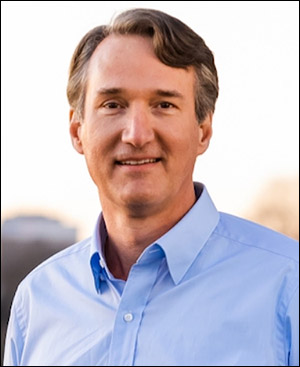
Glenn Youngkin, Virginia Republican governor candidate

Oct. 8, 2021 — A new Emerson College poll (Oct. 1-3; 620 likely Virginia voters, live interview and online panel with weighted responses) finds former Virginia Gov. Terry McAuliffe and ex-hedge fund CEO Glenn Youngkin in a virtual dead heat on the ballot test. McAuliffe is clinging to a bare 49-48 percent edge, but the underlying numbers suggest Youngkin may not be quite that close.

While Youngkin enjoys a very strong lead in the rural areas (57-42 percent) McAuliffe does better than he in the much larger urban areas (59-36 percent) thus negating, and then some, any edge the challenger may have established.

Surprisingly, considering recent poor Republican performance among suburban voters, Youngkin pulls slightly ahead of McAuliffe, 49-48 percent, within this category. Breaking even here would be a huge benefit for Youngkin should this trend prove real and is sustained.

Among women, McAuliffe has a 51-45 percent edge, which is actually a credible split for a Republican nominee in a Democratic state. Youngkin, however, needs to perform better among men than his 50-46 percent split found in this survey. Targeting men should be a key focal point for the Youngkin campaign in the closing days of the race.

Among minority groups, Emerson finds that Youngkin is outperforming a typical Republican candidate. The split among blacks, however, of 72-25 percent in McAuliffe’s favor, is suspect. Usually a Republican candidate is closer to the 10 percent level within this cell segment. It is not particularly unusual, however, to see a Republican polling better among blacks than what would be the actual performance factor once the votes are cast, and that pattern may appear again when the final votes are recorded in this contest.

The Hispanic segmentation is interesting. Republicans have been doing better within the Hispanic cell, and particularly so in 2020; so Youngkin actually leading McAuliffe within this group, 55-45 percent, may not be shocking but certainly appears inflated.

It wouldn’t be particularly surprising to see Youngkin pull more votes from Hispanics than a typical Republican candidate, but it is unlikely he would post a majority within this group. Still, while probably not as rosy a picture as this poll paints for Youngkin, it is probable that he will draw a greater Hispanic share than originally projected for him at the beginning of this campaign.

Continue reading

New Tight Nevada Polling

By Jim Ellis

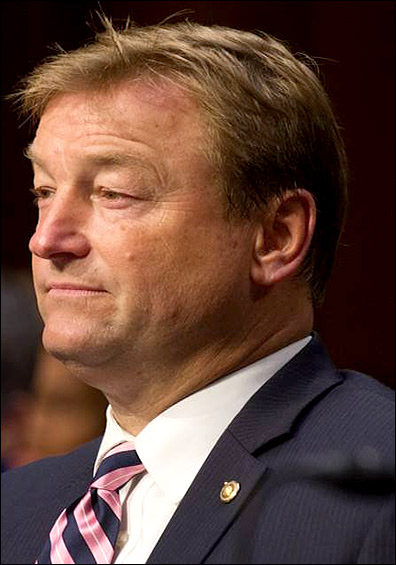
Former Sen. Dean Heller (R-NV)

Oct. 6, 2021 — The Nevada Independent online news site commissioned a September Mellman Group statewide poll (Sept. 15-22; 600 likely Nevada voters, live interview) just as former US Sen. Dean Heller (R) was announcing that he will join the Republican field vying to challenge Gov. Steve Sisolak (D). The results and analysis were released Monday.

The pollsters also tested the US Senate race between first-term Democratic incumbent Sen. Catherine Cortez Masto and former Attorney General Adam Laxalt (R). Both the gubernatorial and the US Senate contest returned close general election projections.

Nevada has featured close elections in the previous decade leading up to the 2022 voting cycle. Of the 18 statewide electoral contests between and including 2012 and 2020, Democrats have averaged 49.0 percent of the vote and Republicans’ 45.2 percent. In eight of the 18 campaigns, the winner recorded only plurality support.

During the time span, Democrats won 10 statewide races and Republicans won eight, but the GOP has scored only one victory since 2016. Therefore, it is not surprising to again see close polling data, and we can expect similar results throughout the campaign cycle.

According to the Mellman data, Gov. Sisolak would lead ex-Sen. Heller, 46-43 percent, but the small margin tightens even further if Clark County Sheriff Joe Lombardo were to win the Republican nomination. In the Sisolak-Lombardo pairing, the governor edges the sheriff by half a percentage point, 44.9 – 44.4 percent.

In the Republican primary, asked of only those who said they plan to vote in that contest though the sample number was not released, Heller led Sheriff Lombardo, 31-23 percent, with former professional boxer Joey Gilbert and North Las Vegas Mayor John Lee trailing with 11 and three percent, respectively.

On the positive side for Gov. Sisolak, his favorability index is only slightly upside-down at 46:48 percent, despite his handling of the COVID-19 virus getting a heavy 38:59 percent negative rating. He leads in all-important Clark County by 10 and seven points against Heller and Lombardo, respectively.

The governor saw a negative reading coming from Washoe County (Reno), however, which tends to act as a bellwether of the Nevada vote and an entity that Sisolak carried in 2018 against then-Attorney General Laxalt. The Mellman poll posted Heller to an eight-point lead over Sisolak in Washoe, while Sheriff Lombardo enjoyed a six-point edge.

Continue reading

Nebraska Redistricting Map Set; Surprises in Arizona Senate Polling

Nebraska’s new three-district congressional map

By Jim Ellis

Oct. 4, 2021 — The Cornhusker State of Nebraska has joined Oregon and Colorado in completing its redistricting process as Gov. Pete Ricketts (R) late last week signed into law the new three-district congressional map.

The new map is similar to the previous plan. It slightly improves Rep. Don Bacon’s (R-Papillon/Omaha) 2nd District while keeping the Omaha metro area together as a complete unit. The 2nd will remain competitive, though Rep. Bacon will be in stronger position to seek a fourth term. He was re-elected last November with a 51-46 percent margin in defeating Democrat Kara Eastman for the second time and defending himself against a $4.5 million opposition campaign.

Rep. Adrian Smith’s (R-Gering) 3rd District again stretches the width of the state, from Colorado and Wyoming all the way to Iowa and the northwestern corner of Missouri. This time the 3rd even goes so far as to border Omaha’s Douglas County.

It is likely the new Nebraska map will continue to send three Republicans to the House, though Democrats will undoubtedly return to target Rep. Bacon in District 2.

Arizona Senate

Phoenix-based OH Predictive Insights tested the Arizona electorate as they regularly do (released Sept. 29 & Sept. 7-12; 882 registered Arizona voters, online opt-in panel) and finds freshman Sen. Mark Kelly (D) leading all potential Republican general election opponents, but with percentages well below majority support in all tested instances.

As you will remember, Sen. Kelly, after a difficult and expensive 2020 campaign in which he raised an incredible $101 million to defeat appointed Martha McSally (R), won the special election, 51-49 percent, to fill the remainder of the late Sen. John McCain’s (R) final term. He now returns to the campaign trail in order to win a full six-year term in 2022.

At this point, Attorney General Mark Brnovich, venture capitalist Blake Masters, solar energy company Jim Lamon, and retired Arizona National Guard Adjutant General Mick McGuire comprise the top tier of the Republican field. OHPI tested each man individually opposite Sen. Kelly.

Continue reading

Sen. Grassley to Seek Re-Election

By Jim Ellis

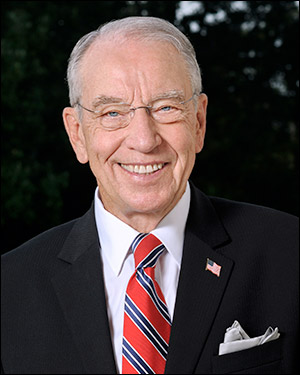
Iowa’s seven-term US Sen. Chuck Grassley (R)

Sept. 28, 2021 — Saying he “ … has a lot more to do for Iowa,” seven-term Sen. Chuck Grassley (R) on Friday announced that he will run for an eighth term next year. Recently, the senator said he would make his decision about launching a 2022 campaign on or before Nov. 1.

Sen. Grassley was one of three Republican incumbents who had not declared their re-election intentions. Sens. Ron Johnson (R-WI) and John Thune (R-SD) both say they will announce their decisions later in the fall. All 14 in-cycle Democrats are on an active re-election track.

Sen. Grassley is already the longest-serving Iowa US senator, originally elected on the same night when Ronald Reagan won the presidency in 1980. He has been an elected official since winning his first term in the state House of Representatives back in 1958. Should he win the coming election and complete his next term, he will have served 70 consecutive years as a public official, counting his time in the state legislature, US House and Senate.

It appears the senator is in strong political shape for the coming campaign. At this point, he faces only state Sen. Jim Carlin (R-Sioux City) in the Republican primary.

When he entered the race, it was speculated that Carlin was attempting to get a head start on an open Republican primary in anticipation that the 88-year-old senator would announce his retirement. He indicated that he planned to stay in the race regardless of Sen. Grassley’s intentions, but now that the incumbent’s campaign is official we will see if Carlin continues in his long shot statewide effort.

The leading Democrat is former Congresswoman Abby Finkenauer. She served two terms in the state House of Representatives, and then defeated incumbent US Rep. Rod Blum (R) in the 2018 election. She would subsequently lose her first re-election bid to current Congresswoman Ashley Hinson (R-Marion/Cedar Rapids). Now, like so many others who have recently lost elections, Finkenauer is attempting to run for a higher office.

Continue reading

Republican Youngkin Notches First Lead in Virginia Gubernatorial Race

By Jim Ellis

Republican Glenn Youngkin, Virginia candidate for governor

Sept. 24, 2021 — A new University of Mary Washington survey (conducted by Research America, Sept. 7-13; 1,000 total sample 528 likely Virginia gubernatorial election voters, live interview & online) finds Republican Glenn Youngkin (R) leading former Virginia Gov. Terry McAuliffe (D), 48-43 percent, but there are caveats.

While virtually every poll has projected the two candidates recording support percentages in the 40s, this is the first that found the ex-governor and former Democratic National Committee chairman trailing. Two other surveys were also released yesterday, and both of them find results consistent with other pollsters that place both candidates in the 40s, but with McAuliffe holding the advantage.

KAConsulting (Sept. 17-19; 700 likely Virginia voters, live interview), polling for the Presidential Coalition, found McAuliffe topping Youngkin, 46-42 percent. Public Policy Polling (Sept. 17-18; 875 Virginia voters, interactive voice response system) derived an almost identical 45-42 percent McAuliffe ballot test result during a simultaneous time realm.

The Mary Washington study may well be an outlier. While the 48-43 percent margin comes from those describing themselves as likely voters in the Nov. 2 election, when responses from all 1,000 sampled individuals are recorded, the ballot test flips to 43-38 percent in favor of McAuliffe. It is not unusual to see differences when screening for likely voters versus the universe as a whole, but detecting a ten-point swing affecting just one candidate – you will notice McAuliffe scores 43 percent within both groups – raises methodological questions.

The poll becomes even more suspect when seeing that the candidates in the other statewide races, lieutenant governor and attorney general, produce no such GOP swing. In the lieutenant governor’s contest, Republican Winsome Sears has a 47-41 percent lead over Democrat Hala Ayala among likely voters, but the two are dead even at 38 percent support when all respondents are added to the ballot test matrix.

In the AG’s campaign among likely voters, Republican Jason Miyares holds a 46-42 percent edge over incumbent Democrat Mark Herring, but the race flips to 40-37 percent in the attorney general’s favor when all respondents are questioned.

Continue reading

Michigan Gov. Whitmer
Falters in New Polls

By Jim Ellis

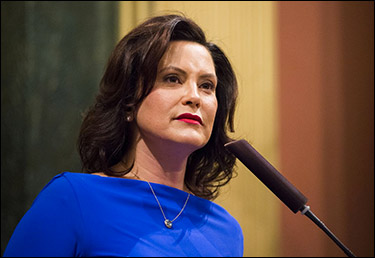
Michigan Gov. Gretchen Whitmer (D)

Sept. 23, 2021 — We have further evidence that the Michigan governor’s race is going to be a highly competitive political contest next year. A pair of new polls, following one in late August, find Gov. Gretchen Whitmer (D) either in a virtual dead heat with, or trailing, former Detroit Police Chief James Craig (R).

The Trafalgar Group and Strategic National, Inc. were both in the Michigan field during virtually the same time realm to test the impending governor’s race. Trafalgar (Sept. 13-15; 1,097 likely Michigan voters; live interview, interactive voice response system, online, and text) actually finds the governor slipping behind Craig by a 50-44% count. Strategic National (Sept. 18-19; 600 likely Michigan voters) arrived at a much tighter contest with the governor still in the lead. Their result projected a razor thin 46.6 – 46.0 percent margin.

Gov. Whitmer has become controversial even nationally through her draconian COVID shut down measures, and then being caught on several occasions as eschewing the dictates for herself and family. As the Strategic National poll shows, however, the governor’s favorable and unfavorable opinions are equivalent … and almost everyone feels strongly about their preference.

In terms of her personal favorability index, the responses divide 50:48 percent favorable to unfavorable. The strongly held position, however, spins toward the negative category. Of those who comprise Gov. Whitmer’s 50 percent positive rating, 35 percent, or 70 percent of those professing a positive opinion, feel strongly.

The negative segmentation is more intense. From the 48 percent who hold a negative view of Whitmer, 42 percent, or 87 percent of those holding an adversarial opinion, believe so strongly. Her job approval rating responses, though a different question, yields an almost identical pattern.

The polarization factor is, unsurprisingly, extreme when it comes to the respondents’ opinion about how she’s handled the coronavirus. By a margin of 52:47 percent, the sampling universe approves of her measures to combat the disease. And, in this instance, those feeling strongly on both sides break about evenly.

Continue reading