Category Archives: Governor

Rep. Suozzi Announces for
New York Governor

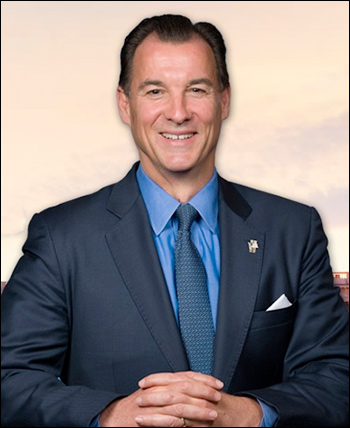
Long Island US Rep. Tom Suozzi (D-Glen Cove)

By Jim Ellis

Dec. 1, 2021 — Turning down NYC Mayor-Elect Eric Adams’ offer of becoming one of the city’s deputy mayors, Long Island US Rep. Tom Suozzi (D-Glen Cove) instead announced Monday that he is joining the fast-growing Democratic primary for governor.

Already in the statewide race is the new incumbent, Gov. Kathy Hochul, Attorney General Tish James, and NYC Public Advocate Jumaane Williams. On the Republican side, Long Island Rep. Lee Zeldin (R-Shirley) is clearly the leading candidate for his party’s gubernatorial nomination, having already clinched the official New York Republican Party endorsement.

This is not the first time Suozzi has run for governor. In the 2006 Democratic primary, ill-fated, then-Attorney General Eliot Spitzer crushed Suozzi, 82-18 percent.

The Suozzi strategy is to take advantage of a crowded Democratic field where the other participants are all campaigning to the left. Therefore, he is calling himself the “moderate, common sense Democrat.” In a plurality election, his strategy has a chance of being successful, but the bigger question may revolve around whether he will have adequate resources to effectively communicate his message to a statewide electorate in order to develop such a fractured winning coalition.

With Rep. Suozzi foregoing re-election, it creates an additional open Democratic US House seat, a number that has grown significantly in the past two weeks, and also potentially alters the New York redistricting process.

Suozzi was first elected to the House in 2016 and twice re-elected, but failed to reach 60 percent in any of his congressional campaigns. Prior to his service in Congress, Suozzi held the Nassau County Executive position for two terms but was defeated when trying for a third. Four years later, in 2013, trying to regain his lost position, Suozzi was again defeated, this time by a strong 59-41 percent margin. Before winning his countywide position, Suozzi was twice elected as mayor of his hometown of Glen Cove, NY.

Suozzi’s 3rd Congressional District sits in Long Island’s center-west sector, hugging the north shore. The four districts that are self-contained on Long Island are a combined 148,780 people short of meeting the per-district population quota of 776,971 individuals in each of the state’s 26 congressional districts.

Continue reading

PA-Senate: Republicans in Trouble

Former US Ambassador to Denmark, Carla Sands — a Pennsylvania senate candidate to watch.

By Jim Ellis

Nov. 29, 2021 — The Keystone State of Pennsylvania, with an open Senate and governor’s race, will be a focal point of the 2022 election cycle, and last week the Republicans’ early problems grew worse.

The Pennsylvania GOP began this election cycle in a seemingly underdog position as they fought to hold the Senate seat from which two-term incumbent Pat Toomey (R) is retiring; now they are clearly playing from behind.

Iraq War veteran Sean Parnell (R) had former President Donald Trump’s endorsement and was leading the Republican primary in early polling. However, due to losing a child custody judgment rendered at the beginning of this week after a contentious trial in which his ex-wife had accused him of domestic abuse, Parnell withdrew from the Senate contest.

It’s a loss for his party, but Parnell wasn’t even the best of candidates. In his first bid for public office, running for the 17th Congressional District seat against Allegheny County area incumbent Conor Lamb (D-Pittsburgh), now himself a Senate candidate, Parnell came close but lost 51-49 percent. Based upon a close defeat in a winnable district, he decided to make a statewide Senate run.

Two other primary opponents, former lieutenant governor nominee Jeff Bartos and Army veteran, Trump campaign activist, and former congressional candidate Kathy Barnette, also lost their most recent political races. Therefore, the original three leading Republican candidates in either polling or fundraising hadn’t ever won a race and were falling well behind their Democratic counterparts.

The Democrats feature the overall early race leader, Lt. Gov. John Fetterman. He commands first position in primary and general election polling and has raised way more campaign capital than all of his opponents, over $9.2 million through the Sept. 30 financial disclosure period.

John Fetterman, however, isn’t without his own flaws. In 2013, when he was mayor of Braddock, a borough southeast of Pittsburgh in Allegheny County and located on the Monongahela River, Fetterman pulled a loaded weapon on an unarmed African-American jogger after hearing gunshots fired in his neighborhood. The Fetterman campaign has already produced a short video explaining the incident in anticipation of this becoming an issue in his 2022 statewide effort.

Rep. Lamb is running second to Lt. Gov. Fetterman in polling and dollars raised, almost $7 million behind his chief Democratic rival. The latest poll, from the Civiqs organization (Oct. 31-Nov. 1; 929 likely Pennsylvania Democratic primary voters, online) found Fetterman way ahead of Rep. Lamb, 52-12 percent, with other announced and possible candidates, state Rep. Malcolm Kenyatta (D-Philadelphia), Montgomery County Commissioner Val Arkoosh, and potential contender Sharif Street, a state senator and son of former Philadelphia Mayor John Street, all polling at five percent or less.

Continue reading

Sununu Won’t Take Senate Plunge

New Hampshire Gov. Chris Sununu (R) will not run for the Senate.

By Jim Ellis

Nov. 11, 2021 — New Hampshire Gov. Chris Sununu (R) held a long awaited news conference this week to announce his political plans for 2022. The governor had been the Republicans’ top recruitment prospect to challenge vulnerable Democratic Sen. Maggie Hassan, but the three-term state chief executive has chosen to eschew a tough Senate challenge and will instead run for a fourth gubernatorial term.

Though Sununu, like his father before him, has been elected three times as governor, he is still only in his fifth year of service. New Hampshire and Vermont are the only states that have two-year gubernatorial terms. In fact, for a 146-year period, no one had served more than one term as the state’s top office holder. The only governor in New Hampshire history to serve four terms is Democrat John Lynch, who was in office from 2005-2013.

Gov. Sununu’s decision certainly changes the New Hampshire political landscape and will cause potential candidates to begin assessing their chances both in a Senate race against Hassan and as a gubernatorial contender opposite Sununu. Attention now may turn to two-term US Rep. Chris Pappas (D-Manchester).

The Republicans, with trifecta control of the New Hampshire political system in that they hold the governor’s office and have majorities in both houses of the legislature, are looking to change the marginal 1st Congressional District, the seat that has defeated more incumbents than any CD in the country since 2004, into a Republican domain. Doing so would concede the politically marginal 2nd District to incumbent Democratic Rep. Annie Kuster (D-Hopkinton/Concord).

Pappas, aware that a significant change in his district could make him an underdog for re-election, was likely headed into an open governor’s race if Sununu decided to run for Senate. Now that he would have to take on a popular incumbent, his next political move may be less clear.

Turning back to the Senate picture, incumbent Hassan still remains as the most vulnerable Democrat seeking re-election in 2022; so where do Republicans go now? Looking at the crowded 1st District race, two contenders stand out as potential statewide candidates.

Gail Huff Brown, a long time New England television news reporter, is the wife of former Massachusetts Sen. Scott Brown, and she has already announced her congressional candidacy. Former Sen. Brown, himself, would also be a possibility since he has already run for the Senate once in New Hampshire. Matt Mowers is the 2020 1st District nominee who held Rep. Pappas to a 51-46 percent re-election victory. He, too, is an announced congressional candidate but it appears possible that at least one of the aforementioned could instead enter the Senate race.

Continue reading

Election Day Upsets and Surprises

By Jim Ellis

Nov. 4, 2021 — Now that Tuesday’s election numbers are becoming more available and final, we can explore the contests that proved to be upsets and ones providing us with some surprises. In most instances, the Republicans performed better in these races than expected.

The first obvious upset, though a mild one as we approached election day because most people understood that Republican Glenn Youngkin had a legitimate chance to score a victory over former Gov. Terry McAuliffe, is the Virginia statewide race. The biggest surprise was New Jersey Republican Jack Ciattarelli within one percentage point of defeating Democratic Gov. Phil Murphy.

With that background, let’s begin with our upsets:

• Georgia: Former Atlanta Mayor Kasim Reed (D), attempting to regain his former position in the open seat 2021 race, has apparently failed to qualify for the runoff. Atlanta City Council President Felicia Moore (D) placed first, with City Councilman Andre Dickens (D) running 612 votes ahead of Reed for second position with all of the precincts reporting.

Mail votes and ancillary ballots could still push Reed into a runoff with Moore, but it appears that Dickens has the inside track to nose the former mayor out of this race.

• Maine:• New Jersey: State Senate President Steve Sweeney (D) has apparently lost his southern New Jersey seat to truck driver Edward Durr (R) who spent only about $5,000 on his campaign. Durr leads 52-48 percent, which should be enough for him to eventually claim victory.

• New York: Big Republican local election wins occurred in Suffolk and Nassau County on Long Island. GOP candidates won the Suffolk and Nassau County District Attorney’s offices, and defeated the Nassau County Executive. They also reclaimed the majority on the Suffolk County legislature for the first time since 2005.

• Texas: Continuing a GOP rebound among Hispanic voters in Texas, Republican John Lujan converted a 71 percent Hispanic district in southeast Bexar County (San Antonio). Lujan was a 51-49 percent winner in Texas House District 118.

• Virginia: Glenn Youngkin (R) defeated Terry McAuliffe (D), 51-48 percent. Winsome Sears (R) topped state Del. Hala Ayala (D), 51-49 percent. State Del. Jason Miyares (R) ousted Attorney General Mark Herring (D), 51-49 percent. Republicans have clinched or lead in 52 House of Delegates races, enough for them to re-claim the majority. Not only did Youngkin score an upset win, but he had obvious coattails.

There were several interesting surprises on election night, too:

• Florida: Miami area Democrats went to the polls to choose a special election nominee to replace the late Rep. Alcee Hastings (D-Delray Beach) and the result yielded a photo finish. Recounts will be ordered and a long post-election process is expected before someone advances to the January 11th special general election.

At first take with supposedly all votes counted, businesswoman Sheila Cherfilus-McCormick looks to have secured the party nomination by just 31 votes. A later count then put Broward County Commissioner Dale Holness on top by an even smaller 12-vote margin. Expect this one to be in the courts long before a Democratic nominee is finally settled upon.

Continue reading

Youngkin Wins in Virginia;
New Jersey’s Races are Teetering;
Ohio Congressional Races & More

By Jim Ellis

Nov. 3, 2021 — Republican Glenn Youngkin claimed the Virginia governor’s race with his victory over former Gov. Terry McAuliffe (D), becoming the first Republican to win a Virginia statewide office since the 2009 election.

In New Jersey, Republican Jack Ciattarelli is fighting Gov. Phil Murphy (D) to a virtual tie, but outstanding ballots suggest the Democratic governor may barely hang on to win a second term. It was a surprisingly strong showing for Ciattarelli in such a heavily Democratic state. Though both houses of the New Jersey legislature will remain under Democratic control, Republicans appear to have added seats in both chambers.

While mail votes are still being tallied and other ballots can be received in Virginia until Friday, it appears Youngkin did exceed the 50 percent plateau with McAuliffe about two percentage points behind. The Youngkin victory helped pull his lieutenant governor Republican partner, Winsome Sears, over the top to claim the state’s second position.

The Virginia attorney general’s race features another Republican, state Delegate Jason Miyares, leading incumbent Mark Herring (D), who is running for a third term. This is the closest of the three races, so uncounted mail ballots and votes to be received after election day could make a difference. Some entities have projected Miyares a winner, and he is certainly in the better position, but the final outcome may not yet be conclusive.

Several other races are still close, but Republicans may have converted the six seats they need to re-claim the state House majority. In any event, the party gained seats.

Turnout was higher than expected in Virginia. More that 3.2 million ballots have been tabulated, meaning that more than 73 percent of the number of people who voted in the record setting 2020 election returned to cast their votes in the 2021 governor’s race. When comparing the 2017 gubernatorial election to the 2016 presidential, the return rate was 66 percent.

OHIO

In the US House, two new Ohio members-elect completed their special election victories with ease. In the vacant Cleveland-Akron seat that Housing and Urban Development Secretary Marcia Fudge (D) represented, Democratic Cuyahoga County Councilwoman Shontel Brown, as expected, easily won the congressional special general election with 79 percent of of the vote.

Continue reading

Today’s Election Scorecard

By Jim Ellis

Nov. 2, 2021 — Today is a significant Election Day, and the menu of races stretches beyond a Virginia governor’s race that has attracted the lion’s share of political attention.

While the VA governor’s race will of course be top of mind as results come in tonight and analysts attempt to assign precursor status to the contest regardless of the final result, other campaigns will also be of significance.

In the Virginia race, if Republican Glenn Youngkin scores an upset win, and the late indications are clearly moving his way, it may be cast as an affront to the Biden Administration and the Democratic majorities in Congress relating to their legislative agenda. In actuality, it is a more locally based issue, education, that should correctly be cast as the linchpin to describe a Youngkin victory.

Former Gov. Terry McAuliffe’s (D) debate comment saying he did not believe “parents should be telling schools what they should teach,” will actually prove to be the key turning point to a Youngkin victory should it materialize. In McAuliffe wins, then the talk of a coming Republican wave election next year will certainly dissipate at least in the short term.

In addition to the Virginia governor’s race, the remainder of the statewide ticket, the lieutenant governor and attorney general races could be of significance. If Winsome Sears (R), running for lieutenant governor, and Jason Miyares (R), running for attorney general, both win their races to compliment a Youngkin victory, then talk of a clear precursor or budding Republican wave election will carry a more serious tone.

New Jersey voters will decide their governor’s contest as well. In Jersey, late polling, after seeing some closer numbers not even 10 days ago, seems to show Gov. Phil Murphy (D) pulling away from Republican Jack Ciattarelli in the closing week. The final result will likely be closer than most analysts would have projected at the beginning of the odd-numbered year election cycle, however.

In both Virginia and New Jersey, voters will also be electing members of the state legislature. In the Old Dominion, only the House of Delegates is on the ballot, as state senators, with their four year terms, won’t face the voters as a unit until the 2023 election cycle.

In the Garden State, both parties are projecting they will gain seats, but no one believes the strong Democratic majorities in the state Senate and Assembly are in any danger. In the Virginia House of Delegates, Republicans need to convert a net six seats to re-claim the majority they lost in the 2019 election.

Continue reading

Youngkin Catapults to Lead In Virginia Gubernatorial Race

Glenn Youngkin, Virginia Republican governor candidate

By Jim Ellis

Nov. 1, 2021 — A surprising polling turn of events came to light late last week as Fox News released a new Virginia survey that shows Republican Glenn Youngkin (R) holding an eight-point lead in the race for governor, his largest of any poll throughout the campaign. The surprise comes in a result that reverses last week’s Fox poll that found former Gov. Terry McAuliffe holding a five-point advantage.

The Fox News poll (Oct. 24-27; 1,212 registered Virginia voters; 1,015 individuals identified as likely VA gubernatorial election voters, live interview) finds Youngkin claiming a 53-45 percent advantage within the likely voter segment. When looking at the entire registered voter sample, however, the Youngkin edge shrinks to 48-47 percent.

The previous Fox poll (Oct. 10-13; 1,004 registered Virginia voters; 726 individuals identified as likely VA gubernatorial election voters, live interview) gave McAuliffe a 51-46 percent margin. Within the entire sample, the McAuliffe advantage leapt to a double-digit eleven point lead at 52-41 percent.

Though Fox News has a well-known right-of-center orientation, their polling operation does not. The Fox Polls are conducted jointly through a Democratic survey research firm and a Republican polling organization. Beacon Research is the Democratic firm, formerly known as Anderson Robbins Research, while the Republican entity is Shaw & Company Research. The two have been collaborating on the Fox polls for 10 years, since 2011.

According to the FiveThirtyEight research organization that ranks polling firms, Fox News is scored with an A rating, but has a Democratic bias factor of 1.8 percentage points. Therefore, despite Fox News’ reputation, their polling arm has trended more Democratic over the joint partnership’s long history.

That being said, this particular poll appears to have a Republican skew. Looking at the likely voters, 46 percent identified themselves as solid or leaning Republican, while 42 percent responded Democratic. This ratio is contrary to recent Virginia voter history.

The Commonwealth does not register voters by political party, so people can float between the two major political organizations. The move toward the Republicans in this poll could be the centrist, or independent voter, moving to the right for this particular election. Regardless, it is probable that Youngkin’s eight-point margin among likely voters is at least somewhat inflated.

A further problem for McAuliffe is his standing among committed voters. In both the current survey and the previous Fox study that found him leading by five points, his committed support remained constant at 44 percent. Seeing no movement on this question suggests that McAuliffe is lacking momentum in the closing days.

Continue reading