
Tag Archives: Rep. Jodey Arrington

NJ Rep. Coleman to Retire; Rogers Up in Michigan; Allred Down in Texas

By Jim Ellis — Tuesday, Nov. 11, 2025

A congressional retirement announcement from New Jersey, ex-US Rep. Mike Rogers (R) taking the lead in a new Michigan Senate general election poll, and a Texas Senate survey that finds 2024 US Senate nominee and ex-Congressman Colin Allred again trailing in the Democratic primary, are outlined in this round up. These are the top political stories coming from the early part of the Veterans Day weekend. Also, overnight, Republican House Budget Committee Chairman Jodey Arrington (TX-19) announced that he will not seek re-election in 2026. Arrington has served for nearly a decade in the US House. More on his retirement in an upcoming post.

NJ-12
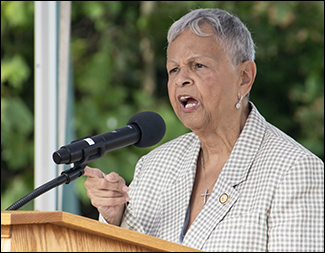
New Jersey Rep. Rep. Bonnie Watson Coleman (NJ-12)

Yesterday, saying “it’s time to pass the torch,” six-term Rep. Bonnie Watson Coleman (D-Ewing Township/Trenton), 80, announced that she will not seek re-election next year.

Prior to her election to the US House in 2014, she served 17 years in the New Jersey General Assembly, four years as Majority Leader. From 2002-06, Watson Coleman chaired the New Jersey Democratic Party.

The Garden State’s 12th District, which includes the capital city of Trenton, Princeton University; and North, East, and South Brunswick; is reliably Democratic. The Dave’s Redistricting App statisticians calculate a 56.5D – 43.5R partisan lean.

The central New Jersey district was at one time a Republican domain but redistricting and a change in voting patterns have yielded Democratic representation since the beginning of 1999. Therefore, Rep. Watson Coleman’s successor will almost assuredly come from winning what promises to be a hotly contested Democratic primary.

The Watson Coleman retirement means 39 seats will be open in 2026, not counting the CDs headed to special elections in Tennessee and Texas, along with New Jersey’s 11th District seat when Gov-Elect Mikie Sherrill (D) resigns from the House.

From the group of 2026 open seat members, Rep. Watson Coleman becomes the 15th Democrat not to seek re-election and the 11th to retire from politics. The other 28 are seeking a different office or moving to a congressional district other than the one they currently represent.

Michigan Senate

The Rosetta Stone polling organization released the results of an independent poll that finds Republican former Rep. Mike Rogers polling ahead of all three Democratic US Senate contenders.

Rogers, who served seven terms in the House before retiring, returned to enter elective politics with his run for the Senate in 2024. In an open-seat battle with then-Rep. Elissa Slotkin (D), Rogers came within 19,006 votes from just under 5.6 million votes cast of winning the race, a percentage margin of 48.6 – 48.3.

The Rosetta Stone poll, released over the weekend, (Oct. 23-25; 637 likely Michigan general election voters) finds Rogers, who is virtually unopposed for the Republican nomination, ahead beyond the polling margin of error individually against each of the Democrats: Rep. Haley Stevens (D-Birmingham), state Sen. Mallory McMorrow (D-Royal Oak), and former Wayne County Health Director Abdul El-Sayed.

Opposite Rep. Stevens, Rogers leads 47-40 percent. If Sen. McMorrow was his opponent, the Rogers edge would be a similar 46-39 percent. The Rogers’ advantage grows if El-Sayed becomes his general election opponent. Under this scenario, the former Congressman posts a 45-31 percent margin.

Other polls have shown this race much closer, but this is the first publicly released statewide poll since June.

Rosetta Stone tested the Democratic Senate primary, but the sample size of only 287 likely Democratic primary voters indicates the results should be considered statistically insignificant in a state the size of Michigan.

Texas Senate

New polling in the Texas Senate Democratic primary again shows trouble for 2024 Senate nominee Colin Allred.

The Impact Research survey conducted for the James Talarico Senate campaign (Oct. 23-29; 836 likely Texas Democratic primary voters; live interview & text) finds state Rep. Talarico taking a 48-42 percent lead over Allred.

In a late September survey from the University of Houston and Texas Southern University, the academic pollsters found Allred lagging in last place if the Democratic field consisted of he, Rep. Jasmine Crockett (D-Dallas), former El Paso Rep. and statewide candidate Beto O’Rourke, and state Rep. Talarico. For her part, Rep. Crockett says she is considering the Senate race. Crockett has led several Democratic statewide polls.

It has been known for some time that the Republican Senate primary would be a hard-fought contest between four-term incumbent Sen. John Cornyn, Attorney General Ken Paxton, and recently entered Rep. Wesley Hunt (R-Houston). Now, however, analyzing the available polling data leads to the conclusion that the Democratic primary appears just as competitive as the Republican contest.
Texas 2022 Candidate Filing Closes

By Jim Ellis

Dec. 17, 2021 — Texas became the first state to see candidate filing close for the 2022 elections, so the campaign season has officially been launched.

In the Lone Star State, candidates file with their respective state party organizations, or county parties if their race is fully contained within one entity, and not the Secretary of State. Therefore, the filings might not yet be fully recorded and approved. The statewide primary is scheduled for March 1. If no candidate for whatever office does not receive majority support in the first election, a runoff between the top two finishers will occur on May 24.

What we know so far is that Gov. Greg Abbott (R) will face a significant Republican primary challenge from former Florida congressman and ex-Texas Republican Party chairman Allen West and former Dallas state Sen. Don Huffines. The latter man, who was defeated for re-election in 2018, has the ability to self-fund a statewide primary campaign. Former congressman and 2020 presidential candidate Beto O’Rourke will be the Democratic nominee as he faces only minor opposition in the party primary.

Regardless of the level of competition, Gov. Abbott, though his approval ratings are at a low ebb in his seven-year career as the state’s chief executive, is a heavy favorite in both the Republican primary and the 2022 general election.

The main constitutional office of interest is the attorney general’s race. Here, embattled incumbent Ken Paxton (R), who has for years been under a federal SEC indictment that has yet to move forward, and who has been publicly accused of having an ongoing extra-marital affair, faces three strong candidates for re-nomination: State Land Commissioner George P. Bush, US Rep. Louie Gohmert (R-Tyler), and state Supreme Court Justice Eva Guzman.

Though Paxton has personal and legal problems, his favorability ratings among Republican primary voters is still surprisingly high. Forcing the two-term attorney general into a runoff election, however, is a clear possibility.

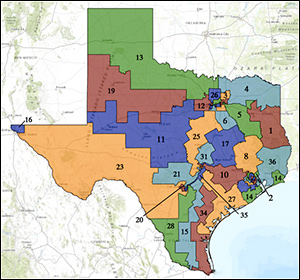
With the state having no Senate race in 2022, the federal focus turns to the new 38-member US House delegation. Texas gained two seats in national reapportionment, thus increasing their delegation size from 36 to 38 seats. The state will wield 40 electoral votes in the next presidential election, second only to California’s reduced 54.

Continue reading

Texas Data

By Jim Ellis

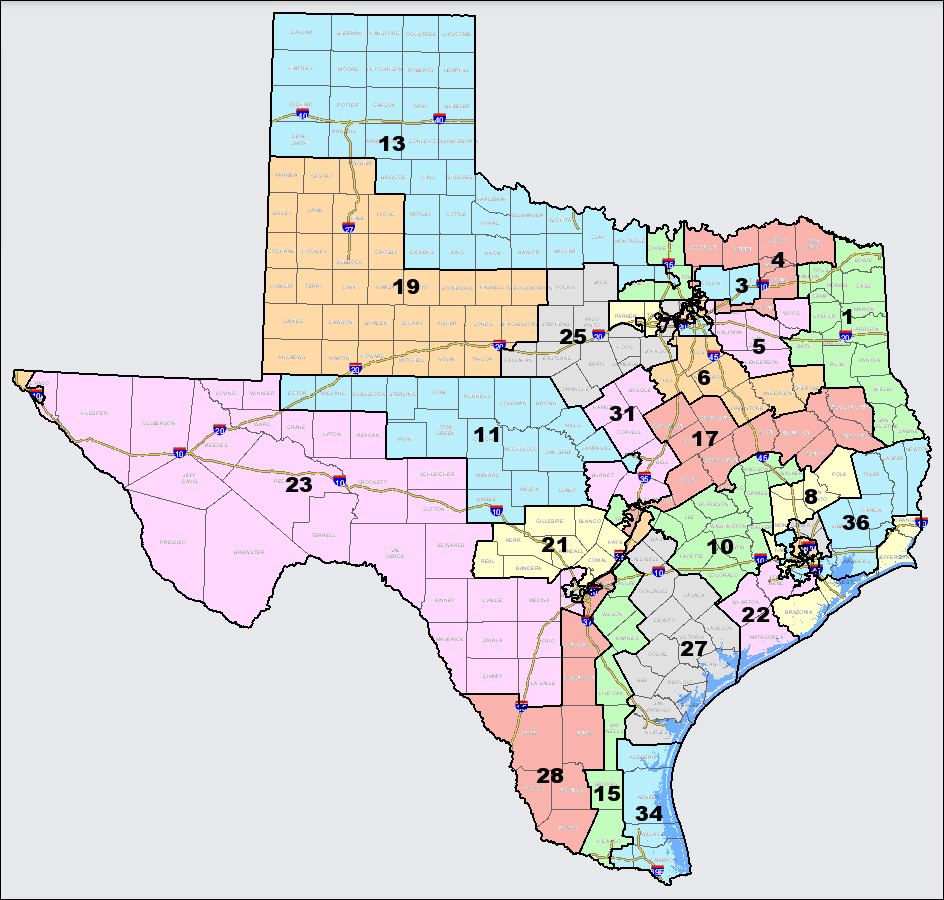
Texas US House Districts

Dec. 17, 2020 — Yesterday, we analyzed the California official 2020 Statement of the Vote and today we turn out attention to voting statistics from the Lone Star State of Texas, a particularly interesting domain for the coming redistricting process. Estimates project that Texas will gain three congressional districts from reapportionment, which should become official at some point in January.

Despite predictions of a “blue wave” hitting Texas and putting the state in play for Joe Biden, Republicans once again swept the competitive races. Though President Trump’s margin did decline from 2016, his 52-46 percent margin was still more than comfortable, especially when considering he was simultaneously losing the nationwide vote.

As was the case in California, down-ballot GOP candidates, as a rule, performed better than President Trump. Sen. John Cornyn (R) was re-elected, and the GOP won 23 congressional races in the state, accounting for almost 11 percent of their party’s national total.

Sen. Cornyn topped 53 percent of the vote in recording a nine-point win over his Democratic opponent, retired Army helicopter pilot M.J. Hegar. In the 23 victorious Republican House races, the winning GOP candidate outpaced President Trump in 19 districts most of which were competitive at least to a degree.

Compared with the Democratic improvement in elections two years ago, the GOP rebounded in 2020. A total of 16 Republican incumbents sought re-election, and 11 of those improved their vote percentages from 2018. Additionally, all five of those falling below their previous benchmark did so by less than one percentage point.

For the Democrats, all 13 of their House incumbents saw a downgrade in their voter support from 2018. Rep. Henry Cuellar (D-Laredo), who fought off a tough Democratic primary challenge in early March, saw the biggest drop for any Texas House incumbent, falling from 84.4 percent in 2018 to a 58.3 percent win in November. The more serious drop, however, was for Rep. Vicente Gonzalez (D-McAllen) who won re-election to a third term from his South Texas district with just 50.5 percent of the vote against an opponent who spent only $404,000. Gonzalez’s victory percentage slipped from 59.7 percent in 2018.

The TX-15 district is largely a Mexican border seat that starts just east San Antonio in the Seguin area and travels south all the way through the city of McAllen in Hidalgo County. The latter entity hosts three-quarters of the 15th District’s population. Republicans, including President Trump, improved their standing throughout the Mexican border area in the 2020 election, which was a principal reason that Democratic gains in the Dallas, Houston, Austin, and San Antonio metropolitan areas were somewhat offset.

Statewide turnout was up a strong 23.7 percent when compared to 2016, enabling the state to exceed 11 million voters (11,315,056) for the first time. The Texas population grew 3.9 percent during that same time interval.

Continue reading