Monthly Archives: March 2021

IA-2 Controversy Heating Up

By Jim Ellis

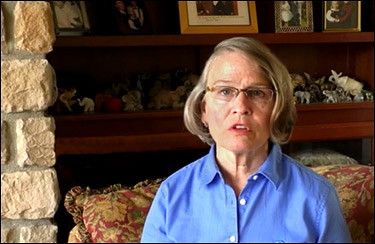
IA-2 Republican congresswoman, Rep. Mariannette Miller-Meeks

March 31, 2021 — Iowa Democratic congressional candidate Rita Hart’s 2020 election result challenge has recently attracted significant media attention. With rhetoric sharpening on both sides over Rep. Mariannette Miller-Meeks’ (R-Ottumwa) state certified six-vote victory, let’s examine where the situation stands.

To review, Miller-Meeks held a 47-vote edge on the original canvass, a total that was reduced to just six votes after the state’s full recount. Miller-Meeks was certified the victor based upon the original final total, and then re-certified post recount. The bipartisan Iowa state canvassing board issued both certifications on unanimous votes.

The losing Democratic nominee, former state senator and 2018 lieutenant governor nominee Hart, filed her challenge directly with the US House instead of turning to the Iowa court system. She claims there are 22 uncounted votes that would change the outcome. The local Iowa election authorities rejected these ballots for various reasons. At the time of commencement for the new Congress, the House seated Miller-Meeks provisionally until the Hart challenge is resolved.

The motion was referred to the House Administration Committee, a panel of six Democrats and three Republicans. California Rep. Zoe Lofgren (D-San Jose), a close ally of Speaker Nancy Pelosi, is the committee chair. Illinois Rep. Rodney Davis (R-Taylorville) is the ranking Republican member. The committee held one hearing on the challenge and agreed on a partisan roll call vote to conduct an investigation and hear her case. The committee has not voted to remove Rep. Miller-Meeks, nor has the case been sent from the committee to the House floor.

Should the complaint come before the full body, and with a 6-3 Democratic majority on the Administration Committee, chances are strong that the Hart case will advance, the Democratic leadership may have a difficult time in obtaining the votes to remove Miller-Meeks.

They certainly would face a united Republican conference, meaning 211 votes assuming that Miller-Meeks would not be allowed to vote on her own seating. If they move after the April 24 Louisiana special election where a double-Democratic runoff assures them of gaining an extra seat and increasing the majority conference total to 220, they could afford to lose no more than four Democratic votes in order to successfully take the seat from Miller-Meeks and award it to Hart.


Continue reading

New Pollster Ratings

By Jim Ellis

March 30, 2021 — The FiveThirtyEight statistical organization released their latest political pollsters’ accuracy ranking chart toward the end of last week — a study that included 592 survey research firms.

Grades from A+ to C/D were assigned to the firms based upon four criteria:

  1. Their 2020 election cycle precision
  2. The predictive category that suggests how successful the firm will be in the future
  3. The number of polls analyzed in this most recent cyccle, and
  4. hat the FiveThirtyEight team terms as the company’s “mean-reverted bias” factor.

Four polling entities earned the top A+ rating. They are:

  • the Iowa-based Selzer & Company
  • ABC News/Washington Post
  • Siena College/New York Times
  • IDB/TIPP

Another six received A ratings:

  • Survey USA
  • Landmark Communications
  • Research & Polling
  • AtlasIntel
  • Monmouth University
  • Marist College
  • Fox News

Seven more posted A- rankings:

  • The Trafalgar Group
  • Public Opinion Strategies
  • CBS News/New York Times
  • Mason-Dixon Polling & Strategy
  • Public Policy Polling
  • Emerson College
  • Quinnipiac University

On the other end of the spectrum, 18 firms were at the bottom of the list but a dozen from this group conducted less than 10 surveys. Of those featuring more than 10 polls, the lowest ranked of the group were Nielsen Brothers Polling, the Humphrey Institute, FM3 Research, Opinion Research Associates, McLaughlin & Associates, and Brown University.

Selzer & Company has long been recognized as one of the country’s better pollsters based upon its strong record predicting the Iowa Caucus presidential results and other races most often from the Hawkeye State.

In 2020, 12 of 19 published polls projected Iowa Democrat Theresa Greenfield as leading Sen. Joni Ernst (R). Approaching Election Day, only two pollsters posted the incumbent ahead four or more percentage points: Selzer & Company and Insider Advantage. Sen. Ernst’s final victory margin was 6.6 percentage points. The IA firm came closest to the end result (Ernst, plus-6; actual, 6.6 percent). Surveying for the Des Moines Register newspaper, Selzer & Company again landed within the accuracy realm (Ernst plus-4).

The ratings also included the polling firms’ partisan bias factor. The bias swing in favor of one party or the other ranged from 4.7 points toward the Democrats (Survey Monkey) to a 3.1 sway for Republicans (MRG Research). The overwhelming majority of pollsters with the highest bias rating favored the Democrats. Of the 28 firms that registered a 2.0 or greater partisan bias factor, 26 favored Democratic candidates.

Continue reading

Analyzing the 2020 Turnout Increase

By Jim Ellis

March 29, 2021 — As we know, election year 2020 produced the largest voter participation level in history, including a substantial increase from the last presidential turnout in 2016. Now that all states have reported finalized election numbers, we know that a total of 158,507,137 individuals cast ballots in the 2020 presidential election, a number that shattered even the highest pre-election turnout predictions.

The figure also represents a 15.9 percent turnout increase when compared with 2016, which, at that time also set a record for raw number voter participation. Attempting to explain the large jump, the proponents of the election system overhaul legislative package in Congress, HR-1/S.1, credit the rise to the heightened use of early and mail voting, and therefore want to make permanent most of the court ordered COVID-19 pandemic response procedural changes. Digging deeper, however, we find that there are other factors present that help explain the voting uptick.

While all but five states (Alabama, Connecticut, Mississippi, Missouri, and New Hampshire) employed some form of early voting, another five conducted their elections only through the mail. The usual all-mail states of Colorado, Oregon, and Washington were joined by Hawaii and Utah according to the Ballotpedia election statistics organization that regularly publishes related data.

All five of these latter states saw turnout growth rates that exceeded the national average, including the state posting the highest increase, the Aloha State of Hawaii, which saw a whopping 32.5 percent rise in voting.

As stated earlier, the national average turnout increase when comparing the 2020 figures with 2016 is 15.9 percent. Eighteen states saw an increase greater than the national mean average, while 32 states and the District of Columbia fell below that number. All 51 entities, however, reported an upsurge in voting from 2016. The median average calculated to an increase of 12.8 percent.

Let’s concentrate on the 10 states with the highest increase from 2016. They are:

STATE        PERCENT INCREASE
Hawaii 32.5%
Arizona 31.6%
Utah 31.5%
Texas 26.2%
Idaho 25.8%
Nevada 24.9%
California 23.4%
Washington 23.2%
Tennessee 21.8%
Georgia 21.5%

Continue reading

One Down, 4 Special Elections to Go

By Jim Ellis

March 26, 2021 — Though Rep-Elect Julia Letlow’s (R) victory in Louisiana last Saturday completed one special congressional election, four others are still in-cycle and fresh ballot test data was just released from the Texas seat.

Next up on the schedule is the LA-2 double-Democratic runoff between state Sens. Troy Carter (D-New Orleans) and Karen Carter Peterson (D-New Orleans) on April 24. Next, on May 1, voters in Texas’ 6th District will go to the polls to begin the replacement process for the late Rep. Ron Wright (R-Arlington). Replacing Biden cabinet members and ex-Reps. Deb Haaland and Marcia Fudge will occur on June 1 and Nov. 2, respectively, in New Mexico and Ohio.

As in Louisiana, the Texas race features the late incumbent’s widow running, but a new poll suggests that Susan Wright’s support is not as deep as Letlow’s in neighboring Louisiana. On Saturday, Letlow, whose late husband, Luke Letlow, passed away three weeks after he won the December 2020 runoff election, scored a landslide 65 percent outright victory over 11 opponents.

In the North Texas race, the Democratic firm Global Strategy Group recently surveyed the 6th District electorate for their client, candidate Lydia Bean (D), during the March 11-16 period and interviewed 500 likely special election voters.

While the results found Wright leading the pack of 23 candidates, she reached only 18 percent support but that was nine percentage points better than her closest opponent, 2018 Democratic congressional nominee Jana Lynne Sanchez.

Freshman state representative and 2018 Republican congressional candidate, Jake Ellzey (R-Waxahachie), the only sitting elected official in the massive candidate field, followed closely behind with eight percent support. Bean, a non-profit organization founder, and former George W. Bush White House aide Brian Harrison were next, posting six percent apiece.

The results suggest that Wright has a clear lead, her advantage is by no means insurmountable and, at this point in the special election cycle, the data is certainly pointing to a pair of candidates advancing into a runoff election.

Under Texas special election procedure, the governor does not schedule the secondary election until it is clear that the runoff is necessary, and the participants chosen. In this case, we won’t know the date of the next election after May 1. It is presumed, however, that Gov. Greg Abbott (R) will schedule the runoff in mid to late July.

Continue reading

Scandal-Tainted Ex-Gov. Eric Greitens Declares for Senate in 2022

By Jim Ellis

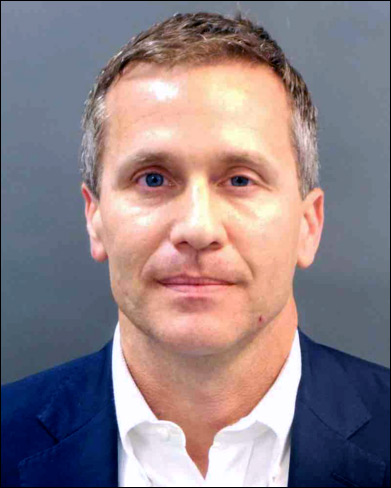
Ex-Missouri Gov. Eric Greitens (R)

March 25, 2021 — Former Gov. Eric Greitens, originally threatening to challenge Sen. Roy Blunt in the 2022 Missouri Republican primary, launched his US Senate campaign Tuesday for what is now an open seat. Sen. Blunt’s decision to not seek re-election obviously drastically changes the Missouri political landscape and opens the door for what could be a nasty GOP primary with a potential ending that could jeopardize what should be a relatively safe Republican seat.

Greitens first ran for office as a conservative retired Navy SEAL and author in 2016, coming from behind to win the Republican nomination for Missouri governor against a crowded field.

Cast as an underdog in that year’s general election to then-Democratic Attorney General Chris Koster, polls suggested he would lose from beginning to end. On election night, however, Greitens scored a 51-46 percent upset victory simultaneously with Donald Trump winning the presidency and Sen. Blunt being re-elected in a close fight.

After attaining the governorship, events turned against the fledgling politician. Reports began surfacing that he, as a married man, was having an affair with his hairdresser. Allegations then came forward that he had briefly held her against her will, taking pictures of her in compromising positions and blackmailing her with threats to make the photos public.

Soon after, Greitens was indicted, and largely due to poor relations with legislative leaders in his own party who were even beginning to prepare impeachment articles, it became evident that a year and several months into his term a forthcoming resignation appeared inevitable. He left office on June 1, 2018.

Later, the charges against him were dropped mostly due to prosecutorial misconduct matters that forced the government to forfeit its case. Despite never being convicted, the sordid affair situation can certainly reappear in a new political campaign. Early analysis suggests that a Greitens victory in the Republican primary could cause the party to potentially lose the seat in the 2022 general election.

The primary situation could be exacerbated if the GOP field becomes crowded as is usually the case in an open race for a seat under the party’s control. Those reported to be considering the Senate race are state Attorney General Eric Schmitt, and US Reps. Ann Wagner (R-Ballwin/St. Louis County) and Jason Smith (R-Salem), among others. Such a split field could allow Greitens to again win the party nomination with only a plurality.

I Continue reading

2022: Three More House Retirements

By Jim Ellis

March 24, 2021 — A trio of veteran House members announced Monday that they won’t seek re-election in 2022. Reps. Tom Reed (R-NY) and Filemon Vela (D-TX) will retire, while Rep. Jody Hice (R-GA) declared his candidacy for the Georgia Secretary of State position.


Rep. Tom Reed (R-NY)

Tom Reed was first elected in 2010 and, at the time of his initial campaign, took a six-term limit pledge. The next election brings him to the end of his originally promised congressional service calendar. Earlier in the year, however, Rep. Reed had been making overtures about running for governor, especially when incumbent Andrew Cuomo (D) began running into political trouble. Rep. Reed even went so far as to begin hiring statewide campaign staff.

Late last week, however, accusations of him being drunk in public and becoming inappropriate with a female lobbyist several years ago began to surface. Originally, Rep. Reed said such accusations were false, but yesterday accompanied his retirement message with an apology for his past behavior.

The Reed retirement decision is likely good news for neighboring GOP Rep. Claudia Tenney (R-New Hartford). You will remember that she defeated former Rep. Anthony Brindisi (D-Utica) by just 109 votes in the November election, a race that consumed more than three months to determine the final outcome. She originally won the 22nd District in 2016, but lost to Brindisi, then a state assemblyman, in 2018.

New York looks to lose at least one seat in reapportionment, and the Reed and Tenney districts rank 27th and 26th in population, respectively, among the 27 New York congressional seats. With Reed departing, the upstate map becomes much easier to draw in that his seat can be collapsed into hers, presenting Tenney with a larger but very likely more Republican district from which she could seek re-election.

Under this scenario, should it occur as described, her most serious competition would very likely come in the Republican primary instead of the general election. Securing local party support in her new counties would become Tenney’s first step in securing the GOP nomination under such a redistricting projection.


Rep. Filemon Vela (D-TX)

Rep. Vela’s retirement announcement after what will be five complete terms in the House comes as a surprise. He did, however, experience his tightest election of his five victories in November, but still won with a 55-42 percent majority. President Biden, however, only carried the 34th District, anchored in Brownsville on the Texas-Mexico border, with a 52-48 percent margin, down from 59-38 percent victory spread Hillary Clinton recorded in 2016.

Continue reading

Julia Letlow Wins LA-5; LA-2 to Runoff

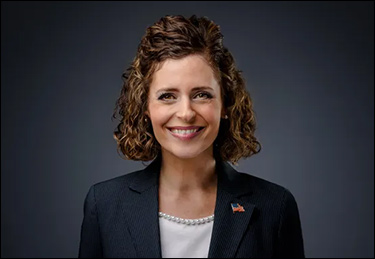
Julia Letlow (R), widow of Rep-Elect Luke Letlow (R) who passed away at the end of last year, easily won Loiusiana’s 5th District special election Saturday.

By Jim Ellis

March 23, 2021 — The two Louisiana special elections turned out as expected on Saturday night but with a slight surprise.

Julia Letlow (R), the widow of Rep-Elect Luke Letlow (R), who passed away at the end of last year, easily won the 5th District special election. Her 65 percent outright win over a field of 11 opponents will allow her to assume the office that her husband won in early December but who died from the effects of COVID and heart disease before the new Congress convened.

In the New Orleans-Baton Rouge 2nd District, vacated when Rep. Cedric Richmond (D-New Orleans) resigned from the House to accept a position in the Biden Administration, two Democrats will advance to an April 24 runoff election. Both outcomes were expected, but the margin for second place in the 2nd District was much closer than anticipated.

Letlow had the support of the entire Republican hierarchy while running in a GOP district, from former President Trump and former Vice President Pence, to Sen. John Kennedy (R-LA), and the Louisiana Republican Party. She also had a huge campaign resource advantage and was expected to exceed the 50 percent mark to win outright. The second-place finisher, Democrat Candy Christophe, fell way back to 27 percent of the vote. No other candidate even exceeded the five percent mark.

Turnout was relatively strong, with 103,609 people voting in the Saturday special election and during early voting. In the pre-election day balloting, Letlow captured 59 percent support, meaning she performed much better in Election Day voting. The total exceeded the Dec. 5 runoff vote that elected Letlow. In that election, 79,306 people voted.

In parish voting, Letlow won 23 of the district’s 24 local parishes, called counties in every other state. The only one she lost, and by just one percentage point, was East Feliciana Parish, but the total vote cast was only from 1,517 individuals. She carried 18 of the 24 parishes with majority support and reached or exceeded the 70 percent threshold in eight localities.

Continue reading

Special Elections Update: LA Votes

https://www.facebook.com/Karen.Carter.Peterson/videos/2521633831472770/Karen Carter Peterson promotional video.


By Jim Ellis

March 22, 2021 — Five special congressional elections are now on the political calendar, and we see current action in all.

Beginning with the two Louisiana seats, voters went to the polls Saturday in the first round of elections in the state’s 2nd and 5th Congressional Districts.

The 2nd, anchored in New Orleans and Baton Rouge, is a Democratic seat left vacant when former Rep. Cedric Richmond (D-New Orleans) was appointed to a White House position in the Biden Administration. The northeastern Louisiana Republican 5th CD became vacant when Rep-Elect Luke Letlow (R), three weeks after winning the seat in a post-general runoff election, passed away from a heart attack and COVID.

The 2nd District sees 15 Democrats, Republicans, minor party, and Independent candidates all on a jungle primary ballot. The political odds favor two Democratic New Orleans state senators, Troy Carter and Karen Carter Peterson, advancing to a general election runoff on April 24. The tone of this week’s candidates’ ads, with Sen. Peterson already being attacked, suggest that the special general between Carter and Peterson is already underway.

Prospects were promising that we would see a winner in Saturday’s 5th District race. Though 12 candidates are on the ballot, just one has strong campaign resources and public backing. Julia Letlow (R), wife of the deceased congressman-elect, looks well positioned to exceed the majority support threshold tomorrow night meaning she would claim the seat outright.

Armed with a 9:1 fundraising lead over her closest competitor at the end of February and holding endorsements from former President Trump, former Vice President Mike Pence, Sen. John Kennedy (R-LA), the Louisiana Republican Party, and the Louisiana Sheriffs of the 5th Congressional District committee, among others, Ms. Letlow appears poised to score a convincing win over a crowded field.

The first poll for the Texas special election was just released. In this 6th District race, vacated because of Rep. Ron Wright’s (R-Arlington) death from cancer and COVID, a whopping 23 candidates are vying to replace the late incumbent. The first election is May 1. If no one receives majority support, which is likely, a runoff will be scheduled after the primary voters officially determine the final results.

Continue reading

New Mexico Special Called

By Jim Ellis

March 19, 2021 — The latest House vacancy now has a special election calendar.

New Mexico Secretary of State Maggie Toulouse Oliver (D) announced yesterday that the candidates from the 1st Congressional District, open since former Rep. Deb Haaland (D-Albuquerque) resigned the seat upon her confirmation as US Interior Secretary, will go to a vote on June 1. This will be the only election for the seat since New Mexico election law allows the political parties to choose special election nominees internally.

Each party will vote through their state central committees. These are political party governing boards where party members elect those serving from each of the state’s 33 counties.

Both major party committees will have many candidates from which to choose. At this point, eight Democrats, including four sitting state legislators, and eight Republicans are announced candidates. Libertarian Aubrey Dunn, a former New Mexico Land Commissioner where he served as a Republican, is also running.

Others still have time to join the race, and we may see a few more since there is no primary and campaigning among a finite group of party insiders is not particularly expensive. Therefore, more than an average number of individuals would be inclined to run since they would perceive the political risk as minimal.

The eventual Democratic nominee will be a heavy favorite for the June 1 election. Though the Albuquerque-anchored seat was competitive even at the beginning of the current decade, it no longer appears so. The last Republican to hold the seat was Heather Wilson who vacated to run unsuccessfully for US Senate in 2008. The CD-1 electorate then chose Democrats in the person of Martin Heinrich, now US senator; Michelle Lujan Grisham, now governor; and Haaland, now Interior Secretary; since Wilson left the House.

The district started to turn heavily Democratic with the first Obama presidential campaign in 2008. Obama scored a 60-40 percent victory within the 1st District confines. Four years later, he won 55-40 percent. In 2016, Hillary Clinton carried the seat with a 52-35 percent margin, and Joe Biden did best of all, recording a 60-37 percent spread last November.

In the subsequent House races, Heinrich averaged 54 percent in his two congressional elections; Grisham, 61 percent in her three campaigns; and Haaland 59 percent in her pair of victorious congressional contests.

The 1st District house 95 percent of Bernalillo County, and the state’s top city of Albuquerque. CD-1 also contains all of Torrance County and small portions of Sandoval, Valencia, and Santa Fe Counties. The district is basically a majority Hispanic seat with over 49 percent of the citizen population being recorded as such. The non-Hispanic white percentage is just under 41.

Continue reading

Georgia: New Poll, Same Story

By Jim Ellis

Sen. Raphael Warnock will face an interesting challenge depending upon who emerges from the Republican primary.

March 18, 2021 — The Trafalgar Group and the Insider Advantage entity, both Atlanta-based firms, partnered to test the politically beleaguered Georgia electorate about freshman Sen. Raphael Warnock’s (D) standing as he looks to run for a full six-year term in 2022.

Being one of the top battleground states in the 2020 presidential contest and hosting two US Senate campaigns last year, 56 public polls were conducted of this electorate from July of last year through the Jan. 5 runoff election. Almost all of them repeatedly showed results within the margin of error on the presidential and both US Senate races; and, with the final total showing President Biden and former President Trump separated by just 11,779 votes while the Senate races came down to one and two-point finishes, the polling proved correct.

Now we see Trafalgar and IA beginning the 2022 Georgia election cycle polling. The new survey (March 7-9; 1,093 likely Georgia voters, interactive response system and online) again finds very tight hypothetical Senate race results. Because Sen. Warnock won the special election in January, he must stand for election to a full six-year term in 2022.

Trafalgar and IA tested three Republicans against Sen. Warnock: former Sen. Kelly Loeffler, ex-US Rep. Doug Collins, and the past University of Georgia and NFL football star Herschel Walker. None of the three have announced their candidacies but all confirm they are considering the race.

According to the results, Sen. Warnock fares best against the woman he defeated in January, ex-Sen. Loeffler. In this ballot test, he leads 46-41 percent. Both Collins and Walker perform better, especially the latter. The Warnock edge narrows to one point against Collins, 46-45 percent, and the new incumbent actually drops behind Walker, 46-48 percent. Notice that Sen. Warnock records 46 percent against all three potential opponents suggesting that he is vulnerable heading into what promises to be another hard-fought Peach State US Senate battle.

While the pollsters tested the job approval ratings for both President Biden and Gov. Brian Kemp (R), they surprisingly did not include such a question regarding Sen. Warnock.

The approval ratios were poor for both the president and governor. Biden scored a 41:55 percent favorable to unfavorable job approval rating, with 32 percent strongly approving and a large 46 percent strongly disapproving.

Gov. Kemp continues to show weakness as he heads into what will be a difficult run against his former opponent, ex-state House Democratic Leader Stacey Abrams. The governor is again in upside-down territory, recording a 33:53 percent negative approval rating. Only nine percent responded that they strongly approve of the governor’s performance while 26 percent strongly disapproved.

At this point, the pollsters asked Republican primary questions to those most likely to vote in the 2022 GOP nomination election.

If Loeffler, Collins and Walker were all to oppose each other in the Senate primary, we see the latter two men virtually tied at 32 percent apiece. Loeffler trails with 24 percent support.

A Collins-Loeffler match would favor the former, as the ex-north Georgia congressman would record a strong 52-32 percent lead. Walker would lead Collins 50-36 percent in a one-on-one match-up, and the former football player would hold a commanding 62-26 percent advantage over Loeffler.

The Georgia Republican respondent cell is strongly pro-Donald Trump with 70 percent saying they would “absolutely” vote for the former president if he were to run again. Only 14 percent of this sample cell said they would vote for anyone other than Trump. Another eight percent said they would consider voting for the ex-president.

We can expect another very active Georgia election cycle, with the Senate and governor’s race assuredly being covered as if they are national campaigns.