Tag Archives: Texas

Presidential Fall-Out and the Perry Retirement

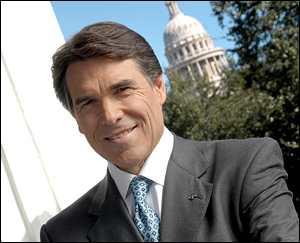
Texas Gov. Rick Perry (R), speaking from a key financial supporter’s Caterpillar plant who also happens to be the majority owner of the San Antonio Spurs professional basketball franchise, yesterday ended speculation about his political future. Perry, standing behind a podium on a stage surrounded by American and Lone Star State flags, made public his intention to retire from the governorship when this current term ends, but left the door wide open for another presidential run.

The governor faced a conundrum about whether to keep his current position while attempting another run for the nation’s top office. In his situation, considering the context of the original Perry national campaign that ended in disaster, the decision over whether to seek re-election was more difficult than for most politicians in a similar situation. Usually, attempting to execute the duties of one political office while running for president is often a disqualifying factor but, in Gov. Perry’s case, the credibility he would have earned from winning yet another term in statewide office and the financial base that such position provides made his decision difficult.

Late last week, Perry transmitted an email to supporters indicating that he would formally announce a decision regarding his political future. The secret was well guarded to the point that no leak occurred about what would actually be announced. It seemed as many Perry supporters believed the governor would retire as felt he would seek a fourth full term.

In culmination, Rick Perry had nothing left to prove as governor. When this term ends, he will have served 14 years as Texas’ chief executive, more than double the time that anyone else has held the office. Until 1982, the state restricted its governors to one four-year term. Even when legislation was passed eliminating term limits, it took until 1998 for Texas’ voters to actually re-elect a governor, and that individual was George W. Bush.

The Perry record is strong. As he mentioned in his retirement address, over 30 percent of all jobs created in America since he became governor have occurred in Texas. The Lone Star economy is robust, while the nation’s economic numbers sink. It was his economic record that propelled him to the forefront of the 2012 Republican presidential field, and kept him as perhaps  Continue reading >

Gov. Perry’s “Exciting Future Plans”

Texas Gov. Rick Perry

Texas Gov. Rick Perry

Texas Gov. Rick Perry (R) just emailed political supporters pledging to announce his “exciting future plans” at a Monday San Antonio event. Normally, when a politician schedules an official speech that will either be a formal campaign kick-off or retirement statement, everyone knows what will be said. Not in this case. One only needs to look back to 2009, when the governor surprisingly announced for another term even though everyone “knew” that he would step down.

Gov. Perry has kept his own counsel about his “exciting future plans,” and there is diverse speculation surrounding what he will do. Many who are close to the governor, who is Texas’ longest-serving chief executive, believe that he has already decided to run for president again in 2016. Assuming this line of thought is true, what is his best move as it pertains to either keeping or relinquishing his current office?

If he is to run for president, he needs to re-establish political credibility. He does that by convincingly winning another re-election.

You’ll remember that he began the 2012 campaign in exalted fashion, entering the race with a first-place polling standing. His August 2011 presidential campaign announcement speech from South Carolina on the day of the Iowa Straw Poll was very well received and he appeared to lay legitimate claim to front-runner status. Few knew, however, that this day marked his campaign’s apex. We all remember his disastrous debate performance when the governor couldn’t recall one of the three federal agencies that he was planning to eliminate should he win the presidency. After this glaring error he tumbled down the polling charts with lightning speed and soon  Continue reading >

Canseco Mulling Comeback in Texas

Rep. Quico Canseco (R-TX-23), who lost 46-50 percent to Democratic state Rep. Pete Gallego in November, says he is considering making a comeback in 2014. The 23rd District is a marginal seat that has flipped between the two parties since 2004. The district stretches from San Antonio all the way to El Paso.

The 23rd is likely to be one of the 2013 redistricting focal points that must be addressed. Because the courts have not approved a permanent Texas map, work either in the state legislature or the jurisdictional judicial panel must occur next year. Now that the seat has a Democratic incumbent, expect more members of this party to be added. It is likely that, at the end of the new redistricting process, Representative-elect Gallego will have a more favorable district from which to seek re-election, particularly if the San Antonio three-judge panel finds itself drawing the new map.

The Early Targets

Even this early in an election cycle, some obvious 2014 targets are evident. In the Senate, majority Democrats must protect 20 seats versus 13 for Republicans. The GOP will need to convert six Democratic states in order to re-capture the majority for the first time since 2006.

In the House, it’s much too early to tell how the cycle will even begin to unfold, but the 2012 winners who scored at or below 50 percent normally find themselves in vulnerable situations two years later. There are 20 winners who scored a bare majority or less in their win last month.

Here’s how we see things lining up:

The Senate

Already, there appear to be four potential toss-up campaigns on the horizon at the very beginning of the election cycle.

Two states already have announced challengers to Democratic incumbents that many believe are headed for retirement despite the senators themselves saying they are planning a re-election campaign.

West Virginia Rep. Shelley Moore Capito (R-WV-2) officially announced that she will challenge five-term Sen. Jay Rockefeller (D) in the next election. With West Virginia now trending deep red and Rockefeller launching verbal attacks against the state’s dominant coal industry, this race must be cast as an early toss-up. Should Rockefeller — who will be 77 years old at the time of the next election — not seek another term, Capito will be considered the early favorite.

Former South Dakota Gov. Mike Rounds (R) also has announced that he will run for the Senate in 2014. He will challenge three-term Sen. Tim Johnson (D). Rep. Kristi Noem (R-SD-AL), who was just re-elected to a second term, also has not ruled out a Senate run, meaning that she would first have to challenge Rounds in the Republican primary. Publicly, she is not closing the door on any 2014 option. A Johnson-Rounds campaign would also have to be rated as an early toss-up. The senator would be favored against Rep. Noem.

Alaska Sen. Mark Begich (D) stands for a second term after defeating veteran Sen. Ted Stevens (R) by a slim 48-47 percent count in 2008. Stevens was fighting a Justice Department legal onslaught that fell apart on the prosecutors but only after Stevens had already lost to Begich. As you know, the senator was later killed in an airplane crash. This campaign will be interesting. A strong challenger such as Gov. Sean Parnell (R), could make this a very tight campaign.

Considering that North Carolina was only one of two states that switched from supporting Pres. Barack Obama in 2008 to Mitt Romney last month, freshman Sen. Kay Hagan (D) will seek a second term and be rated in a toss-up campaign from Day One. There is no clear challenger on the horizon, but whomever the Republicans choose will be a serious contender.

The 2014 election cycle will be a long one, but count on these four Senate races grabbing a major share of the political attention for the next two years.

The House

Here’s a look at the 20 winners in 2012 who are right at or a bit below the 50 percent mark who could be vulnerable:

Below 50 percent

  • Rodney Davis (R-IL-13) – 47% (open seat)
  • Kyrsten Sinema (D-AZ-9) – 48% (open seat)
  • John Tierney (D-MA-6) – 48% (incumbent)
  • Dan Benishek (R-MI-1) – 48% (incumbent)
  • Dan Maffei (D-NY-24) – 48% (challenger)
  • Ann Kirkpatrick (D-AZ-1) – 49% (open seat)
  • Mike Coffman (R-CO-6) – 49% (incumbent)
  • Jackie Walorski (R-IN-2) – 49% (open seat)
  • Jim Matheson (D-UT-4) – 49% (incumbent)

At 50%

  • Ron Barber (D-AZ-2) – (incumbent)
  • Scott Peters (D-CA-52) – (challenger)
  • * Patrick Murphy (D-FL-18) – (challenger)
  • Dan Schneider (D-IL-10) – (challenger)
  • Joe Heck (R-NV-3) – (incumbent)
  • Steven Horsford (D-NV-4) – (open seat)
  • Carol Shea-Porter (D-NH-1) – (challenger)
  • Annie Kuster (D-NH-2) – (challenger)
  • Bill Owens (D-NY-21) – (incumbent)
  • Mike McIntyre (D-NC-7) – (incumbent)
  • * Pete Gallego (D-TX-23) – (challenger)

* Italics: Seat will likely be re-drawn in 2013 redistricting.

Unexpected Voter Turnout Patterns

We wish you the best for the happiest of Thanksgiving holidays. The PRIsm Political Updates will return Monday, Nov. 26.

The official state participation and candidate preference statistics are being released throughout the nation, and many of the numbers are quite surprising. While turnout was down nationally, it was up in most of the battleground states and, despite Pres. Barack Obama’s victory, it may be erroneous to assume that the turnout pattern completely favored him.

While it is clear the president obviously benefited from the voting preferences of the aggregate group of people who cast ballots during the election process, it is interesting to note that he was only able to return 91.5 percent of the total vote he received in 2008. In contrast, losing national Republican nominee Mitt Romney retained 99.4 percent of John McCain’s 2008 vote. Obviously Romney needed to do better than to simply equal McCain’s vote, but it is significant that Obama’s share of the vote declined by almost a full 10 percent from what he obtained four years ago, especially when understanding that the Obama campaign clearly had the superior grassroots organization.

Nationally, and rather astonishingly from what was widely forecast before the election, overall voter turnout was down six million votes from the number cast in 2008, or a fall-off of 4.7 percent. It appears that virtually all of the drop-off came from the Obama coalition, as the president’s vote receded by almost that same amount as did the national turnout (voter participation reduction: 6,148,768 individuals; Obama drop: 5,917,631 votes).

The four core states also recorded interesting turnout patterns. Of the quartet of places that Romney needed to convert if he were to unseat the president, it was North Carolina — the only state in this group that he did carry — that had the highest participation rate increase from 2008. North Carolina voter turnout was up 4.5 percent in comparison to their aggregate number of voters from four years ago. Virginia and Florida, two of the three core states that remained with the president, also saw increased participation. Virginia was up 3.5 percent; Florida 1.0 percent.

Ohio, often believed to be the most important state in the presidential contest because it was viewed to be a national bellwether, surprisingly recorded a lower turnout this year than during the previous Obama victory campaign. Ohio turnout was down a rather substantial 5.9 percent, or greater than 336,000 participants from 2008.

Of those seven states commonly viewed to be in the secondary target group — at least one of which Romney would have had to have carried to be successful, more if he failed to carry all of the core states — four saw increased participation, and three declined. The states producing a greater number of voters were in the Midwest (Wisconsin, up 2.4 percent; Iowa, increasing 1.9 percent) and West (fast-growing Nevada adding 4.5 percent; Colorado, up 3.1 percent).

The three eastern and Mid-Atlantic states all recorded a smaller voter participation rate. Pennsylvania, always considered a swing state and a place that attracts a great deal of campaign attention, saw its voter turnout rate fall 6.1 percent; Michigan, the only state in the Union that actually lost population in the preceding decade, dropped 5.7 percent; and New Hampshire returned almost the same number of voters, coming in just 5,091 ballots under their 2008 total.

It appears the biggest voter drop-off occurred in some of the nation’s largest states, those that are most Democratic and among the president’s strongest places. His home state of Illinois, for example, saw more than 431,000, or 7.8 percent, fewer people vote this year than when compared to their favorite son’s first election in 2008. New York had the largest drop-off, a stunning 19.8 percent below its participation level of four years ago. California, the nation’s largest state, was off 12.5 percent. But, lower turnout rates were not confined only to the large Democratic states. Texas, the biggest and most loyal Republican entity, also saw a reduction in turnout. Over 112,000 fewer voters went to the polls in 2012 when compared to 2008.

More analysis will be completed when additional data is available, but these statewide turnout numbers may have produced more questions about the nation’s voting patterns than answers.

Senate Trends

Rep. Todd Akin

More is becoming known about the nation’s US Senate races, and trends are forming. With seven full weeks to go until Election Day, much can still change but at this point, both parties could be headed to the 50-seat mark. Ironically for Republicans, it could well be Todd Akin’s fate in Missouri, the candidate national GOP leaders attempted to replace because of his unintelligent comments, that will decide which party controls the body in the new Congress.

As we know, of the 33 in-cycle seats, Democrats are defending 23. Today, they appear safe in 10 of those: California (Feinstein), Delaware (Carper), Maryland (Cardin), Minnesota (Klobuchar), New Jersey (Menendez), New York (Gillibrand), Pennsylvania (Casey), Rhode Island (Whitehouse), Washington (Cantwell), and West Virginia (Manchin).

Two more are headed toward the Independent column, and those winners will either caucus or vote with the Democrats. Sen. Bernie Sanders (Vermont) runs as an Independent but joins the Democratic conference. Angus King, the Independent former governor, is strong favorite for Maine Sen. Olympia Snowe’s (R) seat as the campaign turns into the home stretch. He is projected to caucus with the Democrats, but has yet to commit to do so. If the fate of the majority comes down to King, it is unclear what might happen.

Trending toward the Democrats appears to be the races in Hawaii (open seat – Rep. Mazie Hirono), Michigan (Stabenow), New Mexico (open seat – Rep. Martin Heinrich), and Ohio (Sherrod Brown).

Hawaii polls have been erratic, but the preponderance of polling data gives Rep. Mazie Hirono a clear lead. Same is true in Michigan for two-term Sen. Debbie Stabenow and first-term incumbent Sherrod Brown. Though polling shows Rep. Martin Heinrich well ahead of former Rep. Heather Wilson (R-NM-1), this is another race that could turn. Wilson’s strength with Independents in the state could make a difference if Democratic turnout is even slightly low.

Republicans are safe in fives seats: Mississippi (Wicker), Tennessee (Corker), Texas (Cruz), Utah (Hatch), and Wyoming (Barrasso).

Trending toward the GOP are the races in Indiana (open seat – Richard Mourdock), Massachusetts (Scott Brown), Nebraska (open seat – state Sen. Deb Fischer), Nevada (Heller), North Dakota (open seat – Rep. Rick Berg), and Wisconsin (open seat – former governor Tommy Thompson).

The Indiana race is tight – some polls show it about even – but Richard Mourdock has not made any mistakes in his battle with Rep. Joe Donnelly (D-IN-2). Hoosier State voting trends at the top of the ticket – Mitt Romney appears headed for victory over the President here and Rep. Mike Pence is a solid favorite in the governor’s race – should help pull Mourdock across the finish line.

Recent polling in Massachusetts and Nevada is giving senators Scott Brown and Dean Heller small, but consistent and discernible leads over Elizabeth Warren (D) and Rep. Shelley Berkley (D-NV-1), respectively.

While the North Dakota seat has been tight for most of the campaign, more recent polling indicates that Rep. Rick Berg is opening up a lead well beyond the margin of error.

All post-primary polls in Wisconsin give former governor Tommy Thompson a lead over Madison Rep. Tammy Baldwin (D-WI-2). All of these races could turn away from the Republicans before Election Day, but today, the GOP candidates look to be in the winning position.

Questions abound in the following campaigns:

• Arizona (open seat): Though Rep. Jeff Flake (R-AZ-6) is favored here, some polls are detecting a close race and Democratic nominee Richard Carmona is making this campaign a battle.

• Connecticut (open seat): A combination of factors have come together to make this race, at least in the short term, more competitive than expected. GOP nominee Linda McMahon being awarded the Independent Party ballot line, new polling showing the two candidates running close, and a personal financial situation involving Rep. Chris Murphy (D-CT-5) are all minor individual items that taken in the aggregate could become significant.

• Florida: Polling has been extremely inconsistent in the Sunshine State, but more surveys favor Sen. Ben Nelson than Rep. Connie Mack IV (R-FL-14). The campaign is trending Nelson’s way now, but the presidential final wave will have a lot to say about its final outcome.

• Missouri: Right after the August primary, Rep. Todd Akin made rape-related abortion comments that stirred a national hornet’s nest. Incumbent Sen. Claire McCaskill (D) jumped well into the lead, but the margin has since dissipated and the race is back in toss-up range. McCaskill is the most vulnerable of all Democratic incumbents standing for re-election, and Akin is the Republicans’ weakest national challenger. This one is far from over.

Montana: The political battle between first-term Sen. Jon Tester (D) and Rep. Denny Rehberg (R-MT-AL) has been close for months. In the past eight weeks, the polling was detecting a slight Rehberg advantage. A new survey released last week, however, showed Tester regaining the lead. The presidential election will weigh heavily on this race, and Mitt Romney seems to be enjoying a healthy advantage in Big Sky Country. This race will likely go down to the wire.

• Virginia: Possibly the closest race in the country, the campaign between former senator George Allen (R) and ex-governor Tim Kaine (D) has been dead even for the better part of a year. As in Florida and Montana, the presidential race looms large in the Virginia Senate race. The result is too close to call.

To recap, if this analysis is correct, the Democrats are safe or ahead in 16 races, including the two Independent candidates, and Republicans are safe in 11. Under this model, the GOP would attain the majority 51 number if they win any three of the six questionable races isolated above.

Texas Maps Tossed

For the better part of this year, the Texas congressional and legislative maps have been before the United States Court of Appeals for the District of Columbia Circuit. The state submitted their proposed district lines to this body for pre-clearance purposes, in compliance with the Voting Rights Act, instead of the Obama Department of Justice.

Clearly Attorney General Greg Abbott and the Texas Republican legal brain trust felt their approval chances were better going this route than the traditional one – the DoJ. It turns out they were wrong. The Court, yesterday, rejected all of their submissions: congressional, state Senate, and state House. Abbott said Texas will immediately appeal the ruling to the Supreme Court, so the interim maps, ironically drawn by a different federal panel, will hold for the 2012 general elections.

The DC high court ruled that the state eroded the Latino community’s “clout” and took the “economic guts” from the African-American districts. The decision was broader than many believed would be the case, particularly because the San Antonio federal three-judge panel had already drawn interim maps based upon US Supreme Court direction as it pertained to legislative intent. The main areas of concern are the Dallas-Ft. Worth area, particularly as it relates to new District 33 (open seat), which stretches between the two major cities, the Austin-San Antonio corridor, and District 23 (Rep. Quico Canseco) that stretches from San Antonio to El Paso. But, if the African-American districts are also affected, then Houston could come into play, as well.

This ruling suggests major changes will come next year, as Texas redistricting will apparently, once again, begin anew.

Cruz Wins in Texas; Other Results

Ted Cruz


All the pre-election signs were predicting a Ted Cruz upset victory over Lt. Gov. David Dewhurst and the prognostications proved true in the Texas run-off vote last night. Cruz, identified as the clear conservative standard bearer with strong Tea Party support, racked up an impressive 56-44 percent win. Dewhurst has won three previous lieutenant governor statewide elections and another as lands commissioner. It was a crushing loss for for the wealthy lieutenant governor who spent $25+ million on the Senate race, about $17 million of which was self-contributed.

Cruz, the former Texas solicitor general, will now face former state representative Paul Sadler, who easily won the Democratic run-off. The new Republican nominee is the prohibitive favorite to capture the seat in November, winning the right to succeed retiring Sen. Kay Bailey Hutchison (R).

Turnout for the Texas run-off exceeded 1.1 million voters, about half of whom took advantage of the state’s early voting procedure. The state has a notoriously low primary and run-off history, but the raw number of ballots cast in yesterday’s election is among the highest ever recorded.

The run-off effectively produced a number of new congressmen who now will face only token opposition in the general election. In the new 25th District, former Secretary of State Roger Williams notched a 58-42 percent win to secure the GOP nomination and effectively win the seat.

In the Democratic 33rd District, Ft. Worth state Rep. Marc Veasey nipped former state representative and Dallas City Councilman Domingo Garcia in a battle of the two major Metroplex cities. Ft. Worth has the larger share of the district and each city voted overwhelmingly for their hometown candidate. Mr. Veasey effectively won a ticket to the House last night as the 33rd District is clearly a Democratic seat.

Traveling south to the Rio Grande Valley, the newly created 34th CD yielded a victory to Democratic attorney Filemon Vela. The presumptive congressman is from a prominent Brownsville family that sent his father to a federal judgeship and mother to the mayor’s office. He scored an easy 67-33 percent win. Like Veasey mentioned above, Vela will be coming to Washington as part of the new 113th Congress next January.

In new District 36, former one-term representative Steve Stockman, raising virtually no money for his run-off, nonetheless scored a win over financial advisor Steve Takach. With little in the way of general election competition, Mr. Stockman will win the general election and have a seat that he can hold, unlike the one he won back in 1994 where he lasted only one term.

In two run-offs that will yield competitive general elections, state Rep. Randy Weber easily defeated Pearland City Councilwoman Felicia Harris and now will face former Rep. Nick Lampson (D) in a seat that should favor the new Republican nominee. In the San Antonio to El Paso seat (District 23), Democratic state Rep. Pete Gallego successfully dispelled former US Rep. Ciro Rodriguez and will now face freshman GOP Rep. Quico Canseco. The 23rd is the only marginal seat in the Lone Star State.

Georgia Notes:

No real surprises came from the Georgia primary. All congressional incumbents of both parties were easily renominated in their respective elections.

In the new 9th District, the seat awarded Georgia in reapportionment, a Republican run-off will occur in what will be a safe GOP seat. State Rep. Doug Collins and radio talk show host Martha Zoller came within a point of each other, meaning the Aug. 28 run-off election will be a knock-down, drag-out brawl.

Another run-off will be held in District 12 for the right to challenge Rep. John Barrow (D) in an Augusta-based district where almost half of the territory is new to the incumbent. State Rep. Lee Anderson and businessman Rick Allen are the secondary election participants. Allen just nipped retired Navy officer Wright McLeod by under 600 votes to secure the second and final run-off position.

Texas-Sized Upset in the Making?

Yesterday, we covered the races being decided in today’s run-off (Texas) and primary elections (Georgia) and mentioned that former Texas solicitor general Ted Cruz has a legitimate chance of upsetting Lt. Gov. David Dewhurst in the Lone Star State’s US Senate Republican run-off. The release of the new Public Policy Polling data for Texas underscores that the trends are supporting an upset result. According to their survey (July 28-29; 665 Texas GOP likely run-off voters) Cruz has a 52-42 percent lead over the lieutenant governor. The Dewhurst campaign countered with their internal Baselice & Associates poll showing their candidate with a 48-44 percent lead, but these results appear out of line with the other publicly presented trends.

Perhaps most disconcerting for the Dewhurst camp, the PPP numbers report Cruz to be leading 63-33 percent among those who are most excited about voting in the run-off election. Additionally, the ex-solicitor general leads the veteran statewide office holder among those considering themselves as Tea Party voters by a huge 75-22 percent split. In a low turnout election where 70 percent identify themselves to be somewhat or very conservative, this type of spread could well be the defining factor.

Typically, Texas primary and run-off elections record very low turnouts. More than 1.4 million people voted in the May 29 primary election, but a considerable smaller number will vote in the secondary election. The likely turnout projection suggests a participation rate of less than one million voters.

Texas Run-off Tomorrow

Dewhurst | Cruz

Voters go to the polls in Texas tomorrow to choose US Senate as well as several congressional nominees. The big Senate battle is on the Republican side, where three-term Lt. Gov. David Dewhurst fights to save his political credibility against former state solicitor general Ted Cruz. In the May 29 primary, Dewhurst placed first with 44.7 percent of the vote versus Cruz’s 34.1 percent.

The primary results place Dewhurst in a gray area as to whether he can develop a winning run-off coalition in a two-way race. Most often, a well-known candidate who fails to secure a majority of his own party’s vote in the primary election loses the subsequent run-off because the majority opposition only has one choice. Turnout and the candidate who has the most energized base tend to be the determining factors.

Internal polls released from both camps show their own candidate leading in the high single-digit range. The Cruz polling was conducted just among May 29 primary voters while the Dewhurst samples are from a likely voter model. The methodology difference lends more credence to the Cruz polls. The chances of seeing an upset win here are at least 50/50.

On the Democrat side, former state Rep. Paul Sadler and retired educator Grady Yarbrough battle for a ticket to the general election. Realistically, the winner of the Dewhurst-Cruz contest easily defeats the Dem winner in November, so tomorrow’s GOP run-off is likely race-determining.

On the congressional level, run-off voters in several districts will effectively choose House members. In the Dallas-Ft. Worth area, the 33rd Congressional District is one of four new seats awarded the state. A Democratic battle between Ft. Worth state Rep. Marc Veasey and former state representative and Dallas City Councilman Domingo Garcia is peaking. The race has become a rivalry contest between the two Metroplex cities. With more of the Ft. Worth area included in the new 33rd and placing first with a 37-25 percent margin, Veasey is viewed to be the favorite tomorrow. The Democrat winner claims the seat in November.

In the Rio Grande Valley, the new 34th Congressional District is anchored in the city of Brownsville and travels along the Gulf of Mexico coastline. Filemon Vela will likely win the Democratic nomination tomorrow against former congressional aide Denise Saenz Blanchard. Vela, an attorney, is the son of ex-federal judge Filemon B. Vela and former Brownsville mayor Blanca Sanchez Vela. His wife, a Republican, is a sitting district judge. Vela placed first in May with 40 percent of the vote against only 13 percent for Blanchard. The large spread suggests Vela is in strong run-off and general election position.

For the Republicans, in the district stretching from the southern tip of Tarrant County (Ft. Worth) into western Travis County (Austin), former Secretary of State Roger Williams, assuming that financial wherewithal is a determining factor, is poised to score a run-off victory against Tea Party activist and college professor Wes Riddle. Williams is projected to outspend Riddle by an 8:1 margin, but the latter should have a grassroots advantage. In a low turnout election, that could be significant but it is unlikely he can overcome Williams’ many advantages.

In the state’s fourth new district, the 36th CD to the north and east of Houston, first-place finisher Mark Takach, a financial advisor who placed just 350 votes ahead of former Rep. Steve Stockman in the primary, face each other tomorrow. The outcome here is difficult to predict. Takach is an unknown and Stockman served only one term back in 1995-97 in an adjoining area. The winner, however, becomes the prohibitive favorite for November.

In the open 14th District, the seat veteran congressman and presidential candidate Ron Paul is vacating, two strong Republicans, state Rep. Randy Weber and Pearland City Councilwoman Felicia Harris, are fighting for the right to face ex-Rep. Nick Lampson (D) in the general election. The district clearly favors Republicans, but Lampson represented the Beaumont-Galveston region for four terms until his defeat in the redistricted 2nd CD that took him out of his regional base.

From the expansive district that stretches from San Antonio all the way to El Paso, another defeated congressman, Ciro Rodriguez, is attempting yet another comeback. He placed first in the May 29 Democrat primary and now faces state Rep. Pete Gallego in tomorrow’s run-off. The Democrat establishment is clearly behind Gallego, who most believe will be the stronger opponent to freshman Republican Rep. Quico Canseco, but the San Antonio base still appears to be a Rodriguez asset. The general election will be a toss-up in what is Texas’ only real marginal congressional district.