
By Jim Ellis

Georgia Sen. Kelly Loeffler (R) in serious political trouble
The survey data (March 31-April 1; 1,03 likely Georgia general election voters, live interviews) confirm the previous results that found appointed Sen. Kelly Loeffler (R) languishing in deep political trouble presumably because of her highly publicized stock transactions reportedly executed after receiving Senate COVID-19 briefings. Much of this poll’s analytical coverage, however, highlights that President Trump leads former vice president Joe Biden only by two percentage points in one of his must-win states.
The Senate numbers show some changes from Battleground’s last poll conducted on March 24. Rep. Doug Collins (R-Gainesville) continues to hold first place and increases his support by two points to 36 percent in the jungle primary. Rev. Raphael Warnock (D), who the Democratic Senatorial Campaign Committee has already endorsed, moves into second place (16 percent) but remains a full 20 points behind the leader.
Sen. Loeffler pulls just 13 percent preference while Atlanta businessman Matt Lieberman, son of former Connecticut senator and 2000 vice presidential nominee Joe Lieberman who was in second position in the last poll, drops to 11 percent. Former US Attorney Ed Tarver (D) then falls to just three percent preference.
In the presidential race, President Trump leads Biden 48-46 percent. Trump’s favorability index is the same as the ballot test, 48:46 percent favorable to unfavorable. Biden’s favorability was not tested, but Rep. Collins posted a 35:29 percent positive ratio while Gov. Brian Kemp (R) recorded a relatively strong 50:32 percent. Sen. Loeffler, on the other hand, notched a very poor 20:55 percent, thus providing further statistical evidence of the appointed incumbent’s recent severe downward trend.
The president’s numbers are not particularly surprising even though some analysts are pointing out that his small margin is a warning sign toward potentially losing the state in the fall. Looking back to 2016, however, suggests that a two-point lead seven months before the general election in a southern state where Republicans typically under-poll tracks with where Trump found himself at a commensurate time four years ago.

 March 25, 2020 — Gov. Greg Abbott (R), who moved the Texas run-off from May 26 to July 14 this past Friday night means that 16 federal contests – one Senate and 15 House races – will have a longer secondary campaign cycle. In Texas, if no candidate receives majority support in a partisan primary the top two finishers from the particular party advance to a runoff election.
 March 19, 2020 — The COVID-19 virus is causing obvious problems worldwide, and it’s changing the United States’ electoral system. Several states all with primaries on or before June 23 have already moved their date or are discussing such an option.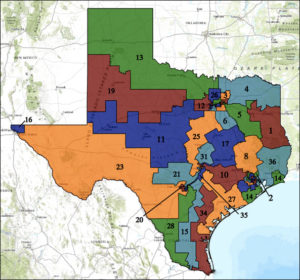
 March 5, 2020 — Tuesday’s elections in Texas and California were subject to slow counting, but at least in the Lone Star State, the numbers are near final.