Tag Archives: Texas

The Texas Lineup

By Jim Ellis

July 20, 2020 — One of the more important states that will determine the House November outcome is the Lone Star State of Texas. Now with 14 of their 15 congressional runoff elections decided, we have almost a full card of nominations set in the state’s 36 districts. Within Texas, 14 of the districts either feature a heightened level of competition or were decided on Tuesday after a hotly contested nomination cycle. The top Texas campaigns are cataloged below:


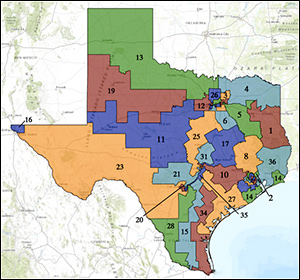
Map of US Congressional districts in Texas

DISTRICT 2
• Rep. Dan Crenshaw (R-Houston) vs. Sima Ladjevardian (D)
2018 Result: Crenshaw, 53-45%
Ladjevardian is a former advisor to ex-Rep. Beto O’Rourke’s presidential campaign. She won the Democratic nomination when her primary opponent chose to forfeit her position in the run-off election. Rep. Crenshaw is the clear favorite for November.


DISTRICT 3
• Rep. Van Taylor (R-Plano) vs. Lulu Seikaly (D)
2018 Result: Taylor, 54-44%
Seikaly won the Democratic runoff Tuesday with 61 percent of the vote. Rep. Taylor is the clear favorite for re-election and should improve upon his 2018 percentage.


DISTRICT 4
• Open Republican Nomination vs. Russell Foster (D)
2018 Result: Rep. John Ratcliffe (R), 76-23%
With Rep. Ratcliffe resigning to become Director of US Intelligence, Republican precinct committee members will meet in convention on Aug. 8 to choose a replacement nominee for the general election. At least 15 candidates are competing. The convention winner becomes a prohibitive favorite in the general election.


DISTRICT 7
• Rep. Lizzie Fletcher (D-Houston) vs. Wesley Hunt (R)
2018 Result: Fletcher, 52.5–45.7%
Rep. Fletcher unseated veteran Rep. John Culberson (R) in 2018. Now she faces mortgage company executive and Iraq War veteran Wesley Hunt in what has traditionally been a Republican seat. Fletcher is the first Democrat to represent the 7th since 1966. This is a competitive race and Republicans eye the Hunt challenge as one of their better conversion opportunities in the country.
Continue reading

Tuberville, Sessions & Sessions;
Moore, Hegar & Valenzuela

By Jim Ellis

Former Auburn Football coach Tommy Tuberville (center) overwhelms Jeff Sessions in Alabama.

July 15, 2020 — The Texas and Alabama runoffs were held yesterday along with the postponed Maine primary, and we have some winners and cliff hangers.

In Alabama, retired Auburn University head football coach Tommy Tuberville, as expected, pretty much demolished former US attorney general and ex-Alabama senator Jeff Sessions last night with the margin of victory being larger than expected. Though earlier polls had predicted spreads as large as 22 points, a 61-39 percent Tuberville victory margin was not forecast even though every pollster found the former coach leading the race. The Tuberville victory was so complete that Sessions, a man who ran unopposed in his previous Senate re-election campaign (2014), was limited to winning only three counties.

Tuberville advances into the general election to face incumbent Democrat, Sen. Doug Jones, who won a special election in 2017 ironically to replace Sessions after he was appointed to his Trump Administration position. Early polling suggests Tuberville will open the general election with a discernible lead over Sen. Jones in what will likely be a top-three state for President Trump.

Alabama hosted two significant Republican runoff elections last night, both of which almost assuredly identified a pair of new congressmen. In the Mobile-anchored 1st District, Mobile County Commissioner Jerry Carl topped former state senator Bill Hightower, 52-48 percent, and will easily win the general election in November. In the adjoining 2nd District, despite being outspent by a 5:1 ratio, former state Rep. Barry Moore (R-Enterprise) easily defeated moving company owner Jeff Coleman who finished first in the regular primary.

Moore scored a 60-40 percent win over Coleman who dropped more than $1 million of his own money into his campaign and earned retiring Rep. Martha Roby’s (R-Montgomery) endorsement. Moore ran as a Trump Republican and mixed his campaign message with attacks on DC and clever issue targeting. He did not run a negative race against Coleman who had been attacked in the primary. Coleman attracted 38 percent on March 3 but could only expand his runoff vote to 40 percent. Moore, on the other hand, who barely qualified for the runoff – just 591 votes ahead of third place finisher Jessica Taylor – was able to build a winning runoff coalition of 60 percent as compared to his 20 percent in the primary.

Turning to the Texas Senate Democratic runoff, retired Army helicopter pilot M.J. Hegar defeated state Sen. Royce West (D-Dallas) by only about 40,000 votes statewide with further precincts to count. Hegar was mathematically projected the winner, but her margin could continue to shrink once the final tabulations are calculated and reported. She will now challenge Sen. John Cornyn (R) in a race that should break the incumbent’s way by a comfortable margin in November.

Continue reading

Texas Runoff Tomorrow

By Jim Ellis

Texas Sen. John Cornyn (R)

July 13, 2020 — The general election is finally getting underway in Texas. The long-awaited Lone Star State runoff elections are tomorrow, postponed from May 26. At the federal level, 16 nominations will be decided, one for the Senate and 15 more in US House races.

In Texas, if no candidate secures a 50 percent majority in the primary, which, in 2020, was all the way back on Super Tuesday, March 3, a runoff election between the top two finishers is then conducted within 12 weeks. Because of COVID-19 precautions, the extended runoff cycle has consumed 19 weeks.

Sen. John Cornyn (R) will learn the identity of his general election opponent tomorrow night, and the incumbent’s campaign has seemingly involved itself in the Democratic runoff. The Cornyn team released a poll at the end of last week that contained ballot test results for the Democratic runoff, a race that seemingly favored original first-place finisher M.J. Hegar, but closer examination leads one to believe that the Cornyn forces would prefer to run against state Sen. Royce West (D-Dallas).

The TargetPoint survey identified Hegar as a 33-29 percent leader but points out that among those respondents who claim to have already voted, the two candidates were tied at 50 percent apiece. They further used the poll to identify Sen. West as the most “liberal” candidate in the race as an apparent way to influence Democratic voters that he is closer to them than Hegar.

We have seen this type of tactic used in other states. In New Mexico, the EMILY’s List organization was running ads against former state Rep. Yvette Herrell, saying she was the “true Trump candidate” in the Republican primary. This was done to convince Republican voters to support Herrell, a candidate the progressive left organization, and many others, believed to be the weaker opponent for incumbent Rep. Xochitl Torres Small (D-Las Cruces).

Regardless of who wins the Texas Senate Democratic runoff tomorrow night, Sen. Cornyn will be a clear favorite for re-election on Nov. 3.

In the House, six districts host runoffs in seats that will result in a substantial incumbent victory this Fall. Therefore, runoff winners in the 3rd (Rep. Van Taylor-R), 15th (Rep. Vicente Gonzalez-D), 16th (Rep. Veronica Escobar-D), 18th (Rep. Sheila Jackson Lee-D), 20th (Rep. Joaquin Castro-D), and 35th Districts (Rep. Lloyd Doggett-D) will become largely inconsequential in November.

The 2nd District originally was advancing to a secondary election, but candidate Elisa Cardnell barely qualified for the Democratic runoff and decided to concede the race to attorney and former Beto O’Rourke advisor Sima Ladjevardian. Therefore, Ladjevardian became the party nominee against freshman Rep. Dan Crenshaw (R-Houston) without having to face a second election. The congressman is a strong favorite for re-election, but Ladjevardian had already raised will over $1 million for just her primary election.

Continue reading

Another Vacancy

By Jim Ellis

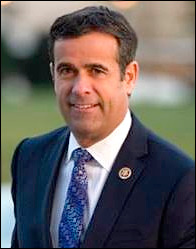
Texas Rep. John Ratcliffe (R-Heath/ Rockwall)

May 26, 2020 — US Rep. John Ratcliffe (R-Heath/Rockwall) of Texas, just confirmed as the country’s new Director of National Intelligence, has already resigned from the House meaning that the state’s 4th Congressional District will now be open for the general election.

Almost as quickly as Rep. Ratcliffe’s post-confirmation resignation occurred, Texas Gov. Greg Abbott (R) announced that he will not call a special election to fill the balance of the term. Therefore, the 4th District seat will remain vacant until the next Congress convenes in January. This is the third seat that won’t be filled this year, and it joins CA-50 (Rep. Duncan Hunter’s resignation) and NC-11 (Rep. Mark Meadows resignation) as incumbent-less seats until 2021. All three districts are safe or likely Republican.

Since the Texas primary was held on March 3 and Rep. Ratcliffe was re-nominated with majority support, the CD-4 congressional race will not advance to a July 14 runoff election. Therefore, the district’s Republican Executive Committee will convene on Aug. 8, according to Texas Republican Party chairman James Dickey, in order for the members to choose the party’s general election replacement nominee.

Because TX-4 is a safe Republican seat (Trump ’16: 75-22 percent — Ratcliffe ’18: 76-23 percent), this committee will almost assuredly be choosing the next congressman. And the eventual GOP nominee who emerges from the committee replacement process will have one of the easiest paths into the US House of any new member.

A large field of prospective office holders will declare their candidacies. Already announced are Rockwall City Councilman Trace Johannesen, retired Navy SEAL Floyd McLendon, Navy veteran T.C. Manning, and attorney Jason Ross. McLendon has already been on the ballot this year. He lost the 32nd District congressional Republican primary on March 3 to businesswoman Genevieve Collins who is now challenging freshman Rep. Colin Allred (D-Dallas).

Texas’ 4th District begins in the far eastern suburbs of Dallas, and then stretches all the way to Arkansas and along the Red River that forms the Texas-Oklahoma border. In between the cities of Rockwall and Heath in the southwest the district roams to Texarkana located in Texas’ far northeast corner. Along the way, small towns with well-known names appear, such as Atlanta, Naples, Paris, Pittsburg, and New Boston.

Continue reading

Super June & Oregon Primary Results

By Jim Ellis

May 21, 2020 — With so many early primary states moving their elections to June due to the coronavirus shut down, no less than 24 states will hold their nominating event in the upcoming month, making this the most active primary month during the election cycle.

A dozen of the states are still observing their regular political calendar, but 12 more moved into June from earlier dates. Therefore, the following adjusted calendar has been locked into place:


JUNE 2

Connecticut (presidential only)
Idaho (from May 19; though mail voting began on the original primary day)
Indiana (from May 5)
Iowa
Maryland (from April 28)
Montana
New Mexico
Pennsylvania (from April 28)
Rhode Island (presidential only)
South Dakota
West Virginia (from May 12)


JUNE 9

Georgia (from May 19)
Nevada
North Dakota
South Carolina


JUNE 20

Louisiana (presidential only)


Continue reading

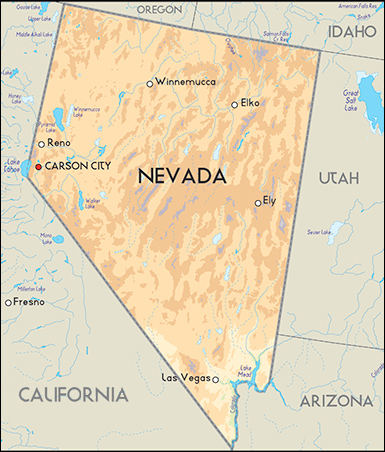
Nevada: A Target?

By Jim Ellis

May 8, 2020 — The Silver State of Nevada, with six Electoral College votes, has been regarded as a swing state in most 21st Century presidential elections, but in projecting the 2020 vote, it is routinely considered as a place destined to land in the Democratic column. But, could Nevada ultimately be in play for President Trump?

With a general election electoral vote map looking ever closer as we move toward November, introducing a new target could drastically change the eventual outcome or at least the campaign focus and strategy.

A new ALG Research poll (April 27-30; 76 likely Nevada general election voters) reports findings that are consistent with virtually all of the 2016 Nevada general election surveys. Last week, the firm found former vice president Joe Biden leading President Trump with a 49-45 percent spread. Such a margin and preference percentages fall into the same realm as all 31 polls conducted in Nevada from May through the November 2016 election.

When ‘16 ended, Hillary Clinton carried the state, but her margin was only 2.4 percentage points, meaning a 27,000-vote spread of more than 1.12 million ballots cast. And, consistent with the large number of polls that concluded a close race within the 40s would be the actual result, Clinton defeated Trump, 47.9 – 45.4 percent, validating the plethora of research conducted over the final five-plus months of that election cycle.

Four years ago, 13 different pollsters conducted the almost three dozen surveys, and in no instance did either Trump or Clinton ever reach the 50 percent plateau. On the other end of the spectrum, in just three instances did one of the candidates dip below 40 percent. Therefore, in 28 of the 31 studies logged within the 2016 Real Clear Politics polling archives, both candidates fell within the 40s, meaning this result occurred over 90 percent of the time. In terms of range, the span stretched from Clinton plus-7 to Trump plus-6, but the average between the two was only 2.7 percent, which is almost exactly the actual final total. This obviously suggests a competitive political battlefield.

Continue reading

COVID & Redistricting

By Jim Ellis

April 29, 2020 — The deadline for the Census Bureau to release the new population data is March 31, 2021, but with the entire process being delayed due to COVID-19 precautions, the ability to meet the requirement is becoming more difficult by the day. Already, the Bureau has been delayed in dispatching their door-to-door teams necessary in obtaining the responses from people who did not return their mail tabulation form.

The Trump Administration is reportedly suggesting that the March 31 deadline be postponed to sometime in the summer of 2021. If this happens, we will see a series of redistricting problems ignited in the states. First, the political leaders in New Jersey and Virginia, places that have 2021 elections and need their new state legislative lines in place well before that date, would find themselves in a difficult position.

Initially, the two states would certainly have to postpone their primary elections because both nominate their general election candidates in June. Beyond that, it is possible they would have to even postpone their general elections into 2020 or run in the obsolete boundaries that were drawn back in 2011. In either case, we could expect lawsuits being launched from whichever party loses a particular electoral contest.

Other states would be affected, too. Many have legal deadlines in place mandating that the new redistricting maps for state legislature and the US House delegation be adopted before the legislative sessions ends. Most states recess before mid-summer, which would mean special sessions being called if the legislature is to act.

The problem intensifies in the states that are either gaining or losing congressional districts in reapportionment. Currently, it appears that seven states will add seats to their delegations (the best projections suggest that Texas will gain three, Florida two, and Arizona, Colorado, Montana, North Carolina, and Oregon one apiece), while 10 will lose single districts (Alabama, California [for the first time in history], Illinois, Michigan, Minnesota, New York, Ohio, Pennsylvania, Rhode Island, and West Virginia).

The aforementioned apportionment is based upon calculations released publicly and not, of course, using the actual numbers. Therefore, we could see some differences between these projections and what the formulas actually produce when the Census Bureau finally can produce the updated real figures.

Continue reading

This Time in 2016

By Jim Ellis

Does Arizona hold the key in a Trump-Biden candidacy?

April 23, 2020 — It is interesting to revert back to April of 2016 to see just how Donald Trump was faring against Hillary Clinton and compare those results with today’s survey research. Thanks to the Real Clear Politics website and their polling archives, the day-by-day polling data from four years ago is still available so we can track the Trump-Clinton campaign historical progress with the new Trump-Joe Biden impending national contest.

The key point to remember about national presidential polling is that the aggregate ballot test means very little yet is the subject of most political research studies. Knowing what voters think about the campaign in places like Arizona, Florida, Georgia, Michigan, North Carolina, Pennsylvania, Texas, and Wisconsin is much more important when attempting to project a final outcome, but we see far fewer numbers coming from these places than we do nationally.

In 2016, we will remember that almost all analysts and political prognosticators were predicting a Clinton win, and virtually all national polling was revealing an advantage for the former secretary of state, US senator, and First Lady, yet Trump emerged the winner. After the election, most surface analysis reported that the polling was in error, but such was not generally the case. The preponderance of polling, which predicted a narrow Clinton popular vote victory was actually correct; as we will remember, Clinton finished ahead of Trump in a close plurality.

With this background in mind, let’s look at what the various polling firms are projecting this month for the Trump-Biden race and compare it to the available data from 2016.

In April 2016, through the 15th of the month, three national polls had been released from individual or collaborating media entities: CBS News (April 8-12), NBC News/Wall Street Journal (April 10-14), and Fox News (April 11-13). This year, we see a more active April polling month that yields nine studies from eight different pollsters.

In 2016, the three testing entities all predicted Hillary Clinton to be holding the advantage over Donald Trump, by margins of 10 (CBS), 11 (NBC/WSJ), and 7 (Fox) percentage points. A little over six months later, Clinton would carry the national popular vote by 2.1 percentage points but lose the presidency because the key states broke toward Trump, which added up to an Electoral College win.

Continue reading

Money Report: The Runoffs

By Jim Ellis

April 22, 2020 — Continuing with our analysis of certain 1st quarter 2020 fundraising numbers, today we look at the upcoming runoff elections that are happening in Alabama, North Carolina, and Texas.

In Alabama, former US attorney general and ex-three term senator Jeff Sessions, and retired Auburn University head football coach Tommy Tuberville move to a postponed July 14 runoff that was originally scheduled for March 31. Tuberville placed first in the primary election by one percentage point over former Sen. Sessions, attempting to make a political comeback and overcome his national feud with President Trump. The longer runoff cycle may give Sessions the opportunity for a rebound.

Though Tuberville finished first, he is behind Sessions in campaign resources though both have plenty with which to compete. For the campaign, Sessions has spent $3.81 million as compared to Tuberville’s $2.84 million. In the first quarter, Tuberville outraised Sessions by just over $40,000. Tuberville raised $785,513 in the first quarter and had $458,519 in his campaign account at the end of March. While Sessions posted a bit less at $743,861, he has more cash-on-hand: $749,235. These numbers tell us that both men will be able to deliver their respective campaign messages before the July 14 vote.

In the Alabama House runoffs, Mobile County Commissioner Jerry Carl (R) outpolled former state senator Bill Hightower (R-Mobile) but not in first quarter fundraising. Hightower led the dollar pace with $344,627 raised versus $169,785, but as a local political official, Carl has been attracting a great deal of earned media because of area coronavirus protection messages. Cash-on-hand is virtually equal, with both men holding slightly more than $200,000. Carl spent $1.3 million in the primary opposite Hightower’s $858,000.

The 2nd District runoff features self-funding businessman Jeff Coleman, who placed first in the Republican primary against former state representative, Barry Moore. The big story here is Coleman financing just short of $1 million for his almost $2 million primary campaign. With Moore raising only $46,137 for the entire 1st quarter, it appears Coleman will be very difficult to overcome in the runoff election.

In North Carolina just one run-off is occurring — in White House Chief of Staff Mark Meadows’ former 11th District. The Republican contest features Meadows’ endorsed candidate, former Haywood County Republican Party chair Lynda Bennett and real estate company owner Madison Cawthorn. Bennett placed first in the primary, and has an edge in fundraising, but Cawthorn was able to self-fund to a degree of $311,000.

Continue reading

House Opens – Toss-Up/Leans

By Jim Ellis

April 15, 2020 — The open-seat count has increased to 43, with 31 coming from the minority Republican column. The number of competitive opens, however, at this point in the cycle is likely just nine, as 34 of the incumbent-less seats fall into either the Safe/Likely Democratic (12) column or Safe/Likely Republican (22) category. Today, we look at the competitive open seats.

Toss-Up

• CA-25: The vacant Palmdale/Simi Valley seat heads to a special election on May 12 in north Los Angeles County. State Assemblywoman Christy Smith (D-Newhall) and Republican retired Navy fighter pilot Mike Garcia (R) advanced from the special primary into the stand-alone mail-in special general. Regardless of the outcome on May 12, these two candidates will advance into the November general election to determine who will represent the politically marginal district in the next Congress.
   The special election has moved from “Lean Democratic” into the “Toss-up” category as a result of recent polling that projects Garcia owning a small lead and because of the partisan turnout numbers in the regular primary. The latter statistic actually found more Republicans voting than Democrats.

• GA-7: In 2018, this Atlanta suburban seat featured the closest raw vote margin in the nation, as incumbent Rep. Rob Woodall (R-Lawrenceville) defeated state legislative staff member Carolyn Bourdeaux by just 419 votes. This year, with Rep. Woodall retiring, Bourdeaux returns but must top five other Democratic candidates including a state senator, state representative, and former Fulton County commission chairman. Therefore, the May 19 Democratic primary, now moved to June 9, will be competitive and the possibility of advancing to an Aug. 11 runoff election certainly exists.
   Republicans may be more likely to move into a runoff than the Democrats, however. Seven candidates are in the field, only one of who is an elected official. More on this race as it develops, but we will probably see tight elections in both primaries and almost assuredly in the general election.

Lean Democratic

• IA-2: In a 2020 open-seat election in this southeastern Iowa congressional district, the Republican challenge is at least as difficult as opposing seven-term incumbent David Loebsack (D-Iowa City), who is now retiring. Democrats have already coalesced around ex-state senator Rita Hart (D-Wheatland), a soybean farmer and former educator from Clinton County.
   In 2018, Hart was the Democratic nominee for lieutenant governor on the ticket that businessman Fred Hubbell lost in a close race to Gov. Kim Reynolds (R). It is an unusual situation when an incumbent party must defend an open seat and winds up with an unopposed candidate in the primary, but that is what has occurred here.
Continue reading