Tag Archives: Public Policy Polling

Daley Out in Illinois; Brown Improves in NH

Bill Daley

Bill Daley

Illinois

As quick and surprising as former US Commerce Secretary Bill Daley’s entry was into the Democratic gubernatorial campaign, so too is his exit. Daley, also a former White House chief of staff to President Obama, had been challenging Gov. Pat Quinn in the Democratic primary. Quinn assumed office when then-Gov. Rod Blagojevich (D) was sentenced to prison and then won a razor-thin one point victory in the regular election against Republican Bill Brady back in 2010.

With Quinn’s approval numbers lagging and the state facing serious financial difficulty, Daley launched his effort to deny the governor renomination in April when he formed an exploratory committee. But now the former cabinet secretary and son of legendary Chicago Mayor Richard J. Daley says he cannot “commit to what the voters may need,” meaning that he does not feel up to serving at least five and potentially nine years (counting the campaign time) in order to get the state “on the right track.”

The decision is good news for at least two people, Gov. Quinn and the eventual Republican nominee. Quinn will now likely avoid a serious primary contest that could heavily damage him for the general election. Early polling showed both he and Daley in the high 30s percentile. Obviously, an incumbent failing to break even 40 percent among members of his own party is a clear sign of inherent political weakness.

Despite abandoning his campaign, Daley reiterated that he believes he could win the race and that Quinn will lose his re-election, asking for “forgiveness” for being honest. Through the last financial disclosure report in June, Daley had raised over $800,000 for his gubernatorial campaign. He says he will conduct an audit of his committee and return contribution money that was not  Continue reading >

New Yorkers Vote Today

Mayor

The long-awaited New York City mayor’s race features its primary election today, and three new polls all arrive at similar findings. According to Marist College/New York Times (Sept. 3-6; 936 registered NYC Democrats), Public Policy Polling (Sept. 7-8; 683 likely NYC Democrat voters), and Quinnipiac University (Sept. 6-8; 782 likely NYC Democrat voters), NYC Public Advocate Bill de Blasio will place first in tonight’s vote, but will he obtain enough votes to avoid an Oct. 1 run-off election?

Marist scores the candidates 36-20-20 percent in de Blasio’s favor, followed by former NYC Comptroller Bill Thompson and City Council President Christine Quinn. PPP shows a similar 39-19-13 percent spread, with the candidates in the same order. Finally, the Q-Poll projects a 39-25-18 percent finish for the trio.

To avoid a post-primary run-off a candidate must receive at least 40 percent of the vote, so it is obvious that de Blasio is teetering right around the minimum figure. Should he fall into a run-off, he is likely to face Thompson, who has more upward momentum than Council President Quinn. Once the leader of the race, Quinn’s support level has been steadily digressing for the past several weeks. Disgraced former US Rep. Anthony Weiner (D-NY-9) has dropped to also-ran status, registering only single-digits in all polling.

At least right now, de Blasio appears to be a heavy favorite if he is forced to a secondary election. Against Thompson, Marist finds the public advocate leading with a 50-38 percent advantage. If Quinn sneaks into the run-off, de Blasio would destroy her 56-34 percent.

PPP gives de Blasio a larger 53-33 percent advantage over Thompson and a massive 67-21 percent spread against Quinn.

Quinnipiac did not test a potential run-off scenario.

Whether it happens tonight or on Oct. 1, current polling points to de Blasio as the eventual Democrat nominee.

Though the pollsters have paid little attention to the Republican side, internal research sources suggest that former New York Metropolitan Authority chairman Joe Lhota is favored to defeat outright supermarket magnate John Catsamitidis and Doe Fund founder George McDonald. Though the Democrats have not held this  Continue reading >

Another Bass Return?

In a race that has been quiet for many months, a reversal of course may be upon us. It appears that Republicans will soon end their dormancy against New Hampshire Sen. Jeanne Shaheen (D) as a pair of candidates may announce for the right to oppose her in the 2014 general election.

Former Rep. Charlie Bass (R-NH-2) was first elected to the US House in the Republican landslide of 1994 and served without receiving a major challenge until 2006. That year, in what proved to be a Democratic landslide that swept the Republicans out of power in Washington, attorney Paul Hodes (D) scored a 53-46 percent win over the veteran GOP congressman. When Hodes launched a campaign for an open Senate seat in 2010, an effort doomed to fail in a crushing defeat, Bass returned to the political arena and re-claimed his 2nd District with a razor thin 48-47 percent win over attorney Ann McLane Kuster (D). Last year, Kuster sanctioned Rep. Bass back to former member status with a 50-45 percent victory in what again proved to be a Granite State Democratic sweep.

At the end of last week, Bass confirmed that he is “seriously considering” a return to elective politics by challenging Sen. Shaheen. Though the incumbent’s job approval ratings are very strong, 53:23 percent in the latest University of New Hampshire poll (late July), the New Hampshire electorate has swung wildly since 2006, alternating between giving both Democrats and Republicans sweeping wins from the top of the ticket to the bottom. Since 2006, inclusive, NH voters have defeated one senator (Shaheen over John E. Sununu in ’08) and five House incumbents (Bass and Jeb Bradley in ’06, Carol Shea-Porter in ’10, Bass and Frank Guinta in ’12) – in a state that possesses only two congressional districts. The state legislative chambers have changed party control several times during that six-year period, too.

Several weeks ago, former state Sen. Jim Rubens (R) opened a senatorial exploratory committee and reports favorable response toward his budding candidacy. Local political insiders predict that Rubens will announce his official campaign within the next two weeks. Should Bass actually decide to run, the former state legislator’s presence in the race means primary opposition – primary opposition that will undoubtedly be to his right before a conservative dominated Republican electorate.

Regardless of the impending 2014 turnout model, which conventional wisdom suggests  Continue reading >

Democrats Battle in CA-17; Spitzer Reels

Khanna-Honda

The elimination of California’s partisan primaries, as was done prior to the last election, will again seriously affect Golden State politics in the 2014 mid-term vote. Under the state’s new jungle primary law, the top two candidates in the June election advance to the general regardless of political party affiliation and percentages attained. Therefore, former US Commerce Department Deputy Assistant Secretary Ro Khanna’s intra-party Democratic challenge to seven-term Rep. Mike Honda will likely last the entire campaign cycle.

Khanna has already been extraordinarily successful on the fundraising circuit, attracting more than $1 million for the 2014 race, and exceeding $1.7 million cash-on-hand. In the 2012 cycle, Khanna was briefly in the 15th District race when he believed that 80 year-old then-incumbent Pete Stark (D) was going to retire. Upon Stark’s decision to run again, all Democratic contenders with the exception of Dublin City Councilman Eric Swalwell withdrew. Swalwell then successfully unseated Rep. Stark 52-48 percent in a Democrat-on-Democrat general election.

Before exiting the Stark campaign, Khanna raised over $1.26 million and had north of $1 million remaining in his campaign account, thus explaining the large early war chest for his Honda challenge. Conversely, Rep. Honda has not been as financially prolific in early 2013, obtaining over $567,000, but ending with less than $375,000 in the bank.

But a just-released Public Policy Polling survey for the Progressive Change Campaign Committee (Aug. 2-4; 806 registered CA-17 voters) shows that Khanna has a long way to go if he is to upset this incumbent, as Honda leads the ballot test 49-15 percent. The result is similar to the previously released Lake Research poll (Feb. 17-20; 503 registered CA-17 voters), commissioned for the Honda campaign, that posted the congressman to a 57-13-5 percent  Continue reading >

Two Reeling Governors: Maine, Illinois

LePage-Quinn

A pair of recent political polls confirm that Maine Gov. Paul LePage (R) and Illinois chief executive Pat Quinn (D) are in tenuous re-election position, meaning losing is a distinct possibility for each. Both face major tests from several opponents and, according to Public Policy Polling (ME) and We Ask America (IL), the challengers either today have, or likely could soon possess, the upper hand.

Maine

PPP surveyed the Maine electorate (Aug. 23-25; 953 registered Maine voters) and determined that recently announced gubernatorial candidate, Rep. Mike Michaud (D-ME-2) is leading Gov. LePage 39-35 percent, with Independent attorney Eliot Cutler drawing 18 percent. Back in 2010, LePage defeated Cutler 38-36 percent, with Democrat Libby Mitchell only securing 19 percent of the vote. Since the governor has never topped 40 percent in any election or poll, the three-way configuration does give him hope of winning a second term. And, with a job approval index of 39:56 percent, being only four points behind in a survey conducted on the heels of his main opponent’s announcement tour certainly suggests the governor retains at least a rocky path to victory.

But, the news is not all favorable for Michaud. Considering that the congressman’s personal favorability index is a strong 53:30 percent, almost opposite that of LePage, it is surprising that his lead is only four points. Combining the elements of taking a poll just after his post-announcement tour, and brandishing a favorability rating that is net 40 points better than the incumbent’s suggests that Michaud still has much work to do if he is to unseat LePage. Additionally, as he did during the last election, Cutler is transforming into a viable wild-card candidate. Overcoming a 21-point deficit this early in the campaign cycle is a difficult, but not insurmountable task.
 Continue reading >

Louisiana Data Conflict; Kasich Down in Ohio

Two days ago, a pair of polls were released into the public domain projecting that Rep. Bill Cassidy (R-LA-6) is faring well against Sen. Mary Landrieu (D). Yesterday, Public Policy Polling publicized a counter-study showing the senator to be in much better political shape, thus calling the Republican data into question. Why the stark difference? We’ll explain shortly.

The two Republican polls were conducted by OnMessage for the National Republican Senatorial Committee (NRSC) and Harper Polling for a conservative website. The OnMessage data (Aug. 12-15; 800 registered Louisiana voters) gave Sen. Landrieu only a 45-41 percent advantage over Rep. Cassidy. HP (Aug. 14-15; 596 registered Louisiana voters) found even better results for the Baton Rouge congressman, actually placing him ahead of the incumbent on a 47-45 percent count.

The PPP data (Aug. 16-19; 721 registered Louisiana voters) forecasts quite a different take. According to these results, Sen. Landrieu has a comfortable lead over Rep. Cassidy, 50-40 percent, when the two are paired in a hypothetical post-primary December 2014 run-off election.

Seeing Democratic and Republican pollsters surveying the same race at the same time but arriving at drastically different conclusions happened relatively frequently during the last election cycle. Particularly in the presidential campaign, we often saw the Republican data placing GOP nominee Mitt Romney in much better position against President Obama than was actually the case.

The chief reason for the past projection disparity was the turnout screening mechanism used in qualifying those who constituted the various sampling universes, and such is undoubtedly the case with these conflicting Louisiana numbers.

In the presidential year, the Democratic pollsters were much closer to accurately forecasting the participation model in what will prove to be the higher turnout year of 2012. Now heading into the mid-term cycle, where voting participation is always lower than in presidential elections, it may be the GOP numbers that yield the more accurate prediction.

As we know, who turns out always determines an election winner, and no one suggests that election year 2014 will be any exception to that rule. Defining the most  Continue reading >

Three States, Three Potentially Challenging Races for Incumbents

Sen. Lindsey Graham

Sen. Lindsey Graham

South Carolina

The long-expected Republican primary challenge to Sen. Lindsey Graham is now coming to fruition. A candidate emerged yesterday who has an interesting background. It remains to be seen if she has the political wherewithal to compete with the veteran senator, however.

Nancy Mace is the first female graduate of The Citadel. Born into a military family, her father is a retired Army general. She announced her challenge to the senator late this week, joining Greenville area businessman and former 3rd District congressional candidate Richard Cash in the nomination race. State Sen. Lee Bright, coming from the Ron and Rand Paul wing of the Republican Party, says he will soon follow suit.

Can any of the three beat Lindsey Graham? While it’s clearly a long shot, the senator does have some obvious vulnerabilities. First and foremost, as any casual political observer understands, Graham is to the left of the South Carolina Republican electorate and has taken some unpopular stands in the state, such as his leadership efforts in the area of immigration reform.

Secondly, though a crowded field usually helps an embattled incumbent, South Carolina does have a run-off law, meaning it could become harder to capture a majority in a split vote primary situation. If someone is strong enough to deny the senator an outright primary victory, the scenario would then be drawn to upset him in the secondary election.

Third, while none of his opponents has significant name ID, they are all substantial individuals, and if one or more can prove they possess fundraising ability, outside conservative groups are ready to come to their aid if Graham begins to falter.
 Continue reading >

Second Poll Confirms Cheney Status; Nunn Runs

Liz Cheney

Liz Cheney

Earlier in the week we reported that Harper Polling surveyed the Wyoming Republican electorate and found newly announced challenger Liz Cheney to be badly trailing incumbent Sen. Mike Enzi (21-55 percent) in the Republican primary. Now, Public Policy Polling (July 19-21; 780 Republican Wyoming primary voters) confirms Cheney’s difficulty factory in denying Enzi renomination, brandishing a similar 26-54 percent spread.

PPP asked pointed questions about whether or not the state GOP electorate even considers Cheney a Wyomingite. According to their question, 36 percent of the Republican respondents do consider the former vice president and Wyoming congressman’s daughter a fellow Equality State resident, while almost half, 44 percent, do not.

Asked further whether they think it more appropriate for Cheney to run for the Senate from Virginia rather than Wyoming, by a margin of 45-33 percent, the individuals comprising this survey sample stated that she should run in the Old Dominion.

Approval ratings were also tested. Sen. Enzi scores a 66:24 percent job approval rating from his Republican base. Cheney earns a 40:34 percent favorable to unfavorable ratio. In comparison, Rep. Cynthia Lummis’ (R-WY-AL) job approval ratio is 55:25 percent. As a follow-up, should Enzi, for some unforeseen reason, decide not to make the race next year and the candidates become Cheney and Rep. Lummis, the congresswoman would have only a slight advantage. According to the PPP data, Lummis would lead Cheney 41-34 percent.

So far, the results of the two earliest polls rate Cheney as a long shot, at best, to upset Sen. Enzi. Based upon data we are seeing elsewhere and sizing up the 2016 presidential field, there is an argument to be made that the former vice president’s daughter might actually have a better shot at capturing the Republican presidential nomination than she would in winning this Wyoming Senate race against Enzi. Secondly, based upon her first ballot test opposite only Rep. Lummis, her chances appear much brighter in running against the congresswoman than they do against the state’s senior senator.
 Continue reading >

Montana Senate Seat Has Become a GOP “Must Win”

Gov. Brian Schweitzer

Brian Schweitzer

Republicans may have just dodged a major bullet as former Montana Gov. Brian Schweitzer (D) announced via telephone interview with local media on Saturday that he is not running for retiring Sen. Max Baucus’ (D) seat.

Polling was showing that the two-term ex-governor, after leaving office early this year, was the strongest candidate from either party who was reasonably considered a potential candidate. The latest Public Policy Polling survey (June 21-23; 807 registered Montana voters) did show Schweitzer trailing former Republican Gov. Marc Racicot by one percentage point, but the chances of the former statewide GOP office holder running to succeed Sen. Baucus are highly remote, so this pairing was discounted. Against all other potential or likely candidates, Schweitzer held a clear advantage.

In the interview explaining his decision not to enter the Senate campaign, the former Montana chief executive said he isn’t a good fit in a legislative body. “I’m a doer,” Schweitzer stated, “I’m used to being in charge of things, getting things done. Unfortunately, the U.S. Senate is a place where things die.”

Without Schweitzer running, the Republicans now become early favorites to convert the seat. If that became a reality, considering their favorable position for the Democratic open seats in South Dakota and West Virginia, it would bring them halfway to their goal of converting the six seats they need to capture the Senate majority.

All eyes will now turn to at-large freshman  Continue reading >

Gov. Perry’s “Exciting Future Plans”

Texas Gov. Rick Perry

Texas Gov. Rick Perry

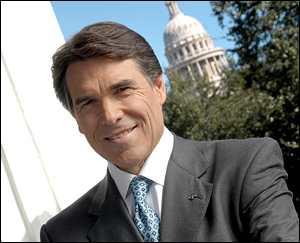
Texas Gov. Rick Perry (R) just emailed political supporters pledging to announce his “exciting future plans” at a Monday San Antonio event. Normally, when a politician schedules an official speech that will either be a formal campaign kick-off or retirement statement, everyone knows what will be said. Not in this case. One only needs to look back to 2009, when the governor surprisingly announced for another term even though everyone “knew” that he would step down.

Gov. Perry has kept his own counsel about his “exciting future plans,” and there is diverse speculation surrounding what he will do. Many who are close to the governor, who is Texas’ longest-serving chief executive, believe that he has already decided to run for president again in 2016. Assuming this line of thought is true, what is his best move as it pertains to either keeping or relinquishing his current office?

If he is to run for president, he needs to re-establish political credibility. He does that by convincingly winning another re-election.

You’ll remember that he began the 2012 campaign in exalted fashion, entering the race with a first-place polling standing. His August 2011 presidential campaign announcement speech from South Carolina on the day of the Iowa Straw Poll was very well received and he appeared to lay legitimate claim to front-runner status. Few knew, however, that this day marked his campaign’s apex. We all remember his disastrous debate performance when the governor couldn’t recall one of the three federal agencies that he was planning to eliminate should he win the presidency. After this glaring error he tumbled down the polling charts with lightning speed and soon  Continue reading >