Tag Archives: New York

AZ, NJ, NY, TN Complete Filings

By Jim Ellis

April 12, 2022 — Candidate filing closed in Arizona, New Jersey, and New York for major party candidates, and for all candidates in Tennessee. The first three states noted each have later deadlines for minor party, independents, and write-in candidates.

Arizona

In Arizona, the Senate and governor races highlight the state’s political battles this year, and there were no surprise entries in either contest.

The Senate race features incumbent Sen. Mark Kelly (D), who is running for a full six-year term after winning the 2020 special election to fill the balance of the late Sen. John McCain’s (R) final term. He has no primary opposition. Republicans feature five candidates, but the battle is revolving around three of them for the party nomination — Attorney General Tim Brnovich, venture capitalist Blake Masters, and former solar energy company CEO Jim Lamon.

The open governor’s contest finds six Republicans and three Democrats vying to become their respective party standard bearers. Former news anchor Kari Lake, who former President Donald Trump endorses, and ex-congressman and 2000 gubernatorial nominee Matt Salmon appear to be the leading candidates. Secretary of State Katie Hobbs opens with a large polling lead over former state Rep. Aaron Lieberman and ex-Nogales mayor, Marco Lopez. This race will likely evolve into a toss-up general election battle.

Four key congressional general election races and a Republican primary are on tap in Arizona. Rep. David Schweikert (R-Fountain Hills) inherits a tougher new district, now numbered 1, that rates a R+7 according to the FiveThirtyEight data organization. His current 6th District is R+13. Physician Hiral Tipirneni (D), who held Rep. Schweikert to a 52-48 percent victory in 2020, is not returning for a re-match. Former Phoenix Suns executive Adam Metzendorf appears to be the strongest of the three filed Democrats. Rep. Schweikert drew two minor GOP primary opponents.

Rep. Tom O’Halleran (D-Sedona) has an R+6 rated 1st District under the current map, but the new 2nd District, despite having almost two-thirds of his current territory, increases to R+15, making him possibly the most endangered Democratic incumbent in the country. Six Republicans are vying for the party nomination, the leader of whom appears to be state representative and decorated Army veteran Walt Blackman.

Democratic representative and former Phoenix mayor, Greg Stanton (D-Phoenix), is also looking at a post-redistricting competitive general election. Seeing his Phoenix metro district move from D+15 to D+1 suggests that a Republican challenger will be a serious contender in November. Six Republicans are vying for the party nomination including two sports figures. Jerone Davison is a pastor and former member of the then-Oakland Raiders NFL franchise after playing football for Arizona State University. Tanya Wheeless is an attorney and former senior vice president for the Phoenix Suns NBA franchise.

The open Tucson-anchored 6th District is another commission-drawn CD designed to be competitive for the decade. Rep. Ann Kirkpatrick (D-Tucson) had she decided to seek re-election, would have run here. This is a must-win seat for Republicans if they are to capture a House majority. House GOP Leader Kevin McCarthy (R-CA) has already endorsed former Hispanic Chamber of Commerce official Juan Ciscomani among a field of five GOP candidates. Democrats feature a battle between state Rep. Daniel Hernandez (D-Sunnyside) and former state senator Kirsten Engel.

Rep. Debbie Lesko (R-Peoria) draws no opposition in her 8th District. In the new 9th CD, controversial Rep. Paul Gosar (R-Prescott) sees his home placed outside the new 9th, but faces only a Republican primary battle in a CD that contains 70 percent of his current constituency.

New Jersey

There is no 2022 New Jersey Senate race, and the governor’s contest was decided last year. Therefore, the US House races lead the top of the ticket. Redistricting saw the Democratic commission members strengthen the politically marginal districts of Reps. Andy Kim (D-Bordentown), Josh Gottheimer (D-Wycoff), and Mikie Sherrill (D-Montclair), but doing so made Rep. Tom Malinowski’s (D-Rocky Hill) 7th CD more Republican.

Continue reading

A Cuomo Comeback?

By Jim Ellis

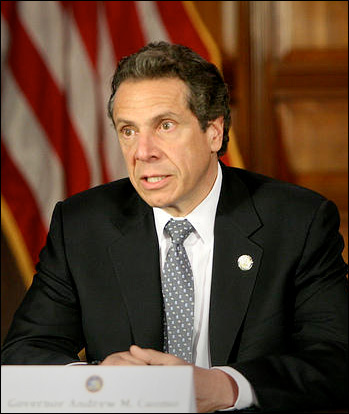
Resigned New York Gov. Andrew Cuomo (D)

March 30, 2022 — Resigned New York Gov. Andrew Cuomo (D) has rather astonishingly not yet ruled out trying to regain his position in this election, and a new Siena College Research Institute poll (March 20-24; 804 registered New York voters, 309 Democratic primary voters) suggests that he might be a competitive contender should he ultimately enter the race.

While it is still unlikely that Cuomo will return, although he has already financed a wave of “rehabilitation” ads designed to improve his damaged image, the Siena numbers do reveal some weaknesses within the Democratic establishment. This means the general election might become interesting.

One of the Siena poll questions asked about Cuomo’s potential status as an independent candidate for the November election. With an eventual Republican nominee, likely US Rep. Lee Zeldin (R-Shirley/East Long Island), presumably being more competitive than a typical New York statewide GOP candidate in this coming general election, a strong independent or minor party contender could become a significant factor in the final outcome and may even have a narrow victory path.

If the resigned governor is to make a move, he is running out of time to file in a partisan primary. Since he is not the endorsed New York Democratic Party candidate, Gov. Kathy Hochul is, he could obtain a ballot position only through submitting 15,000 valid registered voter signatures on or before the April 7 candidate filing deadline. If he were to attempt ballot access as an Independent, that related deadline does not expire until May 31.

While the base Democratic numbers are still strong for President Biden and Gov. Hochul, base Republicans are equivalently fervent against them, but this group is less than half the former’s size. More problematic for the Democratic incumbents and candidates, however, are the non-affiliated voter results, which are clearly trending away.

According to the Siena figures, Gov. Hochul already has an upside-down job approval rating of 42:53 percent within the electorate as a whole, but a positive 63:33 percent ratio among Democrats. She records only a 19:65 percent favorably index from Republicans and a more troubling 31:40 percent negative ratio with the non-affiliated and minor party voter segment.

The most recent published voter registration figures, those dated Feb. 21, 2022 from the New York State Board of Elections, find that 12,982,819 individuals are registered to vote, 49.8 percent of who identify as Democrats. Republicans account for only 21.9 percent of the overall electorate, and added with the 1.2 percent who register in the Conservative party, the clear right-of-center percentage expands to 23.1 percent. Still, this combined figure is less than half of the Democratic number.

Continue reading

House Incumbent Primaries, Part II: Democrats

By Jim Ellis

Feb. 21, 2022 — Part II of our incumbents’ primary challenges report concentrates on the Democratic members who find themselves in serious nomination contests. (Note: Part I — the Republicans — was published Friday. Please scroll down to read.) Nine such situations are covered in this update, with one of them, the Texas race of veteran Rep. Henry Cuellar (D-Laredo) to be decided on March 1.


GA-7: Dem Pairing

Primary: May 24
Runoff: July 26

Rep. Carolyn Bourdeaux (D-Suwanee)
Rep. Lucy McBath (D-Marietta)
• Bourdeaux Cash-on-Hand (Dec. 31, 2021): $2,005,771
• McBath Cash-on-Hand (Dec. 31, 2021): $2,452,731
FiveThirtyEight Statistical Rating: D+16
Dave’s Redistricting App Historical Voting: 58.4% D

Republicans held the redistricting pen in Georgia and after losing two Atlanta metropolitan districts in consecutive elections, it was clear the GOP map drawers were going to take one back. That translated into loading Democrats from the previously Republican 6th District into the transitioning 7th CD.

Along with bringing more Democrats into the 7th, the 6th District incumbent, Rep. McBath, decided to join them. Instead of fighting for re-election in a new Republican 6th District (R+24), she moved south to challenge freshman Democrat Carolyn Bourdeaux in the party primary. As you can see from the cash-on-hand totals above, both incumbents are well-heeled financially, so a major campaign is underway.

Also in the Democratic field is state Rep. Donna McLeod (D-Lawrenceville), who points out that she is the only one of the three that actually lives in the 7th CD. Her campaign has been slow to begin, so it is doubtful that she will be much of a factor, and probably will not draw enough support to force the two congressional incumbents into a runoff. Therefore, it is likely that this pairing will be settled in the May 24 primary.

Among carryover constituents Rep. Bourdeaux has a big advantage in seeing a majority of her current 7th District constituency (57 percent) remaining in the new 7th. McBath, however, sees only 12.1 percent carryover from her 6th District. The larger Democratic influx came from Rep. Hank Johnson’s 4th CD, as 26 percent of his constituency was transferred to the new 7th.

On the other hand, the new 7th is overwhelmingly minority: 29.8 percent black, 21.3 percent Hispanic, and 15.8 percent Asian. Thus, the demographics could help Rep. McBath, who is African American. Her strength within the party’s leftward faction is also a benefit in a primary contest. With each incumbent showing similar strength levels, this will be an interesting race to watch on May 24.


GA-13: Rep. David Scott

Primary: May 24
Runoff: July 26
• Scott Cash-on-Hand (Dec. 31, 2021): $1,107,286
FiveThirtyEight Statistical Rating: D+52
Dave’s Redistricting App Historical Voting: 77.9% D

After only scoring 52.9 percent in the 2020 Democratic primary against three opponents, Rep. David Scott’s (D-Atlanta) 2022 race may be even more serious. Opposing him in this election are two candidates with an election track record, former state senator and 2017 Atlanta mayoral candidate Vincent Fort, and South Fulton City Councilman Mark Baker. The latter man bills himself as the “strongest progressive” in the race, but ex-Sen. Fort was well entrenched with the Bernie Sanders campaign.

Therefore, both opponents are attacking Rep. Scott from the left, which should help him split the opposition vote. Whether such a split will be enough to again allow him to capture majority support in the May 24 primary may be another question. Rep. Scott has long been attacked over not being further to the left on the ideological spectrum, which could again be a problem for him in a district that is overwhelmingly Democratic. Neither Baker nor Fort filed an FEC report at the end of the 2021, meaning they are behind on fundraising.

Rep. Scott must still be rated as the favorite to prevail, but this is another contest that will merit attention on May 24.


IL-6: Dem Pairing

Primary: June 28

Rep. Sean Casten (D-Downers Grove)
Rep. Marie Newman (D-La Grange)
• Casten Cash-on-Hand (Dec. 31, 2021): $1,580,171
• Newman Cash-on-Hand (Dec. 31, 2021): $573,120
FiveThirtyEight Statistical Rating: D+6
Dave’s Redistricting App Historical Voting: 51.4% D

The Illinois race is the second of the three Democratic congressional pairings, and it features sophomore Rep. Casten and freshman Rep. Newman. This particular pairing came about because of complaints that a second Hispanic seat should be drawn in Chicago.

Fearing a loss in court, the Democratic legislative leadership acquiesced and drew a new open 3rd District that is 44 percent Hispanic. As a result, Rep. Newman’s home was placed in Rep. Chuy Garcia’s (D-Chicago) 4th District, but she pivoted to run in the 6th against Rep. Casten. Her move made sense because 43 percent of her constituency was drawn into the new 6th District versus just 24 percent coming from Rep. Casten’s current 6th District.

While Casten has a financial advantage and the support of most of the Chicago Democratic establishment, Rep. Newman is a darling of the far left and will likely attract the more ideological voter that tends to dominate primary voting in both parties.

The aspect of this race that attracts little attention is that the pairing winner is not necessarily home free in the general election. With the Illinois gerrymander drawing 14 Democratic seats of 17 total districts, some of the Dem seats are weak. The 6th, with a D+6 rating from the FiveThirtyEight data entity, is one of those. Therefore, a divisive primary could make the eventual Republican nominee even more viable in the general election.

This draw was not favorable to either Democratic incumbent, and we will see a spirited fight between now and the June 28 primary.
Continue reading

New York Rep. Kathleen Rice
Won’t Seek Re-Election

By Jim Ellis

New York Democratic Rep. Kathleen Rice (D-Garden City)

Feb. 17, 2022 — Four-term New York Democratic Rep. Kathleen Rice (D-Garden City) announced Tuesday, on her 57th birthday, that she will retire from Congress. Saying, “I have always believed that holding political office is neither a destiny nor a right. As elected officials, we must give all we have and then know when it is time to allow others to serve,” the congresswoman stated in her retirement release.

Prior to her election to the US House in 2014, Rice served as Nassau County District Attorney for 10 years after being a member of the prosecutorial staff. Rep. Rice is the 30th Democrat to not seek re-election to the House. The total number of open seats now rises to 51, when counting the open Democratic and Republican districts, and the seats created through reapportionment and redistricting from the various states.

The Rice retirement creates a fourth open seat in the NY delegation, and she is the fifth Empire State member to leave the House at the end of the current term. Rep. Tom Reed (R-Corning) announced his retirement early in the session, but his 23rd District is not technically an open seat because Rep. Claudia Tenney (R-New Hartford) has chosen to run there since her 22nd District was combined with retiring Rep. John Katko’s (R-Syracuse) CD to make a new Democratic seat.

Three of the state’s four open seats appear on Long Island. In addition to Rice’s 4th District, the 1st and 3rd are also open because Reps. Lee Zeldin (R-Shirley) and Tom Suozzi (D-Glen Cove) are both running for governor. This means that freshman Rep. Andrew Garbarino (R-Sayville) will be the most senior Long Island member in the next Congress.

While redistricting changed Rep. Zeldin’s 1st District into a more Democratic-friendly seat, Rep. Garbarino’s south shore Long Island seat became more Republican. Overall, the four Long Island districts needed to gain more than 148,000 new residents to meet the New York per district population goal of 776,971 individuals, or an average of adding just over 37,000 people per CD.

Though three of the four LI seats are constructed to elect a Democrat, the margins are not so strong as to eliminate competition. In wave Republican election years, and 2022 may be such, these open seats will be in play.

According to the FiveThirtyEight data operation, Rep. Zeldin’s 1st District moves from a R+10 to a D+6. Dave’s Redistricting App projects the composite Democratic vote to be 57.0 percent as compared to just 41.0 percent for Republicans. President Biden would have carried the new 1st, which moves east to west from the Hamptons to Bethpage State Park, by a 10.8 percent margin.

Continue reading

Redistricting Boom Hits

New York 2022 redistricting map. (Click on map to go to FiveThirtyEight.com’s interactive map to see breakdown of each Congressional district.)


By Jim Ellis

Feb. 2, 2022 — The redistricting boom that political observers were awaiting has hit. The New York legislature unveiled their new congressional map, and akin to what the Democratic leadership passed in Illinois, the Empire State plan decimates the Republicans just as expected.

As we will remember, New York lost one congressional seat in national reapportionment (by just 89 people statewide) thereby reducing the delegation size to 26 seats. The current 27-district map yields 19 Democrats and 8 Republicans. The new map is projected to reduce the GOP contingent to just four seats.

Starting on Long Island and knowing that Rep. Lee Zeldin (R-Shirley) is leaving his 1st District to run for governor and understanding that the four districts covering the island are a cumulative 148,780 people short of the per congressional district quota of 776,971 residents, means major differences for these seats.

The map drawers brought the 1st District further west, the only thing they could do to capture the number of needed new people, and as a result were able to turn this R+10 district according to the FiveThirtyEight statistical site into a Biden +10.8 percent seat according to an analysis in the Washington Post.

Note that because the New York presidential election was so lopsided, largely because the Trump campaign never tried to become competitive, using just the 2020 presidential numbers to project voter history is likely slanted even more distinctly toward the Democrats. Once more analyses come into the public domain, we will be better able to pinpoint the partisan trend in each new district.

The 1st District draw makes Rep. Andrew Garbarino’s (R-Sayville) 2nd much redder. His CD, designed to now follow the open 1st District’s borderline to the south, would register as a Trump +14.3 percent district as compared to the previous R+8 calculation from FiveThirtyEight.

The plan would then improve both Rep. Tom Suozzi’s (D-Glen Cove) open 3rd District (Biden +14.2 percent) as it moves further into Queens, and Rep. Kathleen Rice’s (D-Garden City) 4th CD. The latter district would record a 12.1 percent Biden performance, up from the 538 total of D+9.

All of the New York City Democrats would again retain safe seats. The big change would come in the Staten Island-Brooklyn district of freshman Rep. Nicole Malliotakis (R-Staten Island). Her current 11th CD voted for Trump in 2020 by a 10.5 percent margin (538: R+13). Under this plan, the Washington Post rates the newly configured 11th for Biden with a +9.9 percentage point spread. Former Rep. Max Rose (D), who Malliotakis unseated in 2020, is back for a re-match. If this map becomes law, as expected, the 11th District playing field will be greatly altered.

The upstate region also significantly changes. Freshman Rep. Mondaire Jones’ (D-Westchester County) district becomes slightly more competitive, from a D+17 to a Biden +13.3 percent. Rep. Sean Patrick Maloney (D-Cold Spring) would go from representing a district that 538 rated as even between the two parties to a Biden +8.3 percent edge. Rep. Antonio Delgado (D-Rhinebeck) would see his 19th CD strengthen from R+4 to Biden +10.0 percent.

Continue reading

New York Rep. John Katko to Retire

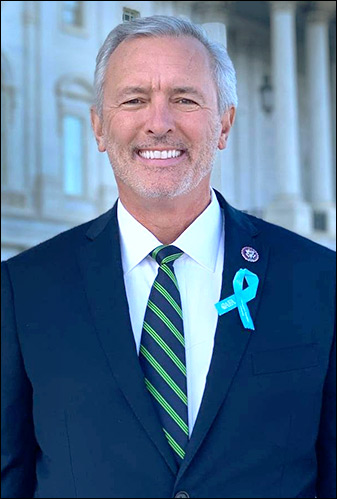
New York Rep. John Katko (R-Syracuse)

By Jim Ellis

Jan. 18, 2021 — New York Rep. John Katko (R-Syracuse) announced Friday that he will not seek a fifth term later this year, creating a 47th open seat for the 2022 US House elections.

Katko, who indicated that he and his wife buried all four of their parents during the past three years, which he said was “gut-wrenching,” says he now desires more time with his family. He leaves a seat where he has averaged 56.5 percent of the vote as one of only eight Republicans from the 27-member Empire State delegation.

Other factors may also have played a role in his retirement decision. Redistricting appeared to be creating some re-election problems for Rep. Katko, as had former President Donald Trump.

New York lost a seat in reapportionment — a district collapse that will come from the Upstate region. Early maps suggested that Katko’s Syracuse-anchored seat would be combined with Rep. Claudia Tenney’s 22nd District, which would result in a paired incumbent situation before the primary winner likely would face another competitive general election campaign.

In the past two election cycles, Rep. Katko’s opponent was college professor Dana Balter (D), and her challenges resulted in expensive and hard fought 53-43 percent (2020) and 52-47 percent (2018) victories. Balter spent $2.7 million and $3.3 million in her two successive races against Rep. Katko, totaling $6 million, which he countered with a combined $6.3 million. Additionally, both candidates received hundreds of thousands of dollars in support from their respective political parties and outside groups.

The NY-24 seat is one of only nine districts where the electorate supported President Biden and elected a Republican to the House. In the current Congress, the 24th is one of just three districts that Hillary Clinton carried while electing a Republican Representative. Katko had repeatedly proven himself as an effective and successful political candidate.

In a paired 2022 situation against Rep. Tenney, however, the retiring congressman would have faced increasing pressure from his political right largely because of his vote to impeach former President Trump. Additionally, the New York Conservative Party leadership said they would not allow Katko to run with their ballot line in the 2022 general election. In New York, a candidate can run with more than one party designation.

Continue reading

Rep. Lawrence to Retire;
Open US House Seats Now Up to 44

By Jim Ellis

Four-term Michigan US Rep. Brenda Lawrence (D-Southfield)

Jan. 7, 2022 — Four-term Michigan US Rep. Brenda Lawrence (D-Southfield) became the latest Democratic incumbent to announce her retirement. She is the 25th Dem to not seek re-election as compared to 11 Republicans.

Saying, “this is the right time to turn the page and spend more time with my family — my husband, daughter, son and granddaughter — and put them first,” Lawrence made official her decision not to seek a fifth term next year. She is 67 years old. Prior to her election to Congress, Lawrence served as Southfield’s mayor for 14 years. She is the only African American in the Michigan delegation and the lone Wolverine State Democrat to serve on the House Appropriations Committee.

It is speculated upon that the new Michigan map influenced her retirement decision, but Rep. Lawrence said she was confident of being able to be re-elected in the new 12th District. Though her home base of Southfield was included in MI-12, the cities of Dearborn, Westland, and the western part of Wayne County would have, for her, been foreign political turf.

In her closing comments to the Detroit Free Press newspaper, Rep. Lawrence said, “I’m incredibly grateful for the people of Michigan’s 14th Congressional District who have placed their trust in me — in me, a little Black girl from the east side of Detroit.”

The Lawrence decision greatly changes the Detroit area congressional campaigns. Immediately upon Rep. Lawrence announcing her retirement plans, neighboring Rep. Rashida Tlaib (D-Detroit) declared that she will seek re-election in the 12th District, saying that she currently represents more of this CD than the downtown Detroit-anchored MI-13. This leaves the 13th open and will create a major Democratic primary battle. CD-13 is a majority African American district and heavily Democratic, meaning that winning the party primary is tantamount to election in November.

A group of current and former Detroit state legislators announced Wednesday that they are filing a lawsuit against the Michigan Independent Citizens Redistricting Commission, saying the new congressional, state Senate, and state House of Representatives’ boundaries discriminate against black voters, and therefore violate the Voting Rights Act. If the lawsuit successfully overturns the Detroit district draws, new mapping instructions could be forced upon the commission before the 2022 election.

Continue reading