Tag Archives: Arizona

SCOTUS Hears Arizona Voter Law Today

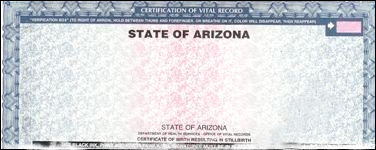
ariz-birth-cert

It appears that the US Supreme Court will soon resolve several election law conflicts. On the heels of hearing Shelby County, Alabama’s challenge to the Voting Rights Act, America’s top nine Justices today listen to oral arguments in an important case that could lead to major changes in voter registration procedures. Both cases will likely be decided before the court’s current term adjourns at the end of June.

The Arizona voting public, via a 2004 ballot initiative, approved a measure that instituted proof of US citizenship requirements before beginning the voter registration process. The law differs from what many states have instituted relating to proving identity before voting because individuals in Arizona must document their citizenship even before registering.

The voter-passed law requires all registrants to prove their US citizenship either through presenting a driver’s license, passport, birth certificate, naturalization number or tribal card when the individual first registers to vote in the state. Lower courts have partially struck down the measure, ruling that the Arizona law conflicts with the National Voter Registration Act of 1994 because the latter merely requires affirmation of citizenship under penalty of perjury, but does not mandate presenting documentation. Therefore, the lower courts have said that the Arizona requirement cannot apply to federal elections.

The rulings are leading to a system of having separate state and federal registration forms, which has already caused confusion among Grand Canyon State election authorities according to a long Arizona Republic news article describing the situation. The federal registration form,  Continue reading >

The Early Targets

Even this early in an election cycle, some obvious 2014 targets are evident. In the Senate, majority Democrats must protect 20 seats versus 13 for Republicans. The GOP will need to convert six Democratic states in order to re-capture the majority for the first time since 2006.

In the House, it’s much too early to tell how the cycle will even begin to unfold, but the 2012 winners who scored at or below 50 percent normally find themselves in vulnerable situations two years later. There are 20 winners who scored a bare majority or less in their win last month.

Here’s how we see things lining up:

The Senate

Already, there appear to be four potential toss-up campaigns on the horizon at the very beginning of the election cycle.

Two states already have announced challengers to Democratic incumbents that many believe are headed for retirement despite the senators themselves saying they are planning a re-election campaign.

West Virginia Rep. Shelley Moore Capito (R-WV-2) officially announced that she will challenge five-term Sen. Jay Rockefeller (D) in the next election. With West Virginia now trending deep red and Rockefeller launching verbal attacks against the state’s dominant coal industry, this race must be cast as an early toss-up. Should Rockefeller — who will be 77 years old at the time of the next election — not seek another term, Capito will be considered the early favorite.

Former South Dakota Gov. Mike Rounds (R) also has announced that he will run for the Senate in 2014. He will challenge three-term Sen. Tim Johnson (D). Rep. Kristi Noem (R-SD-AL), who was just re-elected to a second term, also has not ruled out a Senate run, meaning that she would first have to challenge Rounds in the Republican primary. Publicly, she is not closing the door on any 2014 option. A Johnson-Rounds campaign would also have to be rated as an early toss-up. The senator would be favored against Rep. Noem.

Alaska Sen. Mark Begich (D) stands for a second term after defeating veteran Sen. Ted Stevens (R) by a slim 48-47 percent count in 2008. Stevens was fighting a Justice Department legal onslaught that fell apart on the prosecutors but only after Stevens had already lost to Begich. As you know, the senator was later killed in an airplane crash. This campaign will be interesting. A strong challenger such as Gov. Sean Parnell (R), could make this a very tight campaign.

Considering that North Carolina was only one of two states that switched from supporting Pres. Barack Obama in 2008 to Mitt Romney last month, freshman Sen. Kay Hagan (D) will seek a second term and be rated in a toss-up campaign from Day One. There is no clear challenger on the horizon, but whomever the Republicans choose will be a serious contender.

The 2014 election cycle will be a long one, but count on these four Senate races grabbing a major share of the political attention for the next two years.

The House

Here’s a look at the 20 winners in 2012 who are right at or a bit below the 50 percent mark who could be vulnerable:

Below 50 percent

  • Rodney Davis (R-IL-13) – 47% (open seat)
  • Kyrsten Sinema (D-AZ-9) – 48% (open seat)
  • John Tierney (D-MA-6) – 48% (incumbent)
  • Dan Benishek (R-MI-1) – 48% (incumbent)
  • Dan Maffei (D-NY-24) – 48% (challenger)
  • Ann Kirkpatrick (D-AZ-1) – 49% (open seat)
  • Mike Coffman (R-CO-6) – 49% (incumbent)
  • Jackie Walorski (R-IN-2) – 49% (open seat)
  • Jim Matheson (D-UT-4) – 49% (incumbent)

At 50%

  • Ron Barber (D-AZ-2) – (incumbent)
  • Scott Peters (D-CA-52) – (challenger)
  • * Patrick Murphy (D-FL-18) – (challenger)
  • Dan Schneider (D-IL-10) – (challenger)
  • Joe Heck (R-NV-3) – (incumbent)
  • Steven Horsford (D-NV-4) – (open seat)
  • Carol Shea-Porter (D-NH-1) – (challenger)
  • Annie Kuster (D-NH-2) – (challenger)
  • Bill Owens (D-NY-21) – (incumbent)
  • Mike McIntyre (D-NC-7) – (incumbent)
  • * Pete Gallego (D-TX-23) – (challenger)

* Italics: Seat will likely be re-drawn in 2013 redistricting.

The Final Electoral Score

The electoral results announced this weekend produced a Democratic clean sweep of the political overtime campaigns. All US House races now possess either an official or definitive winner with the exception of the double-Republican run-off in Louisiana’s 3rd District (to be decided Dec. 8). On election night, all but nine races were called forcing a tight count of the early, absentee and provisional ballots in the affected jurisdictions not producing a winning candidate.

Though each of the nine campaigns were originally too close to call, final projections released over the weekend proclaimed Democrats as winners in the remaining outstanding elections, joining those previously declared overtime victors. The final results in AZ-2, NC-7, and FL-18 completed the Democratic sweep.

After Rep. Ron Barber (D-AZ-2) expanded his lead to 1,402 votes of more than 285,000 cast with only about 15,000 absentee ballots remaining as of late Friday, Republican Martha McSally conceded the election to the short-term House member on Saturday afternoon. Barber was originally elected in June to fulfill resigned Arizona Rep. Gabrielle Giffords’ unexpired term. Running in the regular election for the newly configured 2nd District, Barber ran into a much more difficult competitor in McSally than originally forecast. It would not be surprising to see the two square off again in 2014, as the former Gulf War veteran and Air Force pilot received high marks for her ability as a candidate.

Also on Friday in southeast North Carolina, Rep. Mike McIntyre (D), who had been redistricted into a much more Republican seat, officially clinched re-election over state Sen. David Rouzer (R). The final tally separates the two candidates by 655 votes, a spread that falls within the legally proscribed margin to trigger an automatic recount. Though all the ballots will be officially counted again, the outcome is likely to remain the same and McIntyre will almost assuredly serve a ninth term in the House.

Rep. Allen West’s (R-FL-18) post-election saga continues but, barring an unforeseen development in the final early voting count, Democrat Patrick Murphy has defeated the outspoken one-term incumbent. Even after recounting the final three days of received early ballots resulted in West gaining on Murphy and both candidates seeing their vote totals decline, St. Lucie County Circuit Judge Larry Schack denied the congressman’s motion to re-tabulate all of the early ballots. But, in a surprise move on Friday, the St. Lucie County Election Commission voted 2-1 to grant West’s request.

Despite the commission decision, and with Murphy’s lead now expanding to more than 2,100 votes, it is highly unlikely that the result will be overturned. West will then have to decide whether to make a post-certification legal challenge once the results are deemed to be final and official.

All Florida counties were required to report their final canvass results to the Secretary of State yesterday. The state must certify all of the state’s elections on November 20th.

In addition to the aforementioned results, the previously declared overtime winners are Rep. Jim Matheson (D-UT-4), California challengers Raul Ruiz (D-CA-36), Ami Bera (D-CA-7), and Scott Peters (D-CA-52), and Arizona open seat candidates Ann Kirkpatrick (D-AZ-1) and Kyrsten Sinema (D-AZ-9). The House will divide with 234 Republicans and 201 Democrats, a net gain of eight seats for the Dems.

Another Race Called; West Gains in Recount

Arizona election officials have called the new 9th Congressional District race for Democrat Kyrsten Sinema, a former state senator. She has defeated Paradise Valley Mayor Vernon Parker, Republican. With 100% of the precincts reporting, Sinema has 48.3% to Parker’s 45.3%, a difference of 6,500 votes, exactly. There are further ballots to count, but not enough to alter the outcome.

Sinema won the early vote 49.1% to 44.9%, but outpaced Parker on Election Day by only 98 votes. So far in the counting, 154,267 votes were cast early versus 62,080 on Election Day. Sinema’s victory means just one Arizona congressional race remains undecided, that in the new 2nd District, a campaign between Rep. Ron Barber (D) and challenger Martha McSally (R). Earlier in the post-election process, former Rep. Ann Kirkpatrick (D) was declared the winner in the new 1st District.

Turning to the outstanding 18th District in the state of Florida, the court-ordered recount of the St. Lucie County early votes seems to be giving Rep. Allen West’s (R) claims of an irregular counting process some support. Already, in the first stage of the special canvass — the ballots received in the final three days of the early voting period — both candidates’ vote totals have been reduced. West originally charged that votes were double-counted.

In the new counting, West has seen his vote total fall 132 votes, but Democrat Patrick Murphy’s total receded by 667 votes. This allows the one-term congressman to move a net 535 votes closer to his challenger. West is now 1,907 votes behind, district-wide.

The results certainly give the congressman more evidence to call for a full recount. On election night, the totals yielded West an approximate 1,700 vote lead. Once the St. Lucie early votes were added, the totals swung by about 4,000 votes in Murphy’s favor. West argues there were not enough votes cast to allow for such a swing margin, hence his double-counting charge.

Bono Mack Loses; West in Recount; Other Election Updates

We’re learning more about the eight outstanding House races, and one thing is clear: The trends that so favored the Democrats on Election Day are continuing in political overtime.

Rep. Mary Bono Mack (R-CA-45)

Rep. Mary Bono Mack
Congresswoman Bono Mack who succeeded her late husband in Congress, Rep. Sonny Bono upon his untimely death in early 1998, conceded her re-election contest to physician Raul Ruiz on Saturday in California’s Riverside County/Palm Desert region. The current results, which continue to evolve because California non-Election Day votes are still being counted, put the eight-term congresswoman 7,336 votes behind Ruiz. Such a deficit is too large to overcome considering the number of outstanding votes, hence her decision to concede.

The new 36th District contains 75% of the territory from Ms. Bono Mack’s current 45th District and actually became two points more Republican in redistricting, but this year’s Democratic political tide was too much for her to overcome.

Reps. Dan Lungren & Brian Bilbray
In northern California, at the end of counting on Friday, Rep. Dan Lungren (R-CA-7) had fallen further behind his challenger, physician Ami Bera (D). Trailing by just 184 votes on Election Day, Lungren now faces a 1,779 vote deficit with still more than 70,000 ballots remaining.

In the San Diego area, we find a similar trend. There, San Diego Port Commission chairman and ex-City Councilman Scott Peters has extended his lead over Rep. Brian Bilbray (R-CA-52) to 1,334 votes. Approximately 80,000 ballots remain to be counted. With such large pools of ballots still remaining, anything can still happen in both of these districts, but clearly the first reported non-Election Day counts favor the Democrats in both districts.

Rep. Allen West
Turning to southeast Florida, Rep. Allen West (R-FL-18) is encountering a different problem than awaiting a long ballot counting process, but he appears to be having at least a modicum of success in waging his voting irregularity argument. Virtually all of the ballots have been counted here — only those from the military and overseas remain — and West trails attorney Patrick Murphy (D) by 2,442 votes. The congressman’s claim concerns the tabulation of early votes in St. Lucie County. The original election night count gave West about a 1,700 vote lead. When St. Lucie County election officials decided to recount the early votes, based upon a reported technical glitch, the margin shifted by more than 4,000 votes in Murphy’s favor. On Friday, a local judge ordered the 37,000+ St. Lucie County early votes to be recounted. The crux of the West argument is that some of the early votes were double-counted with those cast on Election Day.

Arizona
Counting continues in two undecided Arizona congressional districts. In the tight 2nd District, Rep. Ron Barber (D), who won his seat in a June special election, for the first time leads former Gulf War veteran Martha McSally (R). When counting ended Friday, Barber had taken a 289-vote lead. There could still be as many as 40,000 ballots to count. In the new 9th District, Democrat Kyrsten Sinema continues to lead Republican Vernon Parker, as she has virtually from the beginning. With tens of thousands of ballots remaining, Sinema’s lead has now increased to a substantial 4,710 votes.

Rep. Mike McIntyre
In North Carolina’s 7th District, the re-count trend has favored Republican David Rouzer in his quest to unseat Rep. Mike McIntyre (D). With the counting process continuing, McIntyre’s lead is now down to 394 votes. The final tally is due to be reported on Nov. 16th. Since it is almost a certainty that the end result will fall within a 1% margin, a full recount will be ordered in compliance with state election law. This result will likely hang in limbo for several more weeks.

Rep. Jim Matheson
Counting also continues in Utah’s close 4th Congressional District race even though Republican challenger Mia Love has already conceded to Rep. Jim Matheson (D-UT-4). The congressman’s margin in 2,646 votes, and an eventual Matheson victory will be the final official result.

Florida
Turning to the one outstanding state in the presidential contest, Florida election officials have declared Pres. Barack Obama the winner of the Sunshine State vote, meaning the final Electoral College margin is 332-206 in the president’s favor.

Washington
The one remaining Governor’s race has also been decided. Former Rep. Jay Inslee (D-WA-1) has been declared the winner of the Washington gubernatorial race, defeating Attorney General Rob McKenna (R) 51-49%.

Undecided Race Update

Jay Inslee (D)

All of the Senate races have now been determined, and the Democrats will lead a 55-45 majority in the next Congress, assuming Senator-Elect Angus King (I-ME) joins their caucus, as expected.

One governor’s race remains uncalled. In Washington, former Rep. Jay Inslee (D) has a 51.1-48.9% lead over Attorney General Rob McKenna (R) with still one-quarter of the vote remaining. Inslee has a 54,398 vote advantage with approximately 600,000 votes remaining. To win, McKenna would have to score a bit over 54% of the uncounted ballots. Mathematically this is certainly possible, but the trend suggests otherwise. Even if Inslee holds, the GOP gains one gubernatorial seat nationally, bringing their advantage to 30-19-1 over the Democrats and Rhode Island Independent Gov. Lincoln Chafee.

Here are the latest in the outstanding House races:

  • AZ-1: The race has been called in favor of former Democratic Rep. Ann Kirkpatrick.
  • AZ-2: Rep. Ron Barber (D) vs. Martha McSally (R) – The Republican challenger leads by a scant 81 votes with as many as 65,000 votes left to count. This one, obviously, can go either way as the remaining ballots will determine the winner.
  • AZ-9: Kyrsten Sinema (D) vs. Vernon Parker (R) – About 70,000 ballots remain here, and Sinema’s lead has increased to 3,842 votes. To overtake the Democrat, Republican Parker would need just over 52% of the remaining ballots. This is a reasonable percentage, but Parker has yet to lead the race. Therefore, the trend favors Sinema.
  • CA-7: Rep. Dan Lungren (R) vs. Ami Bera (D) – Approximately 100,000 ballots still must be counted, and the challenger’s lead is a mere 184 votes. Both men have an equal chance of winning.
  • CA-36: Rep. Mary Bono Mack (R) vs. Raul Ruiz (D) – Challenger Ruiz has increased his advantage to 4,679 votes, though more than 50,000 ballots remain uncounted. To win, Rep. Bono Mack needs 55% of the remaining pool of votes. It is unlikely that she will reverse the trend.
  • CA-52: Rep. Brian Bilbray (R) vs. Scott Peters (D) – In a very similar situation to that of Rep. Lungren, it’s possible that as many as 100,000 ballots are still outstanding. Peters leads by 814 votes, meaning that Bilbray needs at least 50.5% of the remainder to pull out the victory.
  • FL-18: Rep. Allen West (R) vs. Patrick Murphy (D) – The congressman trails challenger Murphy by 2,456 votes with all precincts reporting. West is challenging voting irregularities in St. Lucie County, and several thousand provisional ballots remain. Unless West wins his challenge – claiming that certain precincts have been double counted – Murphy is likely to prevail.
  • NC-7: Rep. Mike McIntyre (D) vs. David Rouzer (R) – The congressman leads by 533 votes, with more than 5,000 to count. Many of those are from the challenger’s home county of Johnston, where he performed strongly. There is an outside chance that this election could turn around.
  • UT-4: Rep. Jim Matheson (D) vs. Mia Love (R) – Though challenger Love has already conceded, counting of the remaining 50,000 votes continues. Matheson leads with a 2,646 vote margin, meaning Love needs at least 53% of the remainder, which is unlikely to happen based upon the already known voting pattern.

Obama and Senate Ds; House Rs

The question as to which of the two party’s polling methodology and turnout model projection was correct was answered in the this morning’s early hours, as the Democratic projections proved to be spot on.

As they predicted, Pres. Barack Obama was re-elected with what could be as many as 332 Electoral Votes, should he carry still-outstanding Florida. The absentee ballots will determine the winner at a later date, but the outcome from what was formerly challenger Mitt Romney’s most important state is now irrelevant in determining the victor.

The race was as close as forecast, with the president taking the popular vote, preliminarily, by some 2.5 million ballots, an approximate margin of 51.1 percent. The individual core states of Florida, North Carolina, Virginia and Ohio were just as close as the national popular vote but, in the end, the president captured at least two of the four places, and possibly three, that Romney was virtually forced to win.

As has been the case since 2006, inclusive, the Senate races ended in a run. And, as in two of the three immediately previous elections, it was the Democrats who scored big. Despite having to defend 23 of 33 Senate seats, the Democrats will fare no worse than breaking even and quite possibly will see a net gain of two seats. Both Montana and North Dakota remain outstanding at this writing, going to political overtime. In the Big Sky Country, it will be the final counting plus the absentee ballots in both states that will determine the winner. But, Democratic Sen. Jon Tester (MT) and former Attorney General Heidi Heitkamp (ND) lead in both races. If the two hold their leads, the final Senate margin will increase to 55D-45R.

At the beginning of the election cycle, considering Republicans needed to win only 14 of 33 Senate races to capture the majority, such an outcome was only remotely considered. Again, the polling proved to be spot on, and did correctly forecast the Democratic surge at the end for all of the competitive races. Only in Arizona (senator-elect Jeff Flake) and Nevada (Sen. Dean Heller) did the Republican candidates prevail.

In the House, Republicans held their majority but Democrats cut into their advantage. With 12 races remaining uncalled, the Republicans have 232 seats compared to the Democrats’ 191. Since the LA-3 contest ended in two Republican candidates headed to a post-election run-off (Dec. 1 – Reps. Charles Boustany and Jeff Landry), the minimum GOP number for the ensuing Congress will be 233. Of the remaining 11 races, they have the pre-absentee ballot counting edge in only two, so if trends hold constant in all results, the party division will be 235R-200D, or a gain of seven seats for the Democrats.

Most of the outstanding elections are in Arizona and California, and they are razor-thin. The margins are as follows:

  • AZ-1: The result here could mark the return of former Rep. Ann Kirkpatrick (D). She has a 6,716 vote margin over former state Sen. Jonathan Paton (R). About 1% of the total vote remains to be counted before absentee ballot tabulation.
  • AZ-2: In a real surprise, Republican challenger Martha McSally has a very slight 386 vote lead over just-elected Rep. Ron Barber (D) in the Tucson region seat. This is the former district of ex-Rep. Gabrielle Giffords (D). Barber, her former staff member, won a similar district in a June special election. Absentee ballots will be the determining factor here.
  • AZ-9: The absentees will help decide this marginal race, too, as former state Sen. Kyrsten Sinema (D) has a small 2,101 vote edge over Paradise Valley Mayor Vernon Parker (R). This race never veered from a small Sinema lead all night.
  • CA-7: Challenger Ami Bera (D) leads Rep. Dan Lungren (R) by just 184 votes, but thousands of absentee ballots remain.
  • CA-26: Democrat Julia Brownley has a 7,099 vote lead over state Sen. Tony Strickland (R), but again the thousands of absentee ballots will make the final call.
  • CA-36: Challenger Raul Ruiz (D) leads Rep. Mary Bono Mack (R) by 3,451 votes, but only 57.4% of total universe of ballots has been counted. There could be as many as 50,000 ballots left here and in CA-7.
  • CA-52: Absentees will also determine the winner in this San Diego district, as challenger Scott Peters (D) leads Rep. Brian Bilbray (R) by just 685 votes.
  • FL-18: Freshman Rep. Allen West (R) finds himself trailing newcomer Patrick Murphy by 2,456 votes, and absentees will also determine the final victor here, too.
  • LA-3: As mentioned above, the 3rd District race will move to a Dec. 1 run-off election between two Republican incumbents. Rep. Charles Boustany has a 45-30% lead over Rep. Jeff Landry heading to a secondary election that is sure to produce a Republican winner.
  • MI-1: Freshman Rep. Dan Benishek (R) is holding a small 2,297 vote advantage over former state Rep. Gary McDowell (D). The absentee ballots could still change the outcome here, as well.
  • NC-7: Democratic Rep. Mike McIntyre is holding a mere 378 vote lead over state Sen. David Rouzer (R), with thousands of absentee ballots remaining.

Analysis of all these and other results and trends coming later today.

House: IE Money Flying

The American left and right, including their respective major party organizations, are again spending abundantly in certain House races as we enter the final week of the campaign. In fact, according to new Federal Election Commission independent expenditure (IE) filings just made public, the two sides (House party organizations coupled with outside group spending) have combined to spend $26.4 million during just the Oct. 27-29 period. Of this total, Republican/conservative groups have spent a tick under $14 million, while the Democrats and liberal organizations have spent $12.5 million. Remember, all of these expenditures cover only a three-day period.

The top two races receiving monetary attention in this critical time frame are in New Hampshire, where Rep. Frank Guinta (NH-1-R) is defending the seat he won from ex-Rep. Carol Shea-Porter (D) in 2010. In just the past three days, the Democratic Congressional Campaign Committee (DCCC) has laid down $1.037 million on Shea-Porter’s behalf, mostly for media expenditures on negative ads against Rep. Guinta. Countering that number is the American Action Network, which dropped $637,000 to fund either positive Guinta or negative Shea-Porter ads.

The top Republican recipient is Illinois Rep. Judy Biggert who is having a difficult time in a radically redistricted seat that Democratic leaders designed to defeat her. She opposes former Rep. Bill Foster (D), who lost his 14th District seat in 2010. The National Republican Congressional Committee (NRCC) spent $837,000 on Biggert’s behalf, while the DCCC countered with $743,000 to help Foster.

At least one other incumbent race is seeing combined party and group spending exceed seven figures for this short period. Minnesota Rep. Chip Cravaack (R-MN-8) has witnessed the NRCC and the American Action Network (AAN) combine to spend more than $1 million in his heavily Democratic district. Another such CD is the open IL-13 seat that Rep. Tim Johnson (R) is vacating. Republicans and the AAN dropped more than $850,000 here for Rodney Davis as compared to the DCCC’s $329,000 to help their nominee, Dr. David Gill.

The AAN spent more than $500,000 apiece in California (Rep. Jeff Denham, R-CA-10) and Nevada (Rep. Joe Heck, R-NV-3), in addition to the Guinta and Cravaack races, while the House Majority Fund dropped major six-figure expenditures to help New York Rep. Tim Bishop (D-NY-1) hold his Long Island CD and over $400,000 to help Connecticut Democrat Elizabeth Esty fend off a strong challenge from Republican state Sen. Andrew Roraback in the seat that Rep. Chris Murphy (D-CT-5) is vacating to run for the Senate.

A couple of surprise protects are popping up late for both sides. Democrats, particularly when seeing almost $1 million go toward independent expenditures in Michigan’s 1st CD that contains the state’s Upper Peninsula, believe they have a strong chance to unseat freshman Rep. Dan Benishek. Another strong sleeper campaign might be found in the Orlando area, as the DCCC is dropping more than $427,000 in order to help elect former police chief Val Demings over freshman Rep. Dan Webster (R-FL-10) in Florida.

Democrats are surprisingly spending copiously in Arizona and New York to fend off what they see are serious threats to freshman Rep. Ron Barber (D-AZ-2) and two-term Rep. Bill Owens (D-NY-21).

Republicans believe they have a great closing shot to maintain the new 1st District in Arizona, and to defeating Pennsylvania Rep. Mark Critz (D-PA-12) who won a brutal primary battle against fellow Democratic Rep. Jason Altmire (D-PA-4), only to find himself in a relatively strong Republican seat.

No surprise that the IL-17 contest between freshman Rep. Bobby Schilling (R) and local East Moline official Cheri Bustos (D) is hotly contested, as is the inter-party pairing in Ohio between Reps. Betty Sutton (D-OH-13) and Jim Renacci (R-OH-16). Both of these campaigns are considered toss-ups.

Of the top 10 races where Democrats are spending, three are to protect incumbents. On the Republican board, five of their top 10 expenditure races are for individuals already serving in the House.

Senate Balance of Power is Murky

The nation’s presidential choice is not the only political decision still undetermined at this late date. It now appears that as many as 13 US Senate races are either in the toss-up category or on their way to being categorized as such. In addition to the mainstay toss-up campaigns, we find that the Massachusetts, Missouri, Montana, Virginia, Wisconsin, Nevada, Indiana, Florida and Ohio races are not yet put to bed, either.

Swings and shifts in places like North Dakota, Arizona, Connecticut and Pennsylvania suggests that once perceived clear-cut trends in those places are now less certain.

With the presidential race likely coming down to the votes from a state or two, the Senate majority could as well. The Republicans need a net gain of four states to secure a bare minimum 51-seat majority, while the Democrats need to hold their losses to three in order to maintain chamber control.

A probable Republican loss in Maine and possibly failing to retain Sen. Scott Brown in Massachusetts means the GOP would have to convert six Democratic seats. Since former Sen. Bob Kerrey does not appear particularly competitive in Nebraska, the real majority number recedes to five. Converting the open Democratic seat in North Dakota is now considered a must-win situation. And, taking at least two of the three pure toss-up campaigns in Virginia, Montana, and Wisconsin now becomes a requirement. Additionally, the Republicans would still have to win at least one long-shot campaign, from a state such as Florida, Ohio, New Mexico, Connecticut, and possibly Pennsylvania. The long-term toss-up seat in Missouri appears to be breaking Sen. Claire McCaskill’s way.

But all of the aforementioned presumes the Republicans hold their own seats in Arizona, Indiana and Nevada, none of which are tightly secured at this writing.

Early in the cycle, with the Democrats having to protect 23 seats as compared to the Republicans’ 10, it was assumed that the odds favored forging a new Republican majority. Now, there are fewer people expressing such a sentiment. If Pres. Obama and the Democrats catch a wave going into the election’s final days, Republicans losing seats must also be considered within the realm of possibility.

So, as Election Day draws nearer, the Senate campaign picture is appearing more cloudy.

States That Favor Obama or Romney: The Weakest Links

In this presidential election, we’ve spent a lot of time considering and analyzing the swing states, saying that those not now clearly favoring one candidate or another are going to be the ones that determine who wins on election night. While this is largely true, today we are going to analyze if there any states commonly believed to be in each candidates’ camp that still could slip to the other side.

Right now, 11 states routinely appear in the toss-up column, 23 states are safe/likely/lean for Mitt Romney, and 17 are rated safe/likely/lean for Pres. Barack Obama. Of those now believed to be trending toward a particular candidate, are some weak enough that the opponent might make a late run for their electoral vote contingent? Yes. As we get closer to the election and trends become firm, it is possible that one of the candidates will have no other choice but to throw a “Hail Mary pass” in one or more of these places.

In the 23 Romney states, three may be weaker than the remaining 20. They are: Arizona, Missouri and Indiana. In the 17 Obama states, the three potentially less than solid domains are Oregon, Minnesota and New Mexico.

Understanding that the preponderance of polling shows the state as expressing only moderate to weak support for either Obama or Romney, let’s examine each place’s voting history to determine if any could be a prime switch candidate.

    Arizona: Lean Romney

  • Republican governor
  • Two Republican senators
  • 5R-3D congressional delegation
  • Republicans control both legislative chambers
  • Last time voting Democratic in a presidential race: 1996
  • Times voting Democratic in a presidential race since 1948, inclusive: twice (1948, ’96)
    Indiana: Lean Romney

  • Republican governor
  • Two Republican senators
  • 6R-3D congressional delegation
  • Republicans control both legislative chambers
  • Last time voting Democratic in a presidential race: 2008
  • Times voting Democratic in a presidential race since 1948, inclusive: twice (1964, ’08)
    Minnesota: Lean Obama

  • Democratic governor
  • Two Democratic senators
  • 4R-4D congressional delegation
  • Republicans control both legislative chambers
  • Last time voting Republican in a presidential race: 1988
  • Times voting Republican in a presidential race since 1948, inclusive: three (1952, ’56, ’72)
    Missouri: Lean Romney

  • Democratic governor
  • One Republican senator; one Democratic senator
  • 6R-3D congressional delegation
  • Republicans control both legislative chambers
  • Last time voting Democratic in a presidential race: 1996
  • Times voting Democratic in a presidential race since 1948, inclusive: seven (1948, ’56, ’60, ’64, ’76, ’92, ’96)
    New Mexico: Lean Obama

  • Republican governor
  • Two Democratic senators
  • 2D-1R congressional delegation
  • Democrats control both legislative chambers
  • Last time voting Republican in a presidential race: 2004
  • Times voting Republican in a presidential race since 1948, inclusive: nine (1952, ’56, ’68, ’72, ’76, ’80, ’84, ’88, ’04)
    Oregon: Lean Obama

  • Democratic governor
  • Two Democratic senators
  • 4D-1R congressional delegation
  • Democrats control the state Senate; the state House is a 30D-30R tie
  • Last time voting Republican in a presidential race: 1984
  • Times voting Republican in a presidential race since 1948, inclusive: nine (1948, ’52, ’56, ’60, ’68, ’72, ’76, ’80, ’84)

As you can see, the states with the most recent history of being in the swing category on multiple occasions are Missouri and New Mexico. Democratic Oregon has actually gone for the other party just as many times as New Mexico, tied for the most among these six, but the last time it strayed to the Republican presidential candidate was all the way back in 1984.

It is probable that these six states will remain right where they are currently forecast, but as the election draws near and patterns begin to formulate in the 11 toss-up states, don’t be surprised if at least one of the candidates begins to look elsewhere in an attempt to expand the political playing field. If so, such a move will likely occur within this universe of six states.