Category Archives: Senate

GA-13: Rep. Scott in Runoff

By Jim Ellis

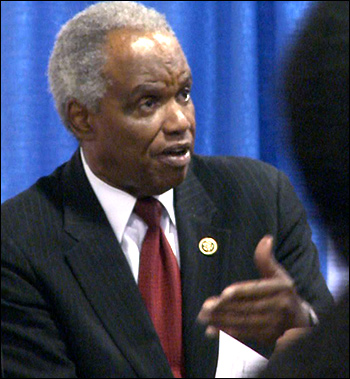
GA-13 Rep. David Scott (D)

June 11, 2020 — Voting problems in Atlanta delayed counting and reporting from Tuesday’s primary, but it is now clear that nine-term veteran Rep. David Scott (D-Atlanta) has been forced into an Aug. 11 runoff election with a candidate who spent less than $1,000 on her primary campaign.

With votes still being counted, Rep. Scott garnered only 46.8 percent of the vote to date, with the remaining 53.2 percent being divided among three Democratic challengers. Advancing into the runoff is former state representative Keisha Waites, who managed to attract 31.1 percent of the vote despite spending only $875.00 on her race.

In third place is former local county Democratic Party chairman Michael Owens (14.1% percent), who has previously challenged Rep. Scott in a party primary, while former East Point mayor Jannquell Peters finished fourth (8.0 percent). The latter two candidates have been eliminated.

Though tabulating continues, almost 88,000 votes have been recorded in this primary race, suggesting that turnout is robust. In the only recent Democratic primary from this congressional district, back in 2014, the total turnout was under 36,000 individuals. Combined, the latter two candidates, Owens and Peters, spent approximately $60,000. By contrast, Rep. Scott spent almost $900,000 so far on his 2020 political effort.

As mentioned above, the only other time Scott was challenged for re-nomination since his original 2002 congressional campaign came in 2014. The congressman defeated Owens in that year, 82-18 percent. In his nine general election victories, Scott has averaged 79.4 percent of the vote, including running unopposed three times.

The 13th District is a suburban Atlanta district that sits south and southwest of the city before moving westward and then north to encompass part of Cobb County. The CD contains all of Douglas county and parts of five others, including Cobb, Fulton, and Fayette. The Citizen Age Voting statistics record a 58.1% percent population figure for African Americans here as compared to 33.4 percent for non-Hispanic whites.

Continue reading

Last Night’s Results

By Jim Ellis

June 10, 2020 — Voters in Georgia, Nevada, North Dakota, South Carolina, and West Virginia chose nominees last night or sent finalists to runoffs in the two southern states.


• GEORGIA: Former vice president Joe Biden clinched his party’s presidential nomination with an 83 percent victory in the Georgia primary and sweeping the state’s 105 delegates. By all counts, Biden has secured the 1,991 bound first-ballot delegate votes to seal the nomination.

In the Democratic US Senate primary, former congressional candidate and documentary filmmaker Jon Ossoff looks to have fallen just short of the 50 percent mark to secure the party nomination. If the trend holds as the final votes are counted, he will advance to an Aug. 11 runoff election. After trailing former lieutenant governor nominee Sarah Riggs Amico most of the night, ex-Columbus mayor Teresa Tomlinson appears to have secured the second runoff position in a close vote.

Logistical problems in the Atlanta area could delay the final totals, so whether Ossoff won outright and deciding the second runoff position are still not necessarily determined. It is likely, however, that a runoff will occur between Ossoff and Tomlinson, assuming the latter candidate chooses to continue. The percentage spread between the two is a lopsided 49-16 percent.

Numbers are also not final in the Atlanta suburban 7th District, but it appears that 2018 Democratic nominee Carolyn Bourdeaux, who came within 420 votes of winning the seat in that year, came close to avoiding a runoff with 46 percent of the vote. Should this trend hold, she will face state Rep. Brenda Lopez Romero (D-Norcross) in the secondary election.

On the Republican side, retired Navy officer and physician Rich McCormick won the crowded primary outright as he topped 55 percent, an impressive total within a field of seven candidates. State Sen. Renee Unterman (R-Gwinnett County) placed a distant second.

In the open 9th District, the seat that Rep. Doug Collins (R-Gainesville) is leaving to run for the Senate, state Rep. Matt Gurtler (R-Tiger) and retired Navy officer Andrew Clyde will advance to the Aug. 11 runoff. Former US Rep. Paul Broun finished in fourth position. In this safely Republican northeast Georgia district, the runoff winner will clinch the general election.

Continue reading

Moving to the General

By Jim Ellis

June 4, 2020 — The June 2nd primary featured 10 states, and now the candidates are set for November. Below is a recap of the races from Tuesday’s primary that project as competitive this fall, and an early prognosis for each.


IN-5:

• St. Sen Victoria Spartz (R) vs. Christina Hale (D)
Trump ’16: 53-41%    |   2018 Congressional: 57-43% R (Brooks)

Ukrainian born state Senator Victoria Spartz topped a field of 15 Republican candidates with 41% on Tuesday night, after a nasty primary that resulted in some of the other contenders running ads touting that they were born in America. Democrat Christina Hale, a former state Representative and 2016 Lt. Governor nominee, had an easier time in her primary, and won with 39% of the vote, which was slightly under pre-election estimates.

Ms. Spartz is the favorite to win in November in a traditionally Republican district, but one that is moving more toward the center. Democrats will see how this race begins to unfold, but this is a seat on their secondary target list. We can expect Spartz to be tested early, and if the numbers suggest an opening, the Democrats will go for an upset win.


IOWA-SENATE:

• Sen. Joni Ernst (R) vs. Theresa Greenfield (D)
Trump ’16: 51-42%    |    2016 US Senate: 60-36% R (Grassley)

Iowa is one of three Republican firewall states to keep the Senate majority, with Montana and Maine being the other two. Sen. Joni Ernst seeks her first re-election and is now paired with Des Moines real estate executive Theresa Greenfield. The Democratic establishment backed Greenfield, but she came under attack in the primary and defeated two opponents with 47% of the vote, a bit under pre-election projection.

All races in Iowa are competitive, so we can expect intense political competition here from the presidential race all the way through each of the state’s four House districts. Polling will show the Senate race as close until Election Day, but what should be another Trump victory here will help set the table for the remainder of the races. Sen. Ernst is rated as a slight favorite as the general election now officially begins.


IA-1:

• Rep. Abby Finkenauer (D) vs. St. Rep. Ashley Hinson (R)
Trump ’16: 49-45%     |     2018 Congressional: 50-45% D

Freshman Rep. Abby Finkenauer (D-Dubuque) defends her seat for the first time and faces a top opponent in Republican state Rep. Ashley Hinson (R-Cedar Rapids), a former television news anchor. The 1st District looked to be the safest Democratic seat in the state after 2011 redistricting, but the electorate hasn’t voted that way. This will be a top tier Republican challenge race, and one to watch. Rep. Finkenauer certainly begins with the incumbent’s advantage, but the IA-1 campaign is a top national GOP target. If the Republicans are to have any chance of re-taking the House majority, Ms. Hinson will have to win.


IA-2:

• Rita Hart (D) vs. St. Sen. Marianette Miller-Meeks (R)
Trump ’16: 49-45%     |     2018 Congressional: 54-42% D (Loebsack)

The 2nd District, located in Iowa’s southeastern sector, is the district that has played best for Democrats during the decade despite President Trump carrying it in 2016.

Democrats feature former state Senator and 2018 Lt. Governor nominee Rita Hart who was even unopposed in an open seat primary. Republicans counter with first-term state Senator Marianette Miller-Meeks (R-Ottumwa), who begins her fourth race for the congressional seat. Ms. Hart is the clear favorite here, and Dr. Miller-Meeks will have to prove her credibility nationally after three losses. If she does not begin the general election in competitive fashion, this race will quickly turn Ms. Hart’s way.
Continue reading

Kansas Beginning to Hop

By Jim Ellis

June 1, 2020 — The open Kansas Senate race is more interesting this year than typical for what is normally a safe Republican state; in fact, it is becoming one of the most intriguing races in the country.

Former Kansas secretary of state and 2018 Republican gubernatorial nominee Kris Kobach

Democrats believe they have a chance of stealing this contest if former Kansas secretary of state and 2018 defeated gubernatorial nominee Kris Kobach were to win the GOP nomination. And it appears that early polling numbers and even the Kansas Republican Party chairman agree.

Things started to unravel back in the 2018 Republican gubernatorial primary when Kobach, then the sitting Kansas secretary of state, challenged Gov. Jeff Colyer in the party nominating contest and managed to beat him by 343 votes from more than 317,000 ballots cast. Colyer ascended to the governor’s office when elected incumbent Sam Brownback (R) resigned to accept a federal position.

The outcome split the already badly divided Kansas Republican Party – fragmented between moderates and conservatives – and coupled with a lackluster, while some say non-existent, Kobach general election gubernatorial campaign effort, Democrat Laura Kelly was able to win the statewide contest 48-43 percent with nine percent going to various minor party candidates.

Democrats are hyped because of that outcome, and Republicans clearly nervous. After months of speculation that US secretary of state and former Kansas congressman Mike Pompeo would leave his position and enter the Senate contest, the party leadership is now solidly coalescing around US Rep. Roger Marshall (R-Great Bend). Republican Party chairman Mike Kuckelman last week even publicly called upon all of the candidates beside Rep. Marshall to exit the race in order to give the congressman a one-on-one shot at denying Kobach the party nomination.

Yesterday, state Senate President Susan Wagle (R-Wichita) announced she would end her Senate quest, stating among other reasons that she did not want to split the party. Kuckelman believes that that crowded field would help Kobach win the nomination because he could do so with a plurality vote, fearing that his hard-right base may be enough to win a crowded field race.

Continue reading

Super June & Oregon Primary Results

By Jim Ellis

May 21, 2020 — With so many early primary states moving their elections to June due to the coronavirus shut down, no less than 24 states will hold their nominating event in the upcoming month, making this the most active primary month during the election cycle.

A dozen of the states are still observing their regular political calendar, but 12 more moved into June from earlier dates. Therefore, the following adjusted calendar has been locked into place:


JUNE 2

Connecticut (presidential only)
Idaho (from May 19; though mail voting began on the original primary day)
Indiana (from May 5)
Iowa
Maryland (from April 28)
Montana
New Mexico
Pennsylvania (from April 28)
Rhode Island (presidential only)
South Dakota
West Virginia (from May 12)


JUNE 9

Georgia (from May 19)
Nevada
North Dakota
South Carolina


JUNE 20

Louisiana (presidential only)


Continue reading

Massachusetts Senate: Total Opposite

By Jim Ellis

May 12, 2020 — On Friday, the most recent Massachusetts Senate Democratic primary poll was released, and it presents a very different conclusion to the close race results previously published.q

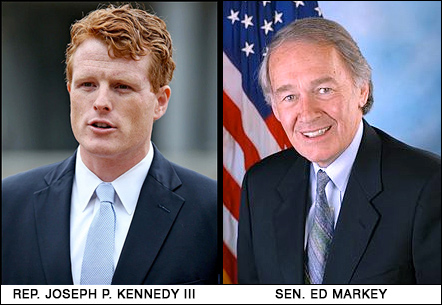
Late last week, we covered a University of Massachusetts at Lowell poll (April 27-May 1; 1,000 registered Massachusetts voters, 531 likely Massachusetts Democratic primary voters) that found Sen. Ed Markey (D) locked in a virtual dead heat (42-44 percent) with Rep. Joseph P. Kennedy III (D-Newton) in their intra-party fight.

Emerson College (May 5-6; 740 registered Massachusetts voters, 620 likely Massachusetts Democratic primary voters) conducted a statewide Massachusetts poll on the heels of the UMass effort and sees Rep. Kennedy crushing Sen. Markey, 58-42%.

The focal point of the Emerson poll was the presidential race and reaction to COVID-19, so just one question was asked about the Senate race. Unlike the UMass survey, Emerson did not release segmentation figures for the Senate ballot test question, so it becomes more difficult to judge reliability.

Since the two polls are so far apart, questions arise as to which is the more accurate. The sponsors are known pollsters who regularly survey Massachusetts – Emerson College is located in Boston, while the UMass affiliate resides in Lowell – so neither has a particular geographic familiarity advantage over the other. The sample sizes are both large enough to render strong results, and each has accurately depicted the state in previous studies.

Continue reading

The Bay State Brawl

By Jim Ellis

May 11, 2020 — Many seasoned Massachusetts political observers believed that the intra-party Democratic US Senate battle between incumbent Ed Markey and Rep. Joseph P. Kennedy III (D-Newton) would never happen.

At the beginning of the election cycle the prevailing local political wisdom was, if Kennedy were to enter the statewide race, that Sen. Markey would simply retire after spending 48 consecutive years in elective office, counting his time in the state legislature, US House, and Senate, rather than taking on a Kennedy and risk losing. Such, however, proved not to be the case. With the candidate filing deadline passing this week, the Sept. 1 showdown between Sen. Markey and Rep. Kennedy is on. And, the latest poll again confirms the two men are locked in a dead heat.

The University of Massachusetts at Lowell released their current survey results of the Bay State electorate (April 27-May 1; 1,00 registered Massachusetts voters, 531 likely Massachusetts Democratic primary voters) and the Democratic US Senate primary ballot test finds Rep. Kennedy clinging to a 44-42 percent lead. This is not much different than the university’s February poll that found Kennedy ahead 35-34 percent.

In all, this has to be a very encouraging result for Sen. Markey. Running against the so-called “Kennedy mystique,” the media-driven term that matters more in Massachusetts than anywhere else, and qualifying for the ballot because the courts reduced the number of required petition signatures because of the COVID-19 imposed precautions, Sen. Markey’s ability to hold his status within the margin of error against Rep. Kennedy has to be considered a victory for the veteran politician.

The money count is almost as close as the polling, except Markey has the advantage. Looking at the March 31 Federal Election Commission financial disclosure reports, Sen. Markey has raised just over $8.8 million for the campaign cycle as compared to $5.9 million for Rep. Kennedy. The senator also has the edge in cash-on-hand resources, $4.4 million to $3.8 million. Therefore, having enough funding to communicate their campaign message to the voters will not be a problem for either man.

Continue reading