Category Archives: Presidential campaign

The Relevancy of RFK Jr.

By Jim Ellis — Thursday, April 4, 2024

Presidency

Presidential candidate Robert F. Kennedy Jr. (I) Photo by Gage Skidmore

Stories are popping up in the political media about President Joe Biden seeing a resurgence of strength in recent national polls, but a bigger story is evolving.

The precursor to the election’s final outcome may prove to be Robert F. Kennedy Jr. and the minor party candidates garnering enough votes to the point where their support tips the electorate towards one candidate or the other.

Additionally, while President Biden and former President Donald Trump consistently find their approval ratings upside down in double-digit point margins that are routinely closer to 20 rather than 10, Kennedy is always viewed as the more popular figure. Though his favorability index is only in slightly positive territory for the most part, generally from three to five percentage points, his standing is far superior to that of the two presidents.

Even when his unfavorable perception slightly exceeds those who view him favorably, Kennedy never drops below the three to five-point negative range. The FiveThirtyEight data organization charts most polling firms daily and finds Kennedy’s average favorability index in positive territory consecutively from May 18, 2023, all the way to today.

As we all know, the national ballot test is irrelevant in forecasting the presidential outcome because it’s the electoral votes calculated in the states that determine the eventual winner. National polling, however, generally provides a good indicator of candidate strength.

Several polls have recently been released and the four most contemporary all find Kennedy now consistently in double-digit support territory. In two polls, HarrisX for Forbes Magazine, and Quinnipiac University, the addition of Kennedy and the minor candidates to the polling questionnaire changes the outcome after the respondents are presented the initial query of a choice between Biden and Trump.

HarrisX (March 26; 1,010 registered US voters; online) returns a 50-50 percent tie between Biden and Trump when the undecided respondents are pushed to make a choice. Yet, when Kennedy and the minor party candidates are added, the lead swings to Trump by a small two percentage-point margin.

Quinnipiac University (March 21-25; 1,407 registered US voters; live interview) sees Biden topping Trump 48-45 percent, but when Kennedy and the minor party candidates are added, Trump secures a one-point edge.

The most recent YouGov/Economist poll (March 24-26; 1,415 registered US voters; online) sees Trump also holding a one-point lead with Kennedy only in low single digits. The Trafalgar Group (March 29-31; 1,029 likely US general election voters; multiple sampling techniques) also finds a consistent result with the previous pollsters: Trump 43, Biden 40, Kennedy 11, Others three percent.

Therefore, we have several conclusions that appear to be correct. First, President Biden is improving his position against the field. Second, Trump appears in a long-term stagnant position, and third, Kennedy is gaining enough support to be a factor in tipping the race from one candidate to the other.

At this particular point in time, the data responses suggest that the Kennedy presence damages President Biden to a slightly greater degree than former President Trump. But, as the campaign progresses, this factor could certainly change.

We can expect to see national and swing-state polling varying from now until the election in a seesaw fashion between President Biden and former President Trump. The unanswered question revolves around Kennedy and just how well he will perform when actual votes are cast, and just who in the end will benefit more from his presence on the key swing state ballots.
Last Night’s Primary Results

By Jim Ellis — Wednesday, April 3, 2024

Primaries

We saw four more states vote yesterday and even though the presidential nominations are clinched in both parties, valuable information can still be extracted from last night’s reported results.

So far, presidential voting has occurred in 36 states, and 32 where both parties have comparable systems. In four states, Delaware, Florida, Idaho, and Mississippi, no votes were recorded in one of the party primaries because a major candidate ran without opposition.

Last night, voters in Connecticut, New York, Rhode Island, and Wisconsin had the opportunity of casting their presidential nomination ballots. To no one’s surprise, President Joe Biden and former President Donald Trump easily swept their respective elections and added to their delegate totals. Each man recorded enough bound delegate votes on March 12 to become the respective Democratic and Republican Party’s presumptive presidential nominees so the later primaries are simply providing “icing on the cake.”

The bigger story throughout the 32 comparable states may be the turnout pattern and what that might mean for the general election. If the turnout trends we have seen in the states where ballots have been cast are a precursor to what happens in November, then Trump is well positioned to unseat President Biden.

Though the Democrats had a good night yesterday as more of their party members voted in Connecticut, New York, and Rhode Island, overall, the Republican turnout has been far superior, and in some very surprising states.

At this point, counting the unofficial numbers from last night, we have seen just over 30 million people vote in the 32 comparable states. Of those, 57.1 percent have voted in Republican primaries. One may argue that the more competitive race was on the Republican side, and that could account for the imbalance between the two parties. While there is validity to this line of reasoning, Democratic turnout is running below the party’s historical participation average even in some of their strongest states, thus highlighting the unusual trend.

Out of these 32 states, more Republicans have voted than Democrats in 24 of the domains while the opposite trend occurred in only eight. Of the Democrats’ eight majority turnout states, only one, Utah, is a surprise. The Democratic primary preference share of only 53 percent in both Massachusetts and Washington, however, does raise eyebrows. The same for Republicans recording that same percentage split in Louisiana.

Republicans posted unexpected turnout advantages in Colorado, Hawaii, Maine, Minnesota, New Hampshire, Vermont, and Virginia. While none of these states are likely to be in serious play for Trump during the general election the turnout trends here are noteworthy, nonetheless.

What may be more troubling for the Biden campaign team is how the swing states performed in the primary participation race.

Here, again, Trump outperformed the president’s Democratic Party in Arizona (58.9 percent of the total turnout chose to vote in the Republican primary), Georgia (67.0 percent), Michigan (59.2 percent), Nevada (55.9 percent), North Carolina (60.7 percent), Ohio (68.2 percent), and last night in Wisconsin (51.7 percent). The substantial margins of individuals choosing to vote in the Republican primary is a clue that former President Trump has a chance to build a new coalition of voters in these most critical of states.

The Nevada Republican total is at least slightly skewed. The combined numbers from the non-binding primary and their delegate apportioning caucuses are tainted because voters could participate in both the primary and a respective caucus, which were held on different days. There is no available data suggesting what percentage of voters participated in both, but it appears from the totals associated with each event that a substantial number cast their vote in each election.

Christie Says No to No Labels; Florida, South Carolina Redistricting; Quick Candidate Filing in New Hampshire

By Jim Ellis — Friday, March 29, 2024

President

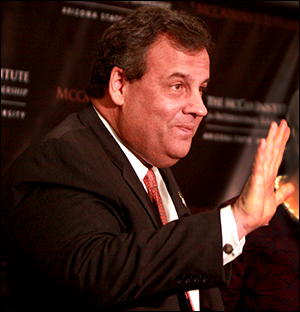
Former New Jersey Gov. Chris Christie (R) says no to No Labels. / Photo by Gage Skidmore

No Labels: Christie Says No — The No Labels Party is seemingly having a difficult time either choosing a presidential nominee or having someone accept their offer to run on their ballot line. A story emerged that former New Jersey governor and ex-presidential candidate Chris Christie (R), after being in negotiations with No Labels, has decided not to pursue entering the 2024 presidential general election as this party’s standard bearer.

Christie, in announcing his decision, said “I also believe that if there is not a pathway to win and if my candidacy in any way, shape or form would help Donald Trump become president again, then it is not the way forward.”

The No Labels membership has voted to field a presidential ticket, but so far, the leadership has not brought forth a national candidate pairing.

House

Florida Redistricting: Federal Judicial Panel Rejects Plaintiffs’ Arguments — A three-judge federal panel has rejected a lawsuit claiming that the Sunshine State congressional map violates the 14th and 15th Amendments to the US Constitution. The ruling’s result means that the current plan will remain in place.

The Florida map, from which the district electorates chose 20 Republicans and eight Democrats, is the Republicans’ strongest, nationally. Therefore, not changing this plan boosts GOP chances of maintaining their small majority.

SC-1: District Looks to Stand — With the South Carolina candidate filing deadline upon us on April 1 and the US Supreme Court so far not ruling on the redistricting case before them, the original three-judge panel has taken action. The federal jurists who initially declared the Palmetto State’s 1st District (Rep. Nancy Mace-R) a racial gerrymander ruled yesterday that the current configuration can stand for the 2024 election. The panel acted because SCOTUS has failed to issue their decision after hearing oral arguments and considering that the filing deadline is Monday.

The fact that the high court has not yet ruled suggests that the district will stand. Though the lawsuit was targeted to the racial complexion of the 1st District, changing this seat will invariably alter at least one other. South Carolina has seven districts that are split in in a 6R:1D ratio.

NH-2: First Candidate Announcement — A day after six-term New Hampshire US Rep. Annie Kuster (D-Hopkinton) announced that she will not seek re-election, a former gubernatorial nominee came forward to declare for the seat. Executive Councilor Colin Van Ostern (D), who held now-Gov. Chris Sununu (R) to an initial 49-47 percent victory in 2016, officially threw his hat into the congressional political ring.

New Hampshire’s 2nd is a politically marginal district that leans Democratic. Republicans will certainly contest the seat, but the quick Van Ostern move suggests he will become the early favorite not only for the Democratic nomination, but to hold the seat in November.

The New Hampshire filing deadline is not until June 14, so potential candidates have considerable time to make their decisions. Crowded fields are expected in both parties, but possibly less so for the Democrats now that Van Ostern has declared his intentions so quickly.

RFK Jr.’s VP Choice; Swing State Data; Casey’s Lead Diminishing; Cruz Polls Show Tight Texas Race

By Jim Ellis — Wednesday, March 27, 2024

President

Presidential candidate Robert F. Kennedy Jr. (I)

Robert F. Kennedy Jr.: VP Choice — Yesterday presidential candidate Robert F. Kennedy Jr. (I) announced that wealthy entrepreneur Nicole Shanahan, the founder of the ClearAccessIP legal technology company that she later sold, will be his vice presidential running mate. Shanahan is, like Kennedy, an environmental activist. She contributed $4 million to his campaign to help finance the Super Bowl ad that the Kennedy campaign ran to emphasize his family history. In the 2020 presidential race, Shanahan contributed to Democratic candidates Pete Buttigieg and Marianne Williamson.

Kennedy has qualified for the ballot in the state of Wisconsin but may have to re-start his petition drive in Nevada. RFK Jr. is reportedly qualified or in strong position to do so in eight states: Arizona, Georgia, Hawaii, Nevada, New Hampshire, South Carolina, Utah, and now Wisconsin. He may have problems in Nevada, however. The submitted petitions may be disqualified because Kennedy did not list a vice presidential running mate, which is a requirement under Nevada election law.

Of the eight states in which his name so far will appear, four are critical swing-state battlegrounds. Therefore, the Kennedy candidacy could affect the final result in the highly competitive entities of Arizona, Georgia, Nevada, and Wisconsin.

Morning Consult: Releases Latest Swing State Data — The Morning Consult organization released the latest data on their continuing swing state tracking project. This iteration shows improvement for President Joe Biden as he records a one-point edge in Wisconsin and is tied in Pennsylvania and Michigan. The tracking polls were conducted from October through March, and regularly surveyed at least 437 registered voters from each of the seven tested states.

The sampling universes in the remaining four states, Arizona, Georgia, Nevada, and North Carolina, continue to support former President Donald Trump. Unless one of the tied states (Michigan or Pennsylvania) falls Trump’s way, he cannot win a majority in the Electoral College even though he continues to poll ahead in the majority of swing states.

Senate

Pennsylvania: Casey’s Lead Diminishing — Two new polls are suggesting that the Pennsylvania Senate race is getting closer. Susquehanna Research just released a statewide survey completed in early March (Feb. 27-March 5; 450 likely Pennsylvania voters; live interview) that projects Sen. Bob Casey Jr. (D) to be leading former hedge fund CEO David McCormick (R) by a 48-42 percent margin. The result is virtually the same as the firm found in January (Casey leading 46-42 percent), but considerably different than the 12-point Casey advantage they detected in their survey from 10 months ago.

Emerson College, polling for The Hill newspaper (March 10-13; 1,000 registered Pennsylvania voters; multiple sampling techniques), sees an even tighter 52-48 percent margin when the undecided respondents are pushed for an answer.

While the current tendencies appear to give McCormick some momentum, the voter history, and legacy of the Casey family (aside from Sen. Casey winning three US Senate terms, the incumbent’s father, Bob Casey, Sr., served two terms as governor and eight years as attorney general) suggest upending the senator remains a very tall order.

Texas: Cruz’s Zig Zag Polling Pattern — The latest Texas statewide survey finds Sen. Ted Cruz (R-TX) leading US Rep. Colin Allred (D-Dallas) only by a relatively small margin. Marist College (March 18-21; 1,117 registered Texas voters; multiple sampling techniques) projects Sen. Cruz holding a 51-45 percent advantage over Allred. A month ago, the University of Texas found the senator holding a 12-point lead. In January, Emerson College saw Cruz claiming only a two-point edge.

It would not be surprising to see a similar zig-zag pattern continue through the bulk of the election period. Because Sen. Cruz’s favorability numbers tend to be below average for a two-term incumbent, the issue matrix within this campaign cycle, particularly in Texas, will favor the Republican office holder.

Though Rep. Allred is certainly a credible Democratic challenger it is difficult to see Sen. Cruz, or any Lone Star State Republican, losing. With President Biden leading the Democratic ticket and having to defend his energy and border policy stances in a state where his party hasn’t scored a major statewide win since 1994, it increases the difficulty factor for a Democratic upset at all political levels. Therefore, expect to see differing polls throughout the campaign cycle, but the actual election will likely culminate in a Cruz victory margin of at least five percentage points.

No Labels Party – Spoiler Alert? Sen. Menendez Says He’s Out; Rosendale Out, Again; Santos to Run Again

By Jim Ellis — Thursday, March 14, 2024

President

Georgia Lt. Gov. Geoff Duncan

No Labels Party: Votes to Field Candidate — On Friday, the No Labels Party members voted to move forward with fielding a presidential ticket in this year’s election, but apparently the organization is not close to identifying who might be those contenders. Some within the organization suggested nominating former Georgia Lt. Gov. Geoff Duncan (R), who is critical of former President Donald Trump.

If No Labels were to go in this direction, it would signal that they are trying to be a spoiler — despite publicly saying that is not what their intention is — i.e., using a figure such as Duncan to draw votes away from Trump in the critical state of Georgia, which would give President Joe Biden a strong chance of again winning the state, thus assuring his re-election. Though the group wants to move forward with nominating a presidential candidate, the members are apparently a long way from selecting a ticket and gaining agreement from those who they might eventually choose.

Senate

New Jersey: Sen. Menendez Won’t Seek Re-Election — Facing multiple federal charges and consistent polling data showing him only with single-digit support within his own party, Sen. Bob Menendez (D) announced on Friday that he will not seek re-election later this year. This leaves the Senate Democratic field ostensibly to US Rep. Andy Kim (D-Moorestown) and Tammy Murphy, the state’s First Lady.

Sen. Menendez now becomes the ninth incumbent not to seek re-election in 2024, a figure that represents more than one-quarter of the 34 in-cycle senators. Of the nine, six are Democrats, two are Republican, and one, Sen. Kyrsten Sinema (I-AZ), who is now an Independent. Despite the large number of openings, it appears only two, Arizona and Michigan, will be competitive in the general election while three, Maryland, New Jersey, and Utah will see highly volatile Democratic (MD, NJ) and Republican (UT) primary elections.

House

MT-2: Rosendale Out, Again — Rep. Matt Rosendale (R-Glendive), in a statement saying he has received recent death threats amidst rumors of an extra-marital affair, has now decided he will not file for re-election. Yesterday was the Montana candidate filing deadline. MT-2 again joins the open seat ranks, as it did when Rosendale announced his short-lived US Senate campaign in February, which lasted only a week. He will retire from the House after serving two full terms, one as the at-large representative, and the other from District 2 since Montana earned a new seat in 2021 reapportionment.

State Superintendent of Public Instruction Elsie Arntzen announced before Rep. Rosendale decided to step aside that she would continue running for the House. State Auditor Troy Downing confirmed his congressional candidacy shortly after the congressman’s retirement announcement.

It is expected that most, if not all, of the seven other announced contenders, including former Congressman Denny Rehberg and state Senate President Pro Tempore Ken Bogner (R-Miles City), will continue with their congressional campaigns. The Montana primary election will be held June 4. The new Republican nominee will be a lock to win the general election in an eastern Montana district that the FiveThirtyEight data organization rates as R+30.

NY-1: Santos to Run Again — Expelled US Rep. George Santos (R), announced that he will indeed be on the ballot to return to Congress. He will not challenge Rep. Tom Suozzi (D-Glen Cove), who replaced him in New York’s 3rd Congressional District, but rather will oppose 1st District freshman Rep. Nick LaLota (R-Suffolk County). Santos calls LaLota an “empty suit RINO” (Republican In Name Only). LaLota was especially critical of Santos during his short tenure in office.

The new redistricting map makes the 1st District more Republican, but it is highly unlikely the new configuration will allow Santos to deny Rep. LaLota renomination. The New York primary is scheduled for June 25.

Last Night’s Primary Results; Rep. Buck to Resign; California Projections; Close Polls in North Carolina

By Jim Ellis — Wednesday, March 13, 2024

President

Primary/Caucus Results — Primaries were held in three states last night, and even without results from the Hawaii caucuses, both President Joe Biden and former President Donald Trump exceeded the bound delegate vote requirement to score first ballot nominations. Therefore, both men become their party’s “presumptive nominee,” meaning they will become the official standard bearer at the respective party conventions in July (Republicans) and August (Democrats).

The Georgia, Mississippi, and Washington primaries went as expected with both Biden and Trump winning with landslide totals against opponents who appear on the ballot but who have withdrawn from the race.

Mississippi was the state that held its full ballot primary last night. Sen. Roger Wicker (R) won renomination against two opponents with just over 60 percent of the vote. Wicker won all but 10 counties in the state from a total universe of 82. All four Magnolia State US House incumbents were either unopposed for renomination or easily won. Freshman Rep. Mike Ezell (R-Pascagoula) had two GOP opponents, and still surpassed 73 percent of the vote. All four: Reps. Trent Kelly (R-Saltillo/Tupelo), Bennie Thompson (D-Bolton), Michael Guest (R-Brandon/Jackson), and Mr. Ezell, now become prohibitive favorites to win again in November.

House

Rep. Ken Buck / Photo by Gage Skidmore

CO-4: Rep. Buck to Resign — Colorado US Rep. Ken Buck (R-Windsor), who had previously made public his intentions not to seek a sixth term later this year, announced yesterday that he will resign much sooner — on March 22. The move initiates the calling of a special congressional election — the fourth in the country prior to the regular general election. Gov. Jared Polis (D) responded that he will schedule the special vote concurrently with the state’s June 25 primary election.

In Colorado, special election nominations are handled through vacancy committees that the local political parties construct. This means the voters will go to the polls only once to fill the balance of the current term.

This system likely plays to Rep. Lauren Boebert’s (R-Silt) detriment. It is highly unlikely that the District 4 vacancy committee members will choose her as the party nominee considering she is still the District 3 incumbent. This also means the dozen announced candidates already vying to replace Rep. Buck will see one of their colleagues likely chosen for the special.

California: More Finalists Projected — As the California ballot counting process moves laboriously along, the Associated Press is projecting that three more candidates will qualify for the general election from the top-two jungle primary. In the Los Angeles-anchored 34th District, both incumbent Rep. Jimmy Gomez (D) and movie executive David Kim (D) will again advance into the general election. This will be the third consecutive election in which the two have faced each other in a double-Democratic contest. In 2022, Rep. Gomez registered only a 51-49 percent general election win over Kim, so another close race is expected later this year.

In the open South San Francisco Bay seat from which veteran Rep. Anna Eshoo (D- Atherton) is retiring, former San Jose Mayor Sam Liccardo (D) is assured of advancing to the November election, but his eventual opponent has still not been decided. In second place is San Mateo Supervisor and former state Sen. Joe Simitian (D), who is only 749 votes ahead of Assemblyman Evan Low (D-Campbell) with approximately 26,000 ballots remaining to be counted.

Whoever wins the special will have a major advantage in the subsequent November regular election if the primary electorate chooses someone in the regular primary other than whom the vacancy committee decided upon. Another option the committee may have is to select someone who agrees not to seek a full term. Therefore, we will see more political drama occurring in Colorado as the campaign to replace Rep. Buck continues to unfold.

Governor

North Carolina: Two More Close Polls — Now that Lt. Gov. Mark Robinson (R) and Attorney General Josh Stein (D) are the official gubernatorial nominees of their respective political parties after last Tuesday’s primary vote, Survey USA and the Cygnal firm went into the field to test the general election between the two new official nominees.

The S-USA poll, conducted for WRAL-TV in Raleigh (March 6-9; 850 NC adults; 736 registered North Carolina voters; 598 likely North Carolina general election voters; online), sees AG Stein leading Lt. Gov. Robinson by a tight 44-42 percent margin, which is in the consistent realm of previously released surveys. When asked about presidential preference, the sampling universe would favor former President Trump over President Biden by a 50-45 percent margin in this most critical of swing states.

The Cygnal survey was conducted during the March 6-7 period (600 likely North Carolina voters; live interview & text) and produced a slightly different outcome. While projecting a similarly close result as Survey USA, Cygnal sees Lt. Gov. Robinson leading the gubernatorial race with a 44-39 percent spread. The latter firm also finds former President Trump holding a five point lead over President Biden but with a slightly different 45-40 percent count.

Four Primaries Today; Fong Advances; Trump Endorses Nancy Mace; Indiana Governor’s Poll

By Jim Ellis — Tuesday, March 12, 2024

President

Primaries Today: Four States — Voters go to the polls today in Georgia, Hawaii (Republican Caucus only), Mississippi (full primary), and Washington.

In all, there are 161 Republican delegates at stake in the four states, and with former President Donald Trump already having 1,078 bound delegates of the 1,215 he needs to score a first ballot victory, securing just over 85 percent of the available delegates tonight will allow him to clinch “presumptive nominee” status. This means he will have enough bound delegates to claim a first ballot victory at the Republican National Convention in Milwaukee during mid-July. For President Joe Biden, it appears he will clinch “presumptive nominee” status next week in the March 19 primaries.

In Mississippi, a quiet night is expected regarding the full ballot primary. Sen. Roger Wicker (R) faces two Republican challengers, including state Rep. Dan Eubanks (R-Walls), but there is little doubt the incumbent will be renominated outright for a fourth term tonight. In House races, each of the state’s four incumbents: Reps. Trent Kelly (R-Saltillo/ Tupelo), Bennie Thompson (D-Bolton), Michael Guest (R-Brandon/Jackson), and Mike Ezell (R-Pascagoula), are seeking re-election and only Ezell faces an intra-party challenge.

The first-term congressman, who unseated then-Rep. Steven Palazzo in the 2022 Republican nomination battle, faces two Republican opponents. Businessman Carl Boyanton, who finished fifth in the 2022 congressional primary with just 6.2 percent of the vote, returns for a re-match with Ezell, and retired Army veteran Michael McGill joins them. Rep. Ezell is expected to easily win renomination tonight, thus avoiding an April 2 runoff election. Should any candidate fail to reach majority support in the initial primary, a runoff election then becomes mandatory.

House

CA-20: Fong Officially Advances — NBC News is projecting that state Assemblyman Vince Fong (R-Bakersfield) will advance into the regular general election from the still unfolding California jungle primary. Fong has 38.8 percent of the votes counted with approximately 26 percent of the ballots still outstanding.

Ironically, the group of candidates may be on the ballot again, in the March 19 special election to immediately replace resigned former Speaker Kevin McCarthy (R-Bakersfield), before the two regular general election participants are officially certified. Under the laborious California ballot counting process, the state still has another 31 days to count and then certify the final results.

Currently in second position is Tulare County Sheriff Mike Bourdeaux (R) with 25.8 percent, just ahead of Democratic educator and 2022 congressional nominee Marissa Wood who posts 22.0 percent of the vote. A total of 11 candidates are on the jungle primary ballot.

Should Sheriff Bourdeaux hold second place, a double-Republican regular general election will then occur in November. For the special election, with nine of the candidates competing, including Fong and Bourdeaux along with Wood, the special election result is expected to produce a similar result to the one just witnessed.

SC-1: Trump Endorses Rep. Mace — In 2022, former President Donald Trump endorsed former state Rep. Katie Arrington against Rep. Nancy Mace (R-Charleston), saying the incumbent is “a terrible candidate,” and she was renominated with only 53 percent of the vote.

Trump is singing a different tune for the 2024 election. Yesterday, he announced his support for Rep. Mace as she again faces a serious primary election opponent. Saying she is “a strong conservative voice for South Carolina’s 1st District,” Trump now endorses Mace as she faces former Haley cabinet secretary Catherine Templeton, who is campaigning from the congresswoman’s right political flank. Three other Republicans, including the representative’s former chief of staff, are also announced candidates.

If no one receives majority support in the June 11 primary election, a short schedule runoff will occur on June 25. The US Supreme Court is also considering a lawsuit that would declare this district an illegal racial gerrymander. If the court rules such, the 1st CD will have to be redrawn and that could lead to a postponed primary.

Governor

Indiana: Sen. Braun Way Up in Governor’s Poll — A new Emerson College statewide Indiana Republican primary survey (March 2-5; 526 likely Indiana Republican primary voters; multiple sampling techniques) finds US Sen. Mike Braun (R) cruising in his quest for the state’s open governorship. The Emerson data finds Sen. Braun posting a 34-7-7-5 percent split over Lt. Gov. Suzanne Crouch, venture capitalist Eric Doden, and former State Commerce Secretary Brad Chambers.

This data tracks with reported internal Braun data from the Mark It Red polling firm that records a 41-12 percent split over Lt. Gov. Crouch. The Indiana plurality primary is scheduled for May 7. The eventual Republican nominee will become a prohibitive favorite to then win the general election in November.

No Labels Party Announcement; California House Primaries Projected; Close IL-12 Poll;
Rosendale Challenger in Montana

By Jim Ellis — Friday, March 8, 2024

President

No Labels Party: Announcement Today — Later today, the centrist No Labels Party, the leadership of which has been working to secure ballot position around the country, is scheduled to make an announcement about their future plans. It is unlikely that they will announce a presidential ticket to compete with President Joe Biden, former President Donald Trump, Independent Robert F. Kennedy Jr., and others, but they are likely to reveal the voting preference of their members to move forward with entering the presidential campaign. If so, the declaration of the presidential ticket will come at a later date.

House

California: House Primaries Projected — The Associated Press has projected several more qualifiers in California House races from the all-party jungle primary. In Rep. Adam Schiff’s (D-Burbank) open 30th District, with 68 percent of the vote counted, Assemblywoman Laura Friedman (D-Burbank) has qualified for the general election, topping a field of 15 candidates. She now becomes a prohibitive favorite in the general election from a Los Angeles County congressional district where President Biden recorded 72 percent of the vote in 2020.

Fortunately for Friedman, Republican Alex Balekian is projected to have topped state Sen. Anthony Portantino (D-Glendale) for the second qualifying position. Balekian uniting the small number of district Republicans was enough to propel him past a fractured Democratic field. In the general election, however, a Republican has almost no chance of winning the seat.

Farther south in San Diego, the AP has projected that auto dealer and 2022 state Senate finalist Matt Gunderson (R) has qualified as Rep. Mike Levin’s (D-San Juan Capistrano) general election opponent. Unlike District 30, the San Diego-Orange County 49th District is much more competitive. Rep. Levin will again be favored to win the general election, but this contest could become close. Though losing a state Senate race in 2022 with similar boundaries to District 49, Gunderson attracted 48 percent of the vote. Rep. Levin won his previous re-election with 52.6 percent of the vote against frequent congressional candidate Brian Maryott (R).

IL-12: Close GOP Primary Poll Released — Illinois pollster M3 Strategies released a survey of the 12th Congressional District Republican primary between Rep. Mike Bost (R-Murphysboro) and former state senator and 2022 Republican gubernatorial nominee Darren Bailey. The poll (March 2-4; 473 likely IL-12 voters) projects Congressman Bost to be holding only a 45-39 percent edge over Bailey. When undecideds are pushed for an answer, Bost’s lead expands to 54-46 percent, largely on the strength of the oldest voting demographic segment.

The 12th District is one of three seats in Illinois that will elect a Republican, so this race will be decided in the March 19 Republican primary.

MT-2: Rosendale Primary Building — Rep. Matt Rosendale’s (R-Glendive) jump in and out of the Senate race and lack of clarity over whether he would seek re-election after leaving the statewide contest has led to him having at least one major primary opponent. State Superintendent of Public Instruction Elsie Arntzen, one of nine Republicans who had announced their congressional candidacy when Rosendale appeared headed for the Senate race, declared yesterday that she will file as a candidate on Monday and force a primary challenge.

None of the other candidates have definitively said they are leaving or staying in the congressional race, so Monday’s Montana candidate filing deadline will prove interesting. Former Congressman Denny Rehberg, State Auditor Troy Downing, and state Senate President Pro Tempore Ken Bogner (R-Miles City) are among the contenders who have yet to confirm or deny that they are continuing their congressional campaign now that the incumbent has decided to return.

Arizona Sen. Sinema Out of Running; More Super Tuesday News

By Jim Ellis — Thursday, March 7, 2023

Senate

Arizona: Sen. Sinema Bows Out — In addition to all the election results on Super Tuesday, Sen. Kyrsten Sinema (I), not seeing a victory path for herself, announced that she would not seek a second term. The Independent senator thanked Arizonans in a video message (above) for allowing her to serve for 20 years in the state House of Representatives, the US House, and the US Senate. At least in the short term, the Sinema departure appears to give Rep. Ruben Gallego (D-Phoenix) the inside track to winning the Arizona Senate seat over former GOP gubernatorial nominee Kari Lake.

The Sinema retirement decision means there are eight open Senate seats among the 34 statewide campaigns in the current election cycle.

President

Nikki Haley, Dean Phillips: Exit Presidential Race — Yesterday brought two campaign suspension announcements that at least unofficially clinch the respective Democratic and Republican presidential nominations for President Joe Biden and former President Donald Trump. Both Rep. Dean Phillips (D-MN) and ex-UN Ambassador Nikki Haley (R) indicated they are ceasing campaign activity, and thus ending any competition in the presidential nomination campaign.

Trump looks set to become the Republican presumptive party nominee on March 12, while President Biden will do so on March 19. The presumptive nominee is the individual who has secured a majority of legally bound first ballot delegates (1,968 for the Democrats; 1,215 for the Republicans), which guarantees a candidate the party nomination.

Rep. Phillips, who is not running for re-election to the House, publicly endorsed President Biden, while Haley did not announce support for Trump in her suspension declaration address, and said, “It is now up to Donald Trump to earn the votes of those in our party and beyond it who did not support him. And I hope he does that.”

Super Tuesday: GOP Turnout Overwhelms — In looking at the 14 Super Tuesday states where both parties held nomination events, in only two, California and Massachusetts, did more Democrats vote than Republicans. Among the more than 14.65 million people who voted in a major party Super Tuesday event, 60.6 percent chose to vote in the Republican primary. In even stalwart Democratic states such as Colorado, Maine, Minnesota, Vermont, and Virginia, more voters cast a Republican ballot than a Democratic. This is a bad sign for President Biden, as primary turnout often is a good indicator of voter enthusiasm.

Republican Leadership: Sen. Barrasso Not Running for Leader — Wyoming Sen. John Barrasso announced yesterday that he would not join the Republican Caucus battle for Leader to replace Mitch McConnell (R-KY). Instead, Sen. Barrasso announced that he will run for the Caucus’s number two slot, that of Senate Republican Whip. In the race for Leader are Sens. John Thune (R-SD) and John Cornyn (R-TX). Reports suggest that Sen. Rick Scott (R-FL) is also considering entering the race. Of the three potential Leader campaign combatants, Sen. Scott is the only one seeking re-election this year.

Super Tuesday Voting

Nikki Haley suspends her campaign. (CBS video)

By Jim Ellis — Wednesday, March 6, 2024

President

Biden, Trump: Almost Clean Sweeps — President Joe Biden and former President Donald Trump both took major steps forward to clinching renomination with almost clean sweeps in the Super Tuesday voting entities. Both men were respectively one entity short of winning every primary and caucus.

Former UN Ambassador Nikki Haley topped former President Donald Trump in the Vermont Republican primary, and President Biden lost the American Samoa Caucus to unknown candidate Jason Palmer. Irrespective of those bumps along the nomination road, both President Biden and former President Trump are on track to become their party’s presumptive nominee before March 20.

Haley, calling for Trump to mend fences with those who supported her throughout the primary process, announced this morning that she was suspending her campaign for the presidency. “The time has now come to suspend my campaign,” she said. “Our congress is dysfunctional and only getting worse. … Our world is on fire because of
America’s retreat. If we retreat further, there will be more war, not less. … We must bind together as Americans. Our country is too precious to let our differences divide us. It is now up to Donald Trump to earn the votes of those in our party and beyond it who did not support him. And I hope he does that.”

Senate

California: Schiff, Garvey Advance — Because the California counting system requires such a long period due to signature verification for the millions of mail-in ballots cast throughout the country’s most populous state, it may be several weeks before we have final totals. That means some of the many competitive races on the ballot may be undecided for quite a long period though most contests already have a projected winner.

The state’s premier campaign is the open Senate race where appointed Sen. Laphonza Butler (D) is not seeking a full term. Gov. Gavin Newsom (D) chose her as the interim senator when incumbent Sen. Dianne Feinstein (D) passed away in September.

With more than half the votes recorded, both Rep. Adam Schiff (D-Burbank) and retired baseball star Steve Garvey (R) have been projected to capture ballot positions in the general election. At this point, Rep. Schiff has 33 percent of the vote to Garvey’s 32 percent. They defeated Reps. Katie Porter (D-Irvine) and Barbara Lee (D-Oakland) who attracted 14 and seven percent of the vote, respectively. The final tallies could change, but it appears clear that Schiff and Garvey will continue onto the general election while all other contenders are now officially eliminated.

Texas: Allred Wins Outright — In a result that would have to register as a mild surprise, US Rep. Colin Allred (D-Dallas) secured majority support in the crowded US Senate Democratic primary to clinch the party nomination outright. He will now challenge Sen. Ted Cruz (R) in November.

House

Alabama: Moore Wins; CD-2 in Runoffs — The 1st District paired incumbents battle ended differently than polling suggested as Rep. Barry Moore (R-Enterprise) recorded a close victory over fellow Congressman Jerry Carl (R-Mobile). The two were tossed into the same district as a result of the court-ordered redistricting map designed to create a new majority minority seat. Rep. Moore, at this writing, looks to have secured a 52-48 percent victory margin.

Though Carl represents 59 percent of the new district and Moore the remainder, Moore performed much better in the portion of the new district that he currently represents. Therefore, Moore’s strong margins in familiar territory were enough to overcome Carl’s Mobile-area base. Rep. Moore is now a lock to win the general election.

The new open 2nd District will, as expected, feature runoff elections for both parties. The Democrats will host a secondary runoff race between former Obama Justice Department official Shomari Figures and state House Minority Leader Anthony Daniels (D-Montgomery).

For the Republicans, ex-state legislator Dick Brewbaker has qualified for the runoff but a tight battle for the second position exists between conservative attorney Caroleene Dobson and state Sen. Greg Albritton (R-Baldwin County), and it will require political overtime to determine which of the latter two advances.

The runoff elections are scheduled for April 2. The eventual Democratic nominee will be a heavy favorite to clinch the seat in November.

Governor

North Carolina: Nominees Chosen Today — As expected, the open governor’s primary yielded a general election that will feature Lt. Gov. Mark Robinson for the Republicans and Attorney General Josh Stein as the Democratic nominee. Both easily won their respective primary elections last night. A tight general election is forecast.