
Category Archives: Presidential campaign

The Effect of Christie Exiting Race; Dems Line Up for 2028; New Mexico’s Party-Switching Candidate;
MI-8 Republican Changes Mind

By Jim Ellis — Friday, Jan. 12, 2024

President
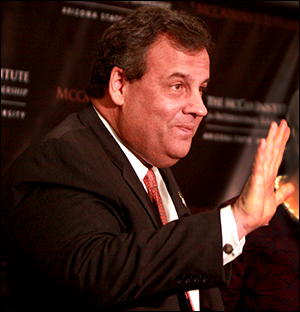
Former New Jersey Gov. Chris Christie (R) exits the presidential race. / Photo by Gage Skidmore

Chris Christie: Exits Race: Seeing no viable victory path toward the Republican nomination, former New Jersey Gov. Chris Christie dropped out of the presidential campaign in an address to New Hampshire town hall meeting attenders and the media Wednesday. On the eve of the Iowa Caucus vote scheduled for Monday, Christie’s departure will likely have little effect upon the Hawkeye State outcome.

The ex-governor was a factor in New Hampshire, however, where the campaign will move after Iowa. Some polls are showing former UN Ambassador Nikki Haley gaining on former President Donald Trump with Christie recording double digit support in third place. Without him on the New Hampshire ballot, it is possible that Haley will see a bump in her support.

Even if she were to score an upset in New Hampshire, the big showdown would come in Haley’s home state of South Carolina before an electorate that twice elected her governor. At this point, however, her support appears to be lagging well behind Trump.

Democrats: Candidates Already Preparing for 2028 — Headed toward a 2024 rematch between President Joe Biden and former President Trump means that the 2028 presidential race will be open since neither man will be able to seek re-election in four years. Already, we see several Democratic governors making moves in anticipation of that impending campaign. Govs. Wes Moore (D-MD) and Andy Beshear (D-KY) have each formed federal political action committees to help Democratic candidates around the country, and Gov. Gavin Newsom (D-CA) has been running a national media effort for months.

Senate

New Mexico: Republicans Get Party-Switcher Candidate — Former Bernalillo County Sheriff Manny Gonzales announced that he is leaving the Democratic Party and will challenge Sen. Martin Heinrich (D) as a Republican. The move gives the Republicans a well known candidate, but this is still a long shot GOP conversion opportunity. If the Republicans are to maximize their opportunities on a favorable Senate map, however, they need to put more seats in play.

Heinrich, after serving two terms in the US House and one on the Albuquerque City Council, was elected to the Senate in 2012 and re-elected in 2018. Sen. Heinrich averaged 52.5 percent of the vote in his two successful statewide runs.

House

MI-8: Republican Changes Mind — Michigan state Rep. Bill G. Schuette (R-Midland) last week announced that he would enter the open 8th Congressional District race, but this week he has changed his mind. Now, Schuette says he will run for re-election to the state House. The move may suggest an opening of the door for his father, former attorney general, appellate judge, US congressman, and US Senate nominee Bill Schuette to run for the open 8th.

Since the 8th CD is a politically marginal district and will host one of the most competitive congressional races in the country, we can expect both parties to invest heavily in the 2024 campaign. Democrats already have several strong candidates, such as state Sen. Kristen McDonald Rivet (D-Bay City), the national Democratic establishment choice; Michigan Board of Education president Pamela Pugh; Flint Mayor Sheldon Neeley; and former Genessee County Democratic Party chairman Dan Moilanen.

Haley’s Good News & Bad News; Another House Retirement; Strong MI-8 Candidates; Utah’s Gov. Cox Draws Strong Opponent

By Jim Ellis — Tuesday, Jan. 9, 2024

President

Republican presidential candidate Nikki Haley / Photo by Gage Skidmore

Primary Polling: NH Closing; SC Not So — Republican presidential contender Nikki Haley, the former UN ambassador and ex-South Carolina governor, saw some good and bad news in recently released polling. The American Research Group (Dec. 27-Jan. 3; 600 likely New Hampshire Republican primary voters; live interview) sees former President Donald Trump maintaining only a 33-29 percent edge over Ms. Haley.

This is the closest New Hampshire survey result published so far during the election campaign. ARG found that Haley is gaining because of her support from non-affiliated voters who can vote in New Hampshire partisan primaries. Among only registered Republicans, Trump leads Haley, 42-31 percent. Among the non-affiliateds who say they will vote in the GOP primary, Haley holds a 42-36 percent edge, thus explaining her closing ability.

However, in Haley’s home state of South Carolina, the results are much different. The latest Emerson College survey (Jan. 2-3; 584 likely South Carolina Republican primary voters; multiple sampling techniques) finds Trump continuing to hold a commanding 54-25 percent lead over Haley. With Trump poised for strong victories in the pre-Super Tuesday states of Iowa, Nevada, South Carolina, and Michigan, even a strong New Hampshire performance for Haley will not likely give her enough of a boost to overtake the former president for the party nomination.

House

CO-5: Rep. Doug Lamborn (R) to Retire — Nine-term Colorado US Rep. Doug Lamborn (R-Colorado Springs) who has typically repelled serious primary challengers throughout his 18-year career in Congress, announced over the weekend that he will retire when the current Congress ends. Lamborn is the 42nd House member not seeking re-election and the 18th Republican. He is the third of Colorado’s seven incumbents who will leave a seat open.

The Centennial State’s 5th District is anchored in the city of Colorado Springs and fully contained within El Paso County. The FiveThirtyEight data organization rates CO-5 as R+18. The Daily Kos Elections site ranks the district as the 74th most vulnerable in the Republican Conference. Therefore, the eventual new Republican nominee will be heavily favored to hold the seat in the November election.

MI-8: Strong Candidates Announce — With Michigan Rep. Dan Kildee (D-Flint Township) retiring, that leaves a politically marginal seat open, and both parties are filing strong candidates. National Democrats have successfully recruited who they believe is their strongest prospect, state Sen. Kristen McDonald Rivet (D-Bay City). Also in the Democratic primary race are Michigan State Board of Education President Pamela Pugh, Flint Mayor Sheldon Neeley, and non-profit executive and former Genesee County Democratic Party chairman Dan Moilanen. Therefore, we will see a very active Aug. 6 Democratic primary to determine the party nominee.

Republicans also now have a candidate with a well known name. State Rep. Bill G. Schuette (R-Midland) is the son of former attorney general, appellate judge, US congressman, and state Sen. Bill Schuette, announced his congressional candidacy late last week. Also in the Republican primary is the twice nominated Paul Junge.

The FiveThirtyEight data organization rates MI-8 as R+1. The Daily Kos Elections site ranks the seat as the 11th most vulnerable in the Democratic Conference. Now as an open seat, the vulnerability becomes even more pronounced. This and the adjacent open MI-7 will be two of the most hotly contested congressional districts in the country. The 8th District is anchored in the Flint-Midland-Saginaw area. It contains Genesee, Saginaw, and Bay Counties, with parts of Midland and Tuscola counties.

Governor

Utah: Gov. Cox Draws Second Credible Primary Opponent — Utah Gov. Spencer Cox (R), seeking a second term, will now face another Republican primary opponent. Former Utah Republican Party chairman Carson Jorgensen announced his gubernatorial candidacy at the end of last week. State Rep. Phil Lyman (R-Blanding) declared his candidacy in late October.

Although Gov. Cox — who has alienated the conservative base from time to time during his tenure — could have trouble in the Republican nominating convention, he would be favored to win a primary election. If both challengers qualify for the Republican primary, having multiple opponents will help the governor clinch the party nomination.

The Disconnects

By Jim Ellis — Friday, Jan. 5, 2024

President

President Joe Biden / Photo by Gage Skidmore

Overcoming the Numbers: Negative Polling vs. Actual Voting — There are many head-scratching poll numbers currently in the political domain, and while much of the data shows a disconnect between what respondents are saying and how they will likely vote, each party finds themselves failing to connect with voters under several surprising circumstances.

In a special interview series that consultant Bruce Mellman conducts, veteran pollster Bill McInturff, just before breaking for the holidays, notes that he sees 19 individual polling figures never before reached. Today, we will review some of the most telling of these research trends and illustrate just who has much work ahead of them to improve their political standing.

As McInturff points out, President Joe Biden is entering his re-election year as the most unpopular chief executive in modern American political history. In fact, in examining the Gallup organization tracking figures for every president since Eisenhower, only three presidents have been saddled with an upside-down job approval rating as their respective pre-election year was ending.

President Barack Obama, being eight percentage points underwater, had the worst rating at this commensurate point until Biden. President Donald Trump was second worst at minus-6. As we know, President Obama rebounded to win re-election while President Trump did not. Niether, however, were as far down as President Biden, who now finds himself 22 percentage points below the break-even mark.

The late September NBC News poll that McInturff’s Public Opinion Strategies firm conducted also finds bad news for Republicans. On the abortion issue prior to the Dobbs decision even being leaked, those individuals who self-identified as abortion issue voters actually favored the GOP. In January of 2020, those voters favored a Republican controlled Congress with a 57-37 percent margin. After the Dobbs briefing was leaked, the numbers flipped to a 63-34 percent spread favoring a Democratic controlled Congress.

As has been documented through other polling, President Biden has a major problem on the Israel-Hamas issue. While he is scoring strong points among the aged 65-plus segment (54-44 percent approve of his handling of the issue), we see a different demographic segment turning against Biden. The POS data brings home just how stark a difference exists between young and old in relation to the Israel-Hamas question.

Among the 18-34 aged segment, a plurality of 46 percent are sympathetic with Hamas’ position as compared to just 27 percent who favor Israel. Within this younger voter sample cell, President Biden takes a major hit. Only 24 percent approve of his job performance regarding Israel-Hamas and a whopping 67 percent disapprove.

Continue reading

Colorado Ruling Reverberations: Why Removing Trump From the Ballot Does and Doesn’t Matter


Happy Holidays! The Ellis Insight will be taking a break over the Christmas holiday. We’ll return with new Insights on Jan. 2, 2024.


By Jim Ellis — Friday, Dec. 22, 2023

President

Former President Donald Trump / Photo by Gage Skidmore

Colorado Republicans Pivot: Caucus Format Considered — A decision by The Colorado State Supreme Court Wednesday barred former President Donald Trump from the primary 2024 ballot because the justices maintained he violated the 14th Amendment by engaging in insurrection; this ruling predictably has ignited fierce responses.

The Trump campaign says they are immediately appealing the ruling to the US Supreme Court. Candidate Vivek Ramaswamy says he will withdraw from the Colorado ballot in protest and urges the other Republican presidential candidates to do the same. The Colorado Republican Party leadership is saying they may eschew the presidential primary and move to an internal party-run caucus format.

Since the political parties control their own nomination processes, the Colorado Republicans would have the authority to change from the primary format to a caucus. The party would then also slate its own candidates to compete for the presidential nomination. In the absence of a US Supreme Court ruling overturning the Colorado decision, changing to a caucus would likely be the party’s best option for giving Trump an opportunity to compete for Centennial State delegate votes.

Other state Supreme Courts, most notably Arizona and Minnesota, also have ruled on Trump’s ballot status and they arrived at the opposite conclusion to the Colorado high court, thus allowing him to compete in their state primaries. Even if the Colorado ruling stands and Trump is not on the state’s primary or general election ballot, it is unlikely to affect the presidential race outcome there. President Joe Biden is a lock to carry Colorado with or without Trump’s name on the ballot, so the national electoral vote count won’t change regardless of how the present controversy is ultimately resolved.

We could again see this issue arise in the general election. The states have the power to accept or reject the political party nominees for ballot placement, so it is conceivable the state Supreme Court could deny Trump ballot access in the general election along the same lines of reasoning present in their current decision.

Should the 14th Amendment controversy carry over to the general election, that would not do particular harm to the down-ballot Republicans, or even Trump for that matter. The former president is not going to win Colorado in the November election, so not appearing on the ballot here would have little effect on the national electoral vote count.

For the down-ballot Republicans not having to run with an unpopular Trump in their state, and with the former president’s voters likely incensed that he was barred from participating, the turnout pattern may actually improve for the Colorado Republican congressional, state Senate, and state House candidates if the former president were to be denied the ability to compete.

If other states were to follow Colorado’s lead, again absent a US Supreme Court ruling, it would likely only be in strong blue states, or those where Trump is clearly not going to win. Likewise, down ballot Republicans in those states may actually fare better, particularly in a place like California, then they would with Trump at the top of their ticket.

It is probable that the general election scenario described above, and very possibly even the primary situation, will not denigrate to the degree of a former president being denied ballot access because the US Supreme Court will likely face enough pressure to hear the Trump appeal and issue a ruling.

Since the former president was not charged with insurrection in any of his indictments and was even acquitted of such when it was part of the second impeachment proceeding, legal analysts believe that there is a better than even chance that the high court will rule in his favor and order the Trump name to appear on ballots across the nation.

Independent Candidates Draw More Votes From Biden; CA-20 Top Contender Disqualified; Another House Retirement; North Carolina Candidate Filing Closes

By Jim Ellis — Tuesday, Dec. 19, 2023

President

Robert F. Kennedy Jr.

Harvard-Harris Poll: Independents Draw More Votes From Biden — Originally when Robert F. Kennedy Jr. had announced as an Independent for the office of President of the United States, the subsequent early polls found him taking slightly more support from former president Donald Trump than President Joe Biden. Recently, that trend has reversed. The new Harvard University survey that The Harris Poll and HarrisX conducted (Dec. 13-14; 2,034 US registered voters; online) is now typical. They find that Kennedy and the other minor party/independent candidates are apparently siphoning away more support from President Biden than other future potential general election opponents.

In the isolated Biden-Trump ballot test, Trump would lead 52-48 percent. Adding just RFK Jr., the Trump advantage expands to 44-36-20 percent. A third ballot test, that included Biden, Trump, Kennedy, Independent candidate Dr. Cornel West, and likely Green Party nominee Jill Stein, saw a 43-35-17-2-2 percent division.

House

CA-20: Top Contender Disqualified — Because state Assemblyman Vincent Fong (R-Bakersfield) had filed for re-election for that seat, and California’s secretary of state had officially accepted his documents, the state’s chief elections officer ruled on Friday that Fong is ineligible to switch to the open congressional race. Therefore, despite his endorsement from outgoing Congressman Kevin McCarthy (R-Bakersfield), Fong will apparently not be on the congressional ballot.

This leaves the GOP field to Tulare County Sheriff Mike Boudreaux, who is president of the California Sheriffs Association, businessman David Giglio, businessman and former congressional candidate Matt Stoll, and casino owner Kyle Kirkland.

The 20th District is the safest Republican seat in the California delegation. Seeing the all-party jungle primary produce a double Republican general election appears a distinct possibility.

GA-3: Another House Retirement — Georgia US Rep. Drew Ferguson (R-The Rock/ Carrollton) announced on Friday that he will not seek a fifth term in the House, saying that “Georgia is a special place, and it’s calling us home.” Ferguson, first elected in 2016, served two terms as the Republican Chief Deputy Whip and is a member of the House Ways & Means Committee. He averaged 66.9 percent of the vote in his four successful congressional campaigns.

The 3rd District hugs the Alabama border in western Georgia, and lies among the cities of Atlanta, Columbus, and Macon. GA-3 is the third-strongest Republican congressional seat in the Peach State. The FiveThirtyEight data organization rates the district as R+38, while the Daily Kos Elections statisticians rank the seat as the 51st safest in the Republican Conference. Donald Trump defeated President Biden here 64-34 percent in the 2020 election. Rep. Ferguson’s successor will be decided in the Republican nomination process. GA-3 becomes the 37th open US House seat headed to the next election.

North Carolina: Candidate Filing Closes — The candidate filing period for North Carolina’s March 5 primary closed on Friday, and we now see a slate of contenders in the newly drawn congressional seats. The state also features an open governor’s race, but no US Senate campaign in 2024.

Republicans filed contenders in all 14 Tar Heel State CDs, but two Republicans will run unopposed unless the Democrats can petition a candidate on the ballot. Rep. Greg Murphy (R-Greenville) in the 3rd District and the eventual nominee in the Greensboro anchored 6th (Rep. Kathy Manning-D retiring), saw no Democratic candidate file.

One of the most competitive seats for the general election appears to be District 1, where freshman Rep. Don Davis (D-Snow Hill) sees his new CD yield only a 50-49 percent victory for President Biden in 2020, though Dave’s Redistricting App calculates a slightly more favorable Democratic overall partisan lean, 50.9D – 47.7R. The likely Republican nominee here is former congressional candidate Sandy Smith.

Hotly contested Republican primaries will occur in the open 6th, 8th (Rep. Dan Bishop-R running for attorney general), 10th (Rep. Patrick McHenry-R retiring), 13th (Rep. Wiley Nickel-D retiring), and 14th (Rep. Jeff Jackson-D running for Attorney General) districts. Under North Carolina voting laws, a runoff occurs only if a candidate fails to break 30 percent of the original primary vote.

Trump Sweeping Biden in Swing States; Malinowski Searches for NJ Senate Support; GOP Puts Forth Interesting NY-3 Candidate; NC-13 Rep. Wiley Nickel Out; Longtime Pol Jumps Into NJ Race

Former President Donald Trump up in polling.

By Jim Ellis, Monday, Dec. 18, 2023

President

Bloomberg/Morning Consult Polls: Trump Sweeping Biden in Swing States — Bloomberg News and Morning Consult partnered for a swing state polling series in the domains that will likely decide the 2024 presidential election: Arizona, Georgia, Michigan, Nevada, North Carolina, Pennsylvania, and Wisconsin. Individual surveys were conducted in each state during the Nov. 27 through Dec. 6 period. Sample sizes ranged from 451 registered voters to 801 such individuals depending upon the state’s population size. All included Independent Robert F. Kennedy Jr. on the questionnaire along with Independent Cornel West and likely Green Party nominee Jill Stein.

Trump led in all seven polls both when the ballot test included the minor candidates and when he and President Joe Biden were isolated. Trump’s margins (with the minor party candidates) were: Arizona (+4), Georgia (+7), Michigan (+4), Nevada (+5), North Carolina (+9), Pennsylvania (+1), and Wisconsin (+6).

To win the election, Trump would need to hold North Carolina, and carry Georgia plus one or two of the other aforementioned states. Trump’s smallest configuration to yield a victory of 270 electoral votes — and this assumes he holds all the other states he won in 2020 — would include Georgia, North Carolina, and Pennsylvania.

Senate

New Jersey: Ex-Rep. Malinowski Interviews for Party Senate Endorsements — Former US Rep. Tom Malinowski (D), who served two terms in the House before his re-election defeat in 2022 and who is now an unannounced US Senate candidate, conducted interviews with the Union County municipal Democratic Party chairmen seeking their endorsement for his potential statewide bid. Malinowski represented most of Union County in the US House. New Jersey First Lady Tammy Murphy and US Rep. Andy Kim (D-Moorestown) already are in the primary race, challenging indicted Democratic Sen. Bob Menendez.

Malinowski would have to overcome long odds in order to win the party nomination, and it is no foregone conclusion that he will actually enter the race. Despite calls for his resignation, Menendez is not leaving the Senate, nor has he ruled out running for re-election. Polls, however, suggest he would badly lose the Democratic primary.

House

NY-3: Local Republicans Nominate Mazi Melesa Pilip — The Nassau and Queens County Republican Party chairmen have nominated Nassau County Legislator Mazi Melesa Pilip, an Ethiopian-born former member of the Israeli military, as their special election congressional nominee. She will oppose the Democratic nominee, former Congressman Tom Suozzi in the Feb. 13 special election to serve the balance of expelled Rep. George Santos’ (R) term.

Interestingly, Pilip is reportedly still a registered Democrat even though she is an elected Republican and will now be the GOP congressional nominee. She is an interesting choice that will likely draw more attention to what is likely to become a competitive special election.

NC-13: Rep. Wiley Nickel Won’t Seek Re-Election, Will Return in 2026 — In an admission that he would not be successful running for re-election in North Carolina’s newly configured 13th Congressional District, Rep. Wiley Nickel (D-Cary) announced late last week that he would end his career in the US House after one term. Rather, he will return to elective politics in 2026 and challenge Sen. Thom Tillis (R). In that year, Sen. Tillis, assuming he seeks re-election, will be on the ballot for a third term.

The new 13th District begins in the Dunn area south of Raleigh in Harnett County. The seat then moves northward around Raleigh on the east side of Wake County and stretches to the Virginia border. The 2022 state Supreme Court drew a 13th District that shared part of Wake County, annexing the city of Cary, and then moved south of the capital city to include Johnston County and parts of Hartnett and Wayne Counties.

The partisan lean for new Congressional District 13, according to the Dave’s Redistricting App statisticians, is 56.6R – 41.2D. Under the map to which Rep. Nickel was elected, the 13th CD held a much different 49.5D – 48.1R partisan lean.

Also leaving the North Carolina congressional delegation are Reps. Kathy Manning (D-Greensboro) and Jeff Jackson (D-Charlotte), who like Rep. Nickel face difficult re-election odds on the new Tar Heel State congressional map. Jackson is running for the open state attorney general’s position and will probably face his colleague in the adjoining congressional district, Rep. Dan Bishop (R-Charlotte), in the statewide race.

Governor

New Jersey: Defeated State Senate President Launches ’25 Gov Campaign — Former New Jersey state Senate President Steve Sweeney (D), who served in the legislature for 20 years before his shocking upset defeat in the 2021 election, announced that he will enter the open 2025 gubernatorial campaign. Sweeney presided over the state Senate as its president for a 14-year period.

Gov. Phil Murphy (D) is ineligible to seek a third term and as in Virginia, where another odd-numbered gubernatorial position will be open, candidates are already announcing for their respective offices long before even the 2024 election transpires.

Announcing for the 2025 gubernatorial race before Sweeney was Jersey City Mayor Steven Fulop. Both US Reps. Josh Gottheimer (D-Wycoff) and Mikie Sherrill (D-Montclair) are reported to be testing the waters to also run for governor. For the Republicans, former state legislator Jack Ciattarelli — immediately after his close 2021 loss to Gov. Murphy — already announced that he would return for another gubernatorial bid in 2025.

Trump Tops 50 Percent in Iowa; Leading CA-20 Contender Won’t Run; Tight IA-1 Race; Jackson Lee Registers in TX-18 at Deadline

By Jim Ellis — Wednesday, Dec. 13, 2023

President

Former President Donald Trump / Photo by Gage Skidmore

Donald Trump: Tops 50 Percent in Iowa — The latest Des Moines Register/NBC News poll (Selzer & Company; Dec. 2-7; 502 likely Iowa Republican Caucus attendees; live interview) sees former President Donald Trump again breaking the majority vote threshold. Selzer & Company, a survey research firm that the FiveThirtyEight data organization rates as an A+ pollster and consistently described as Iowa’s most accurate research entity, projects Trump to be holding a 51-19-16-5-4 percent advantage over Gov. Ron DeSantis, ex-UN Ambassador Nikki Haley, businessman Vivek Ramaswamy, and ex-New Jersey Gov. Chris Christie, respectively.

According to the analysis, this is the largest historical advantage anyone has held for a competitive Iowa Caucus.

House

CA-20: Leading Contender Won’t Run — With Rep. Kevin McCarthy (R-Bakersfield) resigning his seat before the end of the year, the California candidate filing deadline has been extended five days in this district because the incumbent is not seeking re-election. A surprise occurred Monday, as the potential candidate viewed as having the best chance to succeed McCarthy, state Sen. Shannon Grove (R-Bakersfield) who already represents 91 percent of the 20th Congressional District constituency, announced that she will not run for Congress.

Immediately, state Assemblyman Vincent Fong (R-Bakersfield), who had filed for re-election after announcing he would not run for Congress, now wants to file for the congressional seat. It may be difficult for him to withdraw from the assembly race, however, since his candidacy for the legislature has been officially approved. At the time of this writing, rumors also abound that former Congressman Devin Nunes (R) may also file at the last moment. The filing period ends today, so all questions will be answered at that time.

IA-1: Poll Shows Rep. Miller-Meeks With Close Lead — The US Term Limits organization polled Iowa’s politically marginal southeastern 1st Congressional District (RMG Research; Nov. 28-Dec. 2; 448 likely IA-1 voters; online) and finds Rep. Mariannette Miller-Meeks (R-Le Claire) edging former state representative and 2022 congressional nominee Christina Bohannon (D) by a 38-35 percent margin.

The term limits push question then places Bohannon ahead after the pollsters indicate that the challenger supports limiting terms while the incumbent does not, but this will not likely be a determinative issue for the 2024 election campaign.

TX-18: Rep. Jackson Lee (D) Files for Re-Election — Just two days after losing a landslide runoff election in the Houston mayoral campaign, veteran Rep. Sheila Jackson Lee (D-Houston) quickly turned around and filed for re-election to the House. Candidate filing closed Monday in Texas for the 2024 election cycle in preparation for the state’s March 5 primary.

Now, we could potentially see a Democratic primary battle develop. Anticipating the seat would be open if Jackson Lee was elected mayor, five Democrats filed as congressional candidates including former Houston City councilwoman and ex-US Senate candidate Amanda Edwards. It remains to be seen how many of these filed contenders decide to continue to run now that the incumbent has returned.

The 18th District is fully contained within Harris County. The population is 40 percent Hispanic, 34 percent black, and 6 percent Asian. Only 19 percent is recorded as non-Hispanic white. Dave’s Redistricting App’s partisan lead calculation is 73.6D – 24.4R. The FiveThirtyEight data organization rates TX-18 as D+43, so winning the Democratic nomination process is tantamount to claiming the seat.