Category Archives: Polling

Tester, Heller Rebound in Montana and Nevada

Just-released polling data is bringing good news for two western senators. After trailing at-large Rep. Denny Rehberg (R-MT) by 2-3 points consistently since last June, Democratic Sen. Jon Tester has clawed back into the Montana campaign lead according to Public Policy Polling. The survey of 934 Montana voters over the April 26-29 period gives the senator a 48-43 percent advantage over the GOP congressman.

This is obviously a positive result for Tester, a first-term senator who defeated incumbent Conrad Burns (R) by the closest statewide margin in the country six years ago – a difference of 2,847 votes. The timing of the poll compliments a new media push from Tester that features light, humorous commercials designed to promote a positive image. One of the ads plays upon Tester’s habit of bringing his own Montana steaks back with him to Washington. The ad shows Tester sending the steaks through the airport metal detectors and ends with the senator’s wife cooking him a meal in their Montana home. The theme of the ad reinforces Tester’s strategic point that the senator has not “gone Washington.”

It is not uncommon for a series of ads, particularly well-done, positive spots that are unchallenged, to drive polling data. The five-point Tester lead represents a seven-point swing from PPP’s Nov. 28-30 study. Rehberg was ahead 47-45 percent in the previous poll, meaning he has dropped four points while the senator gained three.

Turning to the southwest, in the similarly close Nevada senatorial contest between appointed Sen. Dean Heller (R) and Rep. Shelley Berkley (D-NV-1), Rasmussen Reports gives Heller his strongest showing of the cycle, a 51-40 percent spread against Ms. Berkley, as shown in their new April 30 poll (500 likely Nevada voters).

This is the third consecutive poll to show Sen. Heller with the advantage. He was up 46-43 percent in Public Policy Polling’s March 29-April 1 survey and 47-40 percent in Rasmussen’s March 19 study. Prior to March, Heller last led in data recorded in July 2011.

Nevada, unlike Montana, will be a presidential battleground state with an unstable electorate. Despite being the fastest growing state during the last decade (35 percent real growth rate), poor economic conditions have led to somewhat of an exodus from Nevada. How this will affect 2012 politics is open to question. Therefore, the presidential race’s progression and its effect on the turnout drive will have a lot to say about the final Senate results.

In the end, these two small states, Montana and Nevada, could be determining factors in deciding which party controls the Senate come 2013. The two highly competitive races will draw much national attention. The current volleys being traded among the candidates right now are only the beginning.

Is a Surprise Coming in the North Dakota Senate?

Since Sen. Kent Conrad (D-ND) announced that he would not seek re-election this year, both Republican and Democratic election analysts forecasted that the GOP would convert the open seat. These rankings even held when a November poll gave Democrat Heidi Heitkamp, the state’s former attorney general and defeated gubernatorial nominee, a five-point lead over at-large Rep. Rick Berg (R) soon after she announced her candidacy. The results of a new just-released survey means the supposed Heitkamp advantage can no longer be dismissed.

DFM Research (April 18-26; 478 registered North Dakota voters), polling for the North Dakota Democratic Party, now stakes Heitkamp to a 49-44 percent lead over Berg. Though the long nine-day sampling period suggests reliability questions, the same polling sample returns a 51-32 percent lead for Mitt Romney over President Obama, thus largely dispelling claims of a Democratic skew. Furthermore, though Berg and the Republicans have reported investing campaign dollars into polling, no public releases have yet been forthcoming. This again suggests that Heitkamp leading is an accurate depiction of where the race stands today.

Much will happen between now and Election Day to alter the outcome of this Senate race, and Berg is still in good position to win when considering the state’s voting history in presidential elections. But, it is now clear that the North Dakota Senate race can no longer be considered an easy Republican win and we can expect a competitive general election campaign.

Questioning the Reliability of Univ. of New Hampshire Polls

Over the years, the University of New Hampshire has released some polls that were later proven unreliable, and it appears they are at it again. The college just released the results of their latest study that shows both of the state’s Republican congressmen trailing their Democratic opponents, but the polling methodology is flawed in at least three different ways.

The results show 1st District freshman Rep. Frank Guinta (R) trailing former Rep. Carol Shea-Porter (D), the woman he unseated in 2010. According to the UNH data, Shea-Porter leads the first-term incumbent 44-39 percent. In the more Democratic 2nd District, Rep. Charlie Bass (R) trails 2010 opponent Annie Kuster (D) 39-40 percent.

The first methodological error concerns the length of the sampling period, which stretches from April 9-20. Here, UNH uses a 12-day information gathering period when three is usually considered optimum. The longer sampling time frame has proven to skew results.

Second, the respondent universe of 538 “adults” does not appear to even screen for registered voters. Going beyond the normal voting pool always provides different numbers than one would see from those who are qualified and intend to actually participate in the election.

Third, the number of respondents for each congressional district are low (230 adults in District 1, 251 adults in District 2), thus further deteriorating the reliability factor.

Considering all of the methodology flaws, the current UNH poll should be discounted, though the conclusion that both of the state’s House races will be close and very competitive can certainly be accepted.

Lugar Trailing in Indiana

Wenzel Strategies, polling for the Citizens United organization (April 24-25; 601 registered Indiana voters), projects that Sen. Richard Lugar (R-IN) has fallen behind Indiana state Treasurer Richard Mourdock 39-44 percent in their statewide Republican primary battle. Entering the home stretch, both campaigns and their outside supporters are in high gear. Expect this mode to continue until the May 8 primary.

Lugar predictably criticized the accuracy of the Wenzel poll, but fails to release any countering data of his own. This, in spite of him reporting $74,000 in polling expenditures during the last quarter and a further five-figure investment with the National Research, Inc. company in April. The action suggests that the senator’s own survey research is returning numbers similar to those already in the public domain.

Wenzel Strategies’ president, Fritz Wenzel, while pointing to the fact that Lugar expressed no dissatisfaction with their previous poll that showed the senator leading, publicly retorted that, “It goes without saying that we stand strongly behind our polling in Indiana, as we do with every survey we conduct. [Sen.] Lugar’s denial of the reality these numbers portray is tantamount to denying the voice of Republican voters across Indiana who are certainly indicating they are hungry for a change.”

In addition to both candidates running attack ads against the other, outside organizations are spending heavily, as well. The American Action Network launched negative ads against Mourdock criticizing his investment decisions as state treasurer. The Club for Growth announced a $412,000 media buy that began this week in opposition to the incumbent. The spot ties Lugar to the President as being “Barack Obama’s favorite Republican” and makes the case that the senator has lost touch with Indiana after 35 years of service in Washington.

This campaign has now turned into a major national political affair with another veteran incumbent on the ropes before his own party’s electorate. The final 11 days of the race will very likely be the race determining period.

Previewing this Weekend’s Utah Conventions

Both Republicans and Democrats in Utah will begin their nominating processes on Saturday, potentially choosing gubernatorial, US Senate, and US House nominees. Newly released Dan Jones Associates polling (443 of the 4,000 state Republican delegates) suggests that Sen. Orrin Hatch (R) has improved his position and could potentially secure the 60 percent vote necessary to win renomination.

According to the poll, Hatch scores 61 percent, with former state Sen. Dan Liljenquist trailing at 21 percent, and state Rep. Chris Herrod posting 4 percent. Under convention rules, if a candidate receives 60 percent of the vote on any ballot, that person is nominated. If no one reaches that level, balloting continues until two candidates fall between 40-59 percent. Should that happen, a primary election featuring the pair will occur on June 26th.

In other races, Gov. Gary Herbert (R), who like Hatch is being challenged by several Republicans, also polls 61 percent according to the Dan Jones data. Former state Rep. Morgan Philpot, who held Rep. Jim Matheson (D-UT-2) to a 50-46 percent victory in 2010, is second with 12%.

In House races, all attention will be focused on open District 2 and new District 4, the latter where Matheson is attempting to win re-election. It is likely both parties will go to primaries in District 2, and the Republicans will have one in District 4.

Delegate polling is difficult because so much can change after the first convention ballot is cast. What appears true is that many races are close and several primaries could result. We will have full results on Monday.

Wisconsin Poll: Good for Obama, Bad for Baldwin

The Marquette Law School polled voters on the presidential race and upcoming open US Senate contest in what will be a pivotal 2012 political state. The survey (Feb. 16-19; 716 likely Wisconsin voters) finds President Obama faring well in at least one of several Great Lakes states that could foretell the final national election result.

According to the Marquette survey, Obama would lead former Pennsylvania Sen. Rick Santorum, who does best among the Republican contenders, by a 51-40 percent margin. He enjoys a 53-38 percent edge over former Massachusetts Gov. Mitt Romney, and even larger spreads when paired with ex-House Speaker Newt Gingrich (56-33 percent) and Rep. Ron Paul (52-36 percent).

Zeroing in on the Republican primary, it is Santorum who has a big lead in a state that will likely matter greatly in the GOP nomination contest (primary: April 3). The Pennsylvanian leads Romney 34-18 percent. Rep. Paul attracts 17 percent support and Gingrich 12 percent. Since the state has same-day voter registration and an open primary, all Wisconsinites will have the opportunity to participate in the Republican selection process. In sampling those who self-identify as Republicans, Santorum’s lead over Romney is even greater. Among this group, support for Santorum more than doubles over that for Romney, 44-20 percent.

Turning to the Senate race, the news is not overly good for Rep. Tammy Baldwin (D-WI-2), who is the consensus Democratic candidate. Though Baldwin actually leads two of the three announced Republican candidates (she slips past former Rep. Mark Neumann (R-WI-1) 44-40 percent and enjoys a bigger edge, 45-37 percent, over state Assembly Speaker Jeff Fitzgerald) her level of consistent support in all scenarios suggests a stagnant candidacy. When paired with former four-term Gov. Tommy Thompson, she trails. The former Wisconsin chief executive holds a 48-42 percent lead over Ms. Baldwin.

Notice that in all instances, even against Mr. Fitzgerald who has a low statewide name ID and fares the worst of all GOP candidates on the ballot test, the congresswoman falls within the same 42-45 percent support range. Opposing an extremely well-known Republican, but one with relatively high unfavorable ratings (Thompson), she scores 42 percent. Against an opponent with a hard name ID factor of less than 50 percent (Fitzgerald), she moves only to 45 percent. Paired with a former congressman and statewide candidate (Neumann) who hasn’t been on a general election ballot since 1998, she notches just 44 percent.

Her static performance against a rather diverse group of Republican candidates suggests that she may have an early support ceiling far below what will be necessary to win a general election.

Adding the recall election for Gov. Scott Walker (R) that will occur sometime between April and June, depending upon the resolution of several legal challenges to the presidential and senatorial contests, Wisconsin promises to be the hottest political state in the Union this year. How Wisconsin goes, so could the country.

The Super Tuesday Scorecard

It’s quite possible that Super Tuesday, designed to give one presidential candidate a boost toward the eventual party nomination, may not be particularly definitive in 2012.

Initial polling has been published, or trends are clear, in nine of the 13 states hosting caucuses or primaries on or before Super Tuesday; the preliminary information suggests that the race will move toward the next group of states in close fashion.

Currently, former Pennsylvania Sen. Rick Santorum holds definitive leads over former Massachusetts Gov. Mitt Romney in Ohio (66 delegates – 42-24 percent, Rasmussen Reports, Feb. 15), Oklahoma (40 delegates – 39-23 percent, The Sooner Poll, Feb. 8-16) and Washington (53 delegates – 38-27 percent, Public Policy Polling, Feb. 16-19). He also has a close lead in Michigan (30 delegates – 38-34 percent, Rasmussen, Feb. 20). The grand total of delegates apportioned in the aforementioned Santorum states is 189.

Romney has no published polling data for the states where he commands a definitive advantage with the exception of Virginia, but the outcomes are unquestioned. He will win his home state of Massachusetts (41 delegates), along with Vermont (17 delegates) and Virginia (49 delegates). He has a close lead in Arizona (29 delegates – 36-33 percent, PPP, Feb. 17-19).

The Old Dominion is becoming more important than originally projected. Christopher Newport University conducted a poll of Virginia Republican primary voters (Feb. 4-13) and found Romney leading Rep. Ron Paul 53-23 percent. Remember, only Romney and Paul qualified for the Virginia ballot, meaning one of the candidates will win a majority of the vote – almost assuredly Romney. Breaking 50 percent is important because under Virginia delegate apportionment rules, any candidate receiving a majority of the vote receives unanimous support from all 49 delegates. Therefore, the inability of Santorum and former House Speaker Newt Gingrich to recruit enough petition signatures to participate in the Virginia primary will cost them dearly.

Adding the delegate contingents from the aforementioned Romney states produces an aggregate count of 136.

Georgia is now becoming extremely interesting. With the delegate penalty sanction assessed to Florida for its defiance of Republican National Committee rules, the Peach State now becomes the fourth-largest contingent with 76 delegates. According to a survey from the Atlanta-based Insider Advantage (Feb. 20), Gingrich leads his GOP opponents with 26 percent, but he is followed closely by Romney and Santorum with 24 and 23 percent, respectively. Therefore, it is clear that Georgia is anyone’s game. But, if the vote stays this evenly divided, the candidates will likely split the pool of delegates almost evenly, thereby giving no one a clear upper hand.

There is no available polling for Tennessee (47 delegates), or the caucus states of Alaska (27 delegates), Idaho (32 delegates) and North Dakota (28 delegates). Combined, states total 134 delegates – so far unaccounted for. The aggregate number of delegates contained in the universe of Super Tuesday and Super Tuesday cusp states is 535, or 23.4 percent of the entire Republican National Convention delegate universe.

It is reasonable to expect momentum to shift toward one candidate should either Santorum or Romney sweep the pre-Super Tuesday states of Michigan, Arizona, and Washington. If this happens, then Super Tuesday itself could become definitive after all.

Santorum Leading in Ohio

On the heels of the Public Policy Polling survey showing former Pennsylvania Sen. Rick Santorum leading the Republican presidential field in Michigan, Quinnipiac University released the results of their Ohio poll (Feb. 7-12; 1,421 registered Ohio voters) that likewise places him first. According to the data, Mr. Santorum has a 36-29-20 percent lead over former Massachusetts Gov. Mitt Romney and ex-House Speaker Newt Gingrich, respectively.

Ohio is the key state for Santorum on Super Tuesday (March 6). Emphasizing a resurgence in American manufacturing as one of his key campaign themes, Santorum must score well in states such as Ohio to boost his performance nationally.

An interesting Q-Poll question gives us insight into just how well Santorum’s economic message is resonating in the Midwest. In asking the question, “Would you say that (candidate’s name) cares about the needs and problems of people like you or not?”, the pollsters are attempting to determine how well each candidate transcends class distinctions.

When President Obama’s name is inserted into the question, 58 percent of those sampled said “yes” and 39 percent replied “no.” Conversely, both Romney and Gingrich fared poorly. For Romney, only 40 percent answered affirmatively compared to 48 percent who responded negatively. Gingrich’s numbers were even worse: 37:53 percent.

Santorum scored best. When this question is asked about him, 53 percent said “yes” and only 29 percent said “no.” The results of this question support the overall poll’s conclusion that today, Rick Santorum, is the man to beat in Ohio.

New Senate Numbers in Hawaii, Massachusetts

Hawaii

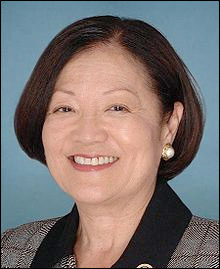
The Hawaii US Senate campaign is turning crazy. Now, another new poll reports starkly different results to some others already in the public domain. Ward Research, a Hawaii-based survey research firm, conducted a new poll with an abnormally long sampling period for the Honolulu Star-Advertiser newspaper (Jan. 26-Feb. 5; 771 registered Hawaii voters) and found Rep. Mazie Hirono (D-HI-2) to be enjoying a huge lead in both the Democratic primary and the general elections.

This contrasts with the latest Merriman Group independent study (Jan. 18-19), which showed only a six-point split between Hirono and former Gov. Linda Lingle (R). It further depicted the congresswoman trailing former Rep. Ed Case (D-HI-2) by two points in the intra-party vote.

The Ward numbers give Hirono a huge 57-37 percent lead over Lingle when the two are matched in what many predict could become a hotly contested general election. Additionally, the Democratic congresswoman maintains a 56-36 percent lead over Case, according to this latest survey. For her part, Hirono’s own pollster, The Benenson Strategy Group, released a survey in November posting her to a similar 54-36 percent lead over Case.

But the Merriman poll is not the only one reporting a much different result than Ward. Public Policy Polling’s October survey showed Hirono besting Lingle 48-42%, and the Republican former governor leading Case 45-43%. Hirono’s Democratic primary advantage was just five points over Case, 45-40%.

With so much discrepancy already existing among the pollsters, it is difficult to get a true read on this race. Since President Obama will run extremely well in Hawaii, the Democratic nominee will likely get a boost in the November general election. On the other hand, Lingle’s huge $1.767 million fourth quarter in fundraising puts her ahead of any other candidate, financially. It is clear she will have the monetary backing to run a strong campaign to compliment her almost universal name identification. Expect this race to become competitive, but the intangibles still favor Ms. Hirono and the Democrats.

Massachusetts

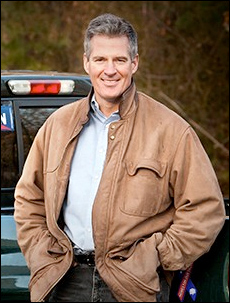
The MassInc Polling Group conducted a statewide Senatorial survey (Feb. 6-9; 503 registered Massachusetts voters) for WBUR radio in Boston, a National Public Radio station. They find former Obama Administration Consumer Affairs Advocate Elizabeth Warren (D) leading Sen. Scott Brown (R) 46-43 percent. Several previous polls have also shown Warren to be ahead, and by more than two points.

The data again illustrates how difficult it is for any Republican to win in the Bay State. Despite trailing, Sen. Brown’s favorability ratings are quite high. A full 50 percent of those interviewed say they have a positive opinion of Sen. Brown versus just 29 percent who registered an unfavorable comment. By contrast, Ms. Warren’s ratio is 39:29 percent.

The poll asked eight preference comparison questions about the candidates’ backgrounds, their views toward the middle class, who would perform better on economic issues, etc. Brown scored below Warren on only one substantive issue question, and on that by just one point. By a margin of 32-31 percent, the sampling universe said that Ms. Warren would better relate to the middle class. An additional 21 percent indicated the two candidates were equal in understanding the needs of middle class families.

The only question where Brown trailed by a relatively large percentage (34-24 percent) was in response to which candidate seems to have campaign momentum.

Therefore, despite the favorable reviews, Brown still trails on the ballot test question. These results are similar to those found in Florida, where Rep. Connie Mack IV is challenging Sen. Bill Nelson (D). There, Nelson’s personal numbers appear to be as good as Brown’s, but he too finds himself pitted in a close election battle.

With both candidates being heavily funded – Brown has already raised $8.6 million with $12.9 million in the bank; Warren has gathered slightly more, $8.9 million, but has considerably less, $6.14 million, cash-on-hand – it is clear this campaign will play out over a long course of time. The intangibles definitely favor Warren because a candidate uniting the Democratic Party will be very difficult to derail in one of the most Democratically-loyal states in the entire country. Sen. Brown is the right candidate to hold the seat for his party, but even he may not have enough ability to stem what could possibly be a very strong tide against him.

Santorum Takes Michigan Lead

Yet another surprise is occurring in the Republican presidential nomination battle, a campaign where astonishing results are basically becoming the norm. A new Public Policy Polling survey (Feb. 10-12; 404 likely Michigan Republican primary voters) gives former Pennsylvania Sen. Rick Santorum a 39-24-12-11 percent lead over his chief rival Mitt Romney, Rep. Ron Paul (R-TX-14), and former House Speaker Newt Gingrich, respectively. Michigan, the state in which Mr. Romney was reared and where his father served as governor for two terms in the 1960s, has long been a stronghold for the former Massachusetts chief executive. Losing the Wolverine State would clearly deal the Romney campaign a major blow.

In one way, the polling results are not all that surprising. Reviving the manufacturing industry in the Great Lakes states has been a focal point of Mr. Santorum’s campaign. Michigan’s economy has been among the worst in the nation. It is the only state to actually lose population in the last decade, mostly due to a lack of employment opportunities. His manufacturing/economic message largely accounts for Santorum’s 67:23 percent favorability rating. This compares to 49:39 percent for Romney. Both Mr. Gingrich and Rep. Paul are upside down, with their negative ratings greatly surpassing their positive scores. Gingrich registers 38:47 percent favorable to unfavorable, and Paul is in an even worse position at 32:51 percent.