Category Archives: House

House Members: 1 for 5

By Jim Ellis — Friday, April 3, 2026

US HOUSE

Of the current 62 open US House seats, 28 of the members are running for a different office, and the combined results of their statewide pursuits are so far underwhelming.

In the five 2026 election cycle contests recorded to date, only one House member, New Jersey Rep. Mikie Sherrill (D), successfully attained her statewide goal. In November of 2025, Sherrill was elected Governor of New Jersey.

Four others lost early primaries and a fifth, Rep. Chip Roy running for Texas Attorney General, advanced to a runoff election after placing second in the March 3 GOP primary. The other four losing statewide primary candidates are Illinois Reps. Robin Kelly and Raja Krishnamoorthi, and Texas Reps. Jasmine Crockett and Wesley Hunt.

Below is a re-cap of the members’ current campaign status:

Alabama

Rep. Barry Moore (R): Currently, Rep. Moore is leading the Senate Republican primary polls and is likely going to a runoff election with Attorney General Steve Marshall. The eventual Republican nominee will succeed Sen. Tommy Tuberville (R), who is running for Governor. The Alabama primary is May 19.

Arizona

Reps. David Schweikert (R) and Andy Biggs (R): Both men are running for Arizona Governor. Currently, Rep. Biggs has a large lead in GOP primary polling. The eventual Republican nominee will challenge Democratic Gov. Katie Hobbs.

California

Rep. Eric Swalwell (D): The Congressman is in a tight race to secure one of two general election ballot positions for the open California Governor position. A Democrat opposing a Republican in the general from the jungle primary will become the prohibitive favorite to succeed term-limited Gov. Gavin Newsom (D). Two Democrats or even two Republicans could conceivably advance to the general election from the huge field of 62 candidates.

Florida

Rep. Byron Donalds (R): Rep. Donalds is the leading candidate in the open Governor’s race. He enjoys large Republican primary leads in a state where the GOP nominee now becomes a strong favorite to win the general election and succeed term-limited Gov. Ron DeSantis (R).

Georgia

GOP Reps. Buddy Carter and Mike Collins: Current polling places Reps. Collins and Carter running 1-2 in the GOP Senate primary. The pair advancing to a June 16 runoff election from the May 19 primary now appears likely. The eventual winner will face Sen. Jon Ossoff (D) in the general election. The Senator begins the general election campaign as at least a slight favorite.

Iowa

Rep. Ashley Hinson (R): Rep. Hinson has positioned herself as the consensus Republican Senate candidate in the open primary. She will face either state Sen. Zach Wahls (D-Des Moines) or state Rep. Josh Turek (D-Council Bluffs). Rep. Hinson will be the general election favorite. The winner replaces retiring Sen. Joni Ernst (R).

Rep. Randy Feenstra (R): Congressman Feenstra finds himself in a tight race in both the Republican gubernatorial primary against four opponents and for the general election against consensus Democratic candidate Rob Sand, the Iowa State Auditor. Rep. Feenstra should prevail in the plurality primary and the early Feenstra-Sand general election will be rated as a toss-up.

Kentucky

Rep. Andy Barr (R): The open Republican Kentucky Senate primary finds Rep. Barr holding a substantial lead in campaign resources but fails to establish a sustained polling advantage against former Attorney General and 2023 gubernatorial nominee Daniel Cameron with wealthy businessman Nate Morris trailing. The Republican nominee will succeed retiring Sen. Mitch McConnell (R). At this point, Rep. Barr will probably prevail in both the GOP primary and general election.

Louisiana

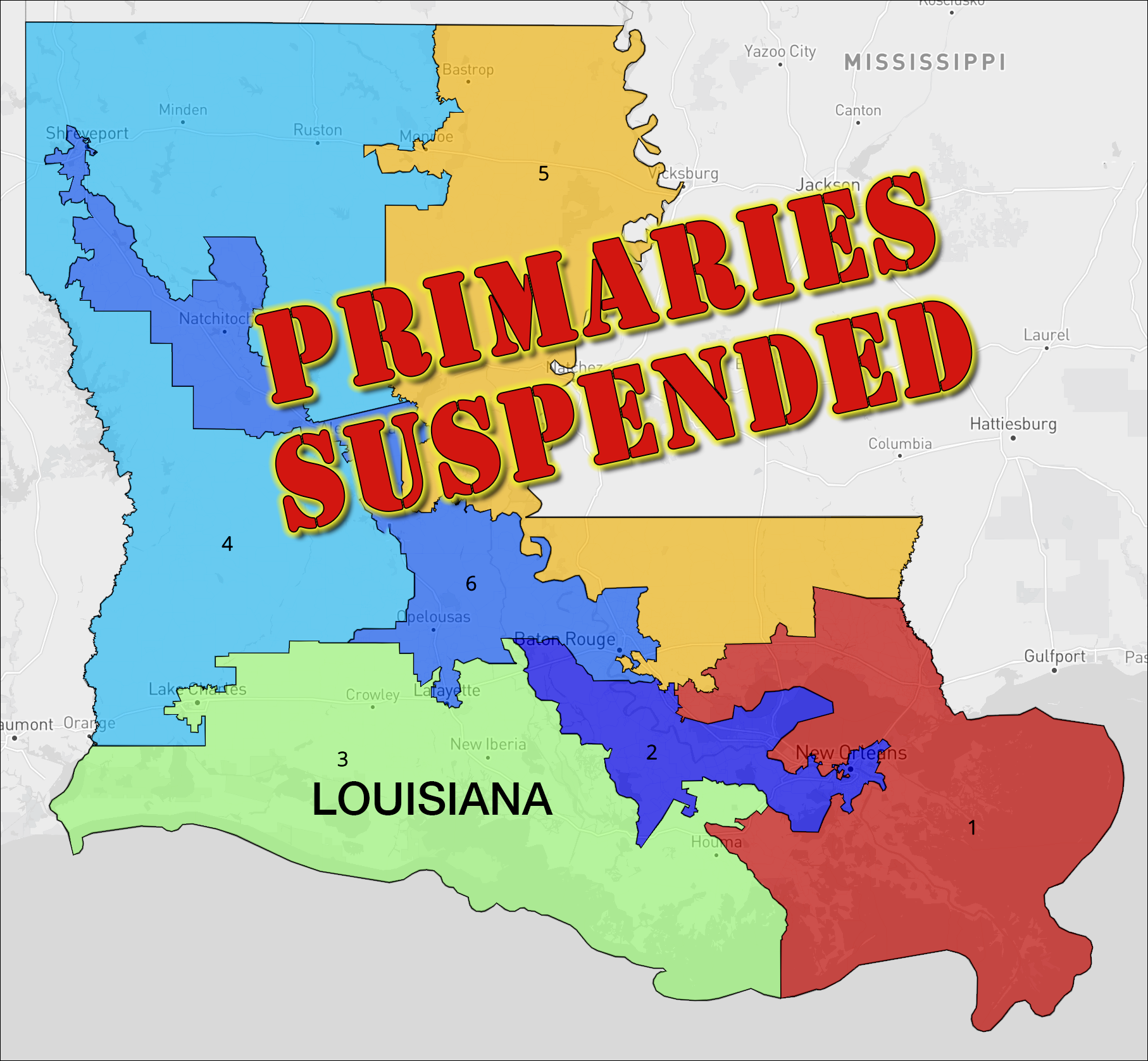
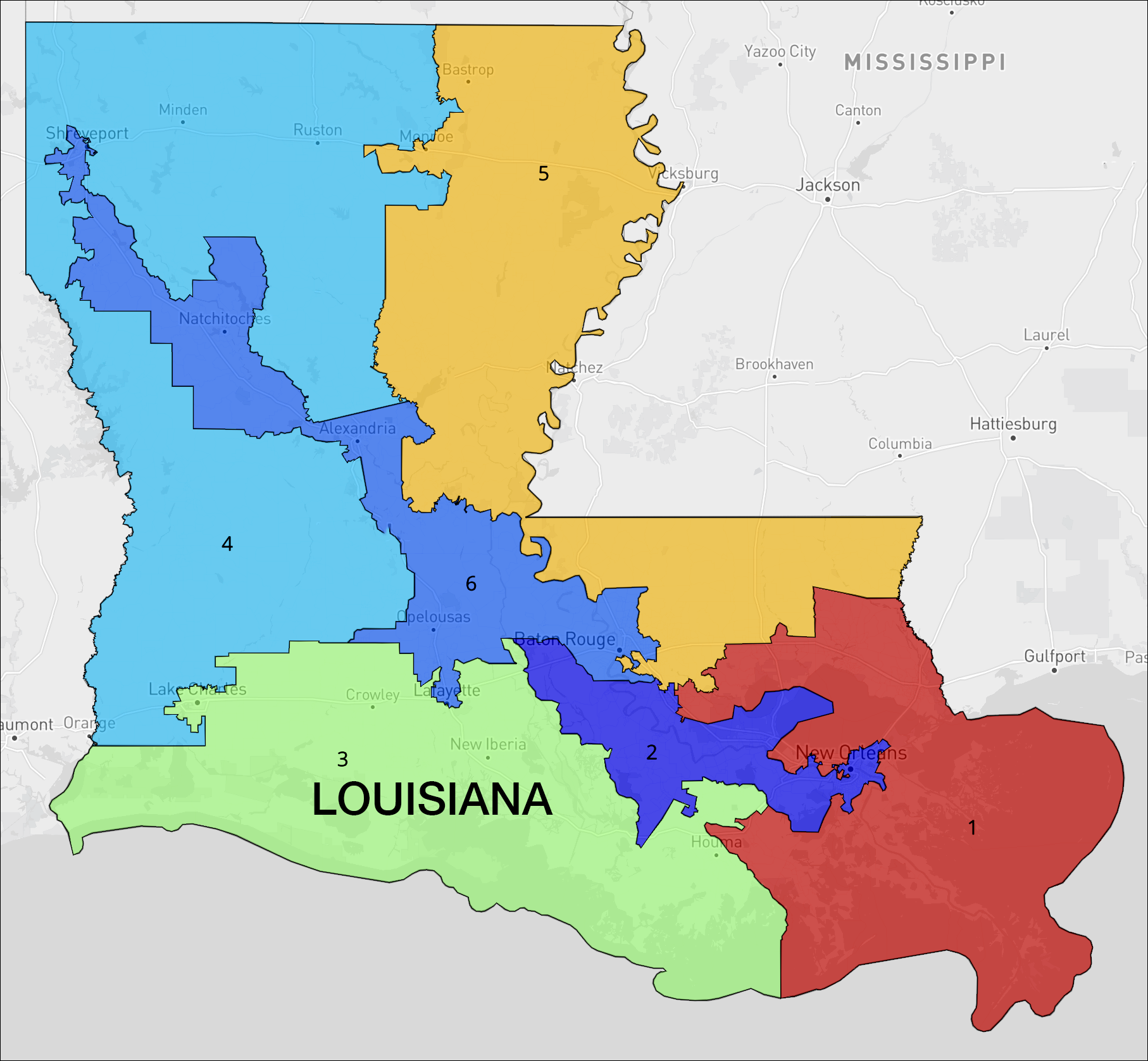
Rep. Julia Letlow (R): Congresswoman Letlow is challenging Sen. Bill Cassidy in the Republican primary along with State Treasurer and former Rep. John Fleming. Louisiana is returning to a partisan primary/runoff system after decades of employing the jungle primary alternative. The change hurts Sen. Cassidy.

Expect the May 16 primary election to end in two of the three candidates advancing to a June 27 runoff election. Sen. Cassidy and Rep. Letlow are the most likely runoff qualifiers. Expect a tight GOP finish. The eventual Republican nominee is a lock in the general election.

Massachusetts

Rep. Seth Moulton (D): Rep. Moulton is engaged in a long-shot challenge opposite Sen. Ed Markey for the Democratic Senate nomination. While polling suggests what could become a competitive Sept. 1 primary campaign, the odds favor Sen. Markey, thus likely ending Rep. Moulton’s congressional tenure.

Michigan

Rep. John James (R): Rep. James is the likely Republican gubernatorial nominee, advancing into a serious three-way general election with Secretary of State Jocelyn Benson (D) and former Detroit Mayor Mike Duggan (I). With Duggan in the race as a competitive non-major party contender, the general election allows each candidate to claim a reasonable victory path. The end result could well be each of the candidates faring well, with the winner obtaining less than 40 percent of the vote.

Rep. Haley Stevens (D): A very tight and intense three-way open Democratic Senate campaign is unfolding featuring Rep. Stevens, state Sen. Mallory McMorrow (D-Royal Oak), and former Wayne County Health Director Abdul El-Sayed.

At this point, the three candidates are in a tight race both for votes and campaign donations with a long way to go. The eventual Democratic nominee will face former Representative and 2024 Senate nominee Mike Rogers (R) in what promises to be a highly competitive general election.

Minnesota

Rep. Angie Craig (D): Craig is in a difficult open primary opposite Lt. Gov. Peggy Flanagan, as both strive to win the Democratic nomination. Flanagan is expected to come away with the party endorsement at the state convention, but Rep. Craig will force an Aug. 11 primary election. The eventual nominee who emerges from what promises to be a close contest will begin as at least a slight favorite over former national sportscaster Michele Tafoya (R), who was a regular on the NBC Sunday Night Football telecasts.

New Hampshire

Rep. Chris Pappas (D): Rep. Pappas is the consensus Democratic Senate nominee, as he is likely preparing to face former Sen. John E. Sununu (R). The latter man has large leads in the GOP primary opposite former Massachusetts Sen. Scott Brown, but the nomination contest here will lag until Sept. 8.

New Hampshire generally favors Democratic candidates, but the Sununu family has done very well in the state especially with Chris Sununu, the Senate candidate’s brother, winning four consecutive gubernatorial elections.

Oklahoma

Rep. Kevin Hern (R): Sen. Markwayne Mullin (R) resigning the Senate seat to become Homeland Security Secretary leaves the seat to appointed incumbent Alan Armstrong (R). Because of Oklahoma’s procedure that requires appointees to pledge not to run for a full term, the door is wide open for Tulsa Congressman Kevin Hern.

Other top Republicans such as Gov. Kevin Stitt and Rep. Stephanie Bice (R-Oklahoma City) have declined to run for the Senate; therefore, Hern is quickly becoming the consensus Republican candidate and a prohibitive favorite for the general election.

South Carolina

Reps. Nancy Mace and Ralph Norman: The two House members joined a crowded Republican gubernatorial field attempting to succeed term-limited Gov. Henry McMaster (R). The latest polling shows a tight field with Rep. Mace near the top and Rep. Norman gaining momentum. Two of the four major candidates, Lt. Gov. Pamela Evette and Attorney General Alan Wilson being the others, will advance to a runoff from the June 9 primary election.

Tennessee

Rep. John Rose (R): Middle Tennessee Congressman John Rose appears to be in one of the longest-shot campaigns of this election cycle. He is risking his safe congressional seat for a run for Governor and badly trails Sen. Marsha Blackburn in the Republican gubernatorial primary. The nomination election is not until Aug. 6, but it would be surprising to see significant changes transpire in this primary campaign.

Wisconsin

Rep. Tom Tiffany (R): At this point in the long Wisconsin primary cycle, Rep. Tom Tiffany (R-Minocqua) looks to have a clear shot for the Republican nomination and is closing in on consensus candidate status. The general election, against the Democratic contender who comes through their crowded and contested Aug. 11 primary campaign, will be rated a toss-up as are most Wisconsin statewide races.

Wyoming

Rep. Harriet Hageman (R): Sen. Cynthia Lummis’ (R) surprise retirement after serving one term opens the door for an easy Harriet Hageman (R-Cheyenne) run. The at-large Congresswoman is already the consensus Republican Senate candidate for the Aug. 18 primary and will be a prohibitive favorite in the general election. The most competitive races in the state will be the open Governor’s race and Rep. Hageman’s open at-large congressional contest, but the Senate campaign looks to be quiet.

In SC-1, It’s Mark Sanford … Again

By Jim Ellis — Wednesday, April 1, 2026

US HOUSE

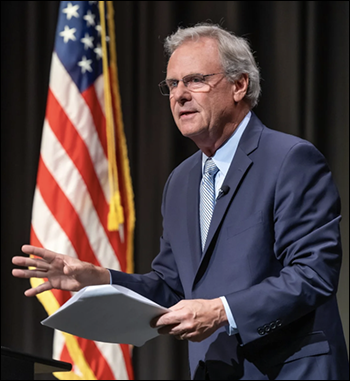
Former South Carolina Governor and ex-Rep. Mark Sanford (R)

The open campaign to replace South Carolina Rep. Nancy Mace (R-Charleston) became more interesting as candidate filing closed on Monday.

Among the late entries is former Governor and ex-1st District Congressman Mark Sanford (R) who served bookend stints in the House before and after his eight years as South Carolina’s chief executive. Toward the end of his gubernatorial tenure, Sanford’s career was marked with an international extramarital affair involving a South American woman that became a national news story. Despite the adverse publicity, he was able to finish his term as Governor and would subsequently again win the 1st District US House seat.

Sanford was first elected to Congress in an open seat 1994 campaign pledging to serve only three terms. He fulfilled his campaign pledge by not seeking re-election in 2000, but then ran for Governor, winning the statewide post both in 2002 and 2006. He was thought to be planning a presidential run in 2012, but the nationwide affair publicity ended any hope of him becoming a serious presidential candidate.

In 2013, after then-Gov. Nikki Haley (R) appointed then-Congressman Tim Scott to the US Senate to replace resigned Sen. Jim DeMint (R), Sanford entered the open special election for the 1st Congressional District and surprised many by again winning the seat. He would then be re-elected to full terms in 2014 and 2016. He would lose renomination in 2018, however. Sanford had become an ardent critic of President Trump, which in large measure cost him the seat.

Again, sounding the theme of opposing the large deficit spending that Congress approves, Sanford this week launched his third open seat campaign for the 1st District seat. The CD is open in 2026 because incumbent Rep. Mace is running for Governor.

In addition to Sanford, a dozen other Republicans also filed their campaign committees, meaning we will see a spirited campaign develop as the large field of contenders rush toward the June 9 primary. South Carolina features a run-off nomination system, as do many of the southern states, but the Palmetto State version is unique. While most feature a month-long runoff cycle or longer, South Carolina allows only a two-week campaign. Therefore, the runoff is scheduled for June 23.

Sanford clearly has more name identification than any other current 1st District candidate and again could prove victorious. Within the field we see four sitting elected officials: state Rep. Mark Smith (R-Daniel Island), Dorchester County Councilman Jay Byars, Beaufort County Councilman Logan Cunningham, and Charleston County Councilwoman Jenny Honeycutt. Another significant candidate, physician Sam McCown, self-funded and raised over $1.2 million before year-end 2025, while Rep. Smith amassed just over $600,000, also as the previous year ended.

It is likely that Rep. Smith is the strongest within the candidate group in addition to Sanford. Coupled with credible fundraising, Smith has assembled a wide array of endorsements that include former 1st District Congressmen Henry Brown and Tommy Hartnett. It wouldn’t be surprising to see he and Sanford qualify for the runoff election.

Considering that Sanford was a vocal anti-Trumper earlier in his career, it is likely that the President will look elsewhere for a candidate to support, possibly Rep. Smith, if he decides to get involved in the race. The Trump endorsement is still a prize in most Republican primaries.

South Carolina’s 1st District occupies the southern portion of the state’s Atlantic coastline, beginning just above the Georgia border and stretching halfway toward North Carolina. The CD contains Beaufort and Berkeley Counties along with parts of Charleston, Colleton and Dorchester, and a sliver of Jasper County. While housing approximately 45 percent of Charleston County, it contains none of the city of Charleston. The 1st CD includes the Low Country islands along with the Hilton Head, Bluffton, Beaufort, Moncks Corner, and Mount Pleasant communities.

Politically, SC-1 is reliably Republican. The Dave’s Redistricting App partisan lean calculation is 55.6R – 42.6D. In 2024, President Trump carried SC-1 with a 55.7 – 42.7 percent victory margin.

The 1st District has been in Republican hands since the 1980 election, with only Democrat Joe Cunningham winning the seat in a 2018 upset. He would lose re-election to Mace in 2020. Since unseating Rep. Cunningham in 2020 by 5,415 votes, Rep. Mace’s average win percentage in her two re-election campaigns has been 57.3 percent.

Colorado Rep. Diana DeGette Barely Survives Ballot Challenge

By Jim Ellis — Tuesday, March 31 2026

US House

Colorado Rep. Diana DeGette (D-Denver)

Current US House member Rep. Diana DeGette (D-Denver) of Colorado barely survived a ballot challenge at the Democratic Assembly caucuses over the weekend.

Under Colorado election procedure, a candidate may qualify for the ballot in two ways. First, receive at least 30 percent support from the party assembly delegates; second, submit 1,500 valid registered voter petition signatures. Candidates can both participate in the assembly and file petitions.

At the 1st Congressional District Assembly this past Saturday, Rep. DeGette received only 33 percent of the delegate vote opposite attorney Melat Kiros.

According to The Down Ballot political blog, 235 delegates were present and voting, meaning just 78 of the participating individuals voted for the 15-term incumbent. The result indicates that she earned ballot placement by just eight votes. Rep. DeGette did not file petitions as a safeguard against performing poorly at the assembly; therefore, she risked renomination defeat had she fallen below the 30 percent threshold.

A third 1st District Democratic congressional candidate, University of Colorado Regent Wanda James, did not participate in the assembly but filed signature petitions.

Therefore, it appears Rep. DeGette has a serious primary challenge in the June 30 Colorado plurality primary election. According to the 2025 year-end Federal Election Commission financial disclosure statement, the Congresswoman held just over $535,000 in her campaign account. Kiros raised over $230,000 and James slightly under $180,000.

Though the delegate vote was overwhelming for Kiros, the assembly result is not necessarily representative of the 1st District Democratic primary vote base. It does show, however, that Kiros is a serious candidate and has significant grassroots support among the most active regular party primary voters.

Rep. DeGette is certainly not the only veteran Democratic incumbent facing a competitive primary challenge. Three, for example, face former US House members. Opposing Reps. April McClain Delaney (D-MD), Wesley Bell (D-MO), and Julie Johnson (TX-33) are former members who previously held the respective seat.

At this point, in addition to Rep. DeGette, 16 other Democratic congressional incumbents must run a serious campaign for renomination. Fewer Republicans face primary challenges, though Texas US Rep. Dan Crenshaw (R-Humble) has already been defeated in the March 3 GOP primary.

Below is a list of the other significant Democratic challenge campaigns that are worth watching as primary season progresses. The principal challengers are also identified (source: Politics1 website):

  • CA-4: Rep. Mike Thompson vs. venture capitalist Eric Jones (California jungle primary is June 2)
  • CA-7: Rep. Doris Matsui vs. Sacramento City Councilwoman Mai Vang and two other Democrats (jungle primary)
  • CA-17: Rep. Ro Khanna vs. financial tech executive Ethan Agarwal and cybersecurity engineer Mike Katz (jungle primary)
  • CA-32: Rep. Brad Sherman vs. ex-Biden White House aide Jake Levine, son of former Congressman Mel Levine, and five other Democrats (jungle primary)
  • CT-1: Rep. John Larson vs. former Hartford Mayor Luke Bronin; state Rep. Jillian Gilchrest, and two other Democrats (Connecticut plurality primary is Aug. 11)
  • FL-20: Rep. Sheila Cherfilus-McCormick vs. Luke Campbell, entertainer and former Miami Mayor candidate, ex-Broward County Commissioner Dale Holness, ex-Sunrise City Commissioner Mark Douglas, community organizer Elijah Manley, and physician Rudy Moise. Rep. Cherfilus-McCormick is under federal indictment, and the House Ethics Committee last week found her guilty of 25 ethics violations. (Florida plurality primary is Aug. 18)
  • GA-13: Rep. David Scott vs. state Sen. Emanuel Jones, state Rep. Jasmine Clark, ex-Gwinnett County School Board Chair Everton Blair, and three others. (Georgia primary is May 19; runoff June 16 if no one receives majority support)
  • HI-1: Rep. Ed Case vs. state Sen. Jarrett Keohokalole, former state House Majority Leader Della Belatti, and two others. (Hawaii plurality primary is Aug. 8)
  • IN-7: Rep. Andre Carson vs. consultant George Hornedo, and two others (Indiana plurality primary is May 5)
  • MD-6: Rep. April McClain Delaney vs. ex-Rep. David Trone, and six other Democrats (Maryland plurality primary is June 23)
  • MI-13: Rep. Shri Thanedar vs. state Rep. Donovan McKinney and three others (Michigan plurality primary is Aug. 4)
  • MN-5: Rep. Ilhan Omar vs. MN AFSCME Vice-President & DNC Member Latonya Reeves and attorney Julie Le (Minnesota plurality primary is Aug. 11)
  • MO-1: Rep. Wesley Bell vs. former Rep. Cori Bush and four other Democrats (Missouri plurality primary is Aug. 4)
  • NY-15: Rep. Ritchie Torres vs. ex-state Assemblyman Michael Blake and three others (New York plurality primary is June 23)
  • TN-9: Rep. Steve Cohen vs. state Rep. Justin Pearson, pastor DeVante Hill, and businessman LaTroy Alexandria-Williams (Tennessee plurality primary is Aug. 6)
  • TX-33: Rep. Julie Johnson vs. ex-Rep. Colin Allred in runoff election from March 3 primary (Texas runoff election day is May 26)

Missouri Rep. Sam Graves to Retire

By Jim Ellis — Monday, March 30, 2026

House

Veteran US Rep. Sam Graves (R-Tarkio)
of Missouri

Veteran US Rep. Sam Graves (R-Tarkio), the chairman of the House Transportation and Infrastructure Committee who has represented northern Missouri since the turn of the century, will not seek re-election later this year. Rep. Graves, who had previously filed his documents to mount a campaign, changed his mind about running, now saying he believes it is his time to step aside.

Graves was initially elected to the House in 2000 and only dropped below 60 percent support one time in his 12 re-election campaigns. Prior to serving in Congress, Graves won seats in both the Missouri state House of Representatives and state Senate. He has been in elective office consecutively since the 1992 election.

The Graves retirement means there are temporarily 61 open US House seats headed to the next election. The number will recede to 59 when the special elections in GA-14 (April 7) and NJ-11 (April 16) occur to fill vacant seats. Of the 61 open positions, 27 members, including Rep. Graves, are retiring from elective politics. The remainder are running, or have run, for a different office.

Missouri’s 6th District contains the state’s northern counties beyond Kansas City to the Iowa border and all the way to the western Illinois border. Under the new Missouri congressional map drawn for the 2026 election cycle, the 6th now contains a significant part of Kansas City including the major Kansas City International Airport and the North Kansas City community.

The addition of the Kansas City metro region reduces the district’s Republican partisan lean by approximately six percentage points, but CD-6 remains as the GOP’s third strongest domain in the Show Me State. According to the Dave’s Redistricting App (DRA) partisan lean calculations, the new MO-6 records a 61.5R – 36.5D split. President Trump received 68.8 percent of the vote in the previous district as compared to Kamala Harris’ 30.0 percent.

With the Missouri candidate filing deadline expiring tomorrow, we can expect a number of candidates to come forward to file in the new open 6th District. The eventual Republican nominee coming from the Aug. 4 primary should have little trouble holding the seat in the November general election.

Whether the new map will be used for the 2026 election remains in question, however, even as candidate filing is closing. Petition signatures have been filed for an initiative to repeal the new map, but the qualification process is not complete. More than enough signatures have been submitted to meet the basic requirement for ballot line acquisition, but whether all additional legal requirements have been met remains unanswered.

Therefore, as the candidates file under the new map, the possibility remains that the repeal initiative could force a re-filing under the previous map. A court ruling on Friday upheld the new plan, but the Secretary of State has until the Aug. 4 primary to rule on signature validation.

According to Missouri initiative law, a ballot proposition requires signatures equal to five percent of the total number of votes cast for the most recent gubernatorial campaign. In this case, the 2024 gubernatorial election saw 2,960,266 ballots cast, meaning the five percent total would require 148,013 valid signatures.

The procedure, however, requires the petitions to equal five percent of the gubernatorial total vote in two-thirds of the state’s congressional districts, or likely six of the eight. Therefore, the actual number of required signatures could be lower than the calculated statewide total. The redistricting opponents have submitted more than 305,000 signatures.

The new draw centers around the state’s 5th District that veteran Congressman Emanuel Cleaver (D-Kansas City) represents. Instead of being a Kansas City metro district, the new 5th stretches from the city of Independence eastward through central Missouri and past the capital city of Jefferson City.

The new map changes the 5th District from a seat with a DRA partisan lean of 60.8D – 35.9R to one that would likely elect a Republican with a 56.6R – 41.1D spread. The remaining seven seats, 6R and 1D, will remain with the current party.

California’s 1st District:
A Tale of Two Races

By Jim Ellis — Monday, March 23, 2026

House

Northern California’s 1st Congressional District. See interactive map at Dave’s Redistricting App.

A confusing political situation is present in northern California as several more candidates than expected have filed for both the special election to replace the late Rep. Doug LaMalfa (R) and the regular election.

Redistricting has caused most of the confusion. The special election will occur in the 1st District to which Rep. LaMalfa was last elected while the regular term 1st District election will be held in the post-redistricting version. Though the field of candidates is largely the same for both campaigns, the two 1st Districts are political opposites.

Several surprising moves have been made. First, term-limited state Assemblyman James Gallagher (R-Yuba City) announced early that he would run in the special election from the district that favors Republicans (Dave’s Redistricting App partisan lean: 60.2R – 37.7D), but he remained uncommitted about running for the full term in the Democratic 1st (DRA partisan lean: 55.2D – 44.1R).

It was thought that when Gallagher announced, he would have little competition and win the seat outright on June 2 and serve half a year in the House. The leading Democrat, it was believed, would not want to risk losing in the Republican 1st, which might potentially weaken his chances for the regular term.

The redistricted 1st CD was drawn for state Sen. Mike McGuire (D-Sonoma County), who at the time the redistricting referendum was moving through the legislature was state Senate President. Like Gallagher in the Assembly, Sen. McGuire was also ineligible to seek re-election to his current position. His price for getting the redistricting referendum through the Senate – the Democrats have a super majority but with no votes to spare – was a 1st District draw where he would run and be favored to win.

Since the map drawers shifted Democratic voters from Reps. Jared Huffman (D-San Rafael) and Mike Thompson’s (D-St. Helena/Napa) 2nd and 4th Districts while adding Sen. McGuire’s home county of Sonoma, the 1st was transformed into a Democratic CD. Therefore, it was initially expected that Gallagher would not enter the regular election and McGuire would not enter the special.

The next two surprising political moves occurred just before the candidate filing deadline expired on March 11. Gallagher actually entered the regular term race and McGuire decided to become a candidate in the special election. Both moves are curious, especially for McGuire.

While a Republican winning the new 1st District that now stretches from the Napa wine country east to the Nevada state line may not be impossible in a favorable election year, it will still be very difficult and especially so when national trends favor the Democrats. But, with few options, Gallagher, who is favored to win the special election, had little to lose by trying since the special election victory would only give him a maximum of six months in Congress.

The more surprising move — and a new poll suggests that Mr. McGuire may not be as strong as initially believed — was the former Senate President entering the special election in the Republican district. Though he should be the regular election favorite in a district he basically drew himself, losing the special election would likely pierce his aura of invincibility.

To complicate matters further, another Democrat — non-profit organization agriculture consultant and frequent candidate Audrey Denney — also filed for both elections. Her presence in the special election could have a significant effect.

In the special, all candidates are placed on one ballot, and should a contender receive majority support, the individual would be elected outright. If no one reaches the 50 percent plateau, the top two finishers regardless of political affiliation will advance to an Aug. 4 runoff election.

Therefore, having another credible Democrat in the special election changes the campaign. Now it will be more difficult for Gallagher to reach 50 percent because Denney could attract some Republican agriculture votes, but she also decreases McGuire’s percentage because she will capture more than a few Democratic votes.

For the regular term, all candidates are again on the same ballot, and on the same day (June 2 regular election primary day) for both elections. In the regular, the top two finishers, presumably Sen. McGuire and Assemblyman Gallagher, will advance to the general election irrespective of percentage attained.

A new poll from David Binder & Associates for the McGuire campaign tested the new 1st District and the result is underwhelming for their client. The survey (Feb. 24-28; 700 likely CA-1 regular term voters; live interview, online, & text) finds McGuire topping Assemblyman Gallagher by a slight 33-30 percent margin with Denney attracting a credible 18 percent.

With so many moving parts and all candidates having some disadvantages in at least one of the two 1st Districts, northern California’s tale of two races promises to feature some very interesting campaigns and results.

How Polls Can Mislead

By Jim Ellis — Monday, March 16, 2026

Polling

Polling is an important element in campaigning for office and also an invaluable tool in helping to forecast elections, but one that can also mislead. That’s why it’s so important to understand the polling methodology in order to best comprehend what the data tells us.

A good example of not taking a ballot test at first glance comes in Maine’s 2nd Congressional District Democratic primary where two polls taken within the same relative time frame are producing very different results. Delving into the methodology gives us a better idea of which pollster has the better information.

The 2nd District is Maine’s northern congressional seat that encompasses most of the Pine Tree State’s vast land area and stretches to the Canadian border. The major population centers are the cities of Bangor, Augusta, and the Lewiston-Auburn metro area. Four-term Rep. Jared Golden (D-Lewiston) is not seeking re-election.

The ME-2 seat is also the most Republican congressional district in the country that sends a Democrat to the House of Representatives. President Trump has carried the 2nd District in all three of his national general election campaigns. The Dave’s Redistricting App partisan lean calculation shows a 52.9R – 41.1D split. The 2026 open race here may become the Republicans’ best conversion opportunity in the nation.

The 2026 campaign features former two-term Gov. Paul LePage, who faces only minor opposition for the Republican nomination, and two major Democrats vying to become their party’s standard bearer: state Sen. Joe Baldacci (D-Bangor), brother of former Governor, ex-Congressman, and previous state Sen. John Baldacci, and State Auditor and former Secretary of State Matt Dunlap.

The conflicting polls in question come from the Maine-anchored Pan Atlantic Research firm conducting its regular “Omnibus Poll,” and Tulchin Research for the Dunlap campaign.

The methodology disclosure for the Pan Atlantic survey reveals that 810 likely voters were questioned online during the period of Feb. 13 through March 2nd. Tulchin conducted their survey soon after Pan Atlantic finished, from March 5-8 of 400 likely ME-2 voters, via multiple sampling techniques.

When looking at the 2nd District Democratic primary, Pan Atlantic projects Sen. Baldacci as holding a significant 36-14-12 percent advantage over Dunlap and former congressional aide Jordan Wood, respectively. Tulchin, however, found a very different result. According to the TR ballot test, it is Dunlap who holds a 36-29-11 percent lead over Sen. Baldacci and Wood.

Obviously, the two pollsters come to contrary conclusions as to what may happen in this particular political campaign. Digging deeper, we can find which of these two surveys is likely the more accurate predictor.

Looking at the Pan Atlantic methodology, we see, as previously stated, that 810 likely voters have been surveyed. This, however, is the number for the entire state and contains many more than just 2nd Congressional District likely Democratic primary voters. The Tulchin Research data focuses only on the 2nd District, and though their sample size of 400 respondents is approximately only half the size of the Pan Atlantic aggregate, in actuality it is the better sample.

Looking closely at the Pan Atlantic report, we find that only 144 individuals comprise the 2nd District Democratic primary subset. This is barely large enough to form a segment cell let alone a sample for an entire congressional district. Therefore, while this Pan Atlantic survey is viable to forecast the statewide general election races, its candidate preference data for the 2nd District Democrats that shows Sen. Baldacci holding a large lead should be discarded.

The better picture comes from the Tulchin Research data. Their polling sample of 400 likely partisan primary voters is sound, thus the projection of Dunlap leading the Democratic primary beyond the polling margin of error is the more believable study.

Expect this Democratic primary to be hard fought through the June 9 primary election. The winner will then face former Gov. LePage in what promises to be a highly competitive general election congressional contest in a race that carries national implications relating to which party will control the House of Representatives in the next Congress.

Rep. Issa to Retire From CA-48;
Non-Partisan Rep. Kiley to Run in CA-6

By Jim Ellis — Thursday, March 10, 2026

CA-48

California Rep. Darrell Issa (R-San Diego)

In another House retirement decision, veteran California US Rep. Darrell Issa (R-San Diego) reversed course and announced on Friday that he will not seek re-election this fall.

The new California redistricting plan was not kind to Rep. Issa, but he initially made statements predicting victory in the new version of District 48. Under the current map, the Dave’s Redistricting App partisan lean calculation revealed a 58.3R – 39.8D split for CD-48. The new Dave’s Redistricting App version, in use for the 2026 election, yields a 50.6D – 48.7R partisan lean.

Though the Democratic map drawers attempted to make this a seat for their new party standard bearer, the numbers suggest a competitive contest will develop potentially resulting in a toss-up rating.

With the news of Issa’s intended retirement, San Diego County Supervisor Jim Desmond (R), who was running in Congressional District 49 against Rep. Mike Levin (D-San Juan Capistrano), will change his focus and move into what will now be an open 48th CD.

Desmond, who represents much of CA-48 on the county Board, will be a strong candidate for the GOP and can now compete in a district more favorable for a Republican. New District 49 carries a 53.8D – 45.3R partisan lean according to the DRA calculations.

There are 12 announced CA-48 Democratic candidates. California candidate filing closed on Friday but because the incumbent did not file in this district, the deadline extends until March 11. Therefore, it becomes unclear exactly how many individuals will ultimately qualify.

Among the notable Democratic individuals who had previously announced are frequent candidate Ammar Campa-Najjar, San Diego City Councilwoman Marni von Wilpert, and Vista City Councilwoman Corinna Contreras.

A recent Public Policy Polling company survey (Feb. 16-17; 727 registered CA-48 voters; live interview and text) produced a 40-18 percent Issa lead over Campa-Najjar with no other potential candidate even reaching the 10 percent level.

Under California’s top-two jungle primary system, all contenders will compete in a June 2 qualifying election. The top two finishers, regardless of partisan affiliation and percentage attained, will advance to the general election. Under the new lineup, Supervisor Desmond appears as a lock to advance, because he will likely coalesce the Republican vote, while the large Democratic grouping will split their party’s votes and battle for the second qualifying position.

While the partisan lean slightly favors the Democrats, the CA-48 election could conceivably develop into a toss-up general election campaign as previously mentioned. Without Rep. Issa in the race, however, the eventual Democratic finalist will begin the general election with a slight advantage.

CA-6

As candidate filing was coming to a close in northern California’s 6th District, we see 3rd District Congressman Kevin Kiley (R-Rocklin) filing in this domain while 6th District incumbent Rep. Ami Bera (D-Sacramento) is seeking re-election in the adjacent District 3.

Rep. Kiley appeared indecisive about where he would run. Most observers believed he would file against Republican Rep. Tom McClintock (R-Elk Grove) in District 5, which stretches all the way to the Fresno area. The 5th is one of four Republican favorable districts in the state after the new redistricting plan was enacted.

Kiley clearly did not want to challenge Rep. Bera in CD-3, so as the filing deadline drew near the Congressman announced that he would enter the District 6 race indicating that he did not want to run in a place, meaning CD-5, that didn’t include his hometown.

District 6, located to the north and east of downtown Sacramento and stretching to the city of Roseville, is now as Democratic as District 3 (each new draw for Districts 3 and 6 show a partisan lean of approximately 53D – 46R). While running in CD-6 does not provide Kiley with a partisan edge, he isn’t facing a fellow incumbent.

His surprise move, likely in an attempt to negate some of his partisan disadvantage, is to file as a No Party Preference candidate, meaning an Independent.

While he isn’t opposing Rep. Bera, Kiley does have a group of formidable Democrats to overcome. In the field are Sacramento County District Attorney Thien Ho, West Sacramento Mayor Martha Guerrero, and ex-state Sen. Richard Pan. In all, six Democrats, four Republicans, and Rep. Kiley on the NPP ballot line appears to be the 6th District field.

How Rep. Kiley not filing as a Republican helps him remains a subject of debate. While he is trying to ditch the GOP party label in an area where it is unpopular, he loses the institutional party support and likely many donors. He begins the campaign with just over $2 million in his campaign account, which should be enough to run a credible campaign if the money is spent late in the campaign cycle.

Both CA-48 and CA-6 will be districts to watch in the June 2nd qualifying election and the November campaign.

Georgia, Mississippi Primary Results

By Jim Ellis — Wednesday, March 11, 2026

GA-14 Special Election

GA-14 lies in the northwest corner of Georgia. To see an interactive version of this map, go to: Dave’s Redistricting App.

The special election to replace resigned Rep. Margorie Taylor Greene (R) ended as expected with the top two finishers advancing to an April 7 runoff election from the field of 17 candidates. All contenders were placed on the same ballot irrespective of political party affiliation. Since no one received majority support, advancing to a runoff election is required under Georgia election procedure.

Democratic retired Army Gen. Shawn Harris, who spent over $4 million in his campaign on top of spending more than $3.5 million against Rep. Greene in the 2024 election cycle, finished first but with only 37.3 percent of the vote. Local district attorney Clay Fuller, who had President Trump’s endorsement, finished a close second with 34.9 percent, or 2,853 votes behind Gen. Harris.

Though last night’s Democratic share is better than 14th District historical trends suggest (Dave’s Redistricting App partisan lean: 69.2R – 28.9D; Trump ’24: 68.1 – 31.3 percent; Greene ’24: 64.3 – 35.6 percent), the Shawn Harris first-place finish should not be considered so unusual.

Of the 17 candidates on the ballot, only three were Democrats. Considering the Harris campaign’s huge spending figure and not splitting the Democratic vote base among a large field, it was clear that the leading Democrat would at least qualify for the runoff if not finish first. A dozen Republicans were competing for the largest share of the Republican base. Adding the aggregate Republican versus Democrat votes, the GOP combined candidates received 60 percent of the turnout.

Total voter participation exceeded 115,000, which is very strong for a special congressional primary election. In terms of county vote share, a Republican candidate won six of the district’s ten counties while Gen. Harris claimed four. The latter man’s largest total (a 49 percent vote share) occurred in Cobb County, the district’s second largest population center. The strongest Republican vote share was in Murray County where Fuller recorded 48 percent.

Mississippi

No particular surprises from last night’s Mississippi primary results, as both the Republican and Democratic primaries finished as expected.

In the Senate race, incumbent Cindy Hyde-Smith (R), as predicted, easily captured renomination with 81 percent of the GOP vote. Also as forecast, she will now face Lowndes County District Attorney Scott Colom who was an easy winner on the Democratic side. Colom scored a 73-18-8 percent victory over two minor opponents to claim the party nomination.

Sen. Hyde-Smith will now be a heavy favorite in the general election. In terms of voter turnout, approximately 9,000 more Republicans than Democrats voted in the statewide intra-party elections.

Turning to the House, Reps. Trent Kelly (R-Saltillo/Tupelo) and Michael Guest (R-Brandon/Jackson) were unopposed for renomination.

In the 1st District, Rep. Kelly will now face the new Democratic nominee, attorney Cliff Johnson who defeated state Rep. Kelvin Buck (D-Holly Springs) with 64 percent of the vote. In a district with a Dave’s Redistricting App partisan lean of 63.9R – 35.0D (Trump: ’24: 67.9 – 30.8 percent; Kelly ’24: 69.8 – 30.2 percent), the Congressman becomes a prohibitive favorite in his quest to secure a seventh term.

Agribusinessman and investor Michael Chiaradio was also unopposed in the Democratic primary. Like Rep. Kelly, Congressman Guest must be rated as the clear favorite to secure the general election. The DRA partisan lean for District 3 is 60.7R – 38.3D (Trump ’24: 64.1 – 34.9 percent; Guest ’24: 100 percent).

The 2nd District Democratic primary had drawn some national attention as former congressional staffer Evan Turnage returned to Mississippi and was challenging veteran Rep. Bennie Thompson (D-Bolton). Also as predicted, Rep. Thompson was an easy winner, recording an 86-13 percent landslide victory.

The 2nd District is the state’s lone Democratic CD and has a strong partisan voter history. The DRA partisan lean here is 63.8D – 35.5R (Harris ’24: 59.7 – 39.3 percent; Thompson ’24: 62.0 – 38.0 percent). Like Mississippi’s three other congressional incumbents, Rep. Thompson is a lock to win again in November.

Fourth District incumbent Mike Ezell (R-Pascagoula) was also a big winner in his Republican primary. The Congressman topped former congressional aide Sawyer Walters in a landslide 84-16 percent vote count. He will have little trouble overcoming the new Democratic nominee, state Rep. Jeffrey Hulum (D-Gulfport) who recorded a 57 percent win over two intra-party contenders.

The 4th District DRA partisan lean is 67.0R – 31.7D (Trump ’24: 70.7 – 28.2 percent; Ezell ’24: 74.0 – 26.0 percent). Obviously, this seat is the strongest Republican congressional district in one of the party’s most loyal states.

Mississippi Primary &
Georgia Special Election Today

By Jim Ellis — Tuesday, March 10, 2026

Primary season continues today in Mississippi as candidates are vying for party nominations in the US Senate campaign and all four US House districts. The special jungle primary to replace resigned Georgia Rep. Marjorie Taylor Greene (R) is also scheduled for today.

Mississippi

Mississippi state flag

Sen. Cindy Hyde-Smith (R) is on the ballot for a second full term, and she is expected to easily win renomination tonight over physician Sarah Adlakha. Mississippi is a runoff state, but the Senator will certainly eclipse the 50 percent-plus-one vote threshold to secure renomination.

Hyde-Smith was initially appointed to the Senate in 2018 after then-Sen. Thad Cochran (R) resigned due to health issues. She defeated former US Agriculture Secretary and ex-Congressman Mike Espy in the 2018 special election, and then again in the 2020 regular election for a full term.

Tonight, Lowndes County District Attorney and former municipal judge Scott Colom is expected to win the Democratic primary, and he too should avoid being forced into a runoff election. He faces two minor Democratic opponents. Sen. Hyde-Smith will be a clear favorite in the general election.

In the 1st Congressional District, Rep. Trent Kelly (R-Saltillo/ Tupelo) is unopposed for renomination. Two Democrats, ex-state Rep. Kelvin Buck and attorney Cliff Johnson are competing for their party nomination. Since only two contenders are on the ballot, one of them will win tonight. MS-1 is a heavily Republican district, so Rep. Kelly is a prohibitive favorite in November.

The 2nd District Democratic primary is likely to attract the most electoral attention tonight. Here, veteran Rep. Bennie Thompson (D-Bolton) seeks renomination to an 18th term from the Mississippi Delta CD. His opponent is former congressional aide Evan Turnage, who returns to his home district in one of about a dozen attempts around the country for a younger Democrat attempting to unseat a veteran House member in the party primary. Turnage is a credible candidate, but Rep. Thompson should easily win renomination tonight and sail through another general election.

The 3rd District race is set. Neither Rep. Michael Guest (R-Brandon/Jackson), on the ballot seeking a fifth term, nor Democrat Michael Chiaradio have primary opposition tonight. MS-3 is also a safe Republican seat, so Rep. Guest will cruise to re-election in November.

Turning to the gulf coast 4th District, we see competition in both party primaries. Rep. Mike Ezell (R-Pascagoula) is running for a third term and faces only former congressional aide Sawyer Walters in the GOP primary.

Three Democrats are vying for the opportunity of challenging Rep. Ezell in the general election: state Rep. Jeffrey Hulum (D-Gulfport), business consultant Ryan Grover, and military veteran Paul Blackman comprise the party’s candidate field. Rep. Hulum will be favored to win outright tonight, but Rep. Ezell should have little trouble holding the seat in the November general election.

GA-14

To see an interactive map of the Georgia Congressional Districts and GA-14, go to: Dave’s Redistricting App.

The initial election to replace Rep. Taylor Greene is being held today. A total of 15 Republicans are on the ballot along with three Democrats, a Libertarian Party member and an Independent. If one of the candidates receives an absolute majority, the individual is elected outright. If no one reaches the 50 percent plateau, the top two finishers irrespective of political party affiliation will advance to an April 7 runoff election.

The eventual special election winner will then serve the balance of the current term. Candidate filing has already closed for the regular term, so it is possible we could see a competitive regular election primary on the Republican side in May regardless of how the special concludes.

For the Democrats, the question to be answered tonight is whether their strongest candidate, retired Army General Shawn Harris, qualifies for the runoff or if two Republicans will advance. The GOP dominates this district, the safest Republican seat in Georgia, but with the vote split among so many party candidates, it will be possible for Gen. Harris to coalesce most of the Democratic vote and secure a runoff position. Doing so might allow him to even finish first.

Gen. Harris has raised and spent $4 million in this race. Running against Rep. Greene in 2024 (he spent $3.5 million but received only 36 percent of the vote), Gen. Harris has become a vacuum for Democratic and left of center campaign dollars. Those contributions have continued for the special election, so we will see what effect the large expenditures will have upon the final vote.

Regardless of what happens tonight, Gen. Harris will return for the regular election. He is unopposed for the party nomination later this year.

For the Republicans, the leading candidates appear to be Lookout Mountain Judicial Circuit District Attorney Clay Fuller who has President Trump’s endorsement. Other contenders sure to attract significant votes are former Paulding County Commissioner Brian Stover, state Sen. Colton Moore (R-Trenton), and Dalton City Councilman Nicky Lama.

First Primaries

By Jim Ellis — Wednesday, March 4, 2026

Voting occurred in the first three primary states yesterday, Texas, North Carolina, and Arkansas. A number of races were decided last night and several are heading to runoffs. Some primary winners are already preparing for tough general election campaigns, while others are celebrating victories tantamount to winning a November electoral contest.

Texas

A huge primary night was held in the Lone Star State, and much more will be written about these races in the days and weeks to come.

In the all-important US Senate race, as expected, Sen. John Cornyn and Attorney General Ken Paxton advanced to a May 26 Republican runoff election. Though votes remain outstanding, a runoff has clearly been projected. Somewhat surprising to many political observers, Sen. Cornyn ran in first place all evening, and carries a one-point margin over AG Paxton from last night’s tabulations. Both will now advance into the late May runoff election by virtue of both scoring in the low 40s percentile range.

For the Democrats, late last night state Rep. James Talarico (D-Austin) was declared the victor over Rep. Jasmine Crockett (D-Dallas) by just about 160,000 votes with ballots still to count. The Republican runoff winner will now face Talarico in the November election in what promises to be perhaps the most competitive Texas Senate race we will have seen this century.

A total of 20 US House races in Texas saw significant primary action. Below is a quick recap:

Incumbents Losing or Trailing

Rep. Dan Crenshaw (R-Humble) went down to a crushing defeat at the hands of state Rep. Steve Toth (R-The Woodlands) even though the Congressman held a huge financial advantage. The vote tally isn’t yet final, but the margin at this writing is a whopping 57-40 percent in the challenger’s favor. Toth will be a heavy favorite to hold the seat in the general election.

Two other House members trail and could lose their seats. Rep. Julie Johnson (D-Farmers Branch) is 11 percentage points behind former Congressman and 2024 US Senate nominee Colin Allred (D), but many ballots remain outstanding because of alleged voting irregularities in Dallas County and a delay in closing the polling places. It is possible that Allred could still win the nomination or be forced into a runoff with Rep. Johnson.

Veteran Rep. Al Green (D-Houston), who many election analysts predicted to lose, may not. He is locked in a tight battle that still could go either way. Rep. Christian Menefee (D-Houston) leads by just 654 votes, but with almost one-third of the ballots still uncounted. Additionally, both men are in the high 40s percentile, meaning neither has reached the majority threshold. Therefore, both could still advance to a May 26 runoff election.

Scandal-tainted Rep. Tony Gonzales (R-San Antonio) trails 2024 candidate Brandon Herrera, but both are only in the low 40s percentile range. Therefore, we can expect the two men being forced into another runoff. Two years ago, Rep. Gonzales was renominated over Herrera by only a 354-vote margin in the runoff election.

Outright Winners

The following candidates were declared outright winners last night in contested races and will advance to the general election as their party’s nominee:

In District 8, former America First Policy Institute attorney Jessica Steinmann romped to an easy 68 percent victory in the open Republican primary, which has likely punched her ticket into Congress. The 8th CD is solidly Republican.

In the 10th CD, Republican Chris Gober, who ran the Super PAC operation for Elon Musk, appears to have won the party nomination outright, though all ballots have not yet been tabulated. Assuming he has won the nomination, he will replace retiring Rep. Michael McCaul (R-Austin) after winning the general election.

Turning to the San Antonio-anchored 21st District, retired Major League Baseball player Mark Teixeira recorded a 61 percent victory against 11 opponents. He is now a lock to succeed Rep. Chip Roy (R-Austin), who has advanced into an Attorney General’s race runoff against state Sen. Mayes Middleton (R-Galveston).

Looking at South Texas District 28, Rep. Henry Cuellar (D-Laredo) landed a 58 percent victory and will now defend his seat in November against Webb County Judge (Executive) Tano Tijerina who easily won the Republican nomination with almost 75 percent of the party vote.

Also, on the Democratic side, Rep. Sylvia Garcia (D-Houston) turned back a primary challenge from former state Rep. and ex-Houston City Councilman Jarvis Johnson with a 58 percent total.

In the seat that Rep. Crockett risked to run for the Senate, prominent Dallas mega church pastor Frederick Haynes easily won the Democratic nomination with 74 percent of the vote. This primary win punches his ticket to Washington in the fall.

Facing nine Republican primary opponents, veteran Rep. John Carter (R-Round Rock) won renomination for a 13th term with just under 60 percent of the vote.

In the Brownsville-anchored 34th District, attorney Eric Flores defeated former Rep. Mayra Flores and six other Republican opponents to claim the party nomination with about a 57 percent vote total. Rep. Vicente Gonzalez (D-McAllen) was also renominated last night but with a disappointing 62.7 percent total. Expect a tough general election to occur in a district that became more Republican under the new redistricting map.

Two more Republicans, Jace Yarbrough in open District 32 and Jon Bonck in open District 38 are knocking on the door of securing majority support. Both will be prohibitive favorites in the general election if they can secure majority support from last night’s primary.

Run-offs

Texas races where no candidate received majority support, thus necessitating a May 26 runoff election, will occur in new open District 9 (Alexandra Mealer vs. state Rep. Briscoe Cain), open District 19 (agribusinessman Tom Sell and an opponent to be decided in a close battle for second place), and open CD 35 (State Rep. John Lujan-R) and businessman Chris De La Cruz, brother of Rep. Monica De La Cruz (R-McAllen).

Much will be written about these races to recap the primary and cover the runoff elections, but the most extraordinary occurrence last night was the Texas Democrats likely exceeding Republican turnout for the first time in decades.

North Carolina

As expected, former Gov. Roy Cooper (D) and ex-Republican National Committee chairman Michael Whatley each easily clinched their respective party nominations and will advance to what promises to be one of the premier national US Senate races. Sen. Thom Tillis (R) chose not to seek a third term.

Perhaps as a harbinger of things to come in the general election, Democratic primary turnout was significantly higher than Republicans. In fact, Cooper received over 140,000 more votes than the aggregate GOP total.

In a contest that was predicted to finish close, Rep. Valerie Foushee (D-Hillsborough/ Chapel Hill) is in a race that is still undecided, though she has a 1,202-vote lead with a small number of outstanding votes. Her Democratic primary challenge was Durham County Commissioner Nida Allam who received outside support estimated in the seven-figure range.

In the competitive 1st District, 2024 congressional nominee and ex-Pentagon official Laurie Buckhout won a close Republican primary, outlasting Carteret County Sheriff Asa Buck by a five percent margin. Buckhout now advances to the general election against Rep. Don Davis (D-Snow Hill) in a much more favorable Republican district than where the two battled two years ago. In the 2024 election, Davis was re-elected with less than a two-point re-election margin. NC-1 now becomes a top national Republican conversion opportunity.

Arkansas

Few incumbents were opposed in the Natural State primary. Rep. French Hill (R-Little Rock) was the only federal official who even had minor opposition. Rep. Hill was easily renominated with 77 percent of the vote. He will face Chris Jones, the 2022 Democratic gubernatorial nominee, in this year’s general election.

All in all, a very exciting 2026 first primary night.