Category Archives: House

Another One Bites the Dust:
Rep. Martha Roby to Retire

By Jim Ellis

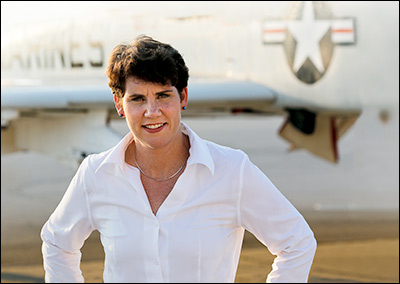
Alabama Rep. Martha Roby (R-Montgomery)

July 30, 2019 — In the past week, three Republican House members made public their intention not to seek re-election including one this weekend. The action brings the grand total of open seats to 13, still a low number but one that is beginning to grow exponentially.

Now joining Reps. Paul Mitchell (R-MI) and Pete Olson (R-TX) in the recent retirement category is Alabama Rep. Martha Roby (R-Montgomery). The congresswoman released an electronic message indicating that she will not seek a sixth term and thanked her family and the people of her state’s 2nd District for the opportunity of serving in the US House for what will be a full decade.

Unlike in 2018, Roby looked to have a clear path to re-election. In the last campaign cycle, she drew a significant primary challenge because of negative comments she made about President Trump during the 2016 electoral contest. But the president endorsed her in the ’18 GOP nomination campaign and she scored a solid 68-32 percent win opposite former Democratic Congressman Bobby Bright in the Republican run-off.

Against four primary opponents, however, Rep. Roby only managed 39 percent of the vote, thus forcing the run-off. She rebounded nicely in the secondary election, and then went onto post a 61 percent victory in the general election. So far, no one from either party has come forward to challenge her, thus, Roby announces her retirement devoid of political pressure.

Alabama’s US Congressional Districts

Alabama’s 2nd District occupies the southeastern corner of the state, from the capital city of Montgomery to the Florida border on the south and Georgia to the east. It contains 14 whole counties and almost two-thirds of Montgomery County.

The seat is solidly Republican. President Trump posted a whopping 65-33 percent win here against Hillary Clinton, even topping Mitt Romney’s 63-36 percent margin over President Obama in 2012. In her five congressional general elections, Roby averaged 58.4 percent of the vote, but that figure is a bit misleading. She unseated then-Rep. Bright in 2010 with 51.1 percent and then survived a surprisingly close call in 2016 when she defeated a relatively unknown Democrat with only a 48.8 – 40.5 percent point spread. In her other three generals, she recorded victory percentages of 64, 67, and 61.

While the open seat figure is creeping upward, the majority of what will be incumbent-less campaigns are still non-competitive for next year’s election season. The overwhelming number of the 13 opens are Republican-held (10R-3D), and it appears at this early point in the election cycle that five of the districts will feature seriously contested general election contests, including four currently in GOP hands.

Continue reading

Rep. Pete Olson to Retire

Texas Congressional District 22, currently represented in the US House by Pete Olson (R-Sugar Land), who just announced his retirement.

By Jim Ellis

Texas Rep. Pete Olson (R-Sugar Land)

July 29, 2019 — Six-term Texas Rep. Pete Olson (R-Sugar Land) announced late last week that he will not seek re-election next year, bringing the House open seat total to an even dozen and leaving what appears to be a competitive race in his wake.

Over the years, the 22nd District has had a colorful history. Originally crafted as a swing district in the 70s, Ron Paul first won it in a 1976 special election before losing it in the regular election later that year. He would return to win the district back in 1978 and then hold it for three terms before running unsuccessfully for the Senate.

Succeeding Dr. Paul was then-state Rep. Tom DeLay (R), who would win 11 elections in the congressional district and rise through leadership to become Majority Whip and Majority Leader.

Leaving mid-term in 2006, the Republicans were barred from replacing DeLay on the ballot, which led to then-Houston City Councilwoman Shelley Sekula-Gibbs (R) running as a write-in candidate and losing to a Democrat, former Rep. Nick Lampson. Two years earlier, Lampson had lost his Beaumont-anchored district. Republicans re-claimed the seat two years later in the person of the current incumbent, Pete Olson.

Rep. Olson issued the following statement explaining his decision: “as someone who has long advocated for policies that put our families first, it’s time for me to take my own advice and be a more consistent presence to help our family. To that end, while I will complete my term in the 116th Congress, I will not be seeking reelection.”

Continue reading

Michigan Rep. Paul Mitchell to Retire:
“Rhetoric Overwhelms Policy …”

Michigan Rep. Paul Mitchell (R-Dryden)

By Jim Ellis

July 26, 2019 — Michigan Rep. Paul Mitchell (R-Dryden) who represents the eastern part of the state known as “the thumb of Michigan”, announced Tuesday that he will not seek a third term in the US House.

His reason for departing after what will be only four years in office and spending over $7 million of this own money to win election to Congress over three campaigns is to spend more time with his family because of his special needs son. Rep. Mitchell also expresses displeasure and frustration with Washington because, he says, “rhetoric overwhelms policy, and politics consumes much of the oxygen in this city.”

Rep. Mitchell was originally elected in 2016, replacing Rep. Candice Miller (R) when she retired after 14 years in the House. He won a five-way Republican primary that year with 38 percent support, or more than 8,000 votes beyond he and his closest competitor, state Sen. Phil Pavlov (R-Port Huron). Mitchell won the ’16 general election with a 63-32 percent margin and was re-elected last year, 60-35 percent.

In his first venture into elective politics, Mitchell ran in the vacant 4th District when former Ways & Means Committee chairman Dave Camp (R-Midland) retired in 2014 after his time leading the panel had reached its term limit. In the three-way Republican primary, Mitchell lost 52-36 percent to current Rep. John Moolenaar (R-Midland). After the defeat, he moved across the state to Lapeer County, an area where Mitchell had business interests.

Continue reading

A Highly Anticipated Challenge:
Texas Rep. Chip Roy vs. Wendy Davis

By Jim Ellis

July 24, 2019 — Late last week, the Democratic Congressional Campaign Committee brain trust, members of the House Majority leadership including Speaker Nancy Pelosi (D-CA) and most of the Texas Democratic delegation, announced they are supporting an event to encourage former Lone Star State gubernatorial candidate and ex-state Sen. Wendy Davis to run for Congress.

Texas freshman Rep. Chip Roy (R-Austin) and ex-state Sen. Wendy Davis (D)

Even before the event, held last night, got underway, Davis had confirmed that she would challenge freshman Rep. Chip Roy (R-Austin) who won a close 50-48 percent open seat victory in 2018 from a district that stretches from San Antonio to Austin and through the Texas Hill Country.

Davis was the 2014 Texas Democratic nominee for governor but went down to a crushing 59-39 percent defeat at the hands of then-attorney general Greg Abbott (R). At the time, Davis was a Ft. Worth area state senator who had gained statewide publicity for attempting a 2013 solo filibuster to block a bill that would have outlawed abortion after 20 weeks of pregnancy, in addition to other restrictions.

The publicity jettisoned her into becoming a statewide candidate but ended in a 20-percentage point loss. Now the party leadership is hoping to make her a viable congressional candidate some 200 miles from her legislative district. Davis was elected twice to her Ft. Worth area Texas senate seat, defeating an incumbent Republican in her first election in 2008 and winning re-election in equally close proportion.

Interestingly, the vote totals for and against her hardly changed from 2008 to 2012. In her first election, Davis attracted 147,832 votes. In her successful re-election bid, she received 147,103. Though her Republican opponents were different individuals, including an incumbent in 2008, they too, received almost an identical number of votes: 140,737 (2008) and 140,656 (2012). Texas is one of two states, California being the other, where the state Senate seats are more populous than congressional districts. After losing the gubernatorial race, Sen. Davis chose not to seek re-election in 2016 and moved to the Austin area.

Continue reading

Q2: The Money Count – House

By Jim Ellis

The top Democratic fundraiser in the House for Q2 was New York freshman Rep. Alexandria Ocasio-Cortez (D-Bronx), with $1.22 million raised from April 1 – June 30.

July 23, 2019 — Yesterday we covered the fundraising and cash-on-hand figures for the 2020 Senate campaigns; today we look at the House.

The Daily Kos Elections site surveyed the entire House universe and segmented the large group into a competitive race category. They find 158 House incumbents who will be in a competitive 2020 campaign or have the potential of being in one at this point in time.

Within this incumbent segment, the aggregate amount raised is over $61.4 million for the second quarter period ending June 30. As one would expect, the majority Democratic members had the larger haul, $39.4 million for the 94 Democrats surveyed as compared to $21.9 million for 64 Republicans. The average amount a Democratic member raised was just over $419,000 as compared to $342,000 for Republicans.

As was the case in 2018, when fundraising records were shattered for US House incumbents and candidates, this election cycle appears to be again featuring candidates who are prolific in this campaign element. For the campaign cycle-to-date aggregate figure, meaning the amount of money raised from Nov. 9, 2018, the day after the last general election, to June 30, 2019, these same incumbents have raised over $135 million, meaning an average of just under $855,000 per member.

For the 94 Democratic incumbents isolated for this report, just over $75 million was raised campaign-to-date, for an average of almost $798,000 per member. The 64 Republicans attracted an aggregate $41.4 million, with an average of $646,000 raised CTD.

In terms of current cash-on-hand, the average competitive, or potentially competitive, Democratic House incumbent posted almost $1 million CoH, or $987,000. Their Republican counterparts averaged $657,000. While Democrats have a clear money advantage, is it equally evident that the GOP candidates will also have more than enough to communicate their message. These figures obviously do not include the large amount of money that outside organizations will raise and spend independently to boost their favored candidates of both parties.

Continue reading

Murphy Wins Run-off in NC-3

By Jim Ellis

North Carolina state Rep. Greg Murphy (R-Greenville)

July 11, 2019 — North Carolina state Rep. Greg Murphy (R-Greenville) scored an easy 60-40 percent victory over Dr. Joan Perry in the special Republican congressional run-off Tuesday night, thus becoming the party nominee in a special general election to succeed the late Congressman Walter Jones, Jr. (R-Farmville) who passed away in February.

The run-off campaign was particularly low key. Neither candidate raised nor spent a huge amount money throughout the entire nomination process. Rep. Murphy will have expended approximately $600,000, while Dr. Perry only reached the $400,000 mark. Both, however, saw independent expenditures conducted on their behalf.

Originally, it appeared the conservative groups would be lining up behind Dr. Perry, and particularly pro-life groups, but when House Freedom Caucus chairman Mark Meadows (R-Skyland/Asheville) publicly endorsed Rep. Murphy the ideological lines appeared to break down.

Murphy carried 12 of the district’s 17 counties, and scored big in his home county of Pitt, with an 82-18 percent victory margin that accounted for more than half of his district-wide 6,972 vote win from a low turnout of 35,916 Republican run-off ballot casters.

Dr. Perry rebounded in her own home county of Lenoir, registering 75 percent of the vote there and cutting Murphy’s district vote margin by 1,482 votes. Though Murphy won 70 percent of the district’s counties, several were by very close margins: 4, 26, 61, 93, 127, and 227 votes.

Now, we move to the Sept. 10 special general election. Back in the April 30 primary, former Greenville Mayor Allen Thomas won the Democratic primary outright and automatically advanced into the general election. Now he and Rep. Murphy will battle for the seat in a campaign that should favor the new Republican nominee.

Continue reading

The Amash Factor

By Jim Ellis

Michigan Rep. Justin Amash

July 9, 2019 — Michigan Rep. Justin Amash (I-Cascade Township) officially left the Republican Party as the 4th of July approached, but what does his decision mean for the 3rd District’s political future?

Rep. Amash has served his whole career as a Republican, being first elected in an open congressional seat back in 2010 after winning a state House district in 2008. Though he left the GOP, he did not affiliate with the Libertarian Party, which many expected. Still, he has the option of running for that party’s presidential nomination even if he does not serve in Congress as a Libertarian.

But Amash’s decision clearly changes the congressional race. If he ultimately decides to seek re-election, his decision to leave the GOP is somewhat curious, at least from an electoral perspective. At this point, already four Republicans have announced, with at least three of them clearly credible. Two are sitting state representatives and one an heir to the Meijer retail store chain that features more than 200 stores predominantly in the Midwest. With no run-off required under Michigan election law, a large competitive field would have played to Rep. Amash’s favor since the contest would have been a base vote nomination election.

Should he decide to seek re-election as an Independent, then all bets might be off. Under the same premise that a crowded field could have helped Amash win a Republican primary, at least a three-way general election candidate field could conceivably allow him to win re-election in similar plurality fashion. But, either major party candidate might have the same advantage making this a wild card race.

Additionally, the three-way set-up could put what is typically a reliable Republican seat in play for the Democrats. Should Amash and the eventual Republican split the right-of-center base, it is conceivable that the Democratic nominee could find him or herself in position to score the plurality victory.

Continue reading