Tag Archives: Pennsylvania

Intriguing “Real Clear” Projections Show the GOP Winning the Senate

To see this map and the data behind it, visit Real Clear Politics (RCP).

By Jim Ellis — Thursday, Oct. 27, 2022

Senate

How Republicans Look to Claim Senate Majority — The Real Clear Politics (RCP) data group released their updated US Senate projections, and their formula suggests that Republicans will claim a surprising 53-47 majority.

Such a projection seems to cut against most of the data we currently see, and, in at least three cases, their win projection is opposite of what their own current Real Clear Politics formula shows.

The crux of their predictions lies in a field entitled “Polls Underestimated,” which factors in an average under-poll for one party or the other. In the 10 Senate races they isolated, Republicans are the under-polled party in most but not all of the targeted campaigns.

Utah, Alaska, Iowa, Washington — The two competitive Senate races not included were first, Utah, where they list Sen. Mike Lee (R) as a “likely” winner, though polling generally shows his race with Independent Evan McMullin falling to within single digits. The second is Alaska, which is excluded because the contest is evolving into a race between two Republicans; hence, the seat is not a factor in determining the overall Senate majority. Also, the race between Sen. Chuck Grassley (R) and retired Navy Adm. Michael Franken (D) is also not included, but Sen. Patty Murray’s (D) battle against Republican Tiffany Smiley in Washington is added.

As mentioned above, in three of the races the RCP prognosticators are expecting a turnaround since their own current data is suggesting an opposite result.

Nevada — The RCP current polling projection in the Silver State suggests that Republican former state Attorney General Adam Laxalt holds a slight 0.8 percent lead over Sen. Catherine Cortez Masto (D). Here, RCP estimates that Democrats under-poll in Nevada by one percentage point. This should leave Sen. Cortez Masto with a 0.2 percent edge, but the table shows Laxalt holding such a lead. This appears to be an error. In any event, their final prediction shows a Laxalt victory, which is reasonable.

Arizona — A state away, Sen. Mark Kelly (D) currently holds an RCP polling lead of 2.5 percentage points over Republican opponent Blake Masters. A Republican under-poll of 1.6 is factored from results during the last three election cycles, which reduces the senator’s advantage to 0.9 percent. In 2020, a total of 21 polls were conducted of the Kelly-Martha McSally Senate race, and Kelly’s average margin was 6.6 points, yet he won only 51-49 percent. Therefore, concluding a Republican under-poll exists in Arizona is reasonable. In this situation, while their model finds Sen. Kelly leading today, RCP predicts a Republican victory for venture capitalist Masters.

Georgia — The other conclusion that is perhaps inconsistent is their prediction for the Georgia Senate race. Showing Republican Herschel Walker with a 1.1 percentage point edge after an under-poll factor of 1.4 is added to the Republican column leads the RCP final prediction that Walker and Sen. Raphael Warnock (D) would be forced into a post-election runoff on Dec. 6. Yet, in the overall count, Georgia is counted in the Republican column. Though not stated, RCP must be predicting that Walker would win the runoff election.

Under Georgia law, as we will remember from 2020, a candidate must receive majority support to win the general election. On the ballot with Sen. Warnock and Walker is Georgia Libertarian Party chairman Chase Oliver. If Warnock and Walker split the vote to where both candidates post in the neighborhood of the 48-49 percent number, then a few points going to Oliver could send the two major party nominees into a Dec. 6 secondary election with Oliver being eliminated from the mix. Thus, we will see more even intrigue on election night coming from the Peach State.

Pennsylvania — RCP is also predicting victory for two candidates who their model suggests are currently behind but who flip after adding the under-poll factor. In Pennsylvania, Democratic Lt. Gov. John Fetterman is running ahead by 1.3 percentage points according to the current RCP survey average. Adding a 3.9 percent Republican under-poll to the aggregate gives Dr. Mehmet Oz a 2.6 percent adjusted lead. RCP predicts a Dr. Oz victory on Nov. 8.

New Hampshire — The race between Sen. Maggie Hassan (D) and retired Army Gen. Don Bolduc (R) has tightened. The RCP average sees a Hassan lead of 3.6 percent but adding a large 5.4 New Hampshire Republican under-poll actually gives Gen. Bolduc a 1.8 percent edge. Still, RCP predicts a Hassan Democratic victory on Election Day.

Other Wins — Finally, the Real Clear Politics data team predicts Republicans to win the Senate races in Florida, North Carolina, Ohio, and Wisconsin, with Democrats holding Washington.

Added up, these numbers result in a 53-47 Republican majority. Possible? Yes. Likely? No.

Oz Closing the Gap in PA; MN-2 a Bellweather for House Majority; Split Georgia Vote May Be Developing; Zeldin Closes in on Hochul in NY

By Jim Ellis — Thursday, Oct. 20, 2022

Senate

Pennsylvania Senate Republican candidate, Dr. Mehmet Oz, the television doctor

Pennsylvania: Oz Closing the Gap — The AARP polling series that Republican pollster Fabrizio Ward and the Democratic data firm Impact Research jointly conduct again tested the Pennsylvania electorate. Their new poll (Oct. 4-12; 1,400 likely Pennsylvania general election voters; live interview & text) projects Lt. Gov. John Fetterman (D) as having only a 48-46 percent lead over Republican nominee Dr. Mehmet Oz, the television doctor. Previously, the AARP poll June poll found Fetterman holding a larger six-point advantage.

Within the same period, The Trafalgar Group also ran a Pennsylvania survey (Oct. 8-11; 1,078 PA likely general election voters; multiple sampling techniques) and arrived at a virtually identical 47-45 percent split. It is becoming clear, with early voting already underway, that this critical Senate race is going down to the wire, just as we saw back in May when the state Republican primary ended in a razor-thin result. In fact, from the last 10 polls released of this race, seven of the 10 found Fetterman leading by four percentage points or less.

House

MN-2: Close Again — In a surprise 2020 finish, Republican challenger Tyler Kistner, a military veteran who hadn’t gotten much national attention, lost only a battle to Rep. Angie Craig (D-Eagan) by only two points — 48-46 percent. It appears the two are headed for another razor-thin finish this year in their re-match campaign. A just-released Survey USA poll (Oct. 15-16; 586 likely MN-2 general election voters; automated telephone & online) projects Craig to be holding a slim 46-45 percent lead over Kistner in a polling result wholly consistent with this electorate’s voting history.

Both Minnesota’s southern sector districts — the 1st and 2nd — are important toward determining the new House majority. The GOP would conceivably be on a majority track by winning one of the state’s two southern swing seats. Should their candidates win both, a big Republican night could be in the making. If the Democrats win both, such a performance would suggest that the party would have a legitimate chance of holding their slim majority.

Governor

Georgia: Disconnect with Senate Race — Two more polls were released that find Gov. Brian Kemp (R) leading former state House Minority Leader and 2018 gubernatorial nominee Stacey Abrams (D), and running substantially ahead of Republican senatorial candidate Herschel Walker. The juxtaposition makes these races interesting to watch.

Insider Advantage (Oct. 16; 550 likely Georgia general election voters) gives Gov. Kemp a 50-43 percent lead over Abrams, but also sees Democratic Sen. Raphael Warnock posting a 46-43 percent edge over Walker. Similarly, while Landmark Communications (Oct. 15-17; 500 likely Georgia general election voters) projects Gov. Kemp’s lead at 51-45 percent, the firm derives a 46-46 percent tie between Warnock and Walker. Therefore, we continually see a relatively substantial single-digit swing in Sen. Warnock’s favor when comparing the gubernatorial results from consistent polling samples. This suggests we could see a split decision from these major Georgia statewide races.

New York: More Data Finding Tightening Race — Quinnipiac University has joined the group of pollsters projecting the New York governor’s race between Gov. Kathy Hochul (D), on the ballot for the first time in her own right after ascending to the position when former Gov. Andrew Cuomo (D) resigned, and US Rep. Lee Zeldin (R-Shirley/East Long Island) as a close race. The Q-Poll (Oct. 12-16; 1,617 likely New York general election voters; live interview) sees the spread between Gov. Hochul and Rep. Zeldin dropping to 50-46 percent.

Four of the past seven polls see the contest falling between two and six percentage points, which represents a notable improvement for Rep. Zeldin. With New York early voting not beginning until Oct. 29, this race’s patterns still have a significant period in which to firm.

Nebraska’s Gov. Ricketts to Become Sen. Ricketts? Dead Heats in CA-21 & FL-27; Oklahoma Shock Poll

By Jim Ellis — Tuesday, Oct. 11, 2022

Senate

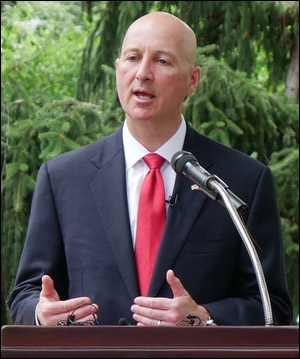
Nebraska Gov. Pete Ricketts (R)

Nebraska: Gov. Ricketts Makes Succession Statement — Sen. Ben Sasse’s (R) resignation, to occur once he is confirmed as the University of Florida’s new president, has spurred discussion as to who will be appointed as Nebraska’s replacement junior senator. Term-limited Gov. Pete Ricketts (R), who refused to comment about his interest in assuming the position when Sen. Sasse announced his future plans, uttered a clarifying comment over the weekend.

Under Nebraska state law, a governor has 45 days to replace a resigning senator after the seat becomes officially vacant. Sen. Sasse indicated he will resign before the end of the year. Therefore, it is possible that Gov. Ricketts could make the appointment as one of his last official acts, or the likely incoming chief executive, University of Nebraska Regent Jim Pillen (R), would do so as one of his first duties.

Ricketts now indicates if he develops an interest in receiving the appointment, he will let the new governor choose the new senator and not appoint himself. In a crowded 2022 Republican gubernatorial primary, Gov. Ricketts endorsement of Pillen helped him win the nomination, so the early tea leaves are suggesting that the outgoing governor could be headed to the Senate.

New Hampshire: Dollars Changing Direction — Earlier, we speculated upon the National Republican Senatorial Committee eventually making the move to pull their media reservation dollars from New Hampshire and begin moving the money to places where the GOP candidate looks to be in better victory position — namely Nevada, Arizona, Georgia, and Pennsylvania. With the NRSC’s canceling its $2.6 million budget for the Boston market, as reported by the Adminpact and Daily Kos Elections organizations, the move has been made.

This, however, does not mean the Republican sector is abandoning New Hampshire, especially since polling still shows nominee Don Bolduc within high single-digits of Sen. Maggie Hassan (D). The Senate Leadership Fund and other outside right-of-center allies have reserved another $23 million in media time, so they are clearly not giving up on the NH Senate race even though the state and national party leadership overtly attempted to deny Bolduc his nomination.

House

CA-21: Rep. Costa in Dead Heat — The Trafalgar Group released the first post-primary survey of California’s new 21st Congressional District and the results reveal a surprising dead heat between Rep. Jim Costa (D-Fresno) and businessman and former FBI agent Michael Maher (R). The poll (Sept. 30/Oct. 3; 515 likely CA-21 general election voters; multiple sampling techniques) finds the two candidates tied at 44 percent.

While the Central Valley region is showing signs of voting more conservatively than the rest of the Golden State electorate, the Republicans taking this district would be quite a stretch. The FiveThirtyEight data organization rates the new 21st, which includes downtown Fresno, as D+16 while the Dave’s Redistricting App crew calculates a 58.2D – 39.7R partisan lean. In the jungle primary, Rep. Costa unexpectedly received just 47.0 percent of the vote, but the Democratic aggregate total was 57.0 percent.

FL-27: Tight Race Prediction Coming True — In 2020, Rep. Maria Elvira Salazar (R-Miami) upset then-Rep. Donna Shalala (D) from a South Florida district that votes Republican to a greater degree than the voter registration figures might suggest. The GOP redistricting map drawers made the seat more favorable for Rep. Salazar, but it still rates as a D+1 according to the FiveThirtyEight data organization and 52.4D – 46.5R on the Dave’s Redistricting App partisan scale.

Therefore, it is not surprising to see a SEA Polling & Strategic Design survey (Oct. 3-5; 400 likely FL-27 general election voters; live interview) finding state Sen. Annette Taddeo (D-Miami) and Rep. Salazar in a virtual dead heat (Taddeo, 47-46 percent). The poll also found Gov. Ron DeSantis (R) leading former governor and congressman, Charlie Crist (D), 50-44 percent within the 27th District, while Sen. Marco Rubio (R) held a 48-47 percent edge over Rep. Val Demings (D-Orlando).

Governor

Oklahoma: Shock Poll — Largely due to fallout from his Administration’s handling of some of the Covid 19 relief expenditures and attacks over his former business dealings, polling has suggested weakness for Gov. Kevin Stitt’s (R) re-election bid. Now we see a new survey that, for the first time, projects the governor falling behind his Democratic opponent, Superintendent of Public Instruction Joy Hofmeister (D).
The Sooner Poll, which surveys the Oklahoma electorate for various media outlets, released their new data (Oct. 3-6; 301 likely Oklahoma general election voters) and sees Hofmeister holding a surprising 47-44 percent lead. Though the Sooner Poll contains a very small sample and therefore a high error factor, it is becoming clear that this race will now draw further national attention.

Alaska’s Ranked Choice Voting System Favors Sen. Murkowski, Begich over Palin; Dr. Oz Closes On Lt. Gov. Fetterman in PA; CA-26 Race Tightens

By Jim Ellis — Tuesday, Oct. 4, 2022

Senate

Alaska Sen. Lisa Murkowski (R)

Alaska: Ranked Choices Favors Sen. Murkowski — The new Alaska Survey Research firm tested the Alaska Senate race, and we again see Sen. Lisa Murkowski (R) having trouble distancing herself from challenger and fellow Republican Kelly Tshibaka.

The ASR poll (Sept. 25-27; 1,282 likely Alaska general election voters; online) finds Sen. Murkowski leading Tshibaka only 41-39 percent on the ballot test question, with Democrat Pat Chesboro attracting 17 percent support, and Republican Buzz Kelley garnering a four percent preference factor. Kelley has already withdrawn as an active candidate and endorsed Tshibaka, but his name remains on the ballot as one of the four finalists from the Aug. 16 primary vote.

The Ranked Choice system then kicks in to put Sen. Murkowski well ahead in the final round. After Chesbro and Kelley are officially eliminated, Sen. Murkowski would top Tshibaka, 57-43 percent, once the second and third choice votes are added to the tabulation.

Pennsylvania: Movement Confirmation — Yesterday, as well as late last week, we reported upon a trio of surveys finding Dr. Mehmet Oz (R) coming within close range of Lt. Gov. John Fetterman (D) on the various ballot test questions. Fox News, Franklin & Marshall, and Insider Advantage found the Fetterman lead dropping to three and four percentage points.

Now, Emerson College has released their Pennsylvania statewide survey, the fourth coming to a similar conclusion within a constant time realm. The new Emerson study (Set. 23-26; 1,000 likely Pennsylvania voters; multiple sampling techniques) sees Dr. Oz coming within the polling margin of error, trailing Fetterman by only a 45-43 percent count.

House

AK-AL: Poll Finds Begich Passing Palin — The aforementioned Alaska Survey Research poll (see Alaska Senate above) also tested the state’s at-large US House District campaign and it discovered two significant data points. First, in the ballot test of the four candidates who advanced into the general election, businessman Nick Begich III now moves ahead of former governor and 2008 vice presidential nominee Sarah Palin by two and three percentage points on the initial vote and first Ranked Choice Voting round.

The second finding is newly elected Rep. Mary Peltola (D-Bethel) would defeat either Begich or Palin even before getting to the second Ranked Choice round. According to the ASR poll, Rep. Peltola would achieve majority support, thus winning the election, once Libertarian Chris Bye, the fourth-place finisher, is eliminated from further competition.

CA-26: Poll Suggests New Race Bubbling to the Surface — A just-released OnMessage survey (Sept. 14-18; 400 likely CA-26 voters; live interview) surprisingly finds Rep. Julia Browley (D-Westlake Village/Ventura) leading Republican Matt Jacobs by only a 48-43 percent point spread. This poll, that even finds Jacobs leading among the self-described Independents 44-34 percent, is quite a change from the June 7 jungle primary results. In that election, Brownley topped Jacobs, 54-38 percent, with three other candidates sharing the remaining eight percent of the vote.

Whether Jacobs can become competitive to the point of unseating Rep. Brownley remains to be seen in a southern California district that President Biden carried 61-36 percent. For her part, Brownley has averaged 61 percent of the vote in her last three terms, but did have close calls in both her original 2012 election (53-47 percent) and 2014 (51-49 percent).

Hassan Leads Beyond Error Margin in NH Senate Race; Three-Way Tie in NC; Dr. Oz Moving up in PA

By Jim Ellis — Monday, Oct. 3, 2022

Senate

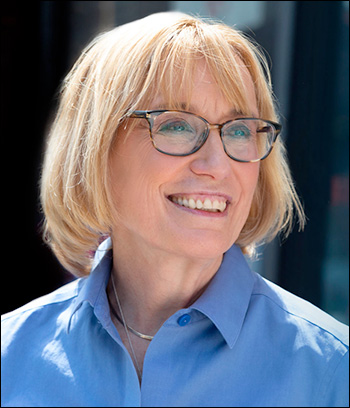
New Hampshire Sen. Maggie Hassan (D)

New Hampshire: Again, Beyond Error Margin — Though the new Suffolk University survey for the Boston Globe newspaper (Sept. 23-26; 500 likely New Hampshire general election voters) shows Sen. Maggie Hassan (D) holding a lead well beyond the polling margin of error over retired Army Gen. Don Bolduc (R) as do three other post-primary pollsters, their 50-41 percent margin is a touch closer than some of the other results.

While Republican national political organizations continuing to spend heavily will likely draw Gen. Bolduc closer to Sen. Hassan, it is unlikely that her ballot test advantage can be overcome before Election Day. Therefore, the analysis that the GOP strategists will pull their media buy from the New Hampshire race and transfer it to other more winnable contests remains valid.

North Carolina: The “Three-Way” Tie — The North Carolina Senate race has been tight for weeks, but now we see three separate pollsters all finding the race status languishing in a flat tie. The Cygnal polling organization (Sept. 24-26; 650 likely North Carolina voters), Meredith College (Sept. 20-23; 731 likely North Carolina voters), and the Global Strategy Group (Sept. 12-20; 800 likely North Carolina voters) all project tied results. Cygnal sees Rep. Ted Budd (R-Advance) and former state Supreme Court Chief Justice Cheri Beasley (D) each attracting 44 percent of the vote. Meredith College finds both with 41 percent, while GSG’s total is 46 percent apiece.

Obviously, the North Carolina Senate race is one of the closest in the nation with just over a month remaining and early voting on the cusp of beginning.

Pennsylvania: Dr. Oz Moving Closer — A trio of new surveys find Dr. Mehmet Oz (R) coming within close range of Lt. Gov. John Fetterman (D) in their expensive battle over what is one of the most important Senate contests in the nation.

Fox News (Sept. 22-26; 827 likely Pennsylvania general election voters) finds Dr. Oz pulling to within four points of Fetterman, 48-44 percent. Franklin & Marshall College (Sept. 19-25; 517 likely Pennsylvania general election voters) and Insider Advantage (Sept. 23-24; 550 likely Pennsylvania general election voters) also see similar margins. The latter two arrive at identical ballot test results: Fetterman leading 45-42 percent. With early voting just days away from beginning since the ballots have already been mailed to the registered voters, Dr. Oz may be making his move at precisely the right time.

Governor

Wisconsin: Six Polls, Six Tight Results — The Wisconsin governor’s race between incumbent Gov. Tony Evers (D) and businessman and former statewide nominee Tim Michels (R) is clearly a dead heat. Six polling firms were in the field during the Sept. 14-27 period surveying between 574 and 1,399 likely or registered voters and each sees an extremely close race.

Emerson College and Public Policy Polling find Gov. Evers leading by two percentage points. Big Data Poll and Fox News saw the race as a dead heat tie. The Trafalgar Group and Fabrizio Ward (R)/Impact Research (D), polling for AARP, project Michels as holding a tight lead. In five of the six results, both candidates drew support within the 40s. Only the AARP survey found a contender, Michels, reaching the 50 percent mark.

YouGov/CBS News Abortion Poll Results; A Suspected Outlier in Pennsylvania Senate Race; Montana House Race Closer Than it Should Be

By Jim Ellis — Thursday, Sept. 29, 2022

Issues

YouGov/CBS News: Abortion Poll Results — The international polling firm YouGov, surveying for CBS News, released a new issue-oriented poll (Sept. 21-23; 2,253 US registered voters; 1,192 female voters; online), and its purpose was to largely test the abortion issue along with some other subject areas more likely to attract Democratic voters.

Though the abortion issue was highlighted as the central theme of the current poll, and the reported partisan segmentations only included Democrats and Republicans, thus omitting Independents; abortion as a voter turnout driver was still not at the top of the list.

The seven tested issues in common from these two isolated polls were (alphabetically)

  1. Abortion
  2. Climate change
  3. Crime
  4. Economy
  5. Gun policy
  6. Immigration
  7. Inflation

Unexpectedly dropped from The Economist poll list are the issue areas of civil liberties, civil rights, criminal justice reform, education, foreign policy, health care, national security, and taxes/government spending. The most surprising omissions were education and health care, which are included in virtually every issue matrix poll within the entire polling universe.

Though the abortion issue was highlighted as the central theme of the current poll, and the reported partisan segmentations only included Democrats and Republicans thus omitting Independents, abortion as a voter turnout driver was still not at the top of the list.

According to this latest YouGov finding, 59 percent of the respondents rated abortion as “very important” (the other two choices given the respondents were “somewhat important” or “not too/not important”), but this ranked seventh on the list of one dozen tested topics. Again, topping the grouping with an 82 percent “very important” rating was the economy. Here are the results, listed in descending order of importance:

  1. Economy — 82%
  2. Inflation — 76%
  3. Crime — 67%
  4. Voting & election issues — 64%
  5. Immigration — 62%
  6. Gun policy — 61%
  7. Abortion — 59%

While there were many differences between the female and male segments, both rated inflation as “very important” with the same 76 percent rating. The biggest chasm between the two genders was abortion. By an 18-point margin, more women (67 percent) than men (49 percent) rated the issue as “very important.” The other major differences were:

  • Climate change (women: 51% “very important”; men: 37%)
  • January 6th events & investigation (women: 47%; men: 36%)
  • Race (women: 41%; men: 30%)

The best news for Republicans on this poll: the enthusiasm gap still looks to favor them, which is also a key factor in winning lower turnout midterm elections. According to the YouGov/CBS data, Republicans have a five-point lead over Democrats among those saying they will “definitely” vote in the upcoming midterm election, 79-74 percent.

Senate

Pennsylvania: A Suspected Outlier — Several polls have been released regarding the Pennsylvania Senate race during September, and all but one has shown Dr. Mehmet Oz (R) closing on Lt. Gov. John Fetterman (D).

The new Marist College poll (Sept. 19-22; 1,242 registered Pennsylvania voters; 1,043 likely Pennsylvania general election voters; live interview & online) sees Fetterman holding a 51-44 percent advantage, but the result appears to be an outlier. Five other pollsters, surveying during the Sept. 6-24 period find the Fetterman advantage to only be slightly more than three percentage points. On the other hand, 23 Pennsylvania Senate surveys have been released since the May primary and Fetterman has been posted to a lead in all.

Washington: Another Outlier — The Trafalgar Group (Sept. 21/-24; 1,091 likely Washington general election voters; multiple sampling techniques) just released data that no other pollster has even remotely found. According to this most recent Trafalgar result data, Sen. Patty Murray’s (D) lead over Republican Tiffany Smiley has dropped to just two percentage points, 49-47 percent. Though Trafalgar has proven itself very accurate in the elections since 2016, this poll appears to be an outlier.

In the most recent surveys conducted during the Sept. 6-15 period from Public Policy Polling and Elway Research, Sen. Murray holds an average lead of 11 percentage points. Still, Smiley’s effort is the strongest we’ve seen from a Washington statewide Republican candidate this century.

House

MT-1: Closer Than it Should Be — While Montana’s new western 1st District seat was drawn as a Republican CD — the FiveThirtyEight data organization projects a R+10 partisan lean — former US representative and ex-US Interior Secretary Ryan Zinke (R) leads Democratic Monica Tranel by just a 43-41 percent count according to the latter’s internal Impact Research poll (Sept. 14-19; 400 likely MT-1 general election voters; live interview & text).

The result is not particularly surprising considering that Zinke had a close call in the Republican primary, edging former state Sen. Al Olszewski by just a 42-40 percent split. Zinke’s image is his problem, according to the Impact Research survey. His favorability index stands at a poor 39:54 percent positive to negative. Perhaps more troubling, 55 percent of the poll respondents agree that Zinke is “out for himself,” and 50 percent characterize him as “corrupt.” The new MT-1 is a must-win for the Republicans if they are to capture the House majority.

Conflicting Trends in Ohio; Johnson Opening Advantage in Wisconsin; Dead Heat in Pennsylvania

By Jim Ellis — Tuesday, Sept. 20, 2022

Senate

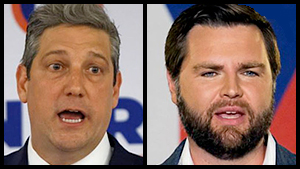
Ohio 2022 Senate candidates Rep. Tim Ryan (D) and author J.D. Vance (R)

Ohio: Conflicting Trends — In the mid-August through early September period, three pollsters found US Rep. Tim Ryan (D-Warren/Youngstown) snatching the polling lead away from GOP author J.D. Vance. The research entities Impact Research, Suffolk University, and Fallon Research, in studies conducted during the Aug. 17 through Sept. 11 time realm, found Rep. Ryan trending ahead with margins between one and six points.

Two news polls, however, see the race flipping back to Vance. Emerson College (Sept. 10-13; 1,000 likely Ohio voters; multiple sampling techniques) and the Civiqs survey research entity, polling for the Daily Kos Election site (Sept. 10-13; 780 likely Ohio general election voters), and in the field during the same period, see Vance now holding close leads of 44-40 and 48-45 percent, respectively.

Wisconsin: Trend Favors Sen. Johnson — Since the Aug. 9 Wisconsin primary, we’ve seen several polls conducted of the Wisconsin Senate campaign. Immediately after the nomination vote, Lt. Gov. Mandela Barnes (D) opened the general election cycle with a polling lead. Marquette University Law School, a regular Wisconsin pollster, found Barnes holding a 52-45 percent advantage over Sen. Ron Johnson (R) in their Aug. 10-15 poll of 713 likely Wisconsin general election voters.

Late last week, Marquette released a new survey (Sept. 6-11; 801 registered Wisconsin voters; live interview) and the law school research organization now posts Sen. Johnson to a slight 48-47 percent advantage. Civiqs, polling for the Daily Kos Election site (Sept. 10-13; 780 likely Wisconsin general election voters), confirms the Marquette result. They find Sen. Johnson up 49-48 percent. Though the lead is small, the Johnson trend line is positive.

House

OR-5: Getting Closer — The Democratic survey research firm Global Strategy Group, polling for the 314 Action super PAC (Sept. 1-8; 400 likely OR-5 general election voters) finds Democrat Jamie McLeod-Skinner, who defeated Rep. Kurt Schrader (D-Canby) in the May primary election, leading businesswoman and former local mayor Lori Chavez-DeRemer (R), by a tight 41-38 percent margin.

GSG finds the district statistics even closer, however. They see a Democratic partisan edge of just one percentage point, even though the party has a five-point voter registration advantage. In terms of the generic congressional vote, the Republicans have a one-point lead. Under various turnout models according to the GSG research, the race changes. If the turnout model is closer to what was found in the New Jersey and Virginia governors’ races (2021), a Biden+5 model, the congressional race becomes a dead heat at 40-40 percent. Under both a 2014 and 2020 turnout model (Biden+10), McLeod-Skinner would establish a 42-38 percent spread. The trouble for McLeod-Skinner, in a district that slightly leans Democratic, is that she doesn’t reach beyond the low 40s under any turnout model. This suggests that Chavez-DeRemer has serious upset potential.

PA-8: Dead Heat Developing — In what is appearing to be a classic example of a Democratic incumbent claiming independence but seeing Republican forces producing stats showing total compliance with the Biden agenda, the people of Pennsylvania’s northeast 8th Congressional District are dividing evenly.

The Republican polling entity, Cygnal, surveying for the Jim Bognet campaign (Sept. 6-8; 440 likely PA-8 general election voters), finds the two candidates, Rep. Matt Cartwright (D-Moosic/Scranton) and Bognet, tied at 48-48 percent. At an R+8 partisan rating according to the FiveThirtyEight polling organization, PA-8 is the second-most Republican district in the country that elects a Democrat to the House.