Tag Archives: North Carolina

Republicans Sweep the North Carolina Special Elections

By Jim Ellis

Sept. 12, 2019 — Republican special election candidates Greg Murphy and Dan Bishop won their respective congressional campaigns Tuesday night in different parts of North Carolina.

North Carolina’s 3rd Congressional District

Murphy, a state representative from Greenville, was an easy winner in the 3rd District, as expected. He recorded a 62-37 percent win over former Greenville Mayor Allen Thomas (D) in taking 16 of the district’s 17 counties and falling in Hyde County by just 43 votes. Rep-Elect Murphy now replaces the late congressman, Walter Jones (R-Farmville), who passed away in February.

For the special election, 113,607 individuals cast their ballots, some 40 percent fewer than the number voting in the 2018 regular election even though Rep. Jones was unopposed. In the presidential election year of 2016, congressional race turnout exceeded 323,000 voters.

North Carolina’s 9th Congressional District

The hotly contested election occurred to the southwest in the 9th District, the seat left vacant all year because the 2018 result was never certified because of voter fraud allegations in Bladen County. Today, the district finally has a new representative. Bishop, a state senator from Charlotte, slipped past Democratic businessman Dan McCready despite being outspent $5 million to $2 million — though the outside group spending, particularly from the National Republican Congressional Committee, added at least another $2 million to the Bishop support effort.

Continue reading

NC Special Elections Decided Today

By Jim Ellis

North Carolina’s 9th Congressional District

Sept. 10, 2019 — Voters in eastern and south-central North Carolina will go to the polls today to fill the state’s two vacant congressional seats. The 3rd Congressional District is open because Rep. Walter Jones (R-Farmville) passed away in February. The 9th District will finally get a representative after going vacant for this entire Congress. As we remember, the 2018 electoral result was not certified due to voter fraud allegations; hence, the calling of this new election.

North Carolina’s 3rd Congressional District

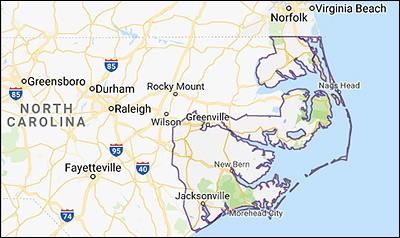
The 3rd District, which includes the Outer Banks area that Hurricane Dorian recently hit, hosts the cities of Jacksonville, New Bern, and part of Greenville within the 17-county region. It should remain in Republican hands. The seat has performed strongly for the GOP, including a 60-37 percent win for President Trump in 2016. Jones represented the district since his original election in 1994, when he unseated then-Rep. Martin Lancaster (D) in the Republican landslide of that year. Rep. Jones averaged 74.5 percent of the vote in the four elections of the present decade.

The Republican special election nominee, state Rep. Greg Murphy (R-Greenville), is favored to defeat former Greenville mayor Allen Thomas, who won the Democratic nomination outright at the end of April. The latest available polling yielded a low double-digit lead for Murphy.

The 9th District begins in Charlotte, encompassing approximately 20 percent of Mecklenburg County, and continues to annex Union – the most Republican county and largest population entity – Robeson, Richmond, Scotland, and Anson counties along with parts of Cumberland and Bladen. The final county, Bladen, was the site of the voter fraud allegations in the last regular election.

Continue reading

2020 Senate Races: The Latest

By Jim Ellis

Aug. 15, 2019 — New developments are occurring in 2020 Senate races across the country and several are apparently unofficially set for the general election. Below is a recap:

ALABAMA: Two polls have been conducted since both former state Supreme Court Chief Justice Roy Moore and retired Auburn University football head coach Tommy Tuberville joined the Republican race. Each survey showed Tuberville with the lead. The most recent, from the Cygnal research firm (June 22-23), finds Tuberville leading Rep. Bradley Byrne (R-Mobile), 29-21 percent. Judge Moore, the 2017 special election GOP nominee, recorded only 18 percent support among the likely GOP voters. An April 14 Republican run-off is likely after the March 3 primary. The eventual party nominee faces Sen. Doug Jones (D) in the general election.

ARIZONA: While the general election already appears set between appointed Sen. Martha McSally (R) and retired astronaut Mark Kelly (D), the special election schedule is not as clear cut. The 9th Circuit Court of Appeals is considering a lawsuit that challenges the length of McSally’s current appointment. The ultimate ruling could mean an earlier special election. Currently, the special cycle is to run concurrently with the regular 2020 election calendar.

COLORADO: Signs continue pointing to former Gov. John Hickenlooper leaving the Democratic presidential campaign and entering the Colorado Senate race. He looks strong in a Democratic primary – a recent Garin Hart Yang Research poll posts him to a 61-10 percent lead — but he will face a tough general election against incumbent Sen. Cory Gardner (R).

IDAHO: Sen. Jim Risch (R) has announced his re-election campaign for a third term and looks to be a lock for another win.

ILLINOIS: Minority Whip Dick Durbin now has no Democratic primary opposition as state Rep. Anne Stava-Murray (D-Downers Grove) announced several weeks ago that she was ending her Senate campaign. Sen. Durbin is the prohibitive favorite for re-election.

IOWA: The Democratic establishment is coalescing around Des Moines real estate executive Theresa Greenfield. At this point, the general election pairing looks to feature Sen. Joni Ernst (R) and Greenfield.

KANSAS: There is less conjecture that US Secretary of State Mike Pompeo (R) will return to Kansas and run for the open Senate seat and more thought that western Kansas Rep. Roger Marshall (R-Great Bend) will become a candidate. Mr. Marshall already has $1.4 million in his federal campaign account for the 2020 election cycle. He will face a crowded Republican primary but should be favored. Democrats feature a primary between former US Attorney Barry Grissom and ex-one-term Rep. Nancy Boyda.

Continue reading

Projected Democrat Delegate Count

By Jim Ellis

Aug. 12, 2019 — Several polls in key states have been released in early August, so it is a good time to again review the Democratic presidential delegate count estimate based upon the available data.

Projected delegate counts based on polling in nine key states of Democratic candidates jockeying for their party’s nomination for president in 2020.

We see new polls from Iowa, New Hampshire, California, Texas, North Carolina, Washington, and Pennsylvania. Adding the numbers from Nevada and South Carolina — important because this pair is part of the momentum setting First Four — we can gain a decent, though not wholly accurate, picture of where the race would stand if delegate apportionment were based upon these polling totals.

The most current surveys come from North Carolina, Iowa, and Pennsylvania all conducted between July 29 and Aug. 5.

In chronological order, based upon the latest studies, we begin with the Tar Heel State. Survey USA polled the North Carolina Democratic electorate (Aug. 1-5; 534 likely North Carolina Democratic primary voters) and find former Vice President Joe Biden leading his opponents by 21 points. He would post 36 percent as compared to Sens. Bernie Sanders (I-VT) and Elizabeth Warren (D-MA) scoring 15 and 13 percent, respectively. All others fall to single digits.

Accounting for some of the lower-tier candidates eventually dropping out before voting begins, it is likely that the three listed above would exceed the 15 percent threshold to qualify for delegates. If so, Biden would capture approximately 62 delegates, Sen. Sanders would earn 26, and Sen. Warren, 22.

Monmouth University conducted a new Iowa poll (Aug. 1-4; 401 likely Iowa Democratic caucus participants) and found much different results than when we last visited this electorate through the Change Research data in July. Those results projected the top five candidates qualifying for delegate apportionment, but Monmouth sees things quite differently.

According to their latest numbers, it is only Biden and Sen. Warren who would exceed the 15 percent threshold and qualify for delegates, polling at 28 and 19 percent respectively. Therefore, Iowa’s 41 first ballot delegates would split 24 for Biden and 17 for Warren.

Continue reading

The Open Seat Review

By Jim Ellis

Aug. 9, 2019 — With so many seats coming open during the past 10 days, it’s time to review exactly which districts will be incumbent-less for the coming election and how many are truly competitive.
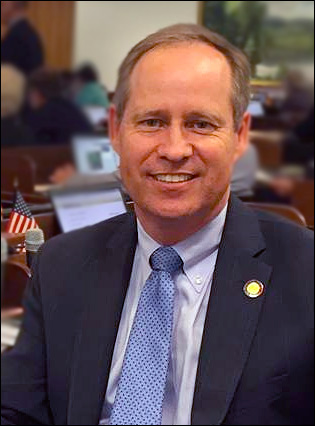
With Rep. John Ratcliffe (R-Heath/Rockwall) withdrawing from his nomination as Director of National Intelligence, it returned Texas’ 4th District to the incumbents’ list, but that move was quickly negated when fellow Texas Rep. Kenny Marchant (R-Coppell/DFW Area) announced his retirement.

Taking those moves into consideration and including the two North Carolina special congressional elections that will be filled on Sept. 10, a total of 16 seats are open headed into the next election. Of the 16, Republicans hold, or last held in the case of the disputed NC-9 result from 2018, all but three of the open seats. Looking at the coming 16 campaigns, all can expect contested primaries in at least one party and seven look to be highly competitive during the general election.

Though the retirement action has been swift of late, the aggregate number of coming vacancies is still very low, especially when remembering that the number of cycle open seats throughout this decade has fallen between 47 and 64, inclusive.

The list below depicts the open House districts and their current status:


AL-1: Rep. Bradley Byrne (R-Mobile)
• Trump ’16: 63-34 | • Romney ’12: 62-37

This southern Alabama seat will be settled in the GOP nomination contest. A run-off after the March 3 primary is likely and will likely feature a two-person combination from the group comprised of former state Sen. Bill Hightower, state Rep. Chris Pringle (R-Mobile), Mobile County Commissioner Jerry Carl, and businessman Wes Lambert. The eventual GOP nominee wins the seat in the November 2020 election.
Safe Republican


AL-2: Rep. Martha Roby (R-Montgomery)
• Trump ’16: 65-33 | • Romney ’12: 63-36

Rep. Roby was one of the surprise retirement announcements, but her leaving the seat open for the next election doesn’t cause the Republicans any harm. Expect a crowded Republican primary and a two-person run-off to ensue. The eventual Republican nominee wins the seat. So far, state Rep. Will Dismukes (R-Prattville) and former state Rep. Barry Moore are the most prominent candidates.
Safe Republican


Continue reading

Murphy Wins Run-off in NC-3

By Jim Ellis

North Carolina state Rep. Greg Murphy (R-Greenville)

July 11, 2019 — North Carolina state Rep. Greg Murphy (R-Greenville) scored an easy 60-40 percent victory over Dr. Joan Perry in the special Republican congressional run-off Tuesday night, thus becoming the party nominee in a special general election to succeed the late Congressman Walter Jones, Jr. (R-Farmville) who passed away in February.

The run-off campaign was particularly low key. Neither candidate raised nor spent a huge amount money throughout the entire nomination process. Rep. Murphy will have expended approximately $600,000, while Dr. Perry only reached the $400,000 mark. Both, however, saw independent expenditures conducted on their behalf.

Originally, it appeared the conservative groups would be lining up behind Dr. Perry, and particularly pro-life groups, but when House Freedom Caucus chairman Mark Meadows (R-Skyland/Asheville) publicly endorsed Rep. Murphy the ideological lines appeared to break down.

Murphy carried 12 of the district’s 17 counties, and scored big in his home county of Pitt, with an 82-18 percent victory margin that accounted for more than half of his district-wide 6,972 vote win from a low turnout of 35,916 Republican run-off ballot casters.

Dr. Perry rebounded in her own home county of Lenoir, registering 75 percent of the vote there and cutting Murphy’s district vote margin by 1,482 votes. Though Murphy won 70 percent of the district’s counties, several were by very close margins: 4, 26, 61, 93, 127, and 227 votes.

Now, we move to the Sept. 10 special general election. Back in the April 30 primary, former Greenville Mayor Allen Thomas won the Democratic primary outright and automatically advanced into the general election. Now he and Rep. Murphy will battle for the seat in a campaign that should favor the new Republican nominee.

Continue reading

Coming to Grips With
The Tar Heel State Electorate

By Jim Ellis

North Carolina Congressional Districts

June 21, 2019 — A new North Carolina poll from Harper Polling conducted for the state’s conservative Civitas Institute (June 8-10; 500 likely North Carolina voters) charts just how difficult it may be for any candidate to strike a balance with the current inconstant Tar Heel State electorate.

As we know, North Carolina is one of the nation’s genuine swing states, and how they break in the 2020 national election will go a long way toward determining the outcome of the next presidential election. Looking at the national electorate from a partisan presidential context, the state is a must-win for President Trump, but less so for the eventual Democratic nominee. If the Democrat were to convert North Carolina, however, a national victory for his or her party would be the likely result.

The survey was fielded to look at several issues and attitudes in the state, and mostly test the 2020 governor’s race. The respondent sample correctly reflects the North Carolina party division (actual: 37.1 percent Democrat, 30.1 percent Republican; poll: 37 percent Democrat, 31 percent Republican), and shows an ideological bent toward the conservatives (combination of strongly and somewhat conservative: 52 percent, strongly and somewhat liberal: 20 percent); but lurches heavily female: 54-46 percent (actual state: 51.3 percent female, 48.7 percent male).

Additionally, the sample claims to have supported President Trump in greater numbers than the actual vote: Trump 46-38 percent in the Harper Poll versus 50-46 percent in the actual 2016 vote count. This is surprising considering the respondent sample leans so heavily female.

But on the two issues tested: college student loans and the tariffs with China, the respondents provide some unexpected answers. Their retorts suggest that candidates from both parties may have a difficult time forging a winning path through the North Carolina electorate.

Continue reading