Category Archives: Polling

Rounding Out the House

Though not covered as extensively as the presidential battle and most Senatorial campaigns, the 435 US House races also figure prominently in next Tuesday’s ballots. While little drama exists concerning these campaigns from an aggregate context, it is still likely that as many as 80+ non-incumbents could win seats for the first time. There are 62 open seats, and easily another 18 to 30 House members could lose their seats.

The current partisan makeup of the House of Representatives is 240 Republicans and 190 Democrats, with five vacancies, three from Democratic seats and two Republican. Today, our House race handicapping chart shows that 229 congressional districts are “safe,” “likely” or “leaning” for the Republican candidate, and 180 districts are “safe”, “likely”, or “leaning” for the Democratic standard bearer, with 26 “tossup” districts that both parties have some chance of winning. In order for the Democrats to re-capture the majority lost two years ago, they would need a net gain of 25 seats from their current level just to reach the bare minimum of 218. With this numerical obstacle standing before them, and in order for the minority party to regain power, they would need a “wave” election, something that has little chance of occurring.

Recent examples of wave elections are the Republican sweep of 2010 and Democratic waves of 2006 and ’08 that drastically changed the composition of the House. Historically, wave elections are driven by the party with a substantial and unparalleled lead going into Election Day. The GOP netted 63 seats in the 2010 midterm election and conversely, Democrats won 31 seats in 2006, followed by another 25 two years later. If campaign historical trends are a true future indicator, as best detected by polling, then 2012 will not be a wave election. As the cycle progressed we have seen a good deal of movement in many races that began as clearly favoring one party or the other. Two contrasting swing races from the west and east are Washington state’s 1st Congressional District and the fast-emerging NY-21.

The Evergreen State has produced a top swing-seat battle in the new 1st Congressional District that was redrawn in a more competitive fashion as part of a deal among the members of the bi-partisan Washington State Redistricting Commission. In exchange for making the previously Democratic 1st District politically marginal and shoring up Republican Jaime Herrera Beutler in the new 3rd District, incumbent Rick Larsen (D) received a safe new 2nd District and the state’s additional seat, the 10th District gained in the national reapportionment formula, was made a Democratic safe haven.

In March of this year, Democratic Rep. Jay Inslee (WA-1) announced his resignation from the House in order to fully focus on his gubernatorial campaign. His vacancy was quickly flooded with interest and, after a hotly contested Democratic primary, former Microsoft executive Suzan DelBene (D) and Snohomish County councilman and ex-state Rep. John Koster (R) won the right to face off against each other in what polling continues to show is a close match-up.

In this key swing seat, a significant amount of money has been spent by outside groups including both the Democratic Congressional Campaign Committee (DCCC) and the National Republican Congressional Committee (NRCC). Recently an independent Survey USA poll (Oct. 19-21; 610 likely WA-1 voters) found DelBene leading Koster by three points, 47-44 percent. The new poll, compared to a previous S-USA study conducted five weeks prior, found that DelBene has increased five points in support, while Koster has lost two points. The results also determined that DelBene has a greater advantage with self-described moderates and independents.

Turning to the St. Lawrence Seaway region along the Canadian border on the north and Lake Champlain to the east is the new NY-21 District and Republican Matt Doheny could be moving into upset position. Lagging behind for most of the race, Doheny has emerged as a serious threat at precisely the right time. Two different polls forecast a closing race. Incumbent Bill Owens released his own data (Global Strategy Group; Oct. 21-23; 403 likely NY-21 voters) staking him to a 47-40 percent lead. But, another independent survey detected a much different result. Siena College (Oct. 29-30; 629 likely NY-21 voters) found the race to be much closer. According to the Siena data, Doheny is up by just one percentage point, 44-43 percent. Clearly, this campaign is very much alive turning into the final weekend.

While a good deal of uncertainty still remains in precisely predicting the composition of the new Congress, it is likely that Republicans will maintain control with their current margin potentially in tact.
GOP Senate Momentum Has Stalled

The Indiana Democratic Senate campaign of Rep. Joe Donnelly released its internal Global Strategy Group poll (Oct. 28-30; 600 likely Indiana voters) that posts their man to a 43-36-9 percent advantage over Republican Richard Mourdock. The latter number is going to Libertarian Party candidate Andrew Horning. Mourdock countered by making his internal data public, a poll that claims his deficit is only one point. But even this latter margin is a reduction in support for the reeling Republican as a rape-related abortion comment in the final candidates’ debate could prove to be the deciding factor.

Republican gubernatorial nominee Rep. Mike Pence probably confirms Donnelly’s lead with his latest actions. Though releasing positive numbers for his own campaign and that of the presidential contest, the Pence team remained mum on the Senate race, leading to speculation that their internal data also shows Donnelly leading.

Taking Indiana would be a huge boon to the Democrats and will go a long way toward achieving their goal of holding the Senate majority.

In two western states, however, the GOP trend may be improving.

The National Mining Association, through their continuing Count on Coal campaign, launched an attack against Montana Democratic Sen. Jon Tester. The group goes so far as to say that Tester has joined Pres. Barack Obama’s “war on coal” for not supporting the coalition efforts and for his backing of federal regulations that have largely undermined the state’s coal production operations. Along with the Democratic gubernatorial nominee, Tester has refused to sign onto the Montana coal petition that pledges to protect the industry. Despite being a place of just under one million inhabitants, Montana ranks fifth in the nation in coal production, producing slightly under 45 million tons in its apex year of 2010.

Republican Denny Rehberg signed the pledge, as have most other candidates throughout the state, and the coal group is trying to make this issue the deciding factor of the campaign. In a race that has polled even for months, one coalition group heavily promoting a critical issue position could have a major effect. Energy issues are making an impact in races across the country, especially in the West.

Conflicting polls are now coming from New Mexico. Rep. Martin Heinrich, the Democratic nominee, released his internal GBA Strategy numbers (Oct. 27-29; 600 likely New Mexico voters) that again places him 10 points ahead of former Republican congresswoman Heather Wilson. But, earlier this week, Wilson countered with her own Public Opinion Strategies survey (Oct. 21-22; 500 likely New Mexico voters) that showed her topping Heinrich, 44-43 percent in this case, for the first time in the campaign.

Heinrich’s numbers have held for most of the election cycle, and he has been in stronger position than one would have guessed running against a Republican former representative who proved she could win repeatedly in Democratic regions. If her earlier POS data is correct, it might signal that her campaign could be peaking at the right time and become the Republican sleeper race that many people suggested it might be earlier in the year.

Overall, however, the Democrats look to be in the more favorable position than Republicans in Massachusetts, Virginia, Florida, Ohio, Pennsylvania and Wisconsin. The GOP is likely to convert Nebraska, and is trending more positively in North Dakota. With the likely loss of the Maine seat to Independent Angus King, the Republicans could be trading two of their current seats for two others, but this still leaves them four short of majority status.

If Indiana and Montana cancel each other from a party division perspective, and Elizabeth Warren unseats Republican Sen. Scott Brown in Massachusetts, the Democrats could actually end the night breaking even, or losing fewer than the four seats than the GOP needs to snatch away the majority. Democrats are protecting 23 seats in this cycle as compared to the Republicans’ 10, thus giving the GOP many offensive opportunities. But their early positive momentum has definitely stalled.

Little Change in Two Years

Less than one week before Election Day 2012, we know little more about the projected outcome than we did when the campaigns began in earnest almost two years ago. At that time there was uncertainty about the presidential election. A feeling persisted that Pres. Barack Obama could certainly win re-election, but enough vulnerability existed that a strong challenger could deny him a second term.

With majority Democrats having to protect 23 of the 33 in-cycle contests, control of the Senate appeared up for grabs. With the 2010 state legislative elections swinging hard toward the Republicans, thus giving them clear control of the redistricting process, it became a foregone conclusion that the House GOP majority would be sustained in a post-reapportionment election year with newly drawn congressional district boundaries.

Two years later and six days away from the people’s decision, we still have no counter-arguments to any of these observations.

According to all of the latest national polls, the presidential race is a virtual tie. Seven national pollsters released popular vote surveys yesterday and the biggest spread among the group was Rasmussen Reports producing a two-point lead for Republican Mitt Romney. Five of the polls were showing one-point margins either way, and one, Public Policy Polling for the Service Employees International Union (SEIU), showed a 49-49 percent tie. It simply doesn’t get any closer.

Turning to the states, we find equally close numbers though the Romney position has improved in many key electoral vote havens. Think of the model that stated the Republican needed to convert Indiana, the 2nd Congressional District of Nebraska (because the state awards it electoral votes individually for the candidate carrying each congressional district), Florida, North Carolina, Virginia, Ohio and one other Obama state larger than Vermont or Delaware. Today, Romney looks solid in Indiana and NE-2, and good in Florida and North Carolina, while improving to even footing in Virginia. But this standing, while much better than his Republican predecessor’s of four years ago, does not clinch victory.

The next tier becomes determining. The Romney trends in Ohio are improving, and at least one pollster, Rasmussen Reports, actually has the challenger forging ahead in the Buckeye State by the slimmest of margins. All other survey research firms show either a tie or a slight Obama lead. Trends seem to be moving Romney’s way in Colorado. Iowa, Wisconsin and New Hampshire are all still very much in play, and are virtually deadlocked. Obama has been recently drawing stronger numbers in Nevada. Movement could still occur in Pennsylvania, Michigan, Minnesota and possibly even Oregon, but it is likely that these states are only flirting with the Republicans and will return to the Democratic fold on Election Day.

Though there are still ways for Romney to win nationally without carrying Ohio, assuming the rest of our analysis rings true, he likely won’t unseat the president without winning what is becoming the deciding state. It is very likely that the way Ohio eventually votes will determine who remains or becomes president. Amazingly, the election is still simply too close to call.

The Senate remains just as tight, though Democrats are in good position to hold at least a bare majority. There are still 14 Senate races projected to be within the margin of error, so anything can still happen. The outcome of the presidential race will likely help decide all of these critically important, and virtually dead even contests.

There are ominous signs on the near horizon for the president, however. As an incumbent, going into an election tied rarely leads to victory. The Obama campaign confirms Romney’s momentum by consistently promoting a negative message. Additionally, aggregate estimates from all of the early voting states suggest that the Democrats are more than 20 percent behind their 2008 pace of returning the ballots to the election officials. They are still responding in greater numbers than Republicans, but the Democratic margin is certainly down. And, finally, we are all basing our predictions on polls showing a zero to two-point difference when their own error factor is 2.5 to 3.5 percent.

It’s clear this election will be very close and it’s possible we could be headed to political overtime, meaning absentee ballot counting could again make the difference, just as it did in 2000.

Gallup Shows Likely Voters Skew to Romney

Source: Gallup

The Gallup organization released their likely voter model on Oct. 26, which, along with Rasmussen Reports, has consistently shown much better numbers for Mitt Romney than other national polls. It is important to note that Gallup and Rasmussen are the only two pollsters that have tracked the presidential race every day for the entire election cycle. Both have found consistently similar results, too. The myriad of other pollsters have conducted benchmark or brush fire polls, meaning they are surveying the national electorate for just a short period in time and producing a snapshot of the voters’ intentions rather than a trend.

Right now, all of the polling suggests a Romney lead in the national popular vote among those considering themselves likely to vote, with Pres. Barack Obama doing better in the critical states and among the registered voter universe. The likely voter numbers are producing a very unique and inverted situation because similar situations in the past have always shown the Democratic candidate leading the popular vote, while the Republican fared better in the states.

According to the Gallup analysis, the electorate looks virtually the same as it did in 2008, but the voting intensity model is quite different. There is either no, or only a one-point, difference in the demographic categories when comparing today with four years ago, and as much as a four-point increase among non-white voters when overlaying 2012 data against what was found within the 2004 electorate that re-elected George W. Bush.

Gallup maintains that their likely voter model, culled from a series of seven screening questions (see below), has correctly predicted the final trend in the past two elections. Their 2004 pre-election projection suggested a two-point Bush popular vote win, which is what happened. In 2008, the final data correctly predicted Obama’s win, but over-shot his performance. The Gallup data predicted an 11-point Obama spread; in actuality the final count was +7 points over Republican John McCain.

Today’s model shows virtually no demographic difference between 2008 and 2012, but a major swing in terms of self-identified party registration. Four years ago, 39 percent of the likely voter sample considered themselves Democrats to only 29 percent for Republicans.

According to Gallup’s latest data, the 2012 partisan self-identified likely voter ratio breaks Republican 36-35 percent, a swing of 11 net points for the GOP (+7R; -4D) in comparison to 2008. When the “lean Democrats” and “lean Republicans” are added, the model expands to 49-46 percent Republican (based upon tracking data collected over the Oct. 1-24 period). This is highly significant in detecting electoral intensity. If correct, the 2012 vote will be very different from 2008 and much more Republican. Today, Gallup shows a 50-46 percent spread in Romney’s favor among likely voters. Rasmussen finds Romney’s lead to be a similar 49-47 percent.

But, it all comes down to which of the pollsters’ likely voter model is correct. Gallup has actually posted the seven questions they ask to determine voter participation intent, as reported on Gallup.com.

They are:

  1. Thought given to election (quite a lot, some)
  2. Know where people in neighborhood go to vote (yes)
  3. Voted in election precinct before (yes)
  4. How often vote (always, nearly always)
  5. Plan to vote in 2012 election (yes)
  6. Likelihood of voting on a 10-point scale (7-10)
  7. Voted in last presidential election (yes)

Answers are graded on a scale of 1-7 and the results categorized accordingly. The latest numbers from their registered voter pool gives Obama a 48-47 percent edge, but the likely voter group goes significantly for Romney, as previously mentioned, 50-46 percent.

It’s going to be a very close and interesting election. Next week will determine which of all predictions are correct, but Gallup has already provided the most information to help us understand their support methodology.

Nevada Early Voting

© Google

The Silver State of Nevada has become a key state in this presidential election. Part of the secondary group of states that will have a major impact in determining the eventual winner, its state election officials have released the early voting return numbers relating to party registration. No tabulation has begun, but knowing from whom the ballots come does tell a significant part of the story.

So far, the Democrats have a big lead in returned ballots. That’s not too surprising because the party traditionally tends to do better with this voting medium than Republicans. Additionally, Democrats have the better ground operation in Nevada as was evidenced in the 2010 Senate race when Majority Leader Harry Reid was re-elected in the face of a strong GOP head wind.

According to yesterday morning’s release, 210,484 ballots have been returned, with 48 percent of those coming from registered Democrats versus 35.5 percent from Republicans. In Democratic Clark County, registered Ds have returned 50 percent of the 146,337 early and absentee ballots as compared to 33 percent from Republicans. Despite the lopsided margin, Republicans are returning at a rate of two points above their Clark County registration figure. Democrats are even better at +4 percent.

Though the race here will be tight and many more ballots will be cast, the early numbers tell us that the Nevada Dems’ ground organization is meeting or exceeding their pre-election goals.

What the Polls are Really Saying

Republican lobbyist Mike Barbera contributes a guest column today, sharing his views about the presidential election. On Friday, we will feature a piece reflecting the Democratic perspective.

By Michael Barbera

It doesn’t seem to make any sense …

The American economy is burdened with sustained unemployment at levels never before seen in American history. Gas prices are through the roof. The budget deficit and national debt are both sky-high. Household incomes are down, and the housing market is still decimated all over the country. And that’s just the news here at home. Overseas, our embassies are attacked, our diplomats assassinated and our soldiers in Afghanistan are slaughtered by our so-called “allies.”

And yet according to the polls, until his poor debate performance in the first debate, Barack Obama was winning the race for the White House. In some polls he was ahead narrowly, in others he was ahead comfortably — but he was always ahead. How can that be right?

The simple fact is, it’s not. The president may or may not be ahead, but he is not winning. In fact, anyone who looks at the numbers closely realizes that the president’s electoral standing is perilous at best.

Why is it that so many talking heads have spent much time telling us that the president was winning? Quite simply, most of them read polls in a lazy and simplistic manner. Most observers only focus on the “horse race” — who is ahead and by how much. And for most of 2012, the president was ahead. So pundits simply regurgitate the numbers and pretend they know something.

At this stage of the race, horse race reporting doesn’t tell us very much. It doesn’t matter if Pres. Barack Obama leads former Massachusetts Gov. Mitt Romney by three points in Ohio or by six in Wisconsin, or whether he is ahead by one point in the Gallup poll or by five in the latest poll by the AP.

Here is what matters: how far is Pres. Obama from getting over 50 percent of the vote? And the answer, based on any fair reading of the evidence, is that he has a lot of work to do.

Look at the Real Clear Politics averages in the key battleground states. Even before Romney’s recent surge, the president was stuck between 47.1 percent and 48.8 percent in Florida, Virginia, Ohio, North Carolina, Iowa and Colorado. Karl Rove reported in the Wall Street Journal the day before the Denver debate that in 91 recent national polls “Mr. Obama was at or above the magic number of 50 percent in just 20. His average was 47.9 percent. Mr. Romney’s was 45.5 percent.”

The polls have now shifted after Romney’s strong debate performance and the president’s weak one in the first debate. The challenger cut into the president’s lead and in some cases erased it altogether.

That brings us to another popular myth about the polls — that they are constantly shifting. In fact, the president’s numbers have remained very steady. With the exception of a slight spike after the Democratic convention, the president is where he has always been — in the mid-to-high 40s. He has a solid base of loyalists, but he has not yet closed the deal with most voters — despite dominating the airwaves. According to the National Journal, as of Oct. 1, the Obama campaign spent a total of $285 million on broadcast and cable television, in addition to radio advertising, while the Romney camp spent just $117 million — and still the president was well-below the magical 50 percent mark. An incumbent stuck below 50 percent in October is an incumbent in trouble.

What has changed throughout the course of the campaign is the level of Romney’s support. This is no surprise. Like it or not, the American people have seen Obama in action. Most voters know whether they like him and whether they think he is doing a good job. Very few voters are truly undecided about him. Until very recently, many voters were very much undecided about Mitt Romney, however. That is why the president spent so much money over the summer on a steady drumbeat of negative advertising. The American people were not convinced by those ads, many of which were powerful. They wanted to decide for themselves about Mitt Romney, and a record 67 million people watched the first debate. Mitt Romney picked a good day to have a good day — and the president picked a bad day to have a bad one. Romney’s strong performance shook up the race, and he is almost certain to win decisively among late-deciding voters.

Many polls are also overstating the president’s support. These polls are using turnout models based on the 2008 election, which means the pollsters are betting that the electorate of 2012 will look a lot like the electorate of 2008. This is likely to be a losing bet.

The 2008 election featured the following: a historically unpopular Republican president, an economic meltdown one month before the election, an incredibly motivated Democratic base, a demoralized Republican base, record turnout of young voters, blacks and Latinos, and a sizable number of Republican crossover votes for Barack Obama. Does that sound like the electorate we have today? Yet many seemingly reputable pollsters construct their polling around 2008 models. I believe the technical polling term for this is “wishful thinking.”

If we look at the polls with a trained eye — and not simply repeat the horse race numbers fed to us by lazy pundits — it is clear that Obama is not winning. And if he isn’t winning now, he’s not likely to be ahead on Nov. 6.
_______________________

Michael Barbera is a lobbyist and consultant with the American Continental Group.

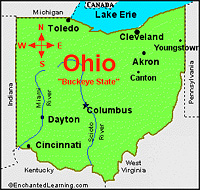
Tracking Ohio

It can be argued that the presidential election is coming down to Ohio. It is very likely that the eventual winner will carry the Buckeye State, and that entity will be enough to put Pres. Barack Obama or Mitt Romney over the top nationally. There are other scenarios — either candidate losing Ohio but carrying Wisconsin and Colorado, for example – but the voting patterns suggest that Ohio will choose the winner.

That being the case, let’s check the latest Ohio polls. Six separate polls measuring the Obama-Romney campaign were just released and these are the results:

• Angus Reid (Oct. 18-20; 550 likely Ohio voters):
  Obama 48%; Romney 48%
• Gravis Marketing (Oct. 18-19; 1,923 likely Ohio voters via automated calls):
  47% Tie
• Public Policy Polling (Oct. 18-20; 523 likely Ohio voters):
  Obama 49%; Romney 48%
• Pulse Opinion Research for Let Freedom Ring organization (Oct. 15; 1,000 likely Ohio voters):
  Romney 47%; Obama 46%
• Quinnipiac University (Oct. 17-20; 1,548 likely Ohio voters):
  Obama 50%; Romney 45%
• Suffolk University (Oct. 18-21; 600 likely Ohio voters):
  47% Tie

Can it be any closer? For the second time in 12 years, deciding the presidency could come down to just a handful of votes.