Category Archives: House

“Squad” Member Bush Trailing;
Suozzi Wins Convincingly in NY-3; Malinowski Won’t Run; Special Election Scheduled in New York

By Jim Ellis — Wednesday, Feb. 14, 2024

House
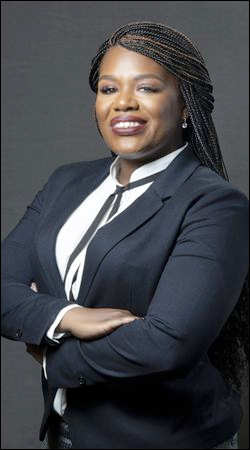
Freshman Missouri Rep. Cori Bush (D-St. Louis) has a competitive race on her hands.

MO-1: New Dem Primary Poll Finds Rep. Bush Trailing — The Remington Research Group has released a surprising new poll (Feb. 7-9; 401 likely MO-1 Democratic primary voters; multiple sampling techniques) that projects two-term incumbent Rep. Cori Bush (D-St. Louis), a member of the so-called House “Squad” or the most progressive left group in Congress, significantly trailing her Democratic primary opponent.

According to the Remington ballot test, former St. Louis County prosecutor Wesley Bell, who was originally a candidate in the Senate race, enjoys a strong 50-28 percent lead over Bush. The congresswoman is also under an investigation from the House Ethics Committee over the potential misuse of campaign funds for personal gain.

Missouri’s 1st District is heavily Democratic, carrying a D+52 rating from the FiveThirtyEight data organization, so the battle for re-election lies squarely in the nomination election. Bush, herself, came into office when defeating veteran Democratic Congressman Lacy Clay in the 2020 Democratic primary.

NY-3: Suozzi Wins — Former US Rep. Tom Suozzi (D) won a convincing 54-46 percent victory over Nassau County Legislator Mazi Melesa Pilip (R) last night even though five surveys from five different pollsters showed the race within a 1-4 point margin.

Rep-Elect Suozzi converts the seat back to the Democratic column, making the partisan division in the House an even closer 219R – 213D with three vacancies. It is probable that when all of the vacancies are filled after completing special elections in late April (NY-26), May (CA-20), and June (OH-6), the House will sit at 221R – 214D heading into the regular 2024 elections.

Once again, Democrats out-performing Republicans in early voting proved a reliable precursor as to which party had the electoral momentum, thus explaining how Suozzi exceeded the polling projections. Additionally, while poor weather was thought to keep the election day turnout low, it did not. A special election turnout of more than 174,000 voters is a strong display for any district. In comparison, just over 271,000 voted in the 2022 regular congressional election.

NJ-7: Ex-Rep. Malinowski Won’t Run — It appears that Democrats are staking their chances of upsetting Rep. Tom Kean Jr. (R-Westfield) upon the former New Jersey executive director of the Working Families Party. The three Democratic candidates who have abandoned their own campaigns turned and endorsed Sue Altman. Now, former US Rep. Tom Malinowski, who the Democratic leadership had hoped to recruit into the race, has also declined to run and he, too, just endorsed Altman.

New Jersey’s 7th District is a politically marginal swing seat that the Daily Kos Elections site ranks as the 16th most vulnerable seat in the Republican Conference. The FiveThirtyEight data organization rates the district R+3, so these most recent developments, all of which help Rep. Kean, means the freshman congressman must be rated as a clear favorite for re-election.

NY-26: Governor Schedules Special Election — With New York Rep. Brian Higgins (D-Buffalo) now officially resigned and his 26th District seat vacant, Gov. Kathy Hochul (D) announced she is scheduling the replacement special election for April 30 to fill the remaining time left on the current term.

The district’s Democratic county chairmen have already chosen state Sen. Tim Kennedy (D-Buffalo) as their special election candidate. The Republican chairmen have yet to decide who will be their own standard bearer but regardless of the person selected, Kennedy will be favored to win the special. The seat is soundly Democratic. The FiveThirtyEight data organization rates is as D+18. The Daily Kos Election site ranks NY-26 as the 78th most vulnerable seat in the Democratic Conference.

Though Kennedy is the clear favorite to win the special election, his tougher challenge may be the June 25 Democratic primary for the regular term. Former Town Supervisor Nate McMurray (D), who twice ran close races in the former 27th District that was collapsed in the latest reapportionment, says he will challenge Kennedy for the Democratic nomination to advance into the November 2024 general election.
DCCC’s Initial Targets

By Jim Ellis — Tuesday, Feb. 13, 2024

House

The Democratic Congressional Campaign Committee (DCCC) released their first targeting list entitled “Red to Blue,” though the group of 17 House districts actually contained one already in the Democratic column.

In alphabetical order by state, the list of 17 includes 16 Republican districts where the DCCC has endorsed a Democratic candidate:

STATE DISTRICT INCUMBENT DCCC CANDIDATE
Arizona 13 DUARTE, JOHN ENGEL, KIRSTEN
California 6 CISCOMANI, JUAN GRAY, ADAM
California 22 VALADAO, DAVID SALAS, RUDY
California 27 GARCIA, MIKE WHITESIDES, GEORGE
California 41 CALVERT, KEN ROLLINS, WILL
Colorado 3 OPEN FRISCH, ADAM
Iowa 1 MILLER-MEEKS, M. BOHANNON, CHRISTINE
Iowa 3 NUNN, ZACH BACCAM, LANON
Michigan 7 OPEN HERTEL, CURTIS
Michigan 1 ZINKE, RYAN TRANEL, MONICA
Nebraska 2 BACON, DON VARGAS, TONY
New York 3 SPECIAL ELECTION SUOZZI, TOM
New York 17 LAWLER, MIKE JONES, MONDAIRE
New York 19 MOLINARO, MARC RILEY, JOSH
Oregon 5 CHAVEZ-DeREMER, L. BYNUM, JANELLE
Texas 15 de la CRUZ, MONICA VALLEJO, MICHELLE
Virginia 2 KIGGANS, JEN SMASAL, MISSY COTTER

The Michigan district included in the above list is that of Democratic Rep. Elissa Slotkin (D-Lansing). Her run for the Senate leaves her central Michigan seat open, but the Democrats winning here in 2024 would not result in a party division gain.

President Joe Biden carried only six the 16 Republican districts, and the FiveThirtyEight data organization provided a numerical rank so as to consider lean Democratic in those same six districts. Therefore, on this list, the half-dozen names below should be viewed as the most achievable targets, which, as you will see, are California and New York dominant.

They are:

  1. CA-13 (Duarte)
  2. CA-22 (Valadao)
  3. CA-27 (Garcia)
  4. NY-3 (Special election; Santos)
  5. NY-17 (Lawler)
  6. OR-5 (Chavez-DeRemer)

This underscores that the key states to determine the next House majority are the Golden and Empire States.

Most of the endorsed Democratic candidates (12 in the 16 Republican held seats) previously ran and lost their race in 2022. A total of 10 unsuccessfully opposed the current GOP House incumbent, while two lost other races (Tom Suozzi, Governor; Mondaire Jones, NY-10).

Curiously, some other vulnerable districts were excluded from this first release. Likely, this is due to one of three reasons: the DCCC has not yet endorsed a candidate; they don’t see a sufficiently competitive challenger within the current field; or, they perceive the Republican incumbent as being too strong.

They are:

DISTRICT CANDIDATE
AZ-1 David Schweikert
CA-40 Young Kim
CA-45 Michelle Steel
FL-13 Anna Paulina Luna
FL-27 Maria Elvira Salazar
MI-10 John James
NJ-7 Tom Kean Jr.
NY-4 Anthony D’Esposito
NY-22 Brandon Williams
PA-1 Brian Fitzpatrick
PA-10 Scott Perry
WI-1 Bryan Steil

Most of the members included within this latter group will be added to later target lists. The fact that Rep. Steil’s name is not yet appended to the “Red to Blue” listing suggests that the Wisconsin State Supreme Court may not order a redraw of the congressional map this cycle. Keeping Rep. Steil’s congressional district intact would give him little incentive to launch a statewide campaign against Sen. Tammy Baldwin (D).

At this point in the new redistricting process, Republicans are likely gaining a net one seat, but the New York redraw hasn’t yet occurred.

The GOP is assuredly gaining three seats from North Carolina, while the Democrats look to increase by one each in Alabama and Louisiana. Since the Georgia and Florida maps will not likely change for the 2024 election portends good news for Republicans; likewise for the Democrats in New Mexico.

Hogan & Rosendale for Senate;
Montana Rep. Gallagher to Retire;
Final Nevada Primary, Caucus Results

By Jim Ellis — Monday, Feb. 12, 2024

Candidate announcements and a surprise retirement made Friday a very interesting political day even outside of the presidential-level happenings.

Maryland

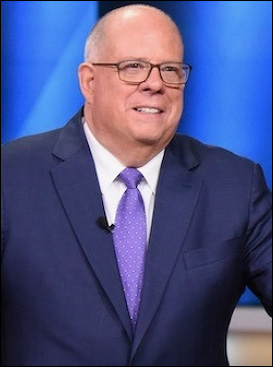
Former Maryland Gov. Larry Hogan (R)

Candidate Filing Closed — Maryland 2024 candidate filing closed on Friday and, after saying he would not run for Senate, former two-term Gov. Larry Hogan (R) unexpectedly agreed to seek the GOP nomination. Despite leaving office with the highest approval rating of any Maryland governor after eight years, Hogan will still be in an underdog position for the general election in heavily Democratic Maryland during a presidential year.

The Democratic nominee will be either US Rep. David Trone (D-Potomac) or Prince George’s County Executive Angela Alsobrooks. The May 14 primary will likely produce a close result. Trone, the founder of the Total Beverage chain store, has already spent $23 million on his Senate campaign through the end of 2023, all but $427,000 from his own pocket.

Knowing that she cannot match his virtually unlimited personal war chest, Alsobrooks had raised just over $5 million for her campaign, and had more than $3 million in her campaign treasury at the end of 2023. She will obviously stockpile as much money as she can for the final month in hopes of coming close to parity with Trone in late campaign advertising.

The latest released internal polling from the Trone campaign (Hickman Analytics; Jan. 18-24; 1,500 likely Maryland Democratic primary voters) finds the congressman leading Alsobrooks 45-34 percent. The poll shows his ads are working, since Hickman’s November survey (Nov. 27-30; 1,000 likely Maryland Democratic primary voters) staked Trone to a 41-34 percent advantage.

Considering her support within the African American community and its strength in the Democratic primary, particularly in her home county of Prince George’s and Baltimore, this primary campaign is far from over regardless of Trone’s insurmountable financial edge.

For Hogan, despite winning two terms as governor, his task to win a federal election in Maryland is daunting. The last Republican to win a Senate race here was then-two term incumbent Charles Mathias back in 1980.

Hogan, an avowed “Never Trumper,” has clearly distanced himself from the former president, but that will be of only marginal assistance. Donald Trump is extremely unpopular in Maryland, and Hogan will be forced to share a ballot with him in November. Therefore, Trump as the Republican presidential nominee will negatively affect the GOP general election turnout model.

Though Hogan will run a competitive race and certainly do better than any Republican at least since Michael Steele pulled to within the 54-44 percent margin that first elected current Sen.Ben Cardin (D) in 2006, the eventual Democratic nominee must still be rated as the favorite to win in November.

Montana

Rosendale to Run — In a move that has been anticipated for well over a year, US Rep. Matt Rosendale (R-Glendive) announced on Friday that he will run for the Senate later this year.

Immediately after the announcement, former President Donald Trump endorsed Rosendale’s Republican primary opponent, aerospace company CEO and retired Navy SEAL Tim Sheehy, as have Gov. Greg Gianforte (R), Sen. Steve Daines (R-MT), and Montana US Rep. Ryan Zinke (R-Whitefish). In 2018, Rep. Rosendale, then the state auditor, challenged Sen. Jon Tester (D) and lost 50-47 percent.

Campaigning for a different office is nothing new for Rosendale. Since 2010, he has run for state House of Representatives, state Senate, US House (at-large), state auditor, US Senate, US House (at-large), and US House (District 2), and won five of the seven campaigns. His move into the Senate race opens the 2nd District to what will be a crowded Republican primary.
Continue reading

It’s a Trump Sweep in Nevada; Williamson Ends Her Campaign;
Close Special Election Poll in NY-3;
WA-5’s McMorris Rodgers to Retire

By Jim Ellis — Friday, Feb. 9, 2024

President

Former President Donald Trump sweeps in Nevada.

Nevada Caucus: A Trump Sweep — Former President Donald Trump, as expected, won almost unanimous support last night at the Nevada Republican Caucuses where the state’s 26 delegates are apportioned. Trump will be awarded all of the state’s national convention delegates. Reports of high turnout around the state are numerous. A complete report will be forthcoming when the final results are formally released.

Marianne Williamson: Draws Campaign to a Close — After placing behind the “None of These Candidates” ballot line in the Nevada primary, Democratic presidential candidate Marianne Williamson suspended her national campaign reducing the field to President Joe Biden and US Rep. Dean Phillips (D-MN). With the president recording a mean average of 93 percent in the last two primaries, it is already a foregone conclusion that Biden will clinch the Democratic nomination no matter how long Phillips remains an active candidate.

House

NY-3: Another Close Special Election Poll — Siena College, conducting a congressional poll for the Newsday publication (Feb. 3-6; 694 likely NY-3 voters) finds a tight special election race to replace expelled US Rep. George Santos (R).

The ballot test gives former US Rep. Tom Suozzi (D) a 48-44 percent edge over Republican Nassau County Legislator Mazi Melesa Pilip. A second survey, from Emerson College (Feb. 4-5; 742 likely NY-3 voters; multiple sampling techniques), reported a similar result: Suozzi leading 52-48 percent when respondents were pushed for a choice between the two candidates. Previously, Emerson conducted a survey in mid-January (Jan. 13-15; 975 registered NY-3 voters; multiple sampling techniques) again finding Suozzi holding a similarly small 45-42 percent edge.

All of this data suggests that the Feb. 13 special election contest is within the polling margin of error and will come down to a turnout battle between the Democratic and Republican teams. The survey research suggests the race is close enough that the side doing a better job getting their voters to cast a ballot will claim the seat in the special election.

WA-5: Rep. Cathy McMorris Rodgers (R) to Retire — Another House member has joined the retirement list. Ten-term Washington US Rep. Cathy McMorris Rodgers (R-Spokane), the House Energy & Commerce Committee chair, announced yesterday that she will not seek re-election later this year. In a long statement that thanks and extolls the virtues of her eastern Washington constituents, McMorris Rodgers formally announced her political intentions.

The open seat count now returns to 47, accounting for Rep. McMorris Rodgers retiring and Indiana Rep. Victoria Spartz (R-Noblesville) changing her mind about not seeking re-election. Within the group, 24 Democrats are not seeking another term in the House, and the Republican number now grows to 22. The new Alabama redistricting plan creates an open seat that begins in Montgomery and stretches to Mobile.

The 5th District of Washington occupies the furthermost eastern part of the state from Canada to Oregon and is anchored in the city of Spokane. The FiveThirtyEight data organization rates WA-5 as R+17. In the 2020 election, former President Donald Trump won the district by a 53-43 percent margin. The Daily Kos Elections site statisticians rank the district as the 56th most vulnerable seat in the Republican Conference. We can expect a crowded jungle primary in August leading to a general election where the Republican candidate should be favored.

McDaniel Reported Out at RNC; Trump Way Ahead in New Poll; Schiff Helps Garvey; Another Close Ohio Poll; Utah’s Tight Senate Race; House News

By Jim Ellis — Thursday, Feb. 8, 2024

President

Ronna McDaniel / Photo by Gage Skidmore

Republican National Committee: Trump Recommends New Chairman — As reports intensify that RNC chair Ronna McDaniel will be leaving the committee after the South Carolina primary, former President Donald Trump has made a replacement recommendation.

The news media is reporting that North Carolina Republican Party chairman Michael Whatley is Trump’s choice largely because he was “so powerful on election fraud” in 2020, according to the ex-president’s statement. It is a virtual certainty that the committee members will adopt Trump’s recommendation, but the question to be asked is how strong a fundraiser is Whatley? While Trump may be most concerned with his election fraud narrative, the RNC is under-performing in the campaign resource battle and must quickly upgrade their efforts.

South Carolina: Trump Way Ahead in New Poll — A new Monmouth University poll for the Washington Post (Jan. 26-30; 815 registered South Carolina voters; live interview & online) sees former President Donald Trump posting a significant 58-32 percent lead over former Gov. Nikki Haley in her home state of South Carolina leading to the Feb. 24 Republican primary election.

Trump holds an advantage among both men and women in the statewide voter sample, and within all age groups. He trails Haley only among college-educated voters, but by only two points, and certain non-evangelical voter groups. Additionally, 90 percent of the respondents saying they would vote for Trump in the primary election would do so in the general election even if he is convicted of some of the many legal charges he faces.

Senate

California: Schiff Helps Garvey — Confident he will finish first in the March 5 open California US Senate primary, Rep. Adam Schiff (D-Burbank) is running ads “against” Republican baseball great Steve Garvey claiming he is too conservative for California in that he twice voted for Donald Trump. In reality, Schiff is attempting to help Garvey finish second in the top two jungle primary, thus eliminating Rep. Katie Porter (D-Irvine), which would allow him to escape having to run a double-Democratic general election.

Having Garvey, or any Republican as an opponent, would virtually guarantee that Schiff would win the seat in November. The ads’ actual purpose is to move more Republicans to Garvey, and thus edge him into second place.

A new University of Southern California for the Center for Urban Politics and Policy at California State University at Long Beach (Jan. 21-29; 1,416 likely Califoria jungle primary voters) survey sees Rep. Schiff holding a 25-15-15-7 percent lead over Garvey and Rep. Porter (D-Irvine). Congresswoman Barbara Lee (D-Oakland) trailed the other major candidates in fourth position. Therefore, a small push from Schiff might just help Garvey succeed.

Ohio: Another Close Poll — The March 19 Ohio Republican primary will be a hugely important election. Among other races, it will decide which GOP candidate will challenge Sen. Sherrod Brown (D) in one of the country’s most compelling statewide campaigns. The Emerson College poll (Jan. 23-25; 1,844 registered Ohio voters; multiple sampling techniques) sees all three Republican candidates coming to within one or two points of Sen. Brown with the incumbent failing to reach 40 percent support in all iterations.

In the Republican primary, the battle is equally close. Businessman Bernie Moreno, who former President Trump and Sen. J.D. Vance support, nips Secretary of State Frank LaRose, 22-21 percent, with state Sen. Matt Dolan (R-Chagrin Falls) trailing with 15 percent. In 2022, Sen. Dolan came on strong at the end, failing to reach second place by one percentage point after lagging during the early part of the campaign. Therefore, the Republican nomination is still very much in doubt.

Ohio features a modified primary system that allows voters to change their registration on the day of the election in order to choose a selected primary.

Utah: Rep. Curtis Begins with Small Lead — Dan Jones & Associates, Utah’s top media polling firm, released a new US Senate Republican primary survey, the first since US Rep. John Curtis (R-Provo) joined the field. The survey (Jan. 16-21; 428 registered Utah Republican voters) finds Rep. Curtis posting a tepid 18-14 percent lead over attorney Brent Orrin Hatch, the son of the late seven-term Sen. Orrin Hatch (R). Following at eight percent is former state House Speaker Brad Wilson. With a majority of the Republican voters still undecided, this contest is wide open.

The state’s April Republican nominating convention will send two candidates to the primary ballot. The others will have to petition for a ballot line. The Utah primary is scheduled for June 25. Sen. Mitt Romney (R) is retiring after one term.
Continue reading

Nevada Primary Underway, Caucus Begins Thursday; Spartz “Un-Retires”; Louisiana Redistricting Fight;
Strong Challenger in MI-3

By Jim Ellis — Tuesday, Feb. 6, 2024

President

Nevada: Primary Today; GOP Caucus Thursday — Nevada voters will cast their votes for a Democratic presidential nominee with 49 delegates at stake in their primary, while Republicans will be participating in what is termed as only a “beauty contest” primary because delegate apportionment will not correspond to the cast ballots. The delegates will be awarded in a caucus system with meetings scheduled for Thursday.

President Joe Biden will easily sweep the small Democratic field, maybe not to the point of getting 97 percent support as he did in South Carolina, but he will win in a substantial landslide. On the Republican side, where the candidates chose to enter either the primary or caucus, sees ex-UN Ambassador Nikki Haley on the outside; she will win a virtually meaningless primary, against virtually meaningless minor candidates, while former President Donald Trump opted to enter the caucus and is likely to sweep Nevada’s 26 convention delegates.

House

IN-5: Rep. Spartz “Un-Retires” — In early 2023, Indiana sophomore US Rep. Victoria Spartz (R-Noblesville) became the session’s first lame duck House member when announcing that she would not seek a third term in order to spend more time with her two daughters who are entering their teenage years. Yesterday, Spartz reversed course and now becomes the first of the burgeoning departing group of members to “unretire.”

Rep. Spartz said the urging from many of her constituents to run again and what she termed as the “failed leadership in Washington,” were her reasons for deciding to stand for another term just as the Indiana candidate filing deadline approaches on Friday.

The focus now turns to the 10 Republicans who are vying to succeed Spartz and see just how many, if any, will terminate their campaigns. State Rep. Chuck Goodrich (R-Noblesville) is viewed as the leading contender and has already spent over $1 million on his congressional effort. He also has more than twice the amount of money in the bank than does Rep. Spartz ($679,000 to $313,000) according to the year-end (2023) Federal Election Commission disclosure report. No other candidate has significant resources.

Louisiana: New Map Challenged — While the Louisiana legislature and governor complied with a court order to draw a new majority minority seat in the congressional delegation, a group of “non African-American voters” have filed suit against the new plan as a racial gerrymander.

A different three-judge panel will hear the lawsuit suggesting the possibility that this map could be rendered illegal, too. The plaintiffs site a 1994 case where a similarly drawn district, one that stretches from Baton Rouge to Shreveport to create a black majority district, was in fact declared a racial gerrymander, which forced a redraw then. This lawsuit suggests that Louisiana congressional redistricting may not be quite over.

Now, House Speaker Mike Johnson (R-LA) weighed in on “X” saying, “there are multiple other map options that are legally compliant and do not require the unnecessary surrender of a Republican seat in Congress.” The new 6th District virtually cuts Johnson’s 4th District into two parts, driving through the middle of the Speaker’s current territory in order to annex the black dominated precincts in Shreveport.

MI-13: A Second Strong Democrat to Challenge Rep. Thanedar — In 2022, then-Detroit state Rep. Shri Thanedar won an eight-person Democratic congressional primary with 28 percent of the vote to claim his seat in the US House. In doing so, Thanedar self-financed his effort to the tune of $9.1 million.

In October, Rep. Thanedar’s top 2022 challenger, former state Sen. Adam Hollier, announced that he would return for a Democratic primary rematch. Yesterday, another major Detroit political figure joined the primary race. Detroit City council member and former state House Minority Leader Mary Waters filed a congressional campaign committee with the FEC. She did not run in 2022. Another potential entry is two-time former candidate John Conyers III, the son of the late Congressman John Conyers (D-Detroit), who held the seat from his initial election in 1964 to his resignation from the House in 2017.

From the freshman incumbent’s perspective, he benefits from having more opponents that will split the vote just the way the 2022 race unfolded.

Regardless of his number of opponents, the congressman looks again to be the biggest spender. According to the year-end (2023) Federal Election Commission campaign finance disclosure report, Rep. Thanedar shows $2.6 million in his political committee bank account. The Michigan candidate filing deadline is April 23 in conjunction with the Aug. 6 primary election.

Is RFK Jr. Going Libertarian? Conflicting Presidential Polling; Trone Expands Lead in Maryland; Special Election Ad Spending in NY

By Jim Ellis — Friday, Feb. 2, 2024

President

Will Robert F. Kennedy Jr., currently running as an Independent general election candidate, switch to the Libertarian Party?

RFK Jr.: Flirting with Libertarian Party — Presidential candidate Robert F. Kennedy Jr. (I) and Libertarian Party leaders confirm they are discussing the possibility of Kennedy becoming the party’s presidential nominee. They are likely still a long way from coming to an agreement, though, mostly because some of Kennedy’s major issue positions such as climate change and gun control do not align with the party leadership; the move, however, makes practical sense for both entities.

First, being the Libertarian Party nominee would give Kennedy ballot access in all 50 states, something that is difficult for any Independent to obtain. The Libertarian Party was the only non-Democratic or Republican entity to achieve universal ballot status in 2020 (Libertarian nominee Jo Jorgensen appeared on the Libertarian line in 48 states and the District of Columbia; in Alabama and Tennessee, she appeared as an Independent), and they again would with Kennedy as their nominee.

Additionally, featuring RFK Jr. as their candidate, it is highly likely that the Libertarian Party would attract its highest historical number of votes. This is important for the organization’s future because many states base future party status upon performance in the national election.

Morning Consult/Bloomberg/Quinnipiac Polls: Any Given Poll — It’s a common saying in the NFL that “on any given Sunday any team can beat another.” A similar phrase appears applicable in political polling, as well. On almost any given day, we can find polls that disagree over outcome even though conducted during the same time period. Wednesday’s Morning Consult/Bloomberg News and Quinnipiac University are good examples.

The day began with Morning Consult/Bloomberg releasing their new regional survey series (Jan. 16-22; 4,596 registered voters in Arizona, Georgia, Michigan, Nevada, North Carolina, Pennsylvania, and Wisconsin; online; part of regular tracking), which finds former President Donald Trump leading in all of the key swing states with margins between three (Arizona, Pennsylvania) at 10 percentage points (North Carolina). Georgia, Michigan, and Wisconsin each posted five-point Trump margins, while Georgia and Nevada were closer to the North Carolina number at plus-eight. Turning to their national track, MC/Bloomberg posted Trump to a two-point advantage over President Joe Biden in the head-to-head ballot test.

Yet in the Quinnipiac University release, a poll that was in the field within a similar same time frame as MC/Bloomberg, though earlier in January (Jan. 4-8; 1,680 US registered voters; live interview), President Biden posted his biggest national popular vote lead of any recent poll, 50-44 percent. When the Independent and minor party candidates were added in, such as RFK Jr., for example, the Biden edge shrinks to just two percentage points, which is much more in line with other pollsters.

Senate

Maryland: Rep. Trone Expands Lead — A new internal Hickman Analytics poll for the David Trone for Senate campaign (Jan. 18-24; 1,500 likely Maryland Democratic primary voters; live interview) sees Trone, the 6th District Congressman, leading Prince Georges County Executive Angela Alsobrooks by a 45-34 percent margin in the open Democratic US Senate primary. The question, however, is for how long? The poll contained an over-sample of African Americans and females to emphasize the groups with which Rep. Trone is weakest.

Though the early numbers look good for the congressman, it must be understood that his campaign has spent well over $15 million to date, and $7 million alone just since November according to the Inside Elections publication. Trone began advertising a year before the primary election.

The Alsobrooks campaign has yet to run an ad. Since it is clear that she cannot match the congressman in an ad war with him self-financing the race from his huge personal wealth, the Alsobrooks strategists are waiting until late in the contest to unleash their own ad buys. She will be competitive as we get closer to the May 14th primary, so despite Trone’s polling and resource lead, this primary battle is far from over.

House

NY-3: Special Election Ad Spending Update — The Daily Kos Elections and AdImpact organizations charted the spending in the special congressional election to replace expelled Rep. George Santos (R-Long Island) as we approach the Feb. 13 election. According to their data, the overall Democratic operation is outspending the encompassing Republican effort by a large amount, $9.6 million to $5.7 million. The two candidates are former US Rep. Tom Suozzi for the Democrats, and Nassau County Legislator Mazi Melesa Pilip for the GOP.

The Congressional Leadership Fund, however, is coming in late to help even the score. They have reserved $2.6 million in television and digital ads to bring the final days spending into parity. In terms of spending booked for the final two weeks, the Democratic advantage narrows to $2.8 to $2.44 million.