Category Archives: House

No. 51

By Jim Ellis

Jan. 31, 2018 — The number of House open seats continues to grow. Veteran New Jersey Rep. Rodney Frelinghuysen (R-Morristown), chairman of the House Appropriations Committee, announced Monday that he will not seek a 13th term later this year.

2018-open-house-seats-toss-upDespite averaging 65.3 percent of the vote during his 12 successful elections and even winning with a healthy 58-39 percent victory margin in 2016, Rep. Frelinghuysen was considered vulnerable for 2018. Democrats have recruited at least two candidates who are pulling in strong financial resources in order to stock a large campaign war chest for a presumed political battle in what is always a very expensive state.

The Dems say this district is changing because Hillary Clinton came within one percentage point of carrying it (49-38 percent) in the 2016 presidential campaign. Still, her performance here pales in comparison to a 55-41 percent Garden State win, and even though the district became close in the presidential contest, it has yet to fall to a Democratic candidate.

Yesterday, we covered the Ohio political situation as being potentially favorable to Republicans. Conversely, the northeastern tri-state region comprised of Pennsylvania, New York, and New Jersey perhaps has even a better chance of adding a strong number of seats to the Democratic conference.

Continue reading

Meehan to Go

By Jim Ellis

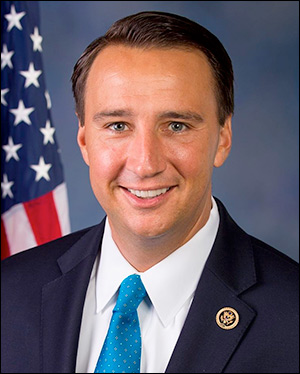
Jan. 29, 2018 — The alleged sexual harassment situation involving four-term Pennsylvania Rep. Pat Meehan (R-Chadds Ford) culminated with his retirement announcement, last week.

Pennsylvania Rep. Pat Meehan (R-Chadds Ford)

Pennsylvania Rep. Pat Meehan (R-Chadds Ford)

In a letter to Speaker Paul Ryan and his local Republican Party chairman, Meehan wrote that he will not be a candidate for a fifth term in November. But, his personal situation may not be the only reason that voluntarily leaving Congress makes sense for him.

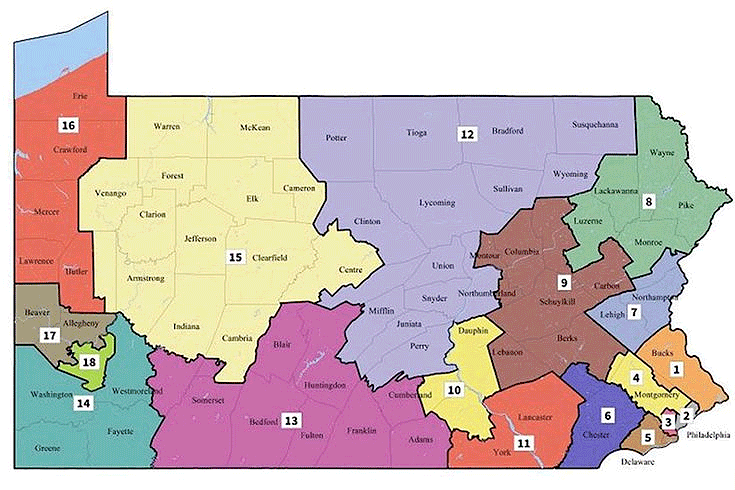
As we’ve discussed on several occasions, the Pennsylvania state Supreme Court invalidated the state’s congressional map earlier this week on grounds that the empowered Republican political apparatus took partisanship too far in constructing the 2011 plan. The GOP will try to flip this case into federal jurisdiction — the US Supreme Court has never ruled a map invalid because of political gerrymandering, and are actively considering several such cases during the current term — but the party’s prospects of doing so are likely poor.

If the state high court’s ruling stands, the legislature and governor will be forced to present a new map to the Justices by Feb. 15 in order to keep pace with the current election calendar. The short deadline will likely avoid compelling the court to delay the state’s March 6 candidate filing deadline and May 15 primary election.

Now with a Democrat governor in office, and not the Republican that signed this map into law, it is highly probable that a veto will occur over the next GOP iteration. If so, then the court will appoint a special master to draw the new map.

Continue reading

Minnesota Becoming a Battleground

minnesota-congressional-districtsBy Jim Ellis

Jan. 22, 2018 — A new political poll is providing more evidence that Minnesota is very much in play for the coming election. Analysts were surprised in 2016 when President Trump came within one percentage point of topping Hillary Clinton in the state, but that pattern seems to be holding, at least according to this latest data.

The last time Minnesota voted Republican in a presidential race was to re-elect President Richard Nixon in 1972, thus making this state the most consistently Democratic domain in terms of presidential election victories. Since the days when Hubert Humphrey and Eugene McCarthy represented Minnesota in the Senate, Republicans have only elected four senators during that stretch of 70 years. Their record of electing governors is a bit better, with seven individuals becoming the state chief executive during the same seven-decade time span.

Building upon President Trump’s strong showing and two Democratic House members, Reps. Tim Walz (D-Mankato) and Rick Nolan (D-Crosby/Duluth), winning re-election with 50.3 and 50.2 percent, respectively, the new Minneapolis Star Tribune’s Minnesota Poll (released Jan. 17; 800 registered Minnesota voters) suggests that we could again see similarly close results later this year.

While five different pollsters have released national generic vote congressional data since the first of the year giving Democrats an advantage from five to 17 points, the Star Tribune is producing much different numbers for the Minnesota electorate. (Quinnipiac University appears to be the outlier here with polls showing Dem advantages of 11 and 17 points, the only pollster to see a double-digit margin; they were thought to be the outlier in the Virginia governor’s race, too, but ended up being closest to the final result.)

Continue reading

Looking at the Opens

2018-us-house-open-seatsBy Jim Ellis

Jan. 19, 2018 — Considering the large number of House retirements that came swiftly late last year and just as 2018 began, it is a good time to review the 49 seats that will have no incumbent running in the next election.

Three of the current vacancies are in special elections that do not run concurrently with the regular election calendar, and will operate under the following schedules:

• AZ-8: (Rep. Trent Franks-R) – Primary: February 27 | General: April 24
• PA-18: (Rep. Tim Murphy-R) – One election: March 13
• OH-12: (Rep. Pat Tiberi-R) – Primary: May 8 (concurrent with state primary) | General: August 7

Republicans are expected to hold all three seats.

While the GOP is risking 34 of the 49 open seats, most should easily remain in the Republican column. Eighteen of the 34 are considered safely Republican, while another six reside in the “Likely Republican” category. An additional five are in the “lean Republican” category The remaining five are clear political battlegrounds and are “Toss Ups,” several of which are ripe for Democratic conversion.

But seeing that only five of 34 open Republican seats rest in the highly competitive category, it will not be enough for Democrats to create the wave election that they are already expecting. Therefore, they will have to build serious and expensive campaigns in the five “Lean R” seats, and further expand their resources into the Likely Republican category in order to score long-shot upsets.

Continue reading

The Daily Retirement Briefing

California Rep. Darrell Issa

California Rep. Darrell Issa

By Jim Ellis

Jan. 12, 2018 — California Rep. Darrell Issa’s (R-Vista) latest re-election, a 1,621-vote victory over retired Marine Corps Colonel Doug Applegate (D) in CA-49, proved to be the closest US House result in the nation during 2016, but there will not be a re-match this year.

Rep. Issa announced Wednesday that he will not seek re-election to a 10th term, becoming the 48th House member to take this action in the current election cycle. With Arizona Rep. Martha McSally (R-Tucson) reportedly primed to declare her Senate candidacy today, the number will quickly grow to 49. Issa’s action directly follows that of fellow California Rep. Ed Royce (R-Yorba Linda/ Fullerton), who announced on Monday that he won’t run for a 14th term.

Both men faced difficult re-election battles, as do five other California Republicans that Democrats are targeting. Because President Trump fared so poorly in California, the Democratic strategists believe the same pattern will carry over into the midterm cycle. But, such a result remains to be seen.

Though Republicans are clearly in worse position without Rep. Royce running again, that might not be the case concerning Issa’s. With his negatives growing and a close call in the previous election, the party might actually fare better with a fresh face, particularly when the Democrats do not have a clear alternative. Though Applegate is running again, he is facing a stiff challenge from at least two other Democrats, wealthy attorney Mike Levin, and former US State Department and United Nations official Sara Jacobs. Real estate investor Paul Kerr rounds out the current Democratic field.

Continue reading

New Year House Preview

US-House-of-Representatives-balance-of-power-January-2018By Jim Ellis

Jan. 8, 2018 — Continuing our federal race outlook to set the political stage in this first week of the actual midterm election year, we now turn to the House races.

Republicans have a 24-seat margin (counting their three vacant seats that will go to special election in the early part of this year: PA-18, AZ-8, and OH-12), and though Democrats and most in the media claim that a new majority is just around the corner, a race-by-race House analysis shows that the road to converting the majority remains difficult to attain. This is so for several key reasons, not the least of which is the typical House incumbent retention factor. In 2016 the rate hit 97 percent (377 victories for the 389 House members who ran for re-election).

Additionally, even though President Trump’s job approval rating is historically low, we must remember that he won the 2016 national election with a personal approval index no higher than his present positive to negative ratios. And, even though congressional approval was well below 20 percent for the entire 2016 election year, Republicans lost only six House seats from their previous modern era record majority of 247 that was attained in the 2014 election.

When we have seen major seat changes occur in past elections, the winning party has done well in converting open seats. For the fourth election cycle in a row, the 2018 House cycle features an above average quantity of incumbent-less US House campaigns – the current number is 45, counting the two latest announced retirees, Reps. Bill Shuster (R-PA) and Gregg Harper (R-MS).

Continue reading

A One-Vote Victory in Virginia;
The Texas Challenge

By Jim Ellis

Dec. 21, 2017 — It now appears that an incredible finish has occurred in the Virginia state elections even though voting ended six weeks ago. The House of Delegates’ majority has come down to literally one single vote from one of the 100 districts according to a just-completed recount.

virginia-shelly-simonds-david-yancey-delegatesIn Newport News Delegate District 94, an incredible one-vote victory for Democrat Shelly Simonds was declared as the final recount tally Tuesday, but this result still won’t become official until the certification process concludes. Simonds is a Newport News School Board member who has apparently defeated incumbent Republican David Yancey by the slimmest possible margin. On election night, and through most of the process, Yancey led the count by 10 votes.

Since the election on Nov. 7, the canvassing and subsequent recount process had been underway with election officials attempting to agree upon a final determination as to who actually won the 94th District race where an apparent 23,912 individuals cast their ballots.

Continue reading