Category Archives: Governor

Cuomo Poll: Retirement Seen As
Preferential Over Resignation

By Jim Ellis

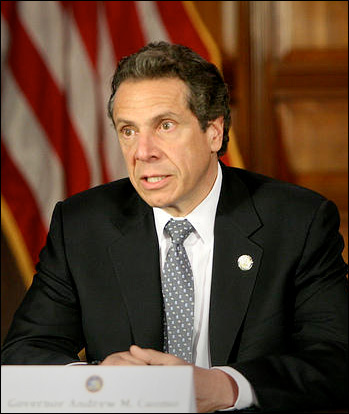
New York Gov. Andrew Cuomo (D)

March 8, 2021 — A new Quinnipiac University poll of the New York electorate (March 2-3; 935 self-identified NY registered voters, live interview) was released late last week after his press conference with mixed results for embattled Gov. Andrew Cuomo (D).

While his numbers are consistently bad with Republicans and Independents, the governor remains strong with his dominant Democratic base. Thus, while a majority of the Q-Poll respondents don’t favor the governor resigning, a large number believes he should not seek re-election in 2022.

To begin, the governor’s favorability ratio is 45:46 percent favorable to unfavorable, which is not particularly bad considering the negative effects of his dual-scandal situation, one involving COVID-related nursing home deaths and the other sexual harassment claims from former staff members.

The positive rating, however, is almost exclusively from Democrats. By a margin of 65:27 percent, self-identified Democrats still view the governor’s job performance positively. Republicans are wholly opposed, 13:82 percent positive to negative, and Cuomo is also decidedly upside-down with Independents, 33:57 percent.

Surprisingly, the polling sample still gives him positive reviews for his handling of the Coronavirus situation (56:41 percent), but, again, most of the favorable ratings come from Democrats, 80:18 percent, while Republicans and Independents both hold strongly negative opinions about how the governor has managed COVID-19: 17:80 percent among tested Republicans; 42:54 percent among Independents.

Once a small number of Democratic officials opened the spigot of dissent toward the governor, many more joined to form a high-flowing chorus. The calls for Cuomo’s resignation aren’t having much effect, however, as a majority, 55:40 percent, do not favor the governor giving up his office before his term ends. As mentioned above, however, the same polling sample does believe he should not seek a fourth term next year, and on this question, even the Democratic response is close.

Overall, 59 percent of the respondents say he should retire at the end of this term, while 36 percent believe he should run again. The Republican pro-retirement ratio registers 90:9 percent. Virtually two-thirds of the Independents (66:28%) say he should retire at the end of next year, while Democrats still barely back him remaining in office after the next election, 50:44 percent.

Continue reading

Florida Poll Boosts DeSantis

By Jim Ellis

Florida Gov. Ron DeSantis (R) at the recent CPAC.

March 3, 2021 — Florida Gov. Ron DeSantis (R) is quickly becoming a national talking point with regard to the 2024 presidential campaign, but he first must further prove himself with a 2022 re-election victory in the always politically close Sunshine State.

Over the weekend at the annual Conservative Political Action Conference (CPAC), Gov. DeSantis was clearly the choice of the conservative base as a potential heir-apparent to former President Donald Trump.

In the future presidential straw poll, former President Trump placed first among the several thousand individuals who participated. He took 55 percent of the first-place ranked choice votes. Gov. DeSantis was a clear second pick, however, with 24 percent. Without Trump in the field, it was Gov. DeSantis running away with the lead, capturing 43 percent with South Dakota Gov. Kristi Noem a distant 11 percent second-place finisher. Donald Trump, Jr. followed with eight percent support.

Just after CPAC, Mason-Dixon Polling & Research released the findings from their Florida poll conducted during the Feb. 24-28 period. The organization surveyed 625 registered Sunshine State voters through a live interview process.

According to the M-D results, Gov. DeSantis’ job approval rating has improved to 53:42 percent favorable to unfavorable, a net 15-point gain from his standing in the July 2020 M-D survey that found him saddled with an upside-down ratio of 45:49 percent.

The job approval ratings are a precursor to his ballot test standing opposite a prospective Democratic gubernatorial nominee, of whom the two leading choices appear to be State Agriculture & Consumer Affairs Commissioner Nikki Fried and US Rep. Charlie Crist (D-St. Petersburg) who may make his third run for governor.

From 2007-11, Crist was governor of the state, but served as a Republican. He switched parties after a failed run for the US Senate as an Independent, and won the Democratic gubernatorial nomination in 2014, but lost to then-Gov. Rick Scott (R) in the general election.

Continue reading

Newsom Recall Election Likely

By Jim Ellis

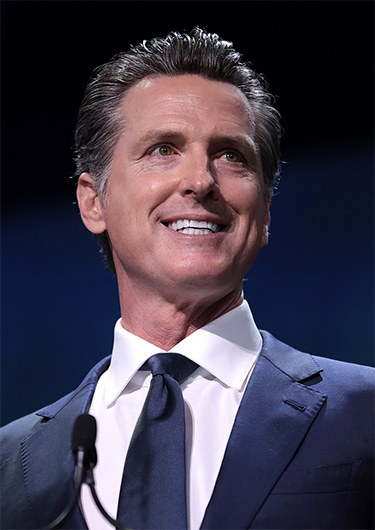
California Gov. Gavin Newsom (D)

Feb. 15, 2021 — Proponents of the recall effort against California Gov. Gavin Newsom (D), with more than a month remaining until the March 17 deadline to collect the necessary number of valid signatures, are already close to forcing a removal election.

Five other attempts have been made to recall Gov. Newsom, but this is the first that had a serious prospect of qualifying. According to the latest poll of the state’s electorate, dissatisfaction with both the governor and the state government’s response to the COVID-19 pandemic has led to the uprising.

Under California election law, state officials can be forced to stand for a recall election if a number of registered voters equal to 12 percent of the total number of votes cast in the most recent governor’s election, in this case the 2018 contest, sign a state certified petition. The total number of qualified signatures needed for the 2021 recall must equal a minimum of 1,495,709. Yesterday, the proponents reported that they have collected 1.47 million signatures. To ensure qualification, the organizing committee members have a goal of obtaining over 1.8 million signatures.

CALIFORNIA GOV. NEWSOME RECALL EFFORT:

 • Signatures Needed • Signatures Collected
 1,495,709 1,470,000
 • Signatures Reviewed • Signatures Validated
 485,650 410,087
 • Signature Approval Rate • Total Signatures Needed
 84.4% 1,772,169

At this point, the Secretary of State’s staff has reviewed 485,650 of the submitted signatures according to the FiveThirtyEight statistical website, and 410,087 have been ruled valid. This translates into an approval rate of 84.4 percent. If this ratio were to continue, the proponents would have to submit a minimum of 1,772,169 signatures. At their most recent reported gathering rate of over 100,000 signatures per week, they should easily reach their quota.

The University of California at Berkeley’s Institute of Government Studies released their latest statewide survey (Jan. 23-29; 10,357 registered voters from online stratified random samples) and compared it with the results from their September 2020 poll. The results show a significant deterioration in the governor’s support base in the short period between the two research studies.

Continue reading

Early Senate 2022 Previews:
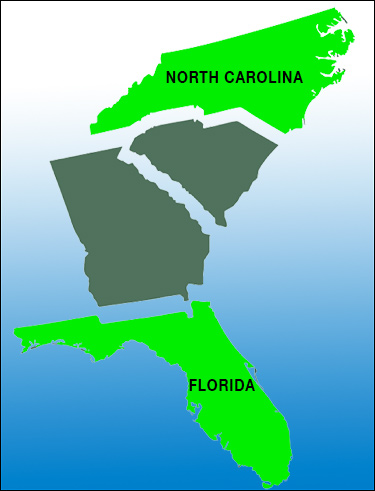
Florida & North Carolina

By Jim Ellis

Jan. 14, 2021 — Regardless of how many in-cycle Senate seats – there are 34 in the 2022 election cycle – come into political play, we can count on seeing Florida and North Carolina once again hosting crucial battleground campaigns.

Florida is always consistent in their close vote totals, particularly when remembering the 2000 presidential campaign — and pollsters, while typically forecasting tight finishes, have often missed the outcomes. In fact, the cumulative polling community has predicted close Democratic victories in the last four key statewide elections: two presidential (2016 & 2020), one senatorial (2018), one gubernatorial (2018), and been wrong on each occasion.

Since 2016, inclusive, Florida has hosted eight statewide races with Republicans winning seven. Yet, their average cumulative vote percentage for these eight victorious campaigns was just 50.7 percent, with the high point being 52.0 percent (Sen. Marco Rubio-R, 2016). Democrats recorded the low winning total: 50.04 percent — 6,753 votes from 8,059,155 votes cast; agriculture commissioner, 2018; winner Nikki Fried (D) vs. Matt Caldwell (R). The aggregate average among the statewide contests in these three most recent election years is 50.7 – 47.9 percent in the GOP’s favor.

With this background, Sen. Rubio will presumably seek a third term next year against what will surely be a highly competitive Democratic opponent. At this point, most of the speculation surrounds two Democratic House members, neither of whom has closed the door on either running for the Senate or challenging Gov. Ron DeSantis (R) as he seeks a second term.

Reps. Stephanie Murphy (D-Winter Park) and Val Demings (D-Orlando) are the two most prominently mentioned prospective contenders, and it wouldn’t be surprising to see one run for Senate and the other for governor. It is less likely that we would see a primary developing between the pair in one of the races.

Other names being floated are Rep. Charlie Crist (D-St. Petersburg), who is always mentioned as a potential statewide candidate because he previously served both as attorney general and governor and lost two other statewide campaigns. Other potential contenders are Rep. Ted Deutch (D-Boca Raton) and former Rep. Debbie Mucarsel-Powell (D-Miami). The state’s lone Democratic office holder, Agriculture Commissioner Nikki Fried, is more often associated with running for governor as opposed to the Senate contest.

Continue reading

Election Day Results & Analysis

By Jim Ellis

Nov. 4, 2020 — Last night’s national election, as predicted, is now it in political overtime.

The presidential race won’t be decided for more than a day, and possibly not until all ballots are received and counted in Pennsylvania, which as of this writing could drift into Friday. The state’s post-election ballot reception deadline, is Nov. 6, at 5:00 pm.

It appears that former vice president Joe Biden (D) has the inside track to unseat the president, but Trump still has a narrow path to victory.

It is likely that the Republicans have held the Senate majority despite what appears to be a close loss at the top of the ticket. Defending 13 of the most vulnerable 16 Senate seats, the GOP may break even. Converting Alabama and leading in Michigan offsets the loss of seats in Arizona and Colorado. Four races remain undecided.

Republicans had a much better night in the House than expected. With 43 races still uncalled, a reasonable projection suggests the Democrats will return to the House with a majority margin approximately seven seats less than in the current Congress. This would make the new majority 226D-209R, and certainly put House control front and center for the 2022 election cycle.

In the 11 governor’s races, we saw one state flip from Democrat to Republican, the open Montana race that completed a Republican sweep of the top four statewide offices. At-Large Rep. Greg Gianforte (R) was elected the state’s new governor, replacing term-limited Gov. Steve Bullock (D) who lost the Senate race to incumbent Steve Daines (R).

Continue reading

New Hampshire Results

By Jim Ellis

Sept. 9, 2020 — The New Hampshire nomination vote was held yesterday, ironically very late in an election cycle in which this state was the first to host a presidential primary. The results unfolded as generally predicted.

Sen. Jeanne Shaheen stands for a third term and was easily re-nominated with 94 percent of the vote against a weak Democratic opposition field. On the Republican side, businessman Bryant “Corky” Messner, who has already loaned his campaign approximately $4 million, defeated retired Army general Don Bolduc with a 51-42 percent victory margin. Sen. Shaheen is a clear favorite for the general election, but upsets are a frequent occurrence in New Hampshire politics, so no victory can be taken for granted.

A close election here is possible again. In Sen. Shaheen’s two federal election victories, her win percentages were only 51.6 and 51.5 percent in 2008 and 2014, respectively. Additionally, in the 2002 campaign, as the sitting governor, she lost to then-US Rep. John E. Sununu (R), 51-46 percent. Returning for the 2008 race she unseated her former opponent, and then six years later defeated former Massachusetts US Sen. Scott Brown (R) who launched a new Senate bid from his neighboring state.

The last election for the state’s other Senate seat was also very close. In 2016, then-Gov. Maggie Hassan (D) unseated Sen. Kelly Ayotte, 48.0 – 47.8 percent, a margin of just 1,017 votes from more than 739,000 ballots cast.

Gov. Chris Sununu (R) is running for a third two-year term – New Hampshire and neighboring Vermont are the only two states that mandate two-year gubernatorial terms – and was easily re-nominated with 90 percent of the Republican primary vote. The Democrats, however, featured a more competitive contest, with state Senate Majority Leader Dan Feltes (D-Concord) apparently topping Executive Councilor Andru Volinsky, 51-49 percent, but with several precincts still outstanding. It is likely the Feltes margin will hold, though it is still mathematically possible for the final outcome to switch.

Turnout in the state was interesting because of its inconsistency between the two statewide offices, which is unusual. In the governor’s race, more Republicans than Democrats voted, so far 129,404 to 124,697 with further ballots to count. The Senate campaign, however, featuring a Democratic incumbent, saw a reversal of the turnout model. In that race, more Democrats have voted so far, 133,729 to 122,676.

Continue reading

New Hampshire Primary Today

By Jim Ellis

Sept. 8, 2020 — Winding through the final state primaries, voters in the Granite State cast their ballots today in order to nominate candidates for US Senate, governor, and two congressional districts. After today, only three primaries remain: next Tuesday in Delaware and Rhode Island, and the Louisiana jungle primary that runs concurrently with the general election.

Sen. Jeanne Shaheen stands for a third term this year and draws only minor opposition on the Democratic ballot. On the Republican side, businessman Corky Messner, who has already loaned his campaign approximately $4 million, is favored to top retired Army General Don Bolduc.

Messner certainly has the resources to run a competitive race against Sen. Shaheen, but there is no question she is a heavy favorite in the general election. Prior to being elected to the Senate in 2008, Shaheen served three two-year terms as governor but lost her first Senate bid opposite then-US Rep. John E. Sununu (R) in 2002.

Since the turn of the century, however, New Hampshire has been one of the most volatile political states, and swingingly wildly from the top of the ticket all the way down the ballot has become a frequent occurrence. Therefore, incumbents from both parties can never be considered completely safe.

Gov. Chris Sununu (R) stands for a third two-year term – New Hampshire and neighboring Vermont are the only two states that mandate two-year gubernatorial terms – and faces only Franklin City councilwoman and radio talk show host Karen Testerman and a man named Nobody, who frequently runs for New Hampshire political office as a Republican or a Libertarian Party member.

The Democrats feature a two-way gubernatorial nomination race between state Senate Majority Leader Dan Feltes (D-Concord) and Executive Councilor Andru Volinsky. New Hampshire’s unique Executive Council is a five-member panel elected in districts and serve as gubernatorial advisors and a check on the governor’s power. The Executive Council has veto power over pardons, nominations and large state contracts. Polling suggests a close race.

Continue reading