Category Archives: Governor

NJ Governor’s Race In Upset Range

Click on above image from TV ad to go to New Jersey gubernatorial Republican candidate Jack Ciattarelli’s ad about state taxes and opponent incumbent Gov. Phil Murphy (D).

By Jim Ellis

Oct. 26, 2021 — The most recent Emerson College poll for the New Jersey governor’s race (Oct. 15-18; 600 likely New Jersey voters; combination live interview, text, and interactive voice response system) suggests that Republican challenger Jack Ciattarelli, a former state assemblyman and ex-county official, has an outside chance of scoring an upset victory over Gov. Phil Murphy (D) in next week’s statewide election.

While the odds still favor a Murphy win, the new survey certainly shows areas of weakness for the Democratic incumbent and a path to victory for the Republican challenger. According to Emerson, Gov. Murphy leads 50-44 percent, and when leaners are added to the mix, the margin tightens to an even closer 52-48 percent.

Among those who classify themselves as “very likely” voters, the Murphy lead shrinks well within the polling margin of error at 48-45 percent. The biggest Ciattarelli positive sectors are among undecided voters, who are breaking his way on a 59-41 percent clip, the Independent segment, 56-32 percent, men, 50-41 percent, and those in the 50-64 age range, 49-46 percent.

Gov. Murphy obviously can highlight positive sectors of his own. The most favorable sign pointing to a Murphy victory next Tuesday is among the people who say they have already voted. Of those, 76 percent indicated they supported Gov. Murphy as opposed to just 24 percent who cast their ballot for Ciattarelli.

The Emerson poll finds the governor leading among women, 57-40 percent, those aged 18-29, at 58-42 percent, the 30-49 aged sector, 47-41 percent, and the oldest and most reliable voting segment, the people aged 65 and older, 53-42 percent.

Neither candidate has a particular advantage on the favorability index. Gov. Murphy records a 49:47 percent favorable to unfavorable rating, while Ciattarelli posts an even 40:40 percent ratio.

Continue reading

Contrasting Poll Stories

By Jim Ellis

Oct. 21, 2021 — A pair of Schoen Cooperman Research surveys of the New Jersey and Virginia governors’ races are telling somewhat conflicting internal stories.

First, the Schoen New Jersey poll (Oct. 9-12; 500 certain and likely New Jersey gubernatorial election voters) finds incumbent Gov. Phil Murphy (D) leading challenger Jack Ciattarelli (R), a former state assemblyman and business owner, 50-41 percent. Moving through the poll, however, we see the “always vote in gubernatorial elections” cell segment tell a different story.

Among the “absolutely certain” 2021 voters, the race tightens to a 48-46 percent Murphy lead, and among those who say they “always” vote in gubernatorial elections, the Murphy position slightly improves to 49-45 percent.

Schoen also simultaneously conducted a similar poll of the Virginia governor’s race (Oct. 9-12; 500 certain and likely New Jersey gubernatorial election voters), and the segmented results offer an even more stark contrast when compared with the overall sample.

On the ballot test, former Virginia Gov. Terry McAuliffe (D) leads ex-hedge fund CEO Glenn Youngkin (R) by a 47-43 percent count, numbers and a spread we have seen consistently throughout the Old Dominion polling cycle.

Among the “absolutely certain” voters, however, the two are tied at 47 percent, and within the “always vote in gubernatorial elections” segment, Youngkin actually takes a 49-45 percent lead.

This pattern of the most likely voters performing better for the Republican candidates than the sample as a whole is not particularly unusual for what we have previously seen in these two governors’ races, and especially so for Virginia.

In the Commonwealth, Democratic primary turnout was 34,000 people less in 2021 than in the 2017 initial election, a trend contrary to what we’ve seen throughout the nation in the most recent elections. Furthermore, other polls have suggested that the Republican enthusiasm factor for this upcoming vote is definitively greater than among Democratic voters.

Continue reading

Youngkin Closing on McAuliffe

By Jim Ellis

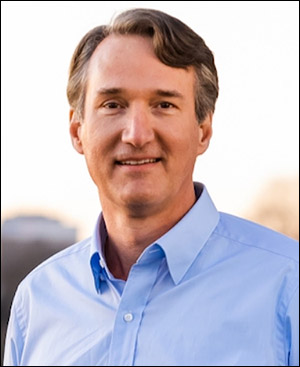
Glenn Youngkin, Virginia Republican governor candidate

Oct. 8, 2021 — A new Emerson College poll (Oct. 1-3; 620 likely Virginia voters, live interview and online panel with weighted responses) finds former Virginia Gov. Terry McAuliffe and ex-hedge fund CEO Glenn Youngkin in a virtual dead heat on the ballot test. McAuliffe is clinging to a bare 49-48 percent edge, but the underlying numbers suggest Youngkin may not be quite that close.

While Youngkin enjoys a very strong lead in the rural areas (57-42 percent) McAuliffe does better than he in the much larger urban areas (59-36 percent) thus negating, and then some, any edge the challenger may have established.

Surprisingly, considering recent poor Republican performance among suburban voters, Youngkin pulls slightly ahead of McAuliffe, 49-48 percent, within this category. Breaking even here would be a huge benefit for Youngkin should this trend prove real and is sustained.

Among women, McAuliffe has a 51-45 percent edge, which is actually a credible split for a Republican nominee in a Democratic state. Youngkin, however, needs to perform better among men than his 50-46 percent split found in this survey. Targeting men should be a key focal point for the Youngkin campaign in the closing days of the race.

Among minority groups, Emerson finds that Youngkin is outperforming a typical Republican candidate. The split among blacks, however, of 72-25 percent in McAuliffe’s favor, is suspect. Usually a Republican candidate is closer to the 10 percent level within this cell segment. It is not particularly unusual, however, to see a Republican polling better among blacks than what would be the actual performance factor once the votes are cast, and that pattern may appear again when the final votes are recorded in this contest.

The Hispanic segmentation is interesting. Republicans have been doing better within the Hispanic cell, and particularly so in 2020; so Youngkin actually leading McAuliffe within this group, 55-45 percent, may not be shocking but certainly appears inflated.

It wouldn’t be particularly surprising to see Youngkin pull more votes from Hispanics than a typical Republican candidate, but it is unlikely he would post a majority within this group. Still, while probably not as rosy a picture as this poll paints for Youngkin, it is probable that he will draw a greater Hispanic share than originally projected for him at the beginning of this campaign.

Continue reading

New Tight Nevada Polling

By Jim Ellis

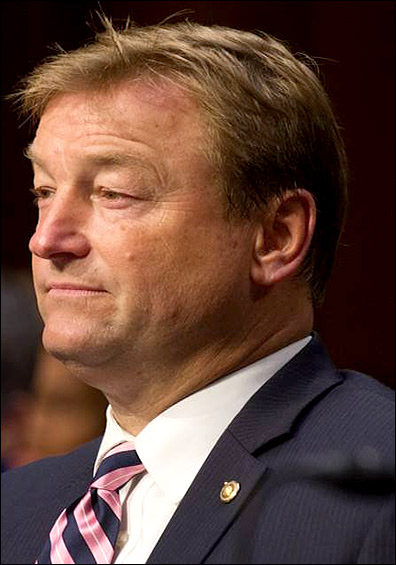
Former Sen. Dean Heller (R-NV)

Oct. 6, 2021 — The Nevada Independent online news site commissioned a September Mellman Group statewide poll (Sept. 15-22; 600 likely Nevada voters, live interview) just as former US Sen. Dean Heller (R) was announcing that he will join the Republican field vying to challenge Gov. Steve Sisolak (D). The results and analysis were released Monday.

The pollsters also tested the US Senate race between first-term Democratic incumbent Sen. Catherine Cortez Masto and former Attorney General Adam Laxalt (R). Both the gubernatorial and the US Senate contest returned close general election projections.

Nevada has featured close elections in the previous decade leading up to the 2022 voting cycle. Of the 18 statewide electoral contests between and including 2012 and 2020, Democrats have averaged 49.0 percent of the vote and Republicans’ 45.2 percent. In eight of the 18 campaigns, the winner recorded only plurality support.

During the time span, Democrats won 10 statewide races and Republicans won eight, but the GOP has scored only one victory since 2016. Therefore, it is not surprising to again see close polling data, and we can expect similar results throughout the campaign cycle.

According to the Mellman data, Gov. Sisolak would lead ex-Sen. Heller, 46-43 percent, but the small margin tightens even further if Clark County Sheriff Joe Lombardo were to win the Republican nomination. In the Sisolak-Lombardo pairing, the governor edges the sheriff by half a percentage point, 44.9 – 44.4 percent.

In the Republican primary, asked of only those who said they plan to vote in that contest though the sample number was not released, Heller led Sheriff Lombardo, 31-23 percent, with former professional boxer Joey Gilbert and North Las Vegas Mayor John Lee trailing with 11 and three percent, respectively.

On the positive side for Gov. Sisolak, his favorability index is only slightly upside-down at 46:48 percent, despite his handling of the COVID-19 virus getting a heavy 38:59 percent negative rating. He leads in all-important Clark County by 10 and seven points against Heller and Lombardo, respectively.

The governor saw a negative reading coming from Washoe County (Reno), however, which tends to act as a bellwether of the Nevada vote and an entity that Sisolak carried in 2018 against then-Attorney General Laxalt. The Mellman poll posted Heller to an eight-point lead over Sisolak in Washoe, while Sheriff Lombardo enjoyed a six-point edge.

Continue reading

Republican Youngkin Notches First Lead in Virginia Gubernatorial Race

By Jim Ellis

Republican Glenn Youngkin, Virginia candidate for governor

Sept. 24, 2021 — A new University of Mary Washington survey (conducted by Research America, Sept. 7-13; 1,000 total sample 528 likely Virginia gubernatorial election voters, live interview & online) finds Republican Glenn Youngkin (R) leading former Virginia Gov. Terry McAuliffe (D), 48-43 percent, but there are caveats.

While virtually every poll has projected the two candidates recording support percentages in the 40s, this is the first that found the ex-governor and former Democratic National Committee chairman trailing. Two other surveys were also released yesterday, and both of them find results consistent with other pollsters that place both candidates in the 40s, but with McAuliffe holding the advantage.

KAConsulting (Sept. 17-19; 700 likely Virginia voters, live interview), polling for the Presidential Coalition, found McAuliffe topping Youngkin, 46-42 percent. Public Policy Polling (Sept. 17-18; 875 Virginia voters, interactive voice response system) derived an almost identical 45-42 percent McAuliffe ballot test result during a simultaneous time realm.

The Mary Washington study may well be an outlier. While the 48-43 percent margin comes from those describing themselves as likely voters in the Nov. 2 election, when responses from all 1,000 sampled individuals are recorded, the ballot test flips to 43-38 percent in favor of McAuliffe. It is not unusual to see differences when screening for likely voters versus the universe as a whole, but detecting a ten-point swing affecting just one candidate – you will notice McAuliffe scores 43 percent within both groups – raises methodological questions.

The poll becomes even more suspect when seeing that the candidates in the other statewide races, lieutenant governor and attorney general, produce no such GOP swing. In the lieutenant governor’s contest, Republican Winsome Sears has a 47-41 percent lead over Democrat Hala Ayala among likely voters, but the two are dead even at 38 percent support when all respondents are added to the ballot test matrix.

In the AG’s campaign among likely voters, Republican Jason Miyares holds a 46-42 percent edge over incumbent Democrat Mark Herring, but the race flips to 40-37 percent in the attorney general’s favor when all respondents are questioned.

Continue reading

Nevada’s Gubernatorial Race:
Ex-Sen. Heller Announces

By Jim Ellis

Former Nevada Sen. Dean Heller (R)

Sept. 22, 2021 — The Silver State of Nevada has been home to some of the nation’s closest statewide elections during the past decade. In almost half of all Nevada statewide political contests since 2012, both party’s nominees have won their elections with only plurality support.

With that backdrop, ex-US Sen. Dean Heller (R), who lost his seat to current incumbent Jacky Rosen (D) in 2018, is making a political comeback attempt in next year’s governor’s race. Heller officially announced his plans Monday after the story broke last week that he would become a candidate.

Part of the announcement came as a surprise, and has more to do with winning the Republican primary than for what he hopes will be a challenge to incumbent Gov. Steve Sisolak (D). Heller, who throughout his career had aligned himself with the pro-choice caucus, pointedly spoke approvingly of the new Texas law governing abortion practices.

In the Republican primary, Heller faces Clark County Sheriff Joe Lombardo and North Las Vegas Mayor John Lee among others. At this point, Gov. Sisolak has no announced Democratic opposition.

According to a July OH Predictive Insights poll (July 6-11; 783 registered Nevada voters), which is the latest Nevada gubernatorial survey available, Gov. Sisolak recorded a 52:39 percent job approval ratio. As with most polls in today’s politics, the bulk of support comes from members of one’s own party, but in this case, 30 percent of the sampled Republicans also gave the governor a positive review.

Gov. Sisolak, a former Clark County Commissioner who previously served as a member of the Nevada Board of Regents, was elected the state’s chief executive three years ago with a 49-45 percent win over then-Attorney General Adam Laxalt (R), grandson of former US senator and Nevada governor, Paul Laxalt (R). Laxalt is also making a political comeback in 2022, running against incumbent Catherine Cortez Masto (D) for the US Senate.

Both the ’22 Nevada governor and US Senate have the potential of ending in close fashion. Since 2012, inclusive, 18 statewide races have been conducted. Democrats won 10 and Republicans’ eight, but six of the GOP victories came in the Republican wave year of 2014 when the Nevada Democratic turnout proved particularly low.

Continue reading

Newsom Wins Recall; Other Elections

By Jim Ellis

California Gov. Gavin Newsom (D)

Sept. 16, 2021 — California Gov. Gavin Newsom (D) easily avoided being recalled in last night’s statewide election, but the margin will likely close once all of the ballots are received and finally counted. The reported results are largely from mail ballots received well before election day. The posted turnout totals exceed 9 million voters, and this number will continue to grow.

The NO option on the recall ballot, meaning the vote individuals cast in order to keep Gov. Newsom in office, is running just under 64 percent, but under the California system of ballot signature verification it will be several weeks before we see official final totals. California also allows a long post-election period for ballots postmarked on election day to be received. It is clear, however, that Newsom will survive in office by a wide margin, but with an end-result closer margin than we see in early returns.

Though the replacement election became moot with the recall being rejected, conservative commentator Larry Elder was the clear leader, recording a tick under 47 percent of the vote. The next closest candidate was Democrat Kevin Paffrath with 10 percent. Former San Diego Mayor Kevin Faulconer (R) finished third with just under 9 percent. John Cox (R), who was one of the leading recall effort funders and the finalist against Newsom in the 2018 election, fell back to less than 4.5% of the vote. Media star Caitlin Jenner (R), who proved not to be a serious candidate, scored just 1.1% in the replacement election.

All of the replacement candidates were at a disadvantage in terms of financial resources. Though Elder raised a reported $18 million, an impressive amount in a short time frame, Gov. Newsom spent possibly as much as $80 million.

The rules for Newsom, however, were different. Because he was the recall subject, and the people were deciding the question as to whether or not he alone should remain in office, the campaign financial structure for him was that of a referendum. Therefore, he could raise unlimited amounts of money from individuals and entities. The replacement candidates, because they were running in an election campaign, were bound by the state campaign finance laws that feature contribution amount limits.

Continue reading