Category Archives: 2022

NM-1: A Pattern?

By Jim Ellis

Albuquerque, New Mexico-anchored NM-1 Congressional District

June 4, 2021 — Several media reports — typified by an MSNBC website analysis article that Steve Benen authored after Tuesday’s New Mexico special election — are trying to make the point that Melanie Stansbury’s landslide victory is a potential benchmark for future Democratic victories. Such a conclusion is a stretch.

The two-pronged premise is that Stansbury was so strong that she even ran ahead of President Biden’s performance in the district, and that the Republican campaign’s emphasis on the crime problem and the national effort to defund the police proved a political failure.

While Stansbury, a two-term state representative, scored a 60-36 percent win in the Albuquerque anchored congressional district that former Rep. Deb Haaland (D) resigned to become US Interior Secretary, her performance is not unusual. In fact, her vote total was less than two points above the mean average Democratic congressional percentage since the party converted the seat from the Republicans back in 2008.

To the argument that Stansbury’s victory margin was larger than President Biden’s 60-37 percent spread against then-President Trump, and it was only one percentage point better, it is not unusual for a House campaign to outperform the top of the ticket. In most instances, the congressional winner is better known than his or her competitor, has greater funding and outside support, and is consistently in position to overwhelm the opposition. Such is rarely the case in a national presidential campaign or in a major statewide contest for senator or governor.

The crime issue was certainly a focal point of Republican nominee Mark Moores, an Albuquerque state senator. The national party, however, did very little to support Moores, virtually conceding the race from the outset based upon the voting history here for more than a decade.

For an underdog candidate in Moores position, emphasizing the crime issue, on paper, made sense as a point of attack. Albuquerque, according to FBI statistics has the ninth worst violent crime statistics in the country, meaning 1,352 crimes per 100,000 residents according to the latest available figures (2019). To put this number in perspective, Chicago, which has drawn much national media attention for its high murder rate, ranks 31st on the same scale, at 943 crimes per 100,000 city residents.

Perhaps one reason the crime issue did not propel the Moores candidacy is there was no serious effort to defund the Albuquerque Police Department, nor is there the sharp racial tension that is present in some of the cities where we saw serious problems along with a local movement to reorder policing.

Continue reading

Stansbury Wins New Mexico Special

By Jim Ellis

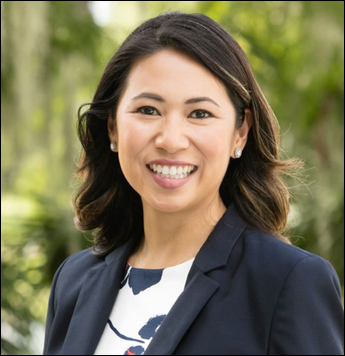
New Mexico state Rep. Melanie Stansbury (D), winner of Tuesday’s special election.

June 3, 2021 — The New Mexico special election went as expected Tuesday, as state Rep. Melanie Stansbury (D-Albuquerque) defeated state Sen. Mark Moores (R-Albuquerque) by a 60-36 percent count, which is consistent with the partisan early vote turnout.

The overall participation factor exceeded 131,000 voters, or 28.2 percent of the district’s registered voter universe, which is relatively high for a special election. It appears that over 70 percent of the people participating in the electoral contest cast an early ballot.

Stansbury, twice elected to the state House of Representatives, was victorious in the special Democratic district convention whose delegates were empowered with choosing a party nominee to replace resigned Rep. Deb Haaland (D-Albuquerque). Haaland vacated the House upon being confirmed as US Interior Secretary in the Biden cabinet.

The Stansbury congressional victory margin came from population-dominant Bernalillo County, where more than 90 percent of the CD-1 residents live. Stansbury captured 61 percent of the vote here. In the smaller rural counties, Moores took three of four, but the aggregate vote total from each of those entities was individually less than 2,500 cast ballots.

The Democratic mean average in the seat since partisan conversion in 2008 is 58.2 percent, so Stansbury ran about two points above the benchmark. The state’s current governor, Gov. Michelle Lujan Grisham, represented the 1st District for three terms and scored the single-highest Democratic election percentage during the 13-year post-conversion period. She tallied 65.1 percent in 2016, the same election in which Hillary Clinton posted a 52-35 percent CD-1 result and 48-40 percent statewide.

Continue reading

Latest Senate News – Part II

By Jim Ellis

May 28, 2021 — Today, we complete our two-part series pertaining to the latest Senate happenings, covering the latter half of the alphabet from New Hampshire through Wisconsin.

• New Hampshire: If Gov. Chris Sununu (R) decides to challenge Sen. Maggie Hassan (D), then the Granite State will likely become the Republicans’ best national conversion opportunity. In the only two publicly released polls this year testing such a pairing, Gov. Sununu leads in both.

Though New Hampshire has trended more Democratic at the top of the ticket in the past few elections and President Biden scored a better than expected 53-45 percent win here in November, Gov. Sununu has claimed three consecutive elections, including a 65 percent victory last year. The governor indicated he will make a decision about a Senate challenge during the summer. Should Sununu not make the race, Sen. Hassan becomes a clear favorite to win a second term.

• North Carolina: In another key Republican open seat, the North Carolina race appears to feature tough primaries in both parties. For the Republicans, whose eventual nominee will attempt to hold retiring Sen. Richard Burr’s (R) seat, former Gov. Pat McCrory, Rep. Ted Budd (R-Advance), and ex-Rep. Mark Walker reside in the top tier, with the former state chief executive enjoying big leads in early polling.

For the Democrats, the primary appears to be winnowing down to a contest between former state Supreme Court Chief Justice Cheri Beasley, who lost her seat in November by just 401 votes statewide, and state Sen. Jeff Jackson (D-Charlotte).

This will be another toss-up, top-tier Senate race regardless of who emerges from each of the competitive nomination contests.

• Ohio: The Buckeye State’s open US Senate race is beginning to crystallize. The Democratic side is headed for consensus around US Rep. Tim Ryan’s (D-Warren/ Youngstown) candidacy.

The Republicans look to have at least four strong candidates, former Ohio Republican Party chair Jane Timken, ex-state Treasurer and 2012 US Senate nominee Josh Mandel, author J.D. Vance, and possibly state senator and Cleveland Indians baseball club co-owner Matt Dolan (R-Chagrin Falls).

Businessmen Michael Gibbons and Bernie Moreno are also announced candidates, but they appear as second-tier contenders at this time. US Rep. Mike Turner (R-Dayton) remains a potential candidate. It appears that former US representative and 2018 US Senate nominee Jim Renacci is moving toward a Republican primary challenge against Gov. Mike DeWine in lieu of again running for the Senate.

Continue reading

Latest Senate News – Part I

By Jim Ellis

May 27, 2021 — Incumbents, candidates, and potential candidates are making political moves in some key upcoming 2022 Senate races, which makes now a good time to review the latest happenings. Today we look at the significant developing races alphabetically from Alabama through Nevada. Tomorrow, we cover the remainder.

• Alabama: Sen. Richard Shelby (R) is retiring, and the early Republican primary battle looks to be a match between Rep. Mo Brooks (R-Huntsville), armed with an endorsement from former President Donald Trump, and ex-US Ambassador Lynda Blanchard who is promising to personally spend $5 million on her campaign.

No Democrat has yet come forward to declare a candidacy. US Rep. Terri Sewell (D-Birmingham), the lone Democratic member of the congressional delegation, has already said she that will seek re-election next year and not run statewide.

• Arizona: Sen. Mark Kelly (D), who won the 2020 special election, must stand for a full six-year term in this election cycle. At this point, four Republicans are in the mix. Term-limited Attorney General Mark Brnovich appears poised to enter the race. Venture capitalist Blake Masters, with presumed major backing from billionaire donor Peter Thiel, is likely to run, as is retired Air Force Major General Michael McGuire. Solar energy company executive Jim Lamon has already announced his candidacy.

This will be a top-tier 2022 Senate campaign and is considered a must-win for both parties.

• Florida: The Sunshine State has been drawing a great deal of political media attention of late, all concerning House members looking to run statewide. It now appears set that Rep. Charlie Crist (D-St. Petersburg) is in the governor’s race, while Rep. Stephanie Murphy (D-Winter Park) seeks re-election, and Rep. Val Demings (D-Orlando) appears set to announce her challenge against two-term Sen. Marco Rubio (R).

The Florida Senate race will be competitive because campaigns in this state are always close and Rep. Demings will be a strong opponent. Incumbent Sen. Rubio, however, begins with a clear advantage.

• Georgia: Like Sen. Kelly in Arizona, freshman Georgia Sen. Raphael Warnock (D) won the special 2020 election to serve the balance of an unexpired term. He, too, must stand for a full six-year term next year.

At this point, now that former Rep. Doug Collins says he won’t run, most of the attention centers around former Georgia football legend Herschel Walker (R) and whether he will return from Texas to challenge Sen. Warnock. Walker promises a decision by summer.

If the former football star chooses to pass, Rep. Buddy Carter (R-Pooler/Savannah) says he will run. Banking executive Latham Saddler and construction company owner Kelvin King are the announced GOP candidates. The list of potential Republican candidates is long with state House Speaker David Ralston (R-Blue Ridge) being the latest to discuss the race with national GOP leaders.

Continue reading

Conflicting Electorate Clues

By Jim Ellis

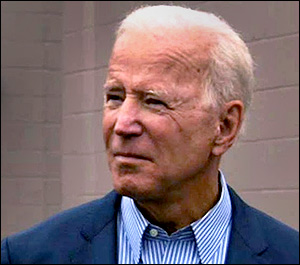
President Joe Biden lingers at the bottom of presidential rankings after his first 100 days.

May 24, 2021 — Data points are routinely being published covering the electorate’s status, leading to various conflicting conclusions. This allows both Democrats and Republicans to promote favorable prediction trends for the 2022 elections.

Presidential job approval is often used as a key prediction benchmark. The Gallup Research organization pioneered presidential job approval tracking, beginning in the 1950s with President Dwight D. Eisenhower, and the tradition continues today.

During that approximate 70-year period, the average performance for a newly elected president in his first 100 days in office is 61 percent favorable. Only those presidents who were elected are included in the Gallup survey. This means that presidents Lyndon B. Johnson, who ascended to the office when John F. Kennedy was assassinated, and Gerald R. Ford, who became president when Richard M. Nixon resigned, are not included.

If you remove, however, the highest rated national leader, President Kennedy (81 percent approval) and the lowest, President Donald J. Trump (41 percent), the adjusted average climbs to 63 percent.

In his first 100 days, Gallup rates President Biden with a 57 percent approval figure, thereby placing him as only the 9th most popular of the 11 newly elected modern era chief executives.

The top three rated presidents in their first 100 days are Kennedy (81 percent), Eisenhower (74 percent), and Ronald Reagan (67 percent). The three lowest are presidents Trump (41 percent), Bill Clinton (55 percent), and Biden (57 percent).

Other surveys rate Biden’s performance somewhat lower, however. In the month of May, eight additional pollsters have tested the president’s job performance and found his favorable score in a tight range, from 51-54 percent with his disapproval percentage spanning from 35 to 48.

The generic polling question is one where a survey respondent is asked whether they would vote for the Republican or Democratic House of Representatives candidate. Right now, we’re seeing the generic numbers span the ideological spectrum, which tells us the great partisan divide is still very much alive. The left-leaning pollsters are seeing big leads for Democrats, while the more conservative-oriented pollsters find the responses very tight.

Continue reading

Another Florida Twist

By Jim Ellis

Florida Rep. Stephanie Murphy (D-Winter Park)

May 20, 2021 — Last week, a story from the Axios news site reported that Florida Rep. Stephanie Murphy (D-Winter Park) had made the decision to challenge Sen. Marco Rubio (R), and that Rep. Val Demings (D-Orlando) would run for governor. Those suppositions proved premature to say the least.

Quickly, Murphy’s spokespeople denied that the congresswoman had made any final 2022 political decision. Simultaneously, Rep. Charlie Crist (D-St. Petersburg), a former Republican governor, announced that he would run for the Democratic gubernatorial nomination with the goal of challenging incumbent Gov. Ron DeSantis (R) next year. Both Rep. Demings and state Agriculture Commissioner Nikki Fried were then expected to soon follow suit and oppose Rep. Crist for the party nomination.

Politico broke a story Tuesday indicating that Rep. Demings had either changed her mind about running for governor, or the aforementioned Axios story drew the wrong conclusion. Certain supporters, including 2014 gubernatorial nominee Alex Sink (D), are now saying that Demings is a virtual certainty to challenge Sen. Rubio.

Since the 2012 election, Florida Democrats have won only one statewide race, and their record includes two gut wrenching losses of less than a percentage point after being predicted to win both times, so the state party now appears in disarray.

Several things could now be at work if assuming the Axios story about Murphy running for the Senate and Demings for governor was true at the time of publication.

First, Rep. Murphy has secured herself in the 7th District, and it is plausible that her seat will get more Democratic post-redistricting. It is very possible that she simply reconsidered giving up a relatively safe House seat in order to enter a statewide race against Sen. Rubio where she would be a considerable underdog.

Second, the Crist entry could be the wild card catalyst that influenced Rep. Demings to change course. Seeing an expensive Democratic gubernatorial primary developing against both Crist and Fried with no guarantee of victory, and then having to pivot into a race after the late August primary against incumbent Gov. DeSantis would, like Rep. Murphy, mean risking a safe House seat for a very uncertain political future.

Continue reading

Senate Vulnerability

By Jim Ellis

May 19, 2021 — We all know that the 2022 US Senate election cycle will be key, largely because every race has the potential of breaking the body’s 50-50 partisan tie. Today, we prioritize the 34 seats in order of electoral strength over the past five top statewide elections in each of the 2022 in-cycle Senate states. This allows us to objectively see from a statistical point which Senate seats appear, at least on paper, to be most vulnerable.

Next year, 34 Senate races are on the ballot with the Republicans defending 20 and Democrats 14 of each party’s 50 incumbent seats.

While the statistical analysis result below largely tells us what we have seen through previous polling, averaging the last five statewide races from each place, President 2020, the most recent Senate race, the most recent governor’s contest, and both the 2016 presidential race and the Senate race that elected the current incumbent, provides more concrete data.

The winning percentage margin was researched for all five historical political contests, and then the mean averaged calculated in each of the 2022 Senate states.

The conclusions:

STATE INCUMBENT PARTY AVG
CA PADILLA D 57.6
ND HOEVEN R 36.4
HI SCHATZ D 34.8
OK LANKFORD R 31.0
ID CRAPO R 30.4
AR BOOZMAN R 28.9
UT LEE R 28.8
NY SCHUMER D 28.4
SD THUNE R 26.9
AL SHELBY (O) R 24.1
MD VAN HOLLEN D 21.5
KY PAUL R 18.1
VT LEAHY D 17.5
CT BLUMENTHAL D 17.2
WA MURRAY D 16.6
IL DUCKWORTH D 16.1
LA KENNEDY R 15.6
IN YOUNG R 15.0
OR WYDEN D 14.9
KS MORAN R 14.3
AK MURKOWSKI R 11.9
MO BLUNT (O) R 11.8
SC SCOTT R 11.7
IA GRASSLEY R 10.3
CO BENNET D 8.8
OH PORTMAN (O) R 6.8
NV MASTO D 3.2
FL RUBIO R 2.6
NC BURR (O) R 1.6
NH HASSAN D 1.6
WI JOHNSON R 1.7
GA WARNOCK D 3.6
AZ KELLY D 5.6
PA TOOMEY (O) R 5.8

(O) – denotes open seat


The above chart shows that the five strongest incumbents, based only upon the top elections from 2016 through the present, are appointed Sen. Alex Padilla (D-CA) and regularly elected Sens. John Hoeven (R-ND), Brian Schatz (D-HI), James Lankford (R-OK), and Mike Crapo (R-ID).

Continue reading