Author Archives: Jim Ellis

Gov. Chris Christie

Good News for Gov. Christie

Gov. Chris Christie

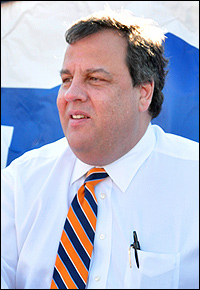
A new Rutgers-Eagleton New Jersey electorate poll (Nov. 14-17; 1,108 registered New Jersey voters) provides Gov. Chris Christie (R) with some very good news. According to the sampling universe, his job approval stands a 67 percent favorable to 26 percent unfavorable. But the better news for Christie is his standing against all potential Democratic rivals.

When paired with state senator and former Gov. Richard Codey, Christie’s margin is 56-31 percent. Against Newark Mayor Corey Booker, the governor stands at 53-34 percent. The numbers are even better when isolated with lesser-known potential Democratic rivals. Matched up against opposing former party chairman Tom Byrne, Christie soars to a 58-22 percent advantage. His gap grows to 60-22 percent when paired with state Sen. Barbara Buono and 60-21 percent when the opponent is Assemblyman Lou Greenwald. None of these individuals is an announced gubernatorial candidate.

Quinnipiac University is scheduled to release its latest New Jersey poll later today, but already leaked that their Christie job approval ratio is a whopping 72:21. It’s hard for a New Jersey Republican to begin an election year in better position. Gov. Christie is eligible to seek a second term next year.

Capito for Senate in W.Va.

West Virginia Rep. Shelley Moore Capito (R-2nd CD) officially announced that she will challenge Sen. Jay Rockefeller (D) next year, becoming the first person of the new election cycle to declare intentions for another office. Though speculation has been heavy that the senator won’t seek a sixth term in 2014, Rockefeller in response to his new challenger, says he plans to run even while disparaging the constancy of the campaign season.

The Republicans scored big with this recruit. Now needing to gain six Democratic seats to achieve bare minimum control, the West Virginia campaign may be behind only North Carolina as a GOP conversion opportunity. Should Sen. Rockefeller reverse course and retire, then Capito would become a prohibitive favorite in an open seat situation.

The congresswoman was originally elected in 2000, and has consistently strengthened her political base with each re-election campaign. This year, she racked up a 70-30 percent win after notching 68 percent of the vote in 2010. Prior to these two elections, her victory percentages had been in the 50s. In a three-congressional district state, Ms. Capito represents one-third of the state’s voters and West Virginia’s largest urban area of Charleston.

Rep. Jesse Jackson Jr. Resignation is Official

Rep. Jesse Jackson Jr. (D-IL-2)

Former Rep. Jesse Jackson Jr.’s (D-IL-2) resignation from the House became official on Nov. 21, thus starting the special election clock. Illinois Gov. Pat Quinn (D) will make an announcement today setting the election calendar, but local officials in the three-county region that comprises the 2nd District have already asked for a waiver from the scheduling law. Should Quinn agree to bypass the special election timing requirement, judicial approval will be required.

Illinois election law states that the governor has five days to call a special election in the event of a vacancy in Congress or for state office. The vacancy is supposed to be filled within 115 days after the date of resignation, but the county officials are asking that the election be postponed to coincide with their municipal and local elections already scheduled for April 9. The special election law would require that both the nominating and special general elections occur before March 16. Quinn has already indicated that his election calendar plan will be both “… fair to the electorate and as economical as possible for taxpayers,” according to his original statement. It is expected that he will make the election concurrent with the regular municipal election date since the two dates are only three weeks apart.

The election officials have also requested that the governor place the nominating election on the same date as their regularly scheduled municipal and local primary, which is Feb. 26. Since the 2nd District is heavily Democratic, it is this party’s primary vote that will be determinative, as the general election will merely be pro forma. Therefore, it is the February date that becomes critical for this replacement process.

Jackson’s resignation is due to health reasons and an ongoing federal investigation into whether he illegally used campaign funds to cover personal expenses, as outlined in his official letter to Speaker John Boehner.

Expect a large Democratic field to compete in the special primary. Already, former Rep. Debbie Halvorson (D-IL-11), originally elected in the old 11th District but defeated in 2010 after one term, has officially announced her candidacy. She opposed Jackson in the 2012 Democratic primary but secured only 23.6 percent of the vote.

Since Illinois has no run-off, Halvorson is hoping to unify the smaller white vote, which may be enough to secure victory if the African-Americans split among many candidates. IL-2 has a black population of 62.4 percent. Two other majority African-American districts, Tennessee’s 9th CD (Rep. Steve Cohen) and Michigan’s 14th (Rep. Gary Peters), currently send white males to Washington, winning under similar circumstances to what Halvorson hopes will occur in this upcoming special election.

Other individuals said to be considering running to replace Jackson are the former congressman’s brother Jonathan Jackson, prominent local Chicago pastor Corey Brooks, attorney Sam Adam Jr., state senators Toi Hutchison and Donne Trotter, Chicago Aldermen Anthony Beale and Will Burns, and former state Reps. David Miller and Robin Kelly. All are Democrats.

The 2nd District encompasses the south Chicago area in Cook County and includes part of Will County and all of Kankakee.

Unexpected Voter Turnout Patterns

We wish you the best for the happiest of Thanksgiving holidays. The PRIsm Political Updates will return Monday, Nov. 26.

The official state participation and candidate preference statistics are being released throughout the nation, and many of the numbers are quite surprising. While turnout was down nationally, it was up in most of the battleground states and, despite Pres. Barack Obama’s victory, it may be erroneous to assume that the turnout pattern completely favored him.

While it is clear the president obviously benefited from the voting preferences of the aggregate group of people who cast ballots during the election process, it is interesting to note that he was only able to return 91.5 percent of the total vote he received in 2008. In contrast, losing national Republican nominee Mitt Romney retained 99.4 percent of John McCain’s 2008 vote. Obviously Romney needed to do better than to simply equal McCain’s vote, but it is significant that Obama’s share of the vote declined by almost a full 10 percent from what he obtained four years ago, especially when understanding that the Obama campaign clearly had the superior grassroots organization.

Nationally, and rather astonishingly from what was widely forecast before the election, overall voter turnout was down six million votes from the number cast in 2008, or a fall-off of 4.7 percent. It appears that virtually all of the drop-off came from the Obama coalition, as the president’s vote receded by almost that same amount as did the national turnout (voter participation reduction: 6,148,768 individuals; Obama drop: 5,917,631 votes).

The four core states also recorded interesting turnout patterns. Of the quartet of places that Romney needed to convert if he were to unseat the president, it was North Carolina — the only state in this group that he did carry — that had the highest participation rate increase from 2008. North Carolina voter turnout was up 4.5 percent in comparison to their aggregate number of voters from four years ago. Virginia and Florida, two of the three core states that remained with the president, also saw increased participation. Virginia was up 3.5 percent; Florida 1.0 percent.

Ohio, often believed to be the most important state in the presidential contest because it was viewed to be a national bellwether, surprisingly recorded a lower turnout this year than during the previous Obama victory campaign. Ohio turnout was down a rather substantial 5.9 percent, or greater than 336,000 participants from 2008.

Of those seven states commonly viewed to be in the secondary target group — at least one of which Romney would have had to have carried to be successful, more if he failed to carry all of the core states — four saw increased participation, and three declined. The states producing a greater number of voters were in the Midwest (Wisconsin, up 2.4 percent; Iowa, increasing 1.9 percent) and West (fast-growing Nevada adding 4.5 percent; Colorado, up 3.1 percent).

The three eastern and Mid-Atlantic states all recorded a smaller voter participation rate. Pennsylvania, always considered a swing state and a place that attracts a great deal of campaign attention, saw its voter turnout rate fall 6.1 percent; Michigan, the only state in the Union that actually lost population in the preceding decade, dropped 5.7 percent; and New Hampshire returned almost the same number of voters, coming in just 5,091 ballots under their 2008 total.

It appears the biggest voter drop-off occurred in some of the nation’s largest states, those that are most Democratic and among the president’s strongest places. His home state of Illinois, for example, saw more than 431,000, or 7.8 percent, fewer people vote this year than when compared to their favorite son’s first election in 2008. New York had the largest drop-off, a stunning 19.8 percent below its participation level of four years ago. California, the nation’s largest state, was off 12.5 percent. But, lower turnout rates were not confined only to the large Democratic states. Texas, the biggest and most loyal Republican entity, also saw a reduction in turnout. Over 112,000 fewer voters went to the polls in 2012 when compared to 2008.

More analysis will be completed when additional data is available, but these statewide turnout numbers may have produced more questions about the nation’s voting patterns than answers.

La. House Race Still to be Decided

Rep. Charles Boustany

All but one of the 2012 US House races have been called and further legal challenges and recounts in at least two districts notwithstanding, a group of 234 Republicans and 201 Democrats will take the oath of office on Thursday, Jan. 3, 2013. Though we know the partisan count, the identity of the 234th Republican member is still undetermined. The election cycle’s final campaign will feature Louisiana GOP Reps. Charles Boustany (R-LA-7) and Jeff Landry (R-LA-3) vying for the right to represent the state’s new 3rd District on Dec. 8.

Under Louisiana election law, the state’s primary date is scheduled concurrently with the national general election day, meaning that Bayou State voters went to the polls for the first time just this past Nov. 6th. If no candidate receives a majority of the vote in what is commonly called the jungle primary, then a run-off election between the top two finishers, regardless of political party affiliation, is held at a later date. California and Washington also use this system, but Louisiana is the only one that holds their primary concurrently with the general election. Because they choose this electoral method, the state’s voters can elect a candidate outright without a second election. In the other jungle primary states, candidates must advance to the run-off election regardless of the percentage received.

Due to national growth patterns and after-effects of the devastating Hurricane Katrina in 2005, Louisiana failed to keep all seven of its congressional districts in reapportionment. Therefore, two members would inevitably be forced into a pairing. The legislature placed veteran Rep. Boustany, elected in 2004, and freshman Landry together in a new southern district. The new seat heavily favors Boustany, because he currently represents 76 percent of the territory and his home base of Lafayette is included whole. Landry sees only 24 percent of his current 3rd District constituency carry over to the new LA-3.

In terms of campaign funding, the two will undoubtedly raise and spend more than $5 million combined. So far, Boustany has obtained just under $3 million, spending $2.64 million and retaining $917,612 for the period beginning October 18th. Landry raised $1.832 million, already spent $1.194 million and had $638,316 in the bank at the close of the Oct. 17 pre-general election reporting period.

Though the outcome will not change the House’s new partisan division, the final result will still be interesting. The pairing is clearly designed for Boustany to win — and he placed first in the Nov. 6 primary election garnering 45-30 percent, a margin of 45,589 votes. But strange things often happen in run-offs. Landry enjoys strong support among the Tea Party activists of southern Louisiana, but exactly what impact they will have in what promises to be a low-turnout election remains unknown.

In another boost for Rep. Boustany occurring just yesterday, the primary’s third place finisher, Democrat Ron Richard who recorded 21.5 percent (67,058 votes), publicly threw his support behind the veteran congressman.

After a winner is declared here on Dec. 8, the new 2014 election cycle will officially begin.

The Final Electoral Score

The electoral results announced this weekend produced a Democratic clean sweep of the political overtime campaigns. All US House races now possess either an official or definitive winner with the exception of the double-Republican run-off in Louisiana’s 3rd District (to be decided Dec. 8). On election night, all but nine races were called forcing a tight count of the early, absentee and provisional ballots in the affected jurisdictions not producing a winning candidate.

Though each of the nine campaigns were originally too close to call, final projections released over the weekend proclaimed Democrats as winners in the remaining outstanding elections, joining those previously declared overtime victors. The final results in AZ-2, NC-7, and FL-18 completed the Democratic sweep.

After Rep. Ron Barber (D-AZ-2) expanded his lead to 1,402 votes of more than 285,000 cast with only about 15,000 absentee ballots remaining as of late Friday, Republican Martha McSally conceded the election to the short-term House member on Saturday afternoon. Barber was originally elected in June to fulfill resigned Arizona Rep. Gabrielle Giffords’ unexpired term. Running in the regular election for the newly configured 2nd District, Barber ran into a much more difficult competitor in McSally than originally forecast. It would not be surprising to see the two square off again in 2014, as the former Gulf War veteran and Air Force pilot received high marks for her ability as a candidate.

Also on Friday in southeast North Carolina, Rep. Mike McIntyre (D), who had been redistricted into a much more Republican seat, officially clinched re-election over state Sen. David Rouzer (R). The final tally separates the two candidates by 655 votes, a spread that falls within the legally proscribed margin to trigger an automatic recount. Though all the ballots will be officially counted again, the outcome is likely to remain the same and McIntyre will almost assuredly serve a ninth term in the House.

Rep. Allen West’s (R-FL-18) post-election saga continues but, barring an unforeseen development in the final early voting count, Democrat Patrick Murphy has defeated the outspoken one-term incumbent. Even after recounting the final three days of received early ballots resulted in West gaining on Murphy and both candidates seeing their vote totals decline, St. Lucie County Circuit Judge Larry Schack denied the congressman’s motion to re-tabulate all of the early ballots. But, in a surprise move on Friday, the St. Lucie County Election Commission voted 2-1 to grant West’s request.

Despite the commission decision, and with Murphy’s lead now expanding to more than 2,100 votes, it is highly unlikely that the result will be overturned. West will then have to decide whether to make a post-certification legal challenge once the results are deemed to be final and official.

All Florida counties were required to report their final canvass results to the Secretary of State yesterday. The state must certify all of the state’s elections on November 20th.

In addition to the aforementioned results, the previously declared overtime winners are Rep. Jim Matheson (D-UT-4), California challengers Raul Ruiz (D-CA-36), Ami Bera (D-CA-7), and Scott Peters (D-CA-52), and Arizona open seat candidates Ann Kirkpatrick (D-AZ-1) and Kyrsten Sinema (D-AZ-9). The House will divide with 234 Republicans and 201 Democrats, a net gain of eight seats for the Dems.

Virginia Numbers Tell the Tale

(Official White House Photo by Pete Souza)

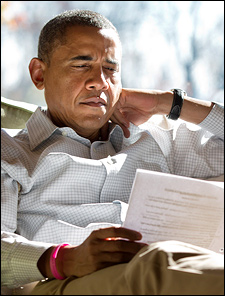
The Virginia State Board of Elections just released their 2012 results segmented by congressional district, the first state to do so, and the data give us further insight as to why Pres. Barack Obama again carried the Old Dominion. The state was long known to be one of the determining voting entities of the campaign, therefore the refined and newly released information carries national significance.

Statewide, voter turnout was reported to be 75.9 percent of the registered voters recorded as “active” by the Virginia state elections officials. The highest turnout district was that of House Majority Leader Eric Cantor (R-VA-7), as 82.8 percent of the central Virginia active registered voters participated. The lowest turnout rate was found in Rep. Gerry Connolly’s (D) northern Virginia 11th District where only 68.9 percent of active registered voters went to the polls.

At the congressional level, eight of the 11 districts were drawn to favor Republicans. The map performed as designed, because the eight GOP congressional incumbents all won re-election. In the presidential race, however, Obama obviously outperformed his Democratic congressional running mates, but only carried one more district than they. Obama won Districts 2 (Rep. Scott Rigell-R), 3 (Rep. Bobby Scott-D), 8 (Rep. Jim Moran-D), and 11 (Rep. Connolly). Therefore, despite GOP nominee Mitt Romney carrying seven of 11 congressional districts, he still lost the state. Obama’s official margin over Romney was 149,279 votes, meaning at least this many people are ballot switchers or did not vote in their individual congressional race.

Perhaps the most extraordinary finding is how Romney’s performance compared to the Republican congressional candidates. In all but one CD, the Republican congressional candidate recorded more votes than Romney. The lone exception was the western-most 9th District, commonly called “The Fighting Ninth” or the “coal district.” Here, Romney scored 11,456 votes more than Rep. Morgan Griffith (R), even though the latter was winning a convincing 61.3 percent re-election victory.

But it is the Northern Virginia seats where the most eye-opening results occurred. Despite not running competitive campaigns against Reps. Moran and Connolly, Republican candidates J. Patrick Murray and Chris Perkins in Districts 8 and 11, respectively, actually recorded more votes than did Romney. Murray secured 4,933 more votes than the Republican presidential nominee; Perkins garnered 9,441 tallies greater than Romney’s total. But none can come close to the results found in the new 10th District, where veteran Rep. Frank Wolf (R) out-polled Romney by 38,362 votes.

To put this in perspective, even though Murray received only 30.6 percent support against Moran and Perkins 35.5 percent in opposing Connolly, more people voted for them in these two districts than for Romney.

The other determining region was the Tidewater area, where the former Massachusetts governor failed to carry Rep. Rigell’s District 2 (he scored 48.6 percent there) and ran 12,466 votes behind the congressman, who won his first re-election with 53.7 percent. The other marginal Republican Tidewater CD, Rep. Randy Forbes’ (R) 4th District, showed an even greater difference between Romney and the congressional candidate. Here, Forbes ran 18,287 votes ahead of the man at the top of his party’s ticket. Romney eked out a 50.1 percent win over Obama, while Forbes racked up 56.9 percent in clinching his sixth re-election.

Comparing the presidential and congressional races to the Senate campaign between eventual winner Tim Kaine (D), the state’s former governor, and ex-Sen. George Allen (R), it was the Democratic candidate who carried the majority of the congressional seats — six to the Republican’s five. In addition to the seats that went for Obama (Districts 2, 3, 8 and 11), Kaine also carried Republican districts 4 and 10.

In more Virginia news, Quinnipiac University (Nov. 8-12; 1,469 registered Virginia voters) just released the first public survey of next year’s gubernatorial contest. Not surprisingly, the results determined that popular Sen. Mark Warner (D) would easily defeat both known Republican aspirants, Lt. Gov. Bill Bolling and Attorney General Ken Cuccinelli. Warner’s margins are 53-33 percent over Bolling and a similar 56-33 percent when paired with Cuccinelli. There has been speculation that Warner might enter the state’s 2013 governor’s race, thus giving him a better platform from which to launch a presidential campaign in 2016.

Former Democratic National Committee chairman and 2009 gubernatorial candidate Terry McAuliffe was likewise tested against the two Republicans. These match-ups suggest a much closer statewide race. Against Bolling, McAuliffe jumps out to a slight 38-36 percent lead; the margin becomes 41-37 percent when Cuccinelli is inserted as the hypothetical Republican nominee.