Tag Archives: Texas

Another Resignation;
North Dakota Convention Results

By Jim Ellis

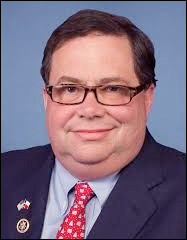
Texas Rep. Blake Farenthold (R-Corpus Christi)

Texas Rep. Blake Farenthold (R-Corpus Christi)

April 10, 2018 — Four-term Texas Rep. Blake Farenthold (R-Corpus Christi), who had shelved his plan to run for re-election well before the March 6 state primary largely due to details stemming from a sexual harassment settlement, abruptly resigned from the House on Friday. Farenthold delivered his announcement via video during the middle of the day and left his position by 5 pm.

The resignation from his TX-27 seat had been rumored because the House Ethics Committee was about to conduct a further investigation into the harassment case and the $84,000 taxpayer funded settlement. Rep. Farenthold said earlier that he would reimburse the government for the payment, but records do not indicate the refund was made. By resigning, the Ethics Committee cannot continue the investigation because Farenthold will no longer be a member.

With now former Rep. Farenthold having left office early, five House seats will be vacant upon Pennsylvania Rep-Elect Conor Lamb’s (D-Pittsburgh) imminent induction. The others are: AZ-8 (Franks-R), MI-13 (Conyers-D), NY-25 (Slaughter-D), and OH-12 (Tiberi-R). All will be filled by special election before the current Congress ends, though the Michigan seat will be done concurrently with the regular election cycle and there is no announced schedule for the New York seat. The AZ-8 seat special general election is April 24. The OH-12 special primary will be held May 8, concurrent with the regular state primary. Gov. Andrew Cuomo has yet to decide a replacement procedure for the late Rep. Louise Slaughter (D-Rochester).

The Texas succession situation is unclear. Gov. Greg Abbott (R) has eight days to decide on a special election schedule. The post-primary run-off for both parties is May 22 for the now vacant 27th CD.

Continue reading

Senate Match-Ups Forming

By Jim Ellis

April 2, 2018
— Only two primaries are in the books, but already we appear to have clear Senate match-ups forming in as many as 14 statewide races.

2018-elections-open-seatsBelow are the races that look set as general election campaigns. Those headed for serious primary battles are not included on this list.

In alphabetical order, the following are the impending general election contests:

Arizona: Assuming Rep. Martha McSally (R-Tucson) repels her primary challenge from the right, the Grand Canyon State general election will feature McSally and Rep. Kyrsten Sinema (D-Phoenix) in what will be one of the premier Senate contests in the country this year.

California: It appears we are again headed for a double-Democratic general election in the Golden State. Sen. Dianne Feinstein should have little trouble dispensing with state Senate President Kevin de Leon (D-Los Angeles).

Florida: With Gov. Rick Scott (R) scheduling an announcement for April 9, it looks like the long-anticipated contest between the two-term governor and incumbent Sen. Bill Nelson (D) will come to fruition.

Minnesota: Appointed Sen. Tina Smith (D) will be running to fill the remaining two years of resigned Sen. Al Franken’s (D) term. State Sen. Karen Housley (R-St. Mary’s County) immediately declared her candidacy and, so far, she appears headed for the Republican nomination. Neither woman has run statewide before, so this campaign has the prospect of turning highly competitive especially with Minnesota moving rightward in the past few elections.

Mississippi: Developments within the past two weeks are yielding a second Mississippi Senate race for the 2018 election cycle. With Agriculture & Commerce Commissioner Cindy Hyde-Smith (R) already being designated to replace retiring Sen. Thad Cochran (R) when he leaves office in April, she will draw serious opposition from state Sen. Chris McDaniel (R-Ellisville). If no candidate obtains majority support in the Nov. 6th vote, the top two finishers will run-off three weeks later.

Continue reading

The Texas Primary Results

By Jim Ellis

March 8, 2018 — The 2018 election cycle’s first regular primary results are in the books, and the Texas electorate largely performed in its typical fashion last night.

Democrats were citing that their primary turnouts would be much higher this year in anticipation of a more competitive 2018 general election cycle; however, the party turnout was substantially better than in the 2014 midterm election (almost double the participation factor), it was still only two-thirds of their 2016 presidential total.

(To see full-size results graphic below, please click on image; partial results shown.)

325-2018-Texas-Primary-Results-graphicDespite the increase, just 6.8 percent of the state’s more than 15 million registered voters cast a ballot in this year’s Democrat primary. Adding the Republican vote, the primary registered only a 17 percent total turnout, again making the state one of the lowest in terms of party primary participation.

This year, 60 percent of those voting chose to cast a Republican ballot, down from the 71 percent in the last midterm and the 68 percent total from the 2016 presidential race. But, in the 17 Republican congressional districts where both sides fielded contested primaries, in only one CD, Rep. Will Hurd’s 23rd District, did more Democrats vote than Republicans.

As expected, both Sen. Ted Cruz (R) and Rep. Beto O’Rourke (D-El Paso) easily captured their party nominations for the US Senate campaign. Sen. Cruz recorded an 85.3 percent vote total among Republicans, while 61.8 percent of Democrats chose Rep. O’Rourke. Since both men exceeded the 50 percent plus one vote majority figure, each advances to the general election.

Republican Gov. Greg Abbott racked up a 90.4 percent win in the GOP primary, while Dallas County Sheriff Lupe Valdez (42.9 percent) and businessman Andrew White (27.4 percent) must now duel in a May 22 run-off election to decide the Democrat nomination.

In the eight open congressional races, three featured outright winners. In retiring Rep. Sam Johnson’s (R-Plano) north Texas 3rd District, state Sen. Van Taylor (R-Plano), as expected, easily captured the Republican nomination (84.7 percent) and he will go onto win the general election. In Rep. O’Rourke’s El Paso-anchored 16th District, the El Paso County Judge (Executive), Veronica Escobar, recorded a 61.4 percent win over five opponents and will easily win the succeeding general election. In Houston, state Sen. Sylvia Garcia (D-Houston), also as expected, notched a 63.2 percent win against six Democratic opponents, and she will replace retiring Rep. Gene Green (D-Houston) in the 29th CD.

Turning to Rep. Ted Poe’s (R-Atascocita) open district, a surprise occurred in the GOP primary. Though she spent over $5 million of her own money, GOP activist Kathaleen Wall failed to qualify for the run-off by a slight 145-vote margin. State Rep. Kevin Roberts (R-Houston) placed first with 33 percent and will face retired Naval officer Dan Crenshaw (27.4 percent) in the May 22 Republican run-off. The winner will have the inside track toward replacing the retiring seven-term incumbent in the general election.

A run-off will occur in retiring Rep. Jeb Hensarling’s (R-Dallas) 5th District. State Rep. Lance Gooden (R-Terrell) advances to the run-off against political fundraiser Bunni Pounds. Gooden’s advantage in the primary vote was 29-22 percent over Pounds. Former Terrell City Councilman Dan Wood was unopposed for the Democratic nomination.

Tarrant County Tax Assessor and former congressional chief of staff Ron Wright came within five percentage points of clinching the Republican nomination in retiring Rep. Joe Barton’s (R-Ennis) north Texas’ 6th District. He becomes a heavy favorite to dispatch airline pilot and Afghanistan War veteran Jake Ellzey (21.7 percent) in the run-off election. Wright will likely succeed the retiring 17-term congressman.

In the 18-candidate 21st District Republican primary to succeed veteran Rep. Lamar Smith (R-San Antonio), former Ted Cruz chief of staff Chip Roy placed first (27 percent), and will face frequent candidate Matt McCall (17 percent) in the run-off election. McCall, who has previously challenged Rep. Smith, may have benefited from name confusion since this seat is adjacent to Rep. Michael McCaul’s (R-Austin) 10th District. Roy now becomes the favorite to win the run-off and the general election to follow the retiring incumbent.

Turning to the Corpus Christi area, former Water Development Board chairman Bech Bruun (36.1 percent) placed a close first in the Republican primary over former Victoria County Republican Party chairman Michael Cloud (34.9 percent), and the two will battle again in late May. The likely Republican nominee will replace retiring Rep. Blake Farenthold (R-Corpus Christi).

Looking at the three races that are expected to be competitive in the general election, Rep. Hurd was easily re-nominated (80.3 percent), while the Democrats must go to a run-off. Former US Trade official Gina Ortiz Jones ran strongly in the Democratic primary (41.3 percent), but must face former San Antonio City Council candidate Rick Trevino (17.5 percent) on May 22. The Democrat establishment’s favored candidate, attorney Jay Huling’s (15 percent), failed to qualify. The succeeding general election here will be competitive in what is the state’s lone swing district.

Rep. John Culberson (R-Houston) was easily re-nominated with 76.1 percent while attorney Lizzie Pannill Fletcher (29.3 percent) and author Laura Moser (24.3 percent) advance to a run-off.

In Dallas, Rep. Pete Sessions (R-Dallas) won a 79.3 percent re-nomination victory, while ex-NFL player Colin Allred (38.5 percent) and former US Agriculture Department official Lillian Salerno (18.3 percent) will battle in the May 22 Democrat run-off election.

None of the 28 House incumbents seeking re-election were forced into a run-off. Rep. Eddie Bernice Johnson (D-Dallas), running for what she says will be her last term, fared the worst but still scored a 63.6 percent re-nomination victory over two opponents.

Primary Season Begins Today

By Jim Ellis

texas-primary-election-2018March 6, 2018 — The 2018 primaries begin today, as Texans will complete their voting process for the first-in-the-nation midterm primary.

The Lone Star State political card features the US Senate race, a full compliment of statewide races, including Gov. Greg Abbott (R) beginning his campaign for re-election, along with voters choosing nominees in the 36 US House seats. The delegation’s eight open seats will attract the most attention. Should candidates not receive majority support, run-off elections between the top two finishers in each party will subsequently be held on May 22.

Both Sen. Ted Cruz (R) and Rep. Beto O’Rourke (D-El Paso) are expected to easily win their respective nominations. This will officially begin the nation’s first US Senate general election cycle. Rep. O’Rourke will have the benefit of commanding strong financial resources — he had just under $5 million in the bank at the end of the pre-primary reporting period — because so many national liberal donors are contributing against Sen. Cruz.

The Democratic gubernatorial primary features Dallas County Sheriff Lupe Valdez opposing businessman Andrew White, son of the late former Gov. Mark White (D). Neither have major resources, and the winner draws Gov. Abbott who could top $100 million in spending. The governor is viewed as a safe bet for re-election.

In the 36 House races, 28 incumbents are seeking re-election; 15 of them (a dozen Republicans and three Democrats) have primary opposition, but all are expected to easily win re-nomination.

Continue reading

Setting the Stage: The Texas Primary

By Jim Ellis

Feb. 23, 2018 — We’re now inside two weeks before the first-in-the-nation regular midterm primary election, as the Texas early voting process is now well underway in preparation for the March 6 regular primary vote.

texas-primary-election-2018Seventy-six candidates are running for major statewide office — races for governor, US senator, lieutenant governor, attorney general, comptroller, agriculture commissioner, land commissioner, and one slot on the state railroad commission. A record total of 304 Democrats, Republicans, Independent and minor party candidates are vying for their respective party nominations in the state’s 36 US House districts.

Texas is a run-off state, meaning if no candidate in the various primaries receives majority support, the top two finishers will advance to a run-off election on May 22. Since a vast number of races have multiple candidates, including 28 individual candidates alone fighting to succeed retiring Rep. Lamar Smith (R-San Antonio) in his open central Texas CD, the secondary election calendar promises to also have a large slate of late May voting contests.

Two Democrats off to late starts are vying to face Gov. Greg Abbott (R), and though nine candidates are on the Democratic gubernatorial ballot, there remains some possibility that either Dallas County Sheriff Lupe Valdez or businessman Andrew White, the son of the late former Gov. Mark White (D), will emerge as the party’s nominee on March 6.

Continue reading

An Open Review – Part I

By Jim Ellis

Feb. 6, 2018 — With so many House retirements coming into focus within the past several weeks, it is a good time to review the list of 53 districts heading into their next election without an incumbent on the ballot.

Of the 53, Republicans currently hold 37 seats versus just 16 for the Democrats. Here’s the breakdown of how things look regarding all 53 seats right now:

2018-elections-open-seats

  • Safe Republican (19)
  • Likely Republican (6)
  • Likely Democrat (6)
  • Safe Democrat (6)
  • Lean Republican (5)
  • Lean Democrat (3)
  • Toss-up (8)

This configuration could change drastically if the Pennsylvania map is re-drawn in a court-ordered redistricting. The state Supreme Court has declared the Keystone State map a political gerrymander and has ordered a new plan drawn by Feb. 15.

The state Senate President Pro Tempore is responding, however, that the legislature will not comply with the court order to turn over statistical data need to draw a new map because the state court did not cite the legal provisions violated in making the current plan a gerrymander. Additionally, the US Supreme Court is sending signals that it may try to involve itself even though this case is filed against the Pennsylvania Constitution and not its federal counterpart. We can count on major action coming here within the next several days.

Furthermore, the US Supreme Court is in the process of deciding the Wisconsin political gerrymandering case, which will also affect active lawsuits in Michigan, North Carolina, Texas, and Virginia; in Pennsylvania, the political gerrymandering lawsuit realm is not directly part of this group because its case is filed within the state court system. But the Republicans have petitioned the federal high court to look at this case for other legal reasons.

Continue reading

The Pre-Redistricting Wars

redistricting-2018By Jim Ellis

Jan. 23, 2018 — Though we are in the fourth election cycle of the decade, the 2011 redistricting fights are still continuing. The US Supreme Court has been dealing with redistricting cases from five states, but it all could come to a head soon.

The lawsuits first break down into the familiar racial gerrymandering claims, which have been in the courts in some fashion or another since the Voting Rights Act was created in 1965. Currently, the topic of political gerrymandering is hot as both parties are pursuing live complaints against their opponents for drawing congressional and state legislative boundaries to maximize the political standing of one party to the unfair detriment of the other.

The major political gerrymandering case comes from Wisconsin and will likely set the tone for other such suits in Michigan, North Carolina, Texas, and possibly Maryland. Democrats are bringing the action in the first four states, while Republicans are challenging Maryland’s 6th Congressional District.

Obviously, the high court is getting involved to craft a new set of rulings relating to both racial and political gerrymandering before the entire country goes into a 50-state redistricting round upon completion of the 2020 census. Therefore, election results in 2018 and 2020 to establish incumbency both in the House of Representatives and the state legislatures become critically important.

Last week, the US Supreme Court stayed the most recent North Carolina lower court redistricting ruling. The three-judge panel invalidated the maps, determining that majority Republicans engaged in political gerrymandering. In the last election cycle the Tar Heel State boundaries were also re-drawn to remedy what the panel cited as racial gerrymandering reasons, but the Democrats were unable to make a dent in the Republicans’ 10R-3D delegation advantage.

Continue reading